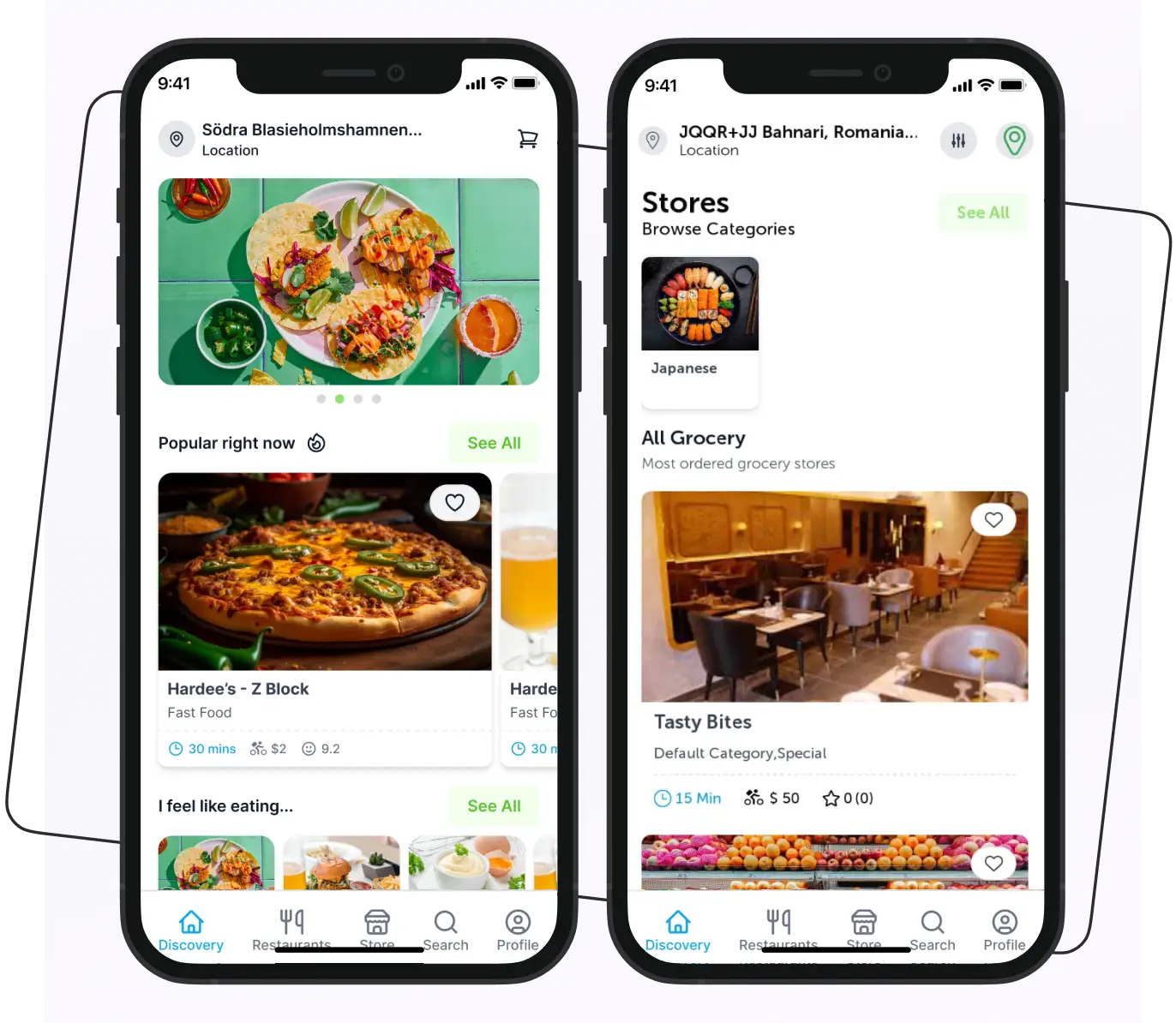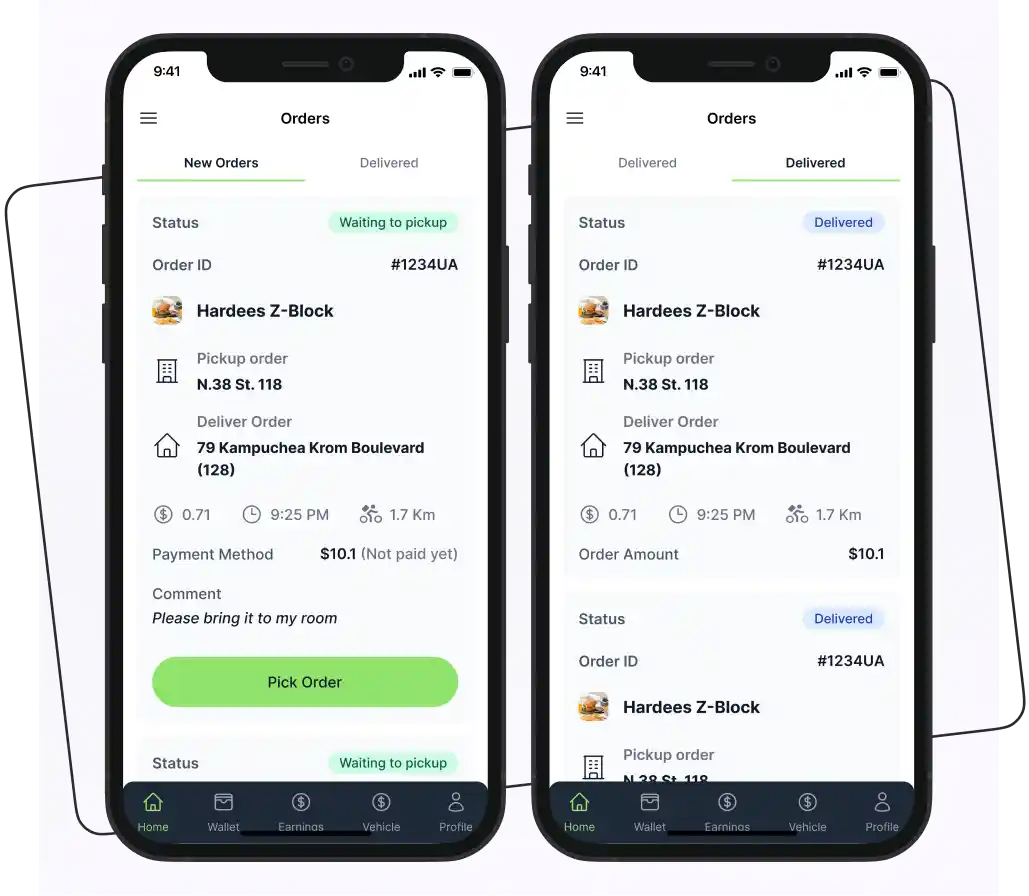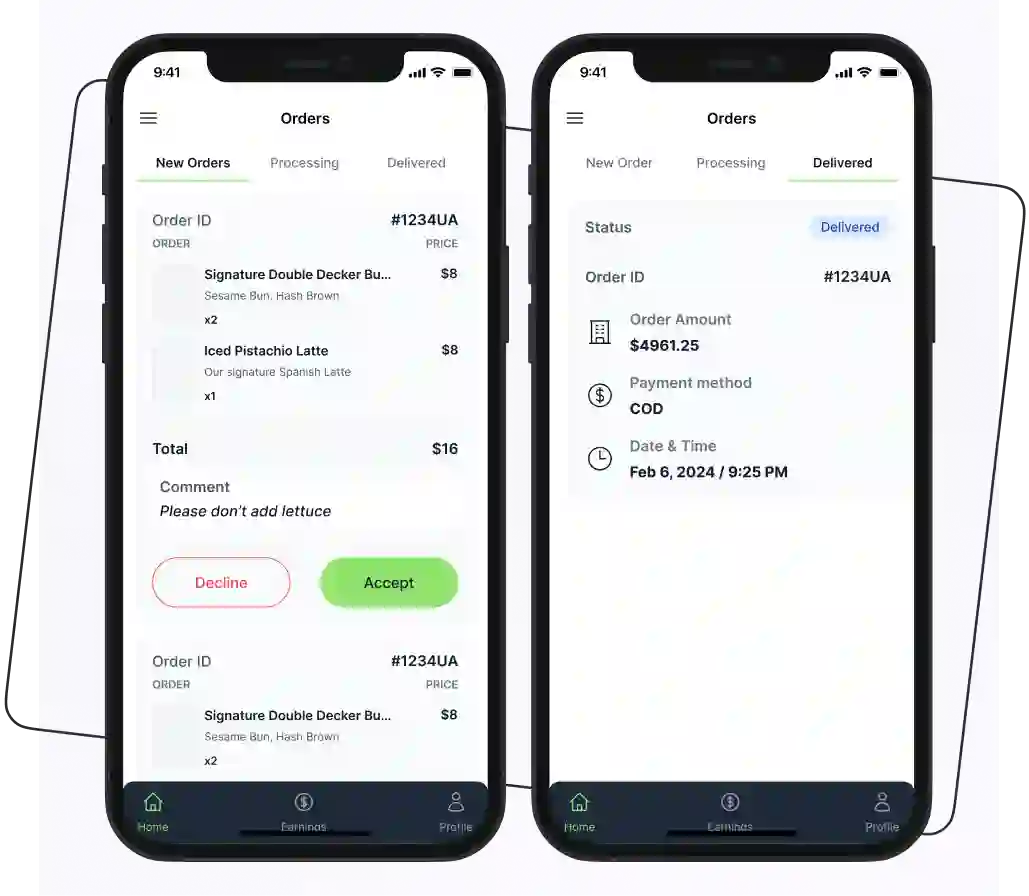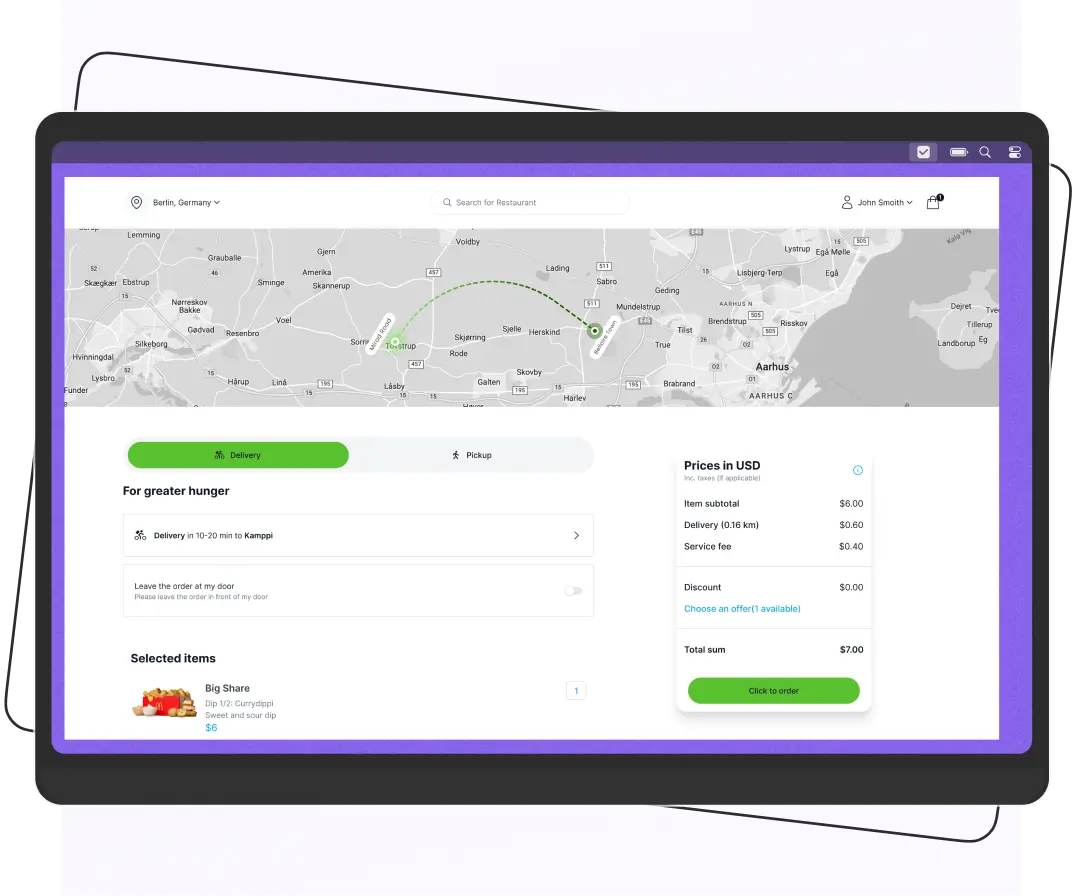
Get Backend API for Home Delivery App Using Node Js
Build faster using the home delivery app using node js open-source frontend. To integrate the backend API, reach out to our sales team. Case studies and technical documentation are available.



Frequently Asked Questions
Node.js is ideal for building a home delivery app because it offers: High Performance: Its event-driven, non-blocking I/O handles many simultaneous requests efficiently. Real-Time Features: Supports instant updates for orders, delivery status, and notifications using WebSockets. Scalability: Easily scales horizontally to handle growing user and delivery demands. Rich Ecosystem: NPM provides thousands of ready-to-use packages for payments, authentication, and APIs. Single Language Stack: Developers can use JavaScript for both frontend and backend, speeding up development and reducing complexity.
Express.js acts as the backend framework in a Node.js home delivery system, simplifying the creation and management of APIs and server routes. Its key roles include: Routing: Handles requests for actions like placing orders, fetching menus, or tracking deliveries. Middleware Management: Enables authentication, logging, and validation efficiently. API Creation: Makes it easy to build RESTful APIs that connect the frontend with the database. Performance Optimization: Provides lightweight, fast server-side operations ideal for real-time delivery apps.
Yes, you can schedule deliveries in advance with a Node.js home delivery app. You can achieve this by: Using task schedulers like node-cron or Agenda.js to handle future delivery times. Storing scheduled orders in the database with a timestamp for delivery. Running background jobs that trigger notifications or assign drivers at the scheduled time.
A Node.js home delivery app supports payments via credit/debit cards, digital wallets, PayPal, and cash on delivery. Transactions are secured using HTTPS, tokenization, 3D Secure verification, and server-side validation to prevent fraud.
You can track your delivery in real time using GPS integration and WebSocket or API updates. The app shows the driver’s live location on a map and refreshes status updates like “Picked Up” or “Delivered” automatically.
A Node.js home delivery app differs from traditional delivery apps through its real-time performance, scalability, and faster response times. It uses event-driven architecture for instant order and delivery updates, supports live tracking, and handles multiple users efficiently without slowing down.




 IOS
IOS Android
 Web
Web