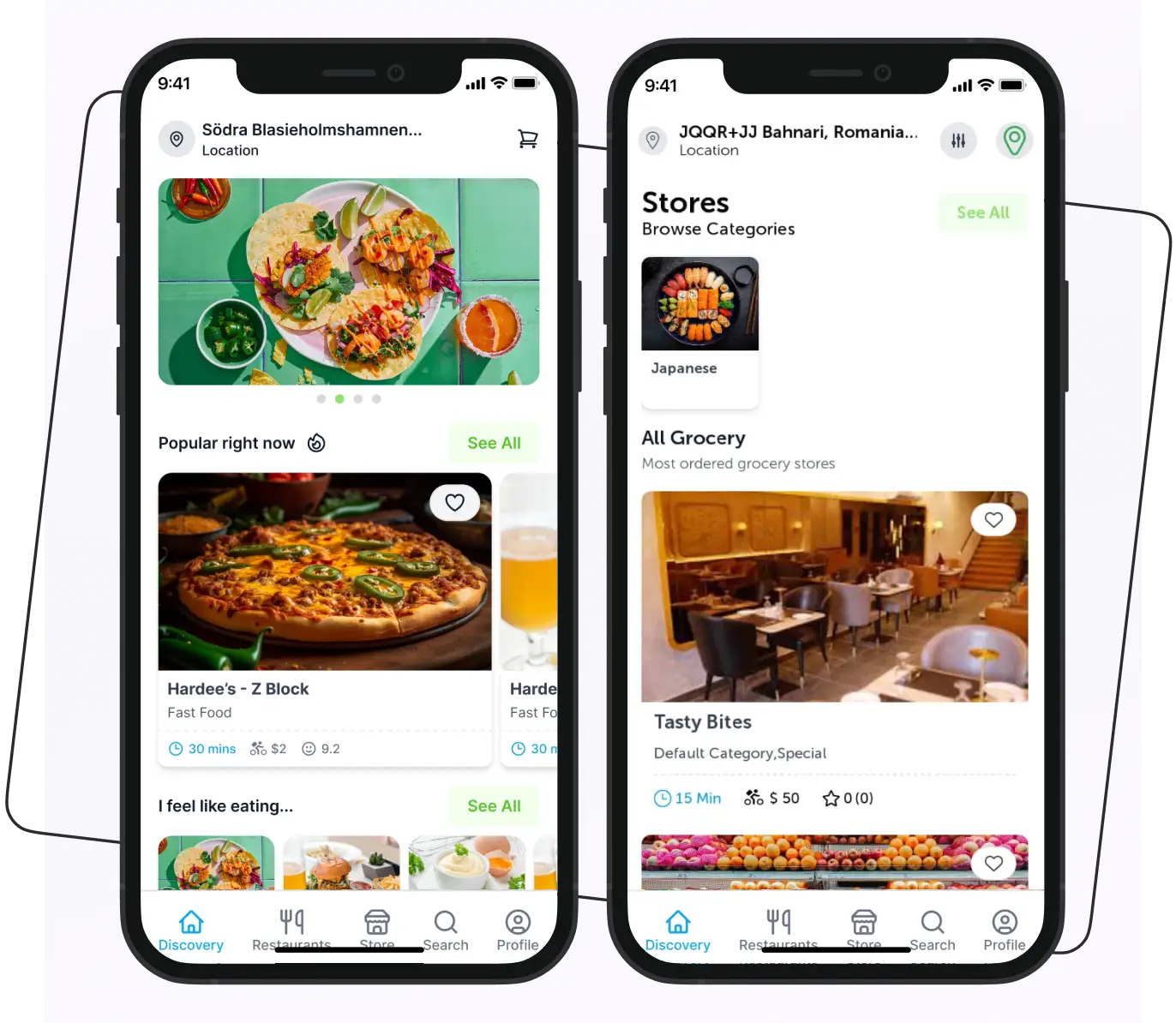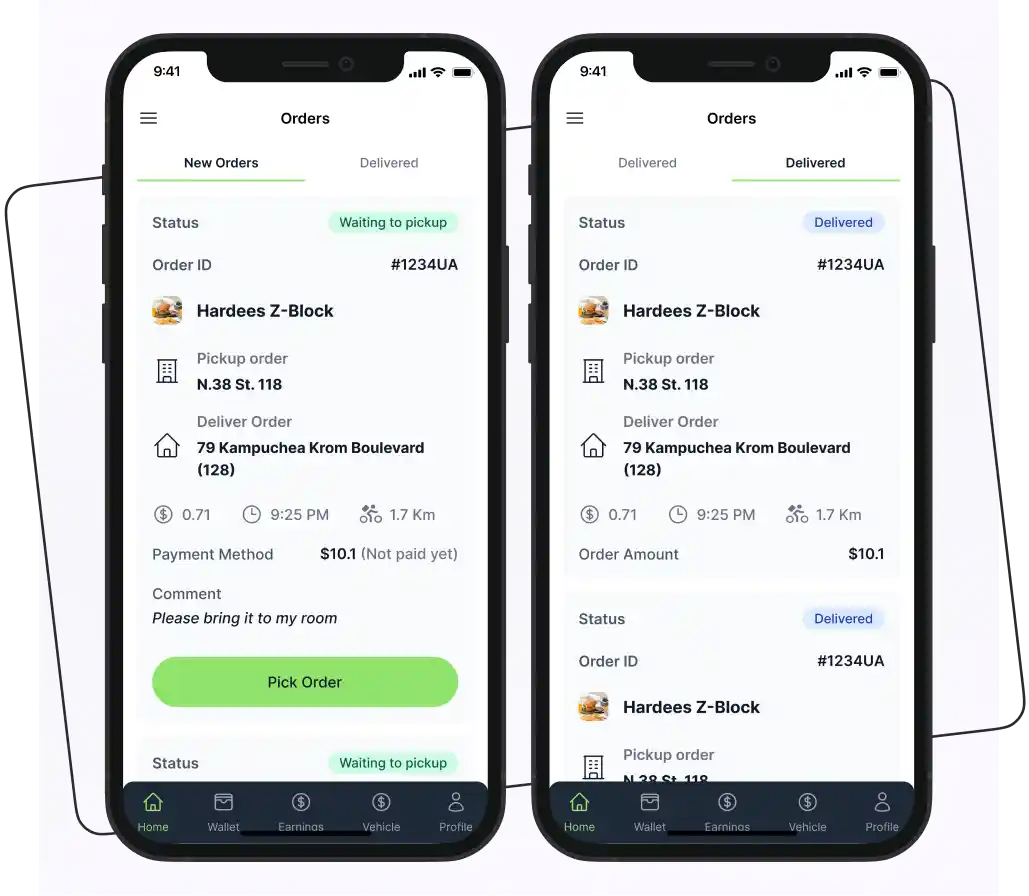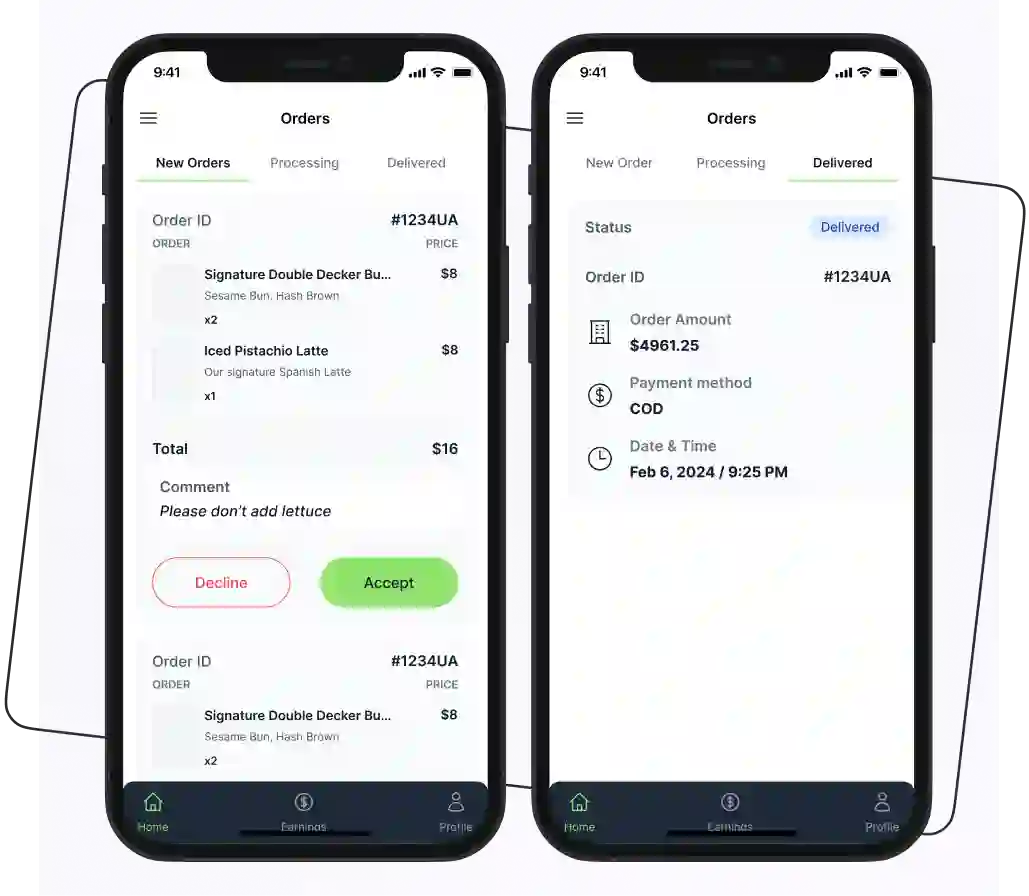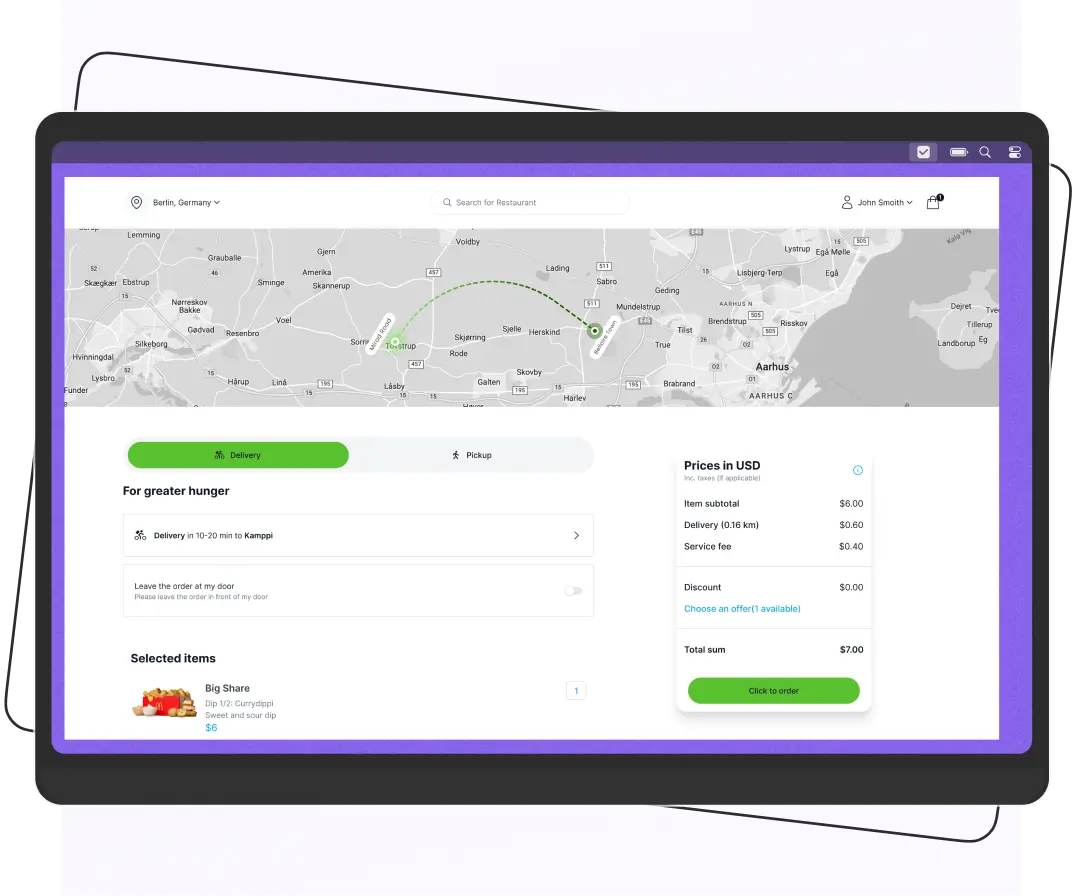
Get Backend API for Food Ordering App Python
The food ordering app python frontend source is open for developers. Access the backend API with a paid license by contacting our sales team. Explore case studies and demos anytime.



Frequently Asked Questions
A food ordering app is a digital platform that enables users to browse menus, place orders, and arrange for delivery or pickup from various restaurants via their smartphones or tablets. How It Works: User Registration: Users create an account or log in to access features. Menu Browsing: Customers can explore nearby restaurants, view their menus, and filter options by cuisine, ratings, or price. Order Placement: Users select items, customize their orders, and add them to a cart. Payment Processing: Secure payment options are provided, including credit/debit cards and digital wallets. Order Confirmation: Users receive a confirmation of their order with estimated delivery or pickup time. Tracking: Customers can track their order status in real-time, from preparation to delivery. Feedback and Ratings: After receiving their order, users can leave reviews and ratings for restaurants.
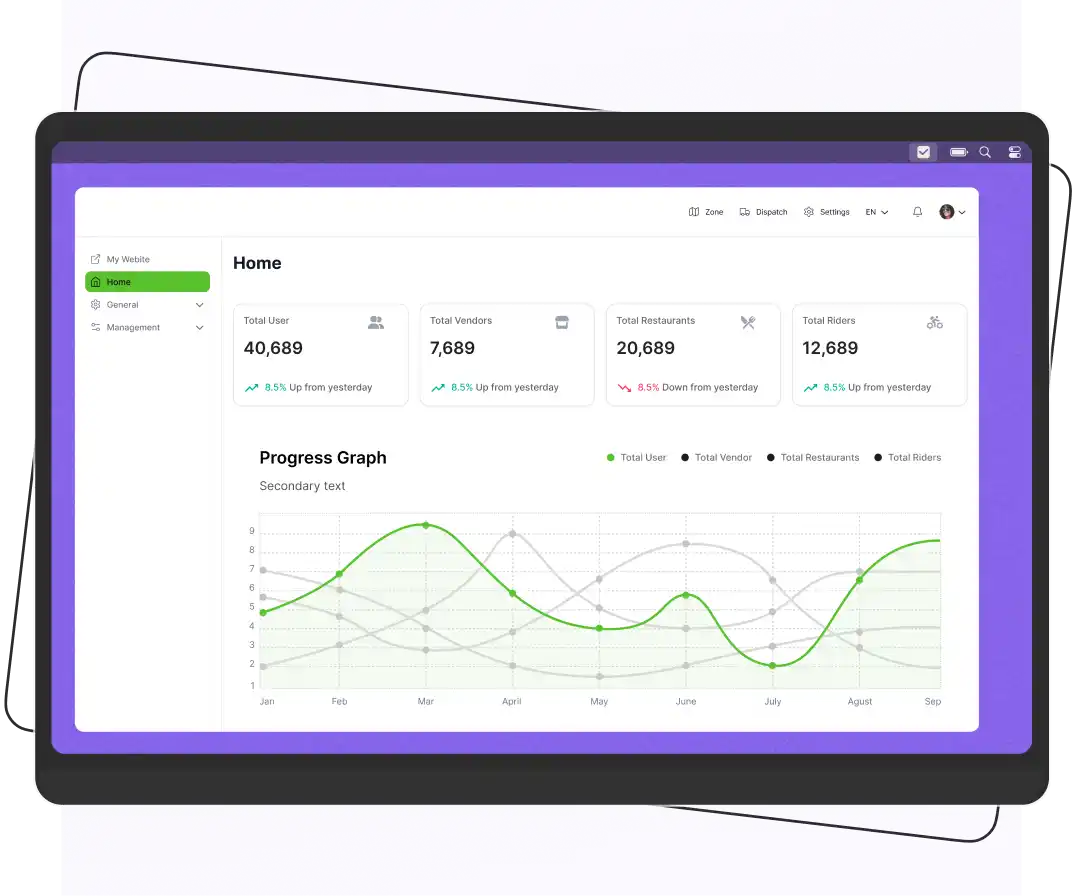
A Python-based food ordering application typically includes the following main features: 1. User Authentication Registration and Login: Users can create accounts and log in securely. 2. Restaurant Listings Browse and Search: Users can view and search for nearby restaurants with filters for cuisine, ratings, and distance. 3. Menu Management Detailed Menus: Restaurants can display their menus with item descriptions, images, prices, and availability. 4. Order Placement Shopping Cart: Users can add items to a cart, customize orders, and review before checkout. 5. Payment Integration Multiple Payment Methods: Support for credit/debit cards, digital wallets, and cash on delivery, with secure processing. 6. Order Tracking Real-Time Updates: Customers receive notifications about their order status, from confirmation to delivery. 7. Delivery Options In-House or Third-Party Delivery: Integration with delivery services or management of in-house delivery staff. 8. User Reviews and Ratings Feedback System: Users can leave reviews and ratings for restaurants and menu items. 9. Promotions and Discounts Special Offers: Ability to apply promotional codes and discounts during checkout. 10. Admin Dashboard Management Tools: Admins can manage users, restaurants, orders, and view analytics for performance tracking.
When building a food ordering app with Python, the following frameworks are among the best options: 1. Django A high-level web framework that encourages rapid development and clean, pragmatic design. Benefits: Built-in admin interface for easy management. Strong security features. Excellent for building complex applications with a robust ORM. 2. Flask A lightweight and flexible micro-framework that allows for easy setup and customization. Benefits: Minimalistic, allowing developers to add only the components they need. Great for small to medium-sized applications. Easy to integrate with other libraries and tools. 3. FastAPI A modern framework for building APIs with Python based on standard Python type hints. Benefits: High performance due to asynchronous support. Automatic generation of OpenAPI documentation. Ideal for building RESTful APIs for mobile and web clients. 4. Pyramid A flexible and modular framework that can scale from small to large applications. Benefits: Highly customizable and supports various databases. Good for applications that may grow in complexity over time. 5. Tornado A web framework and asynchronous networking library designed for handling long-lived network connections. Benefits: Excellent for handling a large number of simultaneous connections. Suitable for real-time features like order tracking.
The cost to develop a food ordering app using Python can vary widely based on several factors. Here’s a general breakdown: Estimated Cost Ranges: Basic App: $10,000 - $30,000 Simple features like menu browsing, order placement, and basic payment integration. Mid-Range App: $30,000 - $70,000 Additional functionalities such as user accounts, order tracking, and customer reviews. Advanced App: $70,000 - $150,000+ Comprehensive features including real-time tracking, advanced analytics, multiple payment methods, and a robust admin dashboard. Factors Influencing Cost: Complexity of Features: More features lead to higher costs. Development Team Location: Rates vary significantly based on geographic location. Design and User Experience: Custom designs and user interfaces can increase costs. Testing and Maintenance: Ongoing support and updates should also be factored into the budget.
Using Python for food ordering and delivery applications offers several advantages: 1. Ease of Learning and Use Python's simple syntax and readability make it accessible for developers, allowing for quicker onboarding and development. 2. Rapid Development Frameworks like Django and Flask enable fast prototyping and development, reducing time-to-market for applications. 3. Rich Ecosystem A vast array of libraries and frameworks is available, providing tools for various functionalities, such as data processing, web development, and API integration. 4. Scalability Python applications can be easily scaled to accommodate growing user bases and increased data traffic, especially with frameworks like Django that support large-scale applications. 5. Strong Community Support A large and active community means extensive resources, documentation, and third-party packages are available for troubleshooting and enhancements. 6. Integration Capabilities Python easily integrates with other technologies and services, making it suitable for payment processing, notifications, and delivery tracking systems. 7. Data Handling and Analysis Excellent libraries for data manipulation (like Pandas) enable effective handling of user data, order analytics, and reporting. 8. Security Features Python frameworks often come with built-in security features to protect against common vulnerabilities, ensuring user data safety.








 IOS
IOS Android
 Web
Web