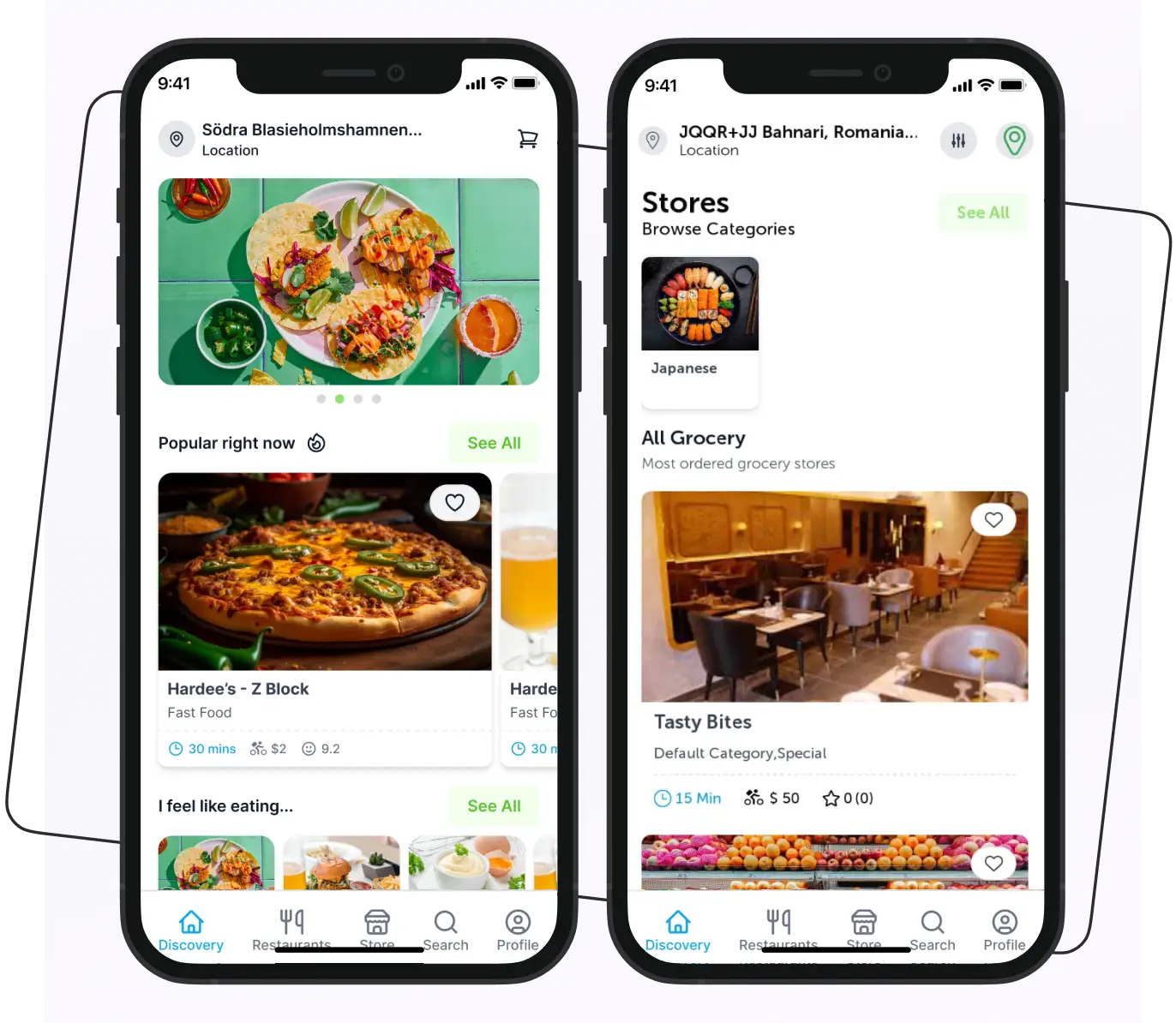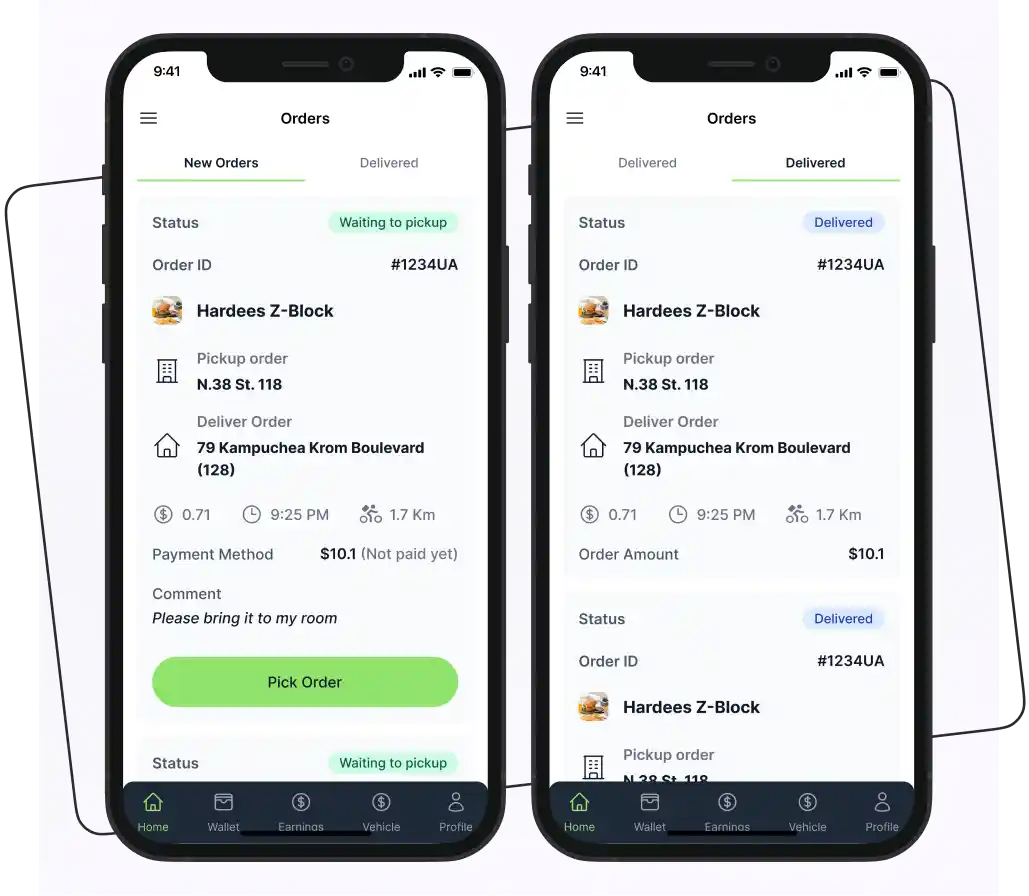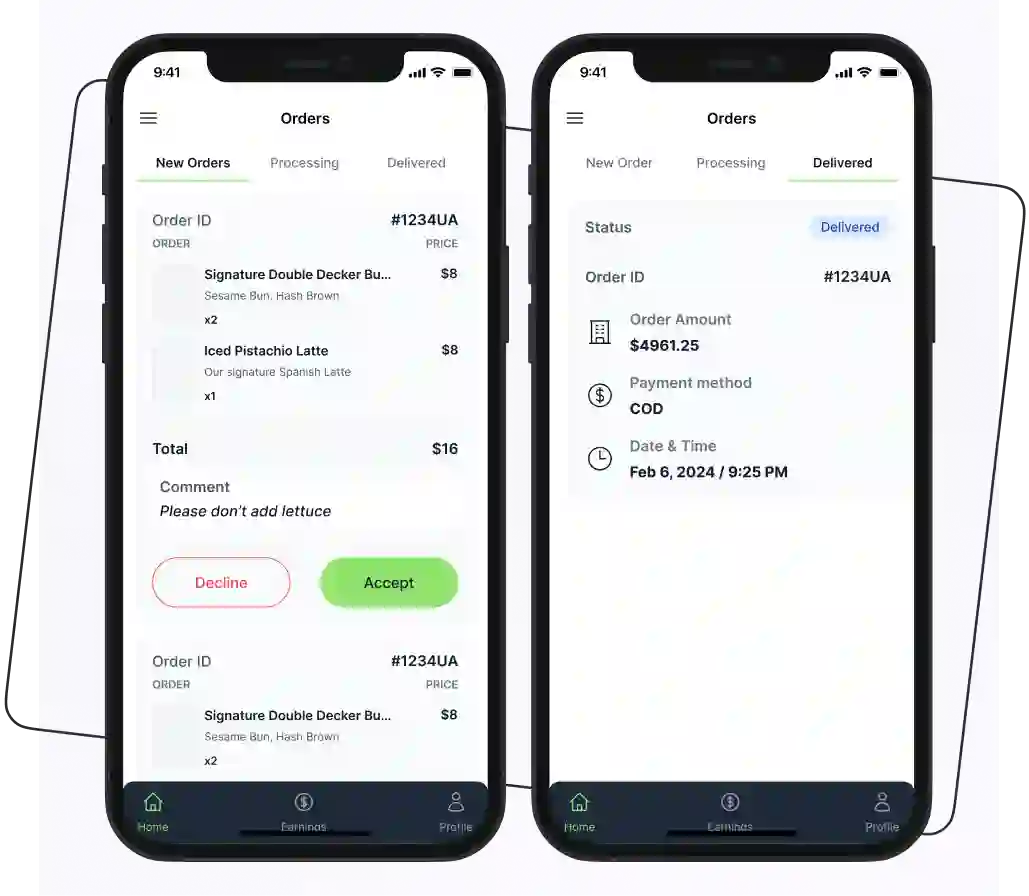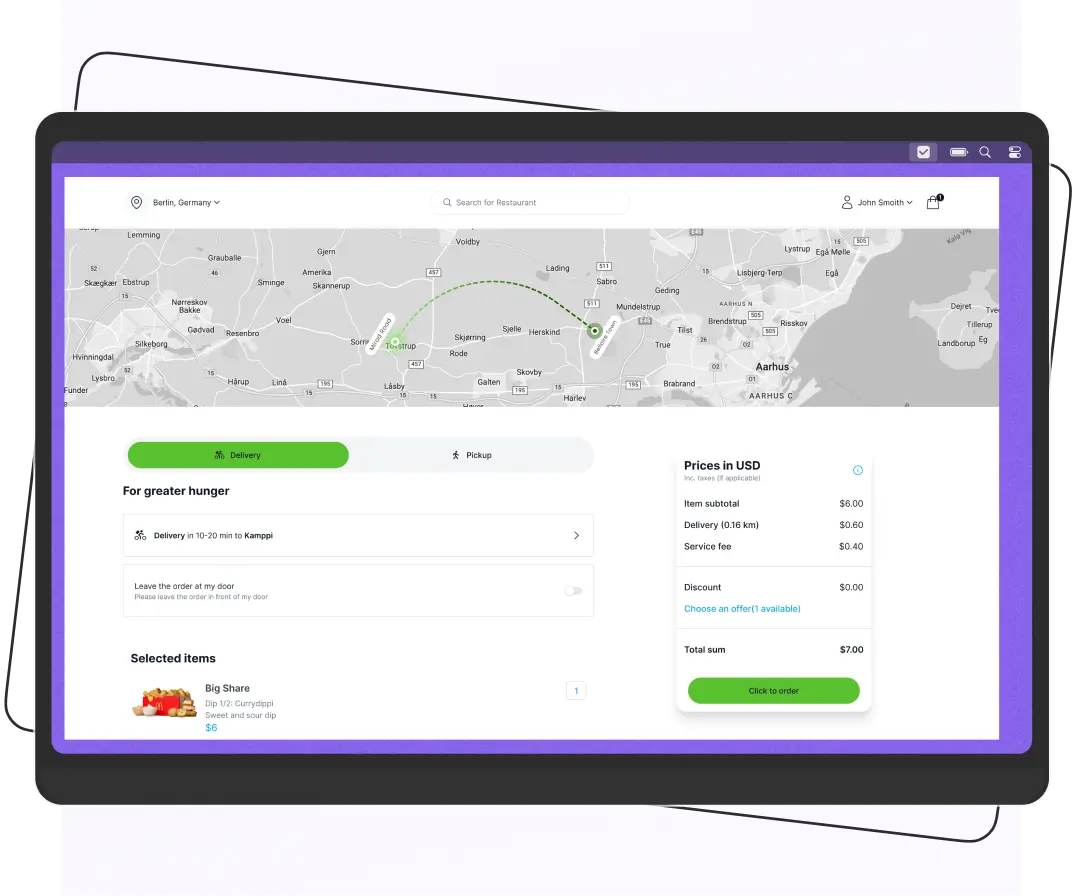
Get Backend API for Online Food Order Apps Using Node Js
Experiment with the online food order apps using node js frontend code at no cost. For production-ready backend API, book a meeting with our sales team. Setup guides and examples are shared publicly.



Frequently Asked Questions
A Node.js backend improves the speed and efficiency of an online food ordering app through: Non-Blocking I/O: Its event-driven architecture allows the server to handle multiple requests simultaneously without waiting for each operation to complete, leading to faster response times. Single Language: Using JavaScript on both the client and server sides streamlines development, reducing context switching and improving productivity. Fast Execution: Built on the V8 JavaScript engine, Node.js executes code quickly, enhancing performance for real-time applications. Efficient Handling of Concurrent Requests: Node.js is designed to manage a high number of simultaneous connections, making it ideal for applications with heavy user interaction, such as food ordering platforms.
The following Node.js frameworks are well-suited for building food delivery platforms: Express.js: A minimal and flexible framework that provides robust features for building web applications and APIs quickly. It's widely used for its simplicity and middleware support. NestJS: A progressive, TypeScript-based framework that is great for building scalable and maintainable server-side applications. It supports modular architecture, making it ideal for complex food delivery systems. Koa.js: A lightweight framework created by the same team behind Express. It provides better control over middleware and is useful for building APIs with improved performance. Hapi.js: Known for its powerful plugin system and configuration options, Hapi is suitable for building robust applications with rich features. Sails.js: A framework built on top of Express, Sails is designed for building data-driven APIs and can be particularly useful for real-time features in food delivery apps.
To maintain smooth server communication during peak usage hours, Node.js uses load balancing to distribute requests across multiple server instances, and clustering to utilize multiple CPU cores, enabling better handling of concurrent connections. Additionally, using caching (e.g., with Redis) helps reduce database load and improves response times.
Yes, the Node.js platform is flexible enough to support both single and multi-restaurant models. Its modular architecture allows developers to easily implement features like customizable menus, user roles, and order management tailored to different restaurant types. Additionally, Node.js can handle varying levels of complexity and scalability, making it suitable for both small and large applications.




 IOS
IOS Android
 Web
Web