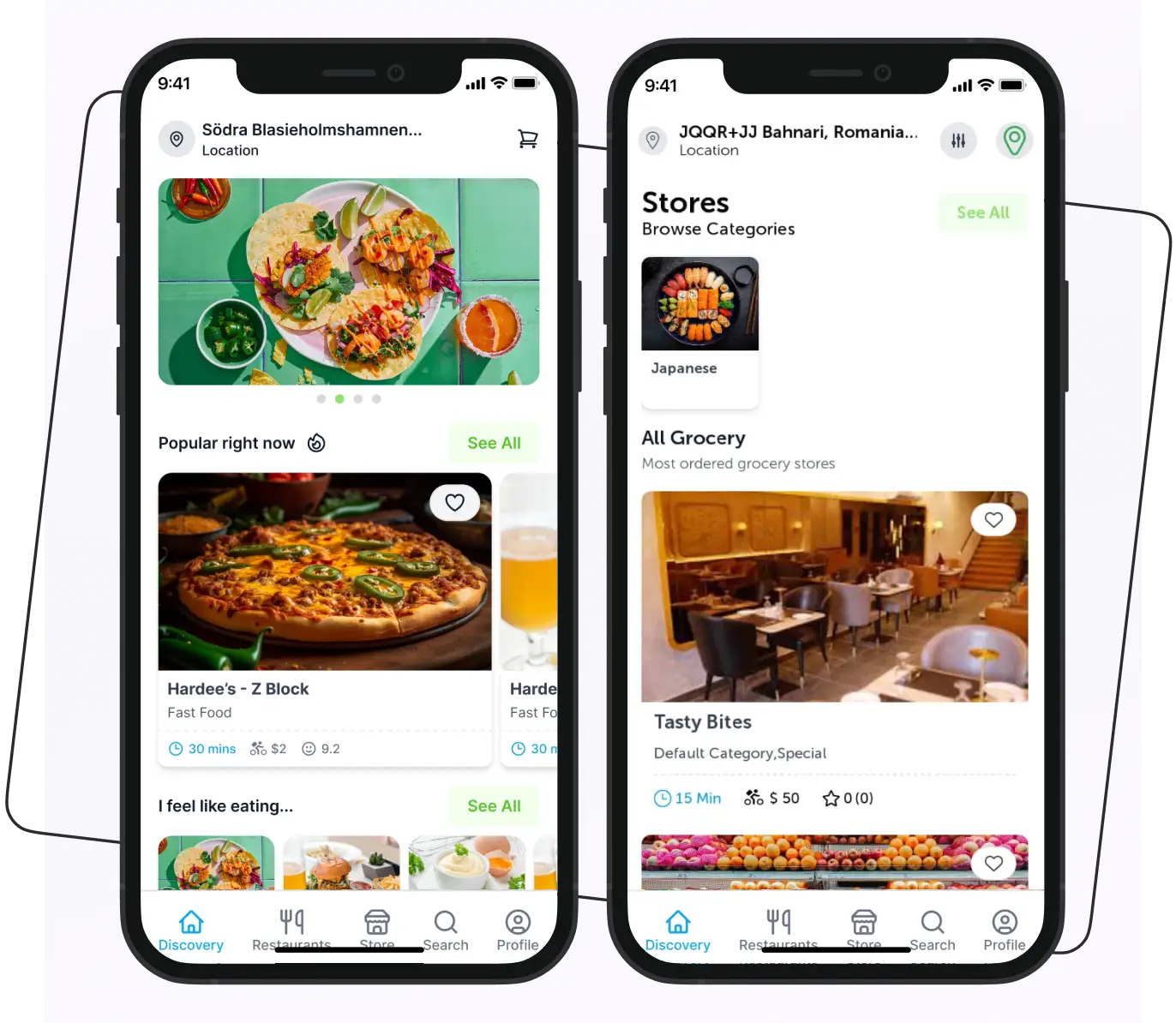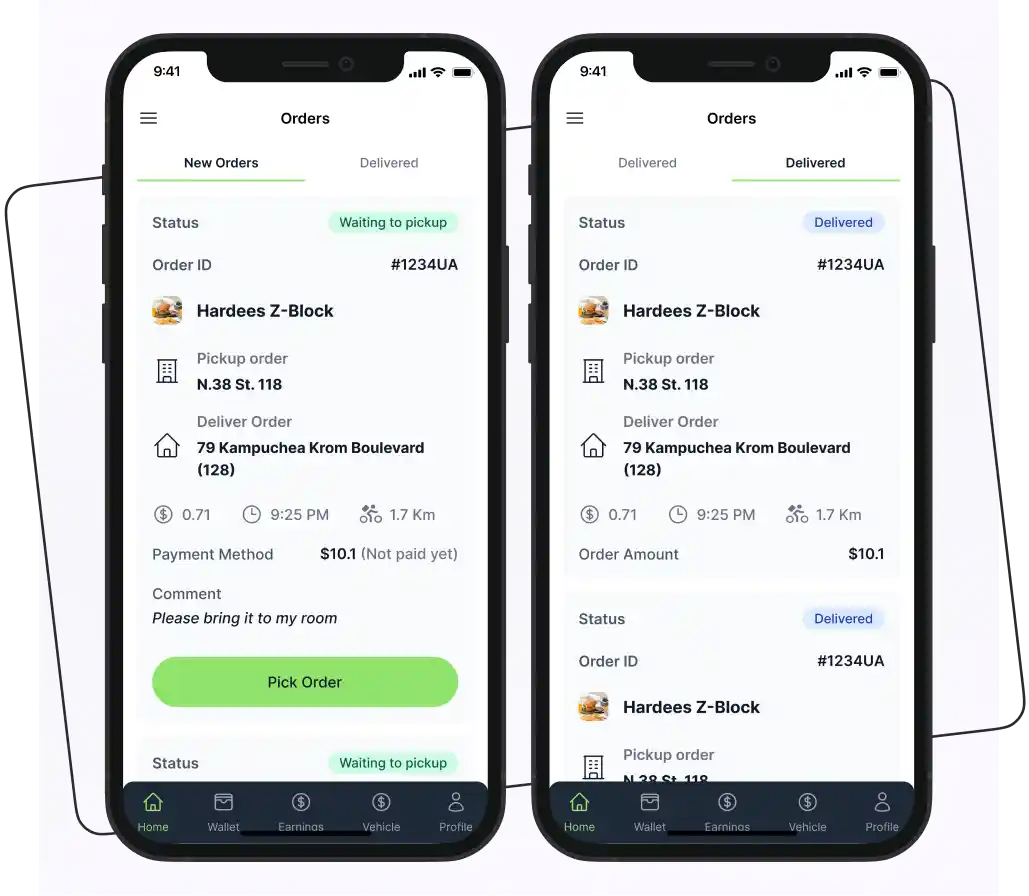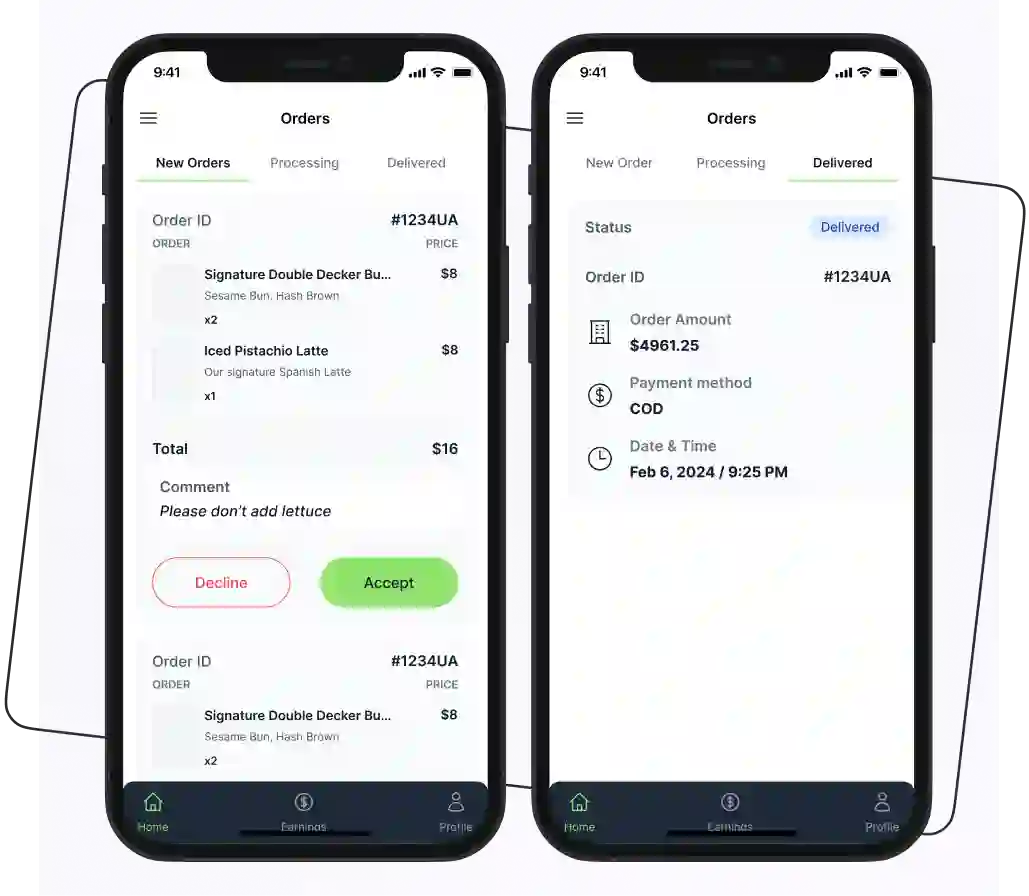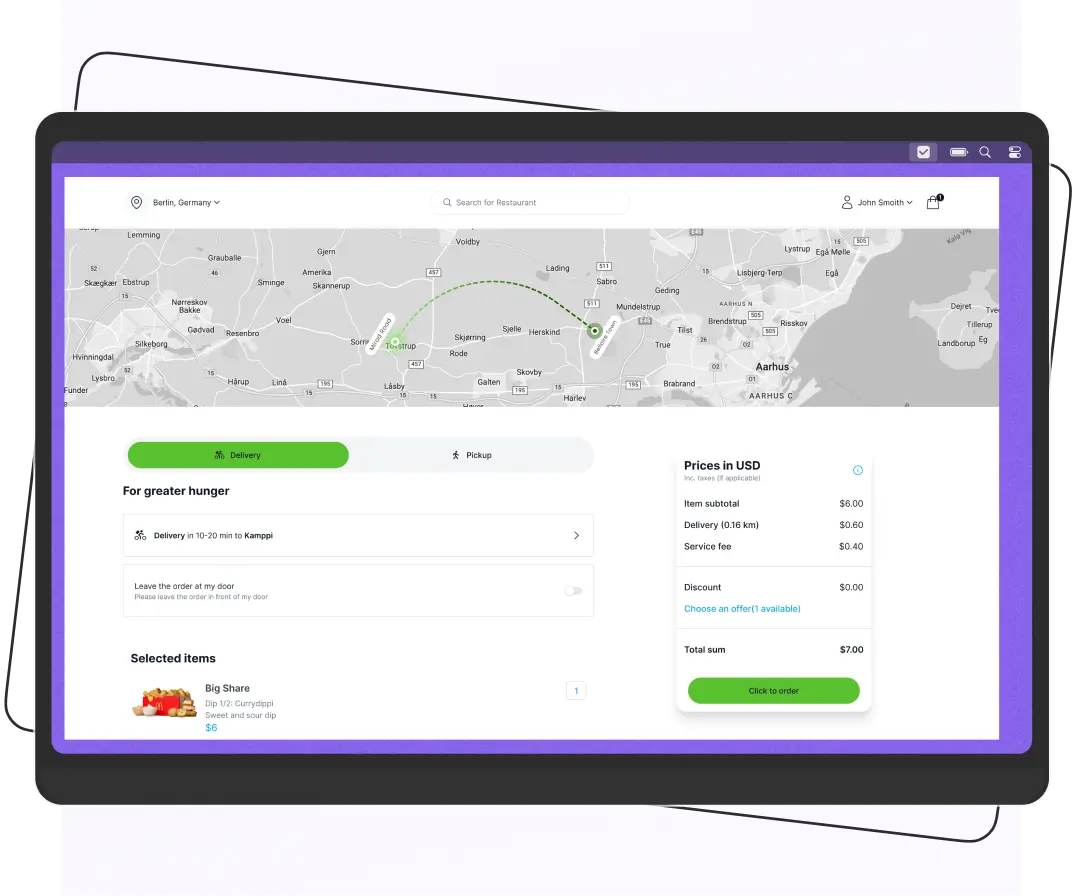
Get Backend API for Food Delivery Clone Using React Native
Start with the food delivery clone using react native frontend, which is free and open-source. To unlock the backend API, schedule a call with our sales team. Documentation and real-world examples are provided.



Frequently Asked Questions
In a React Native food delivery clone, location services and mapping are handled using the following methodology: Device Location Access: Use React Native Geolocation API or Expo Location to get the user’s current GPS coordinates. Map Rendering: Use React Native Maps or Mapbox to display maps, restaurants, and delivery routes. Route and Directions: Integrate Google Directions API or Mapbox Directions API to calculate routes, distance, and estimated delivery time. Real-Time Tracking: Use WebSockets or Firebase Realtime Database to update delivery driver locations live on the customer’s map. Permissions and Accuracy: Request proper location permissions and optimize GPS polling for accuracy without draining battery.
Push notifications in a React Native app are implemented and managed as follows: Notification Services: Firebase Cloud Messaging (FCM) for Android and iOS. Apple Push Notification Service (APNs) specifically for iOS. Integration in React Native: Use libraries like react-native-push-notification. Backend Management: The backend server (Node.js, PHP, etc.) sends notification payloads via APIs to FCM/APNs. Notifications can be triggered by events like order updates, promotions, or delivery status changes. Cross-Platform Handling: Libraries handle platform differences automatically. Include proper permission prompts and token management for each device.
Yes, customers can manage multiple payment methods securely within their profile. Apps use tokenization and secure storage (like Keychain on iOS or Keystore on Android) to save payment details safely, allowing users to switch between cards, wallets, or other gateways without exposing sensitive data.
If a customer’s order is canceled after payment: Payment Reversal: The payment gateway processes a refund to the original payment method. Order Status Update: The app marks the order as canceled and notifies the customer. Inventory Adjustment: Any reserved stock or ingredients are restored in the system. Notifications: Both the customer and restaurant receive alerts about the cancellation and refund.
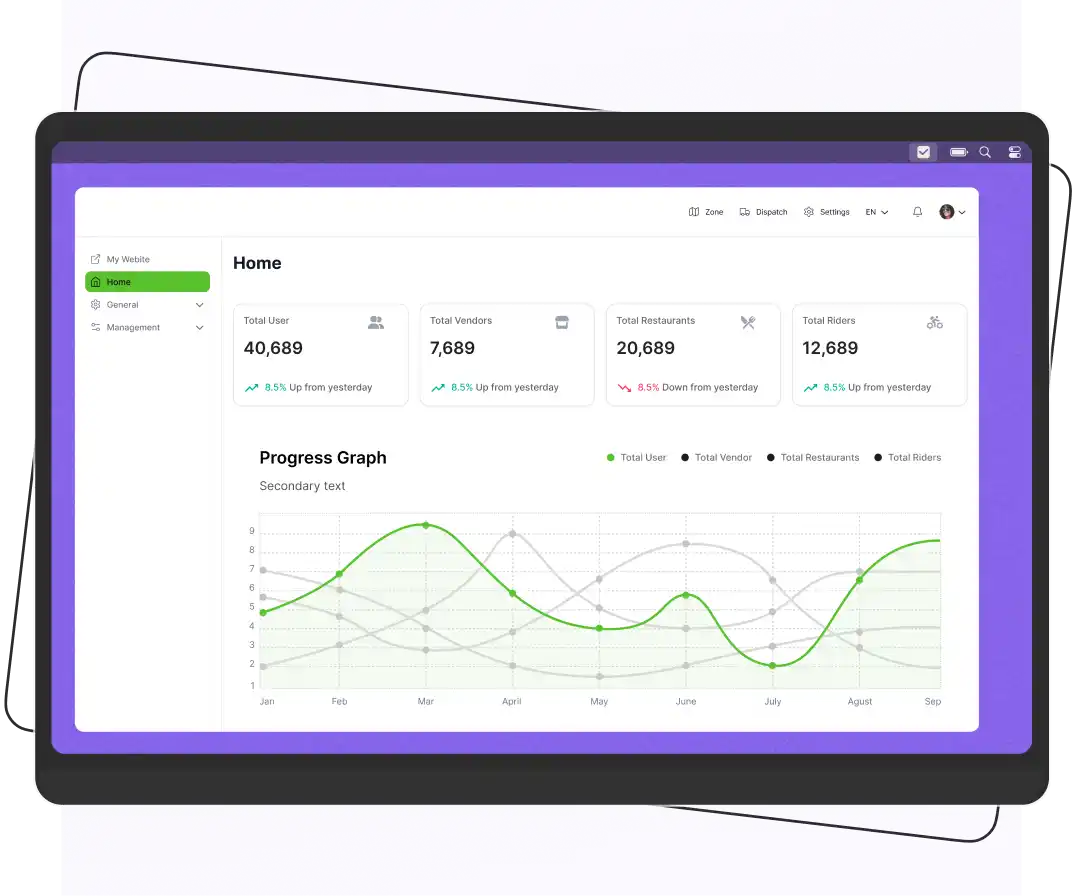
Managing multiple restaurants from a single admin panel is possible by implementing a multi-tenant architecture: Separate Profiles: Each restaurant has its own dashboard, menu, orders, and settings. Centralized Control: The admin panel provides an overview of all restaurants, allowing management of users, orders, promotions, and analytics. Role-Based Access: Assign different permissions to restaurant managers and staff. Database Design: Use shared or partitioned tables with restaurant IDs to separate data securely. Reporting & Notifications: Aggregate performance metrics across restaurants while sending targeted updates to each location.




 IOS
IOS Android
 Web
Web