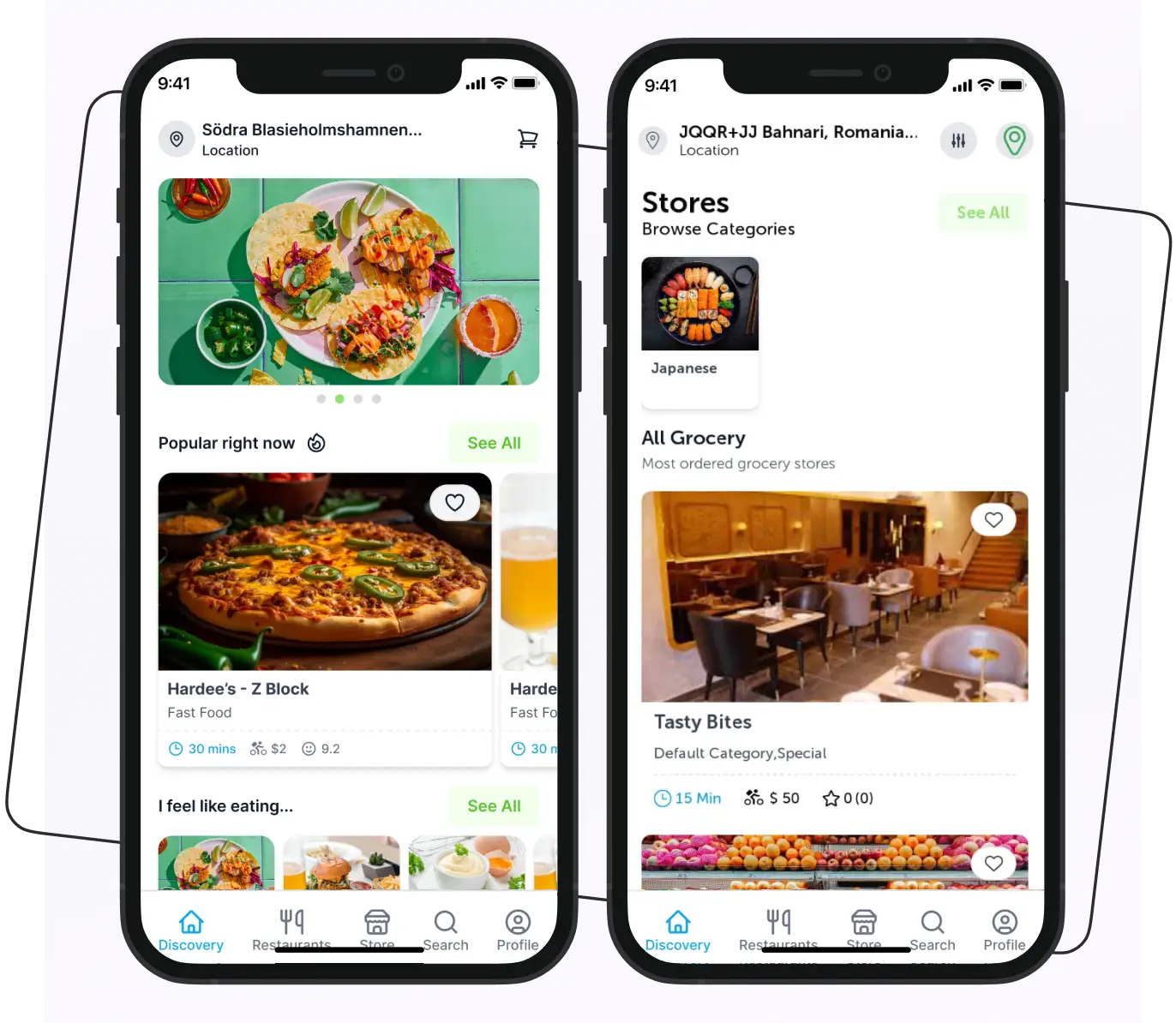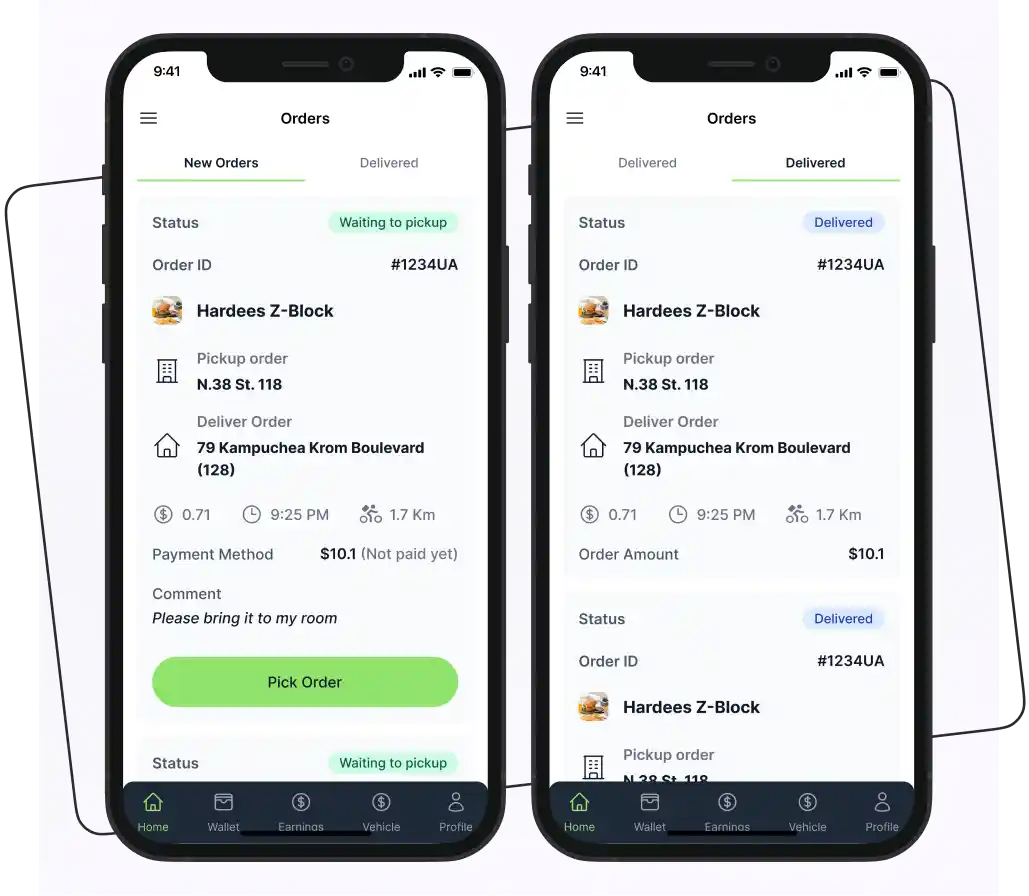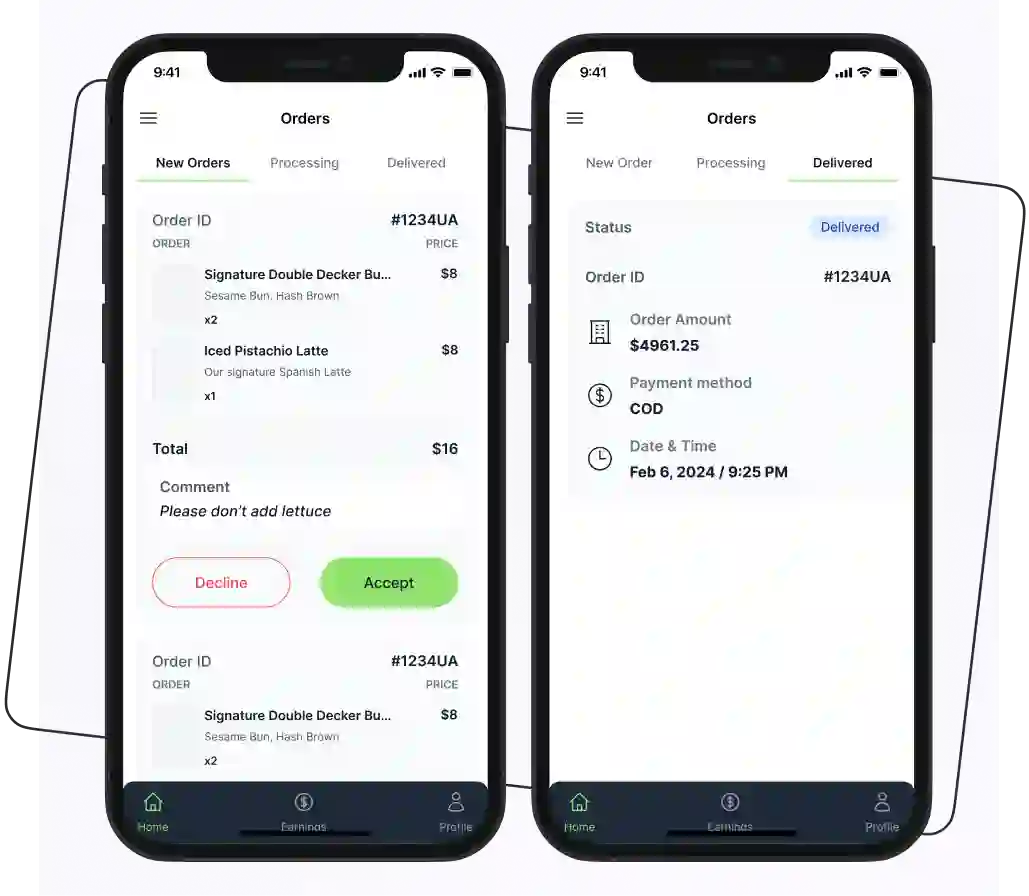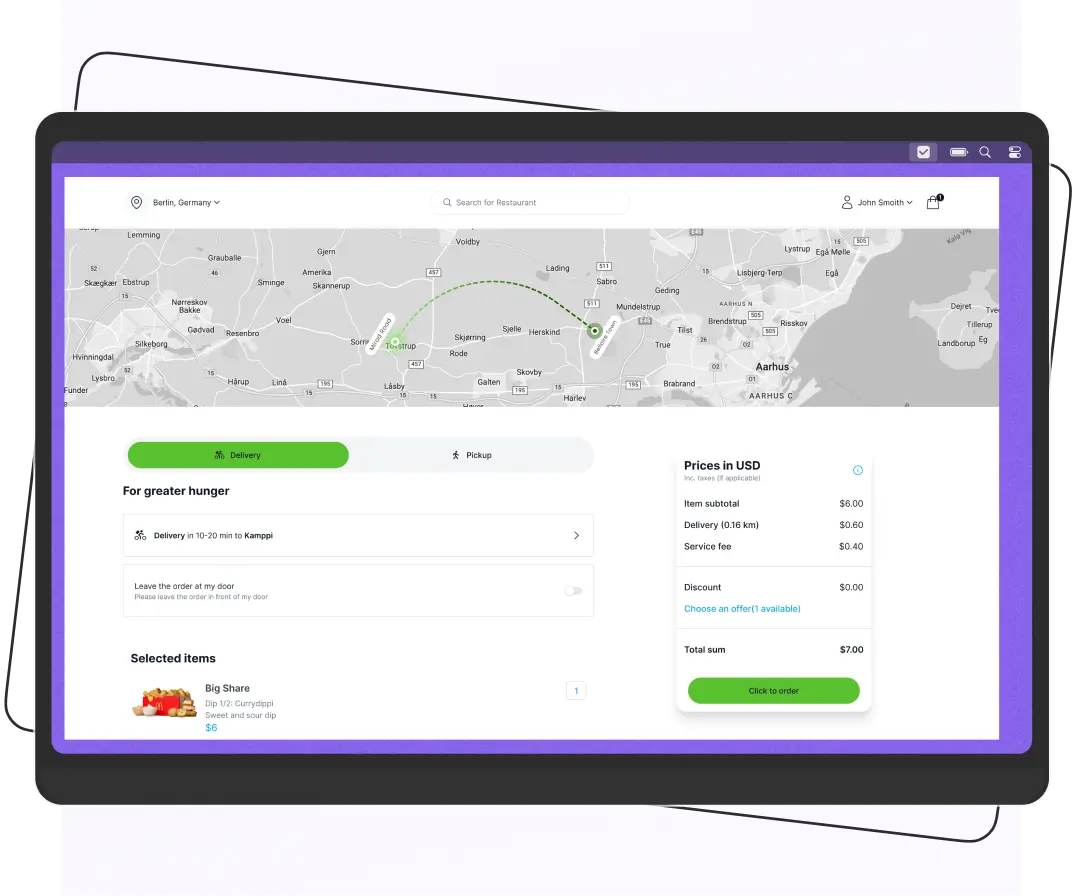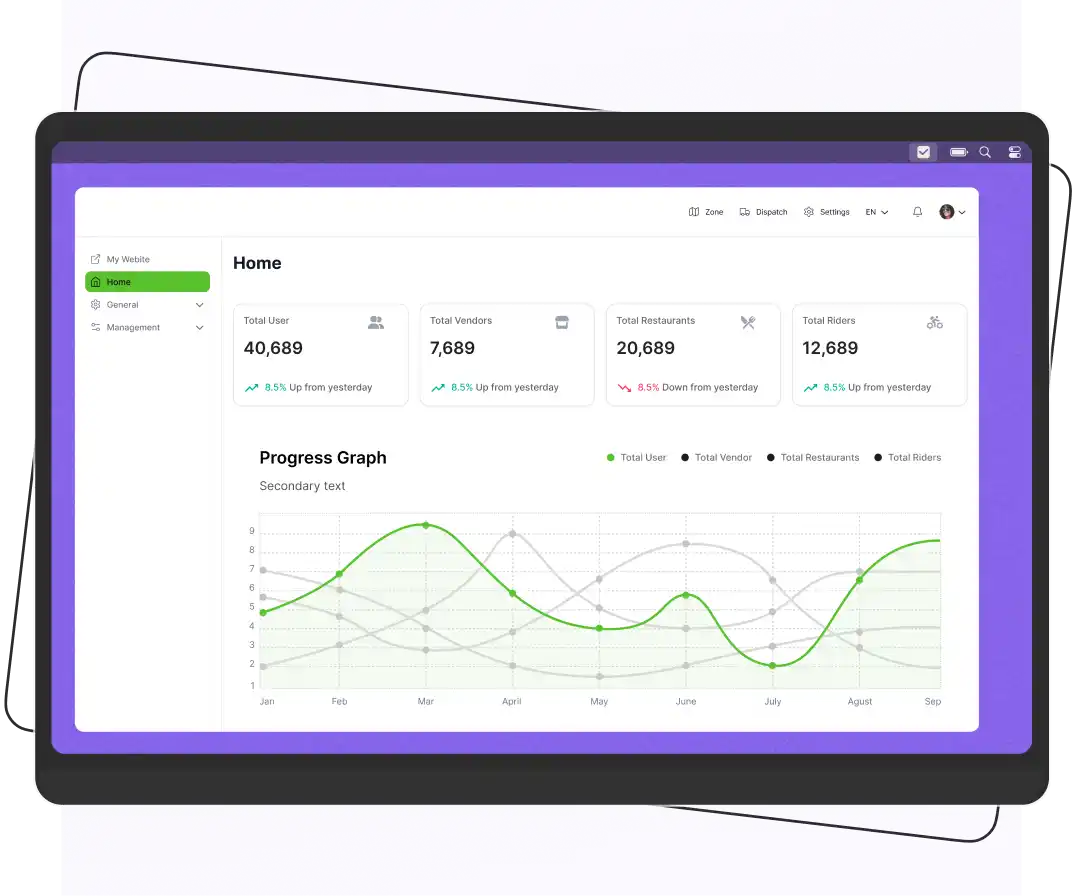


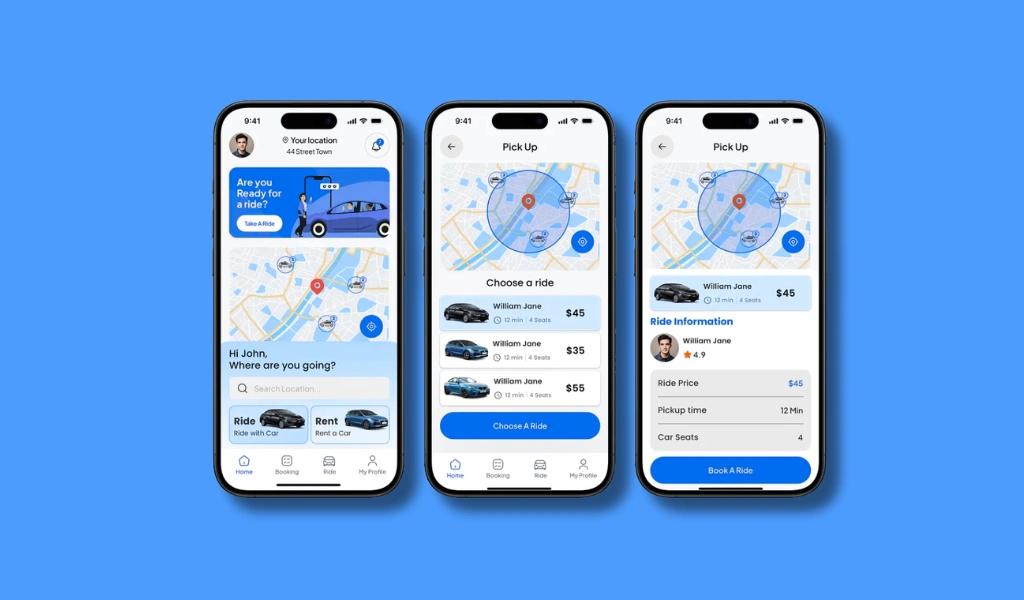
Ride-sharing apps work by instantly connecting you with nearby drivers. Tracking your trip in real time, and handling everything from matching to payment, all within a single app.
Today, ride-sharing is used by hundreds of millions of people worldwide. Uber alone serves over 200 million users globally each month, and apps like Careem provide millions of rides across the Middle East and Asia.
This massive growth shows how quickly on-demand transport has become part of everyday life.
How Do Ride-Sharing Apps Work? Step-by-Step Process
Ride-sharing apps make booking a ride simple and fast. The smart technology connects riders with nearby drivers in seconds.
Here is the workflow of the ride-sharing apps.
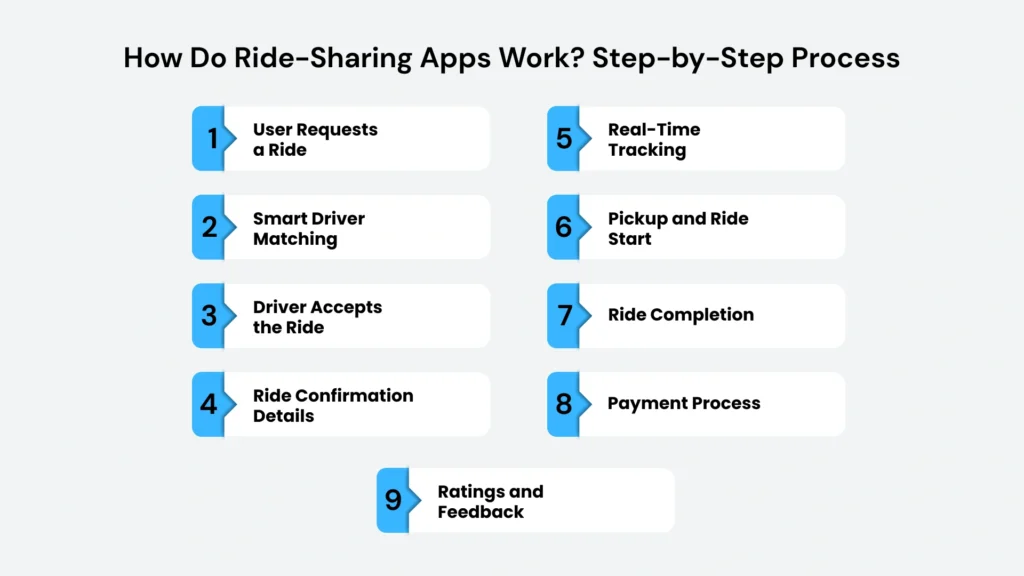
1. User Requests a Ride
The user opens apps like Uber or Careem and enters their pickup and drop-off locations. They also choose the type of ride based on their needs and budget. The app instantly shows the estimated fare and arrival time.
2. Smart Driver Matching
Once the request is made, the system uses GPS to find nearby available drivers. An intelligent algorithm selects the best match based on distance and availability. This helps reduce waiting time and ensures quick service.
Supercharge your deliveries with Enatega.
Register Now3. Driver Accepts the Ride
The driver receives a notification with ride details, such as the pickup location and estimated fare. They can accept or decline the request. When the driver accepts, the ride gets confirmed immediately.
4. Ride Confirmation Details
After confirmation, the user can see driver details such as name, profile photo, vehicle type, and number plate. The app also displays the driver’s rating and estimated arrival time. This builds trust and transparency.
5. Real-Time Tracking
The user can track the driver’s live location on the map as the driver approaches. Drivers also get navigation support with optimized routes.
6. Pickup and Ride Start
When the driver arrives, the user is notified through the app. The trip begins once the rider gets into the vehicle. From this point, the app starts tracking distance and time.
7. Ride Completion
The trip ends when the destination is reached. The app automatically calculates the total fare based on distance, time, and demand. There is no need for manual fare negotiation.
8. Payment Process
After the ride, payment is processed through the app. Users can pay using cards, mobile wallets, or cash, depending on availability. The process is quick, secure, and hassle-free.
9. Ratings and Feedback
Both the rider and driver rate each other after the trip. This feedback system helps maintain service quality and trust. It also improves the overall experience for future rides.
Features of Ride Sharing Apps
Below are the features of ride-sharing apps.
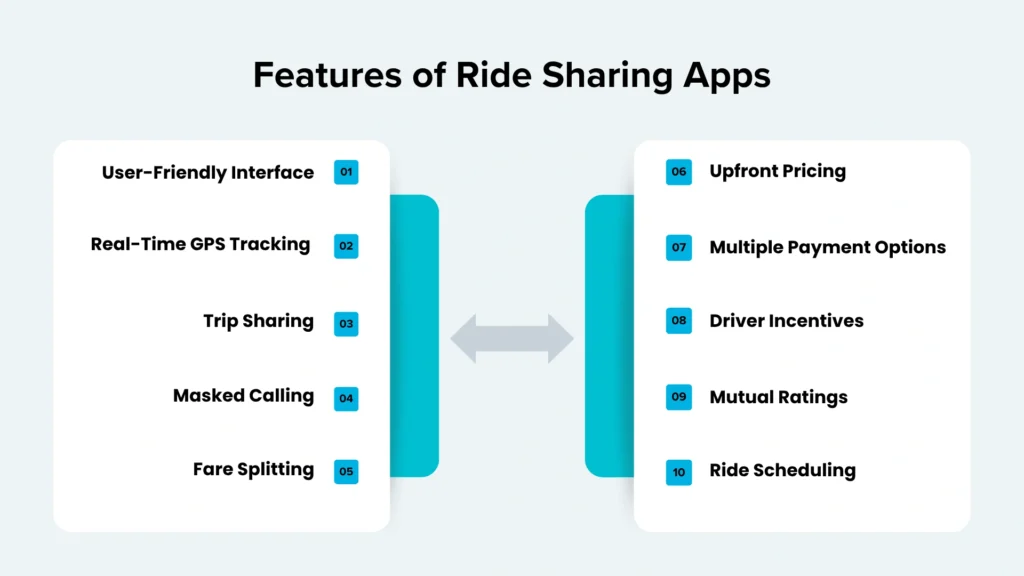
User-Friendly Interface
Ride-sharing apps are designed to be simple and easy to use. Users can book a ride in just a few taps without any technical knowledge.
Real-Time GPS Tracking
Users can track their driver’s location live on the map from booking to drop-off. Drivers also get optimized routes with navigation support. This feature improves transparency and reduces waiting time.
Trip Sharing
You can send a friend a live link that shows your car moving on a map, your name, the driver’s name, the route, and the ETA. They watch your whole journey in real time without needing the app.
Like texting someone “I’m on my way”, but instead of a message, they get a live window into your journey.
Masked Calling
When you call your driver (or they call you), neither of you sees the other’s real phone number. The app acts as a middleman, connecting the call invisibly. Once the ride ends, that temporary number disappears forever.
Fare Splitting
Traveling with friends? You can split the cost inside the app. Each person pays their share directly, no fumbling for cash, no mental math, no awkward “you owe me” conversations later.
Upfront Pricing
Before you even confirm a ride, the app tells you exactly what you’ll pay. No meter ticking, no surprises. The price is locked in even if traffic is terrible and the ride takes longer than expected.
For example, agreeing on a price before a plumber starts work, rather than guessing from an hourly rate.
Multiple Payment Options
Ride-sharing apps support various payment methods like credit/debit cards, mobile wallets, and cash. This flexibility makes transactions convenient for all users. Payments are processed securely within the app.
Driver Incentives
Complete 10 trips before noon and earn a bonus. Drive in a busy zone and earn extra per ride. These “quests” and surge zones are designed to keep more drivers on the road exactly when and where they’re needed.
Mutual Ratings
After every ride, both rider and driver rate each other, usually out of 5 stars. Drivers can refuse low-rated riders. Riders can avoid low-rated drivers. Everyone has skin in the game, so both sides tend to behave better.
Ride Scheduling
Users can book rides in advance for a specific time and date. This is useful for airport transfers, meetings, or planned trips.
Business Model of Ride-Sharing Apps
Ride-sharing apps like Uber and Careem operate on a smart business model that connects riders with drivers and generates revenue through multiple streams.
Here are some strategies that ride-sharing apps use to make money.
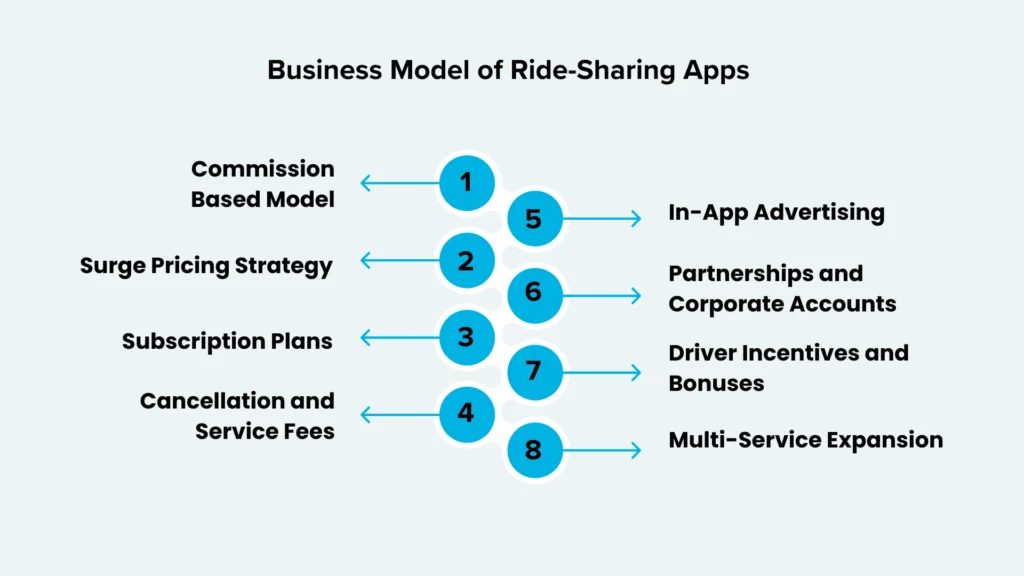
Commission-Based Model
The primary revenue source is commission from each ride. The platform takes a percentage of the total fare, while the rest goes to the driver.
Surge Pricing Strategy
During peak hours or high demand, prices automatically increase. This helps balance supply and demand by encouraging more drivers to come online. It also increases platform revenue during busy times.
Subscription Plans
Some ride-sharing apps offer subscription models for riders or drivers. Users may receive benefits such as discounted rides, priority bookings, or lower service fees. This creates recurring revenue for the platform.
Cancellation and Service Fees
Apps charge small fees if a ride is canceled after a certain time. Additional service charges may also apply to each trip. These fees contribute to overall earnings.
In-App Advertising
Ride-sharing platforms may display ads within the app. Businesses can promote their services to a large user base. This creates an additional revenue stream beyond rides.
Partnerships and Corporate Accounts
Companies partner with ride-sharing apps to manage employee transportation. These corporate accounts bring bulk bookings and steady income. It also helps expand the platform’s reach.
Driver Incentives and Bonuses (Indirect Model)
It is not a direct revenue source; platforms use incentives to attract and retain drivers. More drivers mean better availability, which leads to more rides and higher revenue.
Multi-Service Expansion
Many platforms expand into services like food delivery or parcel delivery. This diversification increases overall revenue and user engagement. It turns the app into a complete on-demand platform.
How to Build a Ride-Sharing App?
Now that you understand the features and business model, let’s talk about how to actually build a ride-sharing app. The process might sound complex, but when broken down into steps, it becomes much easier to follow.
Below are some simple steps to guide you.
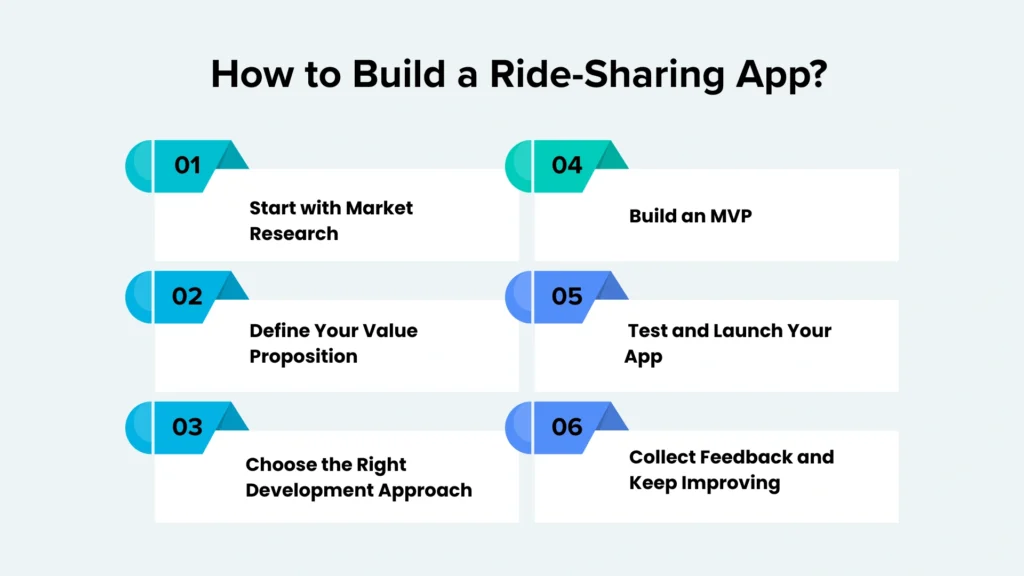
1. Start with Market Research
Before jumping into development, take time to understand the market. Study popular apps like Uber and Careem to see what they do well and where they fall short.
Ask yourself important questions like:
- Who are my target users?
- What problems are still not solved?
- How can my app offer a better experience?
- What will make my app stand out?
Strong research helps you avoid mistakes and build something people actually want.
2. Define Your Value Proposition
This is where you decide what makes your app different. Think about the unique features or benefits you can offer that others don’t.
Your goal should be to:
- Solve a real problem in a better way
- Provide clear value to users
- Create a reason for people to choose your app
A strong value proposition is what turns an idea into a successful product.
3. Choose the Right Development Approach
Now, decide how you want to build your app. You can either develop separate apps for Android and iOS (native) or use a cross-platform solution to build both at once.
Common technologies include:
- Android: Kotlin, Java
- iOS: Swift
- Cross-platform: Flutter, React Native
- Backend: Node.js, Python
- Payments: Stripe, PayPal
- Maps: Google Maps API
Choosing the right tools will impact your app’s performance, cost, and scalability.
4. Build an MVP (Minimum Viable Product)
Instead of building a full-featured app right away, start with a basic version called an MVP. This version includes only the most important features needed to launch.
For example:
- Ride booking
- Driver matching
- Live tracking
- Payments
5. Test and Launch Your App
Before launching, make sure your app is properly tested. Check for bugs, performance issues, and user experience problems. A smooth app experience is necessary to gain user trust.
Once everything is ready, publish your app on platforms like the Google Play Store and Apple App Store. Keep in mind that approval processes may take some time.
6. Collect Feedback and Keep Improving
Launching your app is just the beginning. After release, gather feedback from users to understand their experience.
Use this feedback to:
- Fix issues quickly
- Add useful features
- Improve overall performance
How Much Does It Cost to Build a Ride-Sharing App?
The cost of building a ride-sharing app can vary depending on your goals and requirements.
- Basic app: $15,000 – $25,000
- Advanced app: $25,000 – $50,000+
Several factors affect the cost, such as:
- Platform (Android, iOS, or both)
- Design quality (UI/UX)
- Features and integrations
- Development team location
FAQs
Ride-sharing apps can be convenient, but they also come with downsides like surge pricing during peak hours and inconsistent driver availability. Safety concerns and service quality can also vary depending on the driver and location.
Rideshares can be cheaper for short trips or occasional travel. But for daily use or long distances, driving your own car is usually more cost-effective.
There isn’t one single “safest” rideshare app. Uber, Lyft, and Careem are all generally considered safe when used correctly because they include strong safety features.
Supercharge your deliveries with Enatega.
Register NowConclusion
Ride-share apps have become part of everyday life. You might use one to get to work, send someone to the airport, or manage transport for your team. They’re fast, simple, and available almost everywhere.
But behind that simple “Book Ride” button is a system working in the background that most people never think about. And what’s even more interesting is that businesses today don’t need to build everything from scratch; they can launch their own ride-sharing app much faster than they expect.
So, let’s get started and earn money without hassle.
About the author

Hudaibia Khalid is a senior content writer with several years of experience in creating clear and easy-to-understand content. Over the years, she has worked closely with startups, restaurants, and entrepreneurs, helping them simplify complex digital and technical topics into actionable insights.
Her expertise lies in writing about on-demand platforms, food delivery solutions, and business growth strategies in a way that is accessible even to non-technical readers. With her experience in the industry, she focuses on guiding businesses step by step, from understanding ideas to turning them into fully working solutions.
SHARE






 IOS
IOS Android
 Web
Web