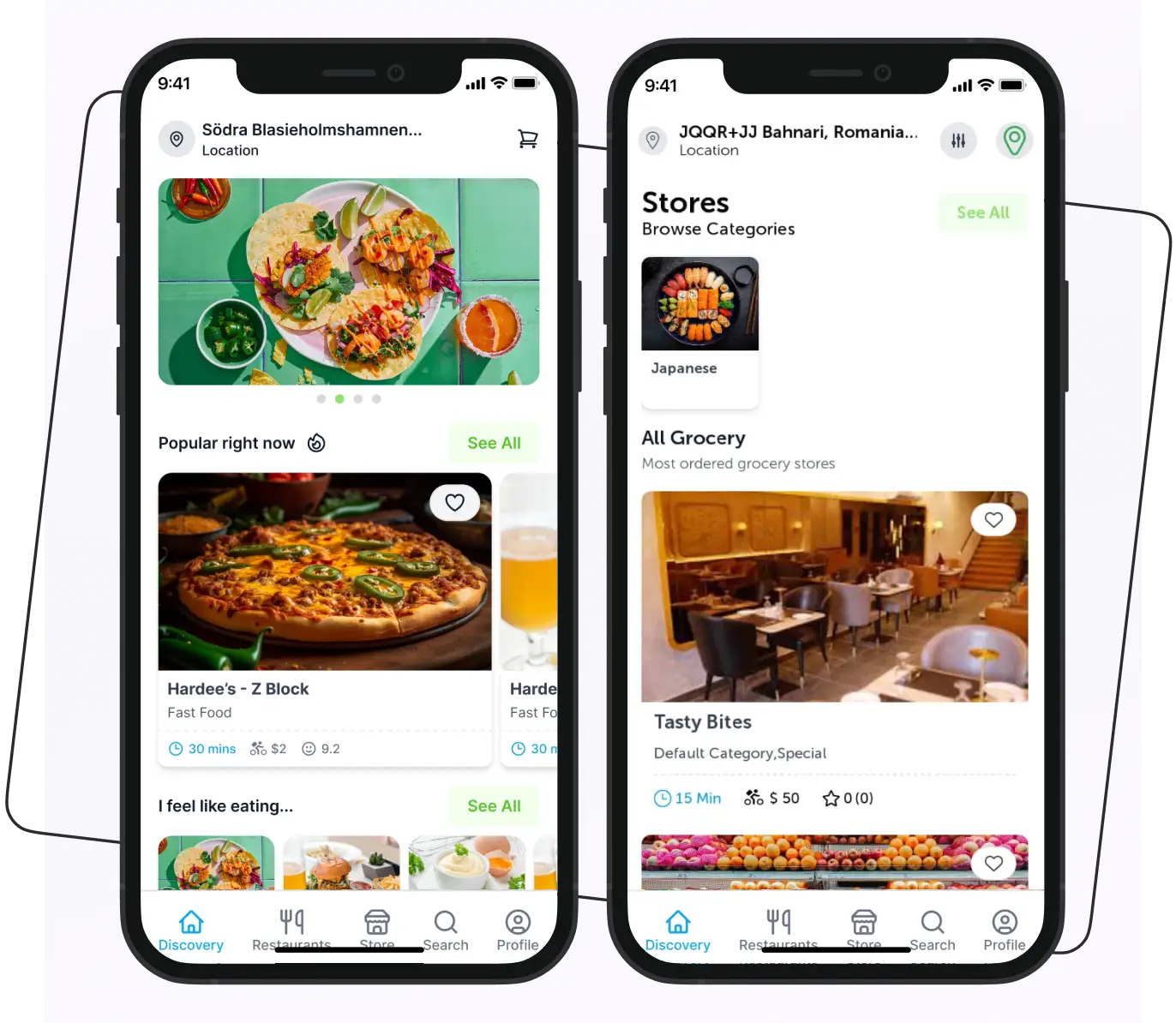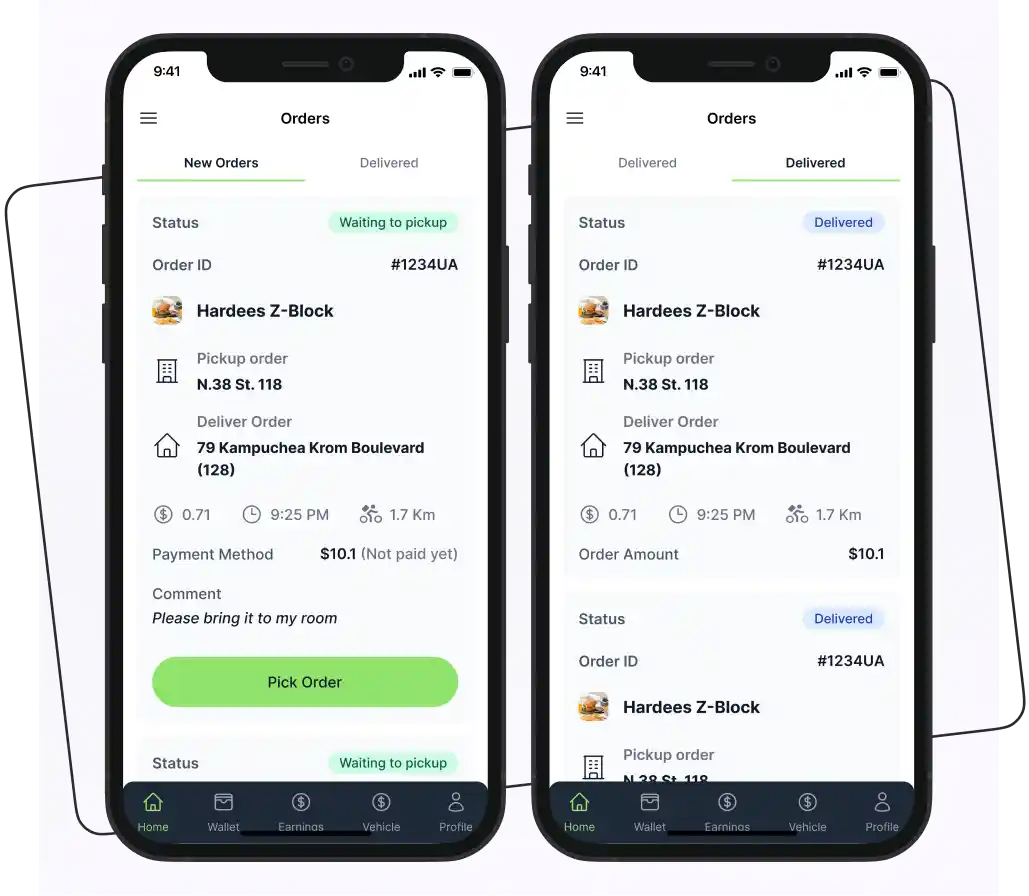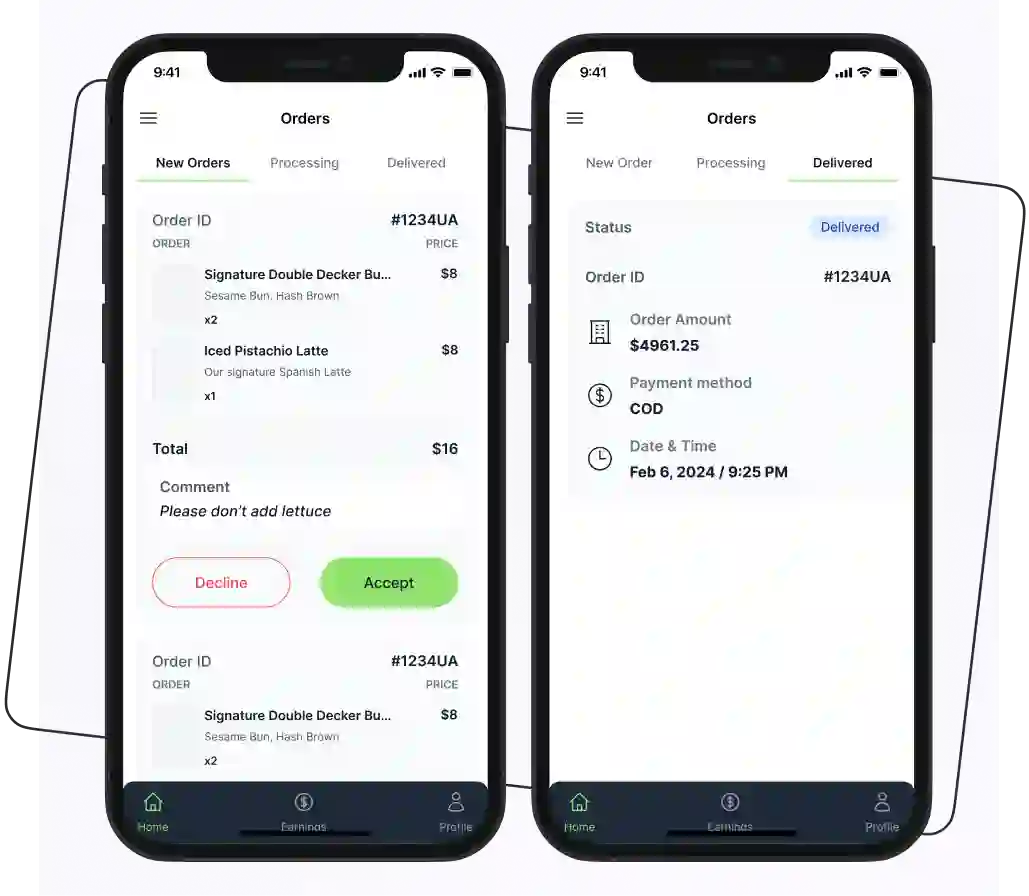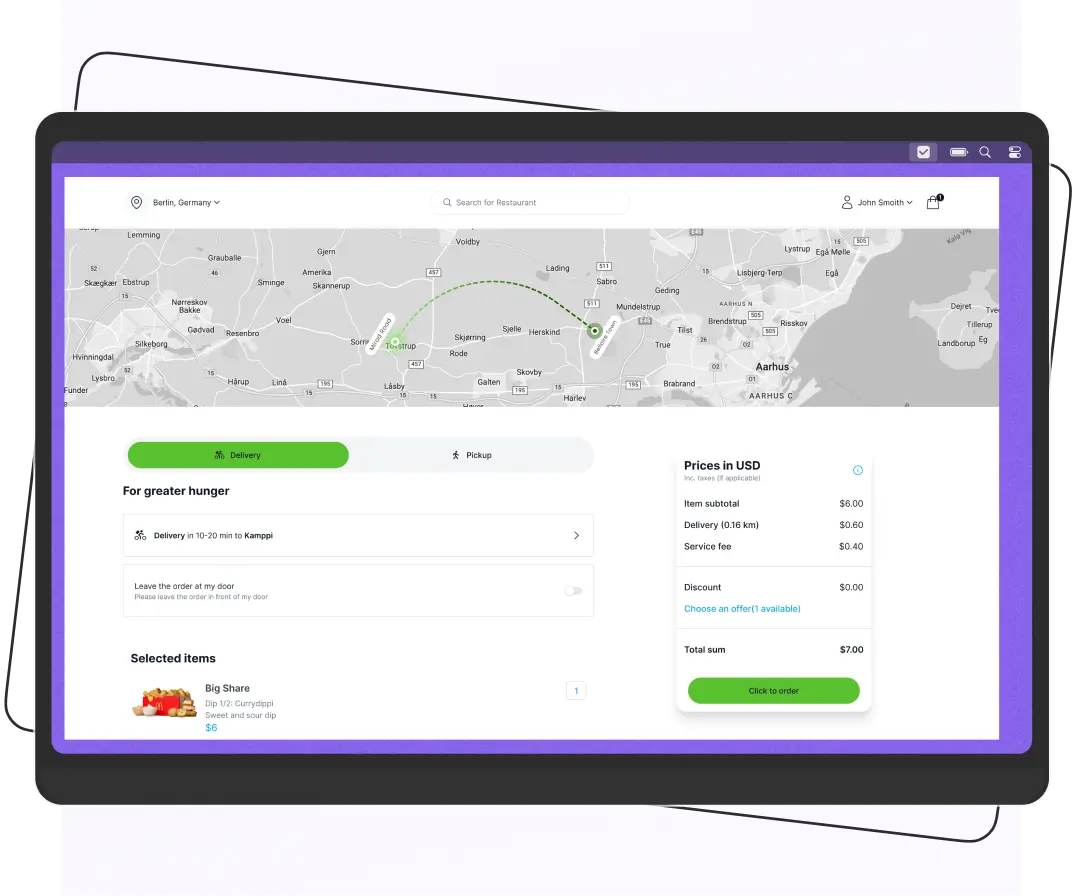
Get Backend API for Flutter Based Food Delivery App
Get started with the flutter based food delivery app frontend source code today. Unlock backend API capabilities through a license—schedule a quick call with our sales staff. Documentation provided.



Frequently Asked Questions
Choosing Flutter for building a food delivery app offers several advantages: Cross-Platform Development: Flutter allows you to write a single codebase that runs on both iOS and Android, reducing development time and costs. Fast Development: With features like hot reload, developers can see changes in real-time, speeding up the development process and improving productivity. Rich UI: Flutter provides a wide range of customizable widgets and a flexible design system, enabling the creation of visually appealing and responsive user interfaces. High Performance: Flutter apps compile to native code, ensuring smooth performance and quick load times, which are crucial for a seamless user experience. Strong Community Support: A growing community and extensive documentation help developers find solutions and resources easily. Integration Capabilities: Flutter easily integrates with RESTful APIs, Firebase, and other backend services, making it suitable for complex food delivery functionalities. Rapid Prototyping: Flutter's flexibility allows for quick iterations and modifications, ideal for startups needing to adapt to user feedback swiftly.
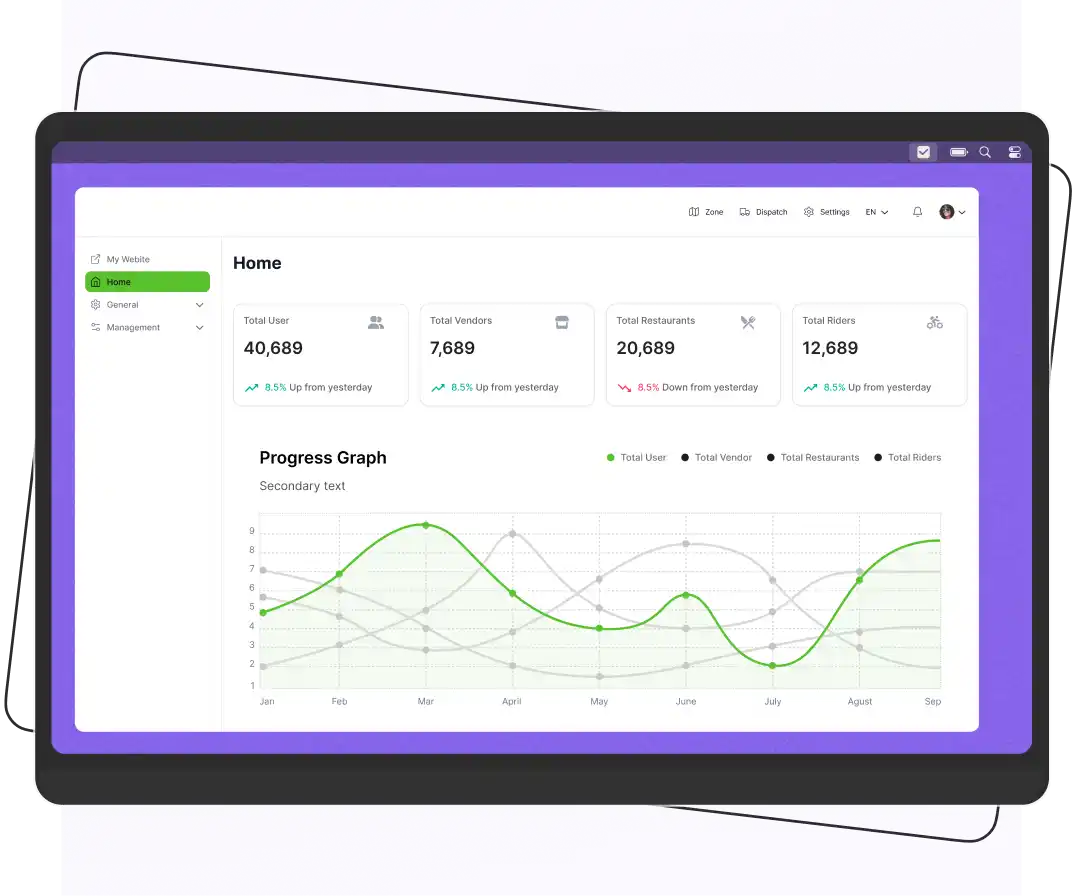
A Flutter food delivery app should include the following must-have features: User Registration and Authentication: Options for users to sign up and log in using email, social media, or phone numbers. Restaurant Listings: A comprehensive list of restaurants with filters for cuisine type, ratings, and distance. Menu Display: Detailed menus for each restaurant, including dish descriptions, prices, and images. Cart Management: Functionality for users to add, edit, and remove items from their cart before checkout. Secure Payment Processing: Integration with payment gateways (like Stripe or PayPal) for secure transactions. Order Tracking: Real-time updates on order status, including preparation and delivery tracking. Push Notifications: Alerts for order confirmations, updates, promotions, and special offers. User Reviews and Ratings: Allow customers to rate their experiences and leave feedback on restaurants and dishes. Search and Filtering: Tools for users to search for specific items or filter results based on preferences. Admin Dashboard: A backend interface for restaurant owners to manage orders, menus, and customer feedback. Favorites and History: Features that allow users to save favorite restaurants and view their order history for quick reordering. Location Services: Integration with maps for selecting delivery addresses and visualizing delivery routes.
Building a Flutter-based food delivery app takes between 3 to 6 months. The timeframe can vary based on several factors: Complexity of Features: Basic apps with essential functionalities will take less time than those with advanced features like real-time tracking, user profiles, and analytics. Design Requirements: Custom UI/UX designs may extend the development timeline compared to using standard templates. Development Team Size and Experience: A larger or more experienced team can expedite the development process. Testing and Quality Assurance: Thorough testing phases to ensure the app's reliability and performance can add to the overall timeline. Integration with Third-party Services: Time required for integrating payment gateways, APIs, and other services can also affect the duration.
The cost to develop a Flutter food delivery app ranges from $20,000 to $100,000, depending on features, design complexity, and the development team's experience.
Developers may face several challenges when building a food delivery app with Flutter: Platform-Specific Features: Implementing features that require deep integration with native components can be complex, as Flutter abstracts many native functionalities. State Management: Choosing the right state management solution (like Provider, Bloc, or Riverpod) can be challenging, especially for apps with complex data flows. Performance Optimization: Ensuring smooth performance, especially with real-time updates and animations, requires careful coding and optimization. Integration with Backend Services: Setting up and managing APIs for payment processing, user authentication, and real-time data can be intricate. Testing Across Platforms: Ensuring consistent performance and appearance across both iOS and Android devices can be time-consuming. Dependency Management: Relying on third-party packages can introduce issues with compatibility and maintenance.








 IOS
IOS Android
 Web
Web