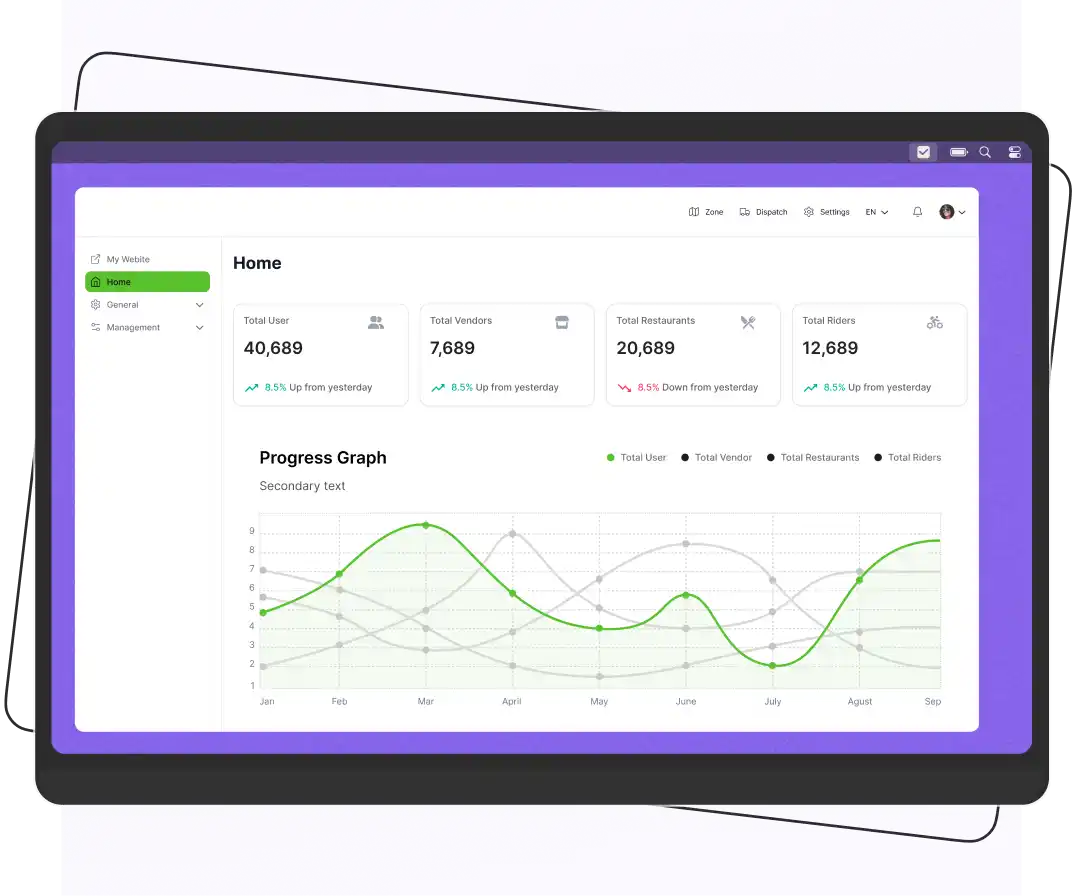
Get Backend API for Web And Mobile Food Ordering And Delivery System
Start with the web and mobile food ordering and delivery system frontend, which is free and open-source. To unlock the backend API, schedule a call with our sales team. Documentation and real-world examples are provided.



Frequently Asked Questions
A web and mobile food ordering and delivery system is a digital platform that allows customers to browse restaurant menus, place food orders, and arrange for delivery or pickup through a website or mobile application.
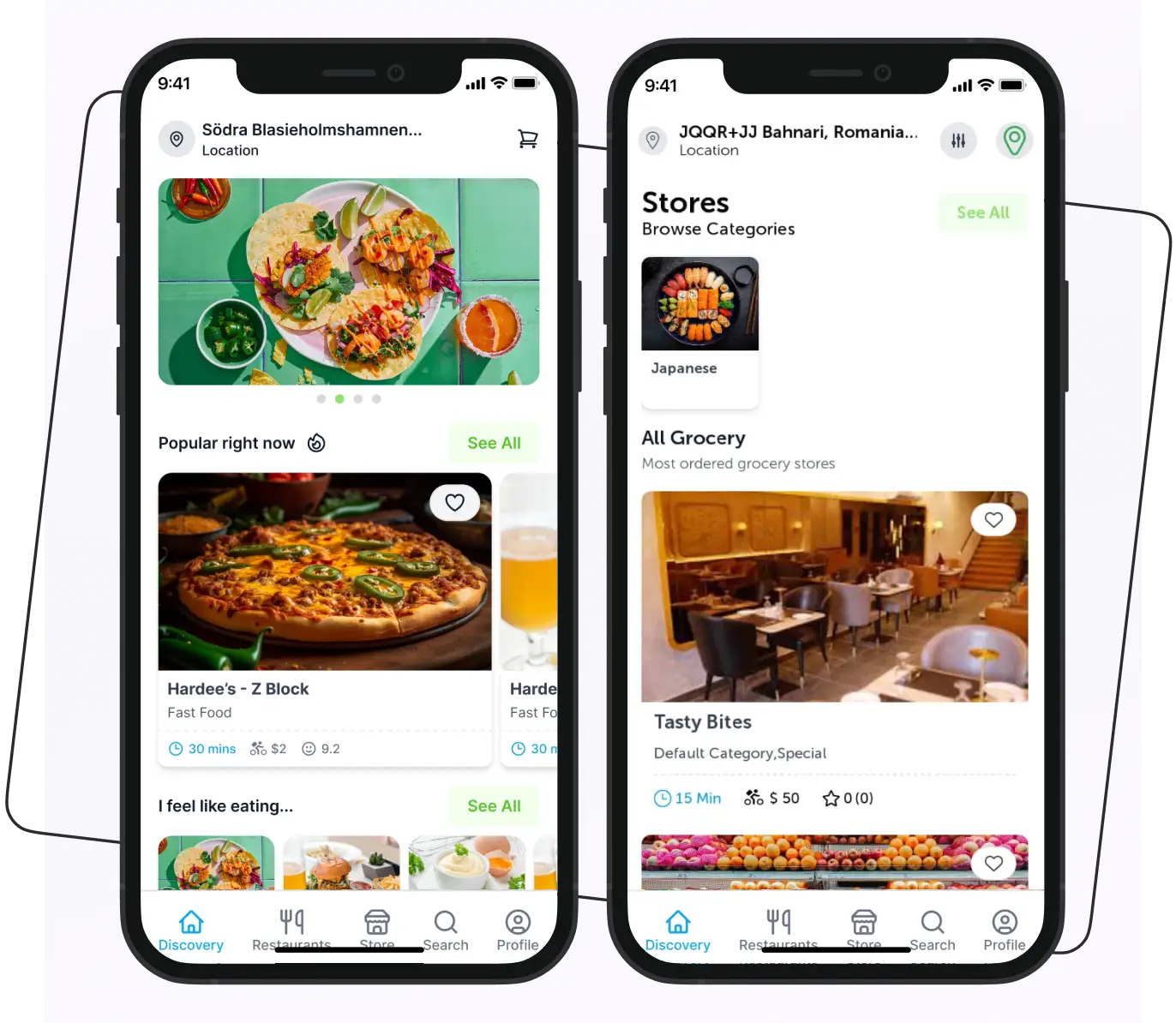
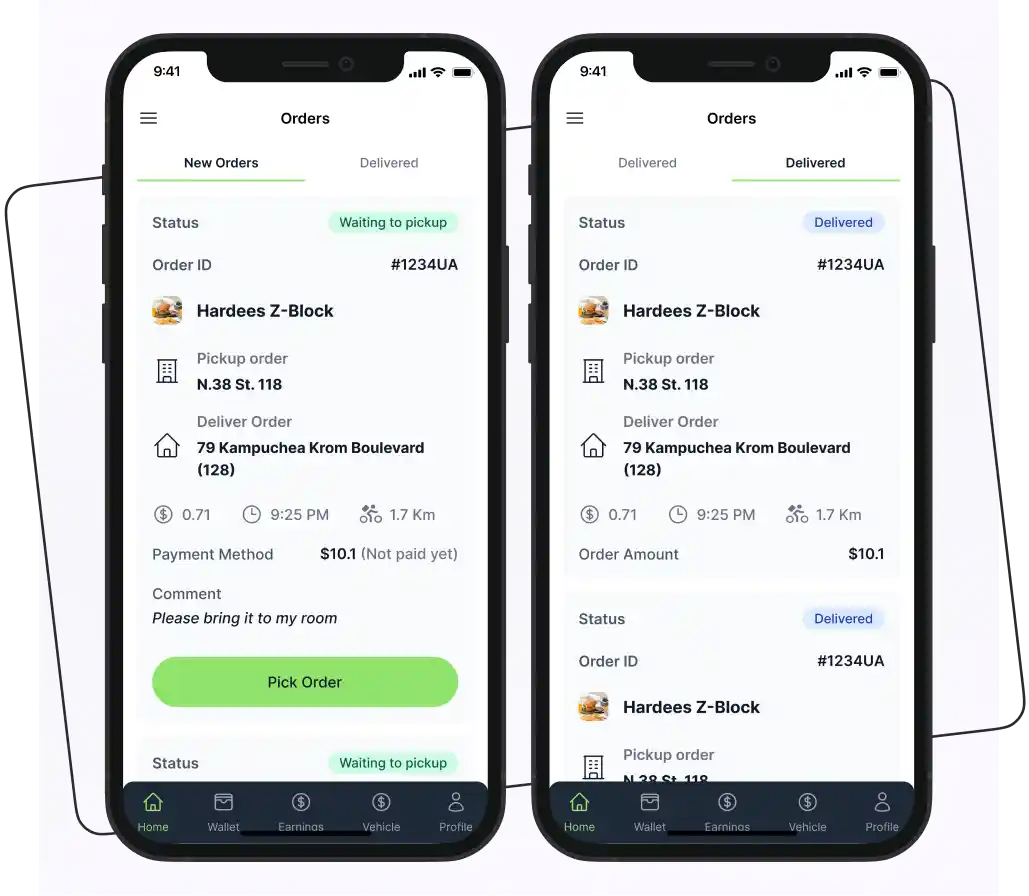
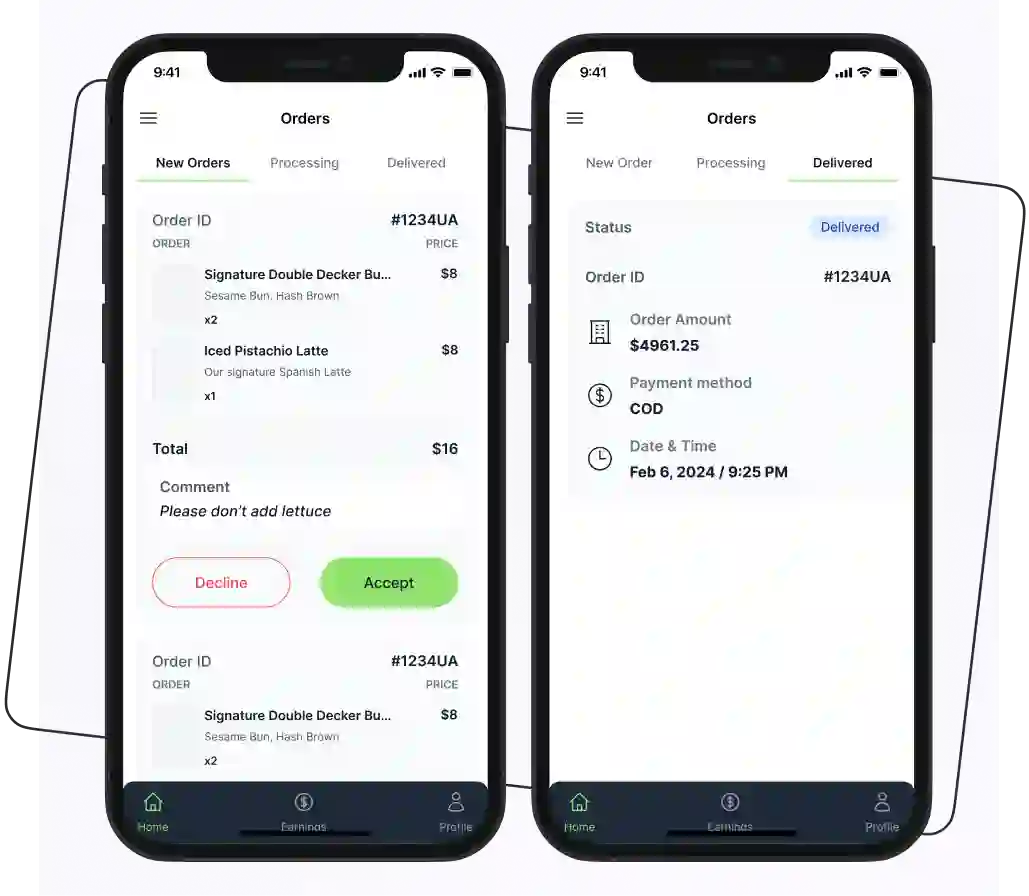
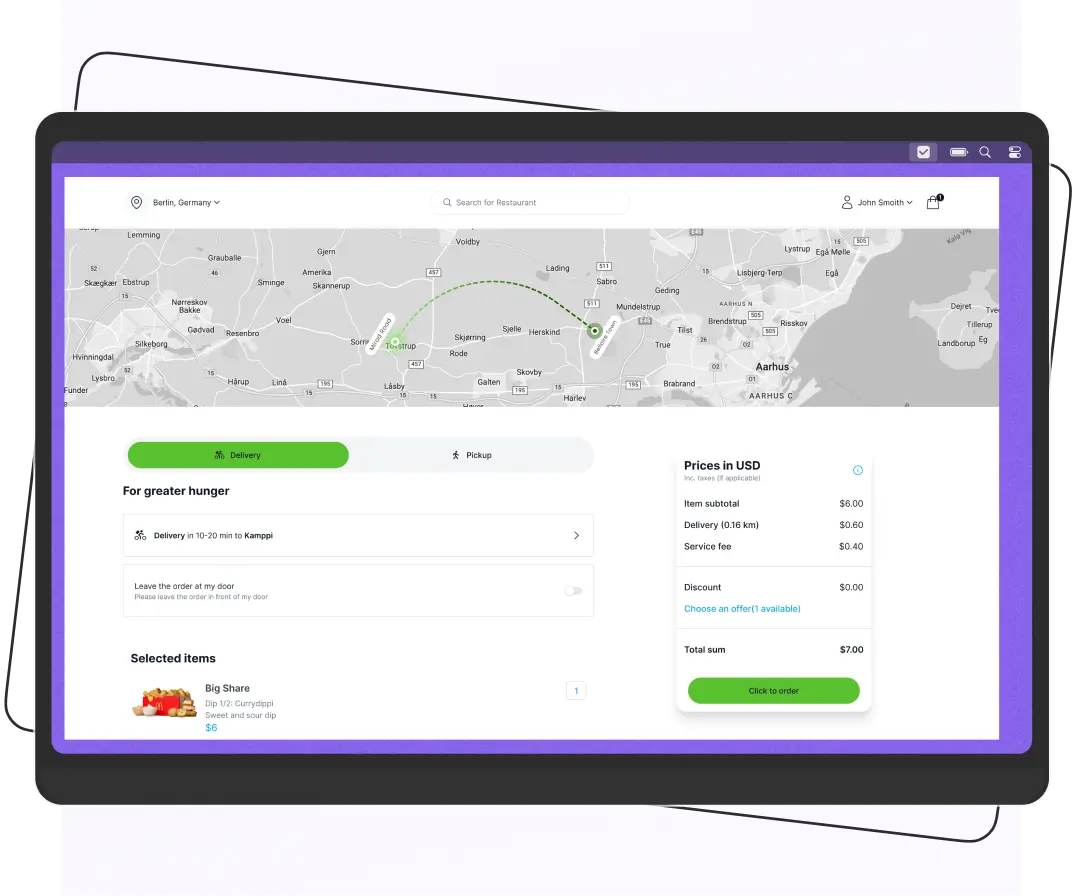
A web and mobile food delivery system operates through a series of interactions between restaurants and customers, facilitated by technology. Here’s how it works for both parties: For Customers: User Registration/Login: Customers create an account or log in to access the system. Browsing Menus: Customers can view available restaurants, browse their menus, and check item details. Placing an Order: Users select items, customize their orders, and add them to a shopping cart. After reviewing, customers proceed to checkout. Payment Processing: Customers choose a payment method (credit card, digital wallet, etc.) and complete the transaction. Order Confirmation: A confirmation receipt is generated, showing order details and estimated delivery time. Order Tracking: Customers receive real-time updates on their order status, from preparation to delivery. Feedback and Reviews: After receiving their order, customers can leave feedback or ratings. For Restaurants: Restaurant Registration: Restaurants register on the platform and set up their profiles with menu items, prices, and operational hours. Order Management: Restaurants receive incoming orders through a dedicated dashboard, allowing for easy tracking. Preparation of Orders: Once an order is accepted, the restaurant prepares the food according to customer specifications. Updating Order Status: The restaurant updates the order status (e.g., in preparation, out for delivery) for customer visibility. Delivery Coordination: Restaurants can manage delivery through in-house staff or integrate with third-party delivery services. Analytics and Reporting: Restaurants can access sales data, customer feedback, and performance metrics through the system.
The core features of a web and mobile food ordering and delivery platform include: 1. User Registration and Profiles Account Creation: Users can register and create profiles to manage their orders and preferences. 2. Restaurant Listings Browse and Search: Users can browse various restaurants, filter by cuisine, ratings, or distance, and view detailed profiles. 3. Menu Management Detailed Menus: Restaurants can display comprehensive menus with item descriptions, images, prices, and availability. 4. Order Placement Shopping Cart: Users can add items to a cart, customize orders, and view a summary before checkout. 5. Secure Payment Processing Multiple Payment Options: Support for credit/debit cards, digital wallets, and cash on delivery with secure transaction handling. 6. Order Tracking Real-Time Updates: Customers receive notifications on the status of their orders, from confirmation to delivery. 7. Delivery Management Delivery Options: Integration with in-house delivery staff or third-party services, including estimated delivery times. 8. User Reviews and Ratings Feedback Mechanism: Customers can leave reviews and ratings for restaurants and menu items, enhancing transparency. 9. Promotions and Discounts Special Offers: Ability to apply promotional codes and view discounts to encourage user engagement. 10. Admin Dashboard Management Tools: Admins can manage users, restaurants, orders, and analytics for performance tracking. 11. Customer Support Help and Support: Access to customer service for inquiries, complaints, and assistance with orders.
Restaurants can benefit significantly from using an integrated web and mobile food delivery system in several ways: 1. Increased Sales and Revenue Broader Customer Reach: Access to a larger customer base through online platforms, attracting new customers who prefer convenience. Upselling Opportunities: Easy promotion of add-ons and specials during the ordering process can increase average order value. 2. Improved Operational Efficiency Streamlined Order Management: Automated order processing reduces manual errors and speeds up order handling. Real-Time Inventory Management: Helps track stock levels, reducing food waste and ensuring popular items are always available. 3. Enhanced Customer Experience Convenience: Allows customers to order from anywhere at any time, improving satisfaction and loyalty. Order Tracking: Provides customers with real-time updates on their order status, enhancing transparency. 4. Data-Driven Insights Analytics and Reporting: Access to data on sales trends, customer preferences, and order patterns helps make informed business decisions. Targeted Marketing: Enables personalized marketing efforts based on customer behavior and preferences. 5. Cost-Effective Marketing Promotions and Discounts: Easily implement promotional campaigns to attract new customers or retain existing ones. Brand Visibility: Online presence enhances brand recognition and can leverage social media channels for marketing. 6. Flexibility and Scalability Menu Updates: Quickly update menus and prices based on demand or seasonal changes without major disruptions. Adaptability: Easily scale operations to accommodate growth or changes in customer demand. 7. Competitive Advantage Stay Relevant: An integrated system positions restaurants to compete effectively against others in the market that may not offer similar conveniences. Innovation: Adopting technology can attract tech-savvy customers and enhance the overall dining experience.
The cost to build a web and mobile food ordering and delivery system typically ranges from $10,000 for a basic setup to over $150,000 for a feature-rich application, depending on complexity, design, and development team location.








 IOS
IOS Android
 Web
Web