


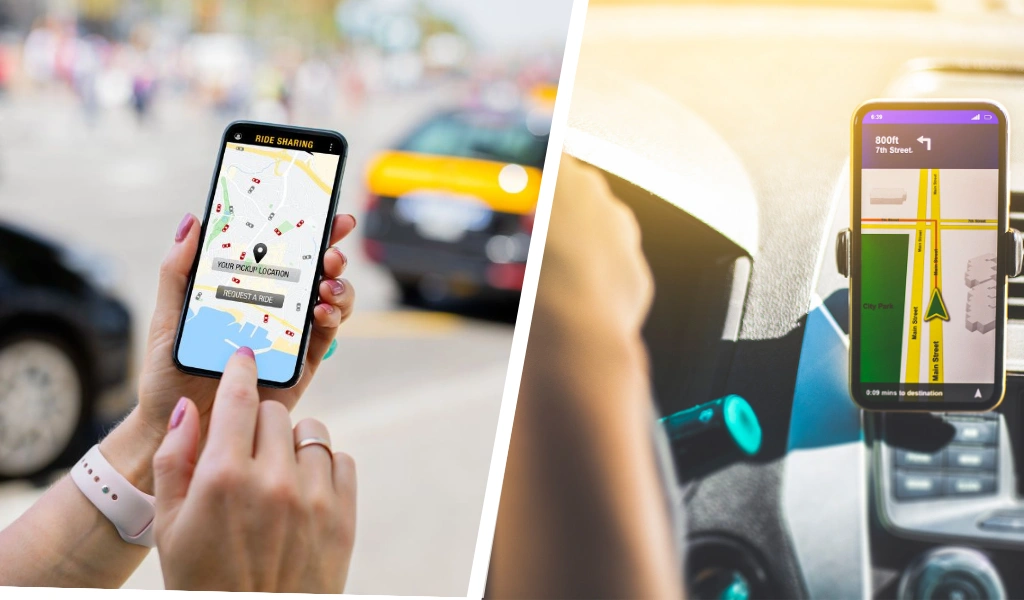
You’ve just left a cafe after a long day, phone in hand, rain starting to pour. With a few taps, you summon a ride home. Simple, right?
But have you ever stopped to wonder whether you just booked a ride-hailing trip or joined a ride-sharing one?
In the age of Uber, Lyft, and BlaBlaCar, these two terms have blurred into one digital blur of convenience. Yet, beneath the surface, they represent two very different ways of moving through the city, one built for privacy and speed, the other for community and sustainability.
As people become more conscious of cost, time, and the environment, the debate between ride-sharing and ride-hailing has become more relevant.
Before you book your next ride, let’s take a closer look at what sets these two options apart. Additionally, find out which one suits your lifestyle best.
Supercharge your deliveries with Enatega.
Register NowWhat is Ride-Sharing?
Ride-sharing is a type of transportation where people going in the same direction share a single vehicle. Instead of traveling alone, passengers split the cost of the ride, making it more affordable and more environmentally friendly.
Ride-sharing can involve:
- Carpooling: Commuters share their daily rides to work or school.
- Peer-to-peer platforms: Apps connect drivers who are already traveling somewhere with passengers heading the same way (like BlaBlaCar or Waze Carpool).
How Does Rideshare Work?
Here is the process of how ride-sharing works.
For Passengers
- Request a ride: Open the app, enter your destination, choose a ride option, and confirm your pickup spot.
- Wait for your driver: The app shows the driver’s name, car details, location, and estimated arrival time. You can contact them if needed.
- Take the ride: When the driver arrives, verify that it’s the right car and start your trip. You can track the ride on the app.
- Pay and rate: Payment is automatic through the app. After the ride, you can rate your driver.
For Drivers
- Go online: Download the app, complete the required documents, and then log in to start receiving ride requests.
- Accept a ride: When a request comes in, see the pickup, drop-off, and estimated earnings. Accept or decline the ride.
- Complete the trip: Pick up the passenger and drive them to their destination.
- Get paid: Earnings and tips are processed automatically after the trip.
Pros and Cons of Ride-Sharing Services for Users
Look at the table below and understand the pros and cons of ride-sharing services from a user’s perspective.
| Pros | Cons |
| Lower cost: Sharing rides reduces the fare compared to private trips. | Less flexibility: Pick-up and drop-off locations may vary. |
| Social interaction: Opportunity to meet new people during the ride. | Limited availability: Ride-sharing may not be available in all areas. |
| Convenience: Apps make it easy to find rides quickly. | Safety concerns: Sharing with strangers may make one feel less secure. |
| Reduces traffic congestion: Having fewer cars reduces road congestion. | Route changes: You might need to adjust your route to match others. |
Pros and Cons of Ride-Sharing Services for Drivers
Here are the pros and cons of ride-sharing services for drivers.
| Pros | Cons |
| Extra income: Drivers can earn money by sharing rides during their commute or free time. | Wear and tear: Frequent driving can increase maintenance costs for your vehicle. |
| Flexible schedule: Drivers choose when and how often they want to work. | Lower earnings per passenger: Shared rides may pay less than private trips. |
| Meet new people: Interact with passengers and expand your network. | Route adjustments: May need to take detours to pick up or drop off other passengers. |
What is Ride-Hailing?
Ride-hailing is a transportation service where you book a ride on demand through an app, and a professional driver takes you directly to your destination. Unlike ride-sharing, the ride is usually private and more flexible, focusing on speed and convenience.
According to Statista, ride-hailing revenue is on an upward trend, projected to grow to nearly 61 billion US dollars in 2029.
How Does Ride-Hailing Work?
Below is the process that shows how ride-hailing works.
For Passengers
- Request a ride: Open the app and enter your pickup and drop-off locations.
- Choose a vehicle: Select the type of car you want, like economy or premium.
- Confirm and track: Confirm your ride to see the fare and track the driver in real-time.
- Complete the trip: The driver takes you directly to your destination, and payment is done automatically through the app.
- Rate the driver: After the ride, you can rate the driver to help maintain service quality.
For Drivers
- Sign up: Register with the ride-hailing app using your own vehicle.
- Go online: Set your availability in the app to start receiving ride requests.
- Accept a ride: Check nearby requests and accept the ones that interest you.
- Earn money: Get paid based on distance, time, and any surge pricing during busy hours.
- Get rated: Your earnings and reputation depend on the ratings you receive from passengers.
Pros and Cons of Ride-Hailing Apps for Users
Here are the advantages and disadvantages of using ride-hailing apps.
| Pros | Cons |
| Convenient: Request a ride anytime with just a few taps. | Higher cost: Usually more expensive than ride-sharing. |
| Fast service: Professional drivers provide quick, direct trips. | Surge pricing: Fares can increase during peak hours or high demand. |
| Reliable: Drivers are trained and verified by the app. | Limited availability: May not be accessible in all areas. |
| Cashless payment: Payment is automatic and secure through the app. | Dependence on app/technology: Requires a smartphone and an internet connection. |
| Safety features: Apps offer tracking, driver info, and emergency options. |
Pros and Cons of Ride-Hailing Apps for Drivers
The table below shows the pros and cons of ride-hailing apps for drivers.
| Pros | Cons |
| Flexible schedule: Drivers can choose when and how often they work. | Vehicle wear and tear: Frequent driving increases maintenance costs. |
| Steady income potential: Earnings are based on trips, distance, and surge pricing. | High competition: Many drivers can lower the number of ride requests. |
| Easy onboarding: Apps handle payments, ride requests, and support. | Dependence on app demand: Income fluctuates with passenger demand. |
| Platform support: Apps provide navigation, safety features, and trip tracking. | Surge pricing pressure: Drivers may need to work during busy hours to earn more. |
Ride-Sharing vs Ride-Hailing – Main Differences
For a better understanding, check the table that outlines the main differences between ride-sharing and ride-hailing services.
| Feature | Ride-Sharing | Ride-Hailing |
| Service Model | Typically operates on a pooled basis. | Generally offers private rides. |
| Payment | Lower costs due to shared fares. | Costs vary depending on distance and time; usually higher. |
| User Experience | May involve waiting for other passengers. | More direct and personal ride experience. |
| Vehicle Types | Typically, standard vehicles often carry multiple passengers. | Individual cars can accommodate either one passenger or a group of passengers. |
| Examples | Services like Lyft Line, BlaBlaCar. | Services like Uber, Lyft. |
FAQs
1. Is Uber considered ride-hailing?
Yes, Uber is considered ride-hailing because it connects passengers with professional drivers for on-demand, private rides through its app.
2. Are ride-sharing drivers illegal?
Not necessarily. Ride-sharing drivers are generally legal if they follow local regulations, have proper insurance, and operate through approved platforms. However, drivers who offer rides independently without meeting legal requirements may be breaking the law in some regions.
3. What are the downsides of rideshares?
Here are the downsides of rideshares.
- Longer travel times: Shared rides may involve multiple pickups and drop-offs.
- Limited flexibility: Routes and schedules can be less convenient.
- Safety concerns: Traveling with strangers can pose risks.
- Availability issues: Rides may not be accessible in all areas.
Supercharge your deliveries with Enatega.
Register NowConclusion
The rise of ride-sharing and ride-hailing has completely changed the way we get around. Ride-hailing offers speed, convenience, and privacy, perfect for when you’re in a rush or want a stress-free, direct trip. Ride-sharing, on the other hand, helps you save money, reduce traffic, and travel more sustainably while connecting with others on the same route.
Choosing between the two doesn’t have to be a strict either-or decision. Your choice depends on your budget, schedule, and priorities. In fact, many people mix both depending on the situation, a ride-hailing trip when time is tight, or a ride-sharing trip when cost matters more.
So the next time you open your app, remember: it’s more than just a ride. It’s a way to travel smarter, save resources, and make choices that align with your lifestyle.
Interested in building your own car-hailing or ride-sharing app? Consult Enatega for expert guidance and end-to-end development solutions.
About the author

Hudaibia Khalid is the creative force behind the blog—a maestro of words and ideas. Her distinctive style not only imparts wisdom but also leaves an indelible mark, transforming each post into a captivating journey through her unique perspective on the world.
SHARE










 IOS
IOS Android
 Web
Web