


With a Turo clone script, you can launch your own peer-to-peer car rental marketplace and enter a market expected to reach $108 billion by 2029.
Think about how many cars stay parked and unused every day, while at the same time, people around them are searching for a quick and affordable ride.
This simple gap has created a huge opportunity in the form of peer-to-peer car sharing. Anyone can rent a nearby car through an app instead of going to a traditional rental company.
Platforms like Turo have popularized this idea by turning ordinary cars into income-generating assets and giving travelers an easier way to get around.
For business owners and startups, the idea is exciting, but building such a platform from the beginning can be expensive and time-consuming.
That’s why many entrepreneurs choose a Turo clone script. It provides a ready-made system to help you launch your own car-rental marketplace.
In this blog, you’ll know these things:
- What is a Turo clone script?
- How does a peer-to-peer car rental platform work?
- The key features you need
- The cost to get started
- The steps to launch successfully
So, let’s start.
What is Turo?
Turo is a peer-to-peer car-sharing platform. It allows car owners to rent out their personal vehicles to other people through a mobile app or website. It works like Airbnb but for cars.
For Users
Users can browse nearby cars, choose the one they like, book it for specific dates, and pay online, all in just a few steps.
For Car Owners
Car owners list their vehicles on Turo, set prices, manage availability, and earn money whenever someone rents their car.
For Renters
Renters benefit from a wider variety of vehicles, flexible pickup options, and often lower prices compared to standard rental agencies.
Supercharge your deliveries with Enatega.
Register NowWhat is the Turo Clone Script?
A Turo clone script is a ready-made software solution. It replicates the features and functionality of the Turo platform.
With a Turo clone script, you can launch a peer-to-peer car rental marketplace. Car owners can list their vehicles, and users can search, book, and pay for cars online.
Basically, it gives entrepreneurs a fast and customizable way to start their own car-sharing business, just like Turo, without spending months on development.
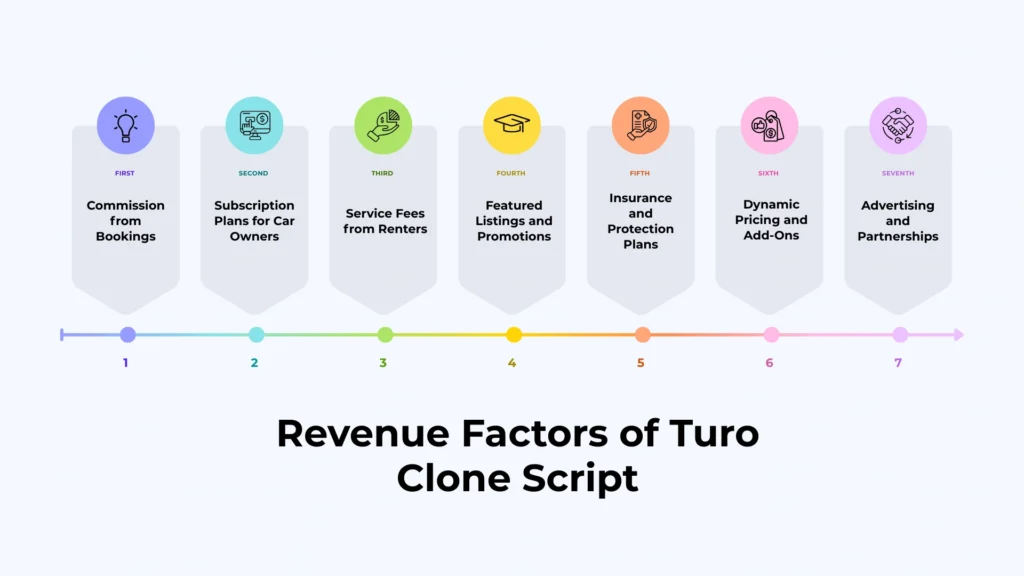
Revenue Factors of Turo Clone Script
Below are the revenue factors of the Turo clone script.
Commission from Bookings
The primary source of revenue for a Turo-like platform is commission on each rental transaction. Whenever a user rents a car, the platform takes a percentage of the total rental amount.
- How it works: If a car is rented for $100 and the commission rate is 15%, the platform earns $15 from that booking.
- Why it’s effective: It scales naturally with growth. More bookings, more revenue without increasing operational costs.
- Customizations: Platforms can offer variable commission rates depending on car types, rental duration, or owner subscription plans.
Subscription Plans for Car Owners
To generate recurring revenue, platforms can introduce subscription-based plans for vehicle owners.
- How it works: Owners pay a fixed monthly or yearly fee to list their vehicles on the platform.
- Benefits for owners: Subscribers may get perks like featured listings, lower commission fees, priority support, and enhanced visibility.
- Revenue potential: Even if bookings fluctuate, subscription fees provide a predictable monthly income for the platform.
Service Fees from Renters
Platforms often charge renters a small service or convenience fee in addition to the rental cost.
- How it works: This fee covers the operational costs of running the platform, including customer support, payment processing, and insurance facilitation.
- Example: If a car costs $100 per day, a $5 service fee per booking can generate substantial revenue.
- User perception: Fees are often bundled transparently with booking totals to ensure trust and clarity.
Featured Listings and Promotions
Car owners can pay extra to highlight their vehicles on the platform or run promotional campaigns.
- How it works: A featured car appears at the top of search results, increasing its chances of being booked.
- Revenue potential: Premium positioning and seasonal promotions create an additional income stream for the platform.
- Customization: Platforms can offer tiered options like daily, weekly, or monthly featured spots, or seasonal discounts for promotions.
Insurance and Protection Plans
Optional insurance and protection plans for renters and owners can be a great revenue source.
- How it works: Renters can purchase coverage for accidents, theft, or damage during the rental period. Car owners may also opt for additional protection plans.
- Revenue model: The platform earns a commission or fixed fee from each insurance plan purchased.
- Added value: Provides safety and trust for users, which can increase platform adoption and loyalty.
Dynamic Pricing and Add-Ons
Platforms can generate extra revenue by offering add-ons and dynamic pricing features.
- How it works:
- Renters can pay extra for services like GPS devices, child seats, cleaning, or extended mileage.
- Dynamic pricing algorithms adjust rental rates based on demand, seasonality, or vehicle type, maximizing earnings.
- Renters can pay extra for services like GPS devices, child seats, cleaning, or extended mileage.
- Example: During a peak travel weekend, a car normally rented for $100/day could be priced at $130/day, increasing revenue automatically.
Advertising and Partnerships
Platforms can monetize through ads and strategic partnerships.
- How it works: Local businesses such as gas stations, car washes, and repair shops can advertise within the app, targeting car owners and renters.
- Revenue model: Charge businesses a fixed fee, a pay-per-click model, or offer partnership deals.
- Additional opportunities: Collaborate with ride-hailing or travel platforms to offer bundled deals, earning referral commissions.
Turo Clone vs Traditional Car Rental Software
Look at the table below and understand the differences between the Turo clone and traditional car rental software.
| Feature / Aspect | Turo Clone Script | Traditional Car Rental Software |
| Business Model | Peer-to-peer car rental connects car owners with renters | The centralised rental company owns the fleet |
| Ownership | Cars are privately owned by individuals | Cars are owned and managed by the rental company |
| Revenue Source | Commissions, subscription plans, service fees, insurance add-ons, featured listings | Rental fees, late fees, additional services (GPS, insurance) |
| User Base | Car owners and renters; scalable through network effect | Customers only; limited by company fleet size |
| Flexibility | Renters can choose from a wide variety of cars, locations, and price ranges | Limited to the company’s available cars and locations |
| Trust and Safety | Ratings, reviews, insurance, and verification systems build trust | Company-owned fleet and contracts manage risk |
Why Use the Turo Clone Script?
If you want to start a car rental business like Turo, using a Turo clone script is the smartest way to do it. Instead of building a taxi booking app or website from scratch, which can take months and cost a lot, you get a ready-made solution.
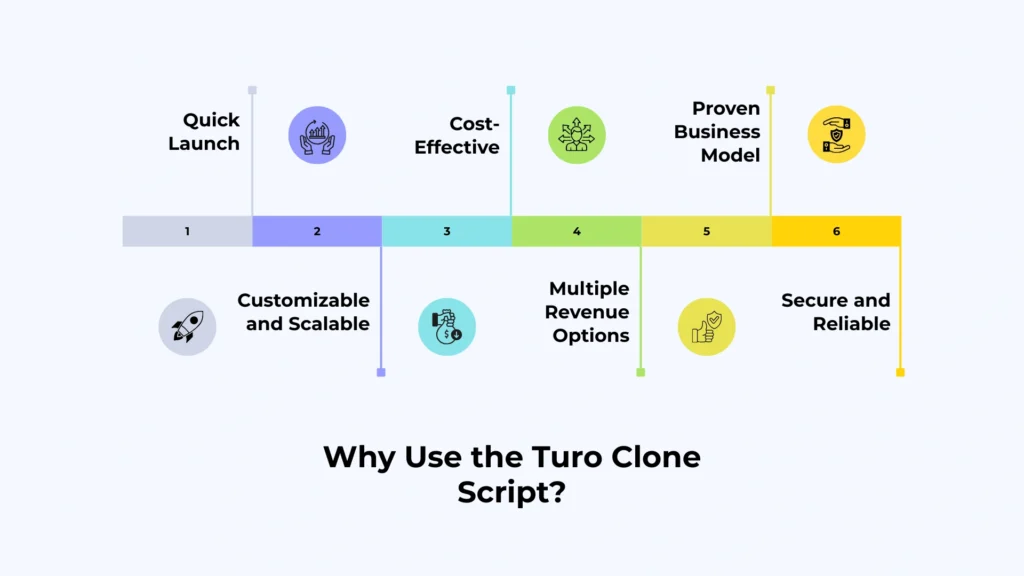
Here are some benefits that you get from using the Turo clone script.
Quick Launch
With a Turo clone script, your car-sharing platform can go live in a short time. All the essential features like booking, payments, and vehicle management are already built, so you don’t have to wait months for development.
Cost-Effective
Building a custom platform from scratch is expensive. A clone script saves money because most of the technology is already developed. You pay only for customization and branding, making it a budget-friendly way to start.
Proven Business Model
The Turo model works because people trust it, and it’s easy to use. By using a clone script, you adopt a proven system that already attracts car owners and renters, reducing the risks of launching a new business.
Customizable and Scalable
It is ready-made; a Turo clone script can be customized to match your brand, add extra features, or expand to multiple cities. It grows with your business.
Multiple Revenue Options
The script comes with built-in ways to earn money:
- Commissions from bookings
- Subscription plans for car owners
- Service fees
- Insurance options
- Featured listings, and more
You don’t rely on just one source of income.
Secure and Reliable
It includes secure payment gateways, user verification, and ratings/reviews to build trust. You don’t have to worry about safety or fraud because the system handles it.
What Features Should a White-Label Turo Clone App Include?
When you’re choosing a white-label taxi booking app for your car rental business, the right features can make all the difference. They help attract users, make the platform easy to use, and ensure smooth operations for car owners and administrators.
Here is a list of the essential features for each part of the platform.
Renter App Features
- User Registration
A simple and fast registration process helps renters sign up without any hassle. Options like email, phone number, or social media login make it convenient and encourage more users to join your platform.
- Easy Search
Renters should be able to find the car they want quickly. Features like location-based search, filters for car type, price, availability, and even special amenities make browsing effortless.
- Secure Payment
Online payments need to be fast, reliable, and safe. Integrating multiple payment options like credit/debit cards, e-wallets, or digital banking builds trust and ensures smooth transactions.
- In-app Chat
Communication between renters and car owners is key. An in-app chat allows them to clarify pickup details, ask questions, and confirm bookings without leaving the platform.
- Rating and Reviews System
Renters can leave feedback on cars and owners, and vice versa. This system builds trust and helps users make informed choices.
Car Owner App Features
- Vehicle Listing Management
Owners can easily add their cars to the platform with photos, descriptions, pricing, and availability. Updating listings, setting rental rules, or marking a car unavailable is quick and simple.
- Earnings Dashboard
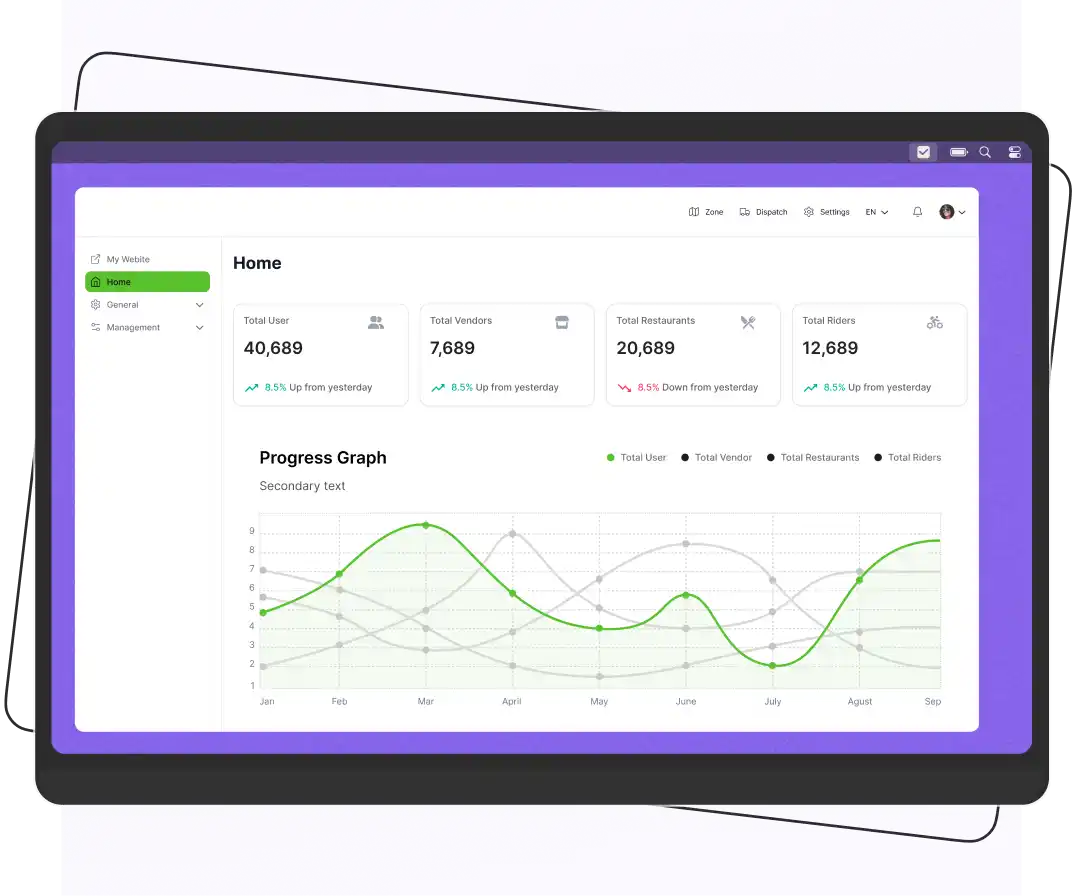
A dashboard that shows earnings and upcoming bookings helps owners track their income. Visual charts and notifications make financial management easy.
- Two-Way Rating System
Both renters and owners can rate each other after a trip. This promotes trust on the platform and motivates better behavior from both sides.
- GPS Navigation
Integrated GPS helps owners and renters track car locations, manage pickups, and ensure smooth journeys.
Admin Panel Features
- User Management
Admins can manage all users, including renters and car owners. This includes approving registrations, verifying documents, and resolving complaints efficiently.
- Booking Management
The admin dashboard allows tracking all bookings, cancellations, and reschedules. It ensures smooth operations and helps identify trends or issues in real-time.
- Commission and Revenue Management
Admins can set and monitor commissions, track revenue, and generate reports. This ensures financial transparency and helps optimize the platform’s profitability.
- Fraud Detection and Risk Management
Security is essential. Admins can detect suspicious activity and prevent fraud with features like document verification, payment monitoring, and automated alerts.
Advanced Features of Turo Clone App
To make your car-sharing platform truly competitive, basic features are not enough. Advanced features improve the user experience and help your business grow faster.
Below are some features that add real value to a Turo-like app.
Trip Extension
The trip extension feature allows renters to keep the car for a longer time if their plans change. Instead of making a new booking, customers can request extra hours or days directly from the app.
The car owner receives a notification to approve the request, and the additional payment is calculated automatically. This makes the rental process more flexible and helps car owners earn more.
Mileage Tracking
Mileage tracking records how far the car is driven during a trip. This helps car owners make sure their vehicle is used within the allowed distance. If a renter goes beyond the mileage limit, extra charges can be added automatically.
Referral Program
A referral program helps grow the platform by encouraging users to invite their friends. When someone joins using a referral link or code, both the new user and the person who invited them can receive rewards like discounts, credits, or coupons. This is an easy and cost-effective way to attract more users and increase bookings.
Trip History
Trip history keeps a full record of all past rentals, including dates, payments, and trip details. Both renters and car owners can review their previous trips anytime, which is useful for tracking expenses and planning future bookings. It also helps the admin team solve disputes quickly because all trip information is stored clearly.
How Much Does a Turo Clone Script Cost?
The cost of a Turo clone script can vary widely depending on features, customization, design quality, and development approach.
Below is the estimated cost of the Turo clone script.
Basic Clone Script
- Cost: ~$3,000 – $8,000
- What you get: Core features like user registration, car listing, booking system, basic payment, and a simple admin panel.
- Best for: Small startups or MVPs (Minimum Viable Product) testing the market.
Mid‑Level Script
- Cost: ~$8,000 – $18,000
- What you get: More advanced features such as in‑app chat, ratings, multiple payment options, analytics dashboard, and better UI/UX.
- Best for: Growing businesses looking for a competitive edge.
Fully Customized and Scalable Platform
- Cost: ~$18,000 – $50,000+
- What you get: Full customization of design and features, mobile iOS & Android apps, dynamic pricing, insurance integration, advanced navigation, and third‑party APIs.
- Best for: Established companies or serious startups planning to scale globally.
Factors That Influence the Cost
Here are the main elements that affect how much your Turo clone script will cost.
Feature Set
The more features you include (e.g., in‑app chat, GPS tracking, insurance options), the higher the cost.
Customization and Branding
Custom design, colors, logos, and branded components add to development time and cost.
Platform Type
The choice of the platform also affects the cost. It directly dictates both upfront investment and ongoing operational expenses.
- Web platform only lower cost
- Web + Mobile apps higher cost
- Native iOS + Android apps highest cost
Maintenance and Support
Ongoing updates, bug fixes, and customer support are usually not included in the base price and can cost extra.
How Long Does it Take to Launch a Turo Clone?
Launching a Turo clone takes 1 to 2 weeks using pre-built scripts. A custom-built solution can take 4–6 months or longer. Ready-to-launch clone solutions allow for rapid deployment in as little as 7 to 10 days, depending on customization needs.
Turo Clone Launch Timeline and Approach
| Approach | Estimated Time |
| Script Solution | 7–14 Days |
| Custom Development | 4–6+ Months |
| MVP Launch | 2–4 Weeks |
Supercharge your deliveries with Enatega.
Register NowConclusion
A Turo clone script offers a future-ready way to enter the growing car-sharing market without the long wait and high cost of building a platform from scratch.
A well-customized Turo-style platform not only creates new income opportunities for car owners but also delivers convenience for renters.
If you are inspired by Turo’s success and looking to create your own peer-to-peer car-sharing platform, Enatega offers the Turo clone app development services.
Our experienced team will help you build an app that caters to the growing demand in the car-sharing market.
Book a free demo with us today and get your custom car-sharing app quickly.
About the author

Hudaibia Khalid is the creative force behind the blog—a maestro of words and ideas. Her distinctive style not only imparts wisdom but also leaves an indelible mark, transforming each post into a captivating journey through her unique perspective on the world.
SHARE










 IOS
IOS Android
 Web
Web