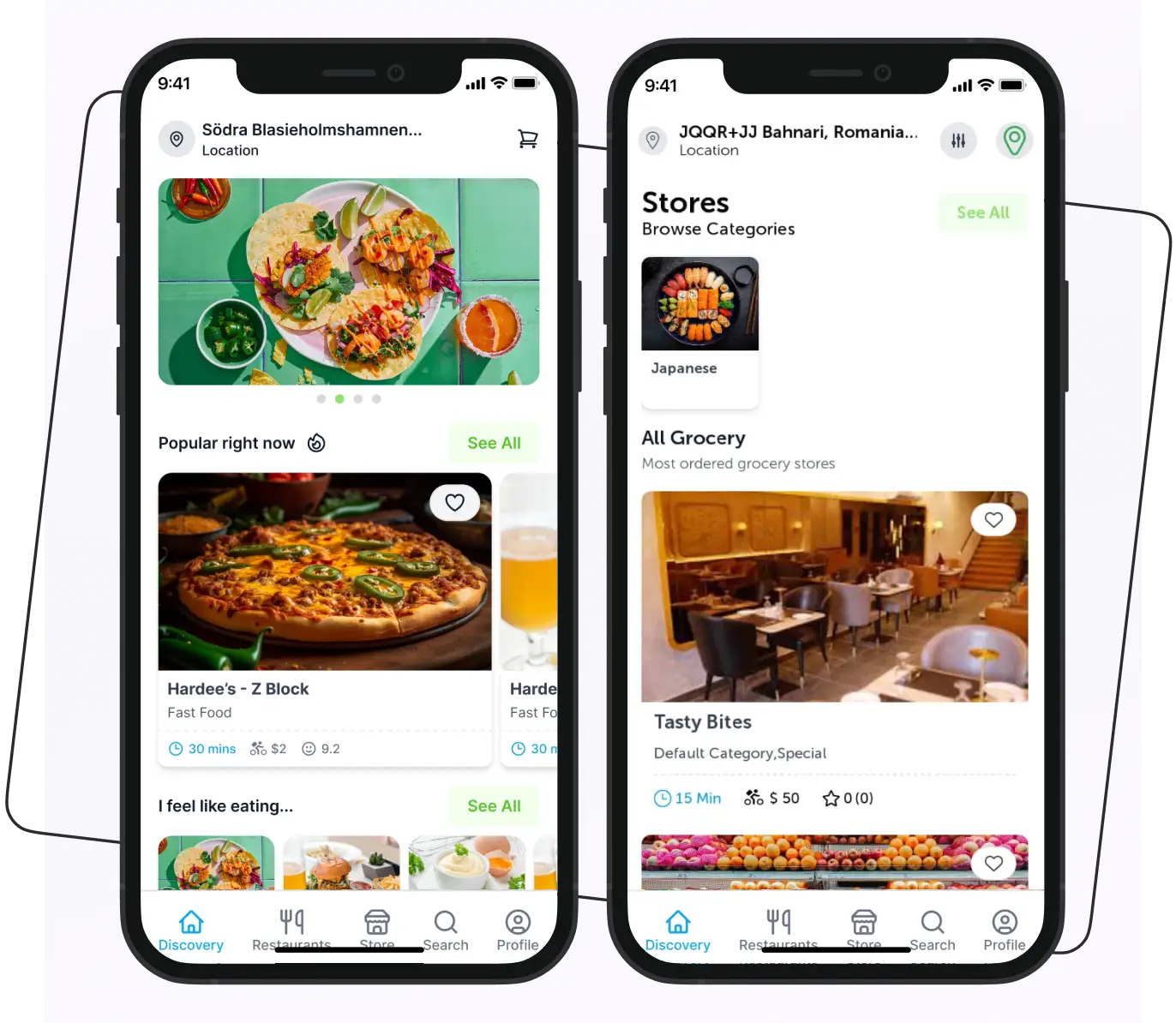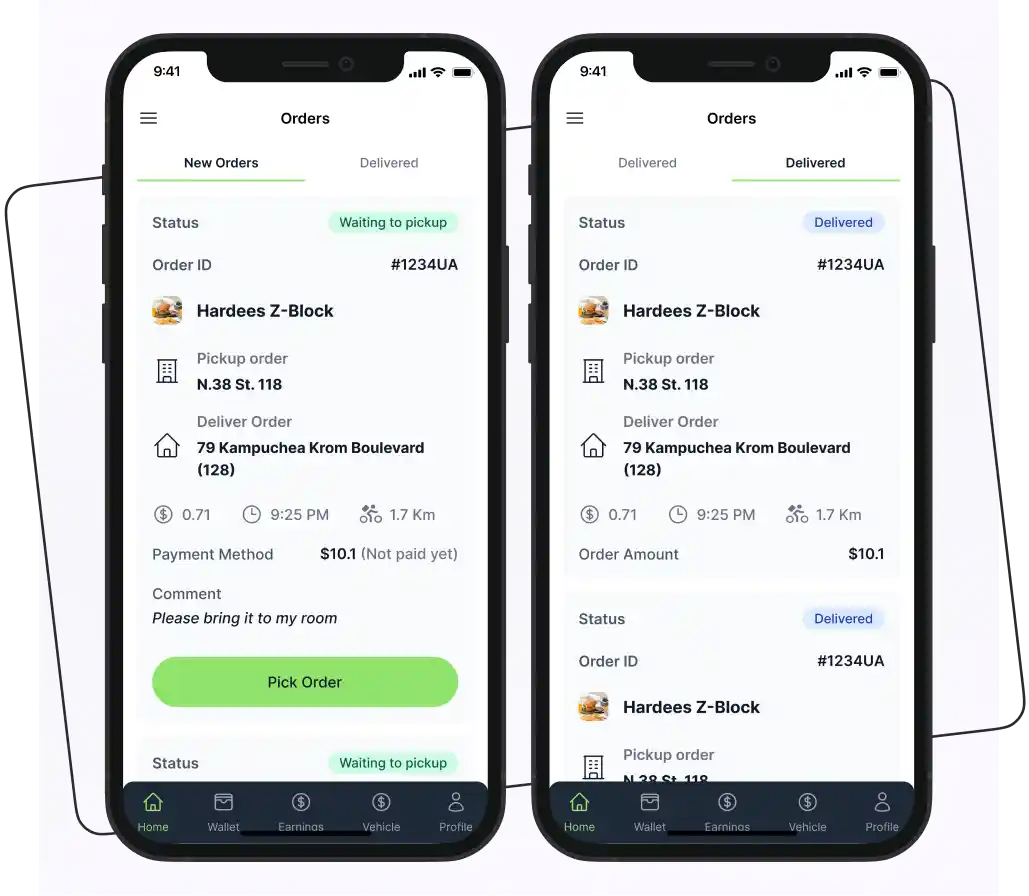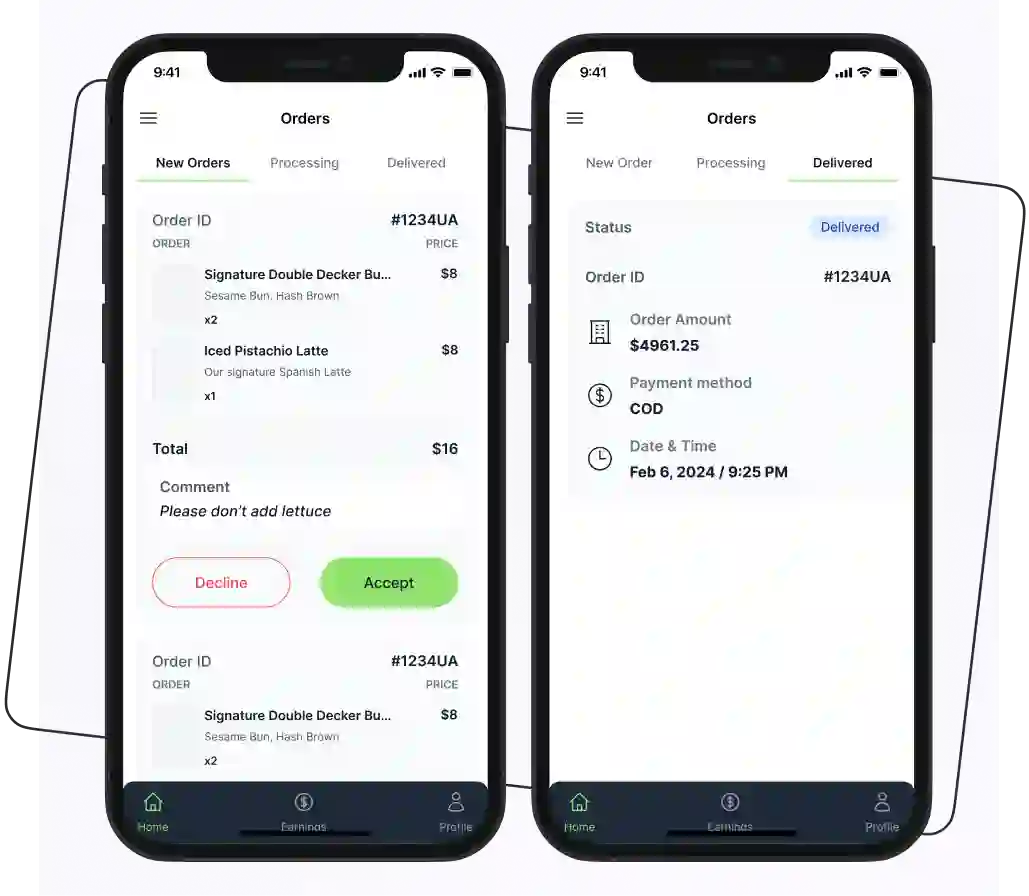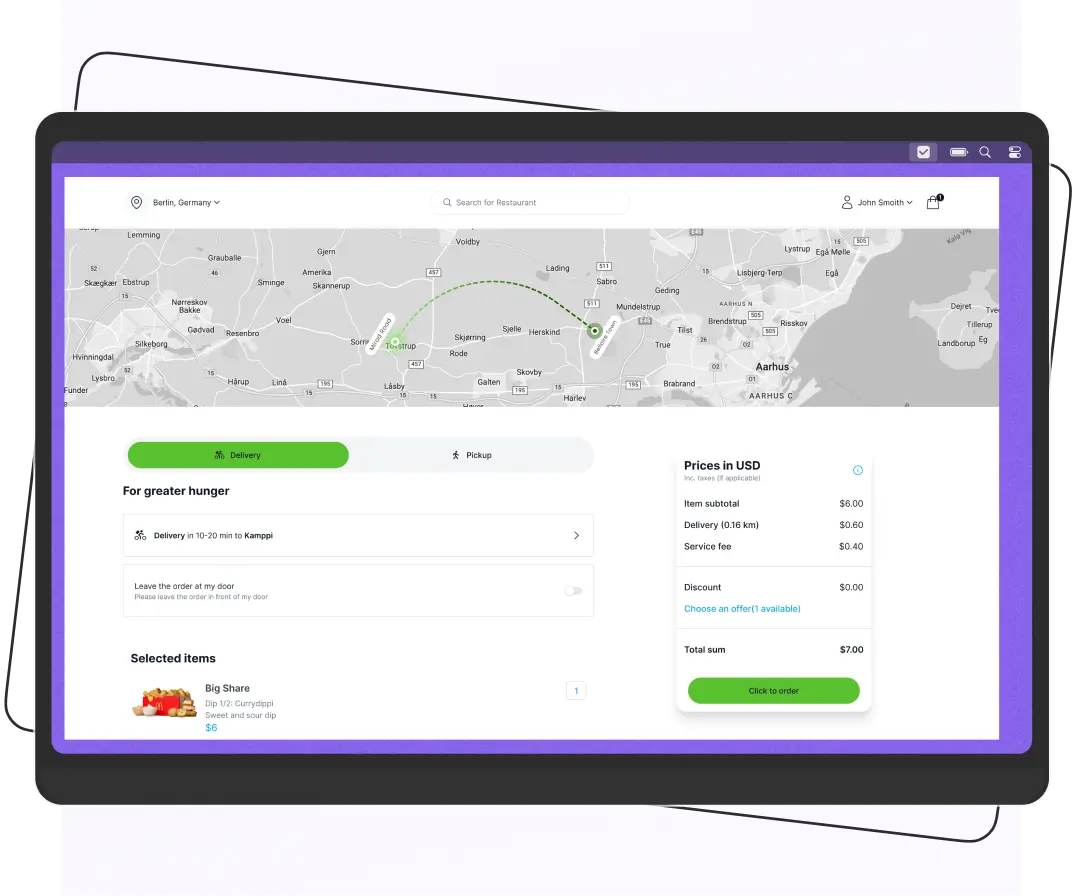


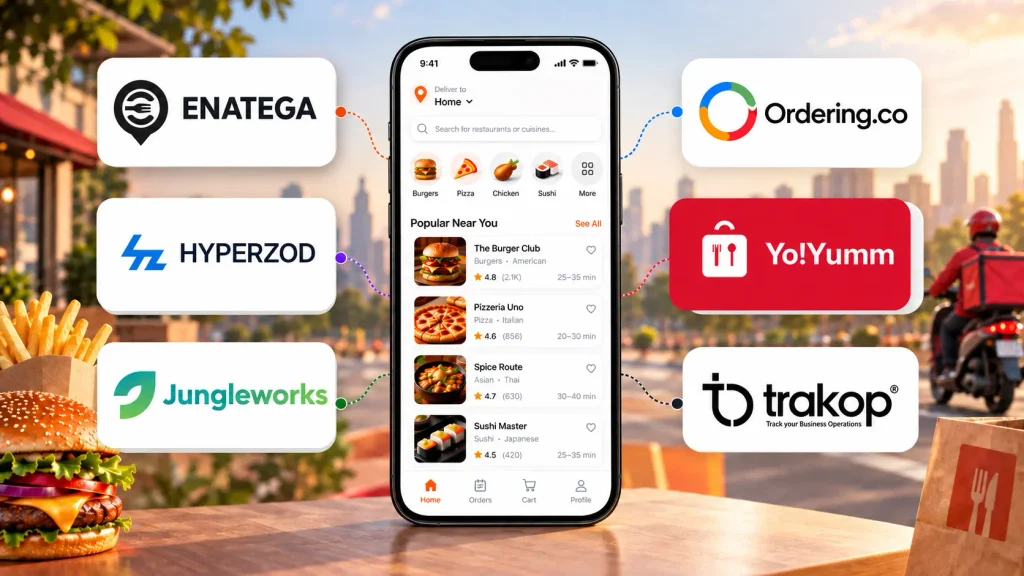
The best Deonde alternatives include Enatega, Ordering.co, Hyperzod, Yo!Yumm, JungleWorks, and Trakop. Each offers a different approach to food and delivery software, from one-time ownership and multi-service delivery to quick commerce, marketplaces, and recurring orders. The right option depends on your business model, pricing preference, customization needs, and delivery requirements.
Deonde gets you into the delivery game fast, but “fast” and “flexible” aren’t always the same thing. If you’re stuck paying subscription fees for features you don’t use, boxed into food and grocery when you want to add courier or laundry, or craving actual ownership of your source code, it might be time to shop around.
Deonde isn’t the only white-label delivery platform out there. From one-time-payment solutions that give you the keys to your source code, to platforms built for quick commerce and multi-vendor marketplaces, there are plenty of options to explore.
Below, we compare the top Deonde alternatives in 2026, covering their features, pricing, and exactly who each one is built for. So you can pick a platform that fits your business instead of the other way around.
What is Deonde?
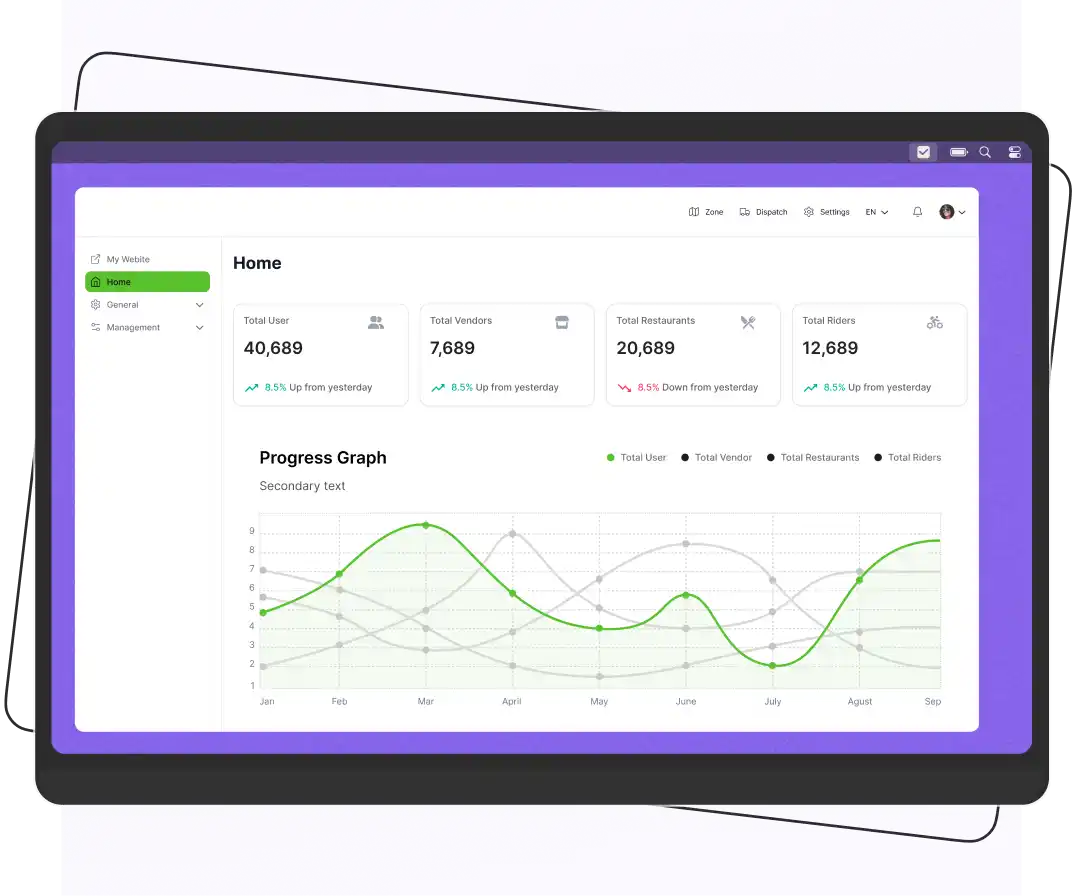
Deonde is a white-label delivery software platform. It helps entrepreneurs and businesses launch their own food, grocery, or on-demand delivery app without having to build the technology from scratch.
No need to hire developers to build a customer app, delivery app, and admin dashboard from the ground up. Businesses can license Deonde’s ready-made system, add their own branding, customize it to their needs, and go live in days rather than months.
Main Components
- Customer app/website: Users can browse, place orders, and make payments
- Delivery partner app: Drivers or riders can accept and fulfill orders
- Merchant/vendor panel: Restaurants or stores can manage menus, inventory, and orders
- Admin dashboard: Business owners can manage the entire operation, monitor analytics, and configure settings
Use Cases Include
- Food delivery marketplaces, similar to local Uber Eats or DoorDash platforms
- Grocery delivery
- Pharmacy and quick-commerce delivery
- Multi-vendor delivery marketplaces
Deonde Business model
Deonde generally uses a subscription-based (SaaS) pricing model rather than a one-time license fee. This is one of the main reasons businesses compare it with alternatives such as Enatega or Yo!Yumm, which offer one-time or lifetime-ownership pricing options.
Supercharge your deliveries with Enatega.
Register Now7 Best Deonde Alternatives
Below is a list of the best Deonde alternatives.
| Platform | Best For | Pricing Model | Standout Feature |
| Enatega | Multi-vertical delivery (food, grocery, courier, laundry, beauty) | One-time payment | Source code included No per-delivery commission |
| Ordering.co | Running a public marketplace and direct-brand ordering together | Subscription, flexible fees | Combines marketplace + commission-free direct ordering in one admin |
| JungleWorks (Yelo + Tookan) | Businesses wanting separate dispatch and storefront modules | Subscription per module | 100+ payment gateway integrations 75+ language localization |
| Hyperzod | 10-minute quick-commerce (food, grocery, pharmacy, retail) | Modular flat-rate, starts ~$29/month + small success fee | AI-firstNo-code |
| Yo!Yumm | Startups wanting a fully owned, one-time-purchase food marketplace | One-time / lifetime ownership | Dine-in Table booking and delivery-fee refund modules built in |
| Trakop | Subscription and recurring-order businesses (milk, meal kits, B2B) | Subscription | Built-in recurring invoicing Multi-payment-model support |
1. Enatega – Open-Source Delivery App Solution for Businesses
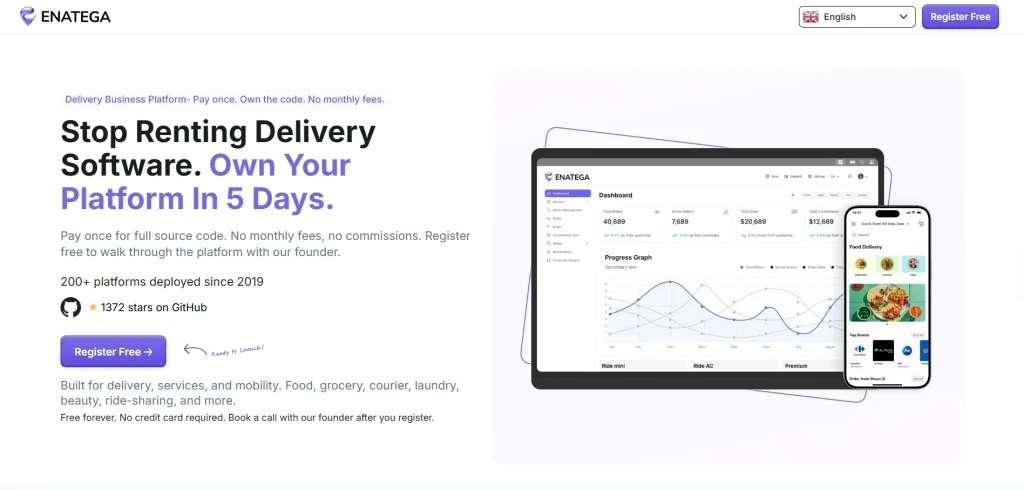
Choose Enatega: If you plan to run multiple delivery services under one brand and want to own your source code outright.
Enatega is a popular alternative to Deonde for businesses looking to expand beyond food delivery into groceries, courier, laundry, and beauty services, all from one platform.
Unlike Deonde’s monthly subscription model, Enatega is available as a one-time purchase that includes the source code. This gives businesses full ownership of their platform and makes long-term costs easier to plan without ongoing subscription fees.
2. Hyperzod – A Cloud-Based White-Label SaaS Platform
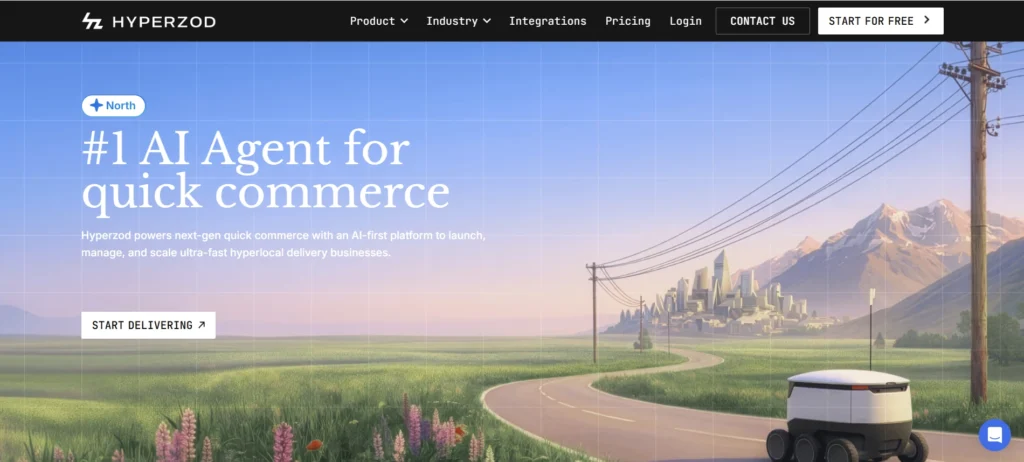
Choose Hyperzod: Speed is your core differentiator, and you want quick-commerce-specific tools like radius-based dispatch out of the box.
Hyperzod is designed around the 10-minute delivery model, making it particularly relevant for quick-commerce businesses operating across categories such as food, groceries, pharmacy, fashion, and electronics.
Its AI-first, no-code approach is aimed at helping businesses launch and manage their delivery operations without relying heavily on development teams.
Rather than offering everything as one bundled subscription, Hyperzod uses a modular pricing model. Businesses can choose the components they need.
The platform also charges a small per-order success fee, so the overall cost depends partly on how the business uses the platform.
One of its notable delivery features is radius-based order routing. Orders can be automatically assigned to the nearest eligible merchant, helping reduce the distance between the merchant and customer and supporting faster fulfillment.
This can be useful for businesses where short delivery times are a key part of the customer experience.
3. Yo!Yumm – Ready-made White-Label Multi-Restaurant Food Delivery System
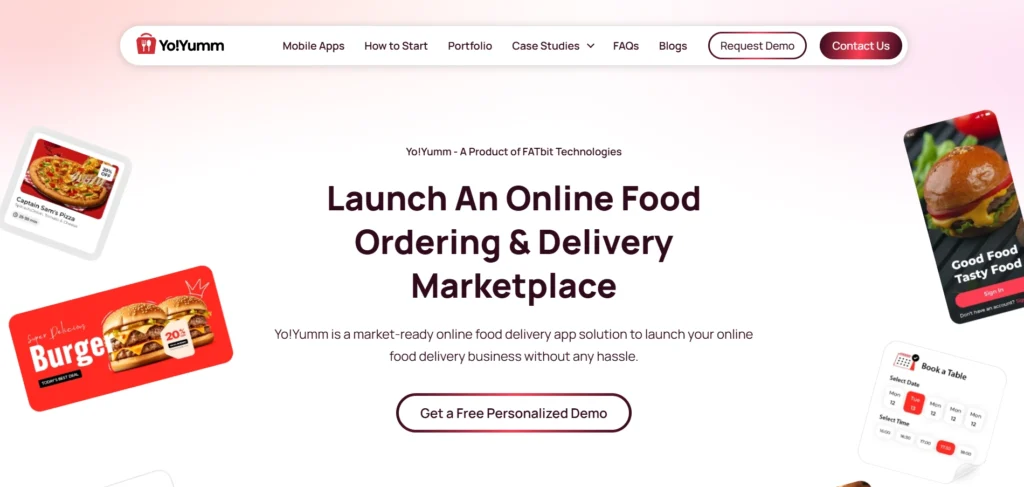
Choose Yo!Yumm: You want a one-time-purchase platform that also covers dine-in and table reservations, not just delivery.
Yo!Yumm is a ready-made, white-label food delivery marketplace built primarily for startups and businesses that want to launch without developing a platform from scratch. Unlike subscription-based solutions, it follows a one-time purchase model with lifetime ownership, making it an option for businesses that prefer a fixed upfront investment.
The platform covers more than just online delivery. It includes dine-in and table-booking functionality, allowing restaurants to manage both delivery and in-house customer experiences through the same system.
Other features include:
- Real-time analytics
- Multilingual support
- Delivery-fee refund management
- Additional tools for managing day-to-day restaurant operations
Its marketplace setup is designed to support multiple restaurants, and the white-label approach allows businesses to launch the platform under their own brand.
4. Jungleworks (Yelo + Tookan) – Modular Delivery Solution
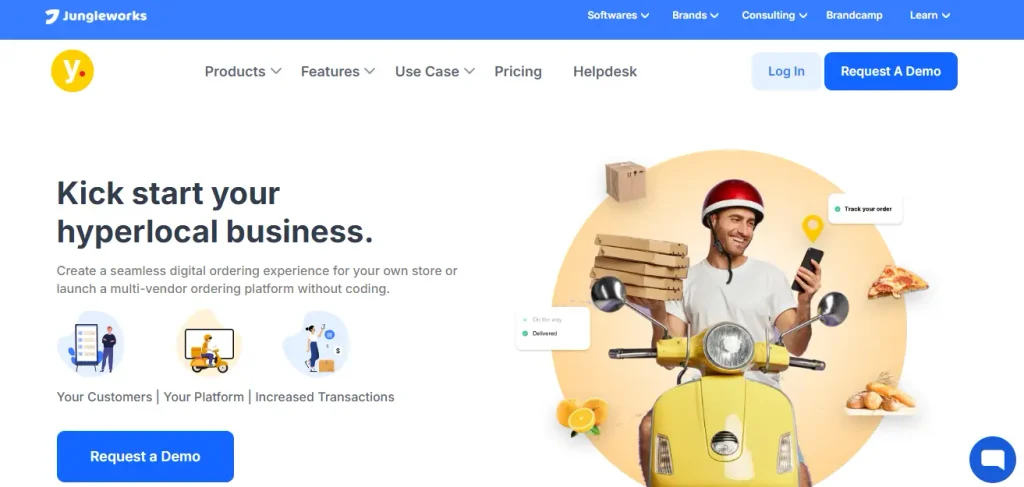
Choose JungleWorks: You want separate, configurable modules for ordering and dispatch, rather than one bundled system, and have the technical resources to set it up.
JungleWorks takes a more modular approach to delivery software by splitting its solution into Yelo for storefronts and multi-vendor marketplaces and Tookan for dispatch and delivery management.
This setup gives businesses more flexibility to configure their ordering and delivery operations separately. However, it can require more technical setup than an all-in-one, plug-and-play platform.
Yelo is designed for businesses that want to build online marketplaces, manage multiple vendors, and handle customer orders. Tookan focuses on the delivery side, including driver management, route planning, and real-time delivery tracking. Together, the two products can cover the main parts of a multi-vendor delivery operation.
JungleWorks also supports 100+ payment gateways and localization across 75+ languages, which can be useful for businesses operating across different countries and regions.
Its modular structure makes it possible to configure the platform around specific business and delivery requirements rather than relying on a single fixed setup.
5. Ordering.co – Online Ordering and Delivery Platform for Marketplaces
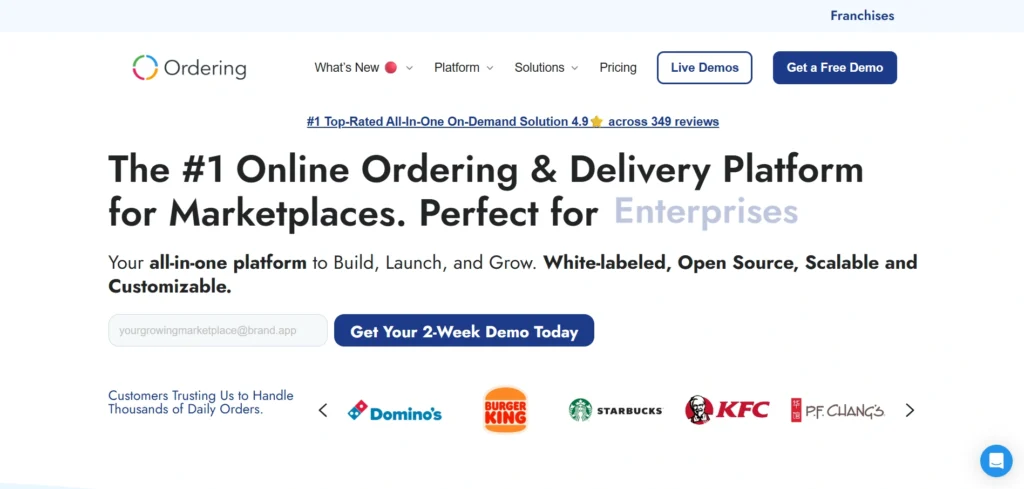
Choose Ordering.co: If you’re building a local Uber Eats-style marketplace but also want individual restaurants to keep a commission-free channel.
Ordering.co stands out for businesses that want to run a public multi-vendor marketplace and give each restaurant partner their own commission-free direct-ordering storefront, all inside one white-label admin panel.
This dual approach makes it a practical option for businesses that want to combine marketplace ordering with direct restaurant sales, rather than managing them as separate products.
6. Trakop – Delivery Management Software for All Businesses
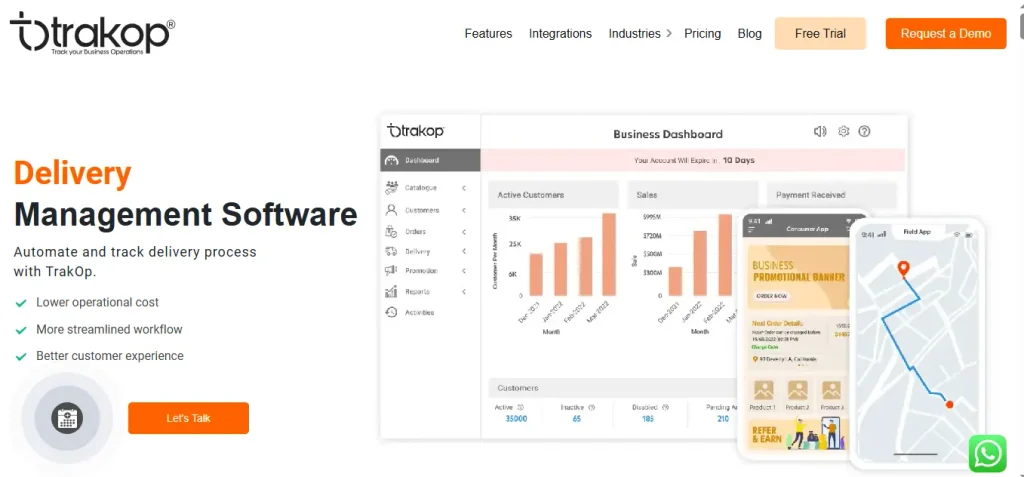
Choose Trakop: Recurring/subscription orders are central to your business model.
Trakop is another Deonde alternative, but the two platforms are designed around different delivery models.
Trakop focuses heavily on:
- Scheduled and recurring deliveries
- Supporting subscriptions
- One-time orders
- Recurring invoicing
- B2B and B2C customer management
It also supports prepaid, postpaid, and hybrid payment models. It makes it a great option for businesses where customers regularly receive the same products or services.
This makes Trakop particularly relevant for milk delivery, meal kits, water delivery, subscription boxes, and other recurring-order businesses where scheduled fulfillment is more important than a general on-demand ordering model.
How to Choose Between Deonde and Its Alternatives
Ask these questions before deciding:
- What verticals do you need now, and in two years?
If you’re likely to expand beyond food, a multi-vertical platform like Enatega or Hyperzod saves a future migration.
- Do you want a marketplace, direct ordering, or both?
Ordering.co is built for running both together; single-purpose platforms usually do one better than the other.
- Subscription or one-time cost?
Recurring SaaS fees (Deonde, JungleWorks, Trakop, Hyperzod) versus a one-time license with owned source code (Enatega, Yo!Yumm) is a real long-term cost difference.
- How technical is your team?
Modular platforms like JungleWorks and Hyperzod offer more control but need more setup; plug-and-play platforms trade some flexibility for speed.
FAQs
Enatega and Ordering.co are the two closest Deonde alternatives. Enatega for multi-vertical, one-time-payment ownership, and Ordering.co for combining marketplace and direct-brand ordering in one platform.
Enatega and Yo!Yumm is generally positioned as a one-time payment or lifetime-ownership option, compared to Deonde’s monthly subscription model.
Hyperzod is specifically built around the 10-minute delivery model, with AI-first dispatch and radius-based order routing designed to minimize delivery time.
Yo!Yumm bundles dine-in and table-booking modules alongside its delivery marketplace features, which sets it apart from delivery-only platforms.
Yes, Enatega is the most commonly self-hosted alternative. It’s sold as a one-time payment with full source code, letting you host and control it yourself instead of relying on Deonde’s managed subscription. Yo!Yumm also offers lifetime-ownership pricing with source access, making it a second option worth considering.
Supercharge your deliveries with Enatega.
Register NowConclusion
Deonde works, but “works” shouldn’t be the goal. Your delivery platform should fit the way your business operates, not force your business to fit the software.
Want full ownership and no recurring fees? Enatega and Yo!Yumm offers one-time purchase options. Building around a 10-minute delivery? Hyperzod is designed for quick commerce. Running a marketplace while giving restaurants their own direct-ordering channel? Ordering.co takes that approach.
There's no shortage of Deonde alternatives in 2026. There's only a shortage of businesses that take the time to pick the right one.
Don’t settle for a platform that almost fits. Choose one that’s built around what your business actually needs.
About the author

Hudaibia Khalid is a senior content writer with several years of experience in creating clear and easy-to-understand content. Over the years, she has worked closely with startups, restaurants, and entrepreneurs, helping them simplify complex digital and technical topics into actionable insights.
Her expertise lies in writing about on-demand platforms, food delivery solutions, and business growth strategies in a way that is accessible even to non-technical readers. With her experience in the industry, she focuses on guiding businesses step by step, from understanding ideas to turning them into fully working solutions.
SHARE






 IOS
IOS Android
 Web
Web