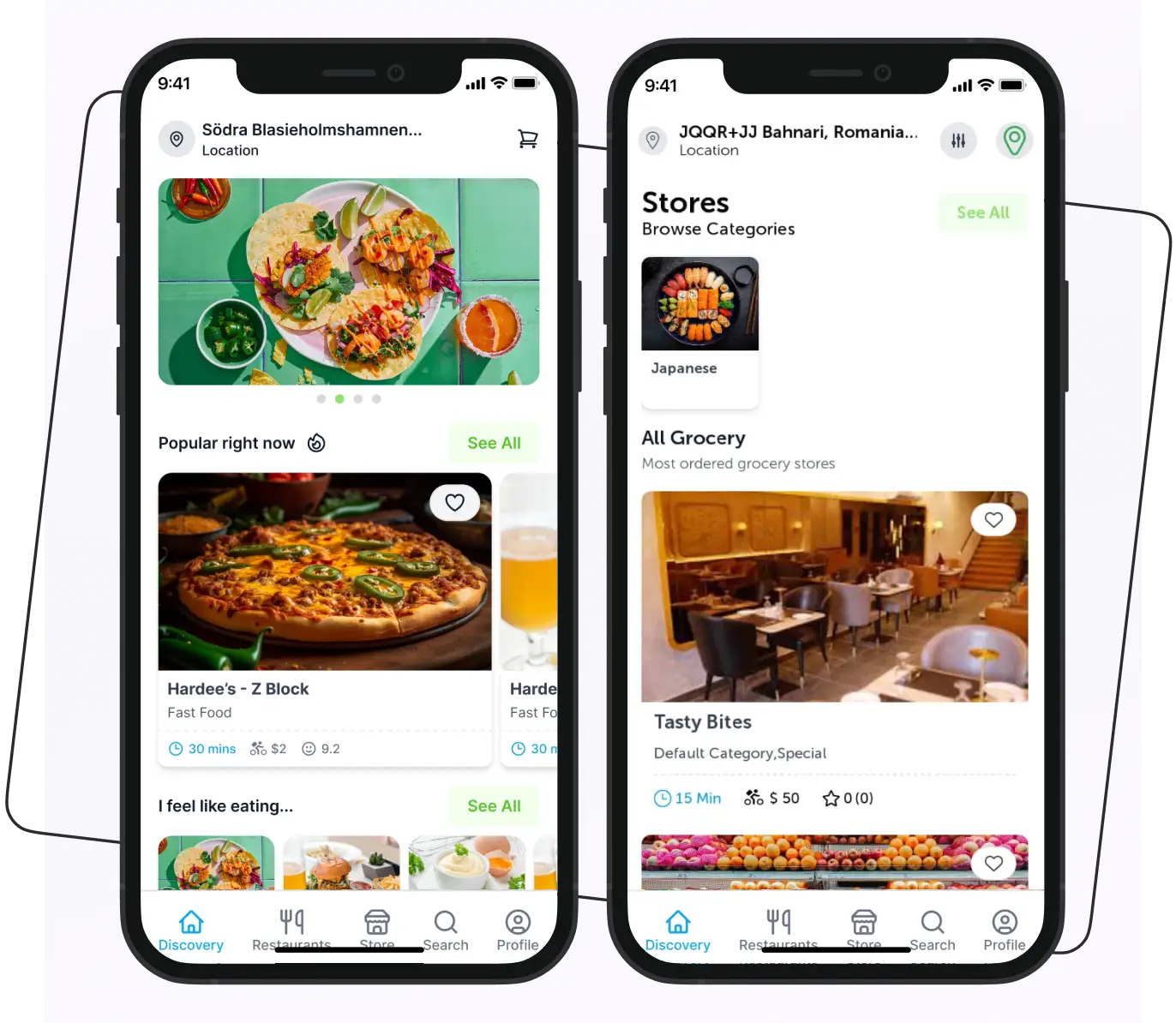
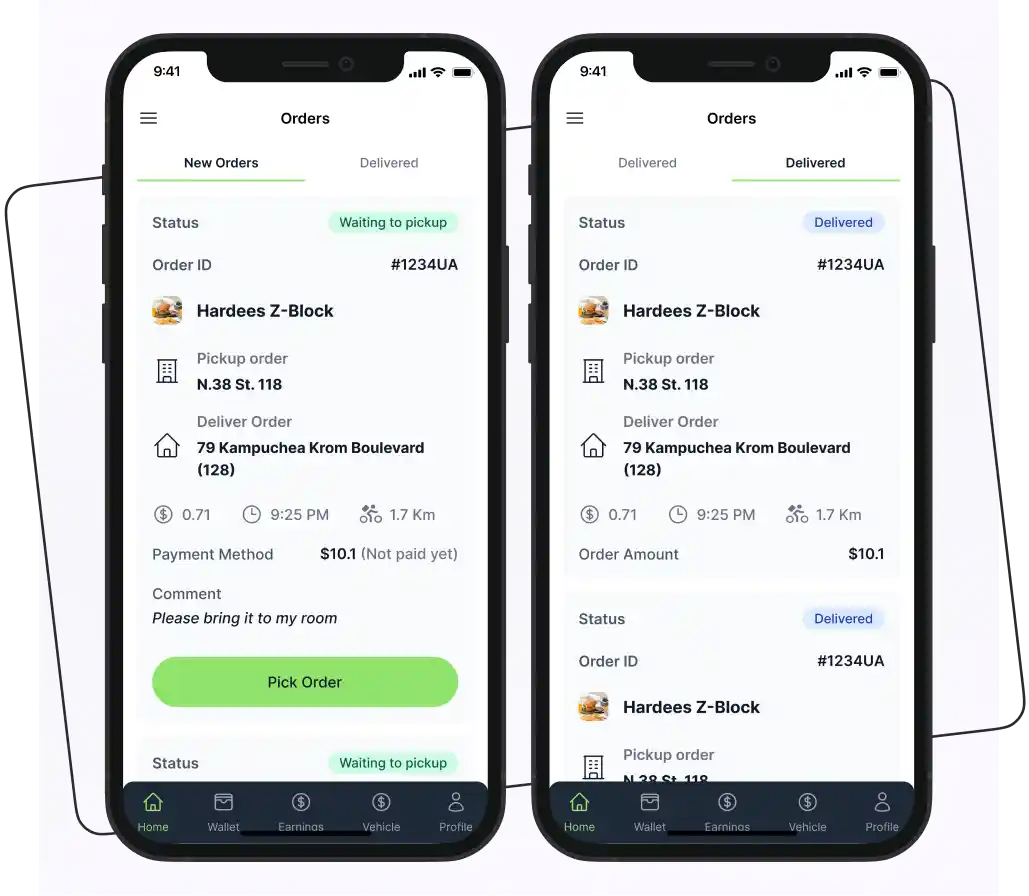
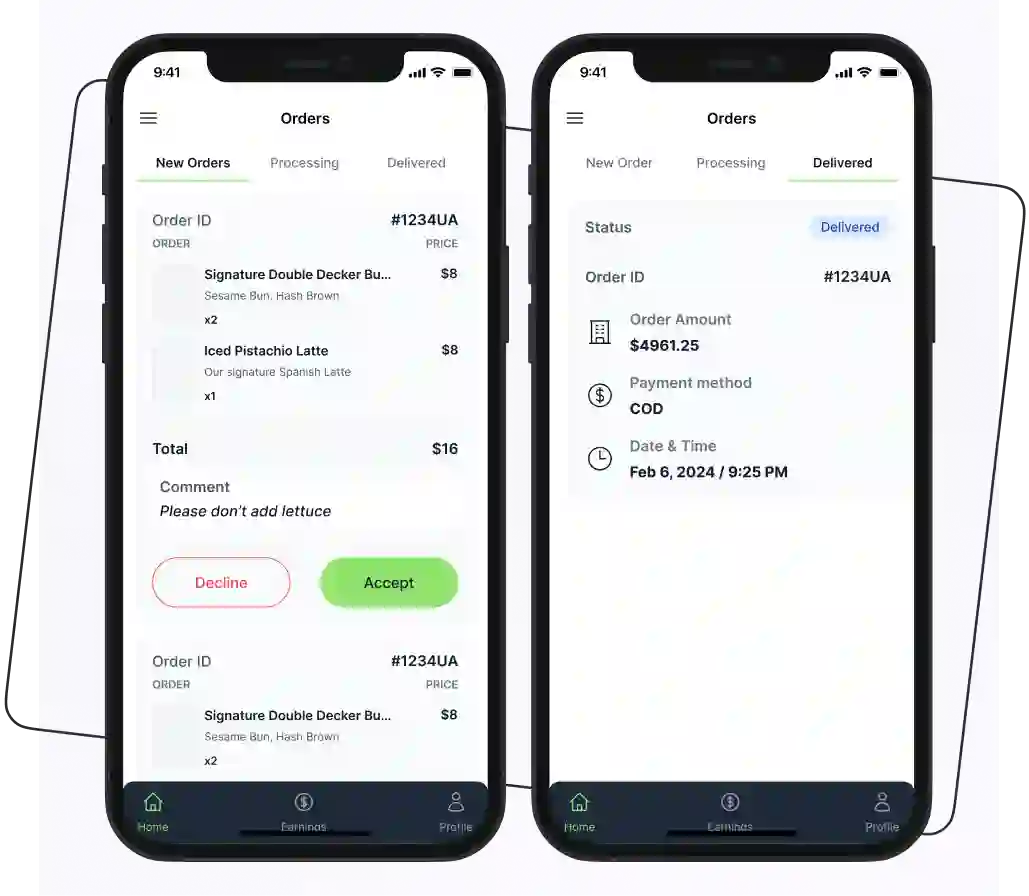
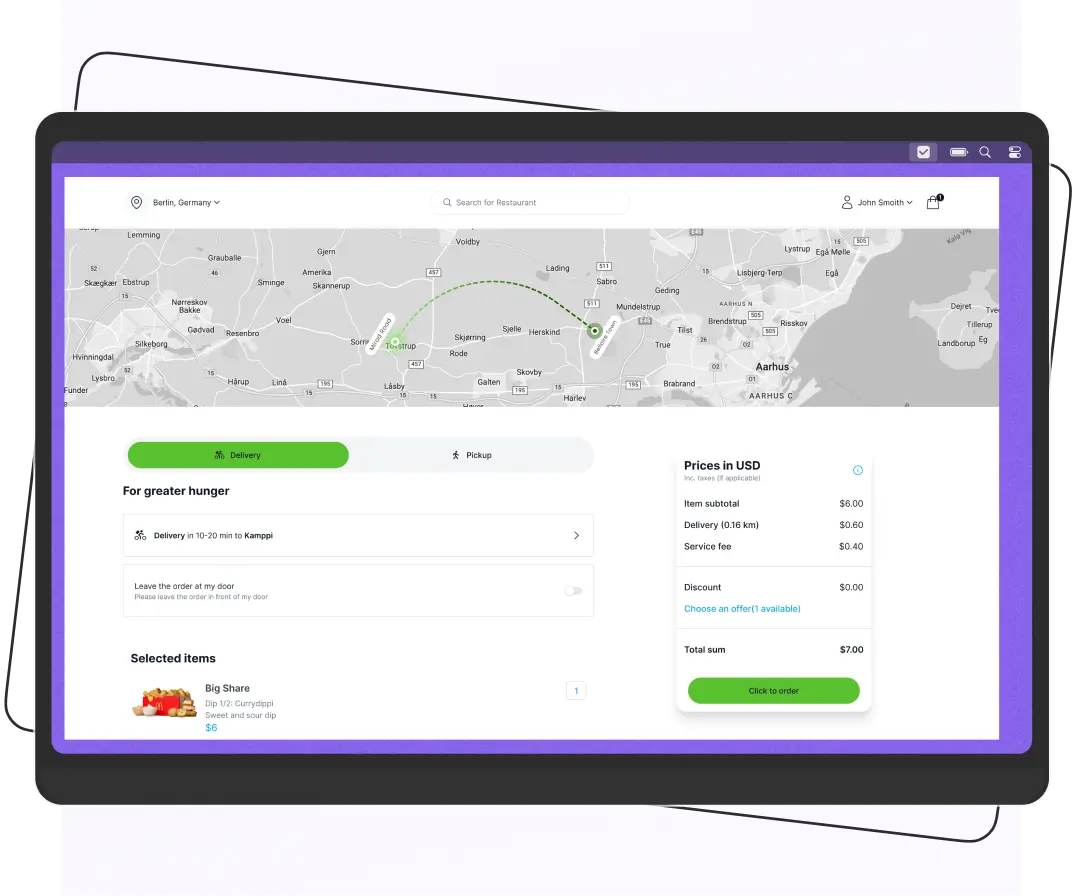
Get Backend API for Food Delivery App Source Code React Native
The food delivery app source code react native frontend is open-source and easy to adapt. Unlock backend API functionality by arranging a call with our team. Access documentation and case studies online.



Frequently Asked Questions
Key libraries and dependencies commonly integrated into a React Native food delivery app for optimal performance include: React Navigation: Handles smooth app navigation and routing. Redux or MobX: Manages app state efficiently across components. Axios or Fetch API: For secure and fast API requests. React Native Maps / Mapbox: Real-time delivery tracking and route mapping. Stripe / PayPal SDKs: Secure payment processing. Socket.IO or Firebase Realtime Database: Real-time order and delivery updates. React Native Push Notifications: Instant updates for orders and promotions.
Yes, the source code of a food delivery app can be restructured or modularized. Using a component-based architecture, clean folder structure, and proper separation of concerns allows easy addition of new features, third-party integrations, or backend services in the future without disrupting existing functionality.
Yes, the codebase of a React Native food delivery app is compatible with backend systems built on Node.js, Firebase, or Laravel APIs. It can communicate in real time using REST APIs, GraphQL, or WebSockets, enabling live order updates, tracking, and notifications.




 IOS
IOS Android
 Web
Web