

It’s a cold Canadian evening, snow is falling outside, and someone taps a few buttons on their phone. Within minutes, a warm meal arrives at their doorstep, fast and freshly delivered. That simple moment of convenience is exactly why Canada’s food delivery industry is growing, and why entrepreneurs across the country are stepping in to build the next generation of delivery businesses.
But here’s what many people don’t realize: the future of food delivery in Canada isn’t just about big players like DoorDash or Uber Eats. It’s about local startups that understand their community better, the ones offering vegan comfort meals in Vancouver, halal dinner boxes in Toronto, or home-style biryani in Calgary.
If you want to help local restaurants, launch a niche food delivery app, or even run a cloud kitchen from scratch, there has never been a better time to enter this industry.
Starting a food delivery business in Canada is more than a business opportunity; it’s your chance to transform how people eat, connect, and experience convenience.
In this blog, we’ll break down every step you need to take, from navigating licenses to building your delivery team. Therefore, you can launch confidently and stand out in a rapidly growing market.
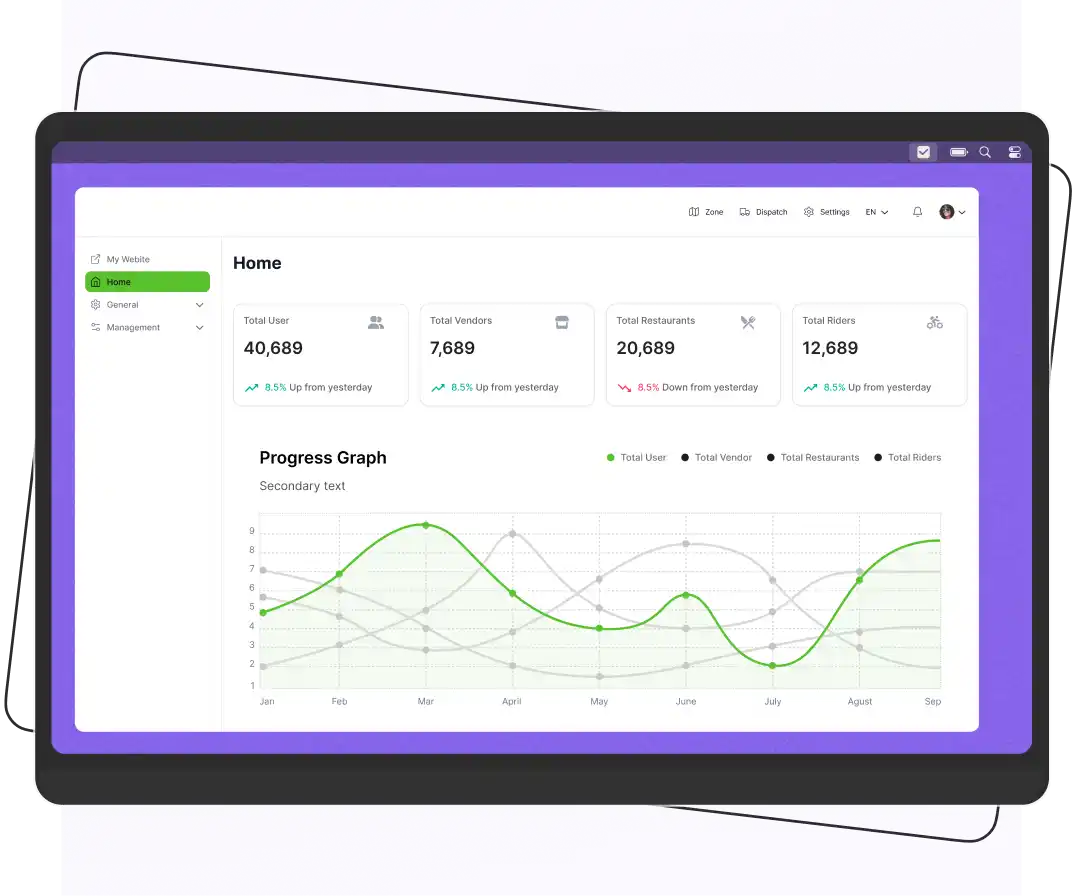
Supercharge your deliveries with Enatega.
Launch NowWhy Start an Online Food Business in Canada?
Canada’s online food delivery industry is experiencing explosive growth, and the numbers speak for themselves. According to Statista, the Canadian food delivery market is projected to reach US$15.61 billion in revenue by 2025, making it one of the fastest-growing sectors in the country.
If you’ve ever considered launching an online food business, now is the perfect time. The industry offers a powerful combination of high demand, flexible operations, and strong profit potential.
Here’s why entrepreneurs are jumping in.
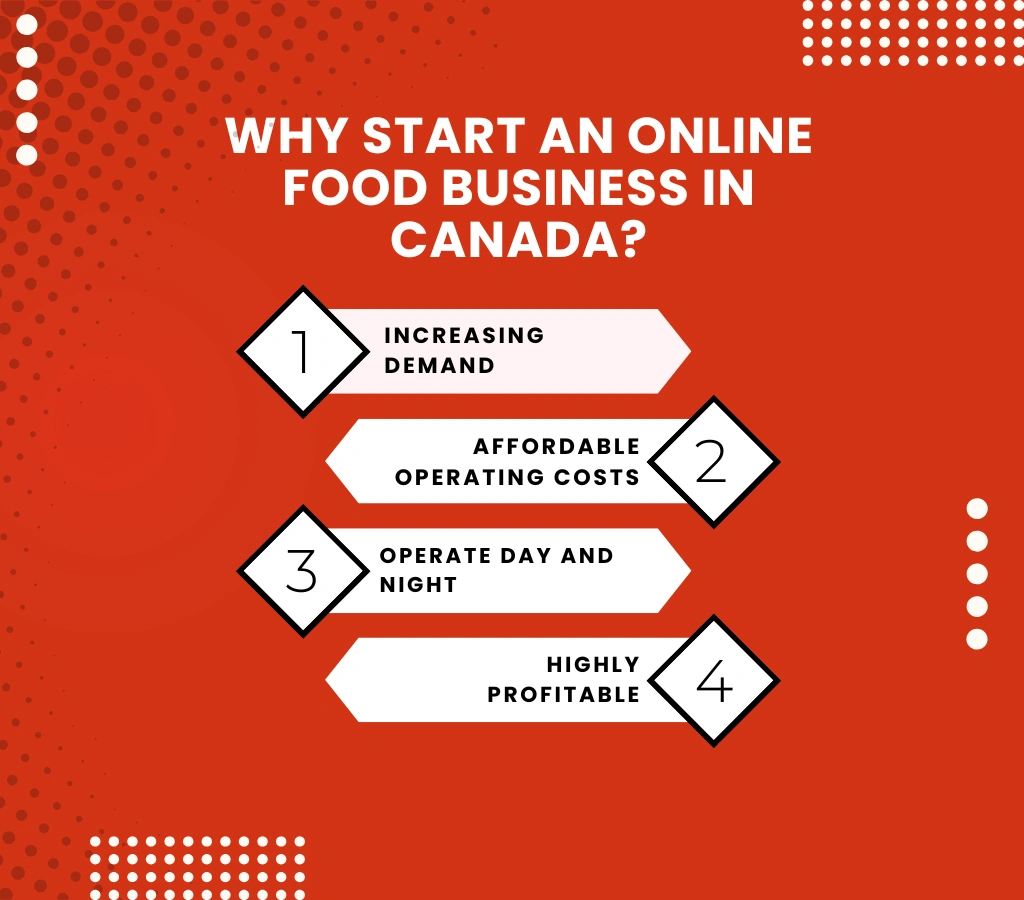
Increasing Demand
Canadians love convenience, and online food delivery fits perfectly into their fast-paced lifestyles. Whether it’s office workers grabbing lunch, students ordering midnight snacks, or families opting for hassle-free dinners, more people are choosing delivery over dine-in. This rising demand creates a steady stream of customers for new food businesses.
Affordable Operating Costs
One of the biggest advantages of going online is eliminating the expensive parts of traditional restaurants. No dine-in space. No heavy staff requirements. Lower utilities. Cloud kitchens and delivery-only models allow you to launch faster and scale smarter, without draining your budget.
Operate Day and Night
Starting an online food business gives you the freedom to serve customers whenever they’re hungry, morning, noon, or night. You can tailor your menu to different time slots, tap into multiple customer segments, and increase your daily order volume simply by staying flexible.
Highly Profitable
With lower overheads and a constant stream of orders, online food businesses can generate impressive profit margins. By optimizing your delivery zones, refining your menu, and using efficient order management tools, you can increase earnings.
7 Steps to Start a Food Delivery Business in Canada
Starting a food delivery business requires careful planning, research, and the right tools. Below are five essential steps to guide you through the process.
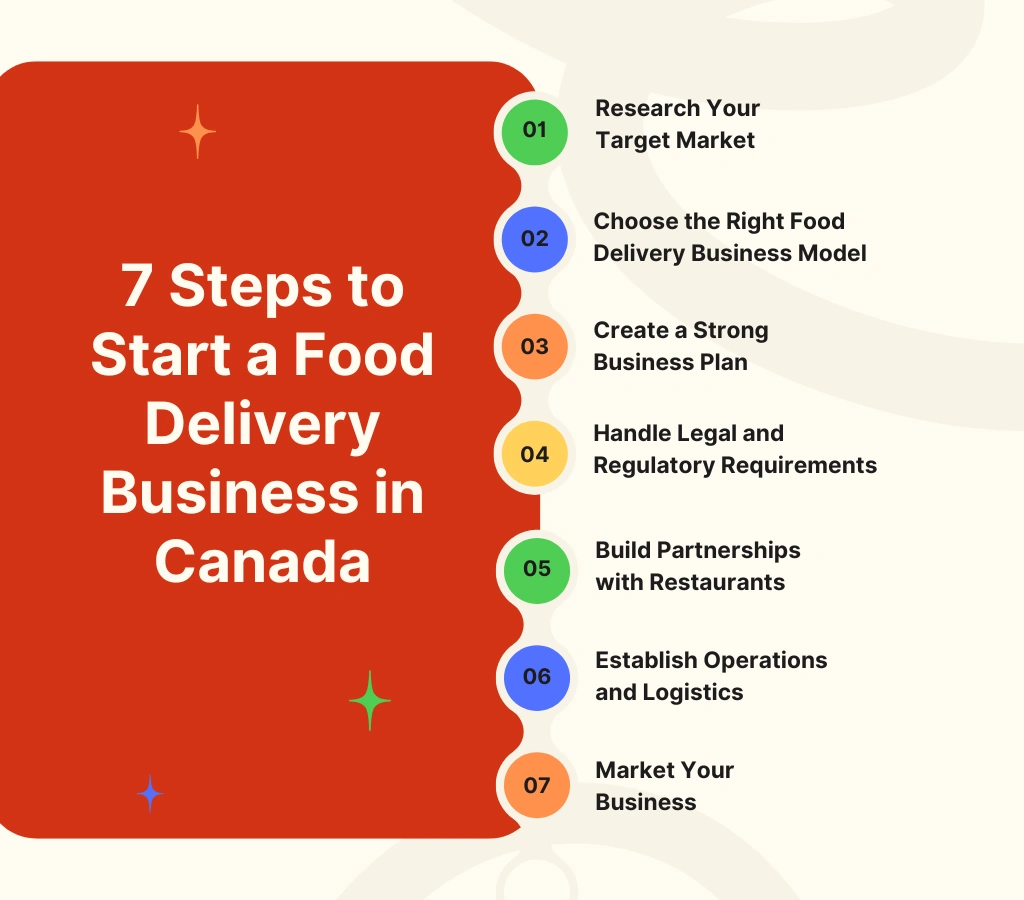
1. Research Your Target Market
Begin by gaining a deep understanding of your audience and the market you want to serve. Analyze how customers in your region prefer to order food, which cuisines are trending, peak ordering times, and what age groups use delivery services the most.
Next, study your competitors. Identify what they do well, where they fall short, and what customers are complaining about. This type of information will help you uncover gaps in the market and highlight opportunities for your business to stand out.
2. Choose the Right Food Delivery Business Model
Selecting the right business model is the first step in launching a successful food delivery venture in Canada. Here are the most common food delivery business models to consider.
- Restaurant-to-Customer Delivery
This model focuses on a single restaurant or a chain delivering directly to customers. You either manage your own delivery team or partner with third-party platforms to handle logistics.
- Marketplace Platform
A marketplace connects multiple restaurants with customers through a single app or website, similar to Uber Eats or SkipTheDishes. You earn revenue through commissions on orders or delivery fees.
- Cloud Kitchen / Ghost Kitchen
Cloud kitchens are delivery-only kitchens with no dine-in space. Multiple food brands can operate under one roof, using the same kitchen and delivery resources.
- Hybrid Model
Some businesses combine models, like operating a cloud kitchen while also partnering with restaurants in a marketplace.
3. Create a Strong Business Plan
A well-prepared business plan acts as your roadmap. It should outline these things:
- Your business model
- Target customers
- Operational strategy
- Marketing plan
- Revenue streams
- Financial projections
A solid plan not only guides your decisions but also proves valuable if you look for investment or partnerships.
4. Handle Legal and Regulatory Requirements
Complying with Canadian regulations is essential. Start by registering your business and choosing the right structure, sole proprietorship, partnership, or corporation.
You’ll also need to:
- Apply for the required licenses and permits
- Meet local food safety and handling regulations
- Follow provincial rules for digital commerce (if selling online)
- Ensure your delivery drivers are insured and comply with transportation laws
5. Build Partnerships with Restaurants
A strong network of restaurant partners is the backbone of any successful food delivery business. You’re running a marketplace platform or a cloud kitchen that features multiple brands, collaborating with the right restaurants can help you attract more customers.
Partnering with restaurants allows you to:
- Offer a wide variety of cuisines to your customers
- Access established brands that already have loyal followings
- Increase order volume and revenue potential
6. Establish Operations and Logistics
Efficient operations are the backbone of a successful food delivery business. Set up key components such as:
- Reliable delivery routes and coverage zones
- A trained delivery fleet or partnerships with independent drivers
- Packaging that keeps food fresh and intact
- An online ordering platform or app that makes ordering simple
7. Market Your Business
Once everything is in place, it’s time to introduce your business to the world. Promote your food delivery service through:
- Social media marketing
- Email announcements
- Paid ads
- Local partnerships
- Referral and loyalty programs
Types of Food Businesses to Start in Canada
Which food business is most profitable in Canada?
Canada’s culinary market opens the door to countless food business opportunities. You’re a passionate cook, a creative baker, or an entrepreneur looking to take a step into a market, here are some exciting food business ideas to consider.
Bakery
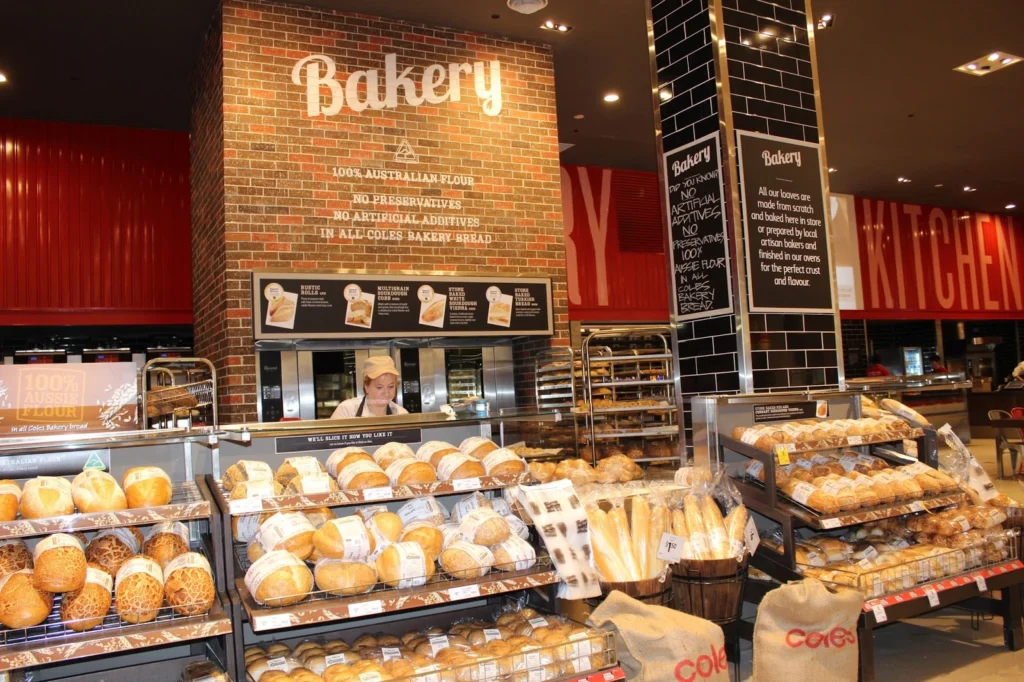
From artisan breads to custom cakes, bakeries remain a Canadian favourite. With the right niche, such as gluten-free, vegan, or specialty desserts, you can quickly build a loyal customer base.
According to the Market Research Future, the Canadian bakery products market is projected to grow from 34.41 USD Billion in 2025 to 45.0 USD Billion by 2035.
Coffee Shop

Coffee culture is thriving across Canada. A cozy cafe offering quality brews, pastries, and a unique ambiance can easily attract daily foot traffic and repeat customers.
Food Trucks

Food trucks give you the freedom to take your menu wherever hungry customers are. Low overhead, mobility, and the ability to participate in festivals and events make food trucks a popular startup option.
Food Kiosk

Small but powerful kiosks inside malls, transit stations, or busy streets are perfect for selling snacks, fast food, or specialty treats with minimal space and investment.
Meal Kit Delivery

As more Canadians opt for home cooking with convenience, meal kit services have become popular. Offer pre-portioned ingredients and easy recipes for busy households.
Catering

From corporate events to weddings and private parties, catering allows you to serve large groups without running a full-time restaurant. It’s ideal for skilled cooks who enjoy creating memorable dining experiences.
Ghost Kitchen (Cloud Kitchen)

Ghost kitchens operate entirely online, focusing on delivery-only menus. With no dine-in area needed, they offer low startup costs, high scalability, and access to multiple food concepts under one roof.
Challenges to Face in Starting a Food Delivery Business in Canada
Launching a food delivery business in Canada offers huge potential, but it also comes with its own set of challenges. Understanding these obstacles early can help you build stronger systems, minimize mistakes, and rise above competitors.
Here are the key challenges you should be prepared to face.

Managing Food Delivery Operations
Smooth, reliable delivery is the foundation of every food delivery business, yet it’s where many companies struggle the most. Poor delivery management can lead to delays, cold meals, unhappy customers, and ultimately, lost revenue.
Common delivery challenges include:
- Defining the right delivery zones
- Handling sudden spikes in order volume
- Allocating enough drivers or vehicles to meet demand
- Ensuring fast delivery times during peak hours
- Maintaining strict hygiene and food safety standards during transit
Without an efficient logistics system, even the best food will fail to impress your customers.
Maintaining Consistent Food Quality
Delivering high-quality, fresh food is one of the biggest hurdles in this industry. Food naturally changes in texture, temperature, and taste as time passes, and customers quickly notice the difference.
Main challenges include:
- Ensuring food tastes as good at home as it does in the restaurant
- Preventing spills, sogginess, or temperature loss
- Choosing packaging that protects freshness and presentation
Customers have countless alternatives; even small compromises in quality can push them toward competitors. Maintaining consistency is important for long-term success.
Meeting Customer Expectations
Today’s customers expect fast delivery, accurate orders, delicious food, responsive support, and better app experiences. If even one of these areas falls short, it can impact ratings and repeat business.
New delivery brands must work harder to build trust and prove their reliability in a crowded market.
Dealing with Price Fluctuations
The food industry is heavily affected by price volatility. From ingredient costs to fuel prices, many factors can influence your bottom line.
Challenges include:
- Keeping menu prices competitive while covering rising costs
- Adjusting pricing without upsetting customers
- Adopting offensive or defensive pricing strategies to stay ahead of competitors
- Maintaining profit margins during inflation or supply shortages
Finding the right pricing structure is a delicate balancing act, and one that directly impacts your profitability.
Competing with Established Rivals
Large platforms like Uber Eats, DoorDash, and SkipTheDishes hold a significant share of the Canadian food delivery market. Their brand power, resources, and customer base can make it difficult for new entrants to stand out.
New businesses must find ways to differentiate themselves through:
- Unique cuisine or niche markets
- Lower delivery fees
- Faster delivery times
- Better customer service
- Local partnerships
FAQs
1. Can I start a food business from home in Canada?
Yes, you can start a food business from home in Canada, but it requires meeting specific provincial and municipal regulations for food safety, licensing, and zoning.
2. What is the cheapest food business to start?
The cheapest food businesses to start are home-based operations like selling baked goods, specialty jams, or offering personal chef/catering services, as they require minimal equipment and little to no commercial rental space. Other low-cost options include operating a food cart or a delivery-only “cloud kitchen”.
Supercharge your deliveries with Enatega.
Launch NowConclusion
The food industry remains one of the most dynamic and profitable sectors in Canada, offering endless opportunities. Starting a food delivery business today not only positions you in a growing market but also opens the door to long-term growth and recurring revenue.
But success in this industry requires more than just great food; it requires the right technology. An online ordering platform can help you manage orders, deliveries, and scale your business faster than ever.
If you’re ready to bring your food delivery vision to life, book a free demo with us today and launch a powerful, fully branded platform tailored to your needs.
About the author

Hudaibia Khalid is a senior content writer with several years of experience in creating clear and easy-to-understand content. Over the years, she has worked closely with startups, restaurants, and entrepreneurs, helping them simplify complex digital and technical topics into actionable insights.
Her expertise lies in writing about on-demand platforms, food delivery solutions, and business growth strategies in a way that is accessible even to non-technical readers. With her experience in the industry, she focuses on guiding businesses step by step, from understanding ideas to turning them into fully working solutions.
SHARE






 IOS
IOS Android
 Web
Web