

Have you ever noticed how most people now book a ride with just a few taps on their phone? Ride-sharing has become a normal part of everyday life, helping people commute to work, reach the airport, or travel across the city with ease. Behind every ride-sharing app, there’s an entrepreneur who decided to turn an idea into a real business.
If you’ve ever thought, “I could start my own ride-sharing service,” you’re already one step ahead.
The good news is you don’t need to compete with global giants to succeed. There are still many opportunities in local markets and community-focused ride platforms. With the right approach, you can build a ride-sharing business that addresses real problems and delivers genuine value.
In this blog, we’ll guide you through the simple and practical steps to start your own ride-sharing business from planning and setup to technology, drivers, and launch strategy.
Supercharge your deliveries with Enatega.
Launch NowWhat is a Ride-Sharing Business?
Ride-sharing business is a transport service where passengers book a ride through a mobile app and share a car with a driver and, in some cases, with other passengers going in the same direction.
Instead of owning a taxi fleet, ride-sharing platforms connect drivers who use their own vehicles with people who need a ride.
Apps like Uber, Lyft, Careem, and Bolt are popular examples of ride-sharing services.
In ride-sharing, the platform acts as a bridge between:
- the passenger (who books the ride)
- the driver (who accepts the ride)
- and the platform owner (who earns a commission per ride)
Ride Share Market Opportunity
- According to Fortune Business Insights, the global ride-sharing market size was valued at USD 106.66 billion in 2023.
- Backlinko states that in March 2024, Uber had a 76% market share of the US ride-hailing market.
- The global ridesharing market size stood at USD 53.02 billion in 2025 and is on track to reach USD 91.16 billion by 2030, according to Mordor Intelligence.
- Uber and Lyft are the largest players in the global ride-sharing market, with Uber remaining the dominant platform, according to Statista.

Are Ride-Sharing Companies Profitable?
Yes, major ride-sharing companies like Uber are finally making profits after many years of losses. They reached this point by reducing costs, increasing prices, expanding services like food delivery, and strengthening their market position. Lyft is also expected to become profitable soon.
However, this success comes with concerns from drivers, many of whom feel their earnings are still low. So while the companies are profitable, the situation is more complex because balancing driver pay and business growth remains a challenge.
Ride-Sharing Business and Revenue Model
Understanding the business and revenue model is important before starting a ride-sharing company.
How Does Ride-Sharing Work?
Before starting the ride-sharing business, you have to know how it works for passengers and drivers.
Here is the complete working process of the ride-sharing platform.
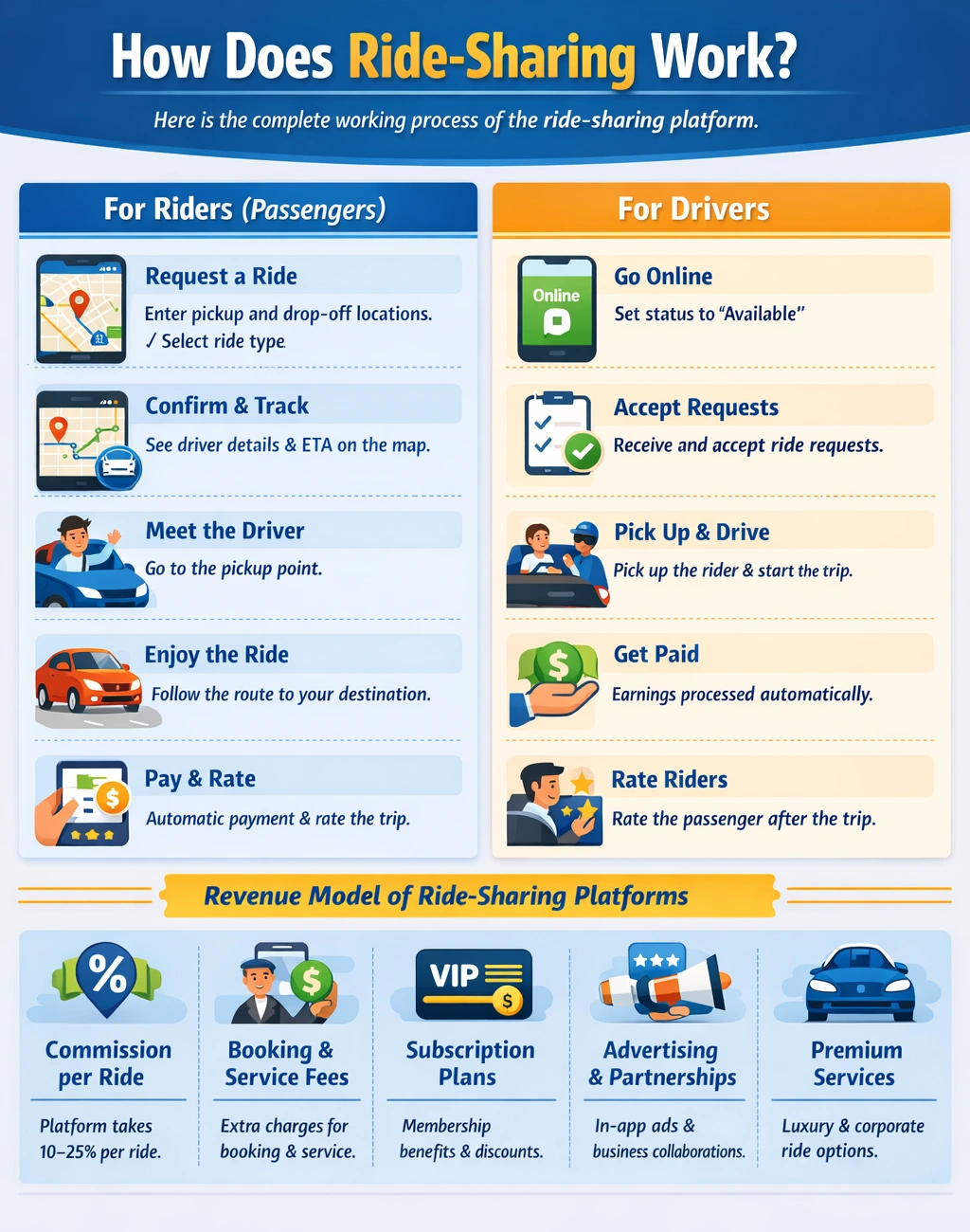
For Riders (Passengers)
- Request a Ride
Open the app, enter your pickup and drop-off locations, and select your preferred ride type (such as standard or shared).
- Confirm and Track
You’ll see the estimated fare, and the app will connect you with a nearby driver. Their name, vehicle details, and live location are displayed on your screen.
- Meet the Driver
Head to the pickup point. The driver will wait briefly before moving to the next ride.
- Enjoy the Ride
The driver follows the in-app navigation to your destination. In many apps, you can add a stop or adjust the route if needed.
- Pay and Rate
Payment is processed automatically through your linked account. After the trip, you can rate your experience from 1 to 5 stars.
For Drivers
- Go Online
Open the app and switch your status to “available” to start receiving ride requests.
- Accept Requests
View trip details such as pickup and drop-off locations, then accept the ride.
- Pick Up and Drive
Navigate to the passenger, confirm their identity, and begin the trip to the destination.
- Get Paid
The app calculates the fare and processes the payment automatically, deducting the platform commission.
- Rate Riders
After the trip, rate the passenger to help maintain safety and service quality across the platform.
Revenue Model of Ride-Sharing Platforms
Ride-sharing businesses earn revenue in several ways, such as:
- Commission per Ride
The most common model. The platform takes a percentage (usually 10–25%) of each ride fare.
- Booking or Service Fees
Additional charges may be applied to passengers for convenience, service, or surge pricing.
- Subscription Plans
Some platforms offer membership plans for passengers or drivers with benefits like discounts, priority access, or reduced commission fees.
- Advertising and Partnerships
Platforms can generate revenue through in-app advertising, brand partnerships, or collaborations with businesses like hotels, restaurants, and corporate clients.
- Premium Services
Offering luxury rides, carpooling options, or corporate ride packages can bring higher margins.
Steps to Start a Ride-Sharing Business
Ready to hit the road and turn your entrepreneurial vision into reality? Starting a ride-sharing business is an exciting journey that puts you in control both behind the wheel and as a business owner.
It’s more than just providing convenient transportation services. It’s about entering the rapidly growing market.
Before you start your engines, take a moment to review the steps below and understand exactly what it takes to launch your ride-sharing business.
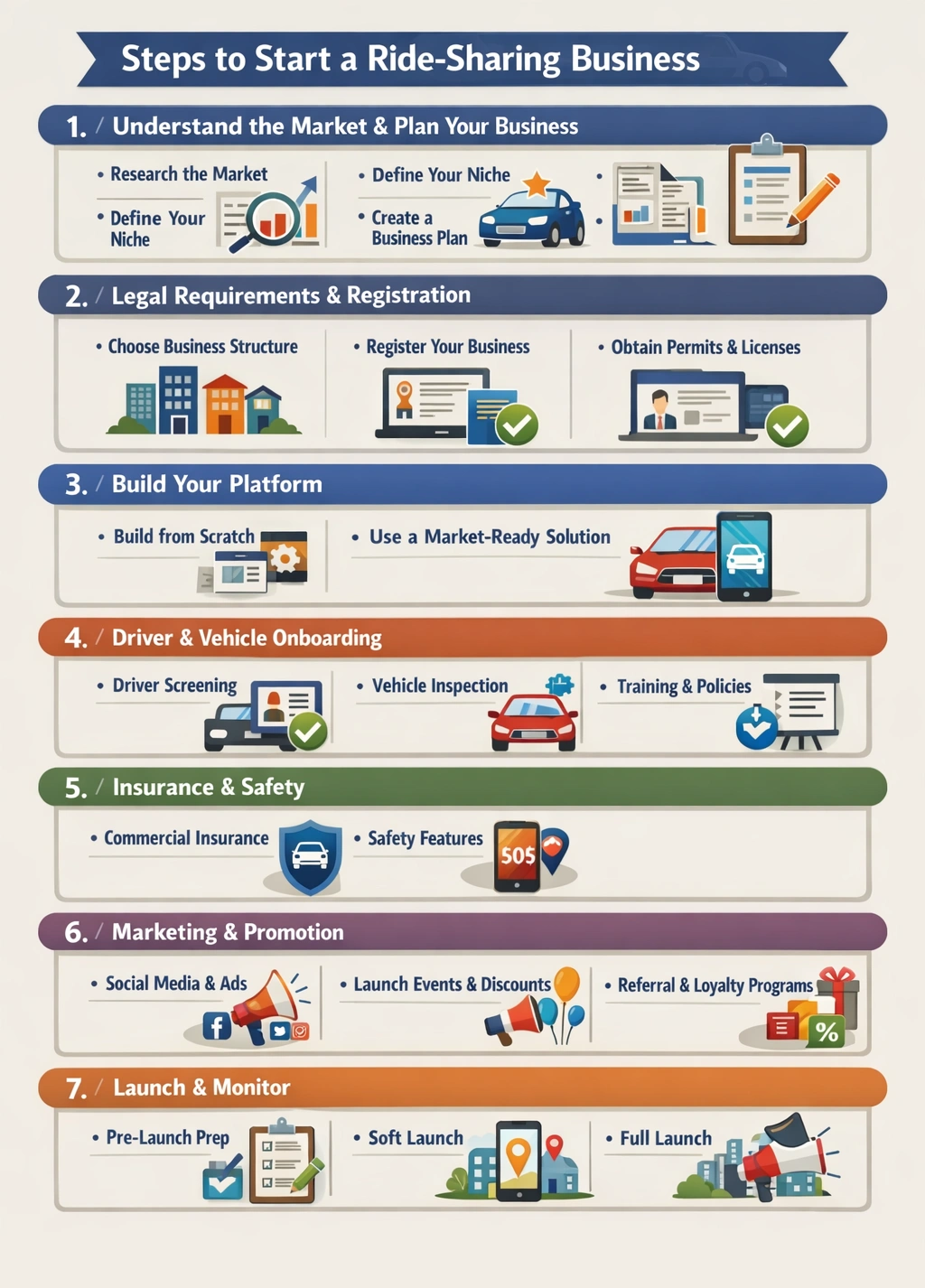
1. Understand the Market and Plan Your Business
Before you start, it’s essential to know your market and have a solid business plan. This foundation will help you start on the right foot and avoid costly mistakes.
In this phase, you have to follow these steps.
- Research the Market
Start by analyzing the ride-sharing market in your area. Identify existing competitors, study their strengths and weaknesses, and find gaps where you can stand out.
Ask yourself questions like:
- Are busy professionals in my city looking for a reliable way to commute?
- Do students need an affordable alternative to public transport?
The better you understand your target audience, the easier it will be to tailor your service to their needs.
- Define Your Niche
Decide what will set your service apart. Options could include:
- Electric vehicles
- Luxury rides for premium customers
- Services focused on families, students, or corporate commuters
- Create a Business Plan
A clear plan will act as a roadmap for your ride-sharing business. You have to create the business plan, and it should contain:
- Your goals and target market
- Revenue model and pricing strategy
- Marketing and growth plans
- Financial projections, startup costs, and budget
2. Legal Requirements and Registration
Just like driving requires rules, so does running a ride-sharing business. You’ll need licenses, permits, and legal compliance.
In this phase, you have to do:
- Choose a Business Structure
Decide whether to operate as a sole proprietorship, partnership, or limited liability company (LLC). Each offers different benefits and liability protection.
- Register Your Business
File your business with local and state authorities. This may include obtaining a business license and registering for taxes; the process varies by location.
- Obtain Necessary Permits
Research local ride-sharing regulations and make sure your business complies. Proper documentation ensures a smooth, legal operation.
3. Build Your Platform
Your app or platform is the heart of your ride-sharing business. It connects passengers and drivers, manages bookings, payments, and schedules.
You have two main options:
- Build from Scratch
For this step, you will have to start from zero. This option offers full customization and control, but it requires a skilled development team (developers, UI/UX designers, QA testers, project managers). Also, it needs more time and investment.
Here are some steps to help you build the platform from scratch.
- Gather requirements and plan features
- Hire or outsource your development team
- Develop and test the app thoroughly
- Launch once all functionality is verified
- Use a Market-Ready Solution
This is a faster and more cost-effective way to launch your ride business. Platforms come with essential features and allow businesses to customize them as per their needs.
4. Driver and Vehicle Onboarding
The success of your ride-sharing business depends on safe, professional drivers and reliable vehicles. You have to do these things:
Driver Screening
Recruit drivers with clean records and valid licenses. Also, conduct background checks and ensure the professionalism of drivers.
Vehicle Selection
Ensure vehicles are safe, reliable, and comfortable. Consider fuel efficiency, maintenance, and passenger experience.
Training
Providing training is one of the main parts of this business. You should offer training about:
- Company policies
- Customer service
- App usage and navigation
5. Insurance and Safety
Safety is non-negotiable. Obtain commercial insurance to cover accidents, damages, and liability.
Additional safety measures can include:
- In-app emergency assistance and SOS features
- 24/7 customer support
- Verified driver and passenger profiles
6. Marketing and Promotion
Getting noticed is important for attracting both drivers and passengers. You have to follow these effective marketing strategies:
- Social media campaigns (Meta Ads, Google Ads)
- Launch events to generate excitement
- Introductory discounts and referral programs
- Loyalty programs to retain repeat customers
Moreover, prompt, helpful support builds trust and ensures a positive experience for both passengers and drivers.
7. Launch and Monitor
Finally, it’s time to launch your ride-sharing business. Treat this as a milestone, not the finish line.
Divide this phase into several different sections.
Pre-Launch Preparation
- Finalize your app and website
- Test all features and fix bugs
- Ensure smooth onboarding for passengers, drivers, and vehicles
Soft Launch
- Start in a limited area or with a small user base
- Gather feedback and make improvements before expanding
Full Launch
- Expand to a wider market once your system runs smoothly
- Continuously monitor operations and optimize for growth
Challenges to Starting a Ride-Sharing Business
Launching a ride-sharing business offers benefits, but it also comes with its own challenges that you have to face.
Below is a table that shows the common challenges of starting a ride-sharing business, along with their solutions.
| Challenges | Solution |
| Regulatory Hurdles: Local regulations can vary greatly, and navigating permits, licenses, and compliance can be complex. | Research municipal laws thoroughly. Consult with legal compliance experts. |
| Competition: The ride-sharing market is highly competitive, with established players dominating. | Differentiate by offering unique services. |
| Safety Concerns: Ensuring the safety of both drivers and passengers is critical, especially in light of growing concerns about personal safety. | Implement complete background checks and training for drivers. Provide in-app safety features (emergency contacts, ride tracking). |
| Driver Recruitment: Attracting and retaining qualified drivers can be challenging, especially in a competitive market. | Offer attractive financial incentives and bonuses. Promote flexible working hours and a supportive community for drivers. |
| Customer Trust: Gaining the trust of users is vital for success, particularly for new customers. | Focus on transparency in pricing and policies. Maintain high service standards and prompt customer service responses. |
| Pricing Strategy: Setting competitive yet profitable pricing can be difficult, especially in a crowded market. | Analyze competitors’ pricing models. Offer introductory discounts or promotions to attract initial users. |
Cost to Start a Ride-Sharing Business
The cost of starting a ride-sharing business can vary widely and depend on several factors, such as:
- Your location
- Business model
- Technology approach
- Scale of operations
On average, a small to mid-scale ride-sharing startup may require anywhere from $25,000 to $250,000+ to launch.
Estimated Costs
- Custom development (from scratch): $80,000 – $250,000+
- White-label / ready-made solution: $15,000 – $50,000
Choosing a market-ready solution reduces time and development cost while still allowing customization.
| Low-budget / MVP launch | $25,000 – $60,000 |
| Mid-scale startup | $60,000 – $150,000 |
| Fully custom enterprise platform | $150,000+ |
Rider App Development Cost by Regions

Supercharge your deliveries with Enatega.
Launch NowConclusion
Is now a good time to start a ride-sharing business? Absolutely, Yes.
The car-sharing and ride-hailing market is growing and projected to reach USD 534.41 billion by 2032. This rapid growth shows there’s still plenty of opportunity for new entrants, especially in local and niche markets.
Urban commuters, students, and professionals are increasingly turning to ride-sharing as a smarter alternative to owning a private vehicle.
If you’re ready to start a successful ride-sharing business, Enatega can help. Our team of experts builds customized car-booking platforms tailored to your business needs.
Don’t wait, book a free demo with us today and achieve success in your ride-sharing business.
About the author

Hudaibia Khalid is a senior content writer with several years of experience in creating clear and easy-to-understand content. Over the years, she has worked closely with startups, restaurants, and entrepreneurs, helping them simplify complex digital and technical topics into actionable insights.
Her expertise lies in writing about on-demand platforms, food delivery solutions, and business growth strategies in a way that is accessible even to non-technical readers. With her experience in the industry, she focuses on guiding businesses step by step, from understanding ideas to turning them into fully working solutions.
SHARE






 IOS
IOS Android
 Web
Web