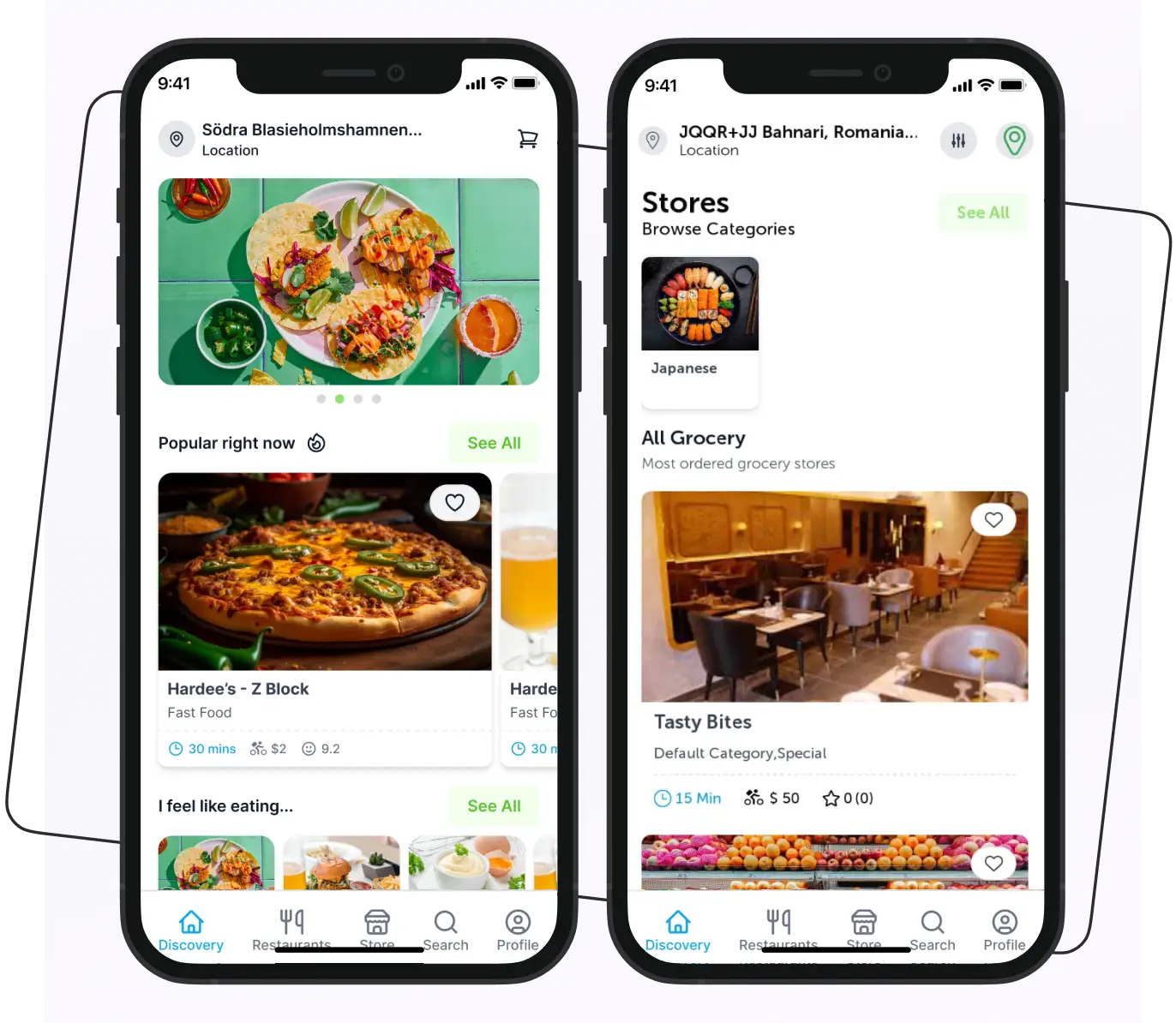
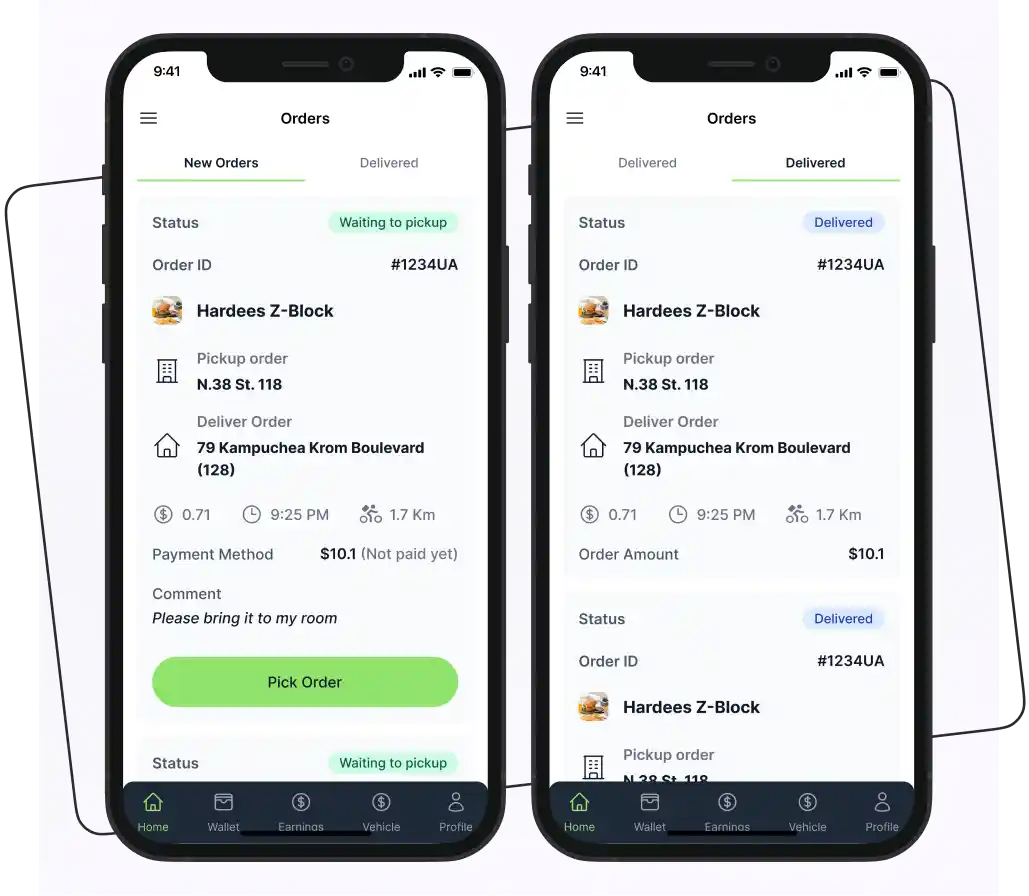
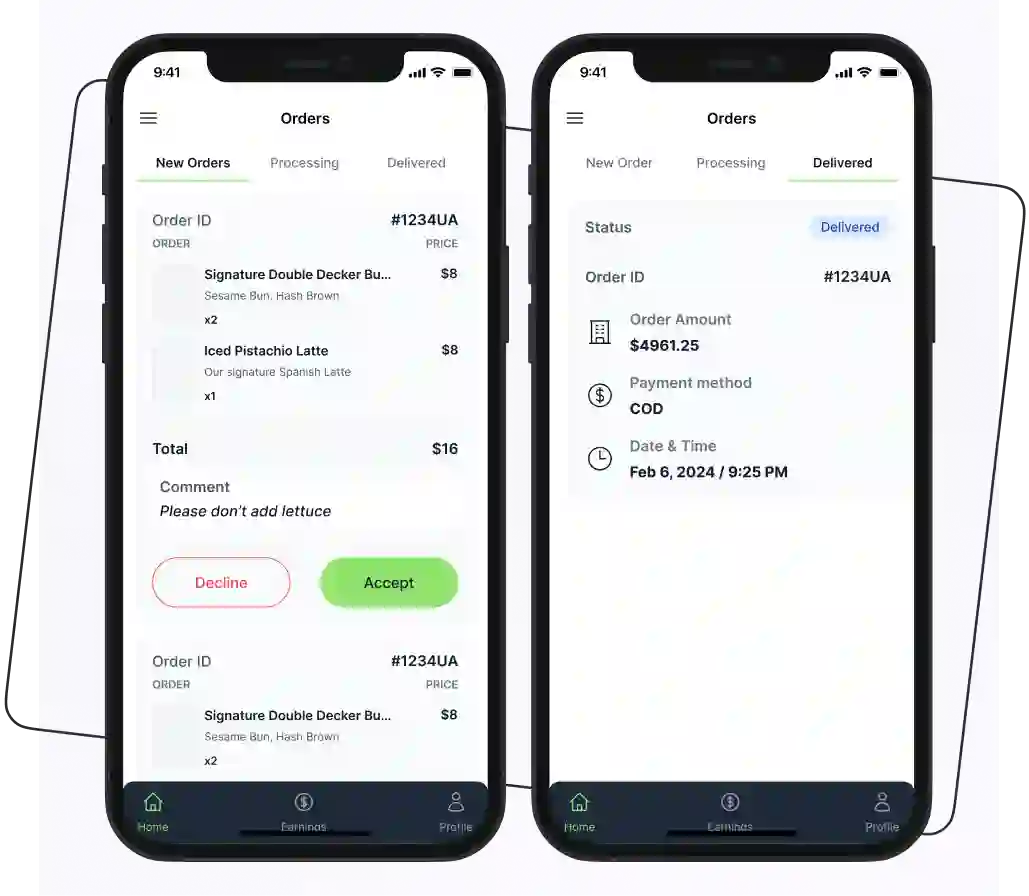
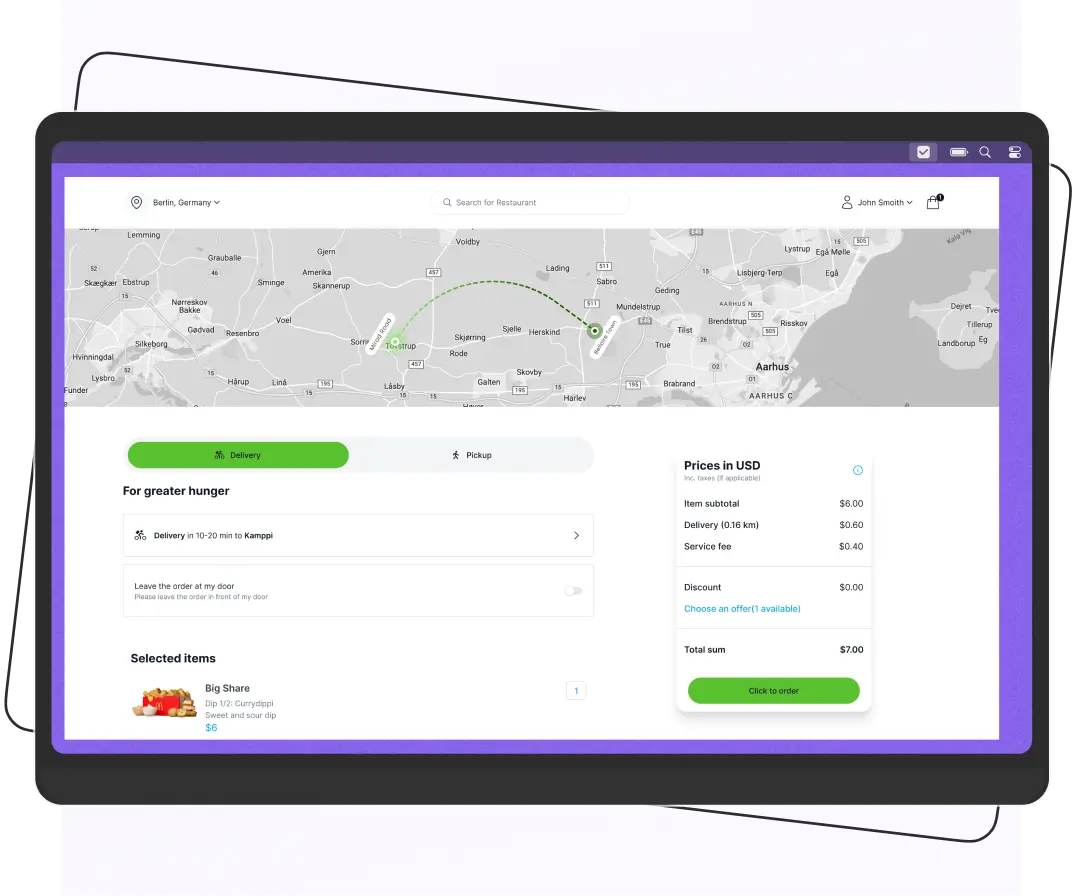
Get Backend API for Automated Food Ordering System Project
Get started with the automated food ordering system project frontend source code today. Unlock backend API capabilities through a license—schedule a quick call with our sales staff. Documentation provided.



Frequently Asked Questions
An automated food ordering system is a technology-driven platform that streamlines the process of ordering food, often using software applications or kiosks. How It Works: Order Placement: Customers select items from the menu, customize their orders, and add them to their cart. Payment: After reviewing their selections, customers proceed to checkout and make payments through integrated gateways. Order Confirmation: The system confirms the order and notifies the restaurant, which starts preparing the food. Tracking: Customers can track their order status in real time, receiving notifications when the order is being prepared and when it’s out for delivery. Feedback Collection: After the order is delivered, customers may be prompted to provide feedback or rate their experience, helping restaurants improve their services.
An automated food ordering system involves various technologies and tools, including: Frontend Technologies: HTML/CSS/JavaScript: For building the user interface of web applications. Frameworks/Libraries: React or Angular for dynamic web applications. Vue.js for user-friendly interfaces. React Native for cross-platform mobile app development. Backend Technologies: Node.js: For building scalable server-side applications. Java/Spring Boot: For robust backend services. Python/Django or Flask: For rapid development and RESTful API creation. Ruby on Rails: For quick web application development. Database: Relational Databases: Such as MySQL or PostgreSQL for structured data management. NoSQL Databases: Like MongoDB for flexible data storage and scalability. Payment Processing: Payment Gateways: Integration with services like Stripe, PayPal, or Square for secure payment processing. Hosting and Deployment: Cloud Platforms: AWS, Google Cloud, or Azure for hosting the application and managing infrastructure. Containerization: Docker for creating consistent environments for deployment. Real-Time Communication: WebSockets: For real-time updates and notifications. Firebase: For real-time database and cloud messaging capabilities. Analytics and Monitoring: Google Analytics: For tracking user behavior and app performance. Performance Monitoring Tools: Such as New Relic or Firebase Performance Monitoring. Development Tools: Version Control: Git for source code management. CI/CD Tools: Jenkins or GitHub Actions for automated testing and deployment.
The cost to build a complete automated food ordering system project ranges from $20,000 to $150,000. Factors influencing the overall cost include: Feature Complexity: Basic systems with essential functionalities will be less expensive than those with advanced features like real-time tracking, detailed analytics, and custom integrations. Design Requirements: Custom UI/UX designs can increase costs compared to using standard templates. Development Team: Hiring experienced developers or a professional agency may cost more than using freelancers. Technology Stack: The choice of technologies (e.g., specific frameworks, databases) can affect development costs. Development Timeline: A shorter timeline may require more resources, increasing the overall budget. Ongoing Maintenance: Costs for updates, bug fixes, and feature enhancements should also be considered. Testing and Quality Assurance: Comprehensive testing phases can add to the overall project cost.




 IOS
IOS Android
 Web
Web