

Key Takeaways
- Introduction: Talabat is a top Middle Eastern food and grocery delivery platform.
- Revenue Streams: Revenue comes from commissions, delivery fees, subscriptions (Talabat Pro), and ads.
- Business Model: Operates a marketplace model connecting customers with restaurants; does not manage inventory.
- Major Growth Factor: Grocery and retail expansion is becoming a major growth driver beyond food delivery.
- Profitable Market: GCC markets are more profitable, while non-GCC markets focus on expansion.
- Competitors: Compared to Jahez and Deliveroo, Talabat focuses on a marketplace approach across multiple Middle Eastern countries.
- Development Cost: Building a similar app costs $10,000–$160,000+, depending on features and complexity.
- Challenges: Main challenges include competition, logistics, and keeping customers engaged.
You’ve probably used Talabat to order food, groceries, or even coffee, but have you ever wondered how it makes money? It’s more than just an app that connects you to restaurants. Talabat has a smart business model working behind the scenes, helping it grow fast and stay ahead of the competition.
For Q1 2025, Talabat revenue increased by 34% to $846 million, according to the Talabat press release.
If you’re thinking about building a food delivery app or just curious about how these apps make profits, you’re in the right place!
In this blog, we’ll explain how Talabat works, how it earns money, and what makes its business model so successful.
Supercharge your deliveries with Enatega.
Register NowWhat is Talabat?
| Quick Look Into Talabat | |
| Founder | Abdulaziz Al Loughani |
| Meaning of ‘Talabat’ | “Orders” or “Requests” in Arabic |
| Parent Company | Delivery Hero (since 2016) |
| Available In | UAE, Kuwait, Saudi Arabia, Bahrain, Oman, Qatar, Jordan, Egypt, Iraq |
| Services Offered | Food delivery, groceries (Talabat Mart (tMart)), pharmacy, flowers, pet supplies |
| Subscription Service | Talabat Pro (offers free delivery and exclusive deals) |
| Partner Restaurants | 65,000+ |
| Delivery Riders | Around 119,000 across the region |
Talabat is a popular online food and grocery delivery service that operates across the Middle East and North Africa. Originally founded in Kuwait in 2004, it quickly grew into one of the region’s go-to platforms for ordering meals, groceries, and more.
Over the years, it expanded its services to several countries and was eventually acquired by Delivery Hero in 2016. Whether you’re craving fast food, need groceries delivered in under an hour, or want to send flowers to someone, Talabat makes it easy and convenient.
How Talabat Works?
Here is the workflow of Talabat.

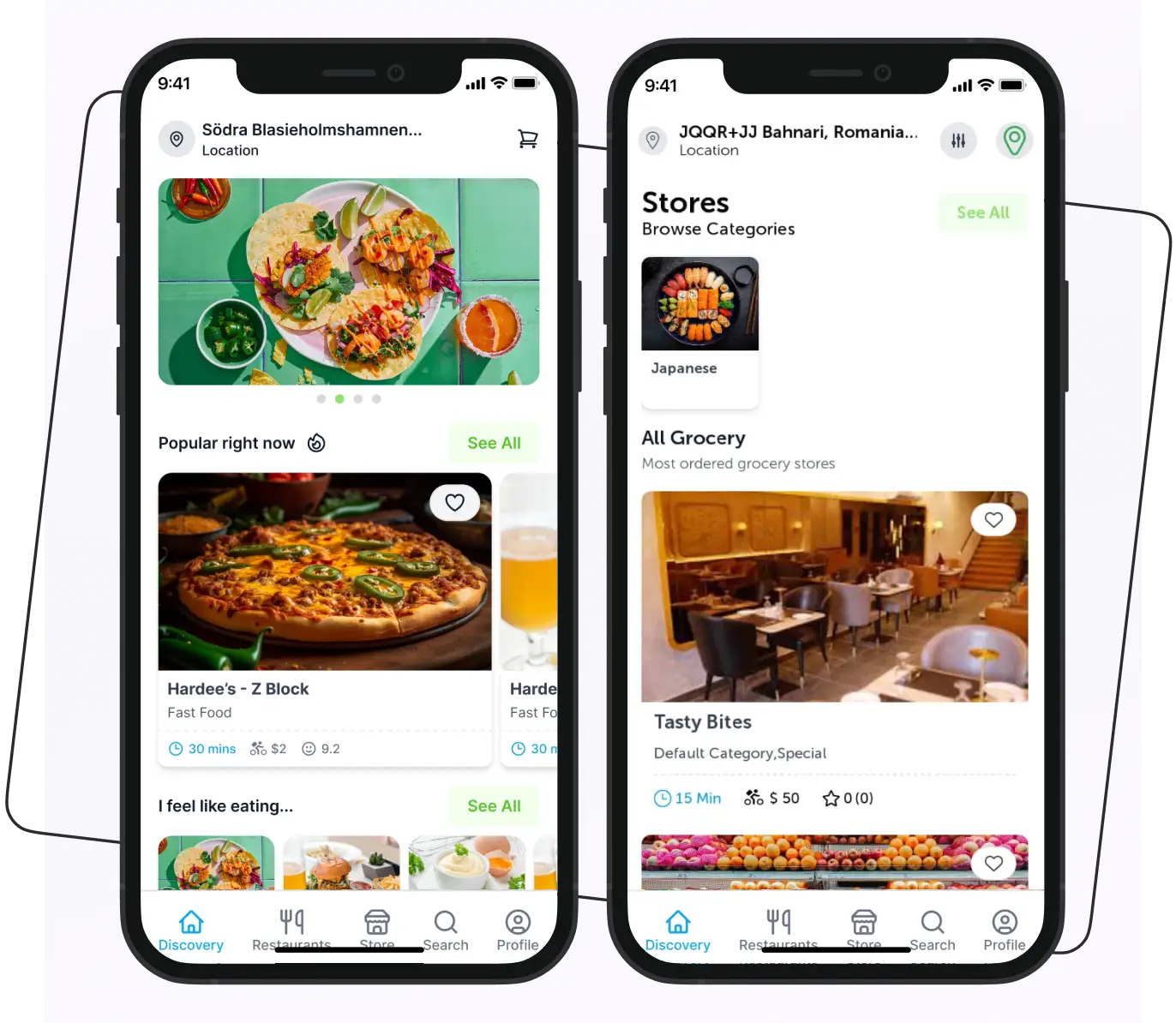
- Open the Talabat app
You have to download the app from the App Store or Google Play.
- Enter your location
This helps the app show you restaurants and stores that deliver to your area.
- Browse and choose
Scroll through the options, including restaurants, groceries, flowers, and medicine.
- Add to cart and customize
Pick your items, choose any extras (like cheese or sauce), and add them to your cart.
- Place your order
Select a payment method: credit card, cash on delivery, or Talabat wallet, and confirm.
- Track your order
You can see when the restaurant accepts it, when it’s being prepared, and when the rider is on the way.
- Receive your order
The rider delivers it to your doorstep. That’s it, food delivered, no hassle.
Talabat Business Model – How Talabat Makes Money?
Talabat works as a delivery and logistics platform that connects customers with restaurants, grocery stores, and other vendors. It doesn’t cook food or stock groceries itself; instead, it acts as the middleman and earns money by helping other businesses deliver to customers quickly and efficiently.
Talabat Revenue Streams
Here are the revenue streams that Talabat uses to make money.

1. Commission from Restaurants
Talabat charges restaurants a commission fee for every order placed through the app. This is their main revenue stream, usually ranging from 15% to 35%. The more orders processed, the more revenue Talabat generates from commissions.
| Pros | Cons |
| Stable and consistent revenue stream | High commission rates |
| Scales easily with order volume | Creates dependency on restaurant partners for revenue |
| No need to manage inventory or food |
2. Delivery Fees
Customers pay a delivery fee on each order, which varies depending on distance, location, and time. This helps cover rider costs and boosts per-order profit. Some of it goes to the delivery partner, while Talabat keeps a portion.
| Pros | Cons |
| Adds extra income per order | High delivery charges |
| Helps cover delivery partner costs like fuel, time, and logistics. | Fee fluctuations based on distance or peak hours may frustrate users. |
| Easy to implement and adjust depending on location or demand. |
3. Talabat Pro (Subscription Service)
Talabat Pro is a paid monthly membership that offers users free delivery and exclusive discounts. It provides steady, recurring revenue and encourages users to order more frequently from eligible restaurants.
| Pros | Cons |
| Generates recurring monthly revenue from subscribers. | Lower profit margin per order when discounts are applied. |
| Improves customer experience with free delivery and exclusive deals. | Restaurants may earn less per order due to discounts offered. |
4. Sponsored Listings and Advertising
Restaurants can pay Talabat for better visibility through featured placements, ads, or homepage banners. This helps restaurants gain more orders while generating extra income for Talabat.
| Pros | Cons |
| An additional revenue stream without involving logistics or delivery. | It may create unfair competition for smaller, non-paying restaurants. |
| Gives restaurants more visibility, helping them grow faster. |
5. Service Fees
Talabat may charge a small service fee during peak hours or for large orders. It’s a way to increase revenue without directly affecting the restaurant or vendor.
| Pros | Cons |
| Helps cover platform costs like payment processing and support. | It can feel like a hidden charge, leading to negative customer feedback. |
| Flexible pricing based on demand, location, or order size. | Not always transparent, which may harm trust and app satisfaction. |
Talabat Business Model Canvas

GCC vs. Non-GCC: The Real Source of Talabat’s Profits
Talabat’s business isn’t the same everywhere. In 2024, it clearly breaks into two very different types of markets:
GCC markets (UAE, Kuwait, Qatar, Bahrain, Oman)
Mature markets with higher average order values, established rider networks, and strong margin profiles. These markets generate the bulk of Talabat’s profitability today.
Non-GCC markets (Egypt, Jordan, Iraq)
These are still growing. Orders are cheaper, margins are thinner, and Talabat is investing heavily to expand. Right now, the focus here is growth, not profit.
If you’re thinking about launching a delivery business, this split shows where the opportunity lies. Talabat is hardest to compete with in GCC markets where it’s already strong. But in non-GCC regions where margins are tight, and the network is still developing, you have a better chance to build a solid position before Talabat fully scales.
Grocery is the Quiet Growth Engine for Talabat
Food delivery is Talabat’s foundation, but it’s no longer the growth engine.
According to Forbes, Talabat’s grocery business (tMart), along with its 2025 acquisition of InstaShop from Delivery Hero for $32 million, helped push its grocery and retail sales to over $2.5 billion in 2024.
The key difference is in economics. Unlike food delivery, which mainly relies on commissions, grocery (especially through dark stores) allows Talabat to earn direct retail margins plus platform fees. That makes the business more profitable as it scales.
If you’re building a delivery platform today, focusing only on food limits your upside. The bigger opportunity is in multi-vertical commerce, combining food, grocery, pharmacy, and more, so you can tap into a much larger market from day one.
Challenges Faced by the Talabat Business Model
Look at the table below and understand the challenges faced by Talabat.
| Challenge | Description |
| Intense Competition | The food delivery market has numerous players, including local and international brands. This intense competition makes it vital for Talabat to differentiate itself through unique offerings and superior service. |
| Logistics and Delivery | Managing a fleet for timely delivery involves complex logistics, including route optimization and traffic management. Delays can lead to customer dissatisfaction, making efficient logistics critical for maintaining a good reputation. |
| Customer Retention | With so many options available, keeping customers engaged is essential. Talabat must continually offer promotions, loyalty programs, and personalized experiences to build brand loyalty. |
| Quality Control | Ensuring food safety and quality can be challenging, especially when dealing with different restaurants. Talabat must implement stringent quality checks to maintain high standards, as any lapse can harm its reputation. |
| Supply Chain Issues | Disruptions in the supply chain can lead to delays in food availability and affect delivery times. Talabat must develop contingency plans to mitigate risks and ensure consistent service levels. |
Talabat vs. Jahez Business Model
The table below shows the comparison of the business models of Talabat and Jahez.
| Aspect | Talabat | Jahez |
| Founded | 2004 | 2016 |
| Headquarters | Dubai | Saudi Arabia |
| Service Type | Online food delivery | Online food delivery |
| Geographic Focus | Middle East (Kuwait, UAE, Bahrain, etc.) | Primarily Saudi Arabia |
| Business Model | Marketplace model connecting restaurants with users | Direct delivery model with its fleet |
| Revenue Streams | Delivery fees, commissions from restaurants | Delivery fees, service fees from restaurants |
| Partnerships | Collaborates with a wide range of restaurants | Partners primarily with local restaurants |
| Market Position | Leading player in multiple Middle Eastern markets | Strong presence in Saudi Arabia |
Talabat vs. Deliveroo Business Model
Check the table below and understand the difference between a Talabat and Deliveroo business model.
| Aspect | Talabat | Deliveroo |
| Founded | 2004 | 2013 |
| Headquarters | Primarily the UK, expanding to Europe and the Middle East | United Kingdom |
| Service Type | Online food delivery | Online food delivery |
| Geographic Focus | Middle East (Kuwait, UAE, Bahrain, etc.) | Primarily UK, expanding to Europe and the Middle East |
| Business Model | Marketplace model connecting restaurants with users | A hybrid model with both marketplace and logistics |
| Revenue Streams | Delivery fees, commissions from restaurants | Delivery fees, commissions, subscription services |
| Partnerships | Collaborates with a wide range of restaurants | Partners with a variety of restaurants, including exclusive ones |
| Market Position | Leading player in multiple Middle Eastern markets | Strong presence in the UK and competitive in Europe |
Features to Include in an App Like Talabat
Below are some features that you must include in a Talabat clone app.
User App
- Easy registration and login
- Search and filters
- Real-time tracking
- Multiple payments
- Order history and reordering
- Promotions and discounts
- Push notifications
- Multi-language support
- Ratings and reviews
Restaurant App
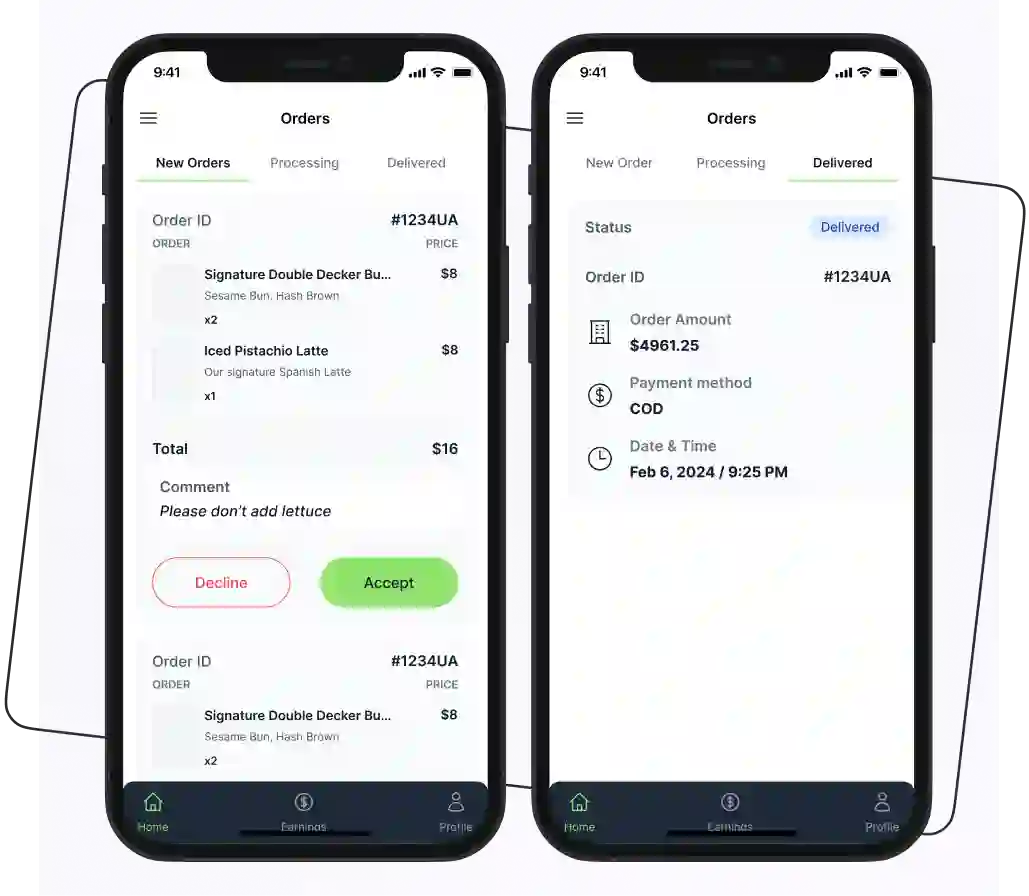
- Restaurant registration
- Order management
- Menu management
- Promotions and advertising
- Analytics dashboard
Rider App
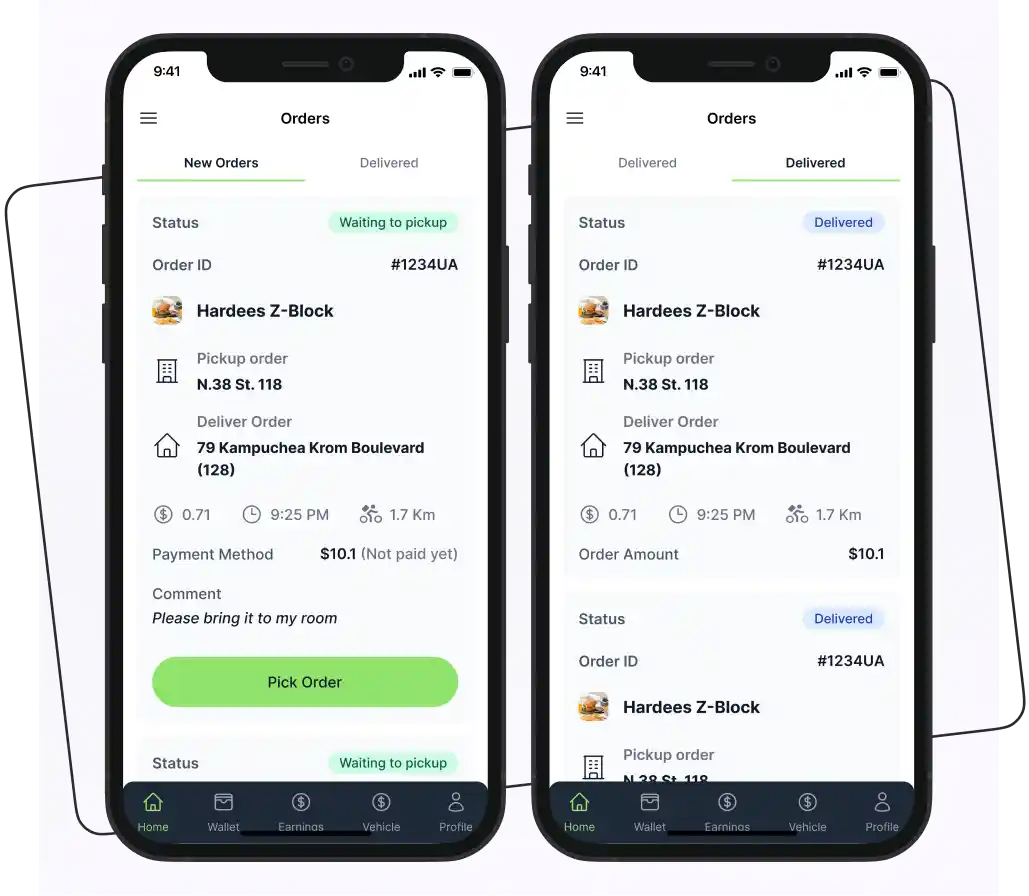
- Rider registration and verification
- Order assignment
- Delivery status updates
- Earnings tracker
Admin Panel
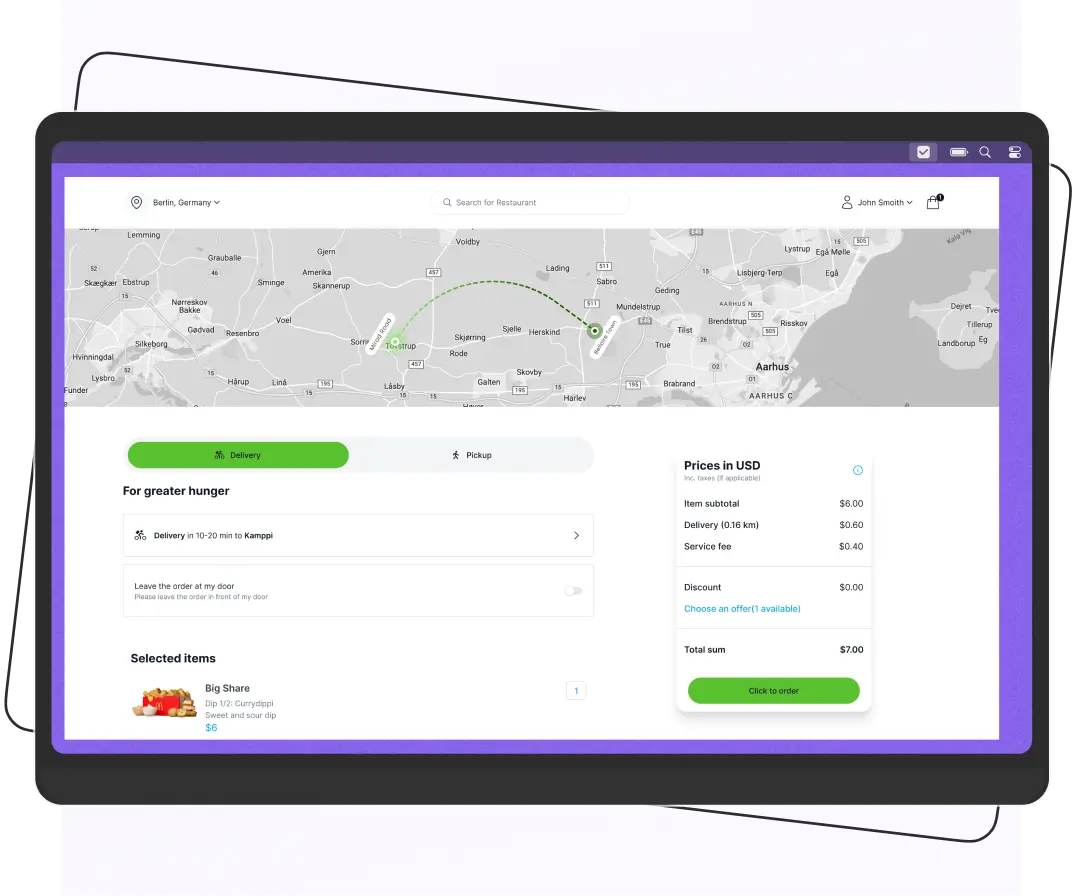
- User management
- Payment and commission management
- Content management
- Support management
Cost of Developing an App Like Talabat
It’s hard to give an exact cost for creating an app like Talabat because it depends on many factors, such as:
- The overall size and scope of the app.
- Target platforms: iOS, Android, or cross-platform.
- Features and functionalities to be included.
- Design and user interface complexity.
- Choice between an in-house team and outsourced development.
- Post-launch support and maintenance requirements.
The estimated cost to build a food delivery app like Talabat usually ranges from $10,000 and $160,000, and can be higher depending on the app’s complexity and advanced features.
- Basic MVP (Minimum Viable Product): $10,000–$20,000. It is suitable for quickly testing ideas.
- Custom, Feature-Rich Apps: $30,000–$100,000+. It includes advanced functionalities like real-time tracking, AI features, and multi-country support.
Factors Affecting Cost
Below are the factors that affect the cost of developing the Talabat app.
- App Complexity
The more features and functionalities your app has, the higher the cost. Simple apps with basic ordering cost less. The apps with advanced features require more development effort.
- Development Approach
Choosing between a white-label/pre-built solution or custom development greatly affects cost. White-label apps are faster and cheaper, while custom apps provide complete flexibility but require more time and investment.
- Platform Choice
Developing for a single platform (iOS or Android) is less expensive than building for both. Cross-platform solutions can save costs but may have limitations compared to native apps.
- Design and UI/UX
High-quality, intuitive design improves user experience but increases development time. Custom graphics, animations, and complex interfaces add to the overall cost.
- Team Selection
Costs vary depending on whether you hire an in-house team, freelancers, or offshore developers. Each option has trade-offs in terms of expertise, speed, and pricing.
- Geographical Location
Developer rates differ by region. Hiring developers in North America or Europe tends to be more expensive than hiring in Asia or Eastern Europe, affecting the overall budget.
3 Lessons from Talabat Before You Build Your Model
Before you build your own delivery business, here are three things you need to get right:
1. Commission is Not Profit
That 25% commission everyone talks about? It’s just a starting point. It doesn’t reflect what you actually earn. Real profitability comes after rider payouts, payment fees, refunds, and discounts. If you don’t know your net profit per order in a specific area, you don’t have a business model yet.
2. Don’t Try to Out-Scale Talabat
You won’t win by going head-to-head across an entire city. Talabat has spent years building density. A smarter move is to focus on smaller zones or underserved areas where you can reach profitability faster. Winning a tight 10–15 km² area is far more realistic than burning cash city-wide.
3. Your App isn’t Your Advantage
Talabat’s profits don’t come from having better software. They come from operations, brand strength, and merchant relationships. The tech is just a tool. Spending a year building an app from scratch won’t give you an edge; it will just slow you down.
How Enatega Can Help You Build an App Like Talabat?
Talabat took 20 years and billions of dollars to build a platform. You don’t have that kind of time.
Enatega gives you a ready-to-launch delivery platform built on the same core infrastructure model deployed in just 5 days. With usage in 90+ countries, it’s designed for operators who want to move fast.
Discuss your needs, and get a fully customizable solution built just for you.
FAQs
Talabat charges restaurants a commission fee ranging from 15% to 35% per order. But it depends on various factors such as the partnership agreement and the restaurant’s location.
The most ordered food on Talabat often includes pizza, burgers, and traditional Middle Eastern dishes like shawarma and kebabs. Popularity can vary by region and season.
Talabat offers several benefits, including:
Convenience
Wide variety
Promotions and discounts
Real-time order tracking for better visibility
User-friendly app
Talabat’s main competitors include:
Zomato
Deliveroo
Uber Eats
Foodpanda
Talabat offers several payment methods, including:
Credit/debit cards
Cash on delivery
Digital wallets
Talabat wallet
Yes, Talabat is a profitable company, having demonstrated strong financial performance with increasing revenue and net income in 2025.
Supercharge your deliveries with Enatega.
Register NowConclusion
Talabat isn’t just about delivering food; it’s about delivering smart business. With a mix of commissions, delivery fees, ads, and subscriptions, Talabat has built a model that keeps both customers and restaurants coming back.
It’s a great example of how the right mix of tech and strategy can turn a simple idea into a big success. Whether you’re a foodie, a startup dreamer, or just curious how apps make money, Talabat shows how it’s done.
So, if you're inspired to build your food delivery app like Talabat, contact the leading food delivery app development company.
About the author

Hudaibia Khalid is a senior content writer with several years of experience in creating clear and easy-to-understand content. Over the years, she has worked closely with startups, restaurants, and entrepreneurs, helping them simplify complex digital and technical topics into actionable insights.
Her expertise lies in writing about on-demand platforms, food delivery solutions, and business growth strategies in a way that is accessible even to non-technical readers. With her experience in the industry, she focuses on guiding businesses step by step, from understanding ideas to turning them into fully working solutions.
SHARE






 IOS
IOS Android
 Web
Web