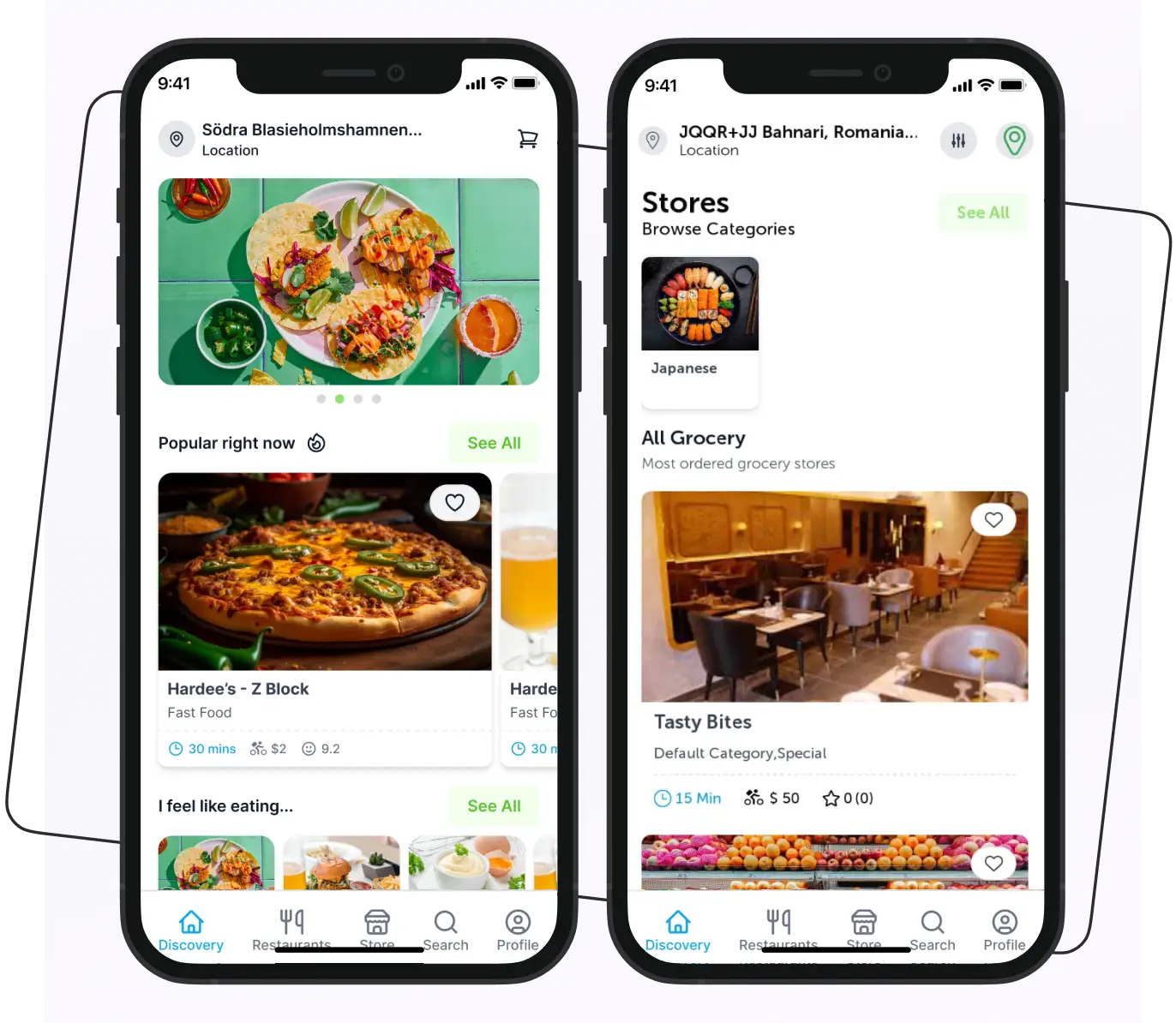
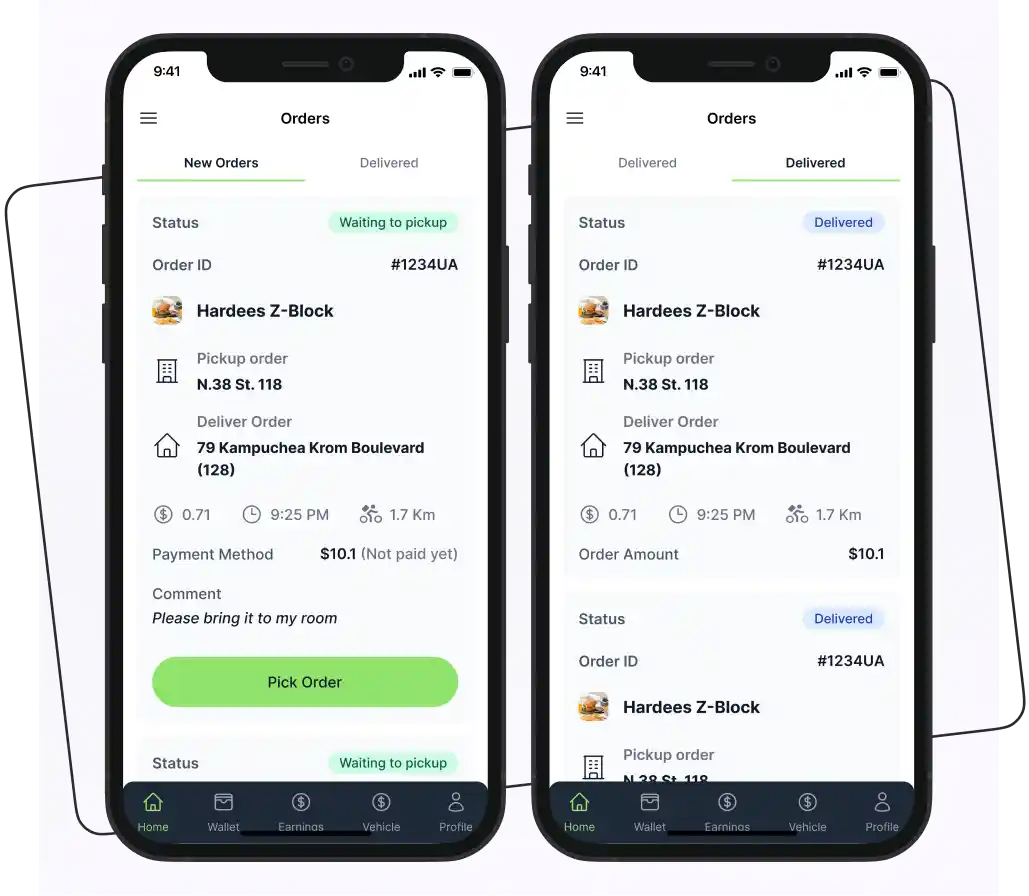
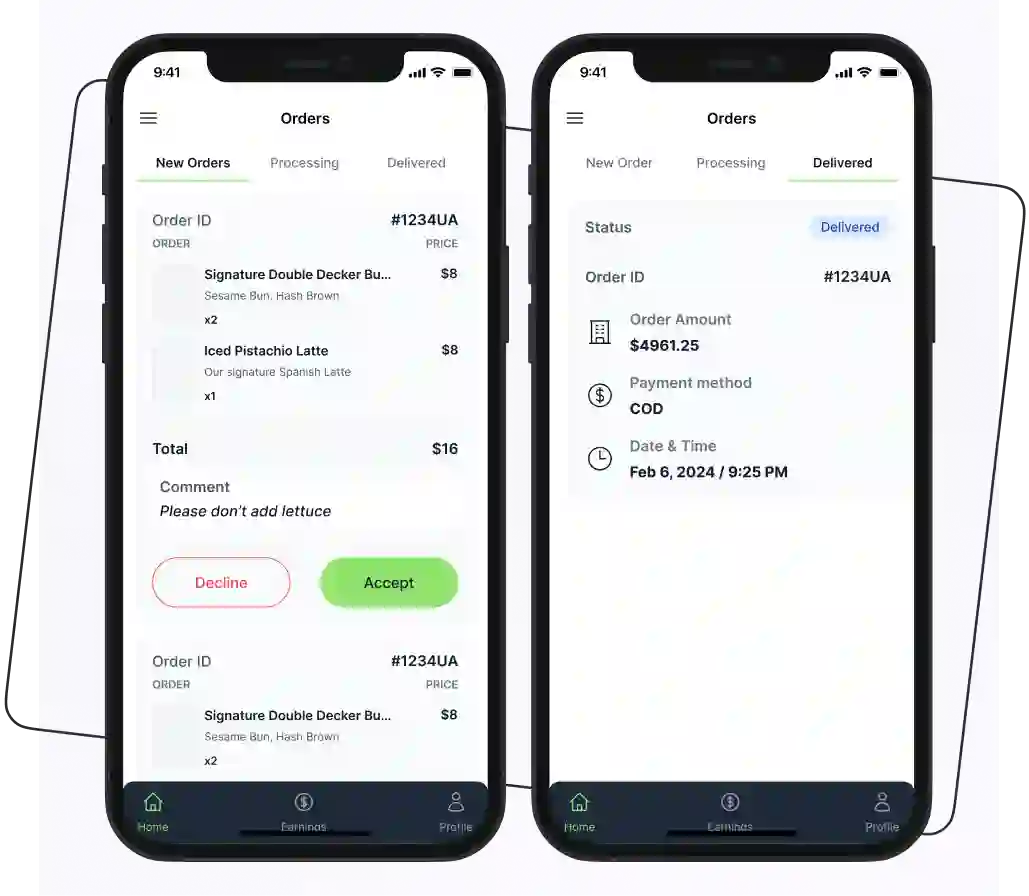
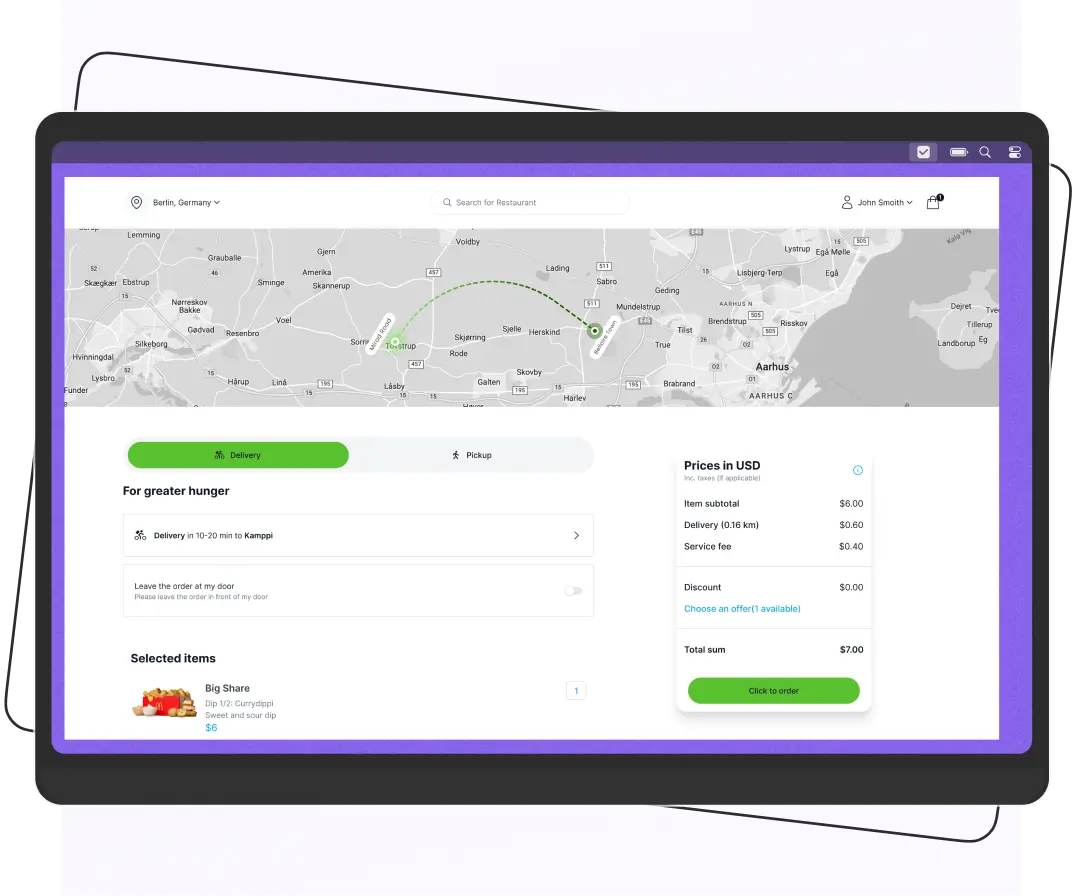
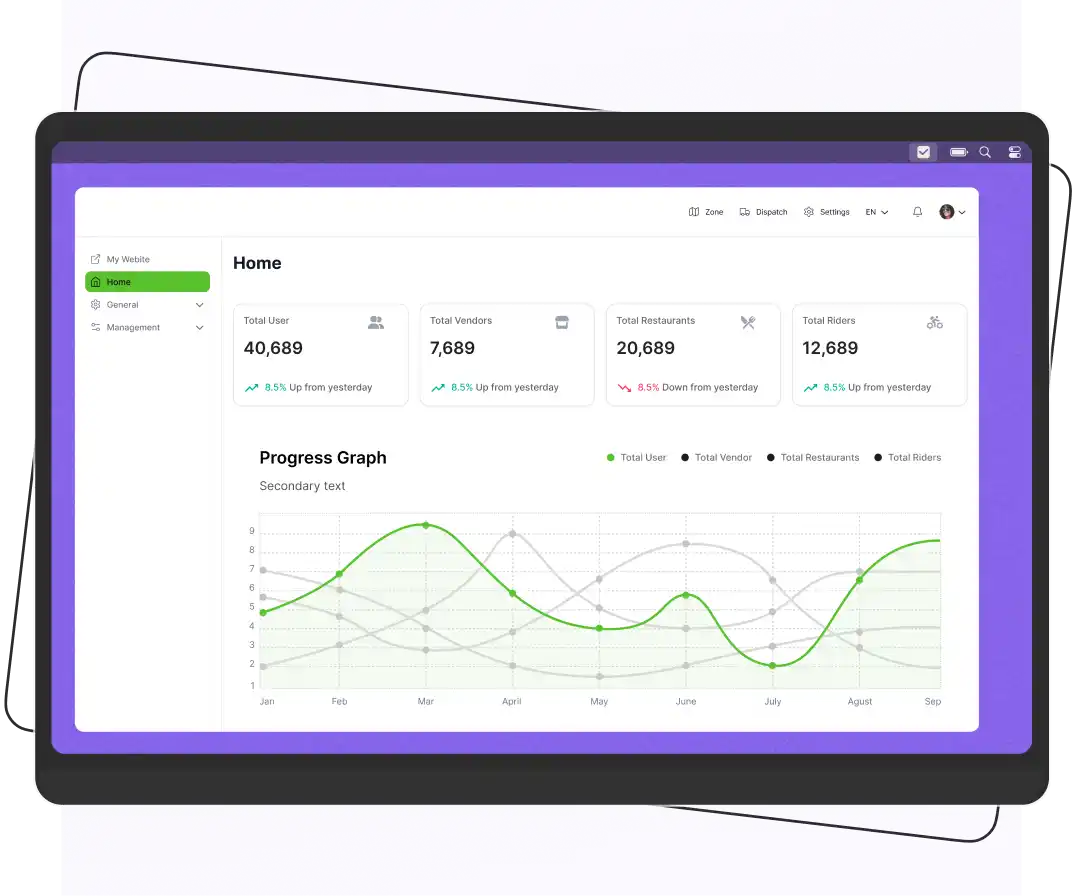
Get Backend API for Restaurant Delivery Platform Using React Js
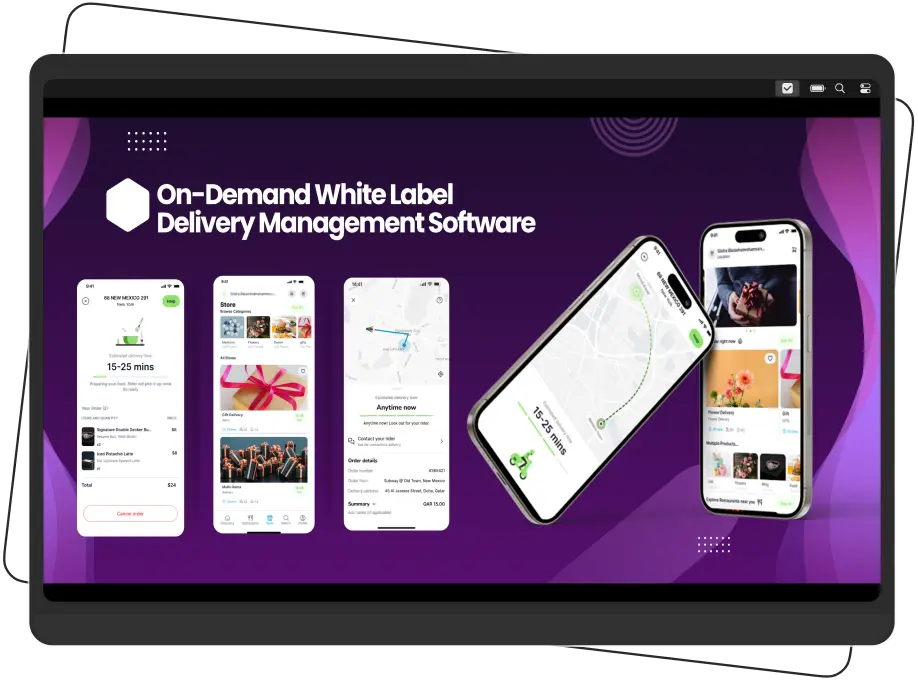
The restaurant delivery platform using react js frontend source is open for developers. Access the backend API with a paid license by contacting our sales team. Explore case studies and demos anytime.



Frequently Asked Questions
React JS stands out for building food delivery apps because: Component-Based Architecture: Makes it easy to reuse UI components like menus, carts, and order lists. Virtual DOM: Ensures fast rendering and a smooth, responsive user experience. Flexibility: Integrates easily with different backend technologies and APIs. Performance: Optimized for high-traffic apps with real-time updates, like live order tracking.
Developing a React JS delivery platform from scratch costs: Basic MVP: $20,000–$40,000 Medium complexity: $40,000–$90,000 Enterprise/fully featured: $100,000+
Yes, React JS can handle high user traffic for a busy restaurant delivery system. Its virtual DOM ensures fast rendering, and combined with efficient backend APIs, caching, and load balancing, it can scale to support many simultaneous users without performance issues.
React JS makes updates and maintenance easier because of its component-based architecture, allowing developers to modify or replace individual UI parts without affecting the entire app. Its reusable components and clear state management also simplify bug fixes, feature additions, and consistent design updates post-launch.




 IOS
IOS Android
 Web
Web