

Key Takeaways
- Total cost range: $15,000 – $100,000+, depending on features, platform, and team location.
- By tier: Basic: $15K–$30K, Mid-level: $30K–$60K, Advanced: $60K–$100K+.
- Biggest cost drivers: Real-time GPS tracking, AI recommendations, UI/UX design, and third-party integrations.
- Hourly rates by region: India: $20–$50, Eastern Europe: $30–$70, USA/UK: $100–$200
- Top cost-saving moves: Start with an MVP, use cross-platform frameworks, and outsource strategically.
- Market opportunity: The global dairy market is projected to reach $1,243.9 billion by 2028 (Statista, 2024), making this a profitable industry to enter.
Building a milk delivery app costs between $15,000 and $100,000+. It depends on the complexity of features, the platform you target (iOS, Android, or both), and where your development team is located.
| App Tier | Cost Range | What’s Included |
| Basic | $15K – $30K | User registration, product catalog, basic ordering, manual delivery tracking, simple payment gateway |
| Mid-Level | $30K – $60K | Everything in Basic + real-time GPS tracking, push notifications, subscription management, admin dashboard |
| Advanced | $60K – $100K+ | Everything in Mid-Level + AI-powered recommendations, route optimization, multi-vendor support, advanced analytics |
Most businesses overspend not because app development is inherently expensive, but because they add advanced features before validating their core product. Starting lean and scaling deliberately is the proven way to control costs.
According to Statista’s 2024 dairy market report, the global dairy industry is projected to reach $1,243.9 billion by 2028. A well-positioned app with a reliable user experience gives your business a real competitive edge in this growing market.
Cost to Develop Milk Delivery App
Milk delivery apps are experiencing growing demand. People prefer to order dairy products online and have them delivered to their doorstep without the early store run.
Therefore, if you have a milk delivery business, creating an app is necessary to expand your customer base and stand out in this competitive market.
However, without knowing the cost of developing a milk delivery app, you cannot create the app at a budget-friendly rate.
The table below provides an overview of the various components and their associated costs. It helps you understand the financial investment required for developing a milk delivery app.
| Cost Component | Estimated Cost | Description |
| Market Research | $1,000 – $5,000 | Analyzing competitors and target audience needs. |
| UI/UX Design | $2,000 – $10,000 | Creating user-friendly interfaces and experiences. |
| Frontend Development | $5,000 – $30,000 | Developing the client-side application (iOS/Android/Web). |
| Backend Development | $5,000 – $25,000 | Server-side logic, database management, and APIs. |
| Payment Integration | $1,000 – $5,000 | Setting up secure payment gateways (e.g., Stripe, PayPal). |
| Testing & Quality Assurance | $2,000 – $8,000 | Ensuring the app is bug-free and functions as intended. |
| Deployment | $1,000 – $3,000 | Launching the app on app stores or web servers. |
| Maintenance and Updates | $2,000 – $10,000/year | Regular updates and bug fixes post-launch. |
| Marketing and Promotion | $2,000 – $10,000 | Initial marketing campaigns to attract users. |
| Miscellaneous Costs | $1,000 – $5,000 | Legal fees, licenses, and unexpected expenses. |
| Total Estimated Cost: $15,000 – $100,000 | ||
Factors that Drive the Milk Delivery App Cost Up or Down
The cost of developing the mobile app for milk delivery depends on various factors, such as:
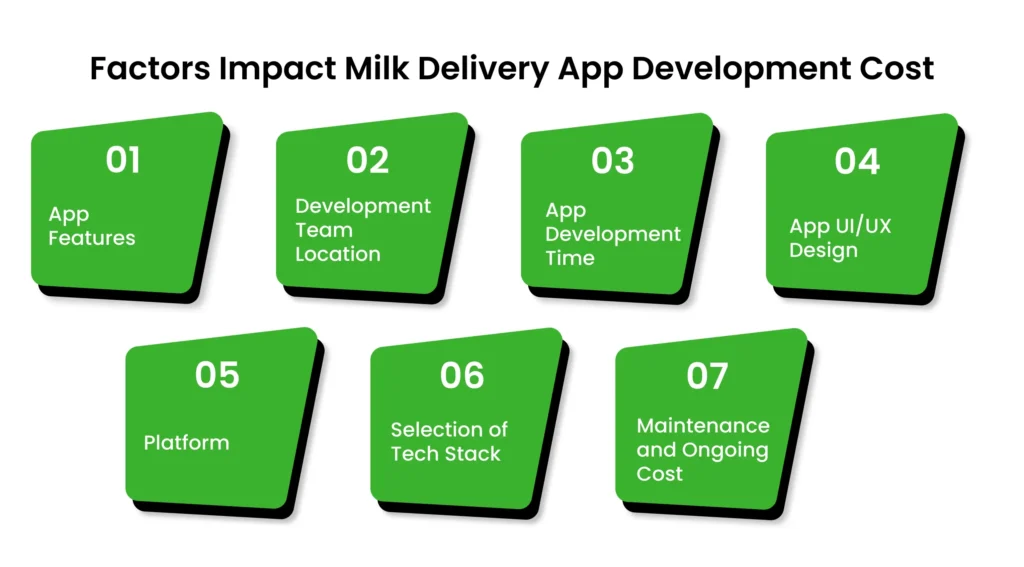
App Features
Features play an important role in evaluating the milk delivery app development cost. The more complex features you add, the higher the development cost and time required.
Features like payment gateway integration, AI chatbots, real-time tracking, and push notifications can affect the on-demand delivery app development cost.
Development Team Location
The location from which you hire the developer also affects the milk delivery mobile app development cost. For example, the cost of hiring senior software developers in the USA is higher, while the same position costs less in Asia. This is primarily because of the difference in the cost of living in both countries.
Here are the hourly rates of developers in various countries.
| Country | Estimated Hourly Rate (USD) |
| USA | $100 – $200 |
| Canada | $80 – $150 |
| UK | $70 – $130 |
| Germany | $60 – $120 |
| Australia | $70 – $140 |
| India | $20 – $50 |
| Philippines | $15 – $40 |
| Ukraine | $30 – $70 |
| Brazil | $20 – $50 |
| South Africa | $30 – $60 |
App Development Time
The average time to build an online milk delivery solution is usually 3-12 months. However, the time varies and depends on the app requirements, like what features you add (simple or complex).
A simple app with basic features takes 3 months to complete, a mid-level app takes 6 months, and a more complex app takes around 12 months or longer.
Supercharge your deliveries with Enatega.
Register NowApp UI/UX Design
User interface (UI) and user experience (UX) design are crucial for app success. Investing in quality design can enhance user satisfaction but may increase costs. Custom designs typically cost more than templates.
Custom designs are more expensive than pre-made templates and offer greater flexibility and uniqueness. In contrast, template designs can be cost-effective and quicker to implement, but they may lack the personalization and depth that users increasingly expect.
Therefore, the choice between custom and template designs involves weighing the benefits of enhanced user satisfaction against the potential increase in costs.
Platform
The selection of platforms also influences the cost of a milk delivery app. You have to decide whether to develop for iOS, Android, or both. For native development, a higher cost is required for separate apps on each platform. The cross-platform development costs less but may have limitations in performance or features.
Selection of Tech Stack
The technology required for app building affects its cost. The tech stack (programming languages, frameworks, and tools) that is required to create the web/mobile app has price differences.
Here is a simple representation of how different technologies can affect milk app development costs based on their complexity.
| Technology | Complexity Level | Cost Impact |
| HTML/CSS | Low | Low |
| JavaScript | Medium | Medium |
| React/Vue.js | Medium | Medium-High |
| Node.js | Medium | Medium-High |
| Python/Django | Medium | Medium-High |
| Ruby on Rails | Medium | Medium-High |
| Java/Spring | High | High |
| Mobile Frameworks | High | High |
| Database Management | Medium | Medium |
| Cloud Services | High | High |
| DevOps Tools | High | Medium-High |
| APIs (REST/GraphQL) | Medium | Medium |
| Testing Frameworks | Medium | Medium |
App Maintenance and Ongoing Cost
Your app development expenses are ongoing rather than one-time. You will still need to pay each month for frequent software upgrades, upkeep, and tech support, even after deployment and launch. This keeps your milk delivery app relevant in the marketplace and is essential for app maintenance.
Custom Build vs White-Label Delivery Solution
Here are the main differences between a custom build and a white-label delivery solution.
| Feature | Custom-Built Delivery App | White-Label Delivery Solution |
| Development Time | 3–12 months (depends on complexity) | 1–4 weeks |
| Initial Cost | $15,000 – $200,000+ | $2,000 – $20,000 (setup/licensing) |
| Ownership | Full ownership of code and product | Limited ownership (platform-controlled) |
| Customization | Fully customizable (features, UI/UX, logic) | Limited customization options |
| Scalability | Highly scalable for long-term growth | Limited by provider’s system |
| Speed to Market | Slow | Very fast |
| Maintenance | Managed by your in-house team or vendor | Handled by white-label provider |
| Branding Control | Full branding control | Branding possible but within constraints |
| Feature Flexibility | Can build any feature from scratch | Only pre-built or allowed features |
| Long-term Cost | Higher upfront, lower long-term per scale | Lower upfront, but recurring fees |
Hidden Cost in Milk Delivery App Development
When planning a milk delivery app, most businesses only consider design, development, and basic features. However, in real-world projects, several hidden costs can increase the total investment if not planned early.
Below are the most common hidden expenses you should account for.
Server and Cloud Scaling Costs
Hosting costs start low, often $50–$200/month for a small user base, but grow significantly as your app scales.
Your cloud infrastructure costs can grow over time, especially if your app handles large order volumes and high user activity.
App Store and Play Store Fees
Apple charges an annual developer program fee of $99/year. Google Play charges a one-time registration fee of $25. Beyond that, both platforms take a 15–30% commission on in-app purchases and subscriptions, which can materially affect your revenue model.
Post-Launch Bug Fixes and Rework
After launch, real users often uncover issues that were not detected during testing, such as payment errors, UI inconsistencies, or performance issues under heavy load. Fixing these problems requires additional developer time, which increases overall maintenance and post-launch costs.
Marketing and User Acquisition Costs
Once the app is built, attracting users becomes another major expense. In many cases, the cost of acquiring users over time becomes higher than the initial development cost itself.
Ongoing Maintenance and Technical Support
Even after a successful launch, the app requires continuous updates to stay compatible with new operating systems. Regular maintenance, bug fixes, and customer support infrastructure add to long-term operational expenses.
Feature Expansion
As the business grows, additional features like subscription models, AI recommendations, route optimization, and loyalty programs are often added. Each new feature requires design, development, testing, and integration, which leads to additional development costs beyond the original budget.
Common Mistakes Increasing Development Costs
Here are some common mistakes that increase the milk delivery app development cost.
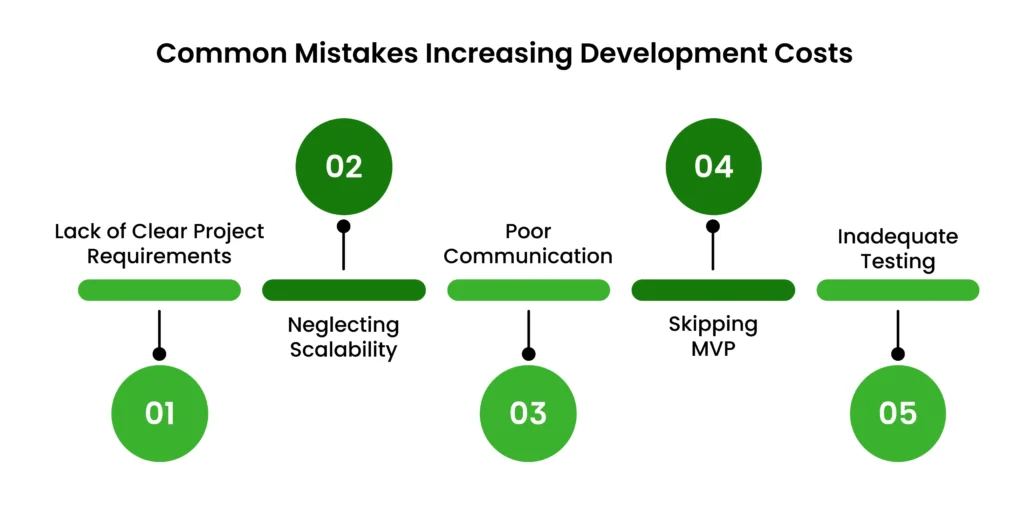
Lack of Clear Project Requirements
A lack of clarity in project requirements is a major contributor to higher development costs. Without a well-defined understanding of what you need, you may end up overspending. Establishing clear and concise specifications from the outset is essential to avoid unnecessary expenses.
Neglecting Scalability
Overlooking scalability can result in higher costs as your app expands. By planning for scalability early on, you can accommodate future growth without facing significant financial burdens later.
Poor Communication with the Development Team
Ineffective communication with your development team can lead to misunderstandings and costly revisions. Maintaining open lines of communication ensures that everyone is aligned and can help prevent delays and additional expenses.
From developers to designers to testers, everyone should understand the primary vision and goal of the product.
Skipping Minimum Viable Product (MVP)
A lot of people ignore the user experience and omit the necessary functionality because they believe MVP is unnecessary. A big mistake that businesses make is to leave out the user experience in their MVP. There is no practical method for validating your product if you skip the MVP phase.
Inadequate Testing and Quality Assurance
Skipping thorough testing and quality assurance can lead to bugs and issues that may require costly fixes later. Investing time and resources in a testing phase is crucial for delivering a reliable and efficient app.
5 Proven Ways to Reduce Your Milk App Development Cost
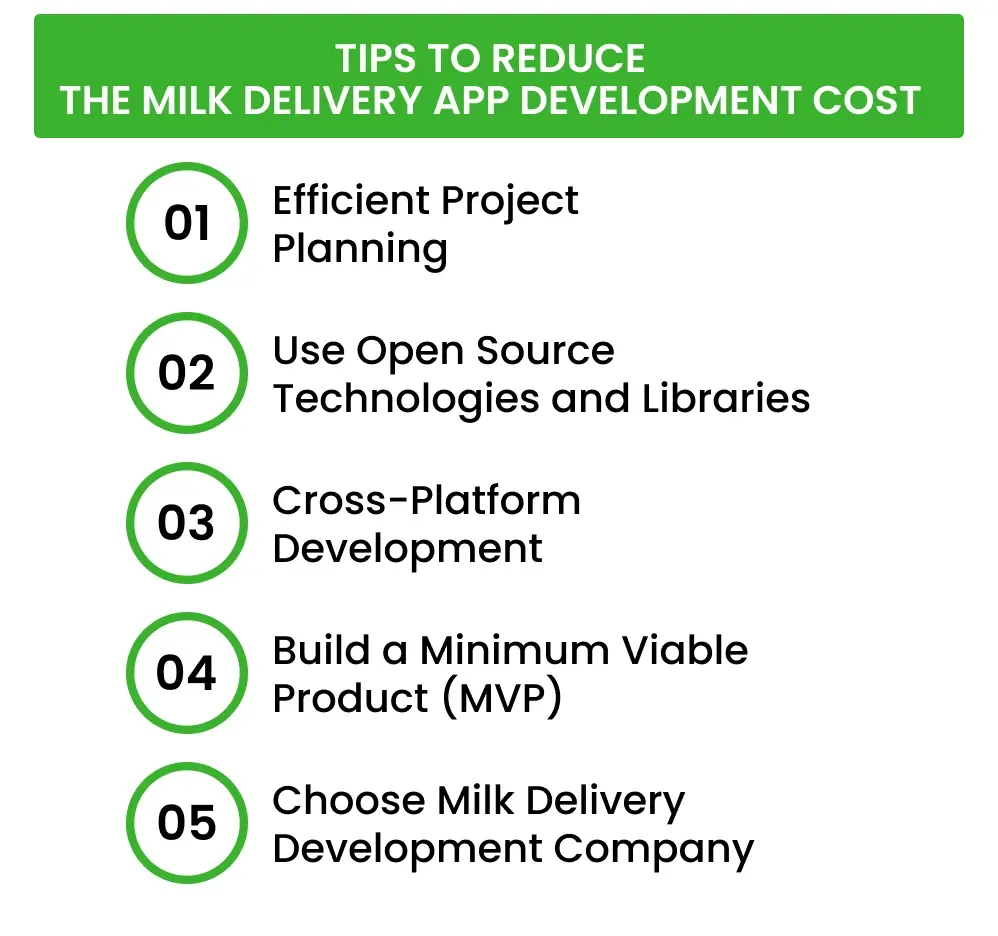
Below are some tips to help you reduce the cost of milk delivery app development.
Efficient Project Planning
Clearly define the app scope and the objective that you want to achieve. This involves defining project requirements, conducting thorough research, establishing timelines, and creating user personas. With all the information, you can easily determine the cost of the milk supply app.
Use Open Source Technologies and Libraries
To reduce the cost of developing the mobile app, use open-source frameworks and libraries. Consider using efficient app development tools that facilitate collaborative workflows and align with industry best practices.
Without requiring a substantial financial commitment, open-source solutions frequently come with a community of app developers that assist. Examine pre-built modules that fit the specifications of the project. This can greatly reduce the time and money needed to develop new features and their associated development expenses.
Cross-Platform Development
Consider using cross-platform development frameworks such as Flutter or React Native for your app. These frameworks enable you to build applications that work seamlessly on both Android and iOS, reducing the need for separate codebases and lowering development costs.
Build an MVP
When considering the costs associated with app development, choosing to create an MVP. It is a smart strategy that helps to reduce the app development cost. An MVP enables you to launch a basic version of the app with essential features, which helps to minimize initial expenses.
This approach allows you to gather valuable user feedback for informed decisions and future enhancements. By adopting an iterative development strategy, you can allocate resources effectively, ensuring they align with user needs while optimizing overall development costs.
Choose the Best Milk Delivery App Development Company
For milk delivery app development, choosing the right partner is essential for success. Select the milk app development company that creates the best app for your business.
Look for an app development company that has experience in building apps similar to yours, a proven track record, a team of skilled professionals, and a portfolio that aligns with your project’s vision.
Benefits of Building the On-Demand Milk Delivery App
Below are some benefits that show why investing in an on-demand milk delivery app is a smart move for modern dairy businesses.
Increased Profits
By offering convenience and accessibility, an on-demand app helps attract more customers, increase order frequency, and increase revenue. Subscription models and upselling opportunities also contribute to long-term profitability.
Reduce Operational Costs
This is one of the biggest advantages of using a milk delivery app. Automating tasks such as billing, order management, inventory tracking, and route optimization lowers manual errors and labor costs.
Increase Brand Awareness
A mobile app enhances your digital presence, helping your brand reach a wider audience. Push notifications, in-app promotions, and social media integrations contribute to higher brand visibility and customer engagement.
Scalable Business Model
As your customer base grows, the app can be easily scaled to handle more orders, delivery zones, and products. You can also expand services by integrating with third-party logistics or offering other dairy and grocery items.
How to Develop a Milk Delivery App? Step-by-Step
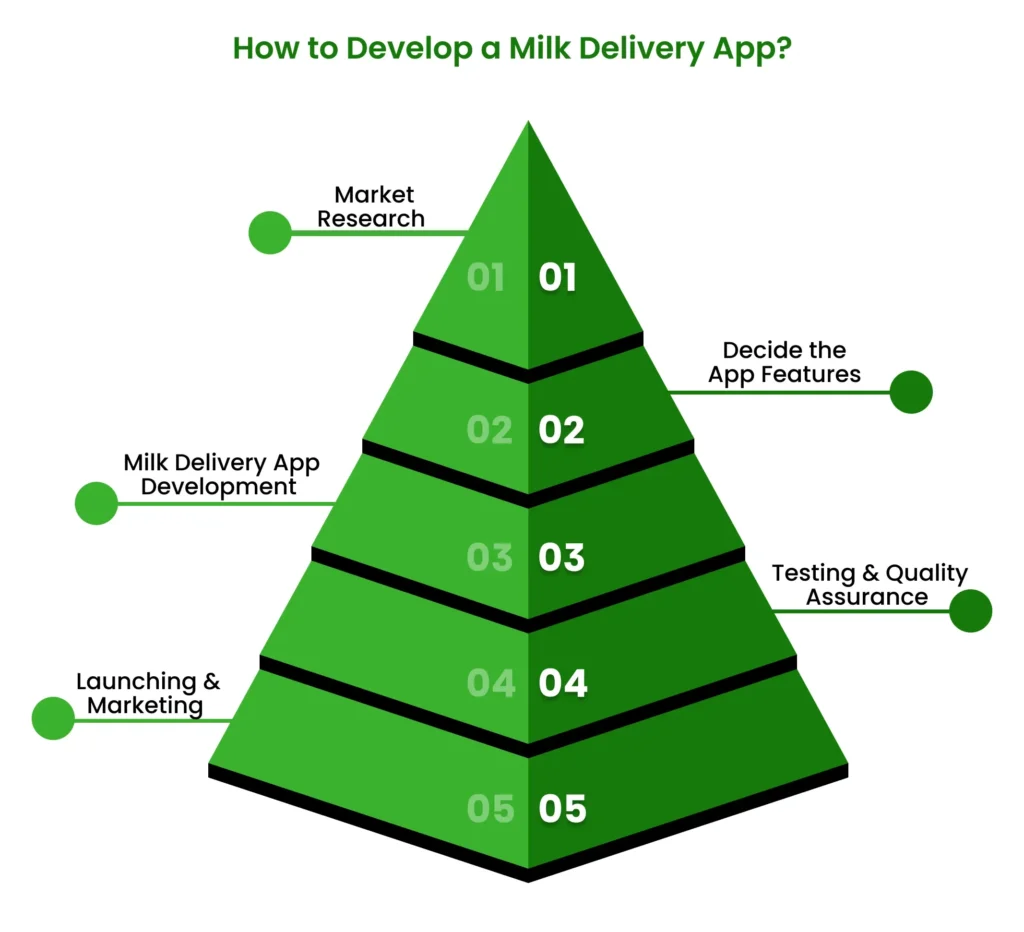
Creating the milk delivery app involves some steps, such as:
1. Market Research
In-depth research is the foundation of a successful online milk delivery app solution. In this phase, you have to analyze the audience, competitors, the latest market trends, and the gaps that you have to fill with your app. Thorough market research helps to reveal unique features that differentiate your milk delivery app from others.
2. Decide the App Features
Select the app features that make your app unique and competitive in the market. Make sure to include the relevant features such as registration, secure payment integration, order management, real-time tracking, and feedback. Also, add the features that are not present in your competitor’s app.
3. Start Milk Delivery App Development
In the development phase of your milk delivery app, focus on designing the front end and then working on the back end. A seamless user interface combined with a robust backend will ensure a smooth experience for your users.
4. Testing and Quality Assurance
Thoroughly test your app to identify and resolve any bugs or errors. Evaluate its performance across various devices to ensure compatibility. Collect feedback from beta testers to enhance the user experience. Before deployment, ensure the app is fully functional and error-free.
5. Launching and Marketing
When testing is complete, it’s time to officially launch your milk delivery app and initiate your marketing campaign. Develop a strategy to attract users and raise awareness. Use social media, online platforms, and partnerships with local dairy farms to reach your target audience.
Consider offering discounts and special promotions to encourage early adoption. Encourage satisfied customers to leave positive reviews, which will help build credibility and attract new users.
Monetization Strategies for Milk Delivery Apps
A smart monetization strategy helps you earn a steady income and grow your milk delivery business over time. By using the right mix of revenue models, you can build a reliable and scalable source of profit.
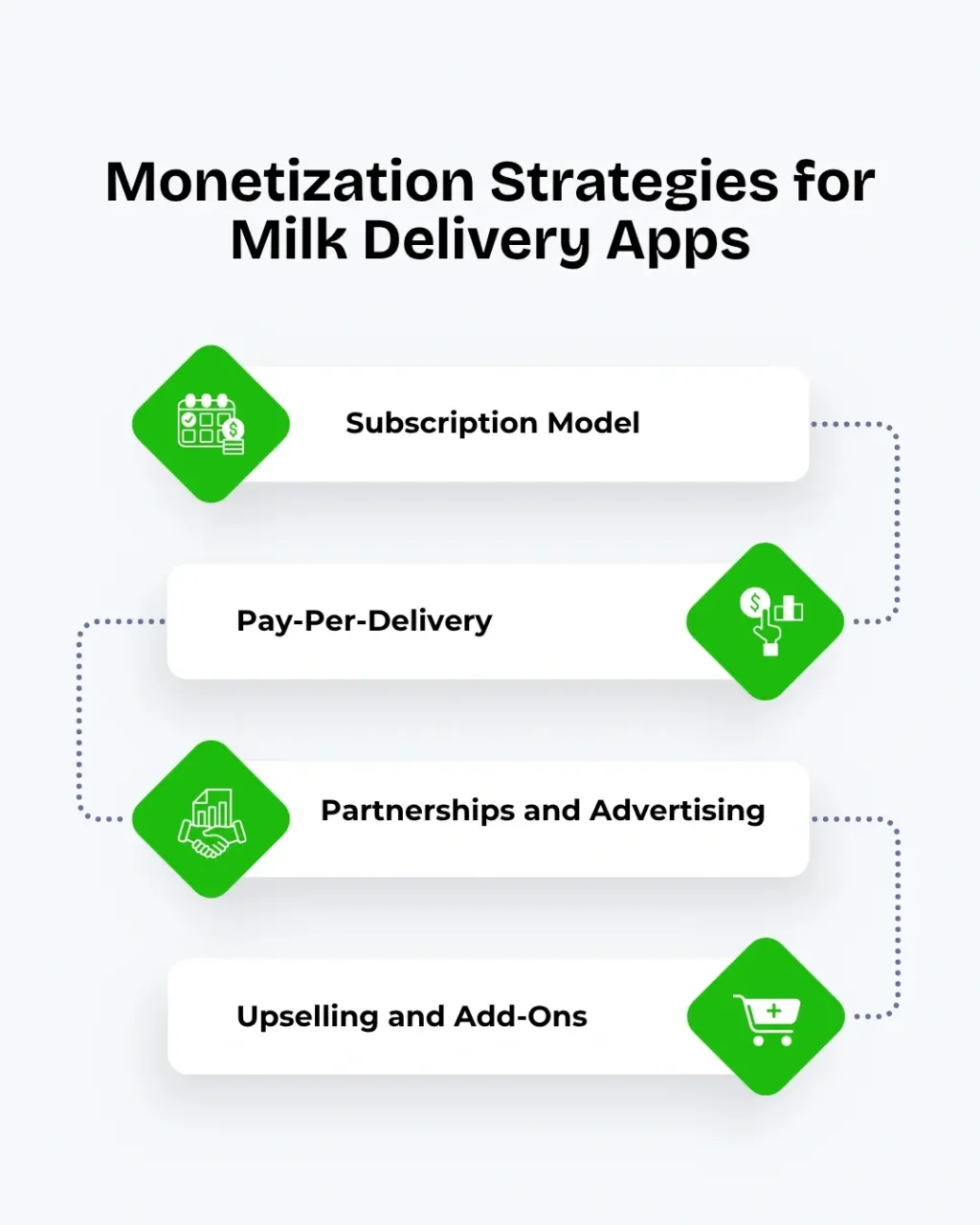
Here are some ways to monetize a milk delivery app.
Subscription Model
This is the most popular way to make money. Customers sign up for daily, weekly, or monthly milk delivery plans, so you get consistent and predictable income. It also helps in keeping customers loyal and makes managing orders much easier.
Pay-Per-Delivery
In this model, users only pay when they place an order, without committing to a subscription. It’s a good option for new or occasional customers who prefer flexibility and want to try your service before subscribing.
Partnerships and Advertising
You can earn extra income by partnering with dairy brands or local businesses and promoting their products inside your app. Running ads or featuring products allows you to generate additional revenue beyond just deliveries.
Upselling and Add-Ons
Offering extra products like butter, cheese, yogurt, or ghee helps increase the total value of each order. By suggesting relevant add-ons to customers, you can increase your profits without needing more users.
FAQs
The cost to develop an on-demand delivery app ranges from $30,000 to $150,000. It depends on the features, complexity, and location of the development team.
The time to develop an app ranges from 3 to 12 months.
Milk delivery apps can be reliable, often providing fresh products and convenient service. However, reliability may vary by region and specific provider, so checking reviews and ratings is advisable.
MilkBasket is a subscription-based milk and grocery delivery service. Here is the process of how it works.
Subscription: Users sign up for a subscription, selecting the quantity and type of milk (e.g., full cream, toned) and other grocery items they want.
Ordering: Customers place their orders through the MilkBasket app or website, choosing a delivery schedule (daily or weekly).
Delivery: MilkBasket delivers the ordered items to the customer’s doorstep, usually early in the morning.
Payment: Payments can be made online or through cash on delivery, depending on the user’s preference.
Below is the work process of milk delivery apps.
User Registration: Customers create an account on the app, providing delivery details and payment information.
Product Selection: Users browse available products, such as different types of milk, dairy items, and groceries, selecting their preferences.
Subscription Options: Many apps offer subscription plans for regular deliveries, allowing users to choose frequency (daily, weekly).
Order Placement: Customers place orders through the app, specifying quantities and delivery times.
Delivery: The app coordinates the delivery of fresh products, usually early in the morning, directly to the customer’s doorstep.
Payment Processing: Payments are often processed through the app, with options for online payment or cash on delivery.
Feedback and Support: Users can provide feedback and contact customer support for any issues or inquiries.
Supercharge your deliveries with Enatega.
Register NowConclusion
Building a milk delivery app isn’t just about how much you spend it’s about where you spend it and why. The real difference comes from your choices around features, development approach, and scalability.
Businesses that plan smartly by starting with an MVP, choosing the right tech stack, and avoiding unnecessary complexity often save thousands without compromising quality. On the other hand, unclear requirements and overbuilt features are what drive costs up, not the development itself.
As the milk delivery market continues to grow, investing in the right app strategy today can position your business for long-term profitability.
Want an exact cost for your app idea? Get a free estimate tailored to your features, market, and budget, no guesswork.
About the author

Hudaibia Khalid is a senior content writer with several years of experience in creating clear and easy-to-understand content. Over the years, she has worked closely with startups, restaurants, and entrepreneurs, helping them simplify complex digital and technical topics into actionable insights.
Her expertise lies in writing about on-demand platforms, food delivery solutions, and business growth strategies in a way that is accessible even to non-technical readers. With her experience in the industry, she focuses on guiding businesses step by step, from understanding ideas to turning them into fully working solutions.
SHARE






 IOS
IOS Android
 Web
Web