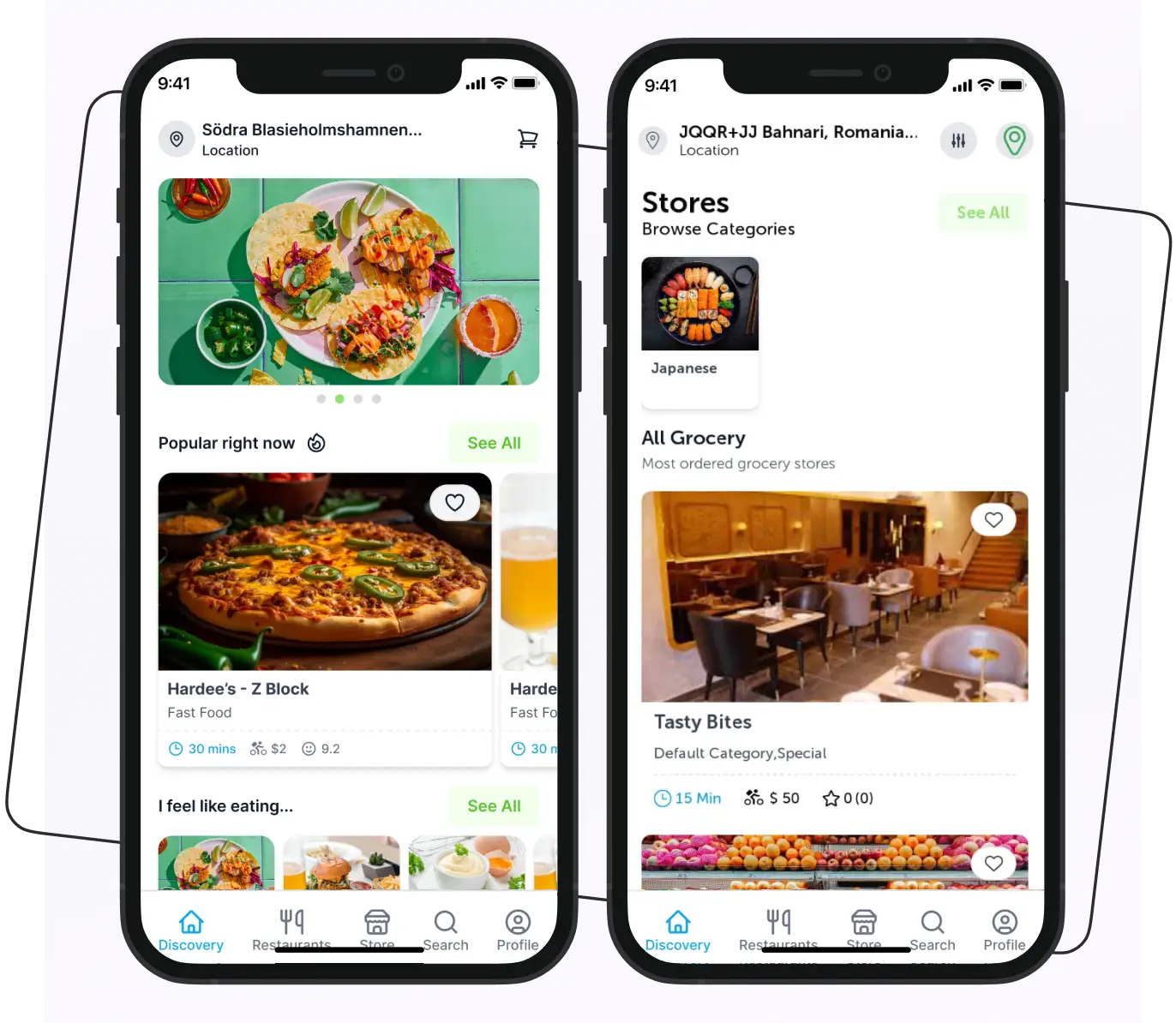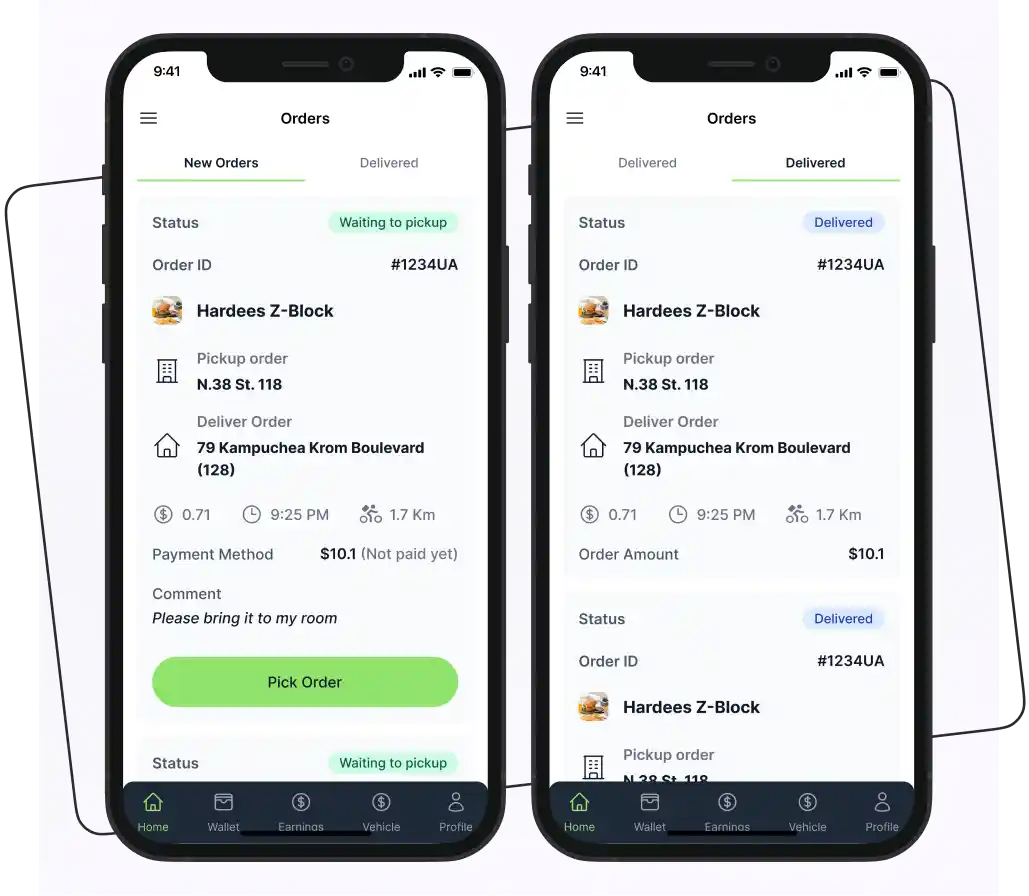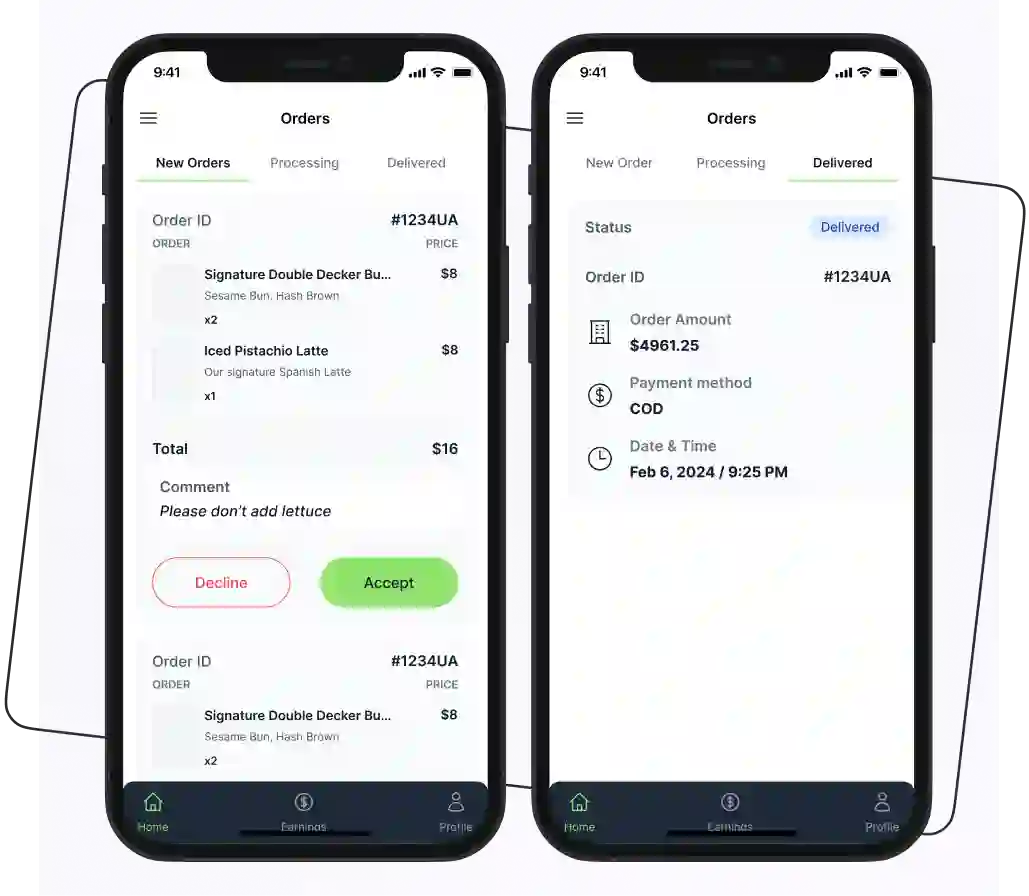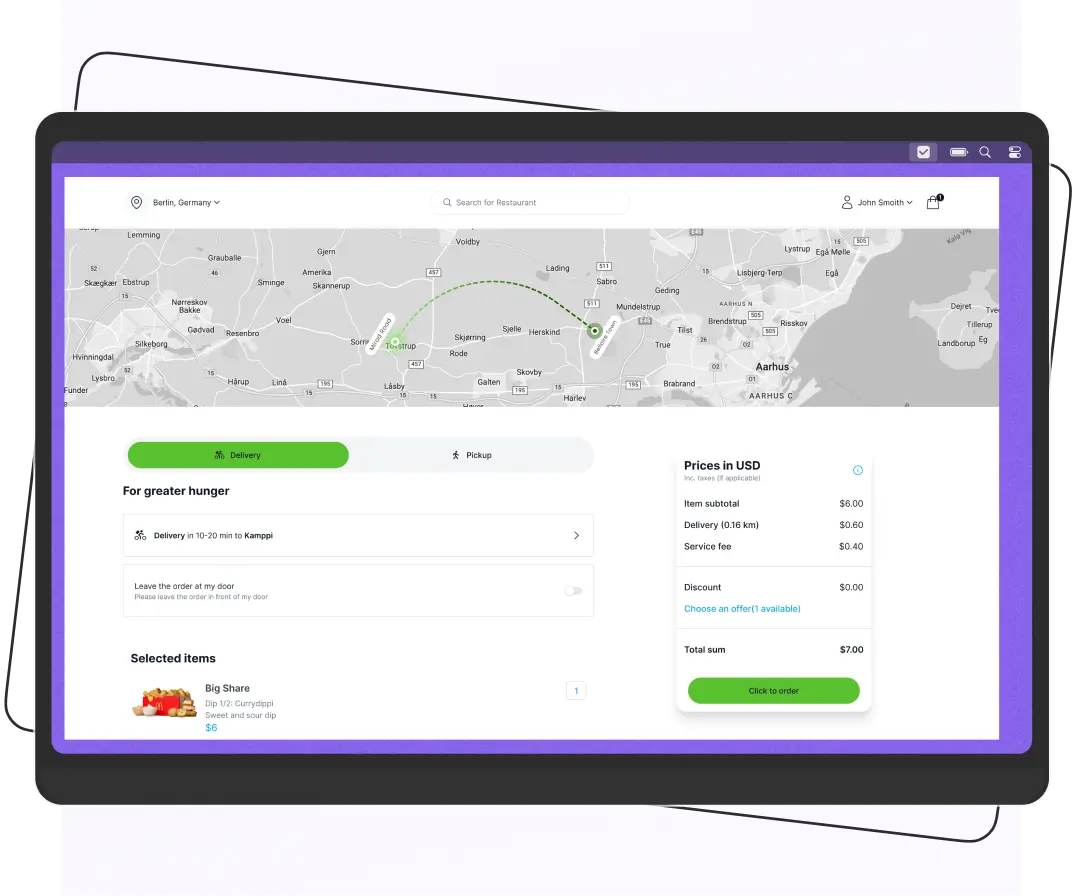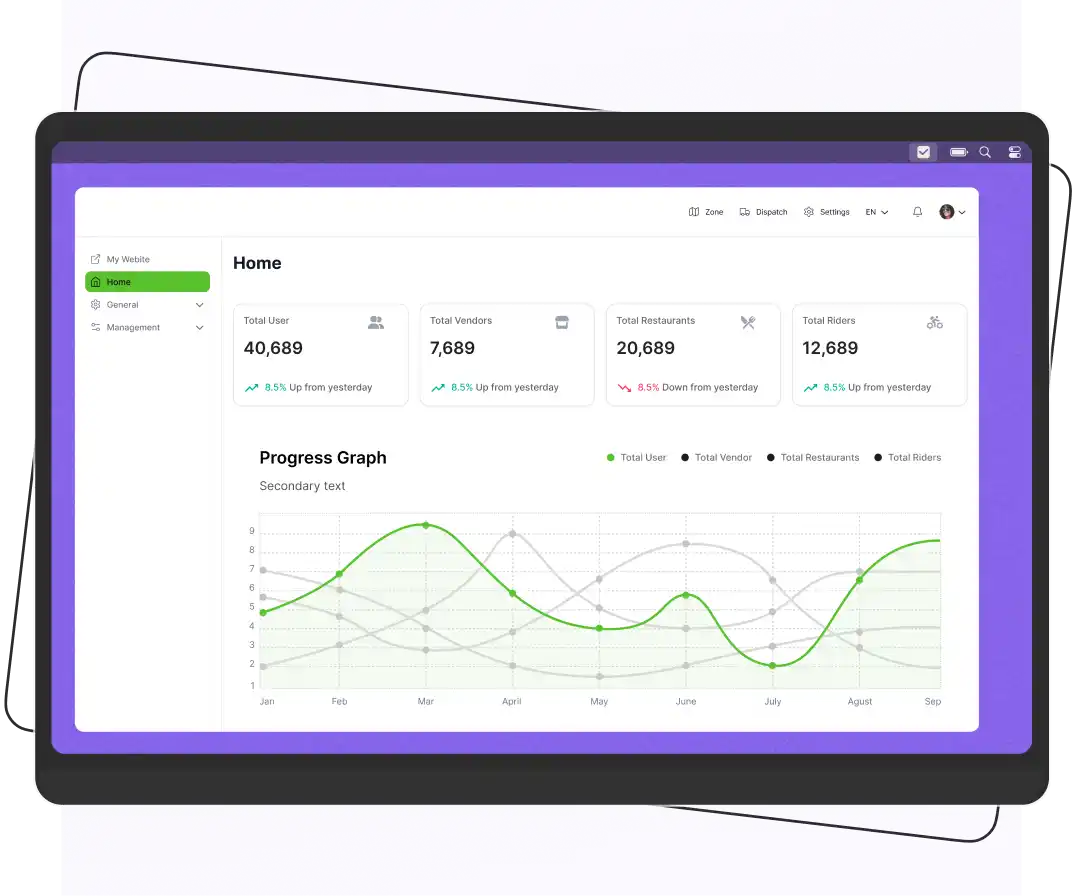


A Jahez clone app is a customizable food-delivery platform inspired by Jahez, with your own branding, features, restaurants, delivery operations, and business model. You can build it from scratch or start with a ready-made white-label solution and customize it for your target market.
The cost of building a Jahez-like food delivery platform can range from $20,000 to $85,000+ for a custom solution, depending on the features, number of applications, integrations, and level of customization. A ready-made or white-label platform can reduce both development time and upfront costs.
Every delicious dish is made with the best ingredients. Similarly, a successful food business succeeds by investing in quality. As a chef chooses the right elements, successful entrepreneurs know their success depends on the right resources.
Therefore, if you want to make a mark in the food delivery industry, developing a Jahez clone app is a fantastic opportunity. This food ordering platform not only improves the dining experience for customers but also simplifies operations for food service providers.
According to Statista, revenue in the online food delivery market is projected to reach US$1.51tn in 2026. With such promising statistics, launching a clone of a successful food delivery app could be a pivotal step for your business.
But the big question is: how do you do it?
In this blog, we’ll cover everything from the benefits of investing in clone app development to step-by-step instructions for bringing your idea to life.
Let’s dive in without delay!
Key Takeaways
- Jahez Clone App: A customizable food delivery app that replicates Jahez’s key features while allowing unique integrations.
- Why Invest? Faster time-to-market, cost-effective development, improved operational efficiency, and a proven business model.
- Revenue Models: Include advertisement fees, delivery charges, and commission-based earnings from food vendors.
- Essential Features: Real-time order tracking, push notifications, multiple payment options, route optimization, restaurant details, and menu customization.
- Development Process: Market research, selecting a business model, partnering with restaurants, choosing a tech stack, and launching the app with ongoing maintenance.
- Estimated Development Cost: Ranges from $20,000 to $85,000+, depending on complexity, features, and development location.
- Tech Stack: Frontend options include React Native and Flutter, backend choices include Node.js and Django, and payment gateways like Stripe and PayPal ensure secure transactions.
How Does Jahez Work?
Jahez works as a multi-sided food delivery marketplace that connects customers, restaurants, and delivery partners through one platform. The basic process starts when a customer places an order and ends when the food is delivered and the order is settled.
Here is how it works.
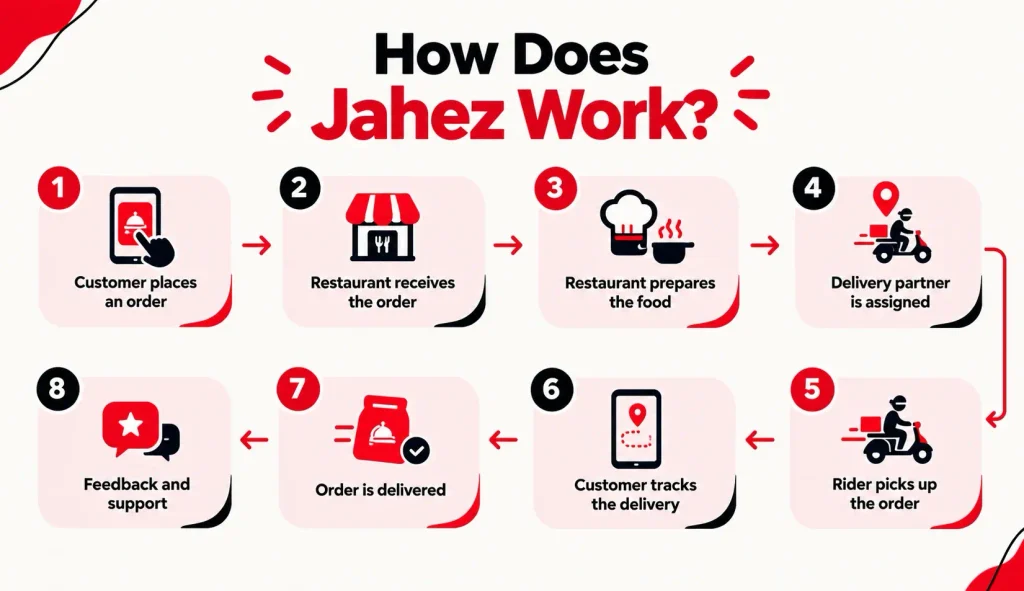
- Customer places an order
The customer selects a restaurant, browses the menu, adds items to the cart, and completes checkout using an available payment method.
- Restaurant receives the order
The restaurant receives the order through its restaurant app or dashboard, reviews the items, and accepts or rejects the order.
- Restaurant prepares the food
After accepting the order, the restaurant prepares the food and updates its order status so the delivery process can be coordinated.
- Delivery partner is assigned
A delivery partner is assigned based on factors such as location, availability, delivery zone, and the platform’s dispatch rules.
- Rider picks up the order
The delivery partner receives the pickup details, navigates to the restaurant, collects the order, and updates the delivery status.
- Customer tracks the delivery
The customer can receive order-status updates and, where real-time tracking is supported, see the delivery progress on the map.
- Order is delivered
The rider delivers the order to the customer and marks it as completed.
- Feedback and support
Customers can rate their experience, view order history, request support, or report an issue.
What is the Jahez Clone App?
The Jahez clone app is an online ordering platform designed to mimic the essential features of the Jahez food delivery app. It also allows for the integration of advanced and unique functionalities that set your app apart.
Investing in the Jahez clone app development offers several key advantages, such as:
- Time Efficiency: Faster time-to-market with a ready-made solution.
- Cost Effectiveness: Reduce development costs by using an established framework.
- Better Management: Better manage operations with built-in management tools.
- Expanded Customer Reach: Reach a broader audience with an accessible platform.
- Proven Business Model: Benefit from a tested and successful business model.
Additionally, the Jahez app clone allows customers to order food from any restaurant and have it delivered to their doorsteps within minutes. Besides that, with the food ordering app clone, customers enjoy countless benefits.
Supercharge your deliveries with Enatega.
Register NowRevenue Models of the Jahez Clone App
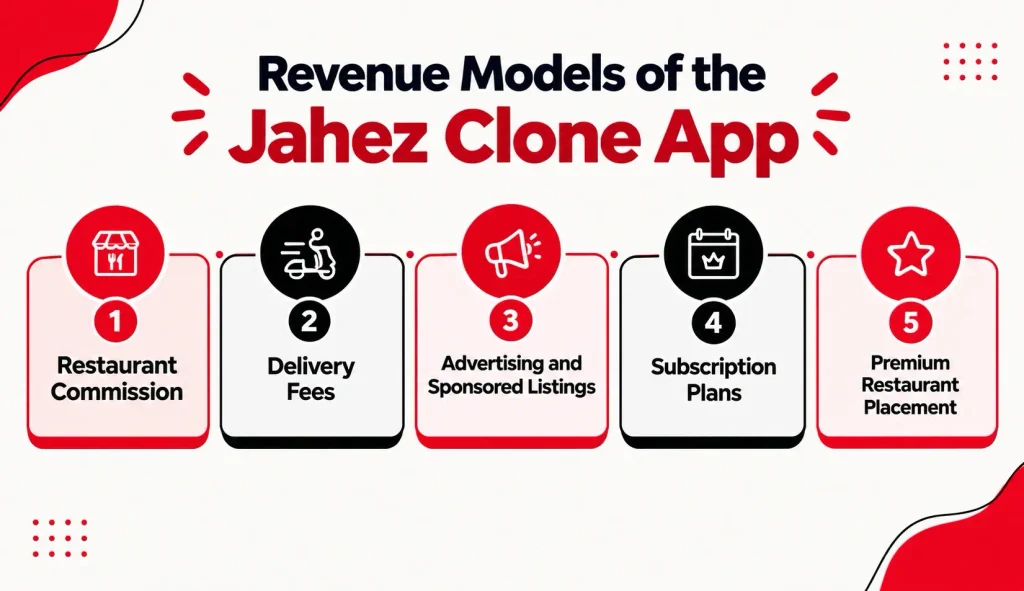
A food-delivery platform can use one or more revenue streams. This depends on its target market, restaurant partnerships, and operating costs. You don’t have to use the exact revenue model used by Jahez; you can choose a combination that fits your business.
Below is a list of the revenue models that can generate more revenue for your business in no time.
1. Restaurant Commission
The platform can charge restaurants a percentage of each completed order. For example, if a restaurant receives a $50 order and the agreed commission is 20%, the platform earns $10 before any applicable taxes, payment fees, refunds, or other costs.
The commission rate can vary based on factors:
- such as restaurant category
- Location
- Order volume
- Services included in the partnership
2. Delivery Fees
Customers can be charged a delivery fee based on factors such as:
- Distance
- delivery zone
- order value
- Demand
- Restaurant’s delivery arrangement
For example, you could use different delivery fees for nearby and distant delivery zones instead of applying one fixed fee to every order.
3. Advertising and Sponsored Listings
Restaurants can pay to promote their businesses within the app. Sponsored restaurants, promoted dishes, banners, and special offers can provide an additional revenue stream and give restaurants more visibility.
4. Subscription Plans
You can offer customers a paid membership that provides benefits such as:
- Reduced delivery fees
- Exclusive discounts
- Loyalty rewards
- Other perks
The subscription model can create recurring revenue and encourage repeat orders.
5. Premium Restaurant Placement
Restaurants can pay for additional visibility in selected areas of the app, such as featured listings or promotional sections. This can be offered separately from the standard restaurant commission.
Jahez vs. Jahez Clone
A Jahez clone is not an exact copy of the Jahez platform. It is a separate food-delivery solution that can use similar marketplace concepts and has its own branding, features, business rules, and target market.
| Aspect | Jahez | Jahez-Style Clone / White-Label Platform |
| Branding | Operates under the Jahez brand and its associated services. | Uses your own brand name, logo, design, and visual identity. |
| Business Model | Jahez operates a food-delivery marketplace connecting customers, restaurants, and drivers, alongside other services within its broader group system. | You can choose the business model that fits your market, such as restaurant commissions, delivery fees, advertising, subscriptions, or a combination. |
| Market | Jahez’s platform operates in Saudi Arabia, with Jahez also operating in Bahrain and Kuwait. | You can launch in the country or region that matches your business strategy and regulatory requirements. |
| Applications | Jahez uses apps and operational products to support its marketplace and delivery operations. | A complete solution can include separate customer, restaurant, rider, and admin applications. |
| Features | Features are determined by Jahez’s own product strategy and operational requirements. | You can select, remove, or customize features according to your business requirements. |
| Technology | Uses Jahez’s own technology infrastructure and systems. | Technology depends on the development approach and solution provider you choose. |
| Customization | Customers use the functionality and experience provided by Jahez. | You control the branding, workflows, integrations, delivery rules, commissions, and other business settings. |
| Expansion | Jahez determines where and how its services expand. | You can plan expansion based on your target market, restaurant network, delivery capacity, and operational resources. |
| Development Cost | Jahez is an established operating business rather than a product that customers purchase as an app-development package. | Cost depends on whether you choose a ready-made, customized white-label, or fully custom solution. |
| Ownership | Jahez’s platform and technology are operated by Jahez Group and its businesses. | Ownership depends on your agreement with the development or white-label provider, including the source code and licensing terms. |
| Launch Timeline | Already operational in its existing markets. | A ready-made solution can generally launch faster than developing a complete platform from scratch. |
Jahez Clone App Features
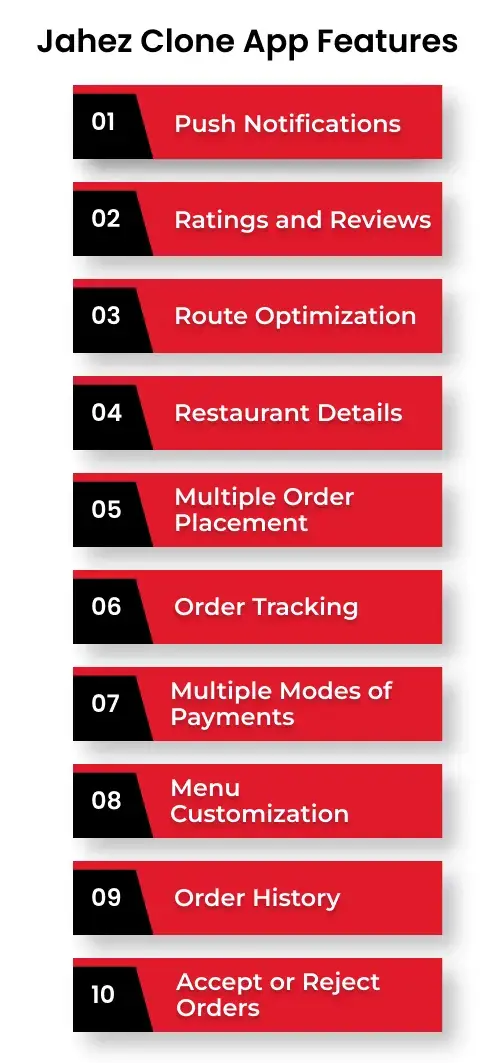
The more relevant features you add, the more easily you can attract customers and increase your business reach.
Below are some features that you should incorporate into your food clone app.
Push Notifications
This feature allows restaurants to send notifications to users for their new offers, deals, discounts, referral or promo codes, etc. It is the best way to engage users with your app, as it keeps them informed about exciting promotions and encourages them to take advantage of special opportunities.
By delivering timely and relevant updates directly to users’ devices, restaurants can significantly improve customer retention and drive sales.
Additionally, personalized notifications can create a sense of connection, making users feel valued and more likely to return.
Ratings and Reviews
The ratings and reviews feature is essential for improving the overall service. Using this feature, users can rate and review the food, rider, and restaurant. It helps future customers to make better decisions and place orders from a better place. In addition, it helps restaurants to know where they lack and which areas they need to improve.
Route Optimization
One of the useful features of the Jahez clone rider app is route optimization. It improves the efficiency of deliveries. By analyzing real-time traffic data and geographical information, the app identifies the shortest and fastest routes for riders to reach the customer’s location on time.
This not only helps in minimizing delivery times but also reduces fuel consumption and operational costs.
Restaurant Details
Users can view the restaurant details, including delivery hours, contact number, and a detailed restaurant description, among other essential information, directly on the app. This user-friendly interface allows them to easily browse the menu and place orders from their favorite restaurants with just a few taps.
Multiple Order Placement
Users can place multiple orders from various restaurants within the app. This feature enables friends or family members to select their favorite dishes from different eateries in one transaction.
By integrating orders, users can enjoy a diverse meal spread without the hassle of making separate purchases.
Order Tracking
With this feature, users and restaurants can track their orders in real time. It maintains the trust between users and restaurants.
For Customers: Customers know the order status and every detail from order preparation to delivery. It provides visibility and transparency into their order’s status and location.
For Restaurants: Order tracking enables restaurants to align their kitchen and delivery processes, ensuring that orders are prepared, packaged, and sent out on time. This system also allows restaurants to make quick adjustments in case any issues occur.
Multiple Modes of Payment
Using the right payment methods provides a secure, reliable, and user-friendly payment experience. The secure payment gateway helps users pay with their preferred methods, such as credit/debit cards, digital wallets, and cash on delivery.
Menu Customization
This feature of the white-label Jahez app clone allows users to customize their menu according to their needs. They can select their specific ingredients, toppings, and other options from the restaurant menu.
Order History
For Customers: Customers can view previous orders, receipts, and order details and quickly reorder frequently purchased items.
For Riders: When a rider delivers an order, it can be saved in their order history, allowing them to see the total number of orders they have successfully delivered. This feature helps riders keep track of their completed deliveries, reducing misunderstandings and improving efficiency.
Accept or Reject Orders
The restaurant and riders can accept or reject orders according to their availability. This flexibility allows restaurants to manage their workload effectively, ensuring they can maintain quality service during peak times. Likewise, riders can choose orders that fit their schedule, promoting a better work-life balance.
When an order is placed, the system sends notifications to both the restaurant and available riders. If a rider accepts an order, they are responsible for picking it up and delivering it within the estimated time frame.
How to Build an App Like Jahez?
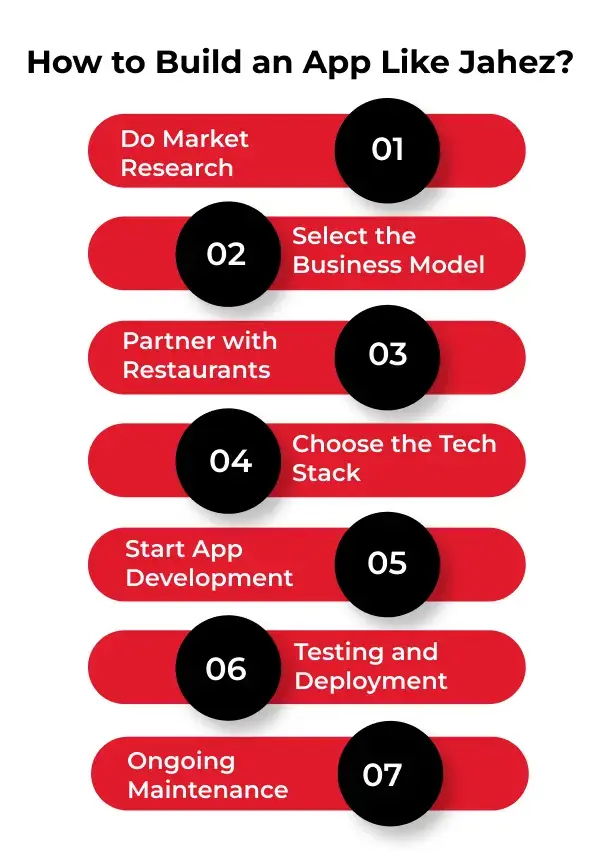
Building a food delivery app like Jahez involves some steps, such as:
1. Do Market Research
First, you have to do market research. Study the latest trends in the food delivery market, and understand your target audience’s interests. Plus, you can analyze your competitor apps and determine their gaps.
2. Select the Business Model
In this phase, select the business model for your food clone app. Decide how your platform will generate revenue and how orders will be delivered.
Possible revenue models include:
- Restaurant commissions
- Customer delivery fees
- Advertising and sponsored listings
- Subscription plans
- Premium restaurant placement
You should also choose a delivery model:
- Platform-owned delivery: Your riders handle deliveries.
- Restaurant delivery: Restaurants use their own delivery staff.
- Third-party delivery: An external logistics provider handles deliveries.
- Hybrid delivery: Restaurants and platform riders both handle deliveries.
3. Partner with Restaurants
Now, it’s time to partner with restaurants that are willing to join your platform. You can attract them by offering deals and discounts, incentives, promotions, and loyalty programs.
4. Choose the Tech Stack
Before starting the app development, select the tech stack. Make sure the tech stack you choose for the Jahez app clone can help you achieve your ultimate business objectives much more easily.
Here are some technologies to help you build a food app like Jahez.
- Mobile apps: React Native or Flutter
- Backend: Node.js or another suitable backend framework
- Database: PostgreSQL or MongoDB
- Maps and location: Google Maps or another mapping provider
- Notifications: Firebase Cloud Messaging and Apple Push Notification service
- Payments: A payment gateway available in your target market
- Cloud infrastructure: A scalable cloud hosting provider
5. Start Jahez Clone App Development
When developing the Jahez food delivery app clone, divide this step into three categories.
UI/UX Design: Design the UI/UX that is visually appealing and easy to use for users. Try to create a user-friendly design that is simple so that users can use the app without any difficulty.
Frontend Development: Develop the app using a chosen framework, building reusable components and integrating APIs for user interaction.
Backend Development: Implement a robust backend with secure APIs, user authentication, and database management, deploying on cloud platforms for scalability.
6. Testing and Deployment
Testing is an important part of app development. When app development is complete, do thorough testing and make the app bug-free. Try to use different testing techniques and test the app from different angles.
In addition, getting feedback from real users helps identify any remaining issues before the app’s official launch. It leads to a more reliable and user-friendly product. After the app testing, deploy it on the App Store and Play Store by following proper guidelines.
7. Ongoing Maintenance
When the app is deployed, it’s essential to keep it up-to-date with regular updates to enhance user experience and functionality.
When updating the app, it’s important to maintain customer preferences, ensuring that user settings and any personalized features remain intact. This not only builds user loyalty but also minimizes frustration, as customers can easily transition to the new version without losing their interest.
Additionally, actively seeking user feedback during these updates can help identify areas for improvement and new features that align with users’ needs.
How Much Does it Cost to Build the Jahez Clone App?
A Jahez-like food delivery app can cost approximately $20,000-$85,000+. The actual cost depends on:
- App’s features
- Level of customization
- Number of applications
- Development team location
- Third-party integrations
- Development approach
A basic version with essential food ordering and delivery features can fall toward the lower end of the range, while a more advanced platform can cost significantly more.
Below is the estimated cost of developing a food delivery app like Jahez.
| Cost Component | Estimated Cost (USD) |
| Market Research | $1,000 – $5,000 |
| UI/UX Design | $2,000 – $10,000 |
| Backend Development | $5,000 – $20,000 |
| Frontend Development | $5,000 – $15,000 |
| API Development | $2,000 – $10,000 |
| Payment Gateway Integration | $1,000 – $5,000 |
| Testing and QA | $2,000 – $8,000 |
| Deployment | $500 – $2,000 |
| Marketing and Promotions | $2,000 – $10,000 |
| Maintenance and Updates | $1,000 – $5,000/year |
| Total Estimated Cost: $20,000 – $85,000+ | |
Jahez Alternatives: HungerStation, Talabat, Koinz & Rafeeq
Here are some similar apps to Jahez that offer great services.
Hungerstation
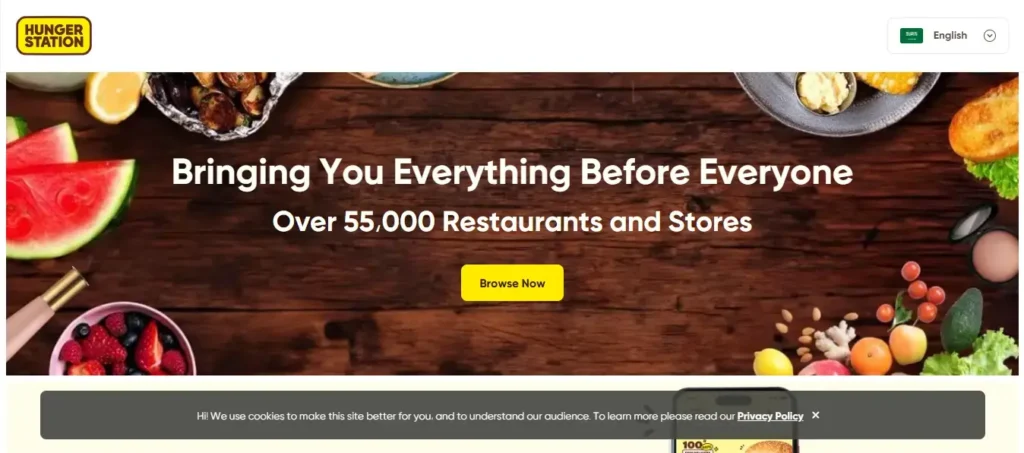
Hungerstation is a leading online food ordering and delivery platform in Saudi Arabia. Over 55,000 restaurants and stores are available on this platform that delivers products to customers’ doorsteps.
This Jahez app alternative makes ordering food and groceries easy and fast. Customers can get their favorites from supermarkets, restaurants, and more with just a few taps on their phones.
Talabat
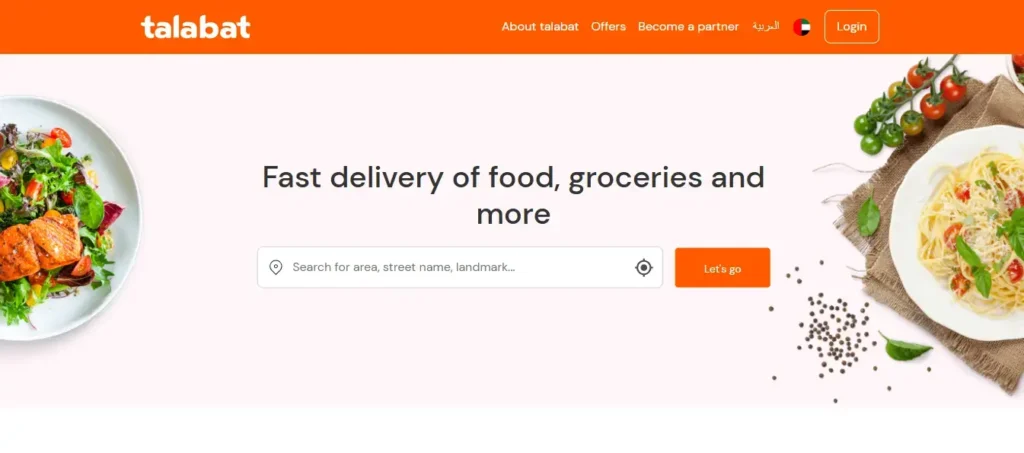
Talabat is another of the best Jahez alternatives that delivers food, groceries, flowers, and more from hundreds of restaurants and stores. The platform provides convenience and reliability to its customers.
Using this online ordering platform, customers can satisfy their cravings for local to international cuisine. Their app is easy to use, and users can quickly place their orders without any problem.
Koinz
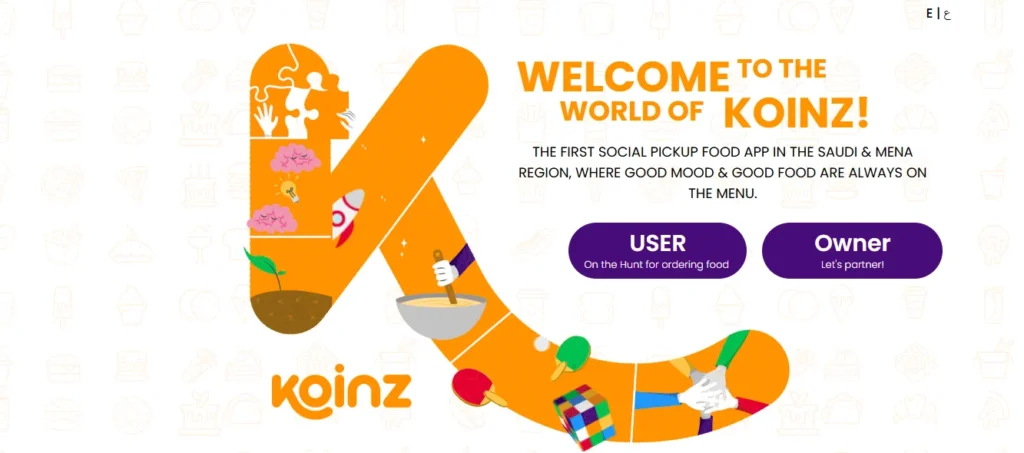
Koinz is the first social pickup food app in the Saudi and MENA region. This platform allows users to browse and order from a variety of local restaurants, making it easy to enjoy their favorite dishes.
As users place orders, they collect points that enhance their dining experience. These points can later be redeemed for free meals and exciting gifts, adding an extra layer of enjoyment to each order.
Rafeeq
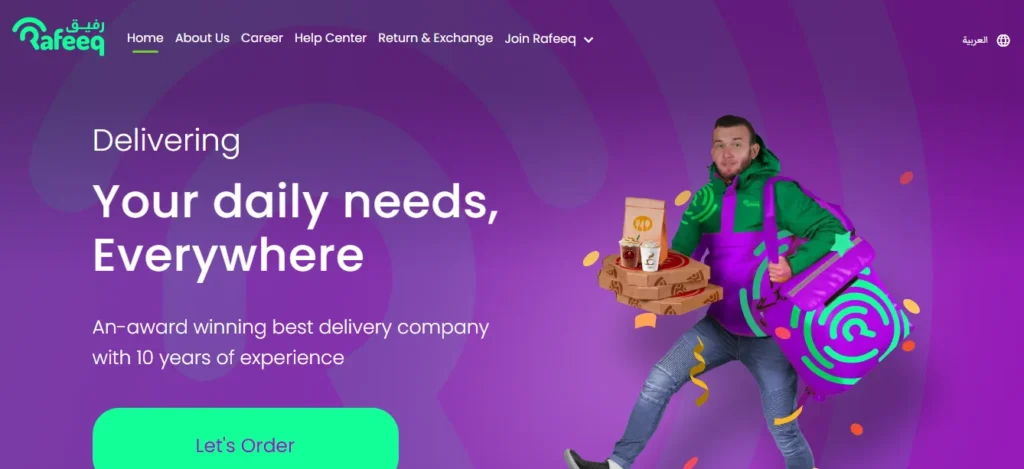
Rafeeq is a well-known food delivery app, similar to Jahez, that caters to a variety of daily needs, ranging from groceries to medicines. The platform allows users to conveniently order from popular establishments such as McDonald’s and KFC, along with a diverse selection of other favorite restaurants.
Moreover, Rafeeq stands out for its user-friendly interface and efficient delivery service, making it a go-to choice for those looking for quick and reliable access to their essential items and meals.
Why Choose Enatega to Build Your Food Delivery App Like Jahez?
Enatega provides a ready-made, customizable foundation for businesses that want to launch a food delivery platform without developing every component from scratch.
It includes the core apps and tools needed to manage customers, restaurants, riders, orders, and delivery operations.
- Complete delivery system: Customer, restaurant, rider, and admin applications are included.
- Source code ownership: You can access and customize the platform instead of being limited to a fixed SaaS product.
- Self-hosting: Deploy the platform on your preferred infrastructure and maintain greater control over your data and environment.
- Payment and map integrations: Connect the payment gateways, maps, notifications, and other services required for your target market.
- Scalable foundation: Start with core food-delivery functionality and add advanced features as your order volume and business requirements grow.
- Live product demos: Test the platform before deciding whether its features and workflows match your business requirements.
Rather than copying Jahez, Enatega can be used as a foundation for building a separate, branded food-delivery platform with your own business model and operational rules.
FAQs
Jahez is a prominent food delivery platform based in Saudi Arabia. It also operates in Kuwait and Bahrain, offering on-demand services and e-commerce solutions.
Creating an app similar to Jahez takes about 4 to 8 months. However, the timeline can vary depending on your specific business requirements.
Jahez is operated by Jahez International Company for Information Systems Technology, a Saudi publicly listed company. Ghassab Al-Mandeel, the company’s founder, serves as CEO, while Prince Mishal Al Saud chairs the board of directors.
Jahez is a Saudi Arabian food delivery service that connects customers with local restaurants, allowing users to order food online and have it delivered to their doorstep. It also offers a platform for restaurants to manage orders and deliveries efficiently.
Yes, clone apps can be detected through several methods, including code similarity analysis, user behavior patterns, and unique identifiers embedded in original apps. Additionally, app stores often have policies to identify and remove clones.
Building a food-delivery platform inspired by Jahez’s business model is different from copying Jahez itself. You can use common features like restaurant listings, commissions, and delivery tracking to build your own platform.
However, you should not copy Jahez’s brand, logo, copyrighted content, proprietary code, or other protected assets without permission. A “Jahez clone” should use your own branding, design, content, and legally obtained code.
Supercharge your deliveries with Enatega.
Register NowConclusion
Building the white-label Jahez clone app helps to meet the demands of your business and customers. It is a way to start your business online successfully and double your profits.
Want to launch without building everything from scratch?
Explore a ready-made food delivery platform with customer, restaurant, rider, and admin apps, then customize it for your market.
Register with us today and confidently step into the market!
About the author

Hudaibia Khalid is a senior content writer with several years of experience in creating clear and easy-to-understand content. Over the years, she has worked closely with startups, restaurants, and entrepreneurs, helping them simplify complex digital and technical topics into actionable insights.
Her expertise lies in writing about on-demand platforms, food delivery solutions, and business growth strategies in a way that is accessible even to non-technical readers. With her experience in the industry, she focuses on guiding businesses step by step, from understanding ideas to turning them into fully working solutions.
SHARE






 IOS
IOS Android
 Web
Web