

Before choosing multivendor delivery software, make sure it supports multiple business models, includes more than just a customer app, automates key operations, supports multiple revenue streams, scales with your business, offers secure payment integrations, and helps you save time and money. These seven factors determine how efficiently your marketplace operates and grows over time.
If you’re building a food delivery startup, one decision will shape everything else: whether to build your platform from scratch or launch with white label food delivery software. For most early-stage founders, choosing the right multivendor delivery platform is what separates a six-month launch from an eighteen-month engineering slog.
But not every platform is built the same. Before investing, it’s important to understand what makes a great multivendor solution and how it can support your business as it grows.
Let’s explore the seven essential things you need to know to choose the right software with confidence.
7 Things to Know About Multivendor Delivery Software
Here are seven things every founder should understand before choosing a platform.
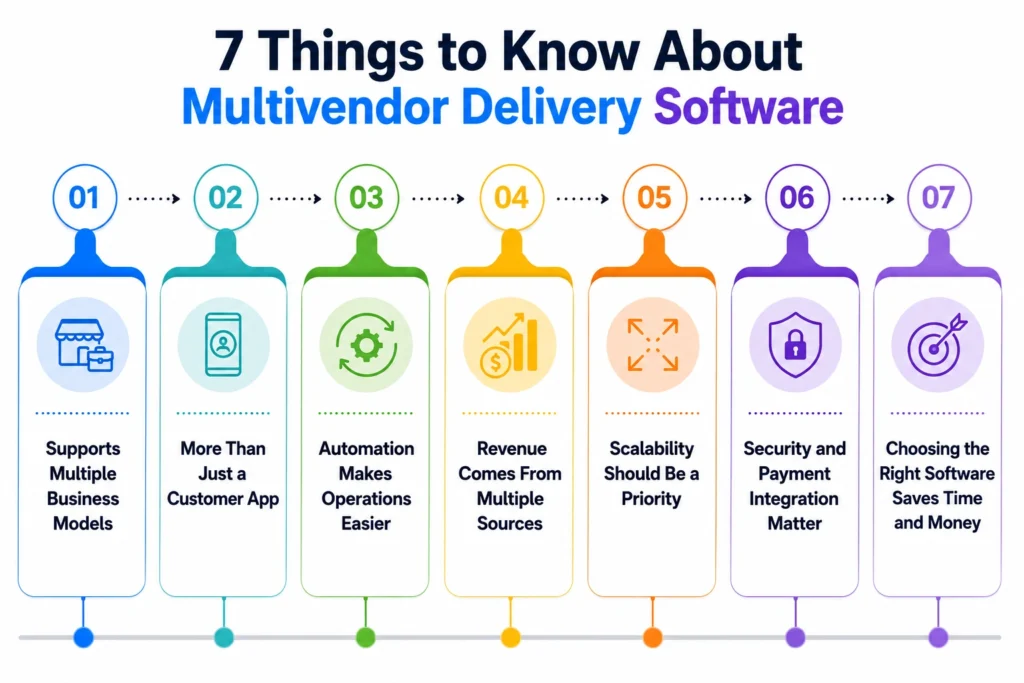
1. Supports Multiple Business Models
One of the biggest advantages of a modern multivendor delivery platform is that it isn’t limited to a single type of business. The same core software order management, vendor onboarding, and payments can help an entire range of delivery verticals, including:
- Food delivery
- Grocery delivery
- Pharmacy delivery
- Flower delivery
- Courier services
- Pet supplies
- Laundry
- Retail marketplaces
This matters because it gives your business room to grow. For example, if you start with restaurant delivery, you can easily add grocery, pharmacy, or other delivery services later without building a new platform. You simply add new vendor categories and continue growing using the same system.
Example: A regional food delivery startup launches with 50 restaurant partners. Six months later, demand shifts and customers start asking for grocery and pharmacy delivery in the same app.
Because the underlying platform already supports multivendor, multi-category operations, the founder adds “Grocery” and “Pharmacy” tabs to the same customer app, onboardes new vendors through the existing dashboard, and goes live in weeks, not months, using infrastructure already built to support it.
Supercharge your deliveries with Enatega.
Launch Now2. More Than Just a Customer App
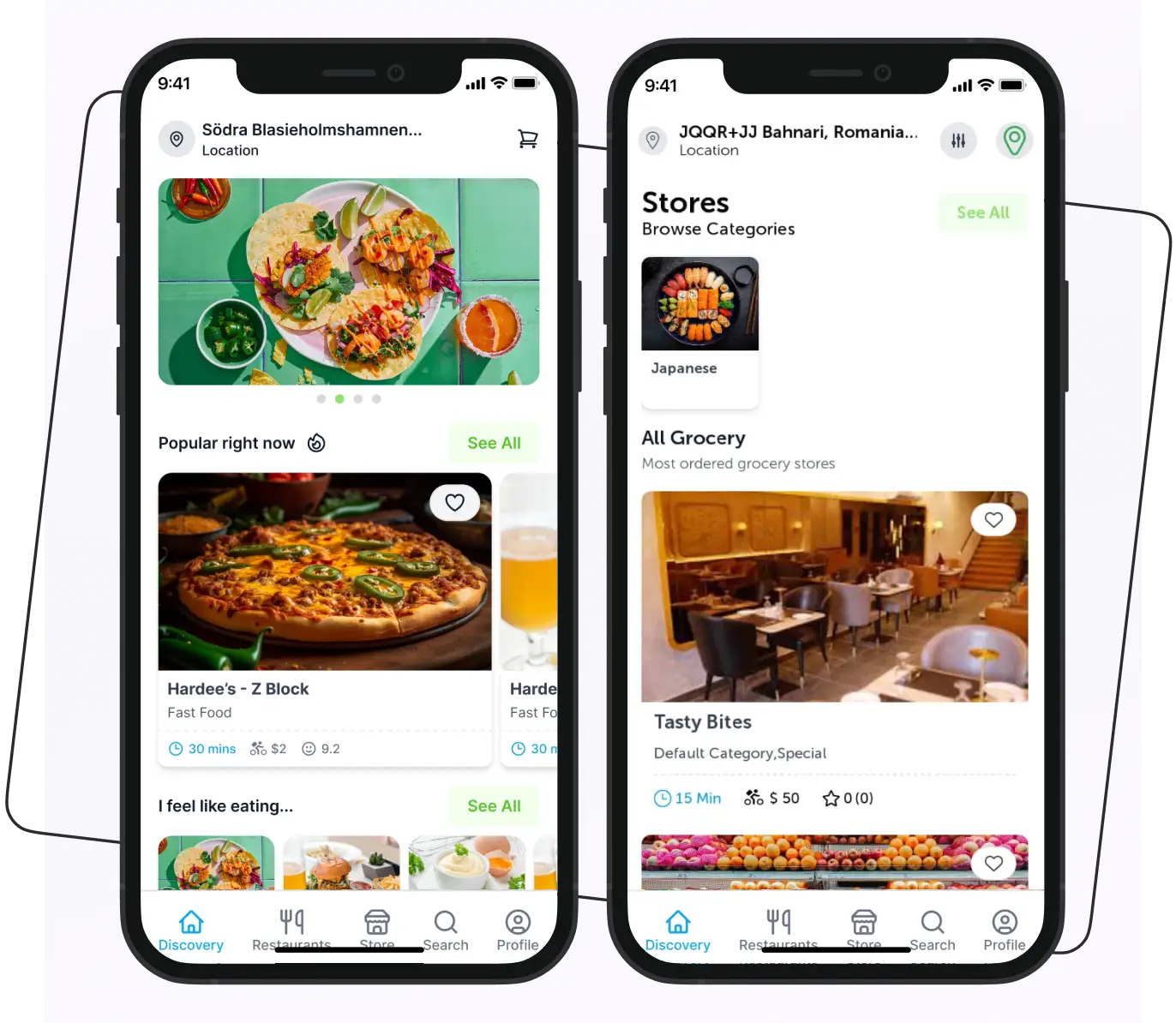
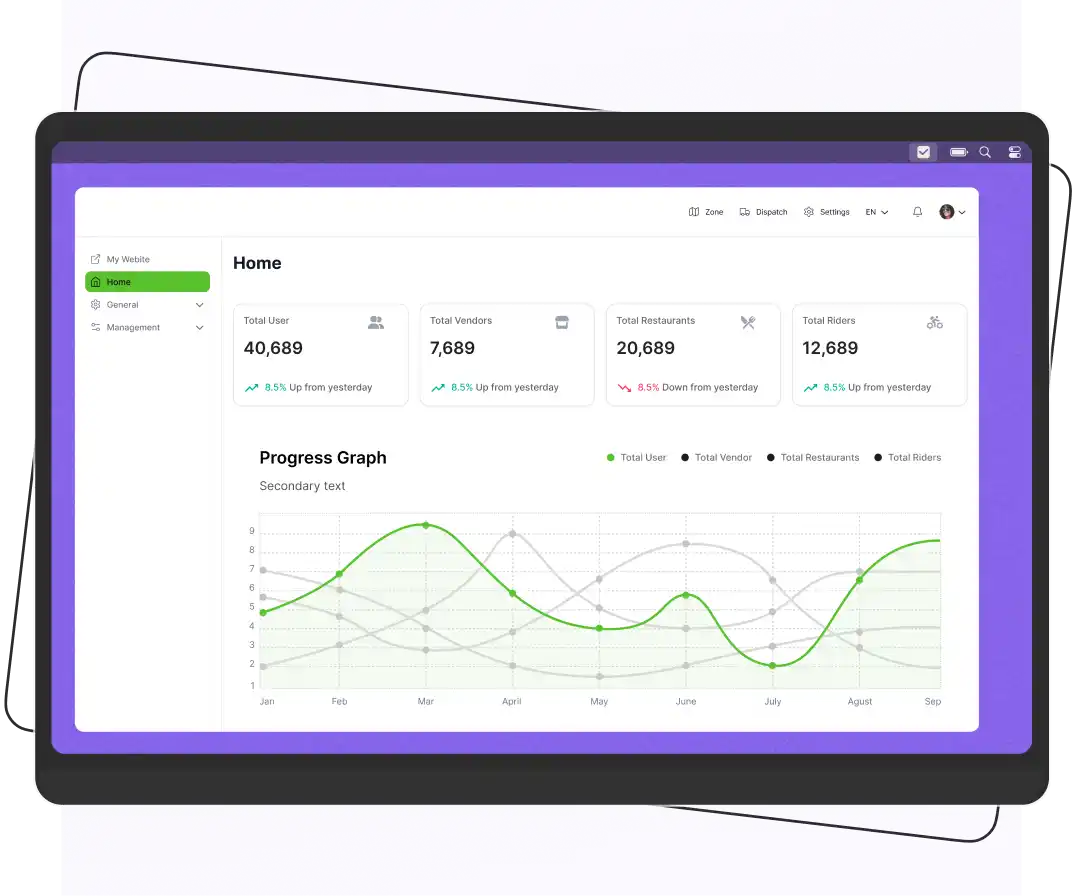
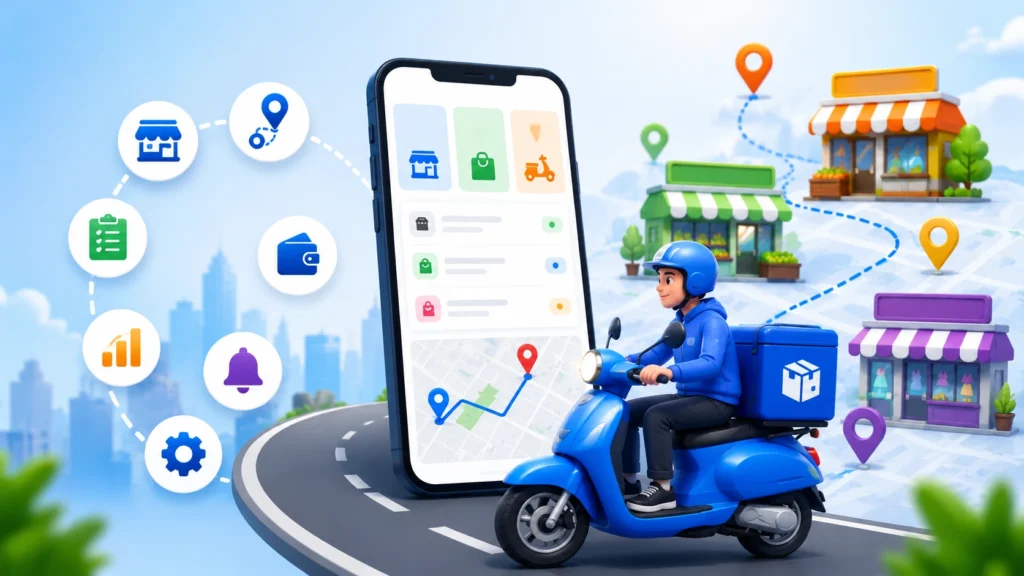
Founders often think of delivery software as “the app customers order from,” but that’s only one piece of a much larger system. A complete white label app solution is made up of four connected systems that work together in real time.
Customer App
The customer-facing side of the platform includes the ability to:
- Browse stores and vendors
- Track orders live from preparation to doorstep
- Pay securely through integrated payment gateways
- Leave reviews and ratings that build trust across the marketplace
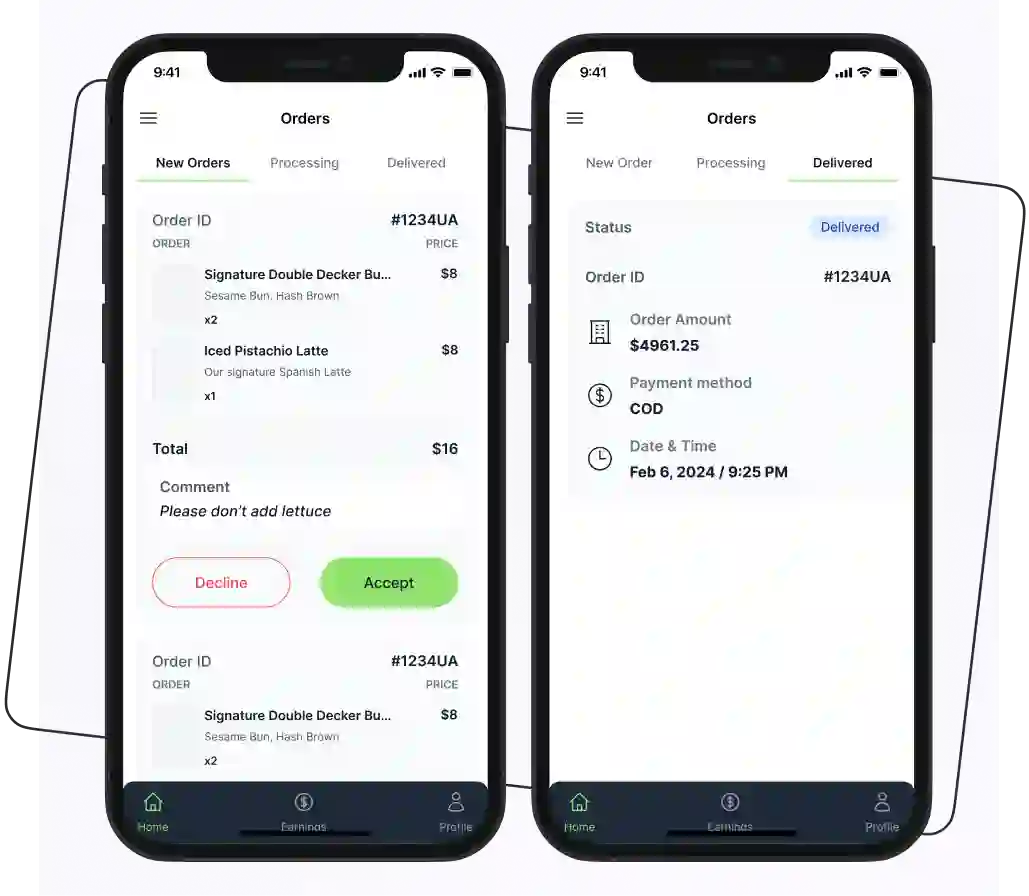
Vendor Dashboard
Each vendor, whether a restaurant, pharmacy, or retail store, gets their own dashboard to:
- Manage products and menu items
- Track inventory levels in real time
- Process incoming orders
- Run promotions or discounts to drive repeat business
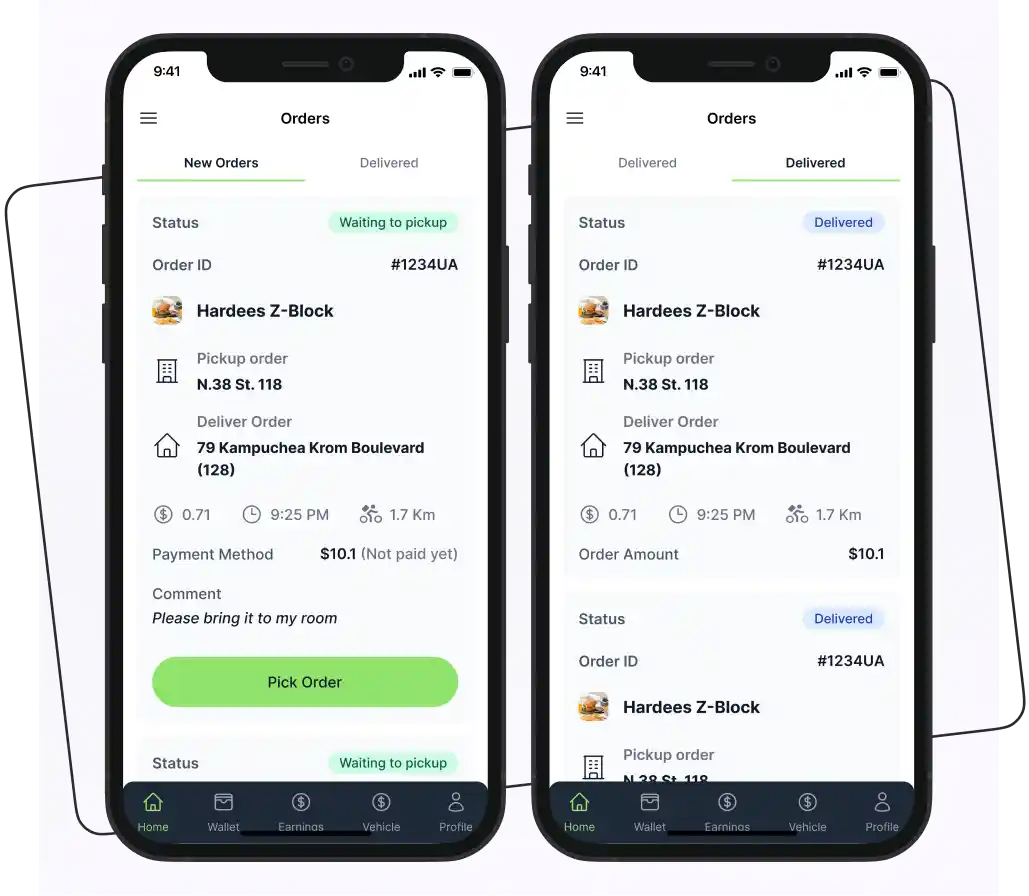
Rider App
Delivery riders operate through a dedicated app that provides:
- Route optimization for faster deliveries
- Visibility into earnings and payout history
- Turn-by-turn navigation
- Real-time delivery status updates that sync back to both the customer and vendor
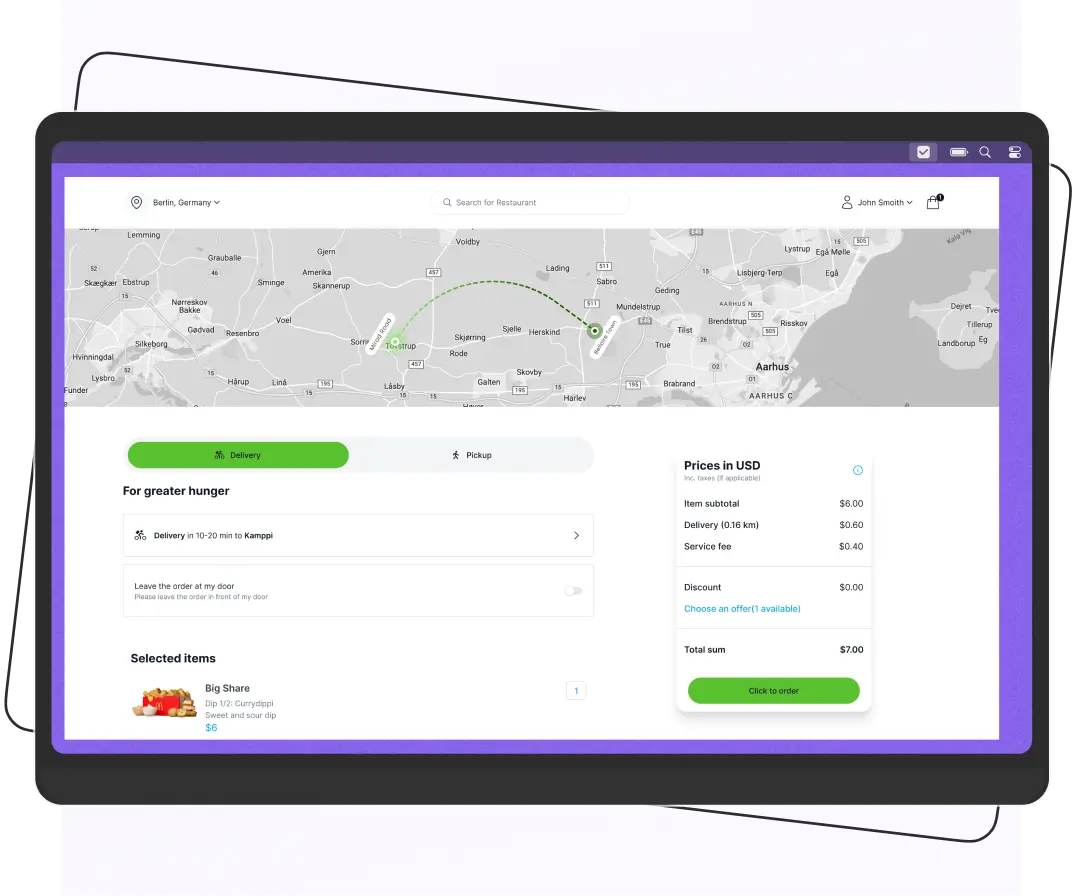
Admin Panel
Behind the scenes, the platform owner controls the entire marketplace through an admin panel that handles:
- Vendor approvals and onboarding
- Business analytics
- Performance reporting
- Payment processing and reconciliation
- Commission settings across vendors and categories
Together, these four components work as one connected platform. It makes it easy to manage orders, vendors, deliveries, and customers from a single system. That’s why it’s important to look beyond the customer app when choosing an on-demand delivery solution.
3. Automation Makes Operations Easier
As order volume grows, manual operations quickly become difficult and time-consuming. This is where automation within a multivendor delivery platform becomes essential, not optional.
Main automation features include:
- Order assignment: automatically matching incoming orders to the right vendor and available rider
- Auto-dispatch: assigning the nearest or most efficient rider without manual intervention
- ETA calculation: dynamically updating delivery time estimates based on traffic, distance, and prep time
- Push notifications: keeping customers, vendors, and riders informed at every order stage
- Inventory syncing: automatically updating stock levels across the vendor dashboard and customer app
- Coupon management: applying and tracking discount codes and promotional campaigns automatically
- Reporting: generating real-time sales, performance, and payout reports without manual data entry
For startups with a small team, automation is more than just a helpful feature. It allows you to manage a growing marketplace efficiently without hiring a large operations staff.
4. Revenue Comes From Multiple Sources
A common misconception is that delivery platforms only earn through delivery fees. In reality, well-designed customizable delivery platforms support several revenue streams that can be combined and adjusted as the business grows.
| Revenue Stream | Description |
| Commission | Percentage taken from every order placed through a vendor |
| Delivery Fees | Charges paid by customers for delivery service |
| Vendor Subscription | Recurring monthly fee vendors pay to stay listed on the platform |
| Featured Listings | Paid placement that increases a vendor’s visibility in search or browse results |
| Advertising | Sponsored banners or promoted stores within the app |
| Surge Pricing | Increased delivery fees during high-demand periods |
Diversifying revenue this way reduces dependency on any single income source and gives startups more room to experiment with pricing as they scale.
5. Scalability Should Be a Priority
Many startups choose software that works well for their first few hundred orders but struggles as the business grows. True scalability in startup delivery tools is when the platform can handle:
- A growing number of vendors without performance slowdown
- Increasing customer volume during peak hours
- Expansion into multiple cities
- Expansion into multiple countries
- Multi-language support for different regional markets
- Multi-currency support for cross-border operations
- Cloud infrastructure that scales resources automatically with demand
Common scaling mistakes to avoid include:
- Choosing software with rigid, single-city architecture that requires a rebuild for expansion
- Underestimating server and infrastructure costs as order volume grows
- Ignoring localization needs until expansion is already underway
- Failing to ask providers directly how performance and pricing change at higher vendor or order volumes
Founders should treat scalability as a launch-day requirement, not a future problem to solve later. Choosing a platform that can grow with your business from day one is much easier and more cost-effective than trying to upgrade a limited system in the future.
6. Security and Payment Integration Matter
Trust is the foundation of any delivery marketplace, and that trust depends heavily on how securely the platform handles data and payments.
When evaluating small business delivery software, founders should confirm the platform includes:
- Secure, integrated payment gateways for smooth and reliable transactions
- PCI compliance to meet global payment card security standards
- SSL encryption to protect data transmitted across the app
- Fraud prevention systems to detect suspicious orders or payment activity
- OTP verification to confirm rider and customer identity during delivery
- GDPR or local privacy compliance, depending on your operating region
- Role-based access, ensuring vendors, riders, and admins only see the data relevant to their role
Skipping these safeguards doesn’t just create legal risk; it directly damages customer and vendor trust, which is difficult to rebuild once lost.
7. Choosing the Right Software Saves Time and Money
The final decision most founders face is whether to build custom software or launch with a ready-made, white label platform. Each option has its own advantages and trade-offs, so it’s important to understand which one best fits your business goals.
| Custom Development | Ready-Made Solution |
| High upfront cost | Lower upfront cost |
| Longer development timeline | Faster launch |
| Requires a large technical team | Minimal technical setup required |
| Fully custom from the ground up | Customizable within a proven framework |
| Higher ongoing maintenance burden | Vendor support typically included |
For most early-stage food delivery startups, a ready-made white-label solution is the smarter choice because it helps them launch faster with less risk. Many platforms still offer custom branding, flexible features, and the ability to adapt the software as the business grows.
7 Common Mistakes to Avoid When Choosing the Multivendor Delivery Software
Choosing the right white label food delivery software is one of the most important decisions a food delivery startup will make, and it’s also one of the easiest to get wrong.
Many founders evaluate platforms based on price or a flashy demo, only to discover months later that the software can’t scale, lacks essential features, or locks them into a rigid, unsupported system.
Below are the most common mistakes startups make when selecting a multivendor delivery platform, and how to avoid them.
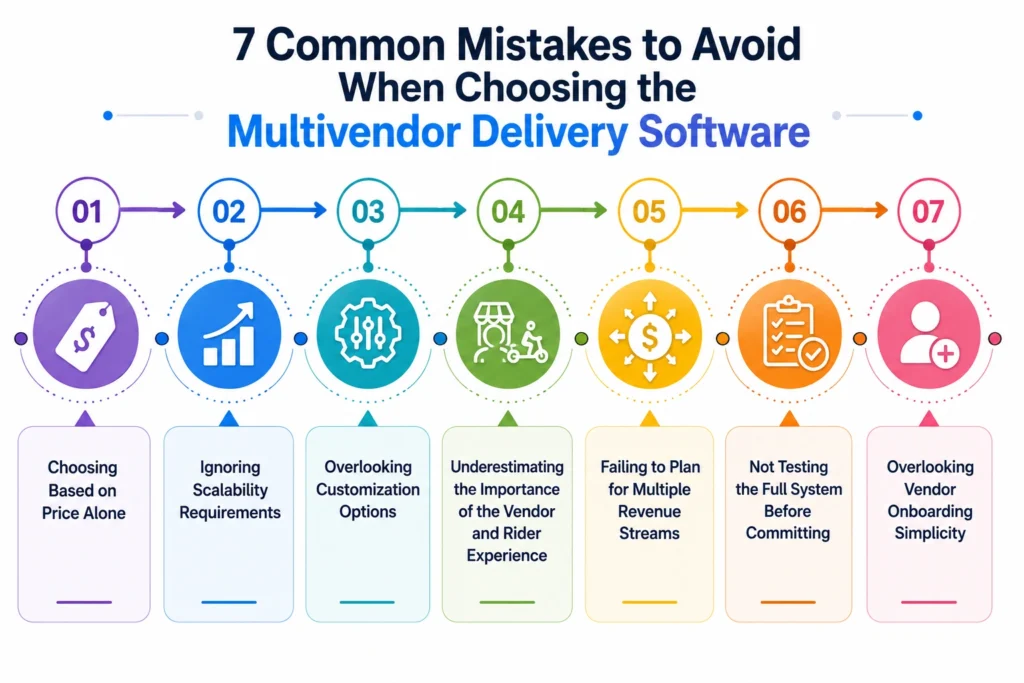
1. Choosing Based on Price Alone
The cheapest option is rarely the best long-term choice. Many startups select a platform purely because it has the lowest upfront cost, without considering hidden fees, limited features, or poor support that show up later.
A low-cost platform that lacks proper automation, security, or scalability often ends up costing far more in the long run. Instead of asking “what’s the cheapest option,” founders should ask “what does this cost me over the next two years, including support, updates, and scaling fees?”
2. Ignoring Scalability Requirements
A platform that works well for 20 vendors and a few hundred orders a day may completely break down at 200 vendors and thousands of daily orders.
Many startups fail to ask vendors directly how the software performs as order volume, vendor count, or city coverage increases. This mistake is especially costly because migrating to a new platform after your business has grown is far more disruptive and expensive than choosing scalable startup delivery tools from the beginning.
Before committing, founders should confirm the platform can support these things:
- Multiple cities
- Multi-language
- Multi-currency operations
- Cloud infrastructure that scales automatically with demand
3. Overlooking Customization Options
Some founders assume that white label automatically means rigid and generic and end up either overpaying for full custom development they don’t need, or settling for a platform that can’t reflect their brand at all.
The better approach is finding truly customizable delivery platforms that allow:
- Full rebranding
- Flexible commission structures
- Configurable delivery zones
- Ability to add or remove features as the business model grows
Skipping this evaluation step often results in a platform that looks and feels identical to every competitor using the same template.
4. Underestimating the Importance of the Vendor and Rider Experience
It’s easy to focus entirely on the customer app and forget that vendors and riders are using the platform every single day. If the vendor dashboard is confusing or the rider app lacks proper route optimization and real-time updates, both groups will disengage quickly, leading to slow order fulfillment and poor delivery times.
A strong multivendor delivery platform needs to work for all three user types: customers, vendors, and riders, not just the app customers see.
5. Failing to Plan for Multiple Revenue Streams
Many startups rely on just one source of income, such as delivery fees, when they first launch. However, as the business grows, it’s important to have the flexibility to earn revenue through commissions, vendor subscriptions, featured listings, advertising, or surge pricing. Choosing software that supports multiple revenue models from the start helps increase profitability.
6. Not Testing the Full System Before Committing
A common and costly mistake is evaluating only the customer-facing app during a demo, without testing the vendor dashboard, rider app, and admin panel as a connected system. A true multivendor delivery platform depends on all four components working together in real time.
Before signing a contract, founders should request access to test all four systems together, not just view screenshots or a single-sided demo.
7. Overlooking Vendor Onboarding Simplicity
If it’s difficult for new vendors to join your platform, your marketplace will grow much more slowly. Before choosing a solution, make sure restaurants and shop owners can easily sign up, upload their products or menus, and start selling with minimal effort.
FAQs
Multivendor delivery software is a platform that allows multiple businesses, such as restaurants, grocery stores, pharmacies, and retailers, to sell through a single app or website.
It is ideal for startups, entrepreneurs, restaurants, grocery marketplaces, pharmacies, retail stores, and any business that wants to manage multiple vendors from one platform.
A good platform should offer:
Vendor management
Customer and driver apps
Real-time order tracking
Multiple payment options
Analytics
Promotions
Notifications
Easy-to-use admin dashboard
These platforms can earn revenue through delivery fees, commissions on each order, vendor subscriptions, featured listings, advertising, and surge pricing during busy periods.
Yes. Most modern platforms support food delivery, grocery delivery, pharmacies, flowers, pet supplies, courier services, retail stores, and other on-demand businesses from a single system.
The timeline depends on the solution you choose. A white-label platform can often be launched within a few days or weeks, while custom-built software may take several months to develop and test.
Supercharge your deliveries with Enatega.
Launch NowConclusion
Building a successful delivery marketplace takes more than just a great idea; it starts with choosing the right software. A platform that is easy to manage, flexible, and built to grow can make daily operations much smoother while giving your customers and vendors a better experience.
Before making your decision, take the time to compare your options and focus on what your business needs today and in the future. The right multivendor delivery software won't just help you launch faster; it will give you a solid foundation to grow with confidence.
About the author

Hudaibia Khalid is a senior content writer with several years of experience in creating clear and easy-to-understand content. Over the years, she has worked closely with startups, restaurants, and entrepreneurs, helping them simplify complex digital and technical topics into actionable insights.
Her expertise lies in writing about on-demand platforms, food delivery solutions, and business growth strategies in a way that is accessible even to non-technical readers. With her experience in the industry, she focuses on guiding businesses step by step, from understanding ideas to turning them into fully working solutions.
SHARE






 IOS
IOS Android
 Web
Web