

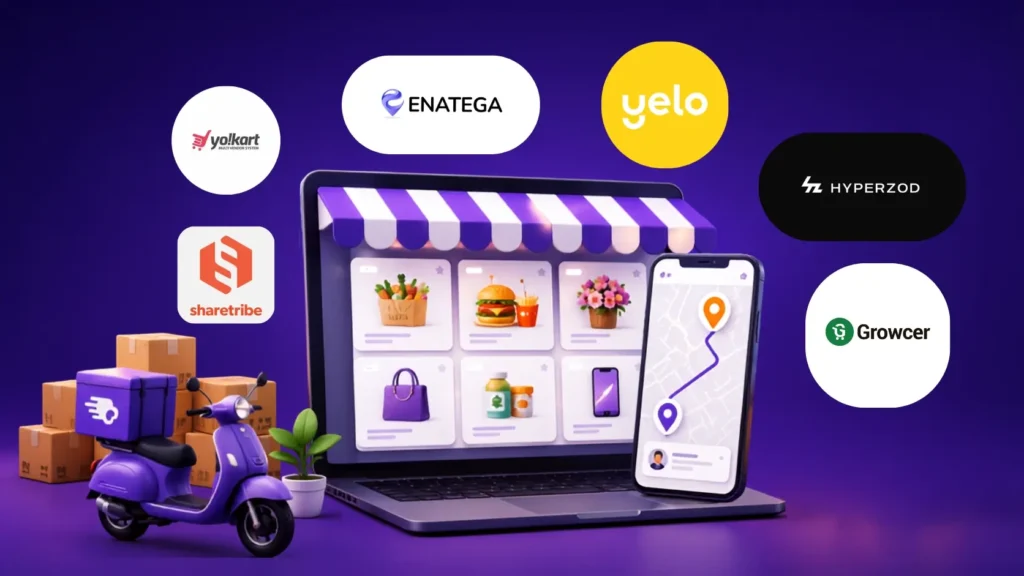
The best multivendor delivery platforms for startups include Enatega, Sharetribe, Yo!Kart, Hyperzod, Yelo (By Jungleworks), and Growcer (by FATbit Technologies). These platforms help entrepreneurs launch online marketplaces for food, grocery, courier, and other on-demand services. The right platform depends on your budget, customization needs, and long-term business goals.
A great delivery business isn’t built on an app alone; it’s built on the platform behind it. The software you choose determines how easily you can onboard vendors, manage deliveries, and grow your marketplace over time.
With dozens of solutions available, knowing which one is worth your investment can be challenging.
This blog compares the best multivendor delivery platforms for startups and highlights the features that matter most before you make a decision.
What Is a Multivendor Delivery Platform?
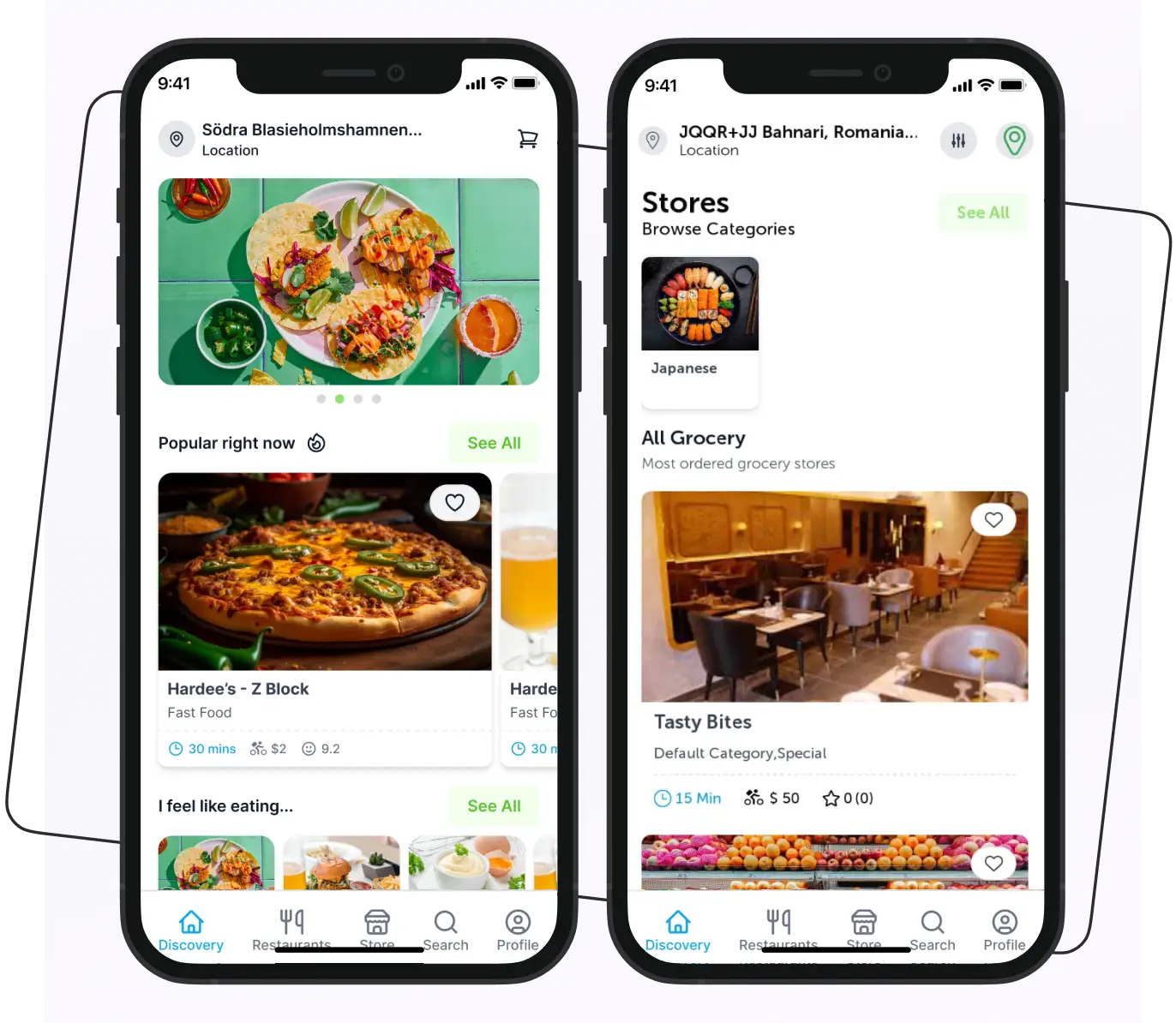
A multivendor delivery platform is software that lets multiple sellers restaurants, grocery stores, pharmacies, retail shops list products and fulfill orders through a single customer-facing app. Unlike single-vendor food delivery software built for one restaurant chain, a multivendor system includes:
- A customer app (browsing, ordering, tracking)
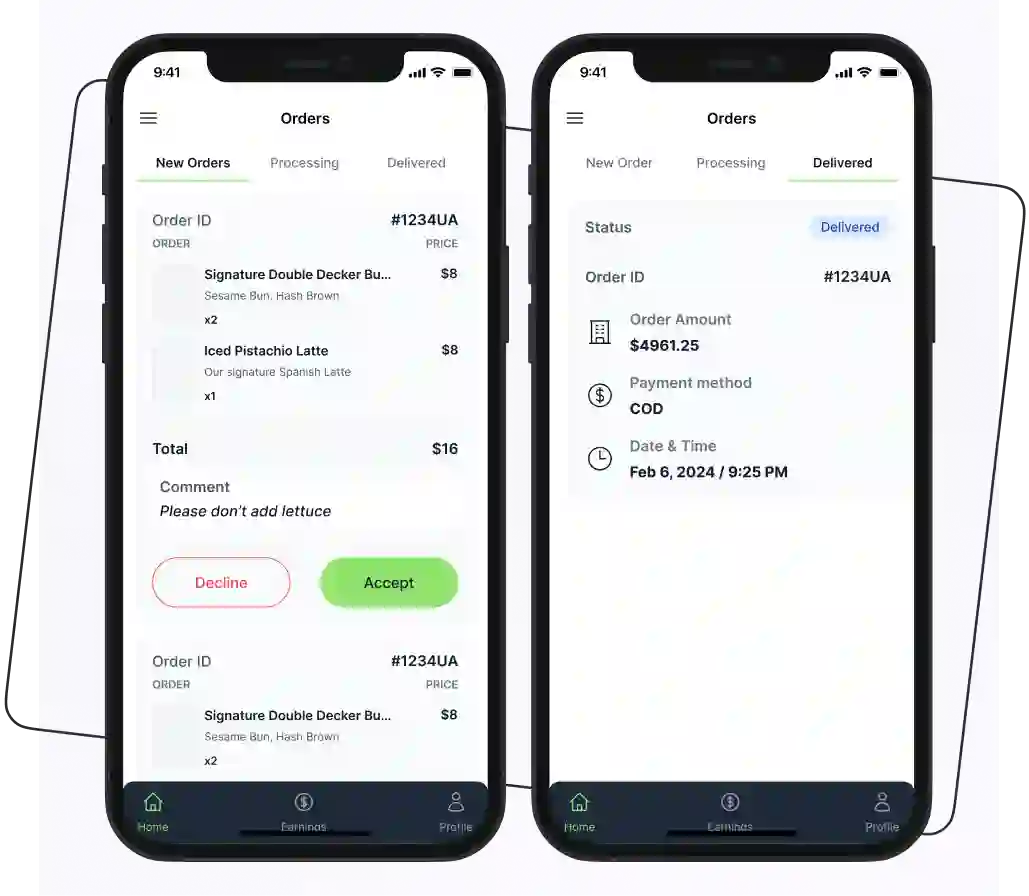
- Individual vendor dashboards (menu/inventory, order management)
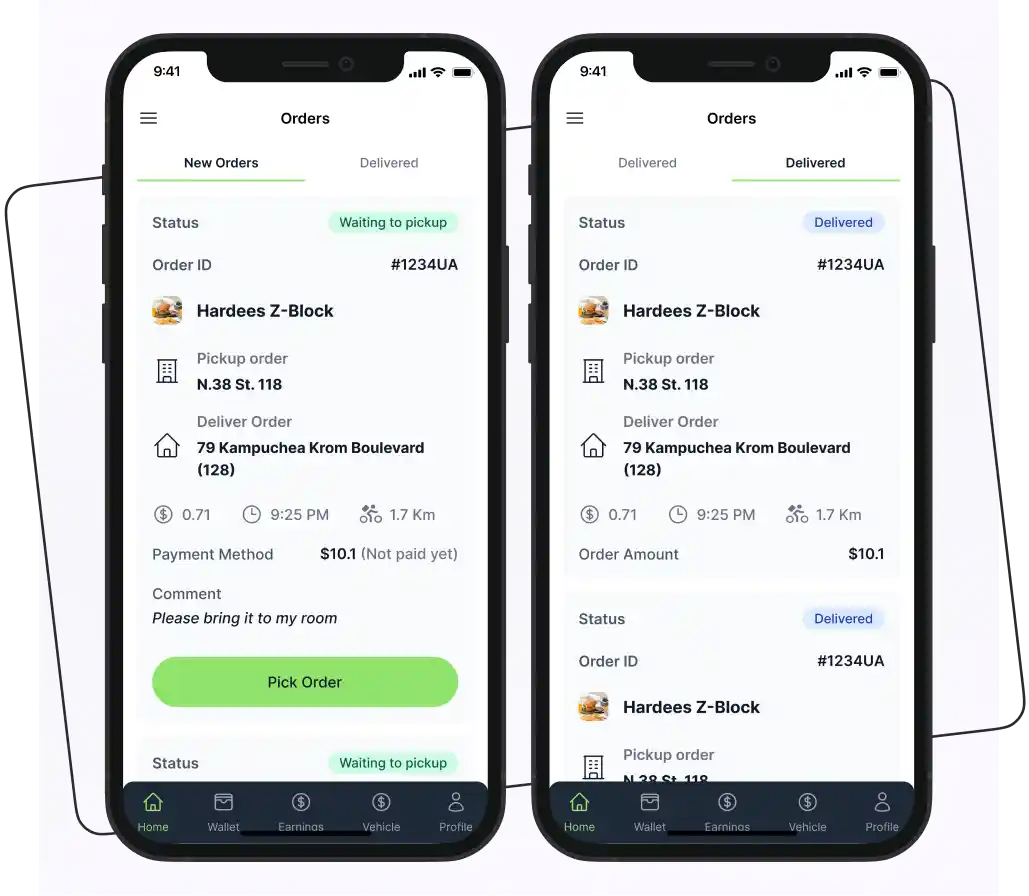
- A rider or delivery partner app (route assignment, live tracking)
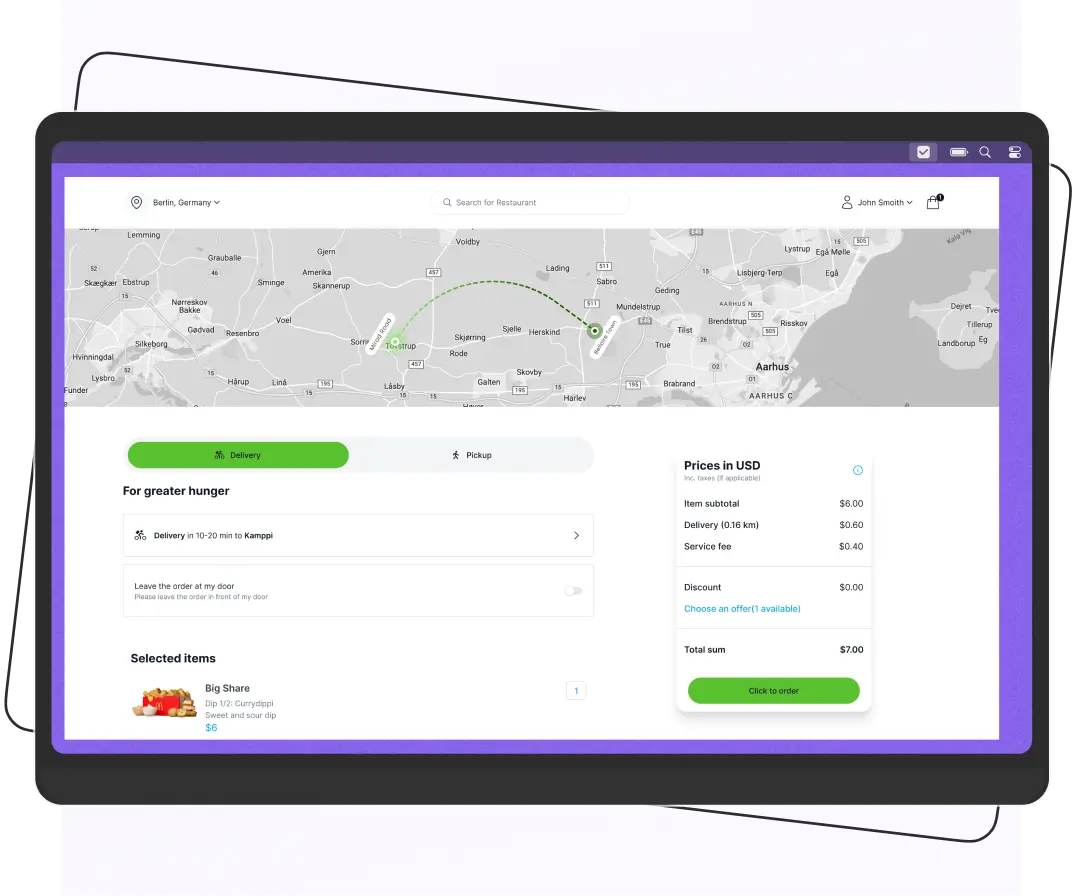
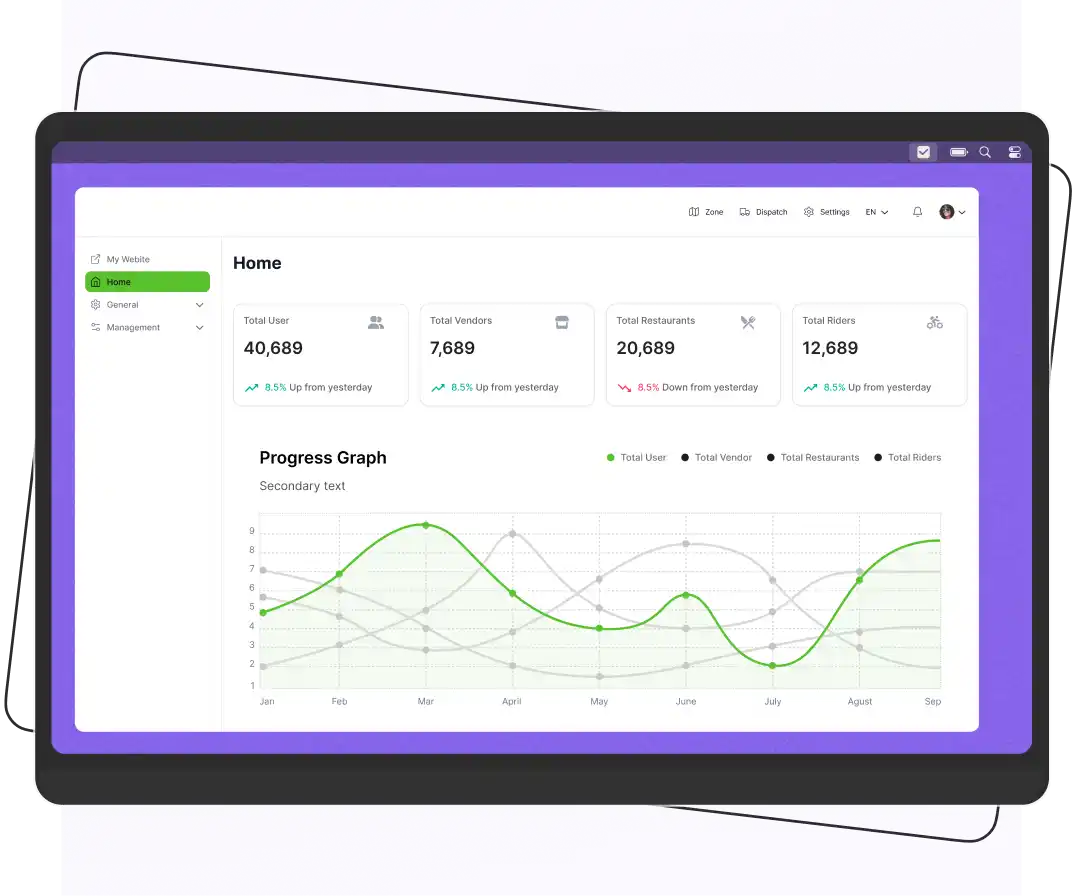
- A central admin panel (commissions, payouts, vendor onboarding, analytics)
This four-sided structure is what makes multivendor marketplace software fundamentally more complex and more valuable than a basic ordering app.
Businesses That Use Multivendor Delivery Platforms
Multivendor delivery software isn’t limited to restaurants. It helps a wide range of verticals, each with its own vendor management and compliance needs.
- Food delivery
- Grocery delivery
- Pharmacy delivery
- Flower delivery
- Liquor delivery
- Pet supplies
- Local marketplaces
Why Startups Choose a Multivendor Delivery Platform?
Before comparing platforms, it’s important to understand the types of delivery business models that startups commonly adopt:
- Hyperlocal marketplace: Connects nearby vendors, such as restaurants, grocery stores, and pharmacies, with local customers, similar to Zomato or Instacart.
- Vertical-specific marketplace: Focuses on a single niche, such as flower delivery, medicine delivery, or specialty groceries.
- On-demand courier network: Allows vendors to use the platform primarily for delivery and logistics rather than customer discovery.
- Dark store/cloud kitchen hybrid: Combines company-owned inventory with third-party vendor products.
Each of these models has unique requirements for vendor management, commission structures, and delivery operations. That’s why choosing the right multivendor platform is a main decision for any startup.
Supercharge your deliveries with Enatega.
Register NowTop Features in a Multivendor Delivery Platform
| Customer App | Vendor Dashboard | Delivery Driver App | Admin Panel |
| Product search | Order management | Route optimization | Vendor approval |
| Live order tracking | Menu/product management | Earnings dashboard | Commission management |
| Secure payments | Inventory control | Navigation | Analytics |
| Ratings and reviews | Promotions | Order status updates | User management |
Top Multivendor Delivery Platforms for Startups
Here are some of the top multivendor delivery platforms for startups. Since pricing and features change over time, use this list as a starting point.
1. Yo!Kart
Best for: Retail marketplaces and startups that need a customizable marketplace platform.
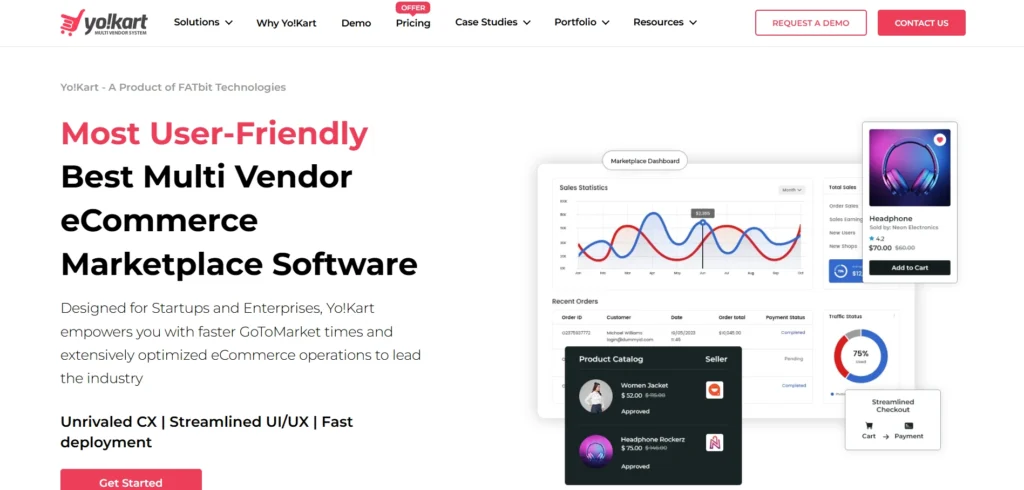
Yo!Kart is a self-hosted multivendor marketplace platform designed for startups and growing businesses. It helps you create an online marketplace where multiple vendors can sell their products.
Its lifetime license eliminates recurring SaaS subscription fees, making it an attractive option for founders looking to reduce long-term costs. It’s best suited for teams that want full source code ownership without building a platform from scratch.
Yo!Kart Features
- Self-hosted platform
- Vendor management
- Commission management
- Multiple payment gateways
- Multi-language and multi-currency support
2. Enatega
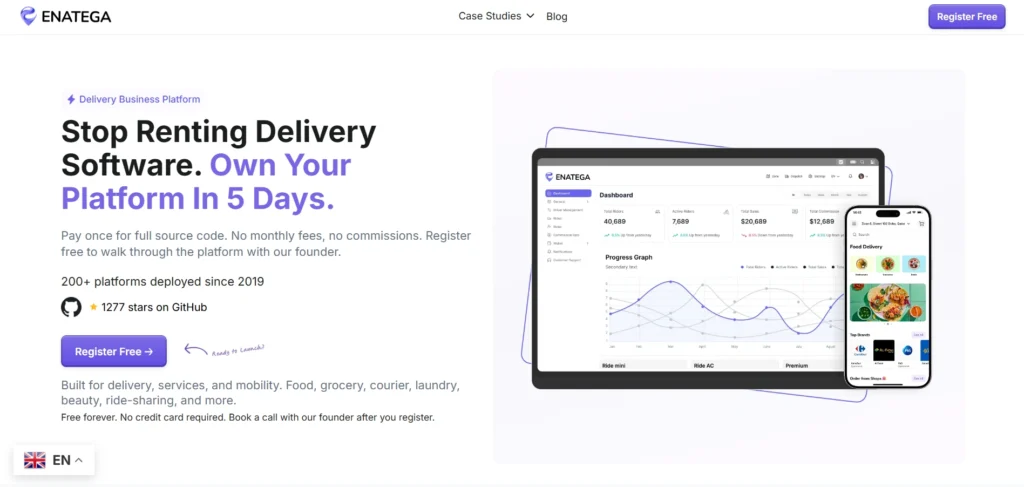
Best for: Startups looking for a scalable delivery platform with complete branding and customization.
Enatega is a white-label, open-source delivery platform built for food, grocery, pharmacy, and other on-demand delivery businesses. The frontend source code is fully open source, while the backend and API are proprietary and included as part of a paid license.
It comes with ready-made apps for customers, vendors, riders, and admins, allowing startups to launch faster while fully customizing the platform.
What Makes Enatega Unique?
- White-label solution
- Open-source code
- Customer, vendor, rider, and admin apps
- Real-time order tracking
- Multiple payment gateway integration
- Transparent pricing
3. Yelo (by Jungleworks)
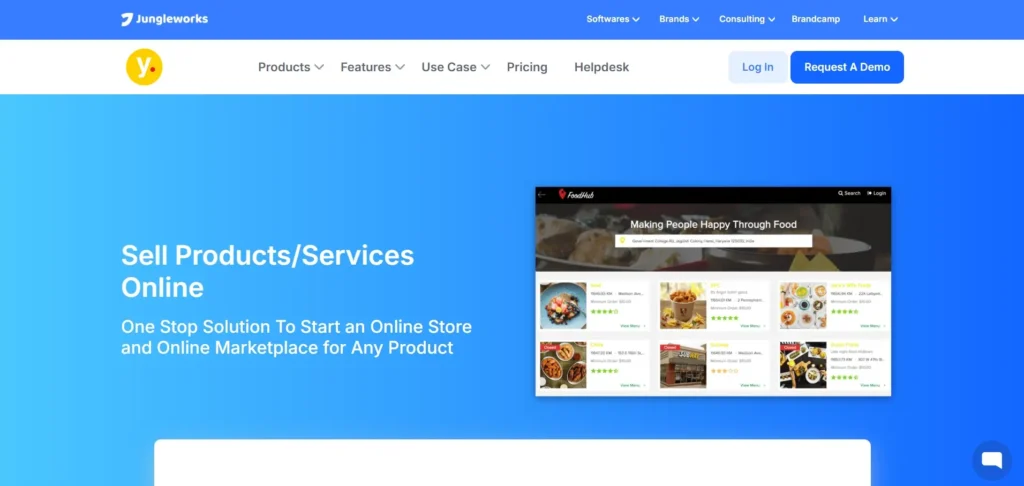
Best for: Businesses that want a fast launch with minimal technical setup.
Yelo is a cloud-based multivendor marketplace platform that enables startups to launch online delivery businesses without extensive development. It supports multiple business models and includes tools for managing vendors, orders, payments, and deliveries.
It is a popular choice for non-technical founders because it requires no coding to launch. It includes geofencing, vendor management, and 90+ third-party integrations, all available through a subscription-based model.
Unique Features of Yelo
- Cloud-based platform
- Multi-vendor support
- Order and delivery management
- Customer and driver apps
- Analytics and reporting
4. Hyperzod
Best for: Grocery stores, pharmacies, restaurants, and other hyperlocal delivery startups.
A no-code, white-label SaaS platform built for quick commerce and hyperlocal delivery businesses, including food, grocery, and other on-demand services. It supports single-vendor, multi-vendor, and multi-branch business models from one platform, with drag-and-drop store creation, geofenced delivery zones, and automated rider dispatch through Autozod.
It’s fully hosted and requires no coding; it’s ideal for founders who want to launch quickly and scale without switching platforms.
Hyperzod Features
- Hyperlocal delivery management
- Customer and rider apps
- Real-time order tracking
- Inventory management
- Delivery scheduling
5. Sharetribe
Best for: Entrepreneurs launching marketplace MVPs or service-based platforms.
Sharetribe is a marketplace platform that helps entrepreneurs quickly launch online marketplaces with minimal coding. It’s not built specifically for delivery businesses; it can be customized for various marketplace models and is ideal for testing new business ideas.
A no-code/low-code SaaS marketplace builder well-suited for founders who want to quickly validate an idea without a technical team. Its hosted “Go” plan is designed for fast and simple launches, while the API-based “Flex” tier offers greater customization for developers.
It’s a best choice for service-based or niche delivery marketplaces that don’t require advanced delivery-specific logistics out of the box.
Features of Sharetribe
- No-code marketplace builder
- Vendor onboarding
- Secure payments
- API for customization
- Ratings and reviews
6. Growcer (by FATbit Technologies)
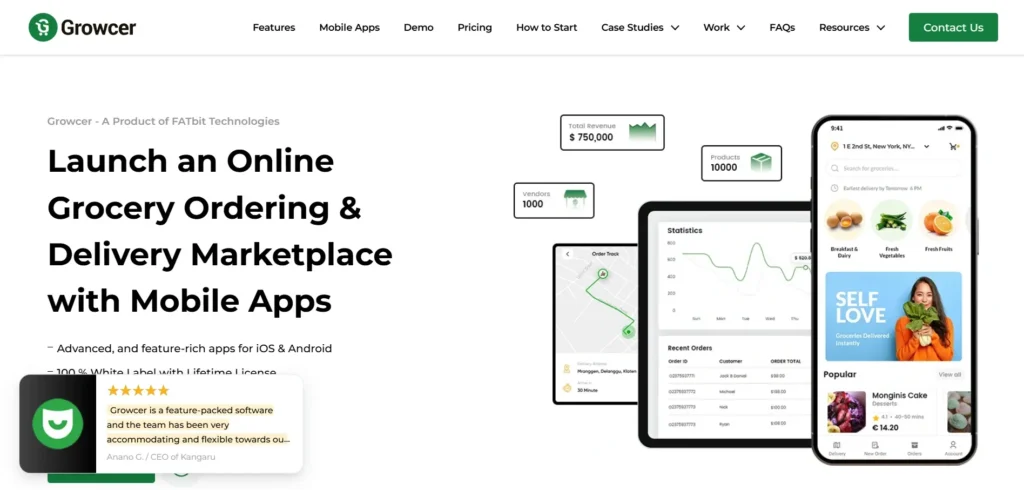
Best for: Grocery delivery startups, supermarkets, and hyperlocal marketplace businesses.
Growcer is a self-hosted multivendor platform designed specifically for grocery and hyperlocal delivery businesses. It provides tools to manage vendors, products, customer orders, and deliveries from a single dashboard.
As a licensed, self-hosted solution, it gives startups full control over their data and codebase instead of relying on a SaaS provider.
Growcer Features
- Multi-vendor grocery marketplace
- Self-hosted software
- Tax handling
- Inventory management
- Delivery management
- Multi-language and multi-currency support
How These Platforms Fit Different Delivery Business Models?
Not every platform fits every business model. Here’s how these solutions align with different startup needs.
Hyperlocal Food and Grocery Delivery
Platforms like Growcer, Yelo, Yo!Kart, and Hyperzod are well suited for businesses delivering food, groceries, and other everyday essentials within a local area.
Fast, No-Code MVP Launch
If you want to validate your business idea quickly without extensive development, Sharetribe and Hyperzod are good options for launching an MVP.
Branded, Mobile-First Delivery Apps
For startups that want their own branded mobile apps with greater customization and ownership, Yo!Kart and Enatega are strong choices.
How to Choose the Right Platform for Your Startup?
Ask these questions before committing:
- What’s my timeline? Ready-made solutions launch faster; custom builds take longer but scale better long-term.
- What’s my budget? White-label platforms are cheaper upfront; custom development costs more but avoids future licensing fees.
- How many vendor types will I support? A single-category marketplace needs simpler vendor management than a multi-category one.
- Do I need ownership of the source code? This matters for future fundraising and exit strategy.
- How will I scale geographically? Some platforms handle multi-city, multi-currency scaling better than others.
Common Mistakes Startups Make
Avoid these common mistakes when choosing and launching a multivendor delivery platform.
Underestimating Vendor Management
Many startups overlook how complex vendor onboarding, payouts, and dispute management can become as the business grows.
Choosing Based on Price Alone
Low-cost platforms may save money initially but often lack the features and scalability needed for long-term growth.
Ignoring Delivery Operations
A great customer experience depends on efficient delivery. Make sure your platform supports rider management, order tracking, and delivery optimization.
Overlooking Compliance
Different regions have different requirements for payments and data privacy. Choose a platform that helps you meet these compliance needs.
FAQs
The cost depends on the platform and your business requirements. White-label solutions are generally more affordable, with pricing starting from a few thousand dollars, while custom-built platforms can cost tens of thousands of dollars or more, depending on the features, customization, and project complexity.
Single-vendor delivery software is designed for one business, such as a single restaurant or grocery store. Multivendor delivery software allows multiple independent vendors to sell through the same platform.
Yes. Many startups begin with a ready-made or white-label platform to launch quickly and test their business idea. As the business grows, they can move to a custom-built solution with more advanced features.
Supercharge your deliveries with Enatega.
Register NowConclusion
Choosing the right multivendor delivery platform is one of the most important decisions you'll make for your startup. The right software doesn't just help you launch faster; it gives you the tools to manage your business with confidence.
Before making a decision, compare platforms based on your business model, budget, and future growth plans. Investing in a platform that can grow with your business today can save you from costly migrations and rebuilds tomorrow.
About the author

Hudaibia Khalid is a senior content writer with several years of experience in creating clear and easy-to-understand content. Over the years, she has worked closely with startups, restaurants, and entrepreneurs, helping them simplify complex digital and technical topics into actionable insights.
Her expertise lies in writing about on-demand platforms, food delivery solutions, and business growth strategies in a way that is accessible even to non-technical readers. With her experience in the industry, she focuses on guiding businesses step by step, from understanding ideas to turning them into fully working solutions.
SHARE






 IOS
IOS Android
 Web
Web