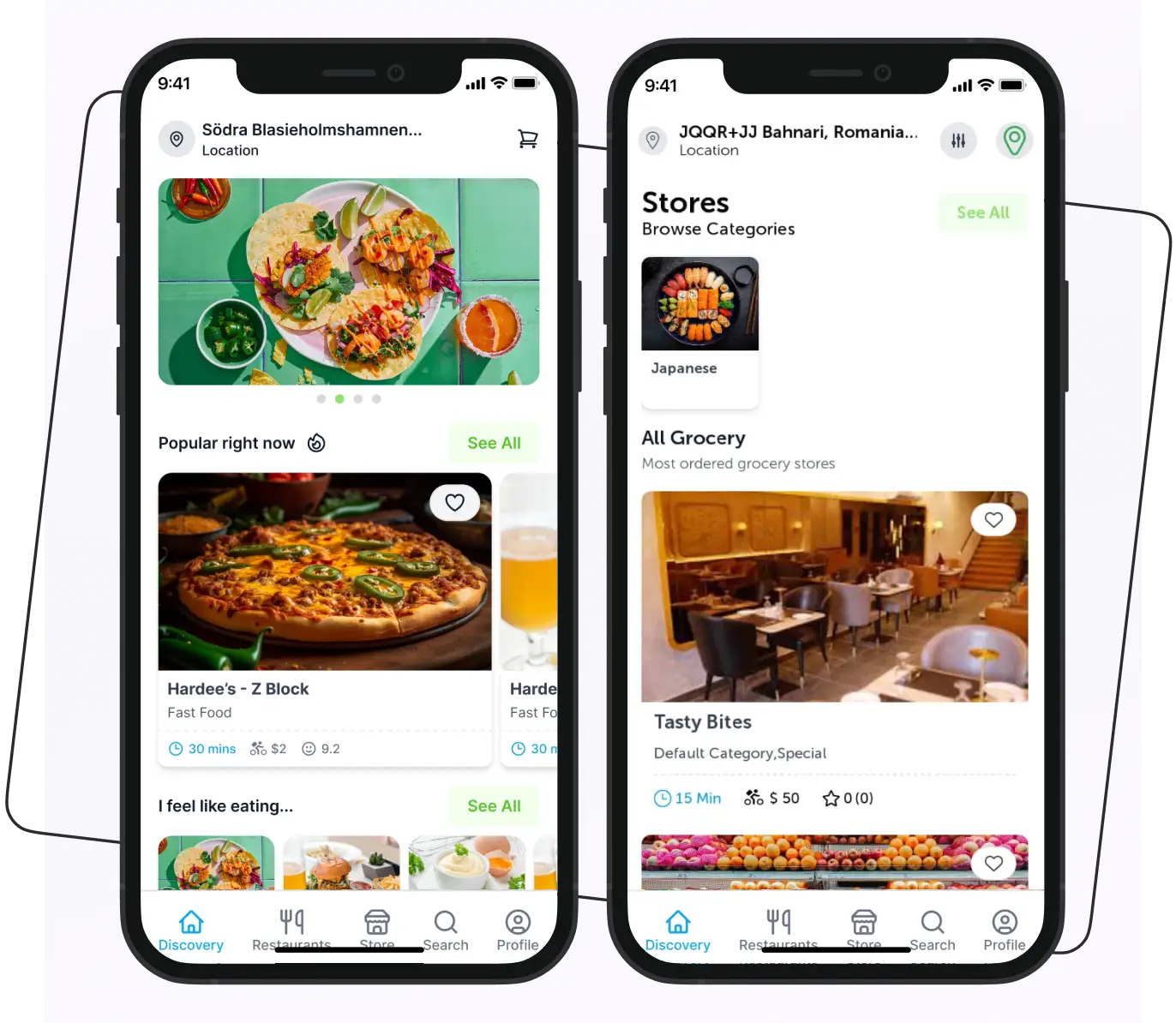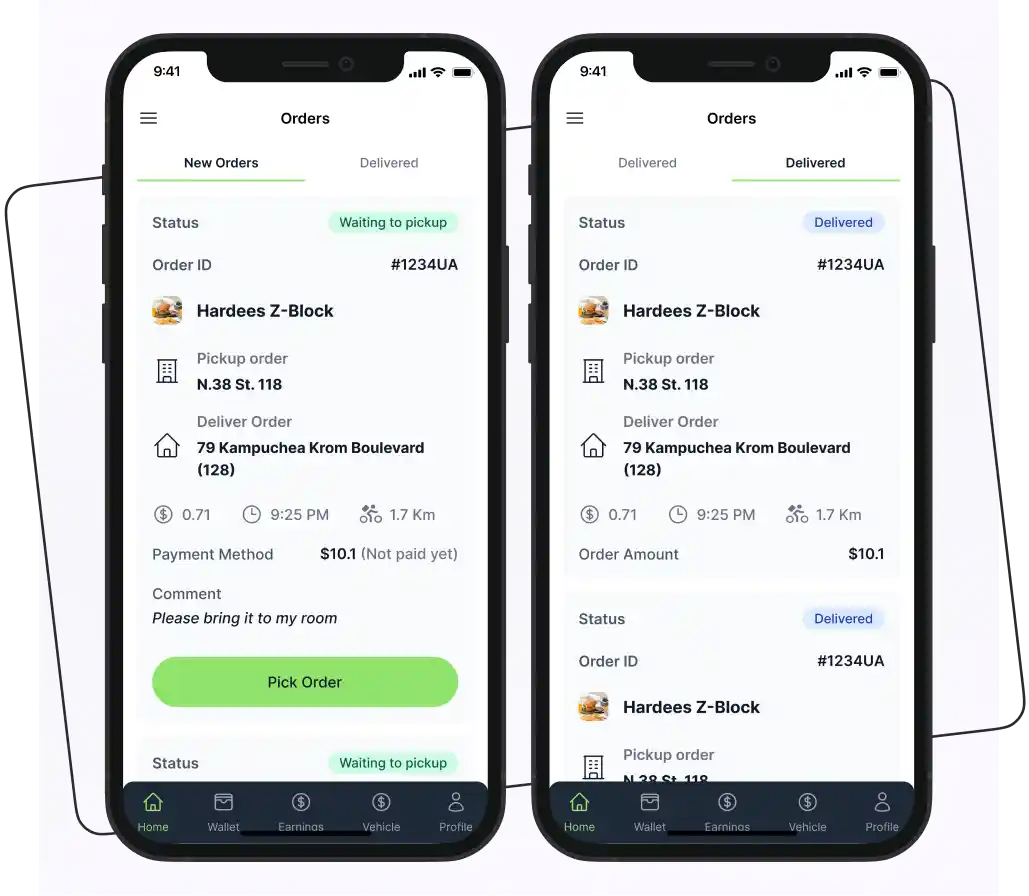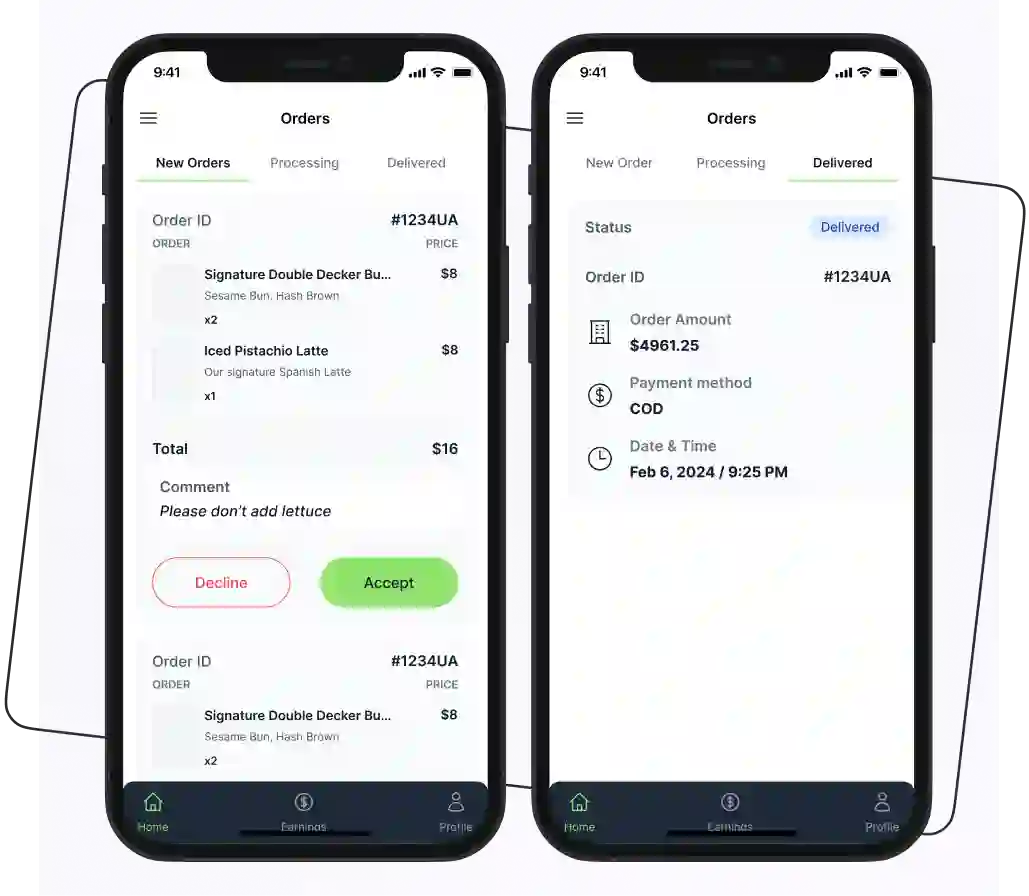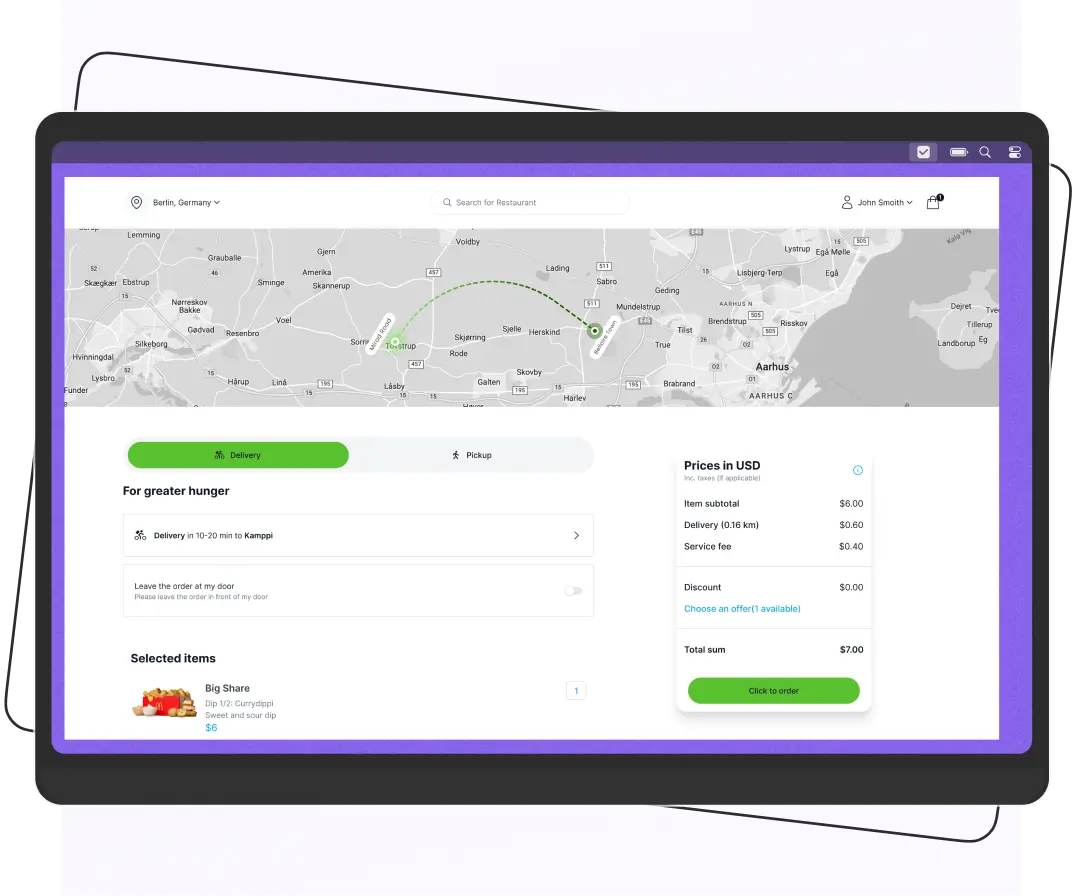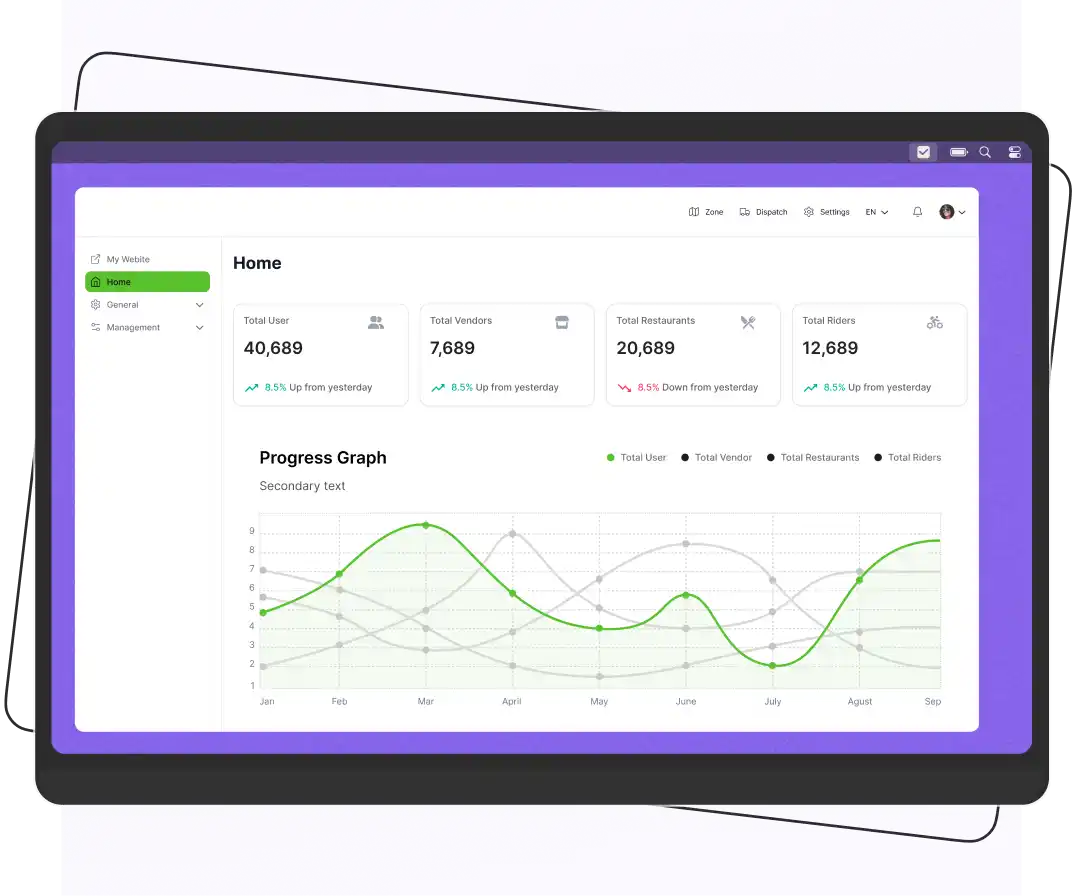


A Postmates clone is a ready-made, customizable software solution designed to replicate the multi-delivery business model of the popular app. It typically includes three core interfaces: a customer app for ordering, a vendor/merchant panel for managing inventory, and a driver app for handling deliveries.
The delivery marketplace that Postmates pioneered still represents a massive global opportunity, but Postmates itself shut down in 2021 after Uber’s acquisition.
A white-label clone script is the fastest way to build on that model. Instead of 6–12 months of custom development, you get a production-ready system customer app, restaurant portal, rider app, and admin dashboard that you customize to your brand.
So, let’s explore how to create a food delivery app using a Postmates clone script, helping you enter the market easily.
What is the Postmates App?
Postmates was an on-demand delivery service that allowed users to order food, groceries, and other essentials from local stores and restaurants.
Founded in San Francisco in 2011, it operated through a mobile app and website, letting customers browse menus, place orders, and track deliveries in real time.
Postmates is no longer an independent platform. According to Uber Technologies, Uber acquired Postmates in December 2020 for approximately $2.65 billion, and the standalone Postmates app was officially shut down in June 2021. Its services were fully folded into Uber Eats.
Postmates Unlimited, its subscription program offering free delivery on eligible orders, was also discontinued as part of this integration and replaced by Uber One.
Supercharge your deliveries with Enatega.
Register NowHow Did the Postmates Model Work?
Here is the workflow of the Postmates app.

Download the App: Available on the App Store or Google Play.
Create an Account: Sign up with email, phone number, and payment method.
Browse Options: Search restaurants or stores; browse available menus and items.
Place Your Order: Add items to a cart and confirm.
Track Your Delivery: Track the delivery rider’s location live after order confirmation.
Receive Your Items: Rider delivers to the door or a designated pickup point.
Payment and Tips: Payment is processed in-app; customers can tip the rider.
Postmates Business and Revenue Model
This model is what a clone app should reproduce:
Business Model
- Platform-Based Marketplace
- Connects customers with local restaurants, grocery stores, and retailers.
- Independent Contractors Delivery Network
- Riders pick up and deliver orders as independent contractors, not employees.
- Wide Range of Offerings
- Food, groceries, alcohol, and general retail, not just restaurants.
- User Experience
- Live tracking, in-app communication, and instant notifications.
Revenue Model
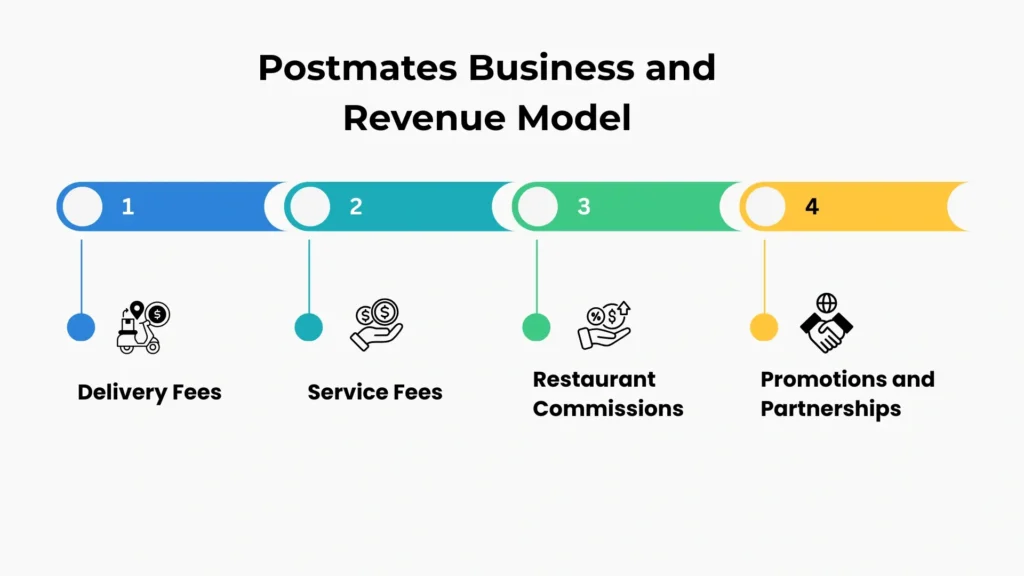
- Delivery Fees
- Customers pay a delivery fee for each order, which varies based on distance and demand.
- Service Fees
- A percentage of the order total is charged as a service fee, which can fluctuate based on factors like time and location.
- Restaurant Commissions
- Restaurants pay Postmates a commission on each order placed through the platform, ranging from 15% to 30%.
- Promotions and Partnerships
- Collaborations with brands for promotional offers can generate additional revenue and attract more users.
What is the Postmates Clone App?
A Postmates clone script is a ready-made delivery platform that lets you launch your own food, grocery, and multi-delivery app like Postmates without building from scratch.
This clone script comes with three apps, i.e., a user app, a restaurant app, a rider app, and an admin dashboard.
Instead of spending months in development, you get a tested, scalable, white-label system ready to launch.
Postmates Clone vs. Custom App Development
| Feature | Postmates Clone App | Custom App Development |
| Time to Launch | 3 – 6 weeks | 6 – 12 months or more |
| Development Cost | $10,000 – $25,000+ | $50,000 – $100,000+ |
| Customization | High. White-label with flexible modules | Full. Built from scratch based on your needs |
| Core Features | Pre-integrated features like order tracking, payment gateways, and ratings | Must be developed and tested from scratch |
| Testing and QA | Basic QA has already been done. | Full testing is required for all use cases |
| Maintenance and Support | Often included or optional as part of the package | Handled in-house or via additional contract |
| Scalability | Scalable | Fully scalable, but it depends on your tech stack and architecture |
| Risk Factor | Low. Proven model with reduced chance of failure | Higher. New product, untested in the market |
| Time to Market | Fast. Perfect for startups and MVPs | Slow. Iideal for long-term, highly custom platforms |
Features of Postmates Clone App
The Postmates clone script is designed to help businesses build their version of the Postmates app with more advanced features. It’s an easy, quick, and cost-effective way for any business to start their delivery service or for an existing business owner wanting to expand their offerings.
Below are some features that you should add to your Postmates app clone.
Features of the Postmates Customer App
| Features | Description |
| Login/Registration | The customers can log in using their email address and password. They can also use their social networking accounts to log in and register. |
| Browse Stores | This feature allows customers to browse the restaurants and stores listed on the app. |
| Real-Time Order Tracking | Live order tracking is the feature within online ordering apps that enables customers to track their orders in real time. This feature gives customers peace of mind, and they can receive their orders on time. |
| Review and Ratings | Online customer reviews are a valuable feature. Customers are allowed to rate and post their reviews about the food and delivery service. Online reviews not only help other customers to make informed decisions, but the restaurants know where they lack and how they will improve their services. |
| WishList | Customers create a list of items they like and can add them to their wishlist to purchase them later. |
| Push Notifications | Push notifications are a powerful tool for your business. This feature reminds the customer about new discounts or promo codes offered by the restaurant or store. |
| Multiple Payments | Allow customers to make payments with multiple payment methods such as cash on delivery, credit/debit cards, mobile wallets, etc. By offering a diverse range of payment options, the Postmates app clone can cater to the preferences and financial needs of a broader customer base, ultimately improving the overall user experience and conversion rates. |
Features of the Postmates Restaurant App
| Features | Description |
| Menu Management | The Postmates app clone should provide a menu management feature that enables restaurant owners to effectively manage all aspects of their digital menu. This feature allows restaurant owners to create, edit, and automate their menus, ensuring efficient menu maintenance and optimization. In addition, restaurants and stores can add new promo codes and deals for customers. |
| Order Management | Manage and keep track of all the orders from a single platform. It helps you streamline your operations and improve the overall customer experience. |
| Check Earnings | On the Postmates app clone, restaurants can check their earning reports, which include all the information. This feature helps to keep track of all the earnings. |
| Access to Customer Information | Providing restaurants and stores with complete access to customer information is a crucial feature of the Postmates app clone. This allows them to better understand their customers, deliver personalized experiences, and build stronger relationships. |
Features of the Postmates Rider App
| Features | Description |
| Availability Status | Riders can change their availability status online and offline at any time. When the rider status is offline, they cannot accept the order request. |
| Earnings Report | The riders can check their complete daily, monthly, and weekly earnings reports. This gives them a clear idea of their total earnings. Moreover, the riders can also check their completed and failed orders. |
| Call/Chat | On the rider delivery app, the in-app chat feature allows the rider to phone or text the customer about the order. |
Features of the Postmates Admin Dashboard
| Features | Description |
| Admin Dashboard | The white-label delivery software should provide an intuitive and feature-rich admin dashboard that gives users a quick and comprehensive overview of their account, performance, and key business metrics. This dashboard should serve as the central hub for managing and monitoring all aspects of the platform. The admin dashboard provides information on the user’s account, total earnings, orders, and more. |
| Manage Notifications | The admin can control the SMS and email notification settings for customers’ and partners’ apps. |
| Manage Sub-Admins | The admin has the right to add new sub-admins and assign specific roles. This feature enhances the platform’s flexibility and scalability, allowing the main admin to delegate responsibilities and manage the overall operations effectively. |
Advanced Features of Postmates Clone App
Here are some advanced features that you should incorporate into your Postmates app clone.
Gamification: To enhance user engagement, the app could include various gamification elements, such as:
- Reward points (e.g., placing orders, referring friends, leaving reviews)
- Leaderboards and badges for users who achieve certain milestones or perform well
- Challenges or mini-games that users can play to earn additional rewards
Social Media Integration: Integrating the app with popular social media platforms can enable users to:
- Share their orders or deliveries on social media
- Invite friends to join the app and earn referral rewards
Loyalty Programs: Implementing a robust loyalty program can help retain users and encourage repeat business. You can offer exclusive perks and discounts for loyal members and reward points that can be redeemed for free deliveries or other benefits.
Customizable Delivery Times: To provide a more personalized user experience, the app could offer features like:
- Allowing users to select their preferred delivery time
- Enabling users to reschedule or cancel deliveries within a certain time frame
Benefits of Postmates Clone App
Building your Postmates app clone can help you stand out in the competitive food delivery industry and provide you with several benefits.
Here are some benefits that your business gets from creating the Postmates clone app.
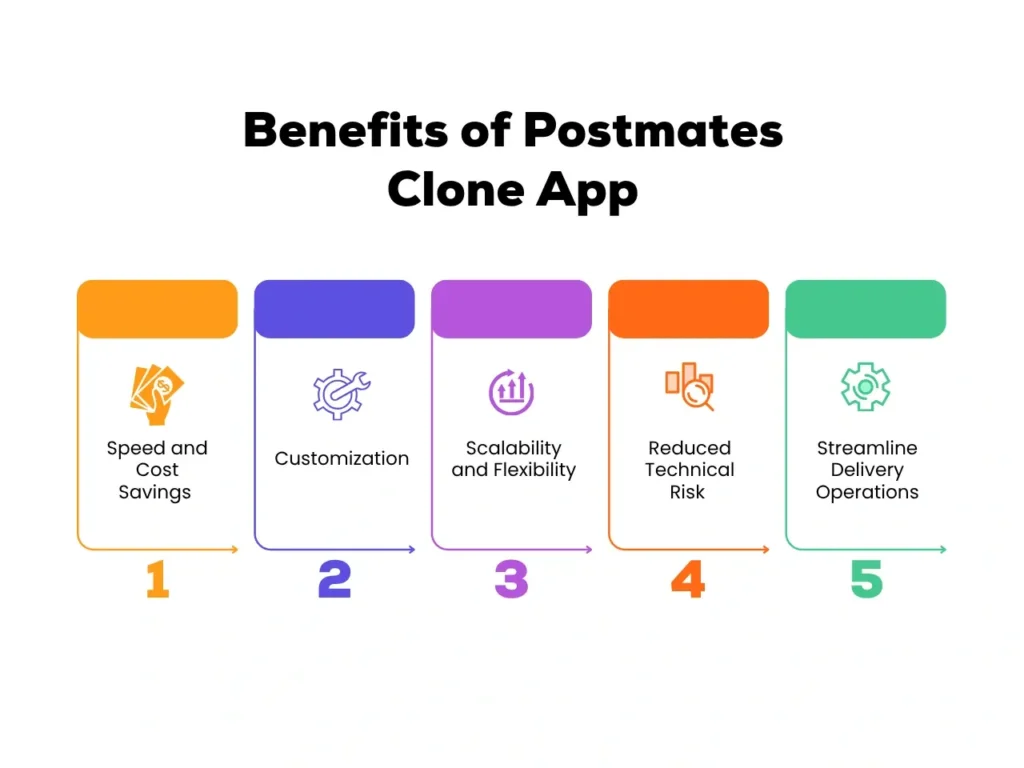
Speed and Cost Savings
Development time drops from 6–12 months to 3–6 weeks. The initial architecture, integrations, and QA are already done; you customize rather than build.
Customization
The white-label Postmates clone app can be easily customized to align with the business’s branding, operational requirements, and customer preferences. Businesses can tailor the app and create a unique and differentiated platform.
With clone apps, businesses can quickly establish their presence in the market and gain a competitive edge.
Scalability and Flexibility
The on-demand delivery solution is designed with a modular and extensible architecture, allowing businesses to scale their operations and add new features as their business grows.
Businesses can easily expand their service areas, add more restaurants and stores, and integrate with new third-party systems as their customer base and service offerings expand.
Reduced Technical Risk
You are launching on an architecture that has already been tested in production. The risk of critical bugs at launch is lower than with a first-version custom build.
Streamline Delivery Operations
Time is of the utmost importance in the food delivery business. Using the food clone app, businesses can streamline their delivery operations and deliver orders on time to the customer’s doorstep. Also, it reduces the need to hire several people who manage your business processes.
How to Build the Postmates Clone App?
Building the Postmates clone app requires careful planning and preparation. Some key considerations for planning and preparing to build a Postmates clone app include:
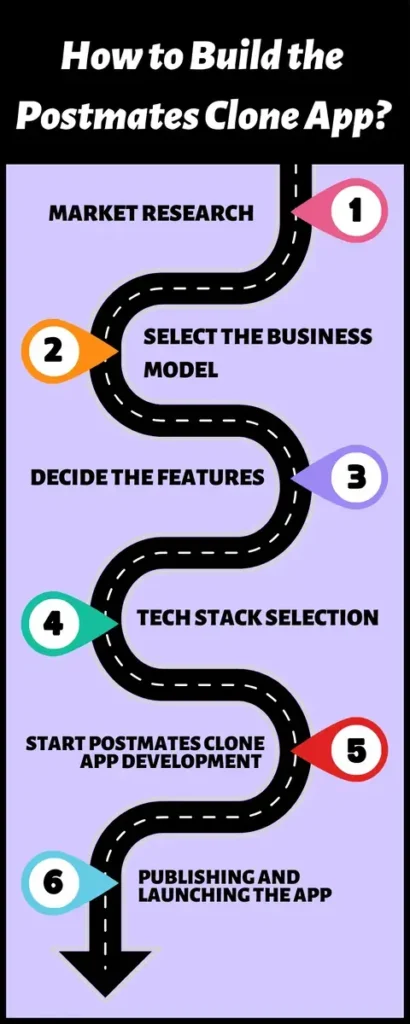
1. Market Research
First, you have to do thorough research on the food delivery market. You have to gather all the information that helps you create the app that sets you apart from your competitors.
In this phase, you have to collect information about these things:
- Know about your target audience’s interests
- Competitor’s app strengths and weaknesses
- Main features that are not present in your competitor’s app
- Understand the clone app business model
2. Select the Business Model
After gathering all the information, you have to select the food delivery business model. Several models are available, but choose the one that perfectly aligns with your business needs.
3. Decide the Features
Decide the features based on user requirements and business goals. Add the features that are essential for a Postmates clone, such as:
- User registration
- Restaurant/menu integration
- Delivery tracking
- Payment processing
- Push notification
4. Tech Stack Selection
Choose the appropriate technology stack that helps you create a successful app. Always select the tech stack based on factors like scalability, performance, development time, and cost.
Look at the table below and understand what technologies are used in creating the app like Postmates.
| Component | Recommended Technology |
| Backend framework | Node.js (Express.js) |
| Database | MongoDB or PostgreSQL |
| Authentication | JWT (JSON Web Tokens) |
| Mobile app | React Native (iOS and Android from one codebase) |
| Web portal | React.js |
| Payment gateway | Stripe or a local payment provider |
| Mapping and geolocation | Google Maps Platform |
| Push notifications | Firebase Cloud Messaging |
| Real-time messaging | Socket.IO |
| Error monitoring | Sentry |
| Testing | Jest, Cypress |
5. Start Postmates Clone App Development
In this phase, start the Postmates clone app development. Divide this step into three phases:
UI/UX Design: Develop a user-friendly and intuitive interface for the app, considering the user journey, responsive design, and branding.
Backend Development: Build a solid backend system to handle various tasks, such as:
- User authentication
- Order processing
- Delivery management
- Integration with third-party services (e.g., payment gateways, maps API).
Develop the mobile app for both iOS and Android platforms, ensuring a seamless and consistent user experience across devices.
Integration and Testing: Thoroughly test the app’s functionality, usability, and integration with backend systems and third-party services to ensure a smooth and reliable user experience. Remove all the bugs or glitches, any unexpected issues, and make the app error-free.
6. Publishing and Launching the App
After removing all the bugs, publish the app on the Play Store and the App Store. Then, start promoting the app so more people know about your app. Try to use different marketing strategies that help build a strong online presence.
How Much Does It Cost a Postmates Clone App?
A Postmates clone app costs between $10,000 to $25,000+, depending on features, platforms (iOS/Android), and customization level.
These estimates are based on development team rates in South and Southeast Asia, where costs are generally lower. In regions like North America or Western Europe, the same custom development can be much more expensive, often ranging from $50,000 to $150,000+.
Factors Affecting the Cost and Timeline
| Factor | Impact |
| Platform | Building for both iOS and Android increases costs compared to a single platform |
| Features | More advanced features like real-time tracking, in-app payments, and delivery management increase costs |
| UI/UX Design | A custom, polished user interface and experience will be more expensive |
| Backend Infrastructure | Developing the server-side components and integrating them with APIs adds to the costs |
| Development Team | Using an experienced in-house team vs outsourcing impacts both cost and timeline |
Challenges in Building the Postmates Clone App
Below are some challenges that business owners face in building the Postmates app clone.
| Challenge | Solution |
| Lack of Uniqueness | Identify an underserved niche (hyperlocal grocery, pharmacy, dark kitchens) rather than competing head-on with DoorDash or Uber Eats. |
| Security Concerns | Implement robust security measures to protect user data, including encryption, secure authentication, and strict access controls. Comply with relevant data privacy regulations and industry best practices. Regularly audit and update the app’s security to address threats. |
| Logistics Complexity | Develop a streamlined order management system to efficiently handle pickup, delivery, and tracking. Use advanced logistics algorithms and real-time data to optimize route planning. Establish strong partnerships with local merchants and delivery providers to ensure reliable and timely service. |
| Customer Acquisition and Retention | Invest in targeted marketing campaigns to effectively reach and engage the target audience. Offer personalized recommendations, promotions, and loyalty programs to customers. Continuously gather and act on customer feedback to improve the app’s features and user experience. |
| Technological Challenges | Develop a scalable technology infrastructure to handle high transaction volumes and data processing. Integrate the app with various third-party services (e.g., payment gateways, mapping APIs, enterprise systems). Ensure the app is optimized for performance, responsiveness, and accessibility across different devices and platforms. |
Postmates Competitors
| Company | Category | Main Strength | Market Position |
| DoorDash | Food + Grocery Delivery | Largest restaurant network, strong logistics | Market leader (US) |
| Uber Eats | Food + Grocery Delivery | Global reach, ride-sharing integration | Strong global competitor |
| Grubhub | Food Delivery | Strong restaurant partnerships | Declining US market share |
| Instacart | Grocery Delivery | Best in grocery shopping + delivery | Grocery leader (US) |
| Deliveroo | Food Delivery | Strong in Europe & UK | Regional leader |
| Glovo | Multi-category Delivery | Food, groceries, and pharma delivery | Europe + LATAM leader |
| GoPuff | Instant delivery | Snacks, essentials in minutes | Strong in US urban areas |
| Foodpanda | Food + Grocery | Strong Asia presence | Asia-focused leader |
| Just Eat | Food Delivery | Large European network | Major EU player |
Tips for Building a Successful Postmates App Clone
Here are some key strategies to consider when developing your Postmates app clone app.
- Validate demand in your target geography before signing vendor contracts.
- Choose a tech stack that supports the features on your roadmap, not just your MVP.
- Define your revenue model explicitly before development starts. Commission rates and delivery fees should be modeled against your projected unit economics.
- Build your rider supply before your customer base; supply-side constraints kill early delivery marketplaces faster than demand-side problems.
- Set up a responsive in-app support flow from day one.
- Offer a targeted launch incentive (free delivery, first-order discount).
FAQs
Yes, Postmates is owned by Uber. The acquisition was completed in December 2020, integrating Postmates into Uber’s delivery services.
Postmates was acquired by Uber in 2020 and has since been integrated into the Uber Eats platform, effectively replacing its standalone service.
With a ready-made clone script, most launches take 3–6 weeks, depending on the level of customization and the responsiveness of your development team.
Supercharge your deliveries with Enatega.
Register NowConclusion
A Postmates clone app is one of the fastest ways to enter the on-demand delivery market with a tested, scalable product. Even though Postmates is no longer a standalone platform, the delivery marketplace model it made popular is still a strong business opportunity today.
The right clone script, properly customized and launched in a well-researched local market, can reach profitability faster than a custom-built alternative at a fraction of the development cost.
So, if you want to create this efficient solution for your business? Discuss your needs with us and launch your food marketplace like Postmates in no time.
About the author

Hudaibia Khalid is a senior content writer with several years of experience in creating clear and easy-to-understand content. Over the years, she has worked closely with startups, restaurants, and entrepreneurs, helping them simplify complex digital and technical topics into actionable insights.
Her expertise lies in writing about on-demand platforms, food delivery solutions, and business growth strategies in a way that is accessible even to non-technical readers. With her experience in the industry, she focuses on guiding businesses step by step, from understanding ideas to turning them into fully working solutions.
SHARE






 IOS
IOS Android
 Web
Web