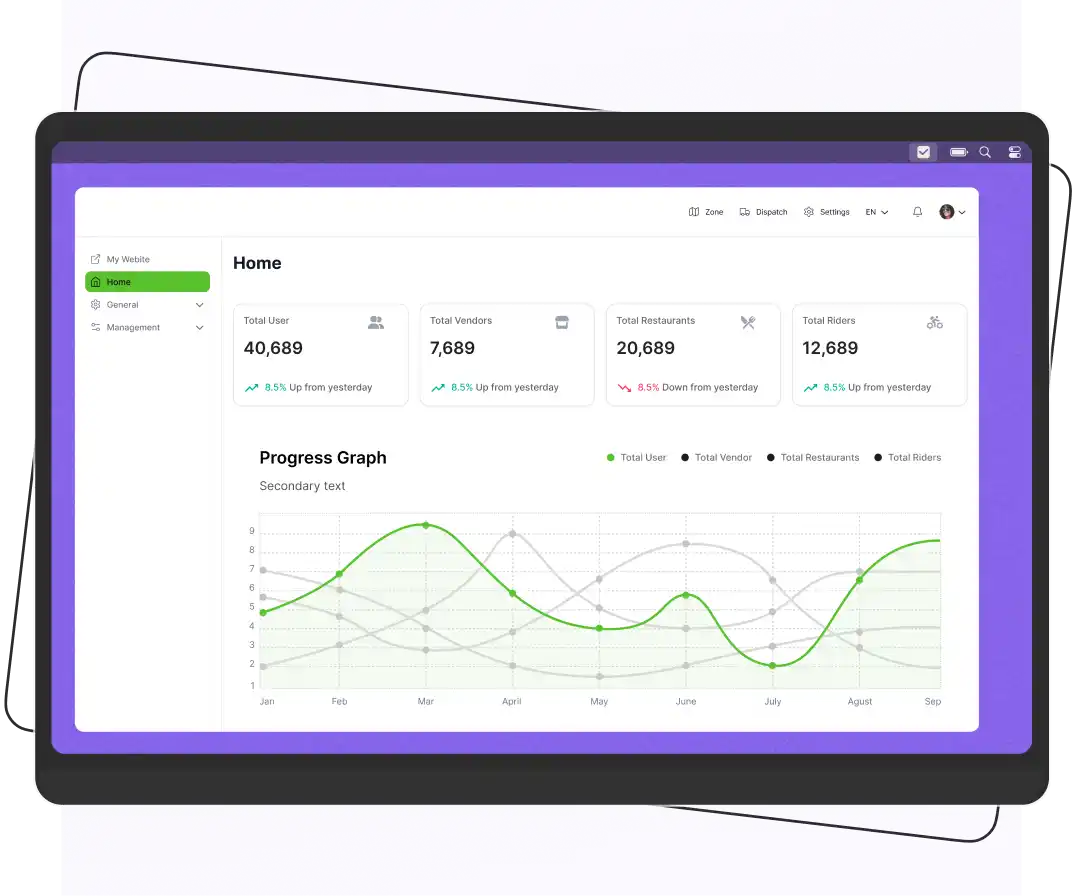


Uber Eats operates a three-sided marketplace business model that connects customers, restaurants, and delivery partners through a single platform. It generates revenue by charging restaurant commissions, customer delivery and service fees, subscription memberships like Uber One, advertising, and grocery delivery services. This asset-light model allows Uber Eats to scale globally without owning restaurants or employing delivery drivers directly.
Hungry? Open Uber Eats. Tap. Order. Done.
It feels simple, but behind that quick delivery is a strong business model quietly working in the background.
Backed by Uber, Uber Eats doesn’t cook food or own restaurants. Instead, it connects customers, restaurants, and delivery riders into one system and makes money at every step.
So how does a platform that doesn’t make the food still make billions?
Let’s explore the Uber Eats business model, so you can understand how it works, how it earns, and what you can learn from it.
What is Uber Eats?
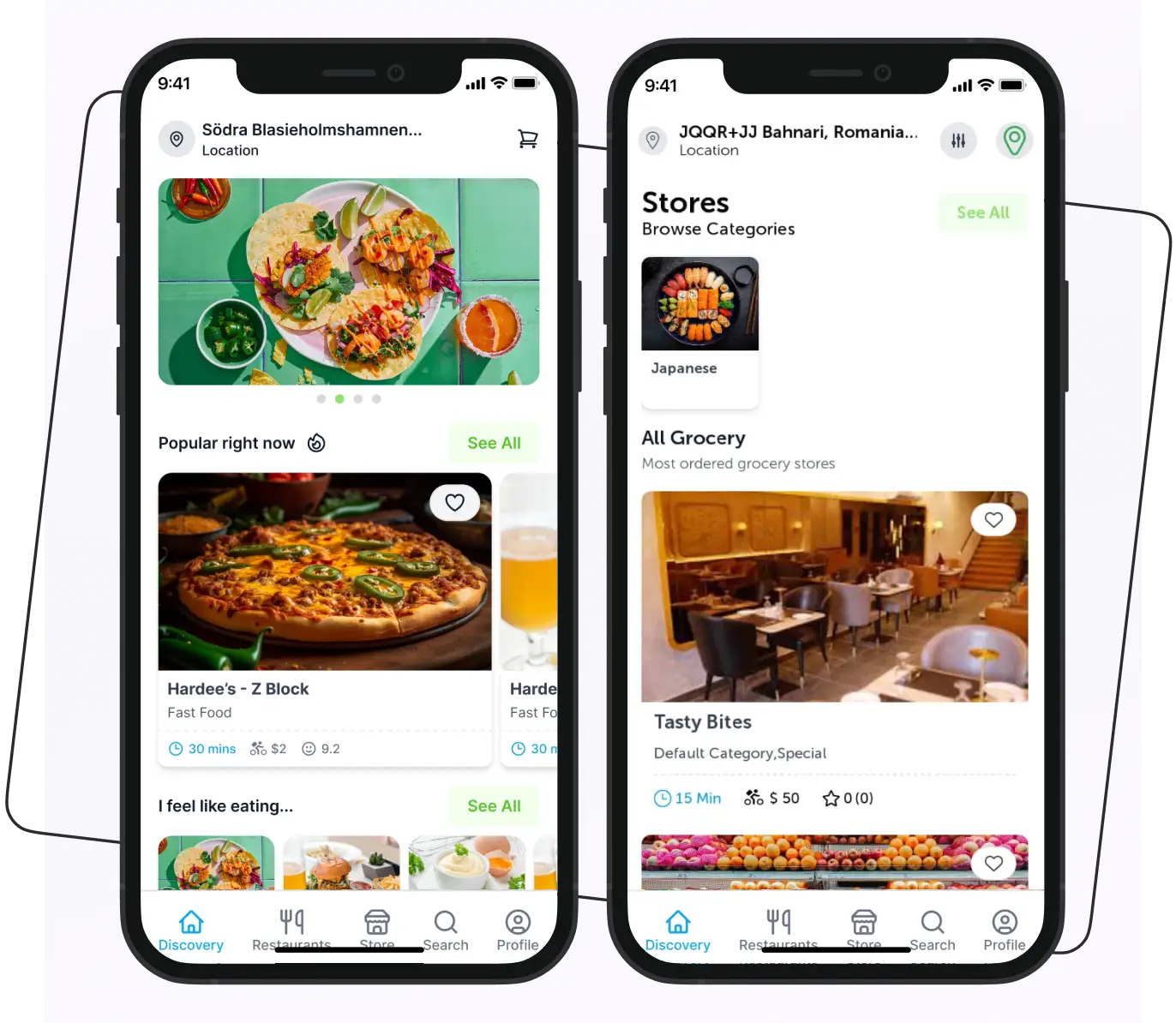
Uber Eats is an on-demand food delivery platform. It connects customers with nearby restaurants and delivery partners through a simple mobile app.
No need to call restaurants or wait in lines. Just open the app, pick your food, place the order, and get it delivered to your door in minutes.
Background of Uber and Its Expansion into Food Delivery
Uber originally started in 2009 as a ride-hailing service, changing how people book taxis worldwide. After dominating the transportation industry, Uber saw a huge opportunity in the growing food delivery market.
In 2014, Uber launched Uber Eats (initially called “UberFRESH”) as a way to use its existing driver network and technology. It started small, but it quickly became a global food delivery service and helped Uber grow beyond just ride-hailing.
Supercharge your deliveries with Enatega.
Launch NowLaunch Year and Global Presence
Uber Eats was officially launched in 2014 and has since expanded rapidly across the globe. Today, it operates in thousands of cities across 40+ countries, making it one of the largest food delivery platforms worldwide.
From big cities like New York and London to smaller growing markets, Uber Eats has spread worldwide. It works with local restaurants and offers different types of food based on what people in each area like to eat.
Moreover, in 2020, Uber bought Postmates for $2.65 billion to improve delivery coverage in the U.S., especially in cities where Uber Eats wasn’t very strong yet.
Market Position and Competitive Landscape
Uber Eats has a unique position in the market.
In the United States, it is the second-largest food delivery platform, where DoorDash leads with a much bigger share. Even after heavy promotions, Uber Eats still trails behind in the U.S.
But globally, the picture is different. Uber Eats performs very strongly in many regions like Europe, Latin America, and Australia, where it often leads ahead of competitors like Delivery Hero and Just Eat Takeaway.
So while it is not number one in every country, Uber Eats remains one of the biggest food delivery platforms in the world.
| Competitor | Founded | Core Market | Annual Revenue (approx.) |
| DoorDash | 2013 | USA (market leader) | $3.3B+ |
| Uber Eats | 2014 | Global | $13.7B |
| Delivery Hero | 2011 | Europe, Asia, LATAM | $13.7B |
| Deliveroo | 2013 | UK, Europe | $2.78B |
| Zomato | 2008 | India, UAE | $2.44B |
| Grubhub | 2004 | USA | Declining |
Uber Eats is strong because it is part of the bigger Uber app. Unlike other apps that only deliver food, Uber also lets users book rides, pay with Uber Cash, and order food all in one place.
So one user can use many services in a single app, which helps Uber earn more and makes it more powerful than apps that only do food delivery.
How Uber Eats Works?
Understanding the business model of Uber Eats starts with one simple idea: it runs a fast, real-time system that connects three people at once: customers, restaurants, and delivery partners.
Why Each Group Uses Uber Eats?
Customers: They can order food from many restaurants in one app, track delivery in real time, and pay easily without going out.
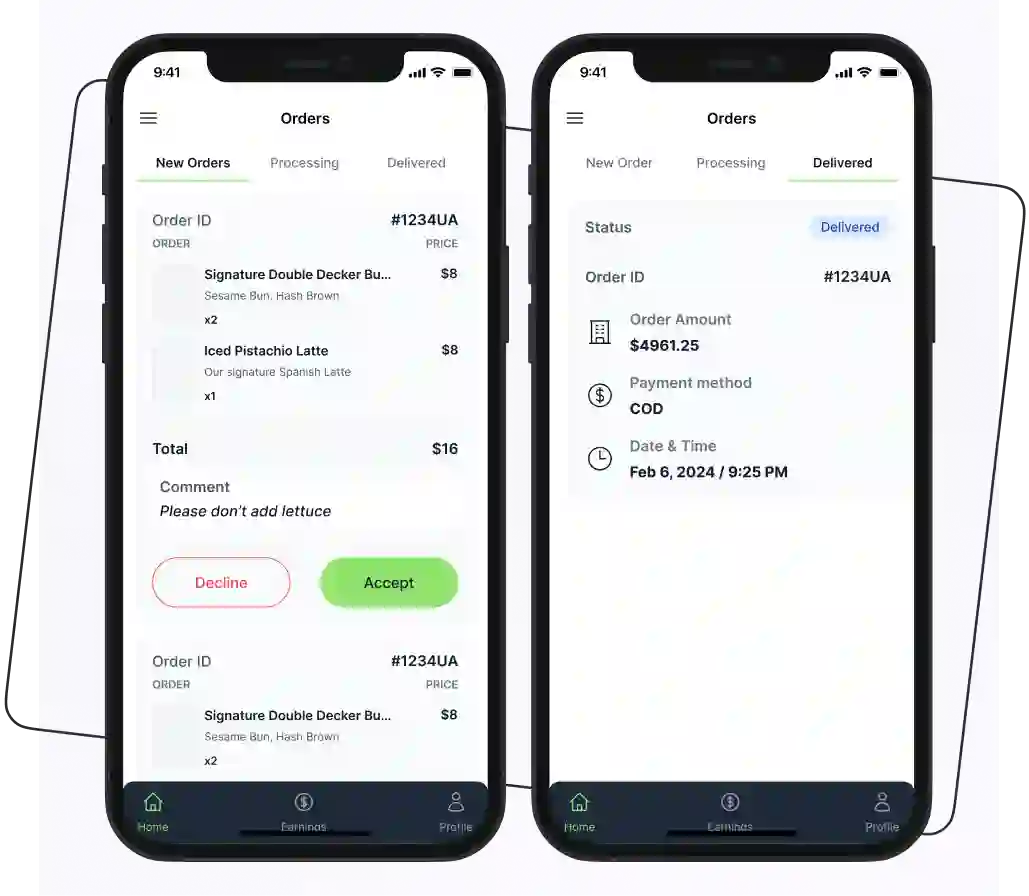
Restaurants: They get more orders without needing their own delivery system, plus data about customer behavior.
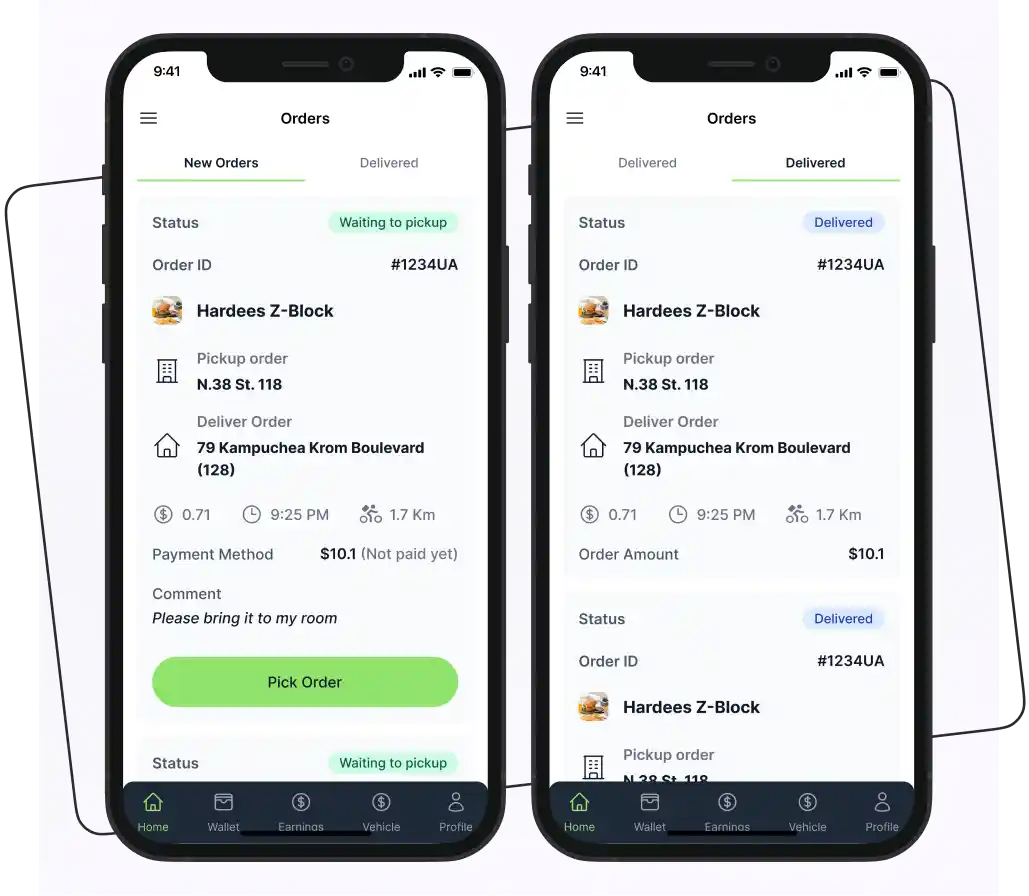
Couriers: They earn money by delivering orders whenever they want, with flexible working hours.
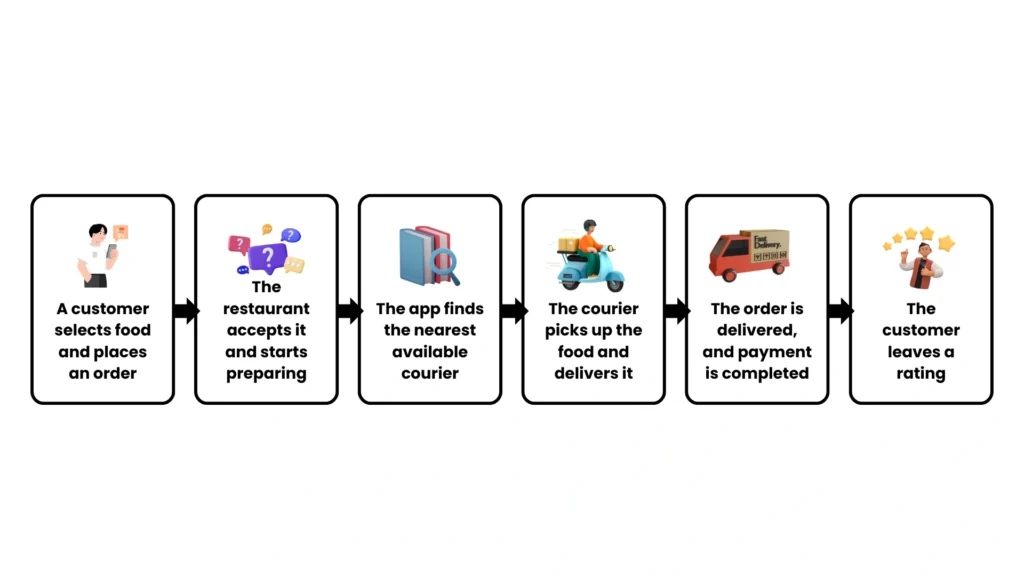
One of the smartest parts of Uber Eats is its system that matches the right delivery partner with the right order. It looks at things like distance, traffic, and cooking time to make sure food is picked up at the perfect time, fresh and on time.
Revenue Model of Uber Eats
Uber Eats doesn’t own restaurants, food, or delivery vehicles. Yet, it generates billions in annual revenue by taking a cut from every order placed on its platform. This makes it a marketplace that connects demand and supply rather than producing anything itself.
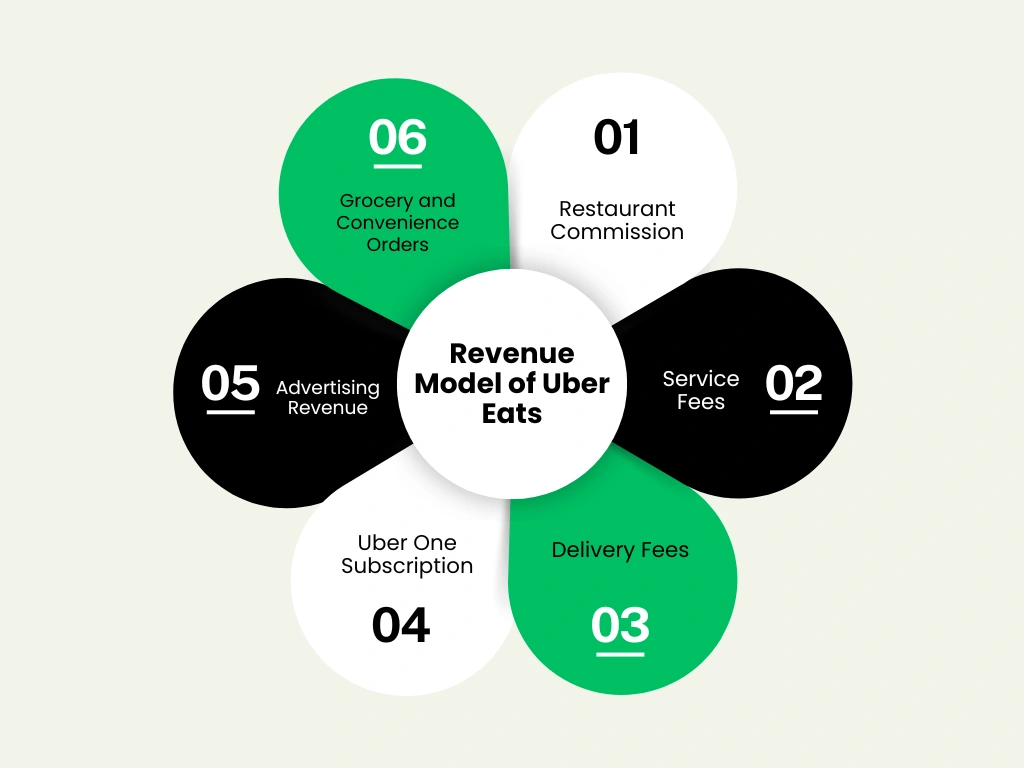
Restaurant Commission (15–30%)
Uber Eats charges restaurants a commission on every order they receive through the app. The percentage varies depending on the market, partnership plan, and services included.
Higher plans often give better visibility and more features. This is one of the biggest sources of revenue for the platform.
Service Fees (5–15%)
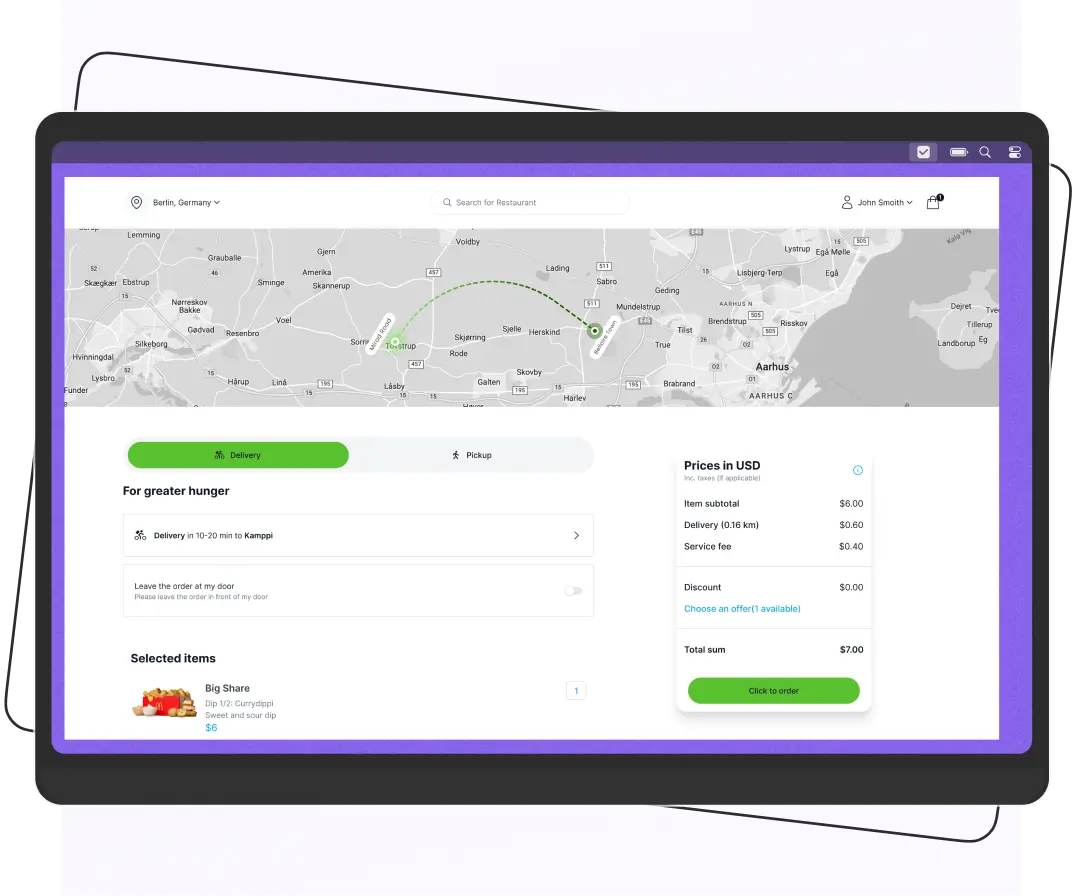
Customers pay an extra service fee on top of their food bill. This fee helps cover platform operations like app maintenance, customer support, and technology systems.
Even though it is small per order, it becomes a large revenue stream when millions of orders are placed daily.
Delivery Fees (Dynamic Pricing)
Delivery fees change based on distance, time, weather, and demand. During busy hours, prices may increase due to limited courier availability. This flexible pricing system helps balance supply and demand.
Uber One Subscription ($9.99/month)
Uber One is a membership offered by Uber. It gives users benefits like free delivery, discounts, and lower service fees. In return, Uber earns steady monthly subscription income. It also increases customer loyalty and repeat usage.
Advertising Revenue (CPC / CPM)
Restaurants can pay to promote their listings inside the app. This includes sponsored search results, featured placements, and banner ads. It helps businesses get more visibility and orders. For Uber Eats, it adds a high-margin digital advertising income stream.
Grocery and Convenience Orders
Uber Eats also delivers groceries and daily essentials in many regions. Each order still includes a commission, similar to restaurant deliveries. This expansion helps Uber grow beyond food into everyday retail. It also increases order frequency per user.
Uber Eats Restaurant Commission Tiers
| Plan | Commission Rate | What the Restaurant Gets |
| Lite / Basic | ~15% | Listed in standard search; no promoted placement |
| Plus / Premium | 25–30% | Featured placement, Uber One visibility, priority matching |
| Self-Delivery | 6–15% | The restaurant uses its own riders; Uber Eats provides orders only |
| Pickup | 6% | Customer collects order; minimal Uber Eats involvement |
Uber Eats’ Biggest Advantage – Powerful Data System
Most people explain how Uber Eats makes money, but its real strength is something else: data.
Every time someone places an order, the app learns things like what food was ordered, when it was ordered, where it was delivered, and how fast it was delivered. It also notices patterns like busy hours, weather, and popular items.
Because millions of people use the app, Uber Eats collects a huge amount of information every day.
This helps the app get smarter over time, showing better suggestions, faster delivery, and more accurate predictions than smaller competitors.
How Uber Eats Makes Money from Data (Indirectly)
Uber Eats uses data to quietly increase revenue in several ways.
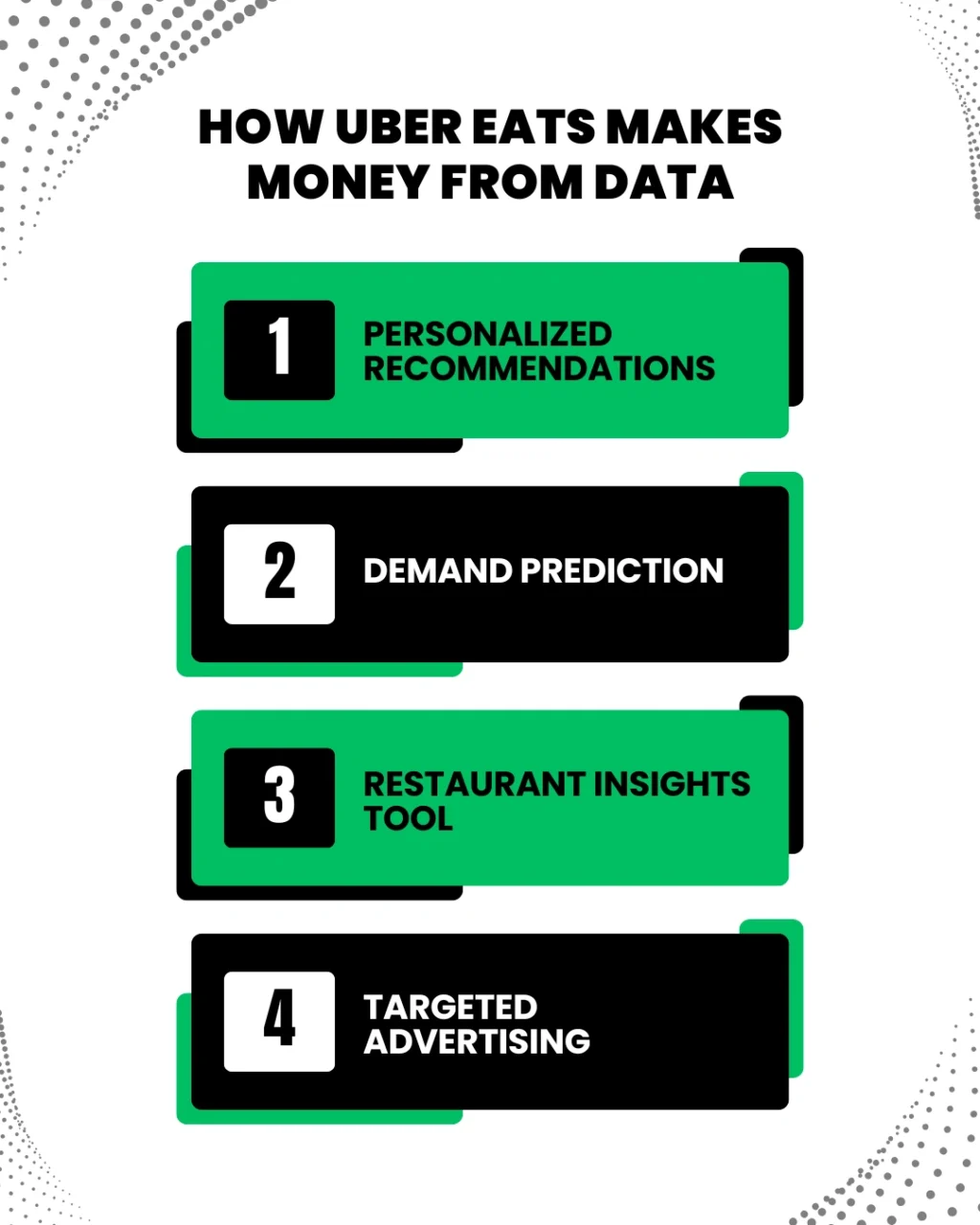
Personalized Recommendations
Uber Eats uses machine learning to study what users order and suggest similar food or restaurants. This makes people more likely to order again and spend more per order without extra marketing costs.
Demand Prediction
The system predicts busy areas before orders spike. It then helps nearby couriers move closer to those zones. This helps reduce delivery time and improve efficiency during peak hours.
Restaurant Insights Tool
Uber Eats provides analytics dashboards to restaurant partners. They can see peak hours, popular dishes, and customer trends. Restaurants pay for this valuable insight even though Uber Eats generates it from existing data.
Targeted Advertising
Using first-party order data, restaurants and brands can run highly targeted ads inside the app. For example, reaching users who frequently order pizza or high-value meals. This makes advertising more precise and more profitable than traditional platforms.
Uber Eats Cost Structure
Revenue is only one side of the story for Uber Eats. The bigger challenge is that running a food delivery platform comes with high and constant costs, which makes profitability difficult even at a huge scale.
Courier Incentives and Guarantees
To make sure enough delivery partners are available, Uber Eats often gives bonuses and guaranteed minimum earnings.
This is especially important during slow hours or in highly competitive markets. These payouts help keep the system running but reduce profit margins.
Customer Acquisition Costs
Attracting new users is expensive. Uber Eats spends heavily on discounts, referral rewards, and first-order deals. In many markets, competitors like DoorDash also run similar promotions, which increases marketing pressure.
Technology Infrastructure
The platform relies on real-time systems to match orders, drivers, and restaurants instantly. This requires heavy investment in cloud computing, engineering teams, and machine learning systems that run 24/7 at a global scale.
Regulatory Compliance
Since Uber Eats operates in 40+ countries, it must follow different laws and regulations in each region. This includes legal teams, government relations, and compliance systems, which add ongoing costs.
Insurance and Liability
Delivery comes with risks like accidents, food safety issues, and order disputes. Uber Eats has to cover insurance and handle claims, which becomes a growing expense as the platform expands.
Customer Support
Millions of orders mean millions of potential issues, such as missing items, late deliveries, or refunds. Handling these problems requires large customer support teams and automated resolution systems.
What’s Next for Uber Eats: Future Strategy
Uber Eats is not just focused on food delivery today; it is actively building the next generation of delivery and commerce systems.
Autonomous Delivery
Uber Eats has started testing drones and delivery robots in some U.S. cities. If this scales, it could reduce dependence on human couriers. This would lower costs and speed up deliveries.
Grocery and Beyond Food
The platform is expanding beyond restaurant meals into groceries, pharmacy, pet supplies, and more. Even though the standalone Drizly app was shut down in 2024, alcohol delivery and other retail categories are still available within the main Uber Eats app.
B2B Catering
Uber Eats is also targeting business customers with corporate catering. These orders are larger, more predictable, and less sensitive to price changes. This makes them more stable and profitable compared to individual orders.
AI Menu Intelligence
Uber Eats is using AI tools to help restaurants improve menus. This includes better descriptions, pricing suggestions, and item combinations. It acts like a digital consultant built into the platform itself.
Loyalty and Personalization
The platform is moving toward smarter personalization. It will suggest meals based on habits, preferences, time, and even occasions. This makes the experience more proactive instead of just reactive.
Uber Eats vs Competitors
Uber Eats competes with several major players in different regions. These are:
| Platform | Strengths | Weakness | Main Market Focus |
| Uber Eats | Global presence Strong technology Fast scaling Wide restaurant variety | Not always #1 in local markets | Worldwide (strong in Europe, LATAM, Australia) |
| DoorDash | Market leader in the U.S. Strong logistics network | Limited global presence | United States |
| Deliveroo | Strong in urban Europe Premium restaurant focus | Smaller global footprint | UK & parts of Europe |
| Just Eat | Large local restaurant network Strong brand recognition | Less advanced tech compared to Uber Eats | Europe & Canada |
4 Lessons From the Uber Eats Business Model
The story of Uber Eats isn’t just about food delivery; it reveals how modern platform businesses are built and scaled.
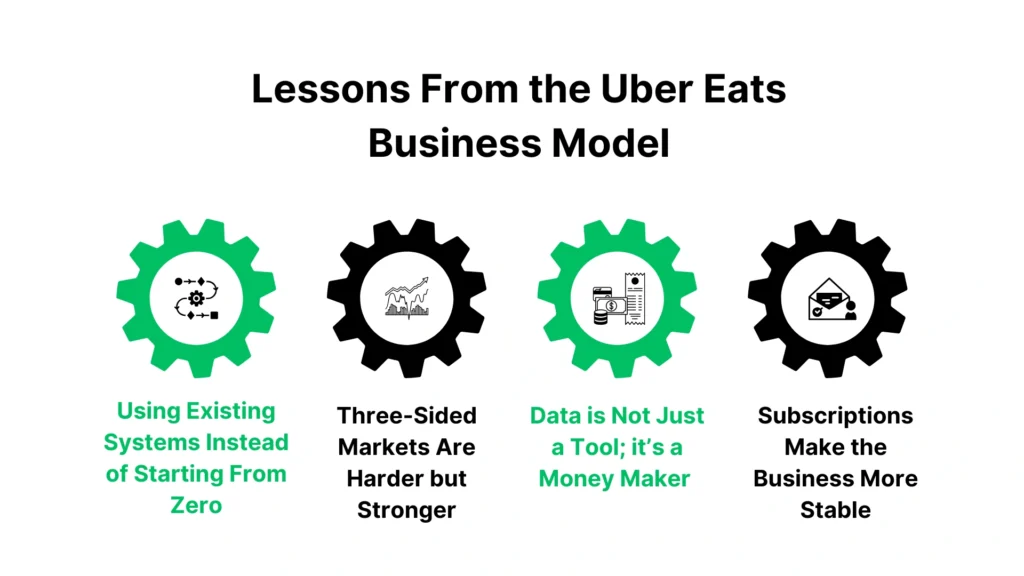
1. Using Existing Systems Instead of Starting From Zero
Uber Eats grew fast because it used existing infrastructure from Uber, like drivers, payments, and maps. Instead of building everything from scratch, it reused what already worked. This shortcut helped it launch and scale much faster than traditional delivery startups.
2. Three-Sided Markets Are Harder but Stronger
Uber Eats connects customers, restaurants, and delivery partners. Managing all three groups is complex, but it creates strong network effects. Once balanced, it becomes very hard for competitors to replace the platform.
3. Data is Not Just a Tool; it’s a Money Maker
Every order generates valuable data about behavior, timing, and preferences. This data is now used for ads, recommendations, and business insights. It turns Uber Eats into a data-driven platform, not just a delivery service.
4. Subscriptions Make the Business More Stable
Services like Uber One change how revenue works. Instead of one-time orders, users subscribe and order more frequently. This reduces customer acquisition costs and increases lifetime value.
Create Your Own App Like Uber Eats
If you’re planning to build an Uber Eats-like platform, you’ll need a great business plan, strong technology, and a reliable network of delivery partners.
But building everything from scratch can be expensive and time-consuming. That’s why many startups choose ready-made solutions, which are easier to launch, more affordable, and quicker to maintain.
One such option is Enatega, which provides a ready-made food delivery system to help you launch your own platform faster.
FAQs
Uber Eats has struggled with profitability due to high delivery and marketing costs, but it has improved in recent years.
It is moving toward profit by growing advertising, increasing subscriptions like Uber One, and improving delivery efficiency.
In the United States, the main competitor is DoorDash, which leads the market share. Globally, strong competitors include Deliveroo in the UK and Europe, and Just Eat (Just Eat Takeaway) across Europe and Canada.
Uber Eats makes money from advertising by letting restaurants and brands pay for better visibility inside the app.
They can promote their listings in search results, appear as “sponsored” restaurants, or show banner ads to attract more customers. These ads are highly targeted using user data, such as past orders and preferences.
Surge pricing on Uber Eats means delivery fees go up during busy times.
When demand is high, such as on weekends, rainy weather, or peak dinner hours. The app increases prices to balance orders and encourage more delivery partners to go online.
It helps keep deliveries fast, but it can make orders more expensive for customers during peak times.
Supercharge your deliveries with Enatega.
Launch NowConclusion
The business model of Uber Eats is successful because it combines smart technology, efficient logistics, and a large network of restaurants.
It shows how a platform can grow by connecting customers, restaurants, and delivery partners in one system. This makes it easier for users to order food and for restaurants to reach more customers.
For restaurant owners and entrepreneurs, there are many lessons to learn from how Uber Eats works, especially around pricing, delivery systems, and customer experience.
If you understand how its revenue model and operations work, it can help you make better decisions for your own business.
About the author

Hudaibia Khalid is a senior content writer with several years of experience in creating clear and easy-to-understand content. Over the years, she has worked closely with startups, restaurants, and entrepreneurs, helping them simplify complex digital and technical topics into actionable insights.
Her expertise lies in writing about on-demand platforms, food delivery solutions, and business growth strategies in a way that is accessible even to non-technical readers. With her experience in the industry, she focuses on guiding businesses step by step, from understanding ideas to turning them into fully working solutions.
SHARE






 IOS
IOS Android
 Web
Web