

For small delivery providers, the things to know about mulivendor are:
- Order aggregation and routing
- Vendor commissions and payouts
- Vendor onboarding
- Rider management
- Consistent customer experience
- Scalable technology
Common revenue models include vendor commissions, customer delivery fees, subscriptions, and paid promotions.
Running deliveries for one business is simple. Managing deliveries for 10, 20, or 100 businesses at once is a different game.
That’s where the multivendor delivery model comes in. Instead of relying on a single restaurant or retailer, small delivery providers can bring multiple businesses onto one platform.
It sounds simple, and in many ways, it is. But once you have different vendors, delivery areas, commissions, and riders to manage, things can get complicated pretty quickly.
For a small delivery provider, that can feel like a big step.
- Is it worth it?
- What software do you actually need?
- How do you manage multiple vendors without losing control of your operations?
Don’t worry, you’ll get answers to all your questions. We’ll look at:
- How multivendor delivery works
- Why it can be a smart move for small providers
- The features you really need
- The mistakes to avoid
- How to get started without making things more complicated than they need to be
So, let’s explore.
Supercharge your deliveries with Enatega.
Launch NowWhat is a Multivendor Delivery Model?
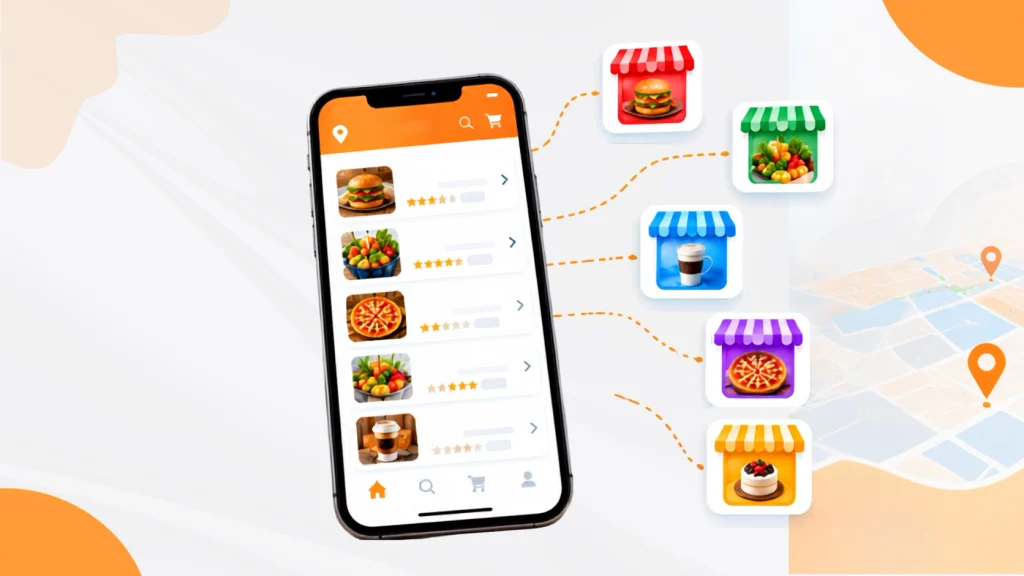
A multivendor delivery model is a logistics setup where one delivery network serves multiple independent vendors such as restaurants, grocery stores, pharmacies, and boutiques through a single app, dashboard, or dispatch system.
Think of it as the model behind platforms like Uber Eats, DoorDash, or Grab, but scaled down and adapted for local and regional delivery providers.
Instead of each vendor having to maintain its own fleet of drivers, orders from multiple businesses flow into one shared dispatch system. The system can then assign each order to the nearest available rider, making coordination easier.
This is different from a single-vendor model, where a delivery provider works exclusively with one store or restaurant chain.
Why Small Delivery Providers Should Care About Multivendor
Running a small delivery business isn’t easy. You’re competing with big aggregators that have strong brand recognition and huge marketing budgets, while your vendor partners are constantly looking for ways to keep more of their profits.
That’s where the multivendor model can help. It allows small delivery providers to work with more businesses and grow their delivery operations.
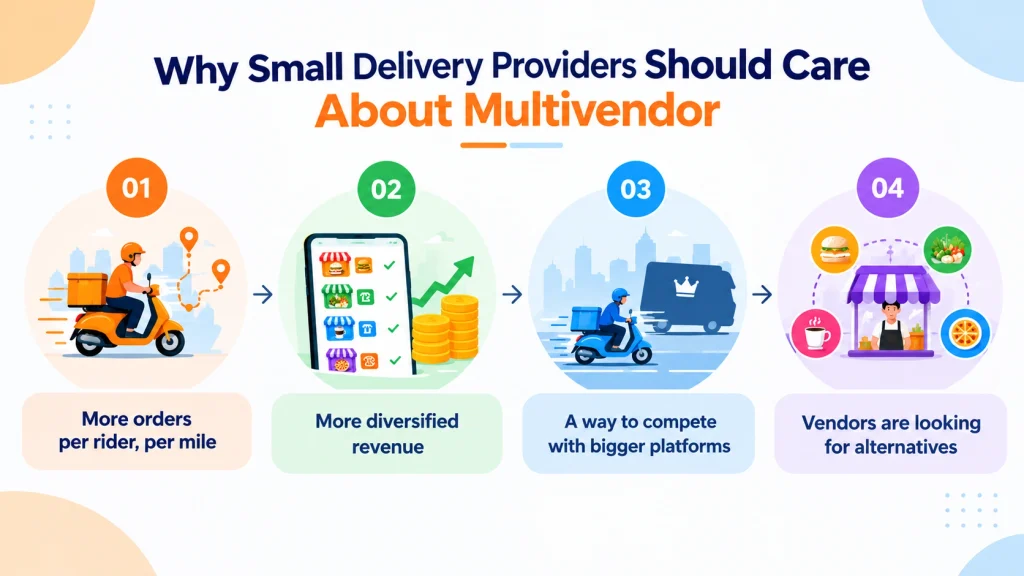
- More orders per rider, per mile
Instead of having one driver wait around for a single restaurant’s order, a multivendor system can combine nearby orders and assign them easily. This helps reduce idle time, improve rider utilization, and lower fuel costs.
- More diversified revenue
Relying on a single client can be risky. With multiple vendors, your revenue comes from a broader customer base, so losing one client doesn’t necessarily have a major impact on the entire business.
- A way to compete with bigger platforms
You may not have the marketing budget of big delivery platforms, but you can compete by offering lower commissions, personal support, and better knowledge of the local market. For many small restaurants and shops, these benefits can make a local delivery provider a better choice.
- Vendors are looking for alternatives
Many independent businesses may prefer local delivery providers because they can avoid giving 20-30% of each order to major platforms. However, the local provider still needs to offer reliable deliveries, good coverage, and an easy ordering experience.
How Does the Multivendor Model Work?
The multivendor model is simple: multiple businesses use the same delivery platform, while one delivery network manages their orders and deliveries.
Here’s how it works.
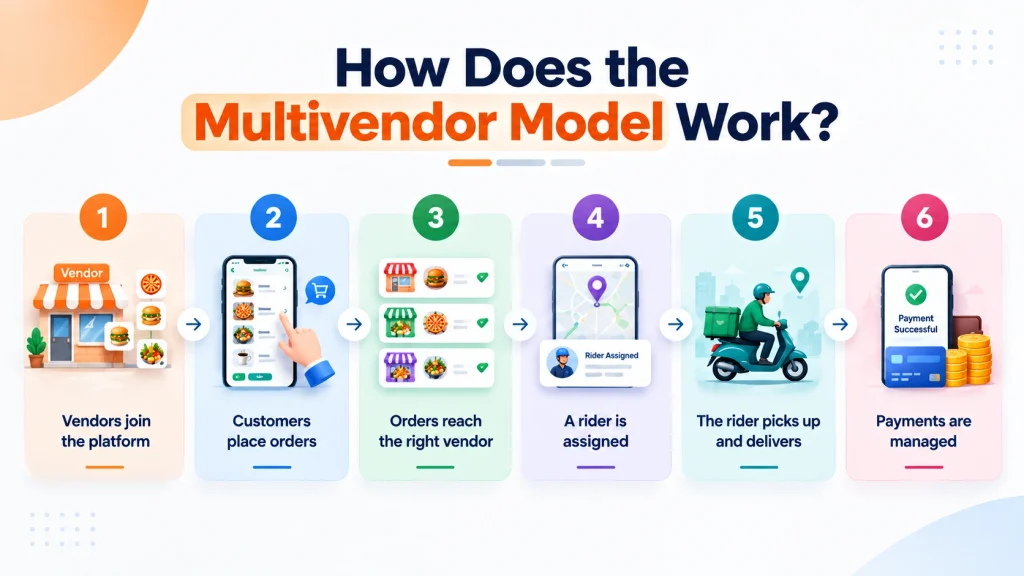
- Vendors join the platform
Restaurants, grocery stores, pharmacies, or other businesses create their profiles and add their products or menus.
- Customers place orders
Customers browse different vendors through the app or website, choose what they want, and place an order.
- Orders reach the right vendor
The selected vendor receives the order and prepares it for pickup.
- A rider is assigned
The delivery system finds an available rider and assigns the order based on factors such as location and availability.
- The rider picks up and delivers
The rider collects the order from the vendor and delivers it to the customer.
- Payments are managed
The platform records the order value, delivery fee, vendor commission, and other charges, making it easier to manage vendor settlements.
6 Things Small Providers Need to Get Right About Multivendor
Here are the few things small delivery providers need to get right when adopting a multivendor model.
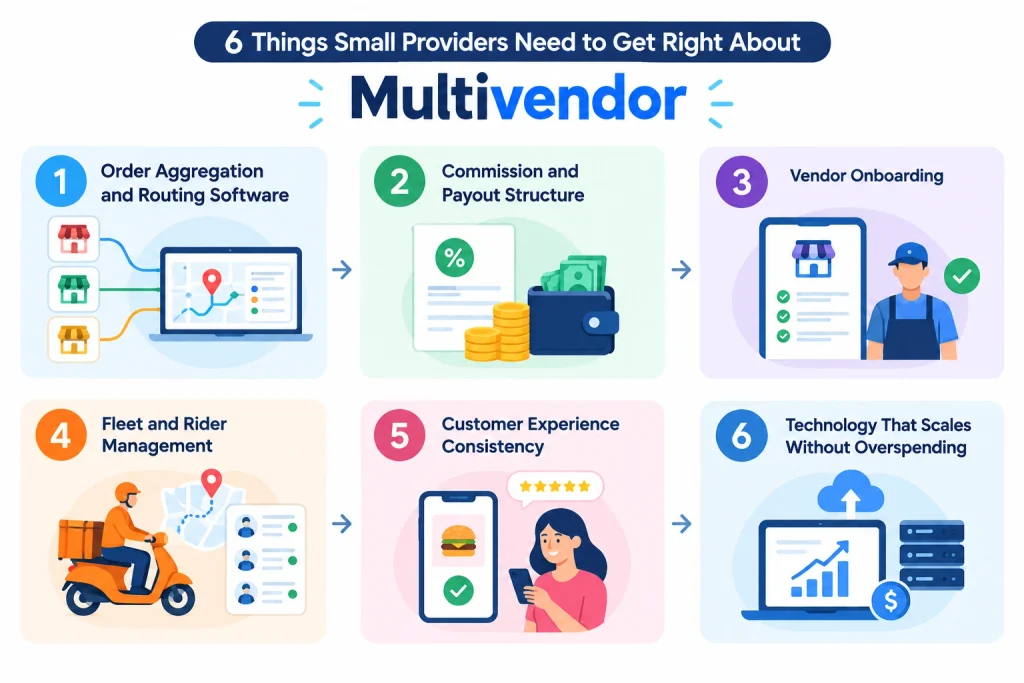
1. Order Aggregation and Routing Software
The right software is the backbone of a multivendor delivery business. It brings orders from different vendors into one place and helps you assign and route them to riders.
Without this system, you may end up managing each vendor separately, which makes it harder to save time and reduce delivery costs. When choosing a platform, look for:
- Real-time order aggregation from multiple vendors and sources
- Automated or semi-automated dispatch to assign orders to the right riders
- Order batching to combine nearby deliveries, even when they come from different vendors
2. Commission and Payout Structure
When you work with multiple vendors, the money from each order needs to be divided between the platform, vendor, and rider. Small delivery providers need a clear pricing structure that works for everyone. This includes deciding:
- Vendor commission: How much the platform charges vendors on each order
- Customer delivery fees: How much customers pay for delivery
- Rider payments: How much riders earn per delivery or batch
- Refunds and cancellations: How refunds, cancellations, and customer disputes affect vendor and rider payouts
The goal is to find the right balance. If your fees are too high, vendors may leave. If they’re too low, you may struggle to cover your delivery and operating costs.
3. Vendor Onboarding
Every new vendor brings something different to manage, such as menus or product catalogs, pickup locations, and business hours. A simple and repeatable onboarding process makes things easier as you add more vendors.
This can include:
- Easy sign-up process
- A vendor dashboard to manage orders and availability
- Basic training so vendors know how to use the platform
This helps you manage more partners without making your operations harder to handle.
4. Fleet and Rider Management
As you start getting more orders from different vendors, managing your riders can become more challenging. Small delivery providers need a clear view of their fleet so they can assign deliveries easily and keep service reliable.
The system should help you track:
- Rider availability and location in real time
- Rider performance, including on-time and order acceptance rates
- Flexible scheduling, whether riders work fixed shifts or accept deliveries on demand
5. Customer Experience Consistency
Customers using a multivendor platform expect the same smooth experience, no matter which vendor they order from. They should be able to track their orders and receive reliable deliveries every time.
If the experience changes from one vendor to another, customers can quickly lose trust in your platform. That’s why keeping service quality and customer support consistent across all vendors is important.
6. Technology That Scales Without Overspending
Small delivery providers don’t need expensive, enterprise-level technology from day one. However, the platform you choose should be able to grow as your business grows. Here are some common options:
- White-label multivendor delivery software
Ready-made platforms that you can brand and customize. They are usually the fastest and most affordable way to get started.
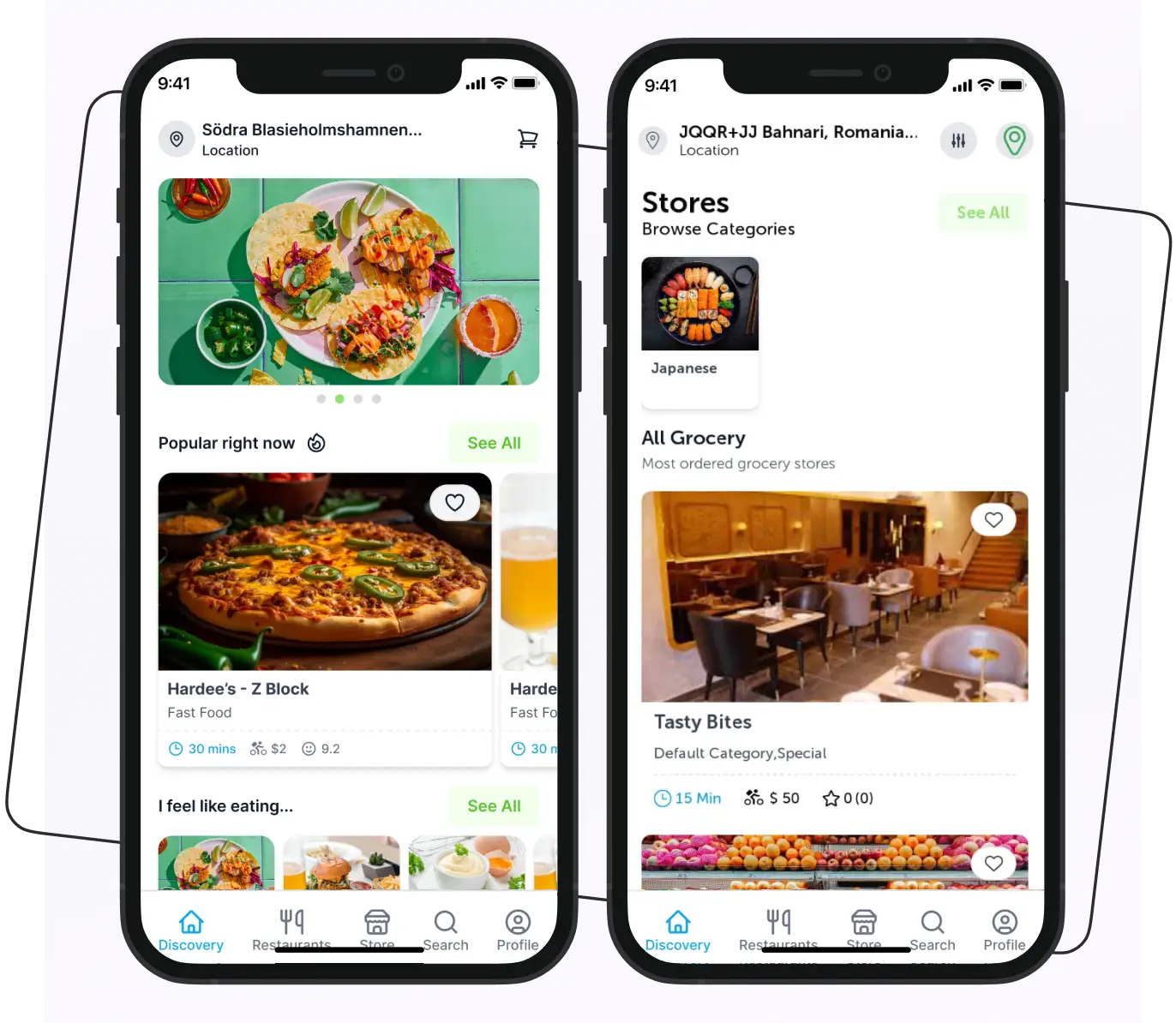
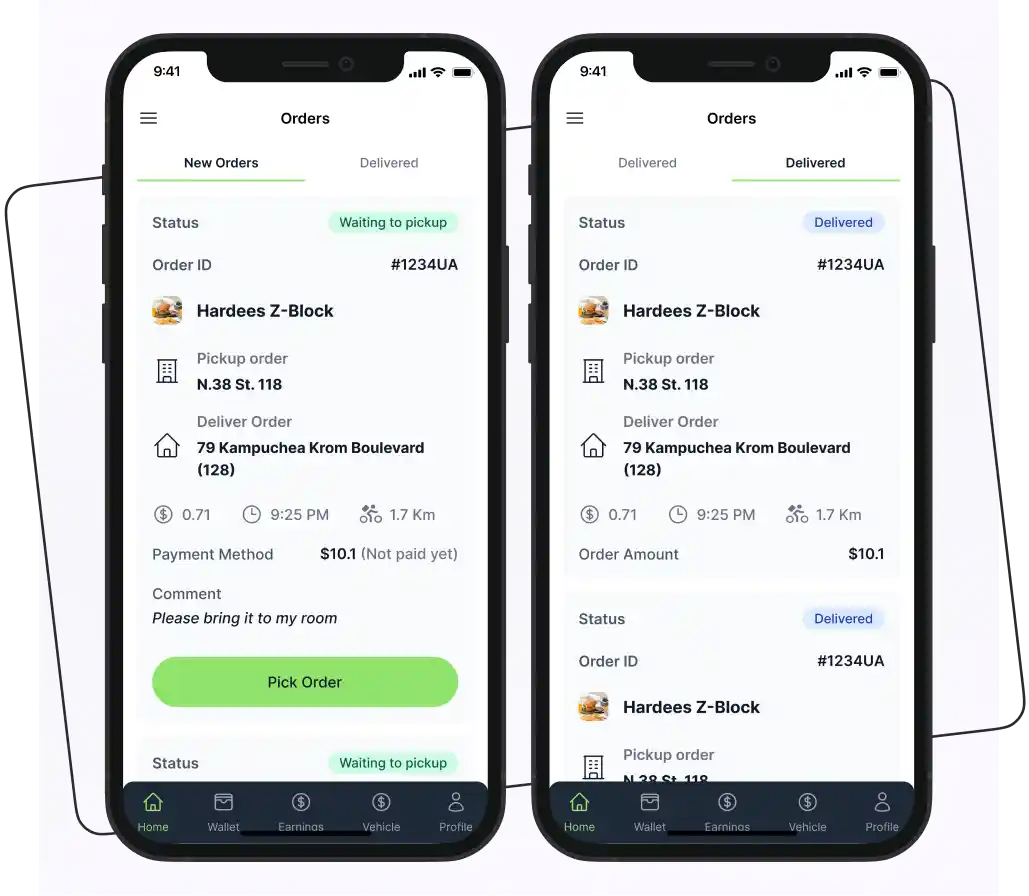
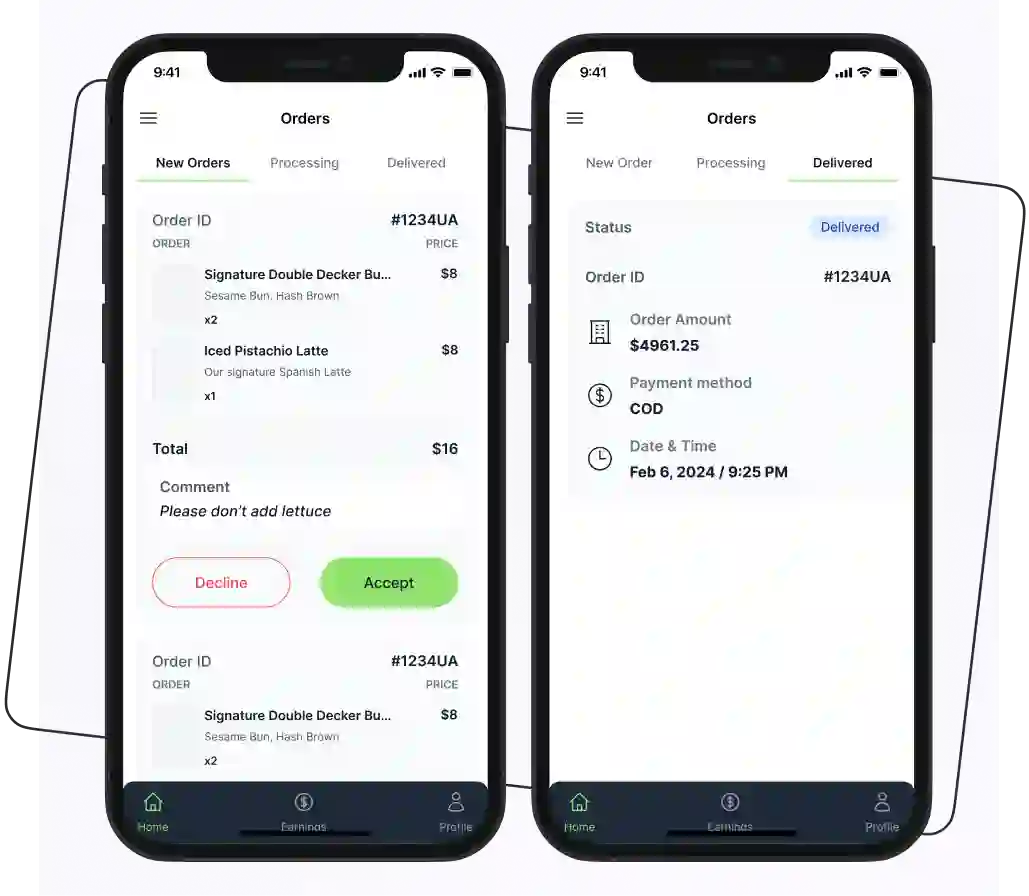
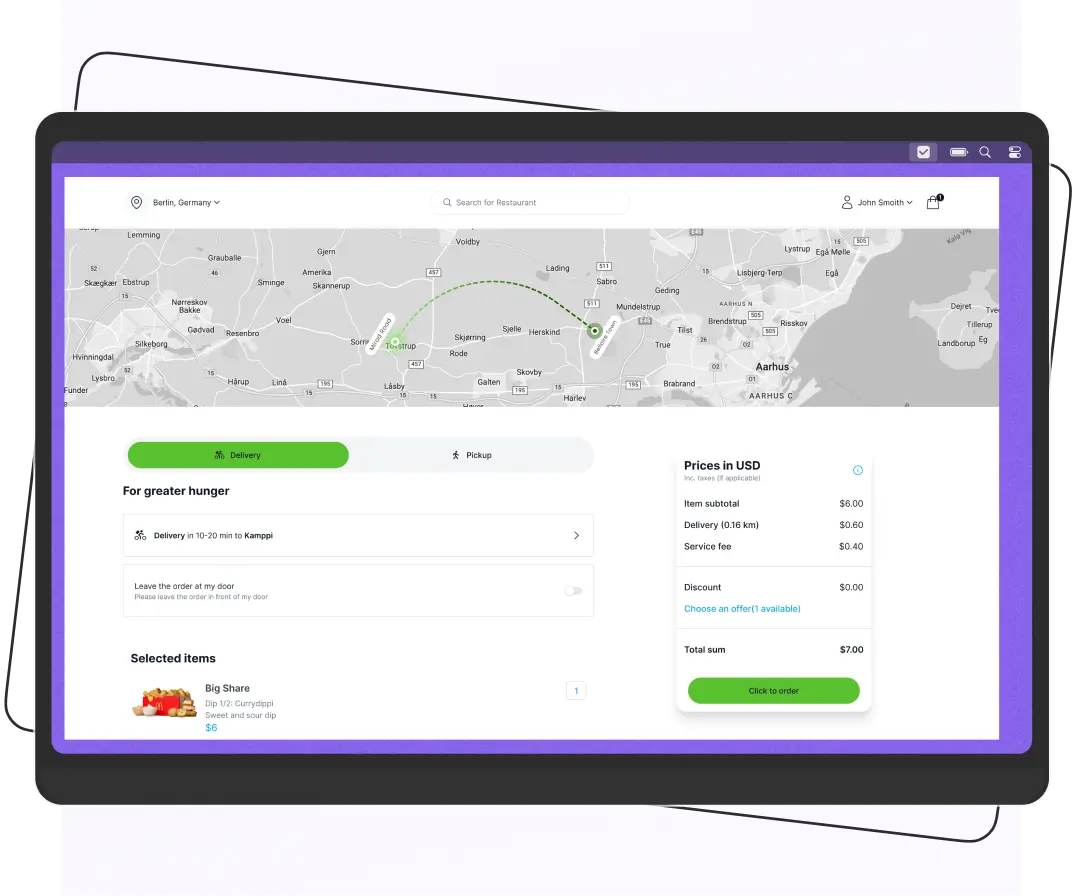
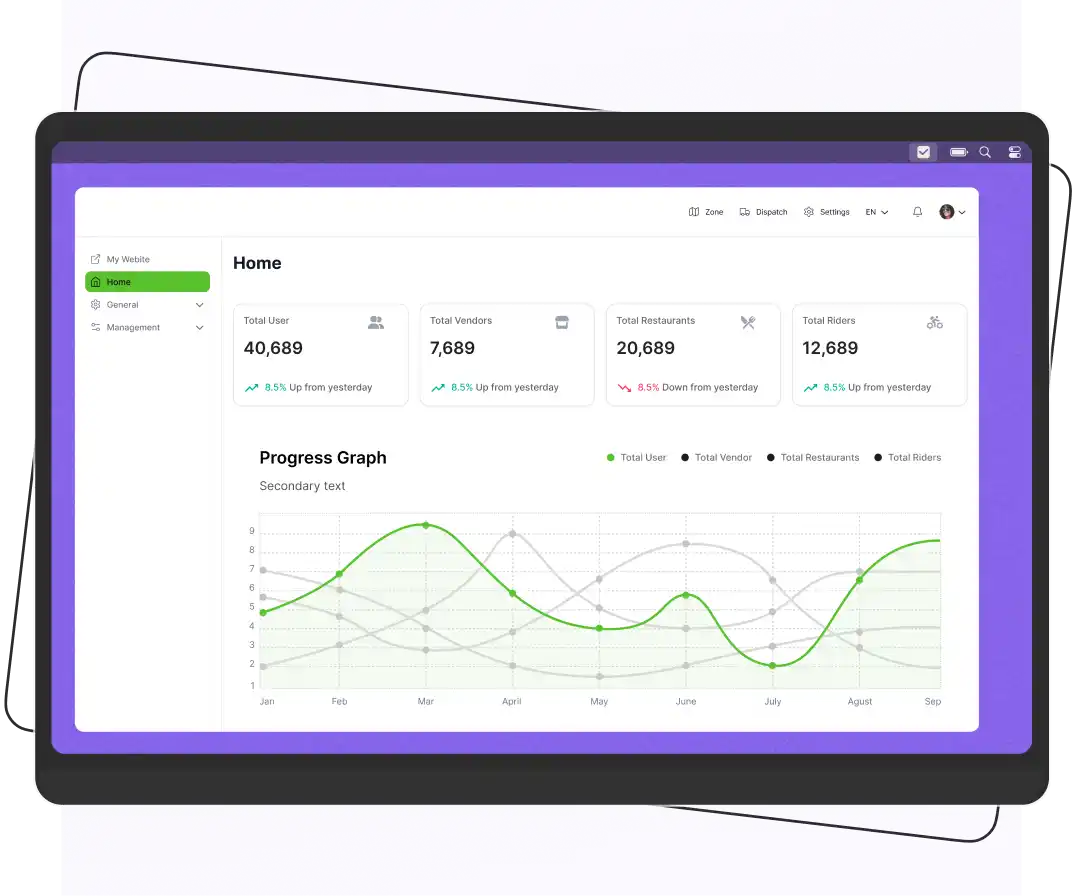
Enatega is a well-known example: it’s a white-label, multi-vendor delivery solution with separate apps for customers, vendors, and riders, plus an admin dashboard. Also, it’s open source at the core, so small providers can license and customize it instead of building from scratch.
- Custom-built systems
Give you more control and the ability to create unique features. However, they usually require a higher upfront investment and more time to launch.
- API integrations with existing aggregators
A useful option if you want to add to your existing order system instead of replacing it completely.
Revenue Models for Small Multivendor Delivery Businesses
Adding more vendors is great, but the bigger question is: how do you make money from a multivendor delivery business?
The good news is that you don’t have to rely on just one revenue stream. Small delivery providers can use different pricing models depending on their vendors, customers, and delivery operations.
Commission on Orders
You charge vendors a percentage of every order placed through your platform. This is one of the most common ways to generate revenue, and your earnings grow as the number of orders increases.
Customer Delivery Fees
Customers pay a delivery fee based on factors such as distance, location, or order size. This can help cover rider and delivery costs and create an additional revenue stream.
Vendor Subscription Fees
Instead of charging a commission on every order, you can offer vendors a monthly or annual subscription. This can be attractive to businesses that want predictable costs.
Featured Listings and Promotions
Vendors can pay to appear higher in search results, promote special offers, or get more visibility on your platform. This gives businesses another way to reach customers and create extra income for your platform.
How Much Does a Multivendor Delivery Platform Cost?
A multivendor delivery platform costs anywhere from $0 to $500 per month for a basic white-label SaaS subscription. A customized white-label solution may cost around $5,000 to $50,000, and a fully custom-built platform can range from $50,000 to $250,000+.
The final cost depends on factors such as:
- The features you need
- The number of apps involved, including customer, vendor, rider, and admin apps, and ongoing maintenance
For many small and mid-sized providers, the initial setup may fall around $10,000 to $60,000, followed by costs for hosting, support, and subscription or per-order fees after launch.
There’s no fixed price for a multivendor delivery platform because solutions can vary significantly. You could start with a $99/month template-based solution or invest in an enterprise platform designed to handle millions of orders.
Common Challenges Small Providers Face
Running a multivendor delivery business comes with its own set of challenges. Small providers need to plan for these issues early to avoid problems as the number of vendors and orders grows.
- Underestimating dispatch complexity
Manually assigning orders may work when you have only a few vendors, but it can quickly become difficult as your business grows.
- Keeping vendor information updated
Outdated menus, prices, or business hours can lead to incorrect orders, cancellations, and refunds.
- Not having enough riders during peak hours
Restaurants and other vendors often receive the most orders around the same time, such as lunch and dinner. This can put pressure on a small rider team.
- Setting commissions too low
Offering very low commissions to attract vendors may seem like a good strategy. However, it can become difficult to sustain if your fees don’t cover your actual delivery and operating costs.
- Lack of useful reporting
Without basic data on orders, delivery times, vendor performance, and rider efficiency, it becomes difficult to identify which vendors and delivery routes are profitable.
A Simple Checklist Before Going Multivendor
Before you move to a multivendor model, take a moment to check whether your business is ready. Ask yourself:
- Do you have software that can handle orders from multiple vendors and manage dispatch?
- Are your commission and payout rates sustainable for your business while still being fair for vendors?
- Do you have a simple, repeatable process for bringing new vendors onto the platform?
- Can your current rider team handle the extra demand when multiple vendors are busy at the same time?
- Do you have basic reporting to track orders, delivery performance, and rider efficiency for each vendor?
- Have you clearly defined how customer support, refunds, and cancellations will be handled across vendors?
If you can answer “yes” to most of these questions, you’re likely in a good position to test a multivendor model. Start with a small group of vendors, learn what works, fix any operational issues, and then scale gradually.
FAQs
Single-vendor delivery serves one business exclusively. Multivendor delivery serves multiple independent businesses through one shared dispatch and delivery network, allowing riders to carry orders from different vendors.
Yes. Small delivery providers can start with a limited number of vendors and expand the platform as their order volume and business network grow.
Common revenue models include:
Vendor commissions
Customer delivery fees
Subscriptions
Paid vendor promotions
Custom development offers greater flexibility. White-label software can help small providers launch faster and with lower upfront development costs.
Yes. The same model can support grocery stores, pharmacies, retail businesses, convenience stores, and other local merchants.
Supercharge your deliveries with Enatega.
Launch NowConclusion
Going multivendor isn’t just about adding more vendors; it’s about changing how you run your delivery business.
More vendors mean more orders, but also more riders to manage, more deliveries to coordinate, and more payouts to track. The providers that get it right aren’t necessarily the biggest ones. They’re the ones that get the basics right from day one.
And you don’t need to go big overnight. Start small. Test the model with a handful of vendors. Track the results. Then scale.
About the author

Hudaibia Khalid is a senior content writer with several years of experience in creating clear and easy-to-understand content. Over the years, she has worked closely with startups, restaurants, and entrepreneurs, helping them simplify complex digital and technical topics into actionable insights.
Her expertise lies in writing about on-demand platforms, food delivery solutions, and business growth strategies in a way that is accessible even to non-technical readers. With her experience in the industry, she focuses on guiding businesses step by step, from understanding ideas to turning them into fully working solutions.
SHARE






 IOS
IOS Android
 Web
Web