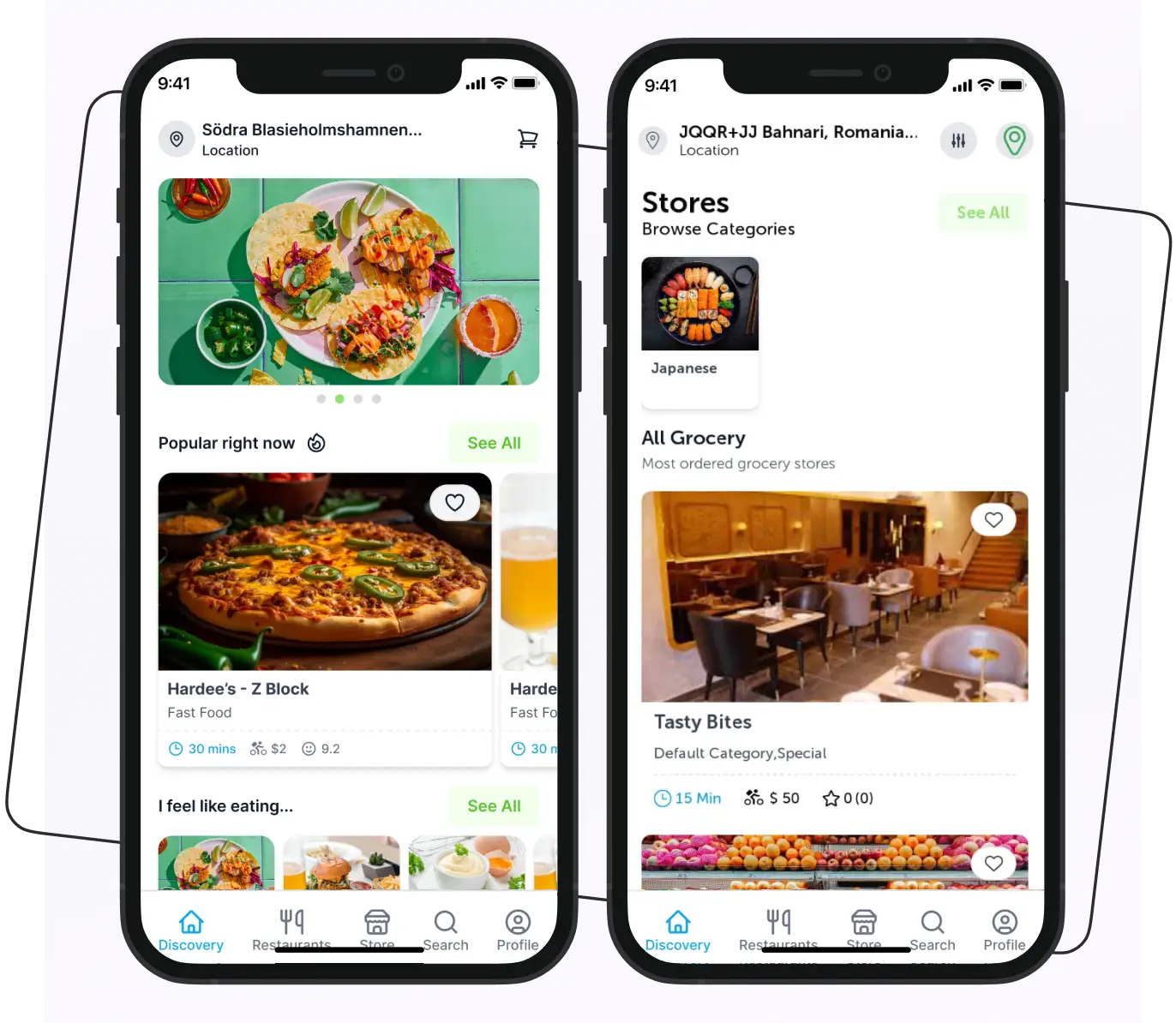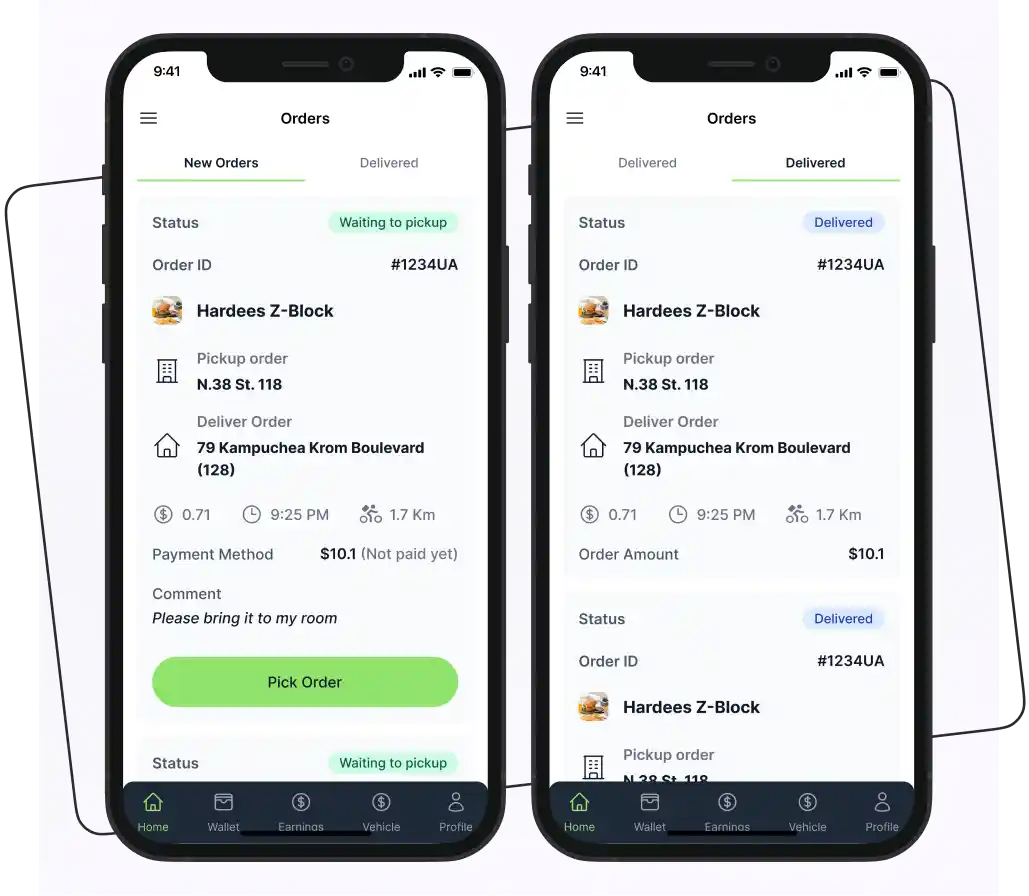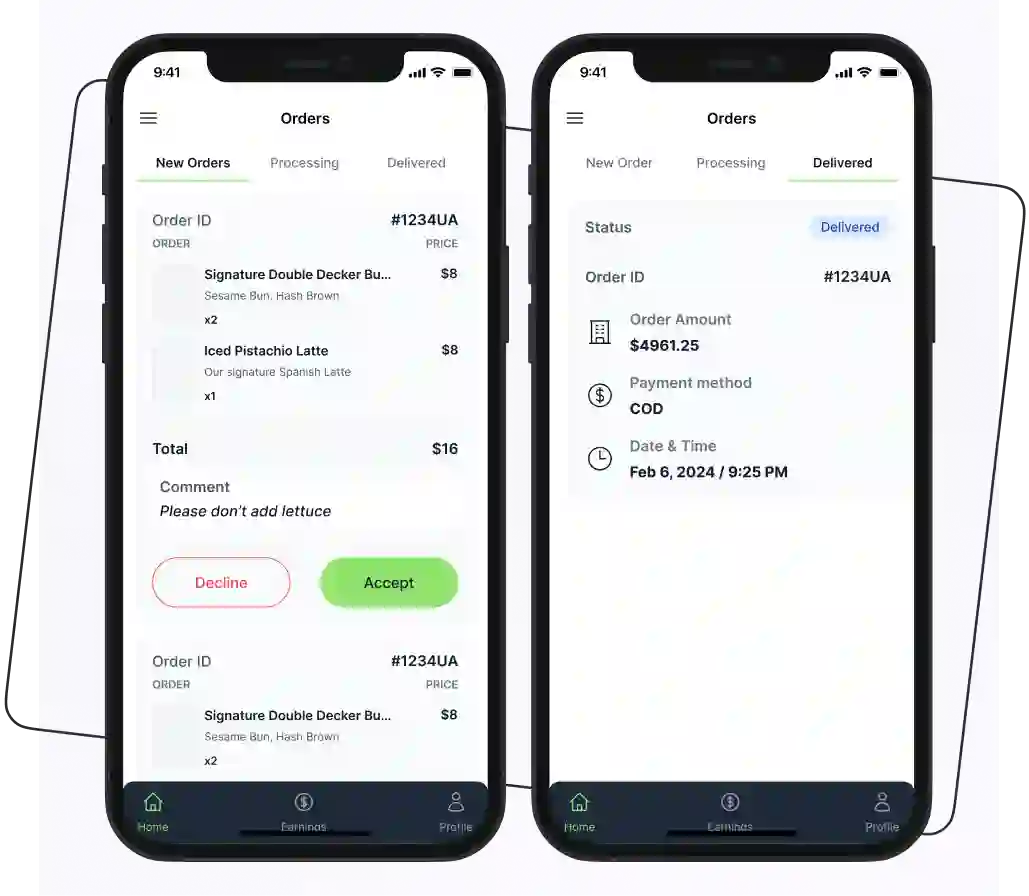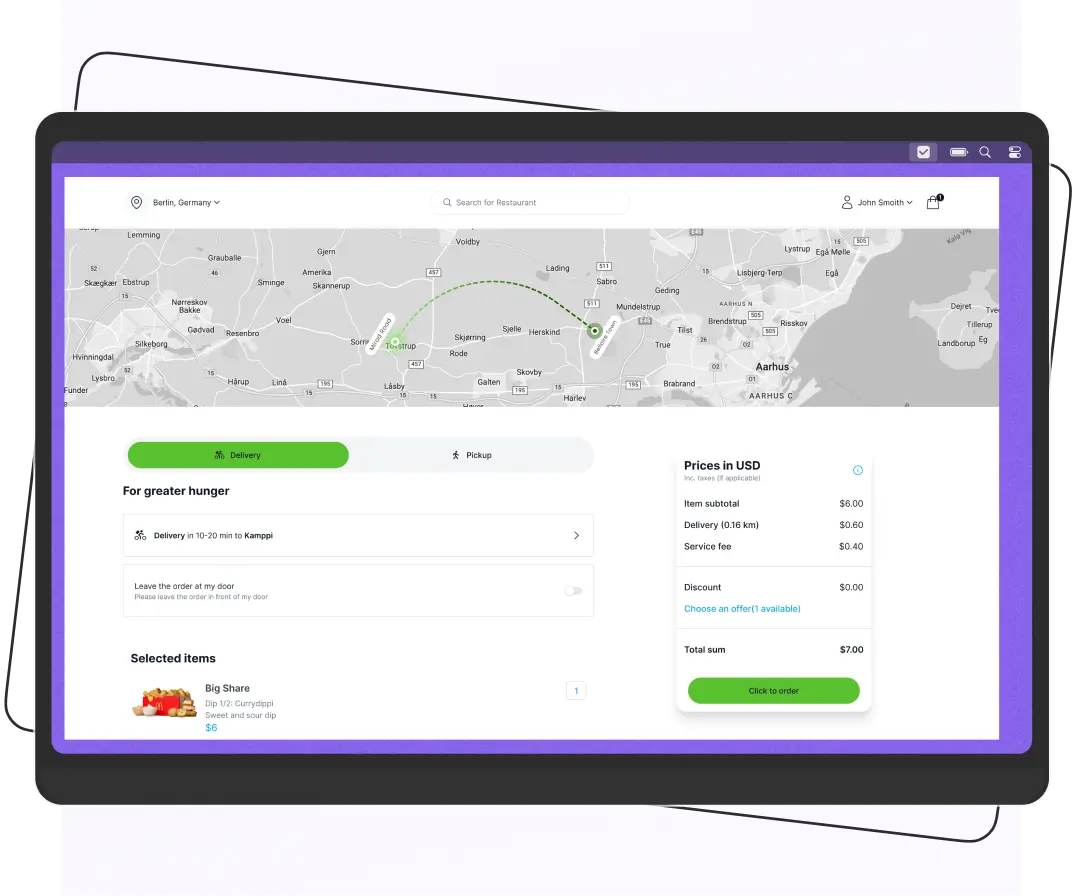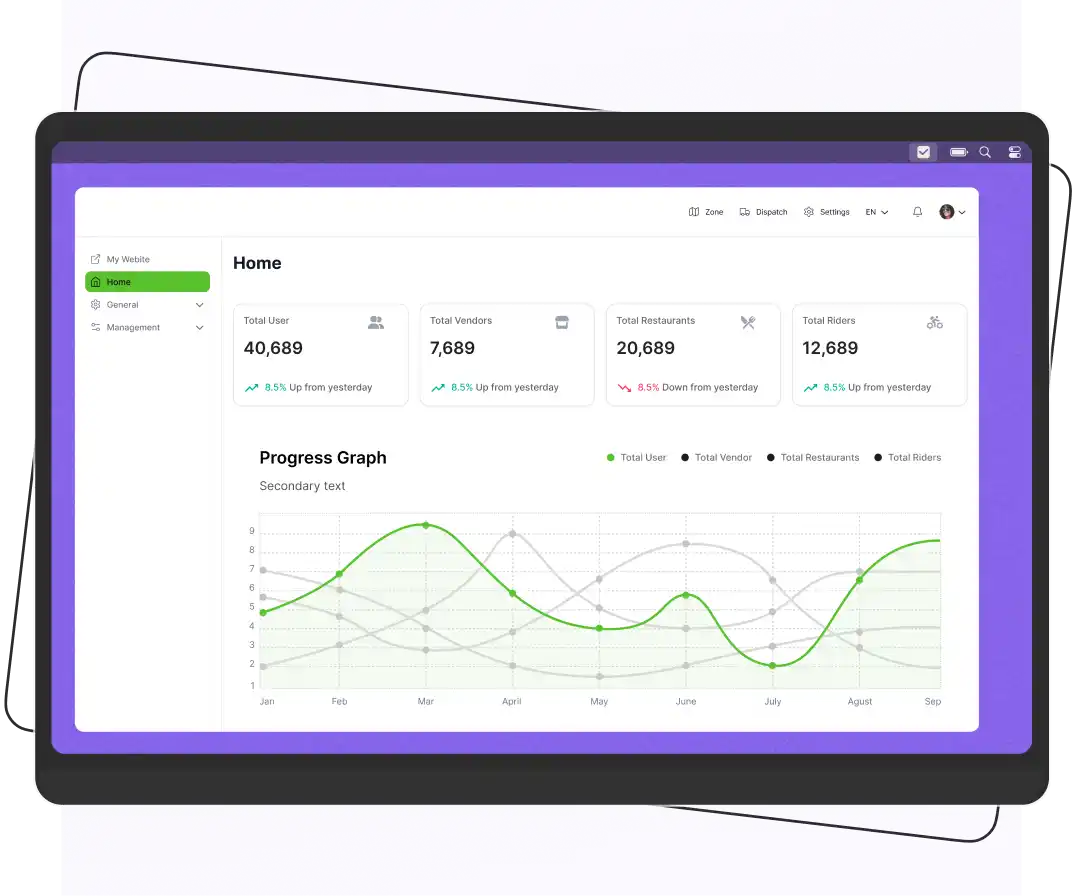


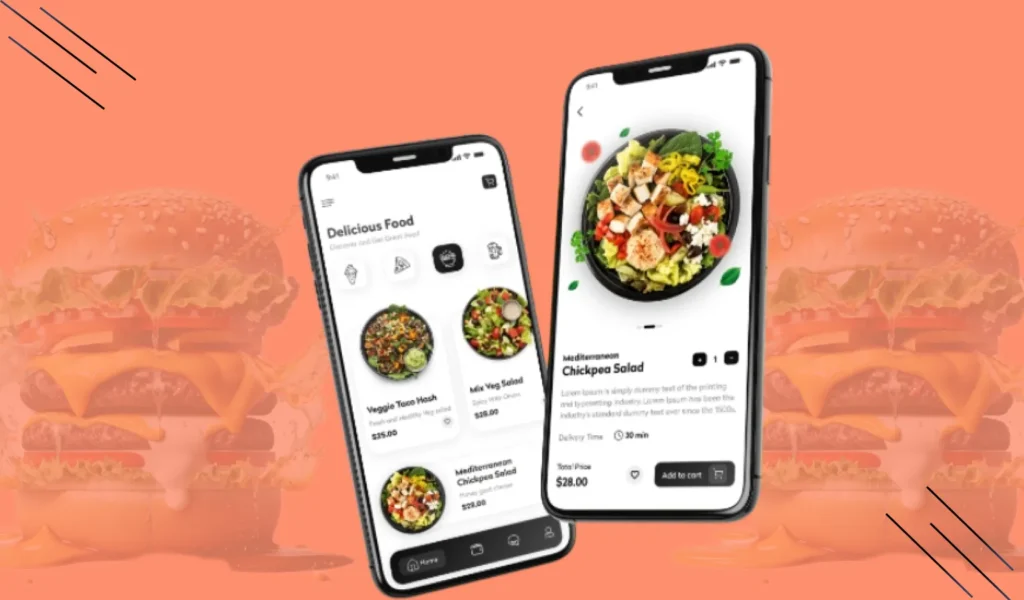
A restaurant app can cost anywhere from $8,000 to $100,000+, depending on factors like your location, development team, and feature requirements. A basic app costs between $4,000 and $15,000, while a mid-level app ranges from $20,000 to $40,000. For advanced apps with complex features, the cost can go from $50,000 to $200,000 or more.
Running a restaurant in 2026 means competing on more than just food quality. Customers now expect to browse your menu, place orders, and track deliveries without picking up the phone.
According to Grand View Research, the online food delivery market size is projected to reach USD 505.50 billion by 2030.
But before you commit to building one, you need a realistic picture of what it costs, not just the development bill, but hosting, maintenance, payment fees, and everything.
This blog will guide you through what goes into the cost of developing a restaurant app and help you understand what to expect.
Let’s get started.
Supercharge your deliveries with Enatega.
Launch NowCost to Develop a Restaurant App
If you’re in the restaurant app development industry, understanding the cost of building a restaurant app should be your top priority.
Below, you’ll find all the essential information you need regarding the expenses involved in creating a restaurant app.
Cost of Building a Restaurant App by App Scope
| App Scope | Estimated Total Cost (USD) |
| Basic Features Only (Core Ordering and Menu) | $8,000 – $15,000 |
| Mid-Level App (Ordering + Tracking + Payments + Admin Panel) | $20,000 – $40,000 |
| Advanced App (AI integration, Admin, Restaurant, Delivery, Loyalty, Analytics) | $50,000 – $100,000+ |
Cost to Develop a Restaurant App by Region
The table below shows the estimated cost to develop a restaurant app by region, including basic, mid-level, and advanced app types.
| Region | Basic App (USD) | Mid-Level App (USD) | Advanced App (USD) |
| North America | $40,000 – $60,000 | $60,000 – $120,000 | $120,000 – $200,000+ |
| Western Europe | $35,000 – $55,000 | $55,000 – $100,000 | $100,000 – $180,000 |
| Eastern Europe | $20,000 – $30,000 | $30,000 – $70,000 | $70,000 – $130,000 |
| UK | $30,000 – $50,000 | $50,000 – $90,000 | $90,000 – $160,000 |
| Australia | $35,000 – $55,000 | $55,000 – $100,000 | $100,000 – $180,000 |
| Middle East | $25,000 – $40,000 | $40,000 – $80,000 | $80,000 – $140,000 |
| India | $5,000 – $15,000 | $15,000 – $30,000 | $30,000 – $60,000 |
| Pakistan | $4,000 – $10,000 | $10,000 – $25,000 | $25,000 – $50,000 |
| Southeast Asia | $6,000 – $12,000 | $12,000 – $30,000 | $30,000 – $60,000 |
| South America | $10,000 – $20,000 | $20,000 – $40,000 | $40,000 – $80,000 |
| Africa | $5,000 – $15,000 | $15,000 – $30,000 | $30,000 – $60,000 |
Cost to Develop a Restaurant App by Developer Type
Look at the below and understand the cost to develop a restaurant app based on the type of developer or development team you choose.
| Developer Type | Estimated Cost (USD) | Pros | Cons |
| Freelancers | $5,000 – $30,000 | Low cost, flexible hours, good for MVPs and small projects | Limited scalability, slower timelines, may lack full-stack expertise |
| In-House Development Team | $80,000 – $200,000+ | Full control, real-time communication, consistent quality | High operational costs (salaries, infrastructure, tools, etc.) |
| Local App Development Agency | $40,000 – $150,000 | Professional teams, local support, and better project management | More expensive than freelancers, sometimes slower than remote teams |
| Offshore Development Agency | $10,000 – $60,000 | Cost-effective, scalable teams and round-the-clock development are possible | Time zone differences, communication challenges |
| Dedicated Development Team (Staff Augmentation) | $30,000 – $100,000 | Skilled team extension, better control than outsourcing, and scalable | Requires strong internal management, with potential onboarding time |
| No-Code/Low-Code Platforms | $1,000 – $10,000 | Fast MVP development, minimal coding required, affordable | Limited customization, scalability issues for complex apps |
Cost to Develop a Restaurant App by Features
| Feature | Description | Estimated Cost (USD) |
| User Registration and Login | Email/social login, OTP, profile management | $1,000 – $3,000 |
| Restaurant Menu Browsing | View dishes, categories, prices, and images | $1,500 – $4,000 |
| Search and Filters | Search by cuisine, dish, price, rating, etc. | $1,000 – $3,000 |
| Table Reservation | Booking tables with time slots | $2,000 – $5,000 |
| Order Placement (Dine-in/Takeout/Delivery) | Cart system, quantity control, special instructions | $3,000 – $6,000 |
| Real-Time Order Tracking | Track food preparation and delivery via GPS | $3,000 – $7,000 |
| Payment Gateway Integration | Stripe, PayPal, Apple Pay, local methods | $2,000 – $5,000 |
| Ratings and Reviews | User feedback on dishes, restaurants, and delivery | $1,000 – $2,500 |
| Push Notifications | Order updates, promotions, and reminders | $1,000 – $2,000 |
| Loyalty and Rewards Program | Points, coupons, discounts | $2,000 – $5,000 |
| Multi-language and Multi-currency | Regional expansion support | $1,500 – $4,000 |
| Admin Dashboard | Manage restaurants, orders, users, and settings | $4,000 – $10,000 |
| Restaurant Panel | The restaurant manages the menu, orders, and timings | $3,000 – $8,000 |
| Delivery Partner App | Accept orders, navigation, and delivery status updates | $5,000 – $12,000 |
| Analytics and Reports | Sales trends, customer behavior, performance insights | $2,000 – $6,000 |
| Chat Support or Help Center | Live chat or ticket-based support | $1,500 – $4,000 |
Types of Restaurant Apps (and Their Cost Impact)
There are several types of restaurant apps, and each has a different cost associated with it. Below are the different types of restaurant apps, along with a general cost range for each type.
| Type of Restaurant App | Description | Estimated Development Cost |
| Restaurant Finder App | Helps users locate nearby restaurants based on location, cuisine, and reviews. | $10,000 – $25,000 |
| Table Reservation App | Allows users to book tables in advance at restaurants. | $12,000 – $30,000 |
| Food Delivery App | Enables users to browse menus, order food, and track delivery in real-time. | $20,000 – $60,000+ |
| Restaurant POS App | Used by staff for order-taking, billing, and kitchen coordination. | $15,000 – $40,000 |
| Loyalty and Rewards App | Offers users discounts, rewards, and loyalty points for frequent purchases. | $10,000 – $25,000 |
| Restaurant Management App | Back-end admin app to manage inventory, staff, menus, and analytics. | $25,000 – $50,000+ |
| Multi-Restaurant Aggregator App | Lists multiple restaurants (like Uber Eats or Zomato) for browsing and ordering. | $40,000 – $100,000+ |
| Menu App (Digital Menu/QR Code Scanner) | Let’s users scan QR codes to access digital menus and place orders. | $8,000 – $20,000 |
| Cloud Kitchen App | For delivery-only kitchens, this includes ordering, kitchen management, and tracking. | $25,000 – $60,000+ |
| Custom Branded App for Restaurants | Personalized app for a specific restaurant/chain with full features. | $20,000 – $70,000+ |
How Long Does It Take to Build a Restaurant App?
The time to build a restaurant app can take anywhere from a few months to a year or more. However, it depends on the apps’ complexity, features, and the development process.
The table below shows the estimated time required for restaurant app building.
| Complexity | App Development Timeline |
| Basic app development | 3-5 months |
| Medium app development | 5-8 months |
| Complex app development | 10+ months |
Restaurant App Development Cost Formula
The cost to develop a restaurant app varies greatly, but a general formula is:
(Total Development Hours * Hourly Rate) + Ongoing Costs = Total Project Cost
This formula factors in the time required for development, the hourly rate of the development team, and additional expenses. Factors like app features, complexity, platform (iOS, Android, or both), design, and the development team’s location impact the total cost.
Example 1: Budget Build (Pakistan-based agency)
- 600 development hours × $25/hr = $15,000
- Hosting + third-party APIs + app store fees = $1,500/year
- Estimated Year 1 Total: ~$16,500
Example 2: Mid-Level Build (Eastern European agency)
- 900 development hours × $50/hr = $45,000
- Hosting + integrations + maintenance = $6,000/year
- Estimated Year 1 Total: ~$51,000
Example 3: Advanced Build (North American agency):
- 1,400 development hours × $120/hr = $168,000
- Hosting + support + maintenance = $20,000/year
- Estimated Year 1 Total: ~$188,000
Factors that Impact the Cost to Develop a Restaurant App
The cost to develop a restaurant app is influenced by several factors, such as:
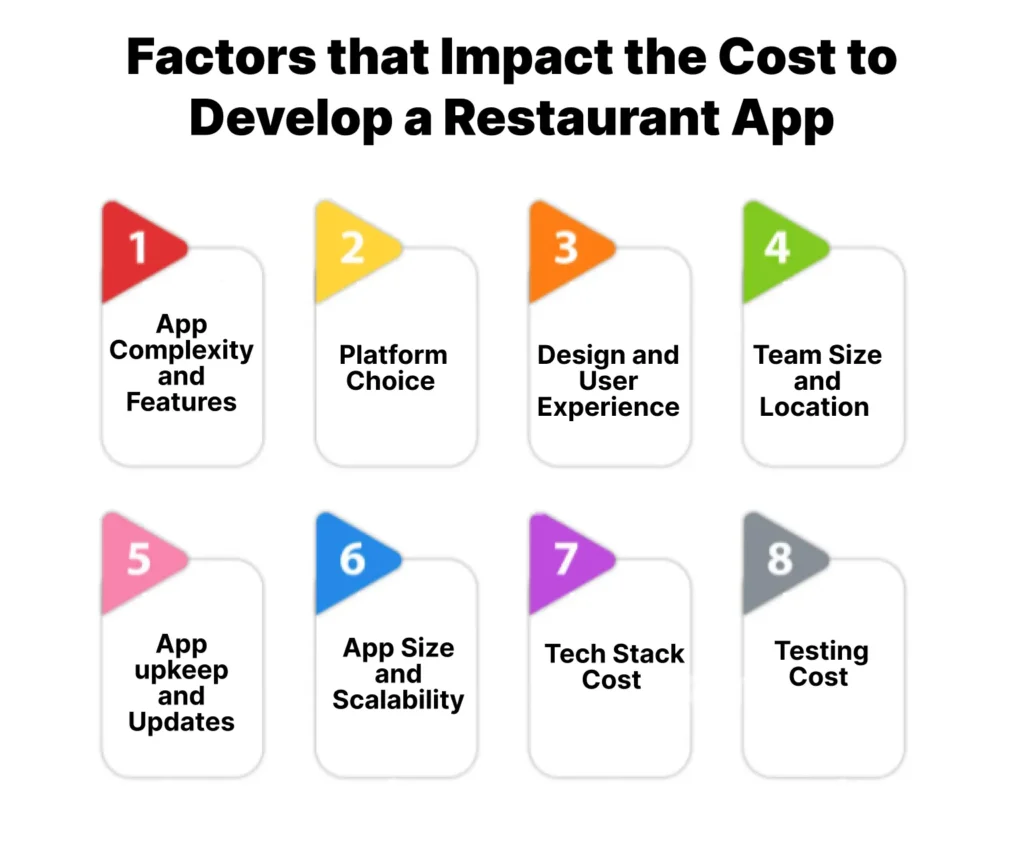
App Complexity and Features
App complexity and features are the major factors that influence the restaurant app cost. The app with basic features like online ordering, menu display, and payment integration will cost less than a more complex app with advanced features like real-time table reservations, advanced analytics, etc.
Platform Choice
- One Platform (iOS or Android): Cheaper to build if you’re only targeting one type of phone.
- Cross-Platform (Both iOS and Android): Using tools like Flutter or React Native can save money by using the same code for both platforms. But it might affect performance.
- Native Apps (Separate for iOS and Android): These give better speed and performance but are more expensive to build for both platforms.
Design and User Experience
A unique and good-looking app is important to attract customers and stand apart from others in the market. However, it takes more time and money to design. You can use ready-made designs that are faster and more affordable.
| Design Approach | What You Get | Estimated Cost |
| Pre-built UI templates | Standard layouts, limited branding, fast to implement | $500 – $2,000 |
| Custom UI/UX design | Wireframes, branded visuals, user flow testing | $3,000 – $10,000 |
| Full UX research + design | User interviews, prototyping, A/B testing, accessibility review | $10,000 – $25,000 |
Team Size and Location
Skilled developers may charge more but work faster and build better-quality apps. Hiring developers from places like North America or Western Europe is more expensive than hiring from Asia, Eastern Europe, or South America.
App Maintenance and Updates
After the app is launched, you’ll still need to fix bugs, make updates, and keep it running smoothly, which adds to the cost. Adding new options later will also cost extra.
App Size and Scalability
Apps with lots of features or heavy data need more space and stronger servers, which increases costs. If you plan to grow and get more users, you’ll need to invest in infrastructure that can handle it.
Tech Stack Cost
Selecting the tech stack is also important and contributes to restaurant app development costs. It can affect development time, scalability, and the overall cost of building and maintaining the application.
A well-chosen tech stack can streamline development and lead to lower costs, while a poor choice can increase expenses due to performance issues, maintenance, and rework.
Frontend (Customer-Facing App)
- React Native or Flutter: Best for budget-conscious builds. One codebase runs on both iOS and Android, cutting development time by 30–40%.
- Swift (iOS) / Kotlin (Android): Native development gives better performance but doubles your frontend cost since each platform needs separate code.
Backend
- Node.js or Django: Popular choices for handling real-time order updates and high traffic volumes. Node.js is particularly strong for live order tracking.
- Firebase: A good low-cost option for MVPs, though it becomes expensive at scale.
Database
- PostgreSQL or MongoDB: PostgreSQL suits structured data like menus and orders; MongoDB works better for flexible, rapidly changing data.
Third-Party Integrations and Their Costs
| Service | Purpose | Estimated Monthly Cost |
| Stripe / PayPal | Payment processing | 2.5% – 3% per transaction |
| Google Maps API | Delivery tracking | $0 – $200/month |
| Firebase Cloud Messaging | Push notifications | Free up to 1M/month |
| Twilio | SMS / OTP verification | $0.0075 per message |
| AWS / Google Cloud | Hosting and storage | $50 – $500+/month |
Choosing the wrong stack, for example, building native iOS and Android separately when your budget is under $30,000, is one of the most common reasons restaurant app projects run over budget.
Testing Cost
App testing can also affect the cost of developing a restaurant app, and it is a very important step to check the app for errors and bugs. It prevents costly fixes and potential negative reviews after the app release.
Hidden Costs Most Businesses Ignore
This is where most budgets go wrong. The development cost is just the beginning, and many businesses underestimate the ongoing expenses required to run and scale an app successfully.
App Maintenance (15–25% annually)
After launch, your app needs continuous updates, bug fixes, and performance improvements. You’ll also need to keep up with iOS and Android updates.
On average, maintenance costs 15–25% of your initial development cost every year.
Server and Hosting Costs
Your app relies on servers to manage everything. As your user base grows, these costs increase.
Small apps may spend $50–$200/month, while scalable apps can exceed $500/month.
Payment Processing Fees
Every transaction in your app comes with a fee charged by payment providers. This ranges from 2.5% to 3% per transaction.
As your revenue grows, these fees become a significant ongoing expense.
App Store Fees
To publish your app, you must pay platform fees. Apple charges $99/year, while Google Play requires a $25 one-time fee.
You may also need to comply with ongoing store policies and updates.
Third-Party Services
Most apps depend on external tools like maps, notifications, and SMS verification. These services charge based on usage.
Depending on the scale, costs can range from $100 to $1,000 per month.
Marketing and User Acquisition
Launching your app doesn’t guarantee users; marketing is essential. You’ll need to invest in ads, SEO, and promotions.
Even small campaigns can cost $500–$2,000/month, and scaling requires more.
Customer Support and Operations
As your app grows, you’ll need support for handling orders, complaints, and refunds. This includes staff and support tools.
Operational costs increase as your user base and order volume grow.
Feature Upgrades and Scaling
Over time, you’ll need to add new features and improve performance. This includes upgrades like loyalty programs or advanced analytics.
These enhancements can cost $5,000–$30,000+ annually, depending on complexity.
Tips to Reduce the Restaurant App Development Cost
Here are some tips to help lower the costs of developing your restaurant app.
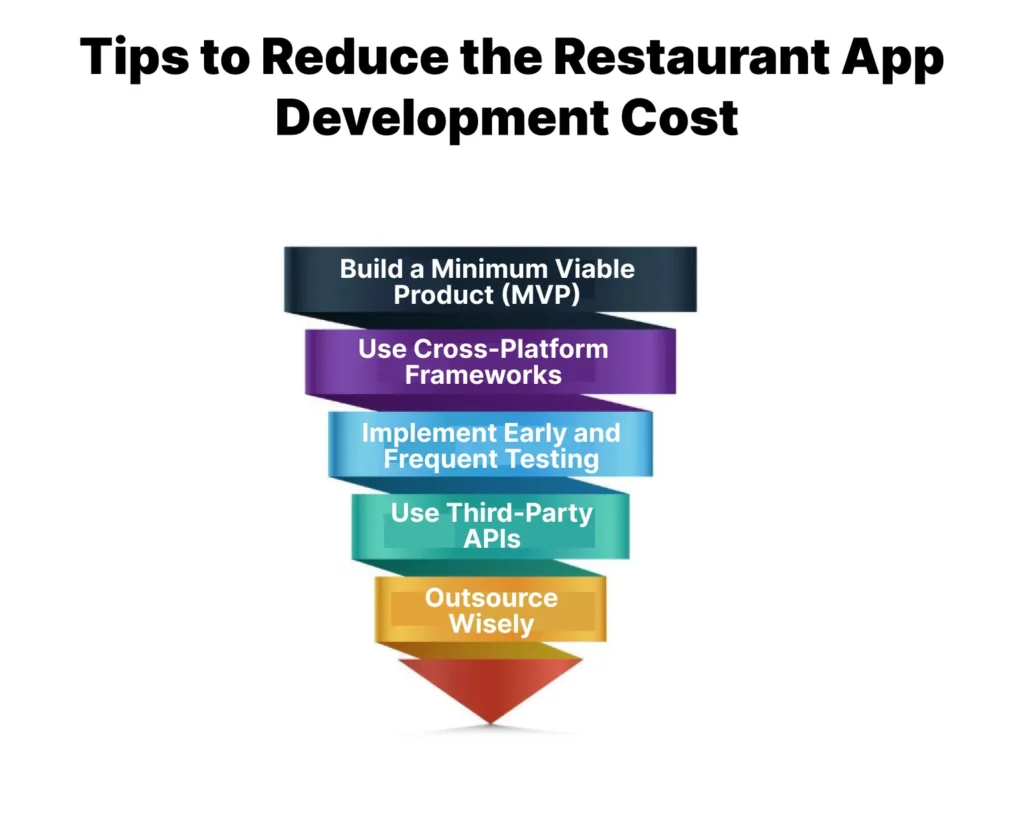
Build a Minimum Viable Product (MVP)
Start with an MVP that includes only the essential features your restaurant needs, such as online ordering, payment processing, and basic order tracking. This approach allows you to launch quickly and gather user feedback.
Use Cross-Platform Frameworks
Consider using frameworks like React Native or Flutter, which enable you to develop apps for both iOS and Android using a single codebase. This can reduce both development time and expenses.
Outsource Wisely
Look for developers in cost-effective regions. Ensure they possess the necessary skills and can meet your deadlines without compromising quality.
Use Third-Party APIs
Instead of building functionalities like payment processing, push notifications, and mapping from scratch, use third-party APIs and pre-built solutions. This can save time and reduce costs.
Implement Early and Frequent Testing
Conduct regular testing throughout the development process to identify and address bugs early. This proactive approach can prevent minor issues from becoming major issues and expensive to resolve later.
FAQs
Creating an app like DoorDash can cost between $150,000 and $500,000, depending on features, design, and development complexity. Ongoing maintenance and marketing can add to the total cost.
A food delivery app with core features menu browsing, cart, payment integration, and basic order tracking costs $20,000–$60,000 for a professionally built product. If you add a delivery partner app, real-time GPS tracking, and a restaurant management panel, expect $60,000–$120,000+.
Using a white-label solution like Enatega can bring this down to $1,000–$10,000.
Most restaurants use a combination of software solutions, including:
Point of Sale (POS) Systems: Such as Square or Toast.
Reservation Management: Tools like OpenTable or Resy.
Inventory Management: Software like MarketMan or BlueCart.
Employee Scheduling: Solutions such as 7shifts or HotSchedules.
Delivery and Ordering: Platforms like DoorDash and Uber Eats.
For most independent restaurants and small chains, a SaaS or white-label platform is significantly cheaper to start with. You can live in weeks for $100–$500/month rather than waiting 6–12 months and spending $20,000–$60,000 on custom development.
Supercharge your deliveries with Enatega.
Launch NowConclusion
A restaurant app is a powerful way to attract customers and get more business sales. It is a great way to grow your business online.
Now that you have a clearer understanding of the costs involved in creating a restaurant app, consider the next steps for your business. If you're looking to develop an app similar to Uber Eats or another delivery service, use an AI estimator. It helps you calculate project effort, timeline, and cost.
About the author

Hudaibia Khalid is a senior content writer with several years of experience in creating clear and easy-to-understand content. Over the years, she has worked closely with startups, restaurants, and entrepreneurs, helping them simplify complex digital and technical topics into actionable insights.
Her expertise lies in writing about on-demand platforms, food delivery solutions, and business growth strategies in a way that is accessible even to non-technical readers. With her experience in the industry, she focuses on guiding businesses step by step, from understanding ideas to turning them into fully working solutions.
SHARE






 IOS
IOS Android
 Web
Web