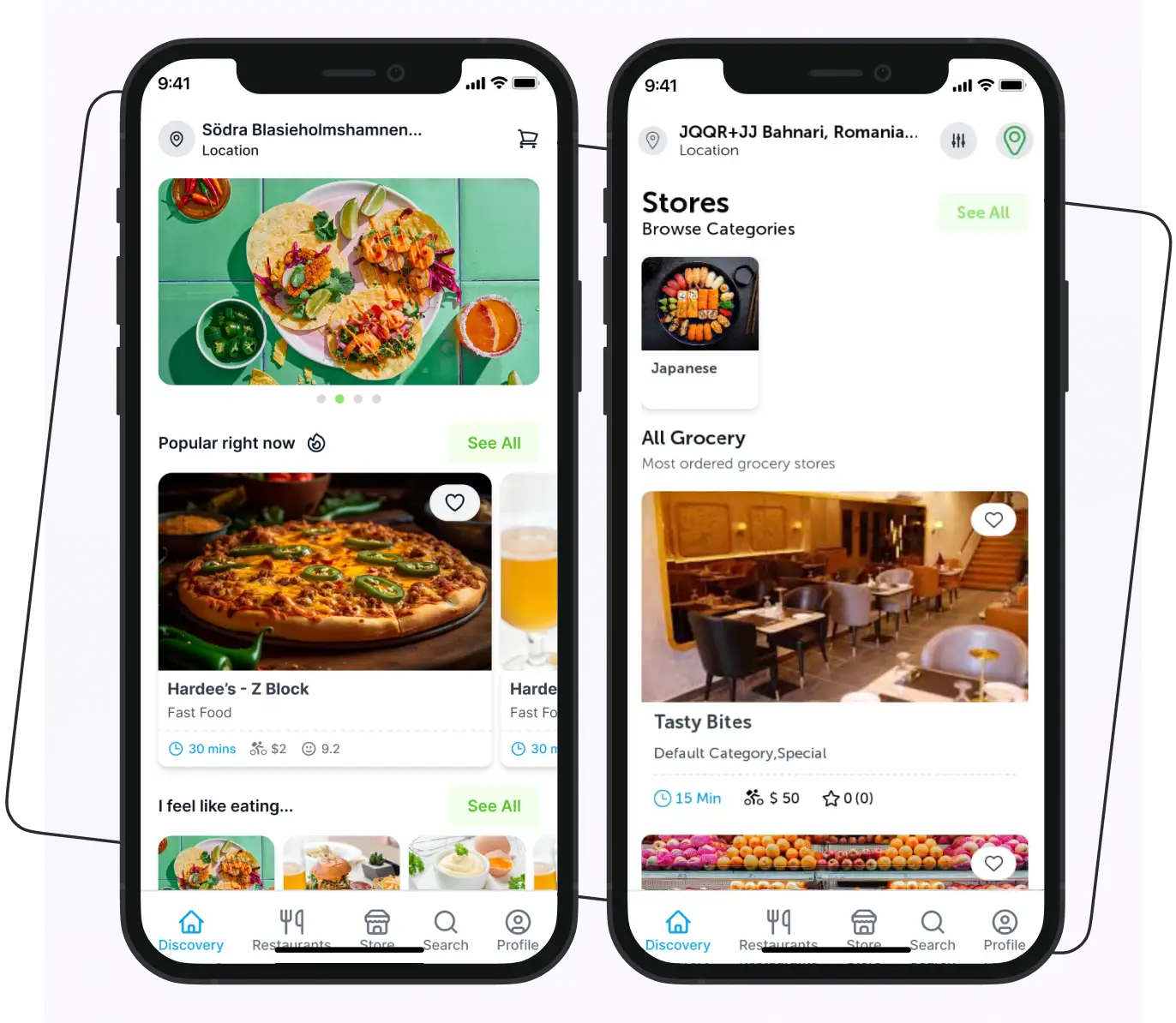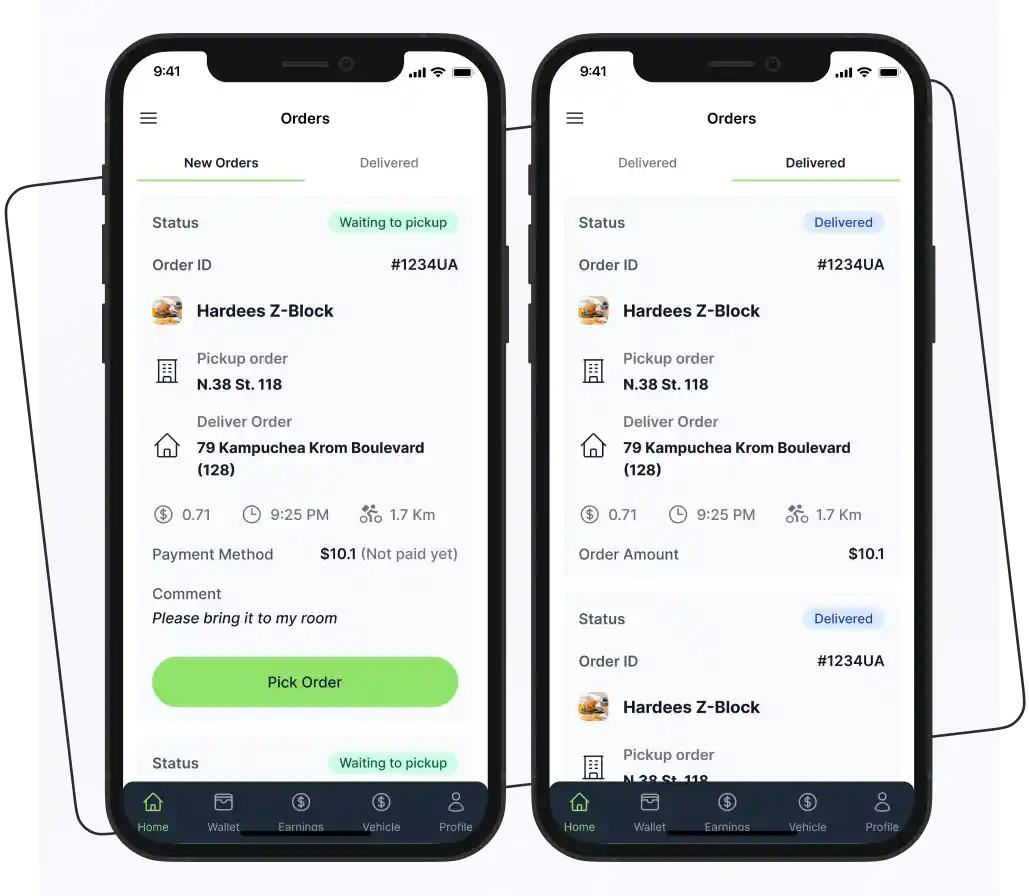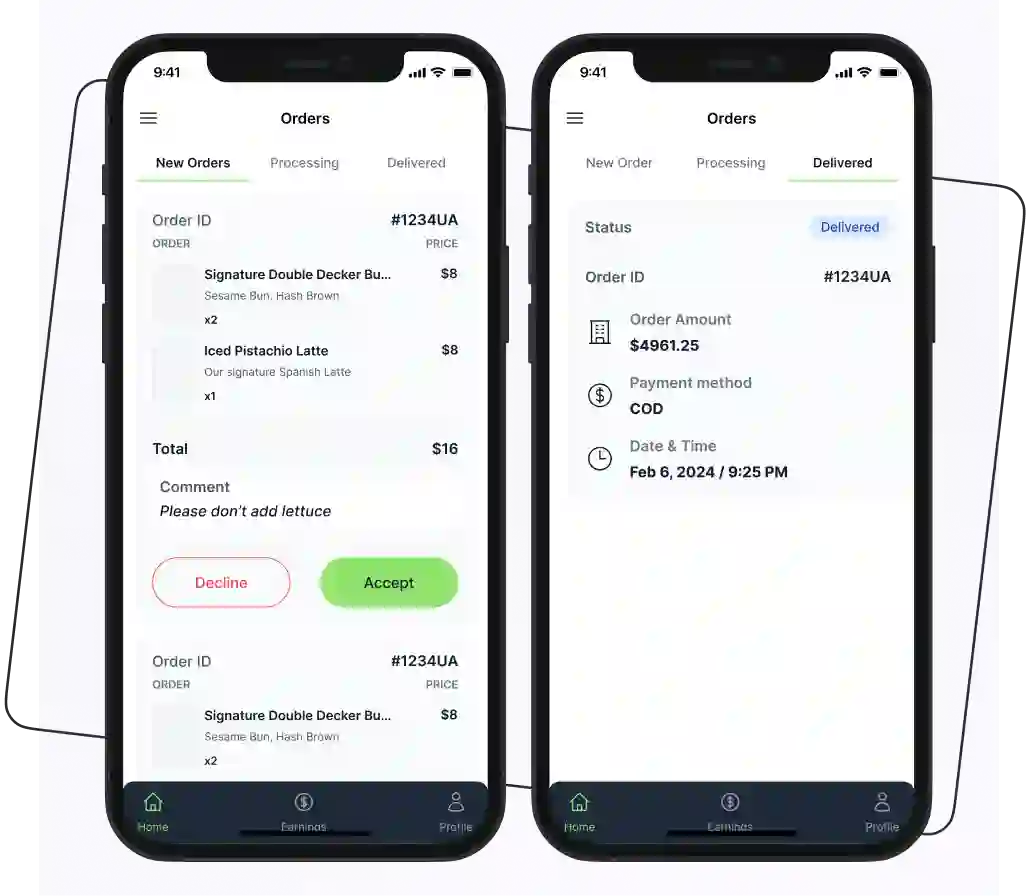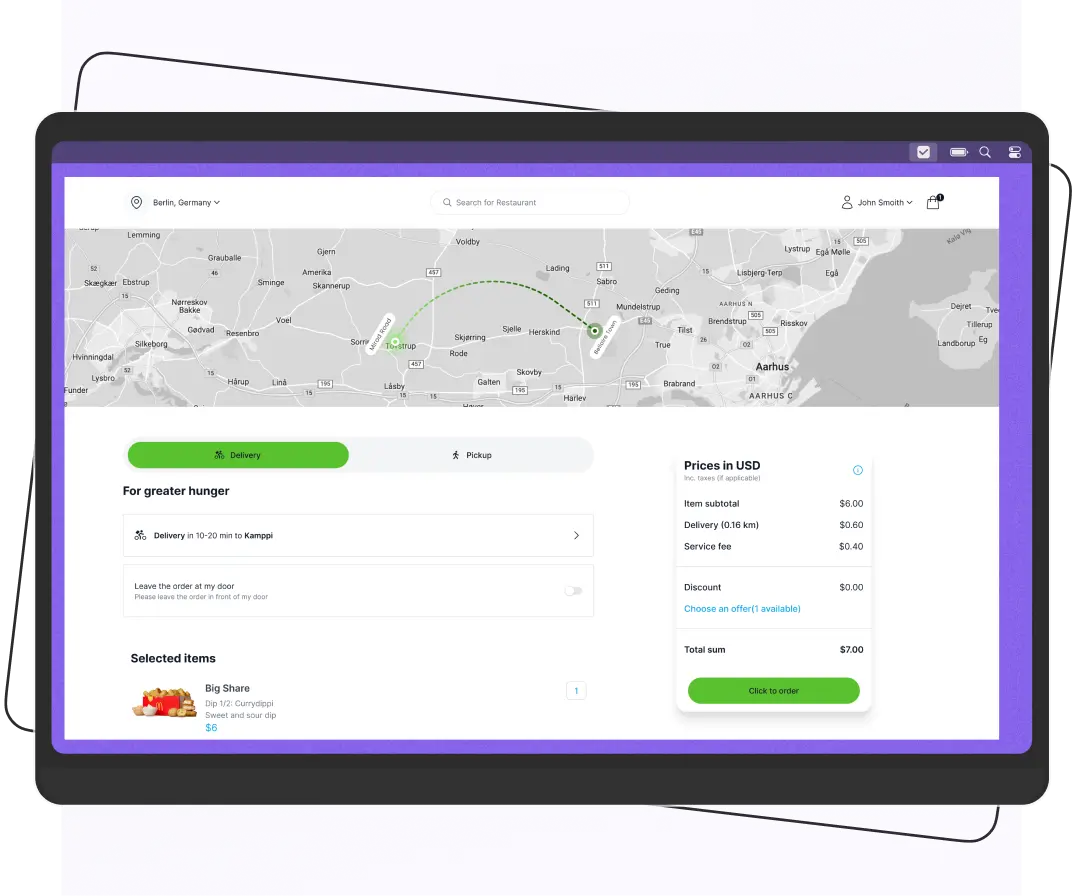


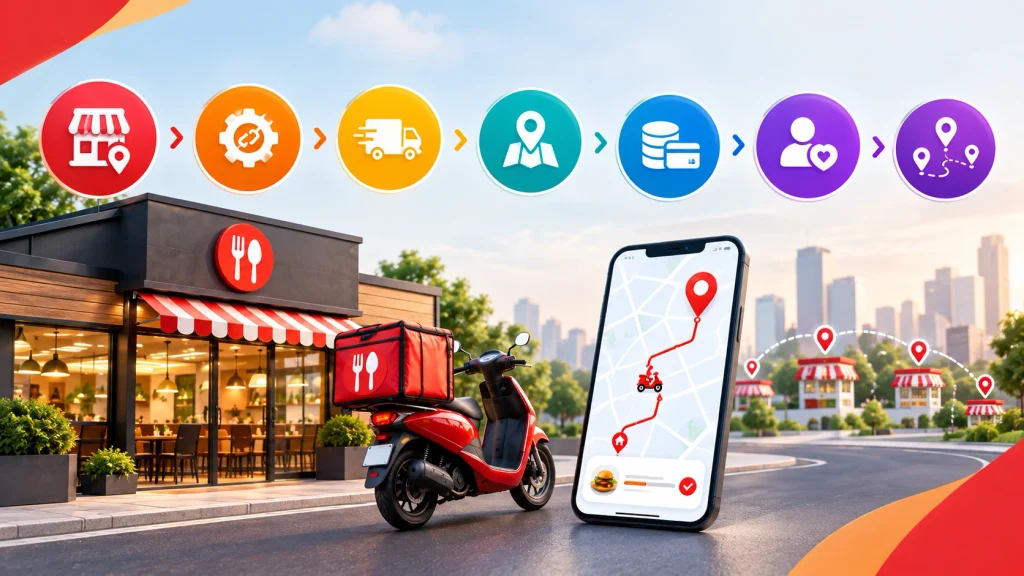
First-party delivery is a model where restaurant chains manage their own ordering and delivery experience through their website or branded app. It gives chains greater control over customer data, branding, delivery operations, and repeat orders, while reducing reliance on third-party marketplace commissions.
To implement it successfully, chains need ordering technology, POS integration, loyalty tools, and centralized multi-location management.
Your customer orders a meal. Your store prepares it. A driver delivers it. Simple, right?
Not quite, especially when a third-party marketplace sits between you and the customer.
For chains with dozens or hundreds of locations, relying on marketplaces for every delivery can mean paying fees on repeat orders, handing over part of the customer relationship, and having limited control over what happens after the checkout button is clicked.
First-party delivery changes that setup.
Customers order directly from your brand; your business controls the ordering channel and delivery operation behind it. You can decide how orders are routed, how drivers are assigned, what customers see, and how you turn a one-time order into a repeat purchase.
But first-party delivery isn’t simply a matter of launching an app and hiring a few drivers. At chain level, the real challenge is making the whole system work across locations without slowing down stores or creating a delivery headache.
So, what does it actually take to make first-party delivery work at scale?
Let’s explore.
What is First-Party Delivery?
First-party delivery is a model where a restaurant chain manages its own ordering and delivery experience. This can include:
- Its website
- Branded app
- POS integration
- Its own drivers
Instead of sending orders through marketplaces such as DoorDash, Uber Eats, or Grubhub, customers order directly from the restaurant.
For multi-location chains, first-party delivery can be a better fit because they have enough orders, customers, and locations to make their own delivery system worthwhile. This becomes even more valuable as the chain grows to dozens, hundreds, or thousands of locations.
Supercharge your deliveries with Enatega.
Launch NowWhy This Matters More for Chains Than Independents
For a single-location restaurant, marketplace commissions may be worth paying to reach more customers. Chains have a different situation. They already have brand recognition, loyal customers, and often the budget to invest in their own technology. This can make first-party delivery more worthwhile.
- Commissions Add Up Quickly
A chain handling 50,000 delivery orders a month at a 25% average commission loses far more in fees than a single restaurant handling 500 orders.
- Customer Data Becomes More Valuable
Every order placed through a marketplace is a customer interaction that the chain may have less control over. With first-party ordering, the chain can better understand its customers and use that information for future marketing and promotions.
- Franchises Have More at Stake
In a franchise, the main company often chooses the technology, while each store pays for it. So, choosing first-party delivery can affect the costs and profits of many stores at once.
- Brand Control Matters More
With a marketplace, the platform controls much of how the menu, photos, offers, and ordering experience are shown. For a large chain, giving up that control across many locations can have a bigger impact than it would for a single independent restaurant.
The Real Cost of Third-Party Delivery for Multi-Unit Brands
Third-party delivery platforms charge restaurants a percentage of each order. Delivery commission rates include:
| Platform | Delivery commission | Pickup commission |
| DoorDash | 15%-30%, depending on the plan | ~6% |
| Uber Eats | 15%-30%, depending on the plan | Lower, varies by market |
| Grubhub | Varies based on marketing, delivery, and processing fees | Lower than delivery |
But the commission is not the only cost. Restaurants may also pay payment processing fees, offer discounts or promotions, and increase menu prices to cover marketplace fees. When all of these costs are added together, the actual cost of third-party delivery can be much higher.
For some multi-location and franchise businesses, the total cost can reach 35%–48% of the order value. At that level, there may be very little profit left from a delivery order.
For a chain, these costs can add up quickly because the same fees apply across many locations. That’s why it’s important to look at the actual profit from each delivery channel, not just the headline commission rate.
First-Party vs. Third-Party Delivery
Look at the table below and understand the differences between first-party and third-party delivery.
| Factor | First-Party Delivery | Third-Party Marketplace |
| Commission per order | No marketplace commission. You usually pay a fixed software or technology cost. | Usually 15%-30%, with the total cost sometimes reaching 35%-48%. |
| Customer data | The chain owns its customer data, including email, order history, and preferences. | Customer data is limited, and the marketplace controls much of the customer relationship. |
| Brand and menu control | Full control over your branding, menu, offers, and ordering experience. | The marketplace controls how your brand and menu are displayed, with limited customization. |
| New customer reach | Depends on your own marketing and customer base. | Marketplaces can help you reach new customers through their existing audience. |
| Delivery control | More control over delivery times and service, especially with your own drivers. | Delivery depends on the marketplace’s driver network. |
| Setup and management | Requires more upfront work, including technology, POS integration, and delivery management. | Easier to start. You mainly need to sign up and list your business. |
How Chains Should Choose Between First-Party and Third-Party Delivery
Chains don’t always have to choose between first-party and third-party delivery. A mix of both can often work better. To decide what works best, look at these three questions for each market or region:
- How much profit do we actually make from each order? Look at all costs, including processing fees, discounts, markups, and marketplace fees, not just the headline commission.
- How many marketplace customers are new customers? Some may already know your brand and could order directly through your own app if you give them a good reason to switch.
- Where do we still need marketplaces? In some areas, marketplaces can help you reach customers and stay competitive. In other areas, you may be able to rely more on your own ordering channel.
Review these numbers regularly as your business grows. This helps you treat delivery as something you can improve and manage, rather than just another business expense.
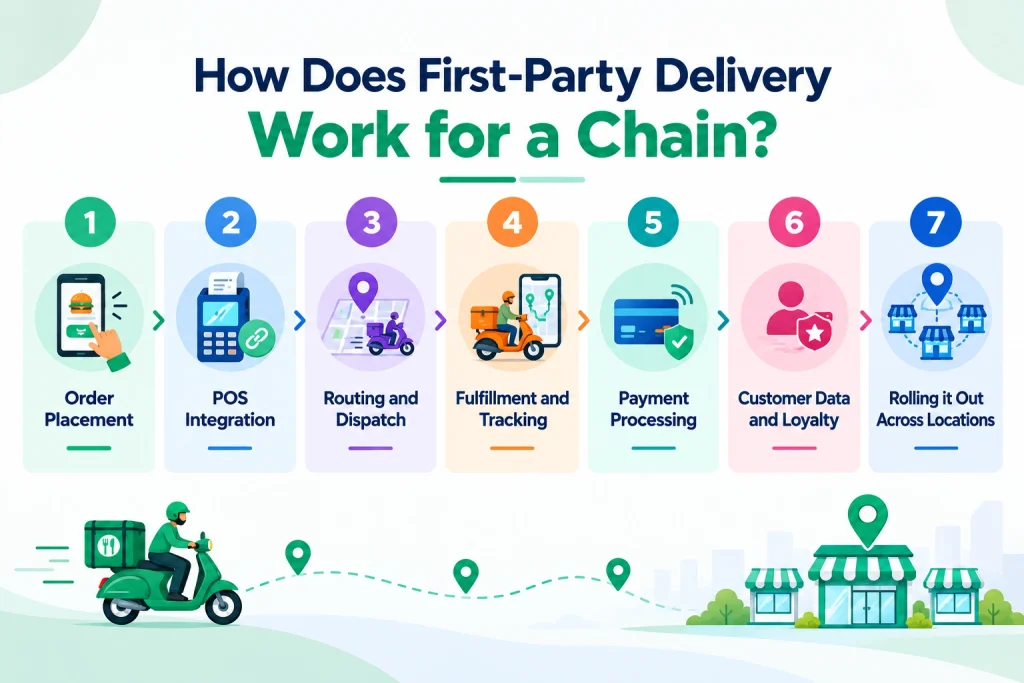
How Does First-Party Delivery Work for a Chain?
First-party delivery for a chain is more than just having your own ordering app. It is a complete system that the brand controls, from the moment a customer places an order to the moment it is delivered.
1. Order Placement
Customers order through the chain’s own website or branded app instead of a marketplace. The chain controls the entire ordering experience, including the menu, prices, promotions, and checkout.
2. POS Integration
The order goes directly to the store’s point-of-sale (POS) system. This helps keep menus, prices, and item availability updated across locations. For a franchise chain, having the same POS setup across stores makes this process easier to manage.
3. Routing and Dispatch
Once an order reaches the POS, it is sent to the kitchen for preparation and assigned for delivery. The chain can use its own drivers, contracted drivers, or a white-label delivery network.
The main difference is that the chain controls how orders are assigned and dispatched, instead of leaving that decision to a third-party marketplace.
4. Fulfillment and Tracking
Customers can track their orders through the chain’s own app or website, similar to the Domino’s Tracker. The chain also controls delivery times, delivery areas, and how drivers represent the brand.
5. Payment Processing
Payments are processed through the chain’s own payment provider instead of a marketplace. The business still pays payment processing fees, but these are usually much lower than the 15%-30%+ commissions charged by delivery marketplaces.
6. Customer Data and Loyalty
Every direct order gives the chain useful customer data, such as:
- Email addresses
- Order history
- Favorite items
- Ordering frequency
This information can connect to the chain’s loyalty program and CRM, helping it send relevant offers and encourage repeat orders.
7. Rolling it Out Across Locations
For a multi-location chain, the system needs to work consistently across corporate and franchise stores. This can be one of the biggest challenges.
Every location needs to follow the same POS, ordering, and delivery processes so customers get a similar experience whether they order from store #12 or store #412.
Steps to Implement First-Party Delivery
Moving to first-party delivery doesn’t happen overnight. For a chain, it’s better to start small, test the system, and expand once you know what works.
Below are some steps to help you implement first-party delivery.
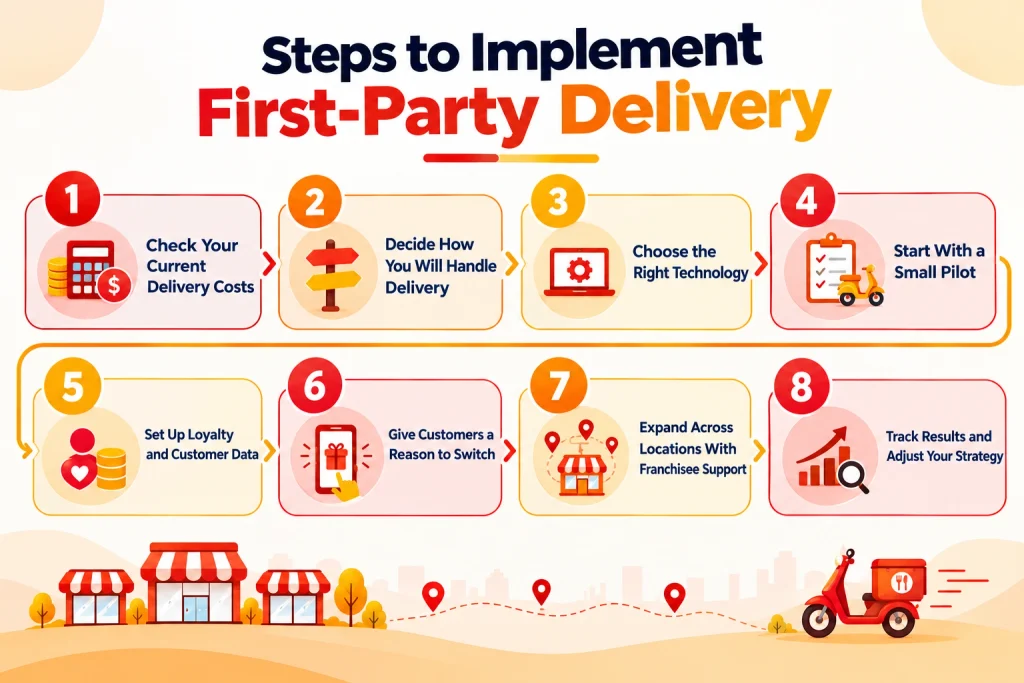
1. Check Your Current Delivery Costs
Before building or buying anything, find out how much each delivery order really costs you on every channel. Don’t look only at the marketplace commission. Include payment fees, discounts, promotions, and any other costs.
This gives you a starting point for measuring your savings later and makes it easier to show franchisees why the change is worth it.
2. Decide How You Will Handle Delivery
Choose how orders will reach customers. You can use:
- Your own drivers
- Contracted drivers managed by your team
- A white-label courier network
- A combination of these options
Make this decision early because it will affect your technology, staffing, and daily operations.
3. Choose the Right Technology
Select an ordering platform that includes your branded app and website and can connect with your POS systems.
For a chain, POS compatibility should come before fancy app features. A great-looking app won’t help if menus don’t update correctly or orders don’t reach the right store.
4. Start With a Small Pilot
Don’t launch across every location at once. Start with a few corporate-owned stores or franchise locations that are ready to adopt the new system. Use the pilot to find technical problems, test delivery operations, and collect real results before expanding.
5. Set Up Loyalty and Customer Data
Build your loyalty program and CRM along with your ordering platform. The main benefit of first-party delivery is that you can build a direct relationship with customers and collect useful first-party data. Waiting until later can mean missing valuable customer information from your early orders.
6. Give Customers a Reason to Switch
Simply launching your own app won’t convince everyone to leave marketplaces.
Offer clear incentives such as:
- App-only discounts
- Bonus loyalty points
- Free or lower-cost delivery
- Early access to new products
- Exclusive deals
Give customers a reason to place their next order directly with you.
7. Expand Across Locations With Franchisee Support
Once the pilot works, start rolling it out to more locations. Give franchisees the support they need, including training, POS setup, documentation, and onboarding help. Share the results from the pilot so franchisees can see the actual benefits and potential ROI.
8. Track Results and Adjust Your Strategy
First-party delivery isn’t a “set it and forget it” strategy.
Track things like:
- Delivery costs and margins by location
- Orders from each channel
- Direct vs. marketplace orders
- Customer migration to your app
- Repeat order rates
- Delivery performance
Use these results to decide where you should stay with a hybrid model, increase first-party orders, or continue using marketplaces for customer acquisition.
Features to Look for in First-Party Delivery Software
Choosing first-party delivery software for a multi-location chain is about more than having a branded app. The system should make it easy to manage orders, stores, drivers, customers, and payments from one place.
Here are some features to look for:
1. Ordering and Customer Experience
- Branded app and website: Customers should be able to order through an app and website that look and feel like your brand.
- Location-based menus: Each location should be able to manage its own prices, menu items, availability, and promotions when needed.
- Real-time item availability: If a store runs out of an item, the menu should update quickly so customers don’t order something that isn’t available.
- Multiple order options: Customers should be able to choose delivery, pickup, curbside pickup, or catering from the same platform.
2. POS and System Integration
- Real-time POS integration: Orders should go directly to the store’s POS system without delays or manual entry.
- Support for different POS systems: This is important for franchises where different locations may use different POS providers.
- API access: The platform should be able to connect with other systems, including accounting, inventory, and kitchen display systems.
3. Delivery and Driver Management
- Flexible delivery options: The system should support your own drivers, contracted drivers, or courier partners. You should also be able to use different options in different markets.
- Delivery zones: Your business should control where it delivers and set different delivery areas for different locations.
- Live driver tracking: Customers should be able to track their orders and see an estimated delivery time.
- Delivery performance reports: Managers should be able to check delivery times, delays, and service quality for each location.
4. Customer Data, Loyalty, and Marketing
- Customer data ownership: The chain should have access to customer information such as contact details, order history, and preferences.
- Loyalty and rewards: The platform should have a built-in loyalty system or integrate with the one your business already uses.
- Customer segmentation: Use customer data to create targeted offers, such as birthday discounts, win-back campaigns, or rewards for frequent customers.
- Marketing integration: Customer data should be usable with your email, SMS, and retargeting campaigns without depending on a marketplace.
5. Franchise and Multi-Location Management
This is one of the most important areas for a chain.
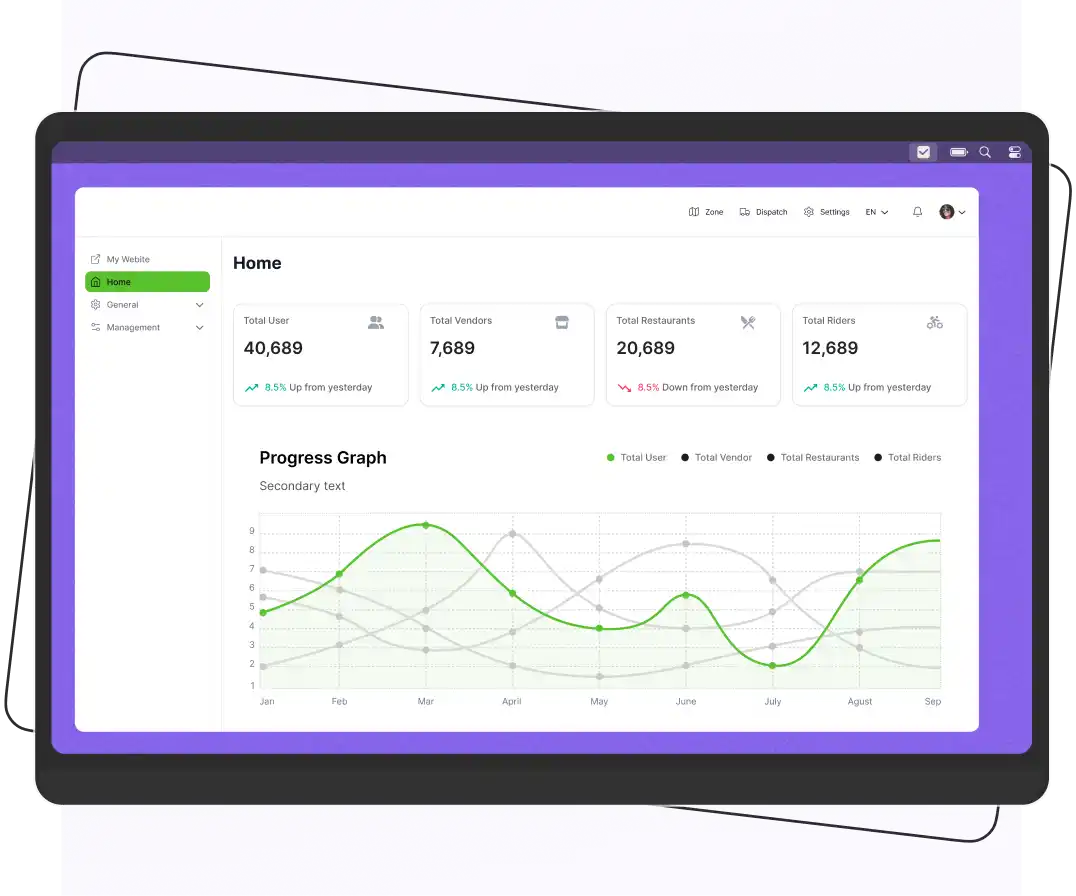
- Centralized dashboard: Corporate teams should be able to monitor orders, sales, customers, and delivery performance across all locations.
- Centralized menu controls: Corporate can manage menus and prices while allowing individual stores to make approved local changes.
- Store-level reporting: Franchisees should be able to see their order volume, delivery costs, fees, and margins.
- Easy store onboarding: New locations should be easy to add without rebuilding or configuring the system from scratch.
6. Pricing and Cost Structure
One of the main reasons chains consider first-party delivery is to reduce marketplace commissions. So, pay close attention to how the software charges.
- Fixed or per-location pricing: A flat subscription or location-based fee can make costs easier to predict.
- Clear payment fees: Payment processing costs should be clearly explained instead of hidden in the pricing.
- No surprise fees: Check for additional charges, required markups, or mandatory promotional spending before signing up.
7. Reliability and Support
Your ordering system needs to work when customers are ready to order.
- Strong uptime and SLA: An outage can mean lost orders, so reliability is especially important for large chains.
- Dedicated support: Look for proper onboarding and support during the rollout, especially when adding many locations.
- Scalable infrastructure: The system should be able to handle higher order volumes as the chain grows.
Common Challenges of First-Party Delivery for Chains
First-party delivery can help chains reduce marketplace commissions, but it also comes with new challenges. These challenges become more noticeable when a business has many locations and franchisees.
Let’s discuss them.
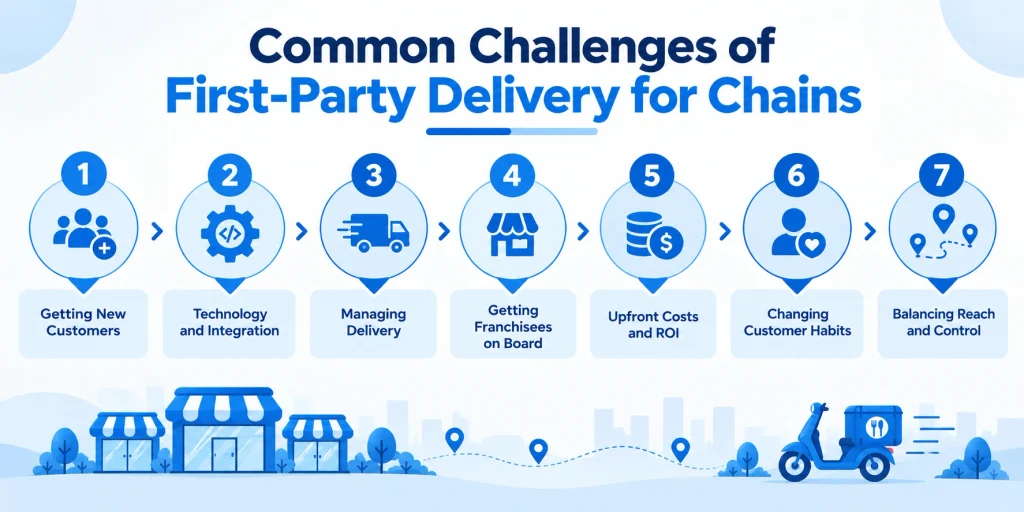
1. Getting New Customers
Marketplaces already have thousands or millions of customers searching for food and other products. A branded app doesn’t have that audience built in.
The chain has to spend its own money on ads, social media, loyalty programs, and other marketing to get customers to download the app and place their first order.
First-party delivery can work very well for repeat customers, but getting new customers can be harder.
2. Technology and Integration
Running your own ordering system requires more than launching an app.
The system needs to connect with the POS, keep menus and prices updated, and make sure orders reach the right store. This can become difficult when different franchise locations use different POS systems.
There are also ongoing costs for app updates, bug fixes, POS changes, security, and maintenance.
Another concern is downtime. If a marketplace has a technical issue, customers may still have other ways to order. If your own ordering system goes down, you may lose direct orders until it is fixed.
3. Managing Delivery
First-party delivery also means taking more responsibility for getting orders to customers.
If you use your own drivers or work with delivery partners, you still need to manage:
- Driver availability
- Routing
- Delivery areas
- Insurance
- Performance
What works for one location may not work for another. A busy city store may have plenty of drivers and short delivery distances. A suburban or rural location may have fewer orders and longer routes.
Keeping delivery times and service quality consistent across hundreds of locations can also be difficult.
4. Getting Franchisees on Board
The corporate team may choose the first-party platform, but franchisees often have to deal with the cost and operational changes at their stores.
Getting every franchisee to agree can take time.
If some stores use first-party ordering while others continue relying heavily on marketplaces, the customer experience becomes inconsistent. It can also make it harder for the chain to build a single customer database and loyalty program.
5. Upfront Costs and ROI
First-party delivery requires an initial investment. The chain may need to pay for:
- Software
- App development
- POS integrations
- Delivery management
- Other technology
The savings from lower marketplace commissions also don’t appear all at once. They build over time as more customers move from third-party platforms to the chain’s own ordering channels.
6. Changing Customer Habits
Getting customers to change how they order isn’t easy.
Someone who already uses DoorDash or Uber Eats may prefer it because their payment details are saved, they have rewards, or they’re simply used to the app.
Building your own food app doesn’t automatically make customers switch. Chains may need to offer incentives such as exclusive deals, loyalty points, or app-only products to encourage direct ordering.
7. Balancing Reach and Control
Going completely first-party can also mean giving up some of the visibility that marketplaces provide.
Marketplaces can help customers discover your brand, especially in competitive markets. If you leave them completely, nearby competitors that remain on those platforms may get those orders instead.
That’s why many chains choose a hybrid approach using marketplaces to reach new customers and encouraging existing customers to order directly.
FAQs
It can be, especially for chains with high order volumes. First-party delivery has technology and delivery costs, but it can reduce the commissions paid to third-party marketplaces.
Yes. Many chains use a hybrid approach. Marketplaces help attract new customers; first-party ordering helps build loyalty and increase repeat orders.
A chain needs:
A branded website or app
POS integration
Order management
Delivery dispatch
Driver tracking
Payment processing
Customer data
Loyalty tools
Chains can offer app-only deals, loyalty points, lower delivery fees, exclusive products, or other rewards to give customers a reason to order directly.
Supercharge your deliveries with Enatega.
Launch NowConclusion
First-party delivery isn't about leaving marketplaces behind. It's about using each channel where it works best.
Marketplaces can help bring in new customers, while your own app and website help you build loyalty, own customer data, and keep more value from repeat orders.
The good news is that chains no longer need to build everything from scratch. Platforms like Enatega offer ready-made customer, restaurant, rider, and admin apps with multi-location support, source code ownership, real-time tracking, and white-label customization.
Use marketplaces to reach customers. Use first-party delivery to keep them.
About the author

Hudaibia Khalid is a senior content writer with several years of experience in creating clear and easy-to-understand content. Over the years, she has worked closely with startups, restaurants, and entrepreneurs, helping them simplify complex digital and technical topics into actionable insights.
Her expertise lies in writing about on-demand platforms, food delivery solutions, and business growth strategies in a way that is accessible even to non-technical readers. With her experience in the industry, she focuses on guiding businesses step by step, from understanding ideas to turning them into fully working solutions.
SHARE






 IOS
 Android
 Web