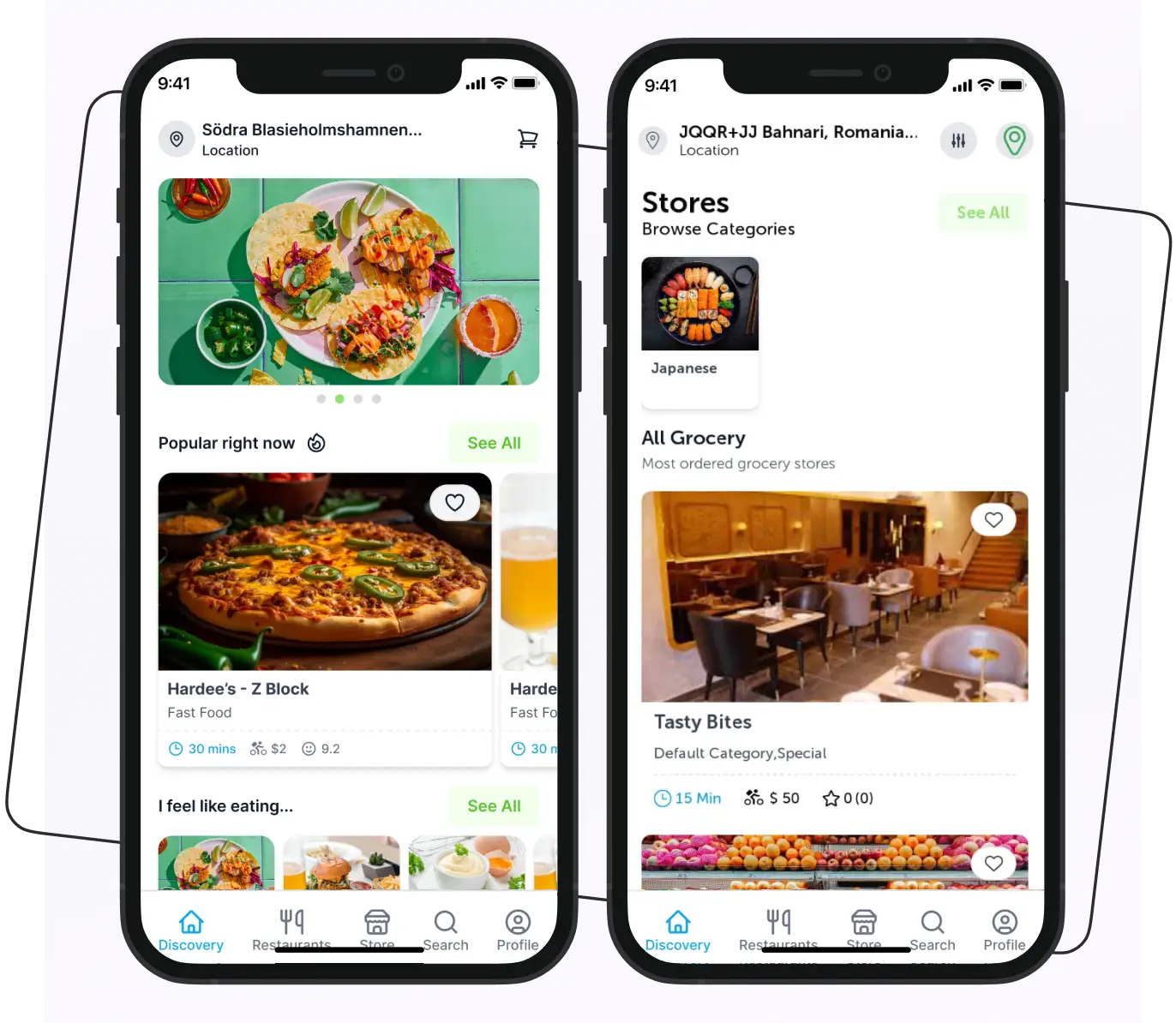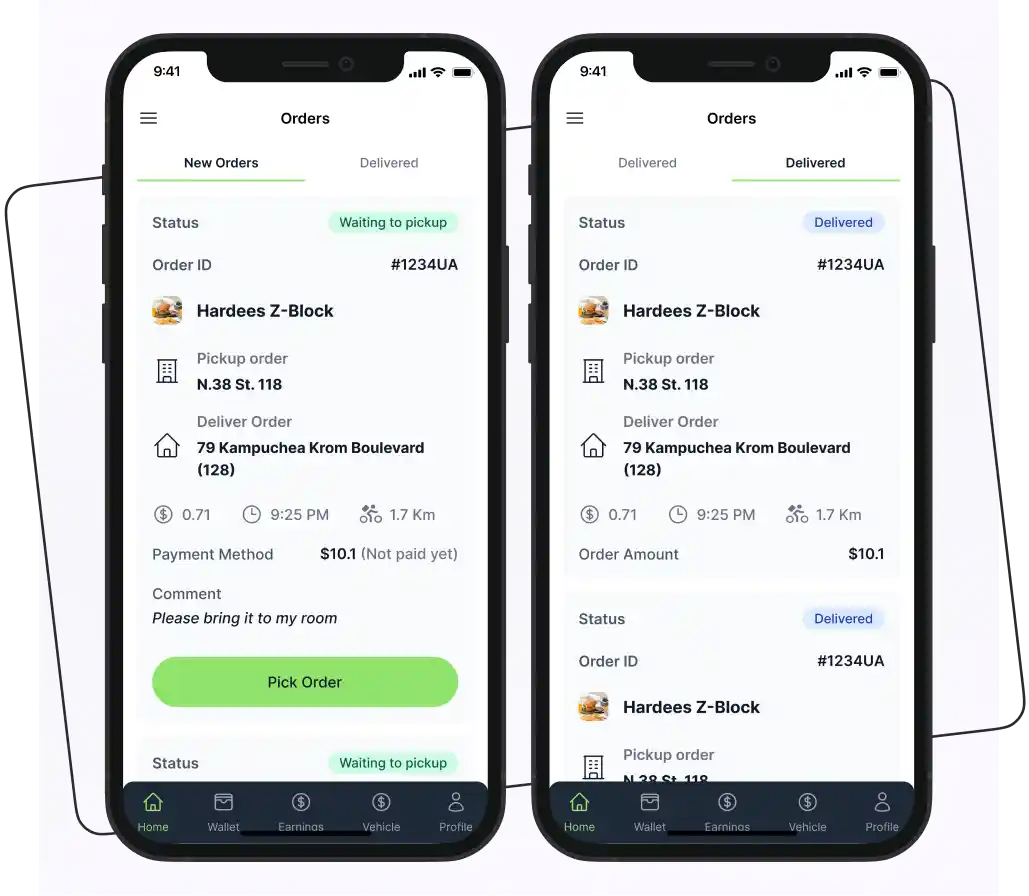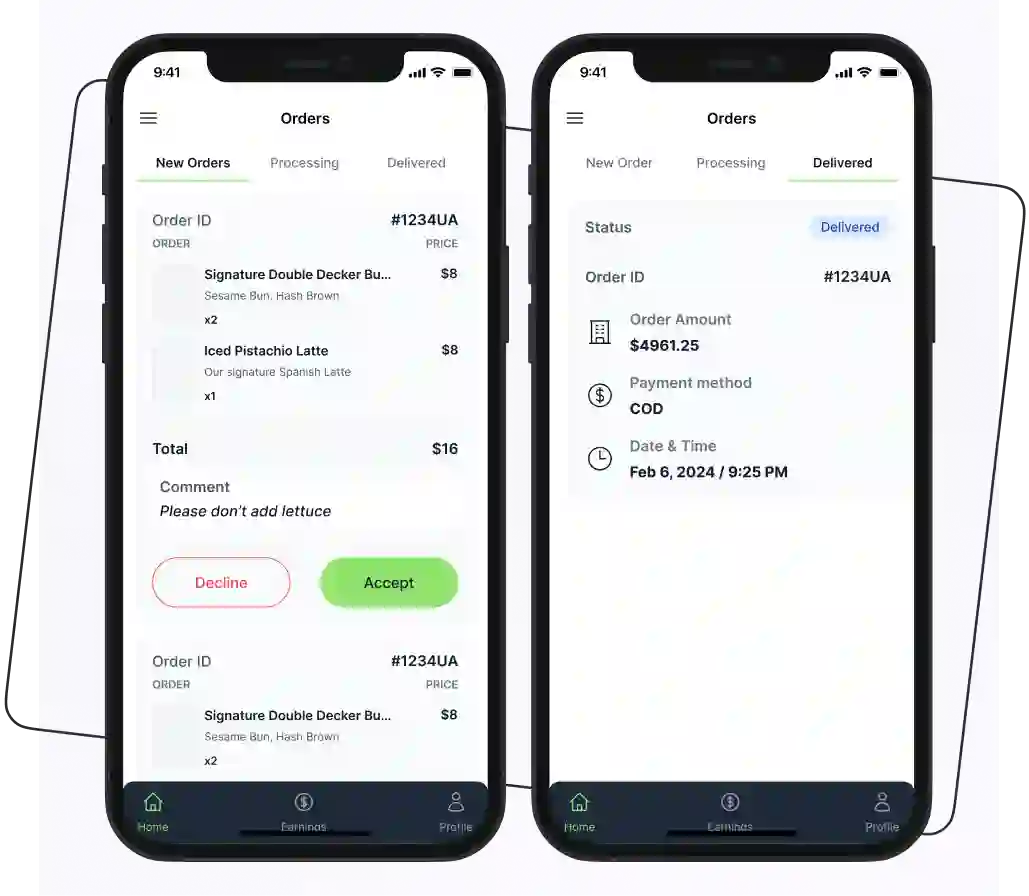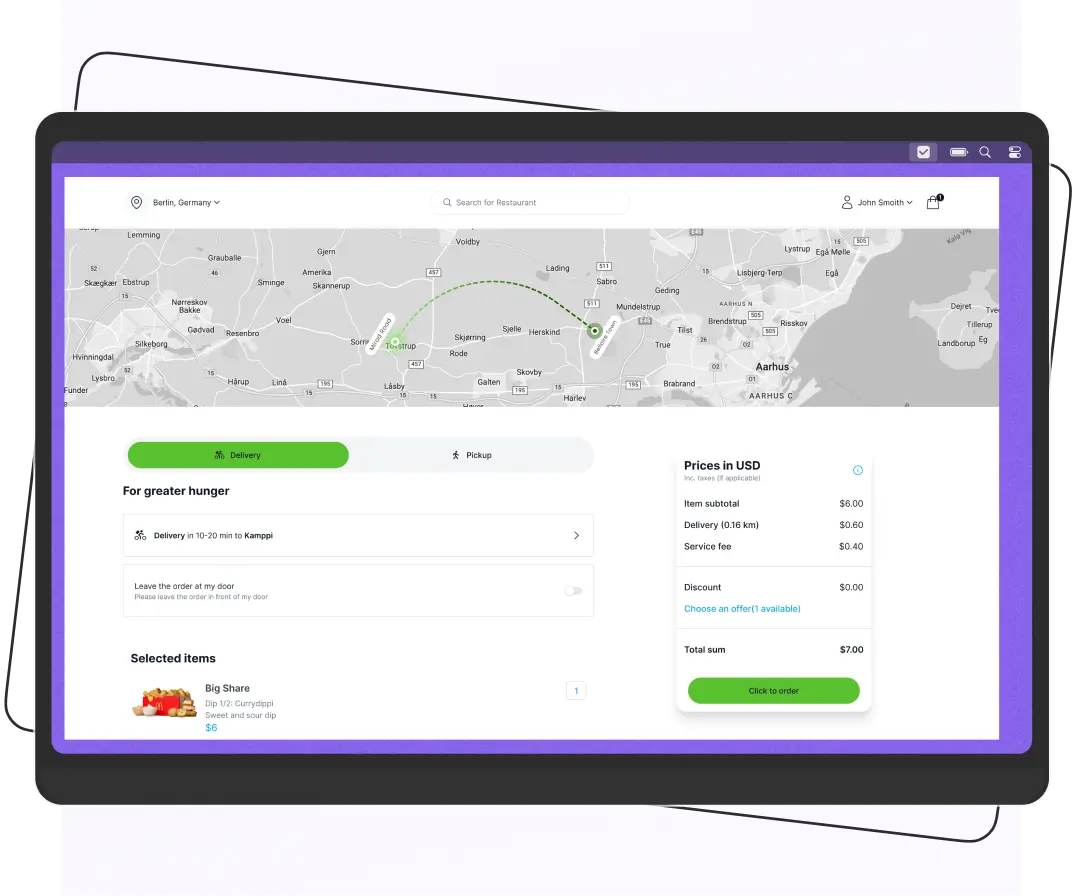


The white-label delivery platform features that matter most are:
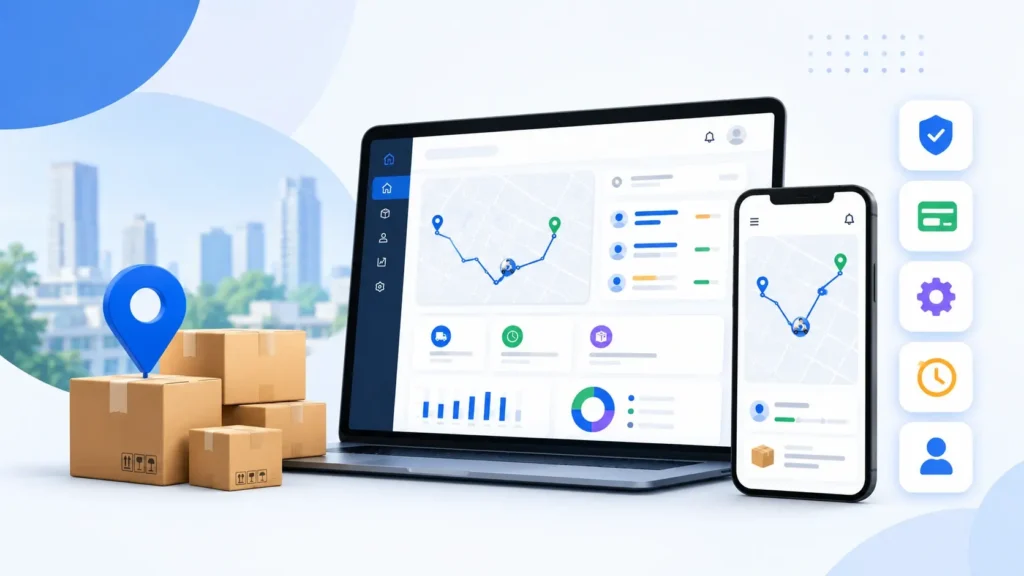
Real-time GPS tracking
AI-based dispatch and route optimization
True multi-tenant branding
Flexible payment and payout tools
A driver app with offline resilience
POS/eCommerce integrations
Proof of delivery
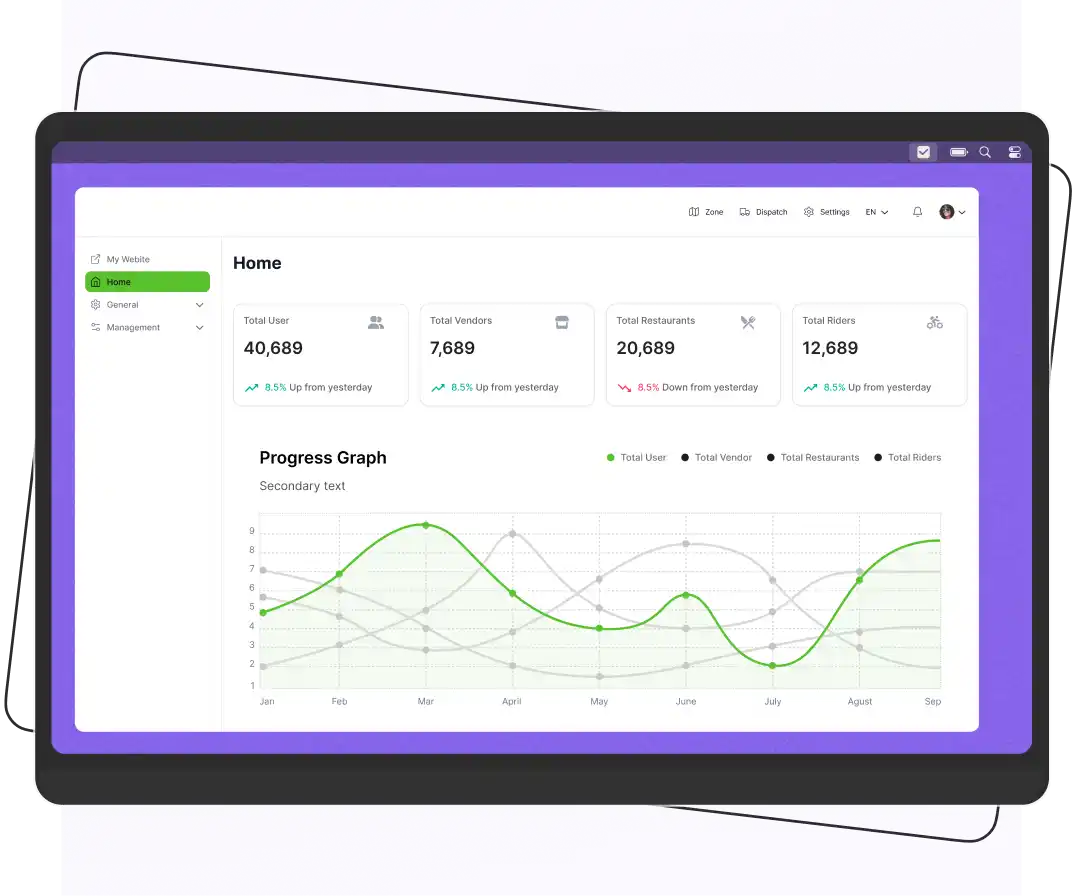
Live analytics dashboards
Multi-city/zone management
Enterprise-grade security and uptime
If you’re evaluating white-label delivery software for food, grocery, pharmacy, courier, or on-demand services, the list of “features” on most vendor pages looks identical.
The real difference comes down to how well those features work in real-world operations. A platform may look impressive on paper but still become difficult to manage as orders, vendors, drivers, and customers grow.
So, we’ll cover 10 white-label delivery platform features that deserve the most attention, explain what to look for in each one, and the questions to ask before you sign a contract.
Supercharge your deliveries with Enatega.
Register NowWhite-Label Delivery Platform Features to Prioritize
Not all delivery platform features are created equal. Here’s what to look for in the features that matter most for long-term growth.
1. Real Multi-Tenant White Labeling (Not Just a Logo Swap)
Most platforms let you upload a logo and pick a color scheme. That’s cosmetic branding, not true white labeling. Prioritize a platform where your brand is present in every customer touchpoint:
- Customer app and web ordering page
- Driver-facing tracking link and SMS updates
- Email and push notification templates
- Invoices, receipts, and payout statements
- App Store listing with your business name instead of the vendor’s
Why is it necessary: If a customer still sees “Powered by [Vendor Name]” on the tracking page or in delivery messages, you’re promoting someone else’s brand instead of building your own.
2. AI-Based Dispatch and Route Optimization

Manual dispatching can quickly become difficult as your order volume and driver network grow. Look for a platform with automated dispatch and route optimization that considers:
- Driver proximity and current workload
- Driver acceptance rate and reliability
- Real-time traffic conditions
- Merchant preparation time and order priority
- Multi-drop batching for efficient deliveries
Route optimization can reduce fuel costs, late deliveries, and the need for additional dispatch staff. As your delivery volume increases, these savings can make this one of the highest-ROI features in your platform.
3. Live, Two-Way Order Tracking
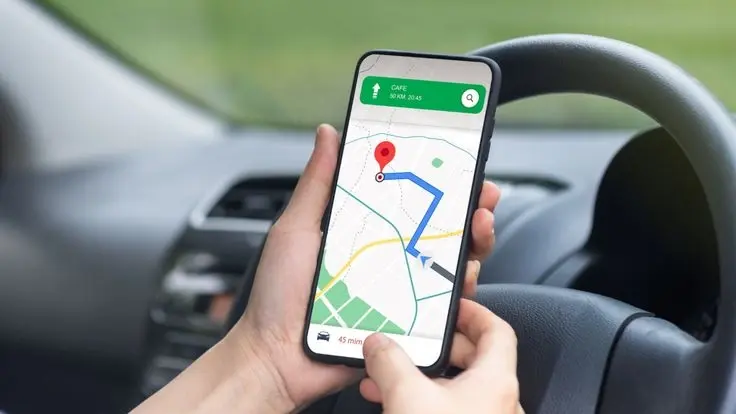
Customers now expect to see their orders in real time, similar to the experience offered by major delivery apps. A strong white-label platform should provide:
- Live map-based tracking with accurate ETAs, rather than basic order status updates
- Automated SMS, push, and email notifications at each stage, from order confirmation to delivery
- Shareable tracking links that customers can use without downloading an app
Real-time tracking gives customers greater visibility and confidence in their orders. It can also reduce “Where is my order?” support tickets and improve the customer experience.
4. Flexible, Multi-Method Payments and Payouts
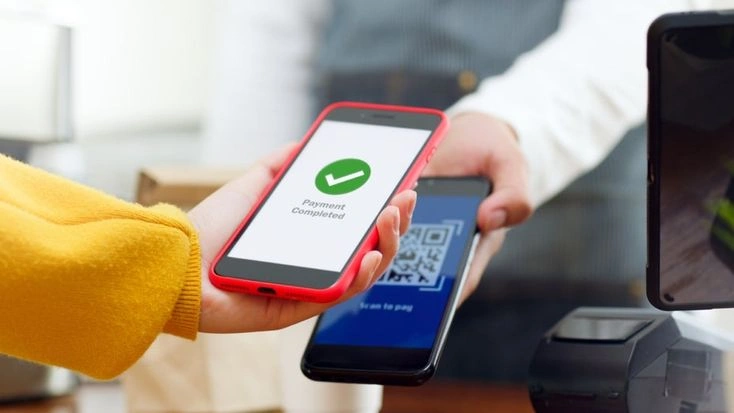
A complicated or limited payment process can cause customers to abandon their orders at checkout. Choose a platform that supports a range of payment and payout options, including:
- Cards, digital wallets, and cash on delivery
- In-app customer wallets, cashback, and refunds
- Automated driver earnings and scheduled payouts
- Merchant settlements and commission tracking, especially for multi-vendor marketplaces
For agencies managing multiple client brands, automated, auditable payouts save hours of manual reconciliation every week.
5. A Reliable, Driver-First Mobile App

Your drivers are a main part of the customer experience, so their app needs to be simple, reliable, and easy to use. A strong driver app should include:
- Simple order acceptance and turn-by-turn navigation
- Offline mode or low-connectivity support, especially for suburban and rural delivery areas
- Transparent earnings, tips, and incentive tracking
- Batch and multi-order support for more efficient deliveries
A clunky driver app doesn’t just frustrate couriers; it shows up as late deliveries and bad reviews on your storefront.
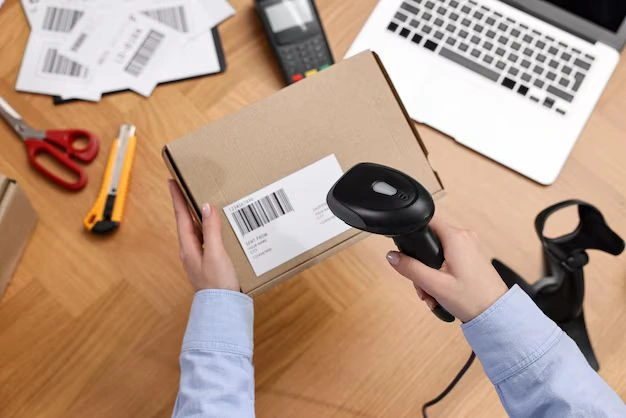
6. Proof of Delivery (POD)

Disputes over “I never received my order” are one of the most common and costly support issues in delivery operations.
A reliable white-label delivery platform should offer strong proof-of-delivery features, including:
- Photo capture at drop-off
- E-signature capture
- GPS-stamped delivery confirmation
- Optional PIN/OTP verification for high-value or age-restricted orders
Strong POD tooling reduces chargebacks, refund fraud, and support overhead simultaneously.
Strong proof-of-delivery tools provide clear evidence that an order was completed successfully. They can help reduce chargebacks, refund fraud, and the amount of time your support team spends handling delivery disputes.
7. Native POS and eCommerce Integrations
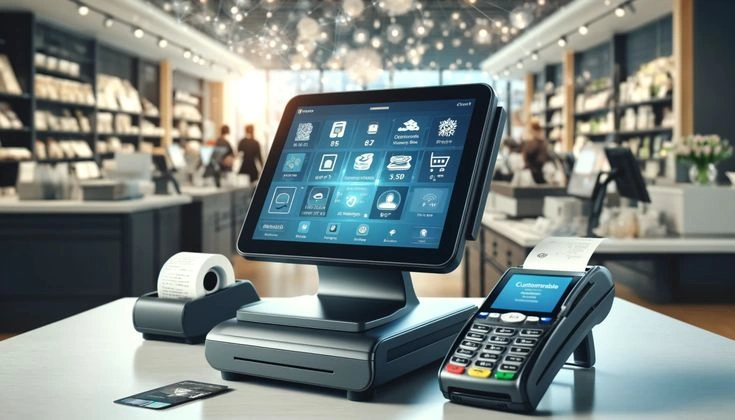
A delivery platform that operates separately from your existing systems can create double data entry and inventory mismatches. Prioritize a platform that offers native or API-based integrations with:
- Point-of-sale (POS) systems for real-time order synchronization and inventory updates
- eCommerce platforms, such as Shopify and WooCommerce, for online sales
- Accounting and inventory management tools to streamline financial and stock management
This is especially important for multi-location restaurant groups, grocery chains, and pharmacies, where inventory accuracy directly affects fulfillment.
8. Multi-City, Multi-Zone Operations Management

If you plan to expand beyond a single location, choose a platform that can support multiple cities and delivery zones from the start. Look for features such as:
- City- and zone-specific pricing and delivery fees
- Localized promotions and commission structures
- Zone-based driver pools and coverage maps
- Per-region reporting and performance tracking
Adding multi-city functionality to a platform designed for a single location can be expensive and disruptive. Choosing a platform with these capabilities from the beginning gives you room to scale without having to replace or rebuild your delivery system later.
9. Real-Time Analytics and Reporting Dashboards

Data is only valuable when you can use it to make better decisions. A strong analytics and reporting dashboard should give you real-time visibility into:
- Delivery times, on-time rates, and driver performance
- Order trends, peak hours, and customer repeat rates
- Revenue, commission, and payout summaries
- Cancellation and refund reasons
The businesses that scale fastest use this data to identify problems and optimize performance rather than simply reviewing reports after the fact.
10. Enterprise-Grade Security, Compliance, and Uptime

This is the feature that’s invisible until something goes wrong. Prioritize platforms that offer:
- End-to-end encryption for payment and customer data
- Compliance with relevant data protection standards, such as PCI DSS for payments and GDPR/CCPA where applicable
- Documented uptime guarantees (SLA) and disaster recovery measures
- Role-based access controls for admin, merchant, and driver accounts
Before choosing a vendor, ask for its uptime history and relevant security certifications. Clear documentation is far more valuable than vague promises about security and reliability.
White-Label Delivery Platform Feature Checklist: Must-Haves vs. Red Flags
Check the table below to see which features are essential for long-term growth and the red flags to watch for when evaluating a white-label delivery platform.
| Feature | Why It’s Non-Negotiable | Red Flag to Watch For |
| True multi-tenant branding | Builds your brand equity, not the vendor’s | Vendor logo/name still visible anywhere in the customer journey |
| AI dispatch and route optimization | Cuts cost per delivery as you scale | Manual-only dispatch tools |
| Live order tracking | Reduces support tickets, builds trust | Status text only, no live map |
| Flexible payments and payouts | Reduces checkout drop-off and admin work | Limited to one payment method |
| Driver app reliability | Lower driver churn, fewer late deliveries | No offline mode, clunky UX |
| Proof of delivery | Cuts disputes and chargebacks | No photo/signature capture |
| POS/eCommerce integration | Prevents inventory and data mismatches | “Coming soon” integrations |
| Multi-city/zone management | Avoids a costly re-platform later | Single-location architecture only |
| Analytics dashboards | Enables continuous operational improvement | Static, non-exportable reports |
| Security and compliance | Protects the business from breaches and fines | No documented SLA or certifications |
How to Evaluate a White-Label Delivery Platform
Choosing the right platform requires more than reviewing a feature list. Use these steps to evaluate vendors and make sure the platform can support your business as it grows:
- Ask for a live demo of each feature, rather than relying on a slide deck. Pay particular attention to dispatch logic and the driver app.
- Request uptime and security documentation in writing before signing a contract.
- Check the depth of integrations, not just whether an integration exists. For example, “we integrate with Shopify” could mean anything from a full native sync to a basic CSV export.
- Talk to a current customer at a similar scale to see how the platform performs with real order volumes, rather than relying only on a sales demo.
- Confirm exactly what “white label” includes and ask for a clear list of where your brand will and won’t appear across the platform.
Case Study: How Borku Used These Features to Launch and Scale
Borku is a multi-vendor food delivery app built on the Enatega platform. It was created to showcase the variety of African cuisine while focusing on user engagement and smooth operations.
It is a useful example because it shows how several of the features discussed above work together in practice, rather than simply appearing on a feature list.
Multi-vendor Branding
Instead of launching as a single-restaurant app, Borku used Enatega’s multi-vendor architecture to onboard multiple African restaurants and food vendors under one marketplace. This directly reflects feature #1 (true multi-tenant branding) and feature #8 (multi-city/zone-ready operations) from the list above.
Ownership Over Rented Infrastructure
Instead of paying an ongoing subscription or a fee on every order, Enatega provides the complete codebase, including admin, customer, rider, and store apps as a one-time purchase, with no license restrictions or feature gating.
As a result, Borku saved $100,000 in commissions in its first year that would otherwise have gone to a third-party aggregator or recurring SaaS fees.
This shows the value of prioritizing feature #4 (flexible payments and payouts) and considering the total cost of ownership from the beginning.
Built to Scale Without Changing Platforms
Enatega provides the full source code; businesses can customize features, UI, and workflows based on their needs. The same platform also supports food delivery, grocery, ride-sharing, or a combined “super app” without having to build everything again from scratch.
This directly connects to feature #8 on this list and helps businesses avoid the costly re-platforming that can happen when they start with software designed for a single location and later need to expand.
The Broader Pattern Across Enatega’s Customer Base
Borku is not an isolated example. Other businesses built on Enatega’s platform have also grown quickly after launch.
For example, Snap Delivered onboarded more than 100 stores, showing that multi-vendor scalability (feature #8) is more than just a checkbox. It can directly support vendor growth.
FAQs
A white-label delivery platform is ready-built software. Businesses can rebrand it as their own to manage online ordering, tracking, and delivery without building custom logistics software from scratch.
Yes, white-label platforms are faster to launch and far more cost-effective. Custom-built software usually makes financial sense only for businesses with very high delivery volumes and highly specific operational needs that existing platforms cannot support.
A ready-made white-label delivery platform costs $49 to $500+ per month on a subscription basis, or a $1,500 to $10,000 one-time fee for a lifetime software license.
However, pricing varies widely by provider and depends on order volume, number of driver/merchant accounts, and which features are included in your plan.
Supercharge your deliveries with Enatega.
Register NowConclusion
Choosing a white-label delivery platform isn’t about finding the vendor with the longest feature list. It’s about choosing a platform that can handle your operations today and continue to support your growth tomorrow.
Before making a decision, test the features, ask the right questions, and look beyond the sales pitch. The best platform isn’t the one with 50 features; it’s the one that executes the features your business depends on consistently.
About the author

Hudaibia Khalid is a senior content writer with several years of experience in creating clear and easy-to-understand content. Over the years, she has worked closely with startups, restaurants, and entrepreneurs, helping them simplify complex digital and technical topics into actionable insights.
Her expertise lies in writing about on-demand platforms, food delivery solutions, and business growth strategies in a way that is accessible even to non-technical readers. With her experience in the industry, she focuses on guiding businesses step by step, from understanding ideas to turning them into fully working solutions.
SHARE






 IOS
IOS Android
 Web
Web