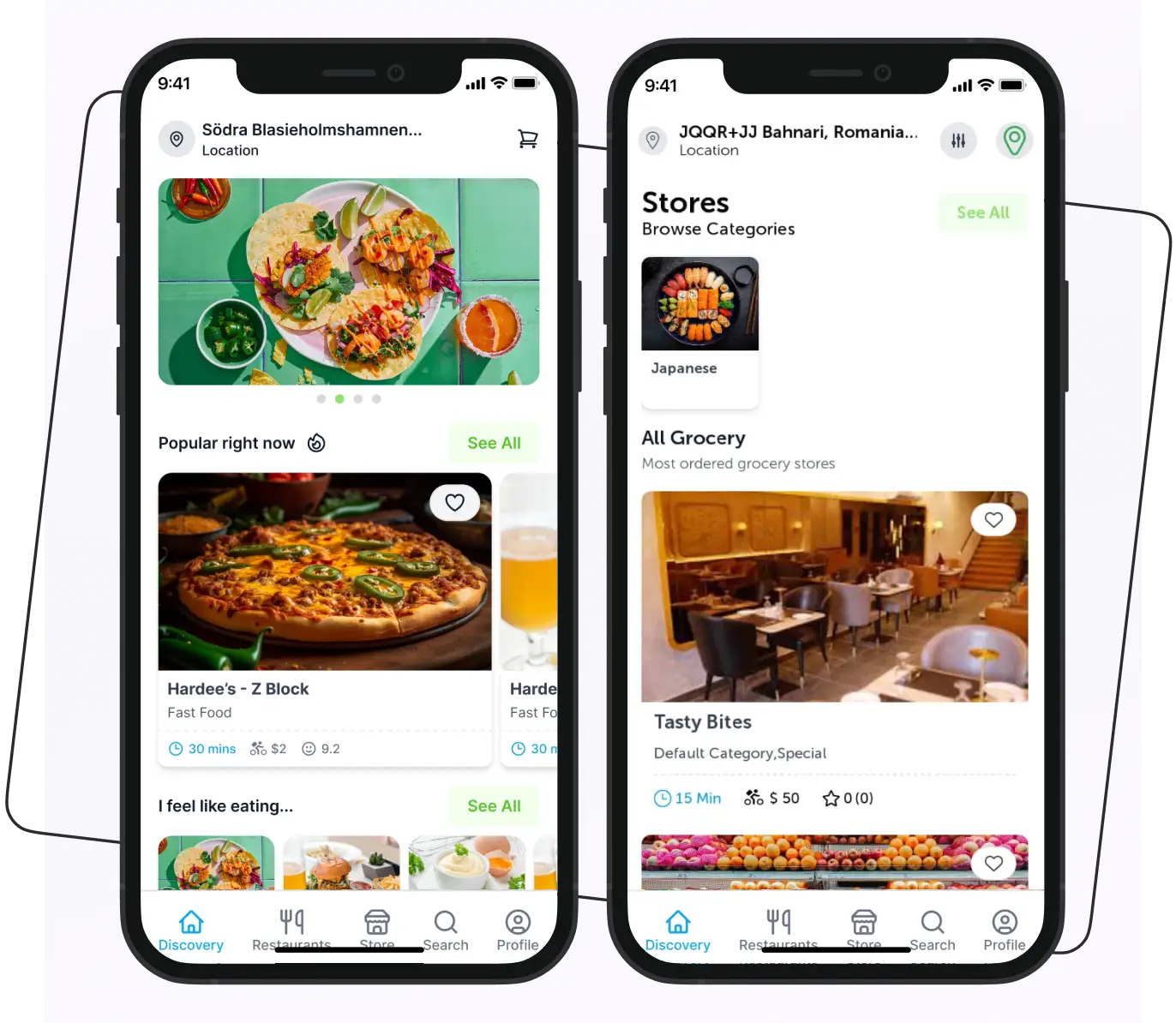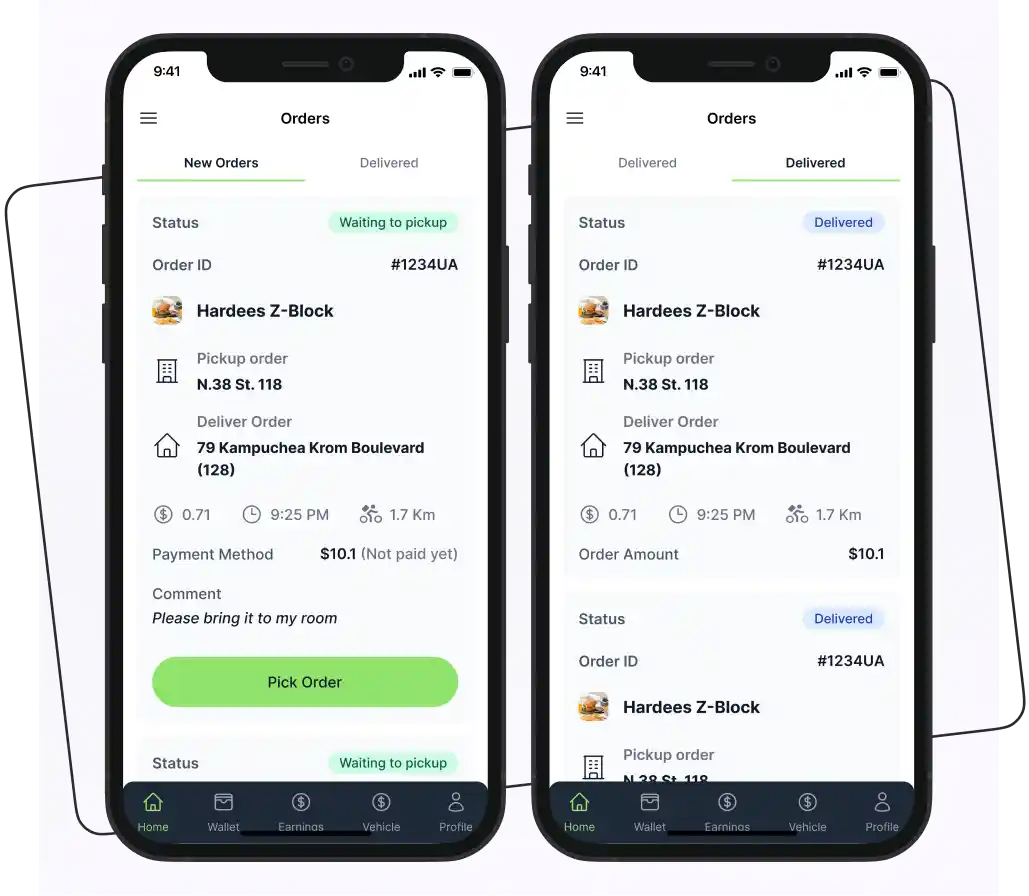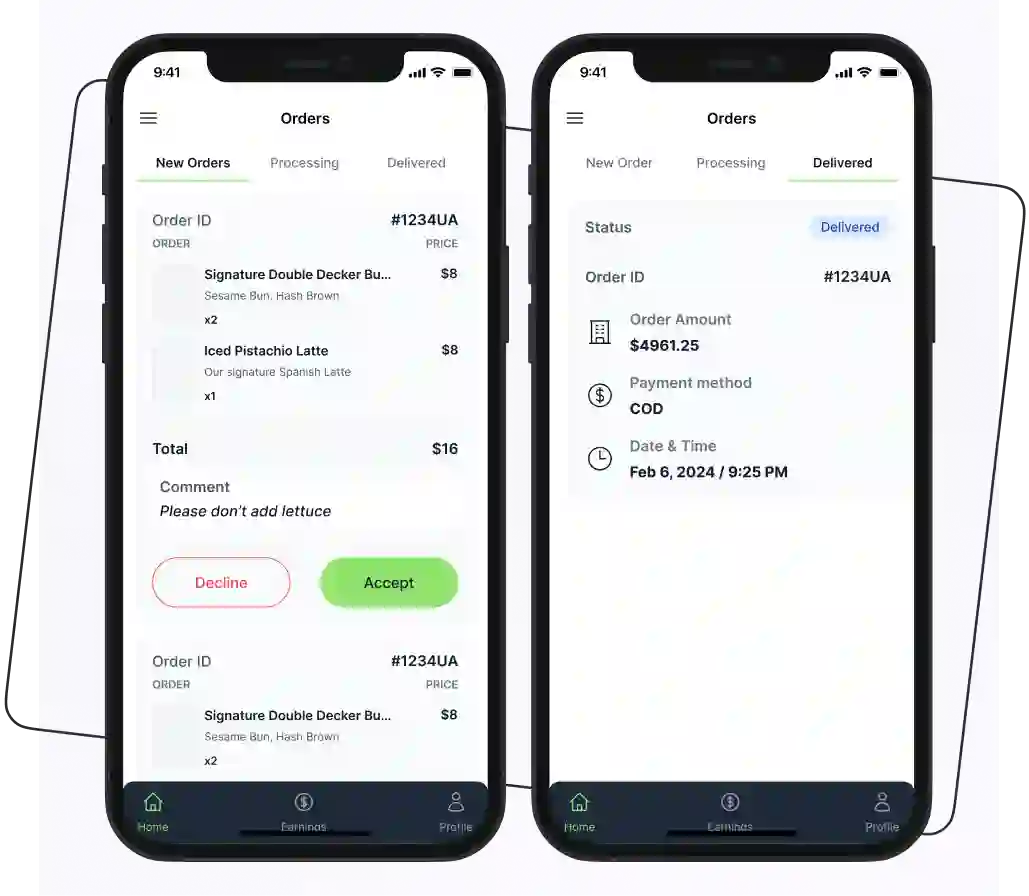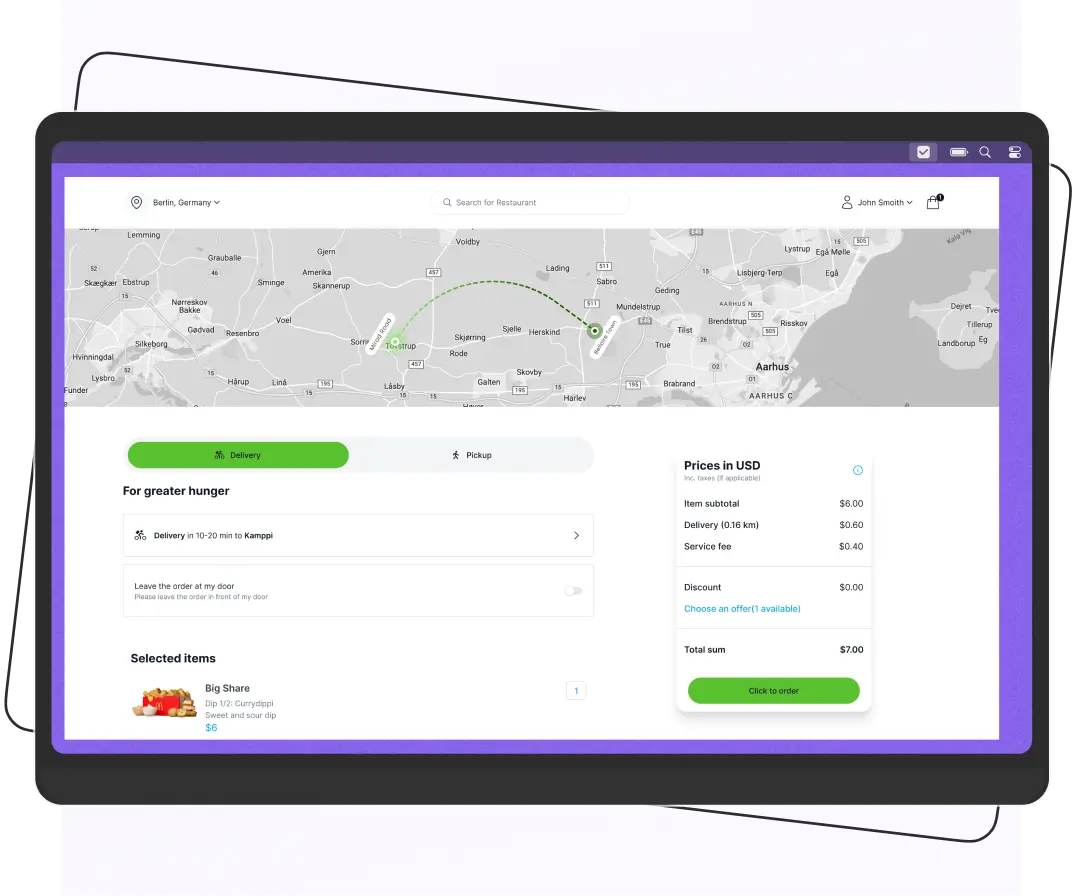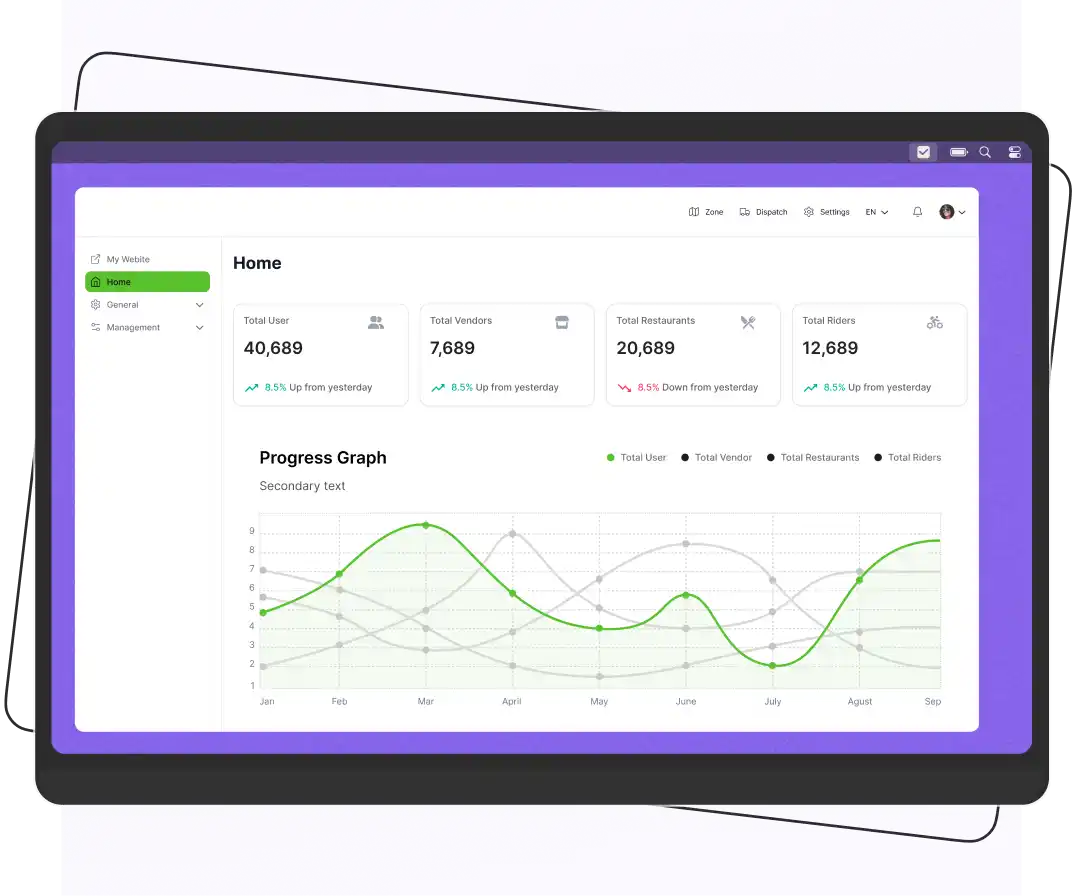


A Foodora clone app is a ready-made food delivery platform that helps entrepreneurs launch a business similar to Foodora. It lets business owners launch an on-demand food or grocery delivery service quickly without writing code from scratch. It can include customer, restaurant, and rider apps.
Want to start your own food delivery business like Foodora? The food delivery industry is growing, and over 3 billion consumers are ordering online, according to Statista. Now is the perfect time to launch your platform without spending a lot of money.
If you’re an entrepreneur looking to enter this thriving market, building your food delivery platform can be a time-consuming and costly process. However, a Foodora clone script offers a cost-effective and time-saving solution.
In this blog post, we’ll explore what Foodora clone software is and how it can help you launch your own food delivery business.
Key Takeaways
- Foodora Clone Script: A cost-effective and time-saving solution to launch a food delivery business without building an app from scratch.
- Business Model: Replicates the successful Foodora platform with customization options to match brand identity.
- Benefits: Offers scalability, seamless user experience, and multiple monetization opportunities.
- Challenges: Finding the right audience, restaurant partnerships, and defining business goals.
- Essential Features: Real-time tracking, multiple payment methods, a user-friendly interface, and order customization.
- Development Process: Conduct market research, select a business model, and integrate key features for a competitive edge.
What is Foodora?
Foodora is an online delivery platform that connects customers with restaurants and other local businesses through its website and mobile apps. The brand was founded in Germany and became part of Delivery Hero as the company expanded its delivery operations across different markets.
Today, Foodora operates in European markets including Austria, Czechia, Finland, Hungary, Norway, and Sweden. Its services and market coverage can vary by country and may change over time.
Customers can use Foodora to browse available restaurants and other businesses, place orders online, choose from available payment options, and track their deliveries. Depending on the market, Foodora also offers delivery of groceries and other products in addition to restaurant meals.
For restaurants and other business partners, Foodora provides access to online customers and supports digital ordering and delivery operations.
Business Model of Foodora
Foodora operates as a multi-sided delivery marketplace that connects customers with restaurants, shops, and delivery riders.
Its business model can generate revenue through fees associated with orders and delivery services, while partners benefit from access to customers and the platform’s ordering infrastructure.
Foodora’s partner terms show that its commercial arrangements can include a service fee or commission per order. Customer-facing charges can include delivery fees and other applicable fees. The exact fees and commercial terms vary by market and partner agreement.
How Foodora’s Business Model Works
- Customers Place Orders
Customers browse restaurants or other available businesses, select products, and place orders through the Foodora platform.
- Restaurants and Businesses Receive Orders
Partner businesses receive orders through the platform and prepare the products for collection. Foodora states that its platform helps partners reach new customers, increase order volume, and generate more sales.
- Foodora Facilitates Delivery
Depending on the market and delivery arrangement, Foodora’s riders can collect orders from businesses and deliver them to customers. Foodora also offers different delivery options in some markets, including scheduled and priority delivery.
- Foodora Earns From Platform Services
Foodora’s partner agreements can include a commission or service fee charged per order. Some agreements may also include other charges, such as monthly fees, advertising-related costs, or other agreed services.
- Customers May Pay Delivery and Other Fees
Depending on the market, order and delivery costs can include a delivery fee and other applicable charges. Foodora’s partner documentation specifically defines delivery fees as amounts paid by customers for delivery.
Main Revenue Streams in a Foodora-Style Business
If you are building a Foodora-style delivery platform, potential revenue streams include:
| Revenue Stream | How it Works |
| Restaurant Commission | Charge restaurants a percentage or agreed fee on orders generated through the platform. |
| Delivery Fees | Charge customers for delivery, with the amount potentially varying by distance, demand, location, or delivery option. |
| Advertising & Sponsored Listings | Charge restaurants or brands for promotional placements and increased visibility within the platform. |
| Subscription Plans | Offer customers a paid membership with benefits such as reduced delivery fees or exclusive discounts. |
| Service Fees | Apply a platform or service fee to eligible orders, depending on local regulations and the chosen business model. |
| Promotional Partnerships | Generate additional revenue through commercial campaigns, brand partnerships, or sponsored promotions. |
What is a Foodora Clone Script?
A Foodora clone script is a ready-made software solution. It replicates the features and functionalities of the popular food ordering and delivery platform Foodora. It provides you with a solid foundation for building your food delivery app or website, allowing you to enter the market quickly.
By using a Foodora-style delivery platform, you can start with pre-built food-ordering and delivery functionality while customizing the branding, features, pricing, and workflows to match your business requirements. The level of customization and source-code access depends on the provider and licensing terms.
Supercharge your deliveries with Enatega.
Register NowFoodora vs. Foodora Clone: What’s the Difference?
Foodora is an established delivery platform with its own brand, operations, technology, and market presence. A Foodora clone is software that provides similar food-ordering and delivery workflows, which an entrepreneur can customize and operate under their own brand.
The exact level of ownership, customization, and control depends on the software provider, licensing terms, and deployment model.
| Factor | Foodora | Foodora Clone App |
| Branding | Operates under the Foodora brand and identity. | Can be customized with the entrepreneur’s own brand, logo, colors, and domain, depending on the solution. |
| Control | Foodora controls its platform, policies, pricing, and operations. | The business owner can control platform settings, policies, pricing, and operations based on the software’s capabilities and license. |
| Customization | Features and platform experience are determined by Foodora. | Features, branding, workflows, and integrations can often be customized, depending on the provider and source-code access. |
| Revenue Model | Uses the revenue and pricing models applicable to its markets and services. | The owner can choose suitable revenue streams, such as restaurant commissions, delivery fees, subscriptions, advertising, or a combination. |
| Scalability | Operates within the markets and infrastructure supported by Foodora. | Can potentially expand to additional cities or markets, but scalability depends on the software architecture, infrastructure, operations, and business model. |
| Maintenance | Foodora manages and maintains its own platform. | Maintenance may be handled by the software provider, the business’s internal team, or an external development team, depending on the solution. |
| Ownership & Licensing | Foodora owns and controls its platform and intellectual property. | Ownership and source-code rights depend on the provider’s licensing agreement. Some solutions offer source-code access or self-hosting, while others may have different licensing terms. |
| Target Market | Serves customers and business partners in its operating markets. | Can be designed for a local, regional, or multi-city delivery business based on the owner’s target market and operational capabilities. |
Why Build a Foodora Clone App?
Building a Foodora clone app lets you launch an on-demand food delivery business quickly and affordably by using pre-built software instead of coding from scratch.
Below are the main benefits that you get from building the Foodora clone app.
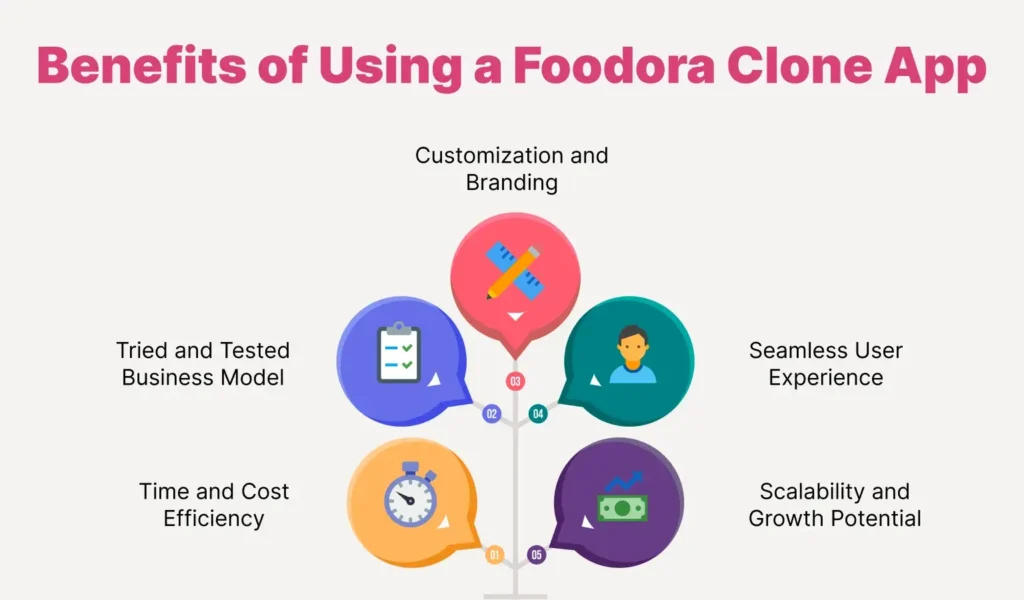
Time and Cost Efficiency
Developing a food delivery platform from scratch can be a time-consuming and expensive process. Using a food delivery clone script eliminates the need to build everything from the ground up. The core functionalities of the app or website are already developed, and you can focus on customizing the platform to match your business needs.
Pre-Built Technology Foundation
Foodora achieved a notable presence in the online food delivery market before shifting its operations and corporate strategy across various global regions.
A clone gives you a pre-built technology foundation, but it does not validate demand in your target market. However, a clone app does not guarantee that the business model will succeed.
You still need to do these things:
- Validate demand in your target market
- Recruit restaurants
- Determine competitive pricing
- Manage delivery operations
- Develop effective customer acquisition and retention strategies.
The main advantage of using a ready-made platform is that it can reduce initial development work and help you test your business idea faster. Your results will ultimately depend on how well the technology, business model, and local market strategy work together.
Customization and Branding
While the on-demand Foodora clone app solution provides a foundation, it is essential to differentiate your platform from the competition. You can customize the design, theme, logo, and other visual elements to align with your brand identity. Additionally, you have the flexibility to add unique features and functionalities. This sets your platform apart and caters to the needs of your target audience.
Seamless User Experience
A food delivery clone app can provide a user-friendly interface for customers, restaurants, and delivery riders.
The exact features depend on the software provider and the type of solution you choose. A clone script, white-label platform, and open-source solution are not necessarily the same.
Before choosing a platform, check whether the source code is available, what license applies, how much customization is supported, and whether you can modify or self-host the software.
Scalability and Growth Potential
As your food delivery business grows, you may need to scale up your operations to accommodate increasing demand. A well-architected platform like Foodora can scale as order volume and users grow, but scalability depends on the software architecture, infrastructure, database design, and ongoing optimization.
What Should a Foodora Clone Include?
Here are some common features that can be included in a food delivery app like Foodora:
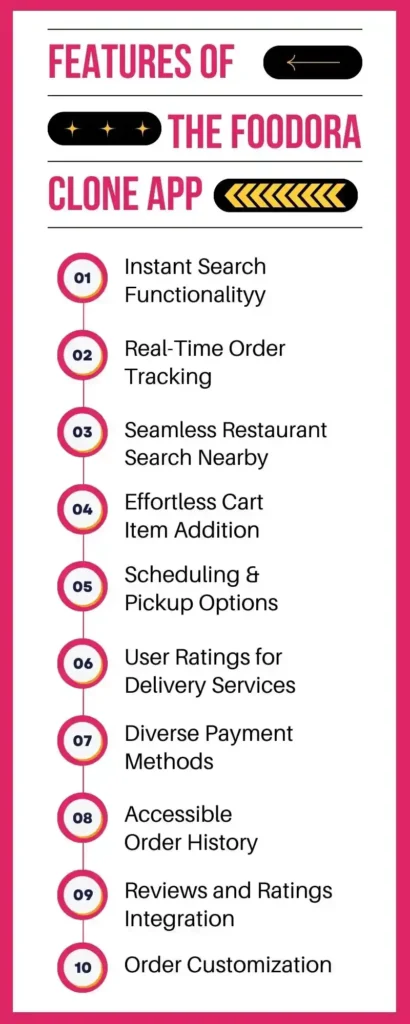
Instant Search Functionality
A search feature allows users to quickly find their desired restaurants or food items based on restaurant names, cuisine types, or specific dishes.
Real-Time Order Tracking
An interactive map-based tracking system enables customers to track the status of their food delivery in real time, providing updates on the delivery person’s location and estimated time of arrival.
Seamless Restaurant Search Nearby
Integration with location services to identify nearby restaurants and display them to users, making it easy for them to explore local dining options.
Effortless Cart Item Addition
Smooth and intuitive user interface for adding and removing items from the cart, customizing orders, and specifying any special instructions or dietary preferences.
Scheduling & Pickup Options
Flexibility for users to schedule their food delivery for a specific date and time or opt for pickup services if they prefer to collect their orders directly from the restaurant.
User Ratings for Delivery Services
Allow customers to provide feedback and rate the quality of the delivery service, delivery rider, and overall experience to help improve service quality and maintain transparency.
Diverse Payment Methods
Integration with multiple payment gateways, enabling customers to pay for their orders using various options such as digital wallets, credit/debit cards, or cash on delivery.
Accessible Order History
A dedicated section where users can view their past orders, reorder favorite meals, and access order details, including invoices and receipts.
Reviews and Rating Integration
Integration with a review and rating system that allows customers to share their experiences, rate restaurants and food items, and provide feedback to help other users make informed decisions.
Order Customization
Customers can customize their orders by adding special instructions, dietary preferences, or other requests before checkout. For example, they can ask a restaurant to leave out a particular ingredient when the restaurant supports that request.
For food allergies, an order note should not be treated as a guarantee that the meal is allergen-free. Restaurants should provide accurate allergen information where possible, and customers with serious allergies should confirm ingredients and preparation practices directly with the restaurant before ordering.
How Does the Foodora Clone Script Work?
A Foodora app clone follows a similar workflow to the original Foodora platform. Here’s a breakdown of how it works:
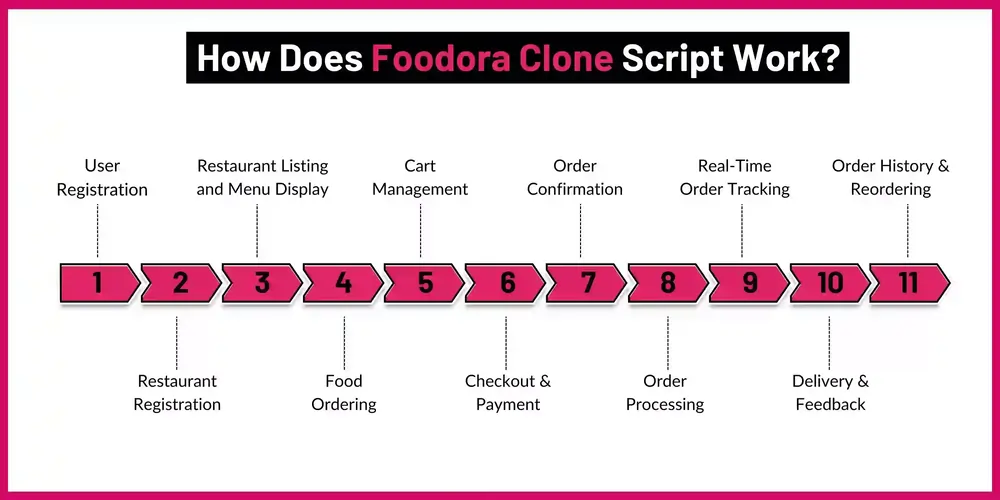
User Registration
Users need to create an account on the ready-to-use clone app solution by providing their basic information, such as name, contact number, and email address. Some clone scripts also offer social media login options for convenience.
Restaurant Registration
Local restaurants interested in partnering with your food delivery platform can register and provide their information, including menu items, prices, and delivery preferences.
Restaurant Listing and Menu Display
The easy-to-use clone app solution displays a list of registered restaurants along with their menus. Allowing users to browse and explore a variety of dining options. Users can view each menu item’s detailed descriptions, prices, and customer ratings.
Food Ordering
Users can select their desired food items from the menu. Customize the order (if applicable), and add them to the cart. The clone script should provide a smooth and intuitive interface for this process.
Cart Management
Users can review the items in their cart, make modifications, and specify any special instructions or dietary preferences before checkout.
Checkout and Payment
The clone script should support various payment options, such as digital wallets, credit/debit cards, or cash on delivery. Users can choose their preferred Foodora payment method and complete the transaction securely.
Order Confirmation
After the successful placement of an order, users receive a confirmation containing basic information like the estimated delivery time and order number. Simultaneously, the restaurant also receives the order notification.
Order Processing
The restaurant prepares the food items and confirms the order for delivery, either manually or through the platform’s automated system.
The clone script may have features for the restaurant to update the order status, such as “preparing,” “out for delivery,” or “delivered.”
Real-Time Order Tracking
The clone script should provide a real-time tracking feature, allowing users to monitor the progress of their orders. They can view the delivery person’s location on a map and receive updates regarding the estimated time of arrival.
Delivery and Feedback
The rider picks up the order from the restaurant and delivers it to the customer’s specified location. After the delivery, users have the option to rate the delivery service and provide feedback on their overall experience.
Order History and Reordering
Users can access their order history, review past transactions, and easily reorder their favorite meals for added convenience.
Step-by-Step Guide to Building the Foodora Clone App
To create a food delivery app like Foodora, you must follow the steps below.
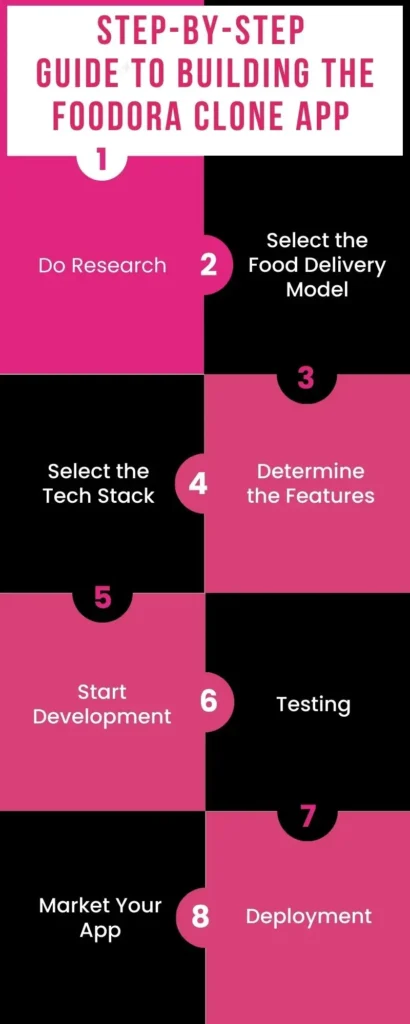
1. Do Research
To build the app that sets you apart from your competitors, you must conduct in-depth research on your competitors’ food ordering platforms. Understand their app interface, what features they offer, pricing structure, strengths and weaknesses, and some other main things.
Also, you can search customer reviews to find the gaps in the existing apps. Determine the current requirements of your target audience.
Now you understand what your target users are searching for and what’s missing from the market. This information helps you structure your app better, and you will create a better version of the app for food ordering services.
2. Select the Food Delivery Model
After completing the research phase, select the food delivery model. Choose the model that best aligns with your business goals.
Here are the two types of food delivery models.
- Order and Delivery Model
This model helps restaurants not to invest in delivery services. The delivery is entirely managed by a third-party delivery service or delivery logistics company. UberEats, Zomato, and DoorDash use this model.
Moreover, the order and delivery model helps startups, small restaurants, cafes, and new ventures that lack resources.
| Pros | Cons |
| No need to invest in a delivery fleet | More competition because many big names in the food delivery industry use this model |
| More chances to earn a commission | Invest time and money |
- Order-Only Model
This model allows customers to connect to local restaurants. Restaurant owners will be responsible only for delivering the food to the customers.
| Pros | Cons |
| No upfront costs | Limited menu offers |
| Highly scalable | Charge a delivery fee from the restaurant |
3. Determine the Features
To build a food delivery app, identify the features you will add to your on-demand food delivery app development. Add those features that benefit users and are not present in your competitor’s app.
Look at the table below that lists each app’s features.
| Customer App | Restaurant App | Rider App |
| Registration | Order management | Registration |
| Order placement | Order status | In-app chat |
| Real-time order tracking | Menu management | Push notifications |
| Loyalty program | Order accept/reject | Earning history |
| Payment integration | Navigation | |
| In-app chat | Manage delivery | |
| Order history |
4. Select the Tech Stack
Select the technology stack for the clone app by keeping the features in mind. The right stack is crucial for the success of your food delivery software. Always choose the technologies that your team has expertise in.
5. Start Development
Start the app development phase. Divide this phase into some steps that make your process of building the app easy.
- Create wireframes or rough sketches to visualize the app’s layout and user interface.
- Develop an interactive prototype using tools like Sketch, Figma, or InVision.
- Test the prototype with potential users to gather feedback and refine the design.
- Determine the technology stack based on your app’s requirements (e.g., programming languages, frameworks, and databases).
- Decide whether to build a native app (iOS/Android) or a cross-platform app (React Native, Flutter, Xamarin).
- Begin coding the user interface (UI) using your chosen framework or programming language.
- Focus on creating responsive designs, smooth animations, and efficient data handling.
- Design and build the server-side components, APIs, and databases required for your app.
- Ensure proper security measures, data validation, and error handling.
You can also hire food delivery app developers if you don’t have the time or resources you need to create the food app.
6. Testing
Perform multiple tests on your app and remove all the bugs and errors. Make your app error-free before deployment.
Testing the app with users from various backgrounds should give you a better understanding of what they want. Always use the feedback and make necessary adjustments in your app.
7. Deployment
The next step involves publishing the app to the app store. Different app stores have different requirements for app submission, so carefully understand them before deployment.
8. Market Your App
After app deployment, start marketing it on different platforms so people know about your app. Use social media platforms that help you increase your app’s visibility, and you can get potential users.
In addition, you can use other marketing strategies like email marketing, running paid ads, offering deals, and more that help you gain more customers.
Marketing and Monetizing Foodora Clone App
Marketing and monetizing the food delivery clone app is important and requires a strategic approach. Here are some various strategies and tips to help you monetize your Foodora clone app effectively.
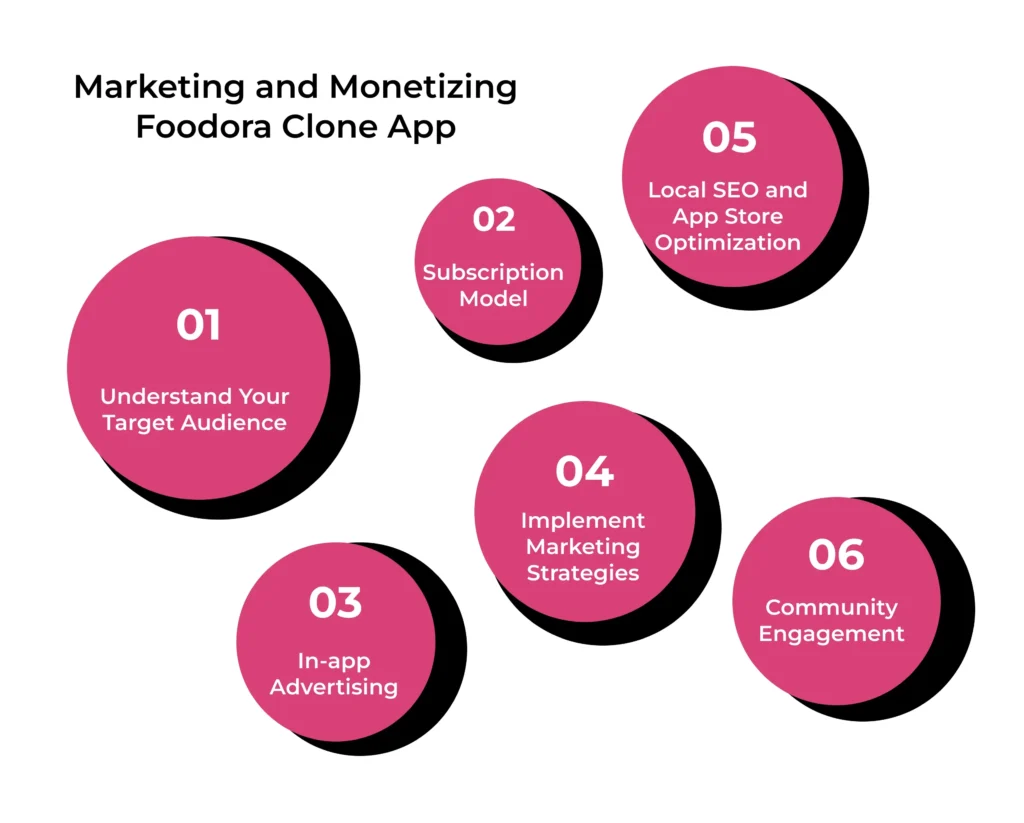
Understand Your Target Audience: Do market research and identify your target demographics, including age, location, and preferences. Also, create user personas to better understand your audience’s needs and behaviors.
Implement Effective Marketing Strategies: Start social media marketing to promote your food app. Use platforms like Instagram, Facebook, and TikTok to showcase food offerings and promotions. Start a blog or YouTube channel featuring restaurant reviews, recipes, and food trends to engage users.
Furthermore, partner with local food influencers to reach a wider audience and build credibility. Encourage users to refer friends by offering discounts or credits for successful referrals.
In-app Advertising: Charge restaurants for premium placement in the app’s listings. Use banner ads within the app for additional revenue from partner brands.
Subscription Model: Offer a subscription model that provides benefits like free delivery, exclusive discounts, or early access to deals.
Local SEO and App Store Optimization: Optimize your website and app for local search to attract nearby users. Use relevant keywords and attractive visuals to improve your app’s ranking in app stores.
Community Engagement: Sponsor or participate in local food festivals or events to promote your app. It helps to improve your brand image.
Foodora vs Foodpanda
Foodora and Foodpanda are separate food delivery brands operating in different markets. Both connect customers with restaurants through online ordering platforms, but their geographic coverage and local operations differ.
Foodora currently operates in six European markets: Austria, Czechia, Finland, Hungary, Norway, and Sweden. Foodpanda has historically focused more heavily on Asian markets.
If you are planning to build a food delivery platform, you do not need to copy either company’s exact pricing, features, or operating model. Study the parts of their platforms that are relevant to your target market, such as:
- Restaurant onboarding
- Delivery management
- Payments
- Customer retention
- Rider operations
Your platform’s business model should be based on local competition, restaurant requirements, and delivery economics.
How Much Does a Foodora Clone App Cost?
A Foodora clone app can cost anywhere from $15,000 to $150,000+. It depends on whether you use a ready-made solution or build a fully custom platform from scratch.
The final cost depends on these factors:
- Number of apps
- Features
- Level of customization
- Development team
- Third-party integrations
- Deployment requirements
A Foodora clone may cost around 15,000-40,000. A more customized platform with customer, restaurant, rider, and admin applications can range from 40,000-80,000. A fully custom, multi-city or enterprise-level platform can cost 80,000-150,000 or more.
These figures are indicative development estimates, not fixed market prices. Actual quotes can vary considerably depending on the development team’s location, technology stack, project scope, integrations, and customization requirements.
Estimated Foodora Clone App Development Cost
| Type of Solution | Estimated Cost |
| Ready-Made / White-Label | 15,000-40,000 |
| Customized Platform | 40,000-80,000 |
| Advanced / Multi-City Platform | 80,000-150,000+ |
| Enterprise-Level Custom Platform | $150,000+ |
Other Costs to Budget For
The initial development price is only part of the investment. You should also budget for:
| Cost | Indicative Expense |
| Cloud hosting and infrastructure | 2,000-10,000+ per year |
| Third-party APIs and services | 500-5,000+ per year |
| Maintenance and technical support | 1,000-5,000+ per month |
| Marketing and customer acquisition | 5,000-50,000+ |
| Payment processing | Varies by provider and transaction volume |
| App-store fees | Depends on the applicable platform and account type |
Challenges in Building a Foodora Clone and How to Overcome Them
Some challenges that business owners face when creating an app like Foodora are.
Finding the Right Audience
One of the biggest challenges businesses face is finding the right audience. You need to know your target market before developing the app. Know their interests, likes, dislikes, and more that help you create a successful app.
Finding Restaurant Partners
If you want to earn money, you need to partner with restaurants and grocery stores. You need to create a list of the restaurants and stores that want to provide online services and then approach them.
Determine Your Needs
It is another challenge that businesses mostly face. You have to determine your needs and goals that need to be achieved. Without having a goal, you cannot succeed in the food delivery industry.
Create the Foodora Clone App with Enatega
Enatega is an open-source, multi-vendor delivery platform that can be used as a foundation for launching a food delivery business. You don’t need to develop every core component from scratch; businesses can use its existing customer, restaurant, rider, and administrative functionality and customize the platform according to their requirements.
A Foodora-style platform built with Enatega can support common delivery workflows such as:
- Restaurant discovery
- Menu management
- Order placement
- Payment processing
- Order management
- Delivery tracking
- Rider operations
The available functionality depends on the selected setup and the customizations required for the business.
Why Consider Enatega for a Foodora-Style Platform?
- Open-source platform: Businesses can access and customize the available source code according to the applicable licensing terms.
- Multi-vendor support: The platform can support multiple restaurants or other vendors from a single marketplace.
- Customer, restaurant, and rider workflows: Different interfaces can be used to manage ordering, restaurant operations, and delivery activities.
- Customizable: Businesses can adapt the platform’s branding, workflows, and functionality to their specific requirements.
- Self-hosting options: Depending on the selected setup and deployment arrangement, businesses can host and manage the platform on their own infrastructure.
- Multiple business models: The platform can be configured for different delivery and marketplace models based on the business requirements.
- Room for expansion: Businesses can add features, integrations, vendors, and delivery areas as their operational needs grow.
FAQs
3-4 months are required to build a food ordering app like Foodora. However, it can be less or more depending on your app features and functionalities.
The old name of Foodora was Volo. The company was initially launched as Volo in Munich, Germany, before being acquired by Rocket Internet and rebranded as Foodora.
Yes, a Foodora clone can be legal if it uses original branding, design, content, and intellectual property. You can replicate the business model and functionality without copying Foodora’s trademarks or proprietary assets.
Yes, you can launch a Foodora clone across multiple cities with a scalable platform. You can add new delivery zones, restaurants, riders, and customers as your business expands.
Supercharge your deliveries with Enatega.
Register NowConclusion
Launching a food delivery business can be challenging, but using a Foodora clone script can simplify the process. Using the foundation provided by the clone script, you can focus on customizing and branding your platform to suit your specific requirements.
If you're running a small eatery or an established business owner looking to expand your food business, a clone script offers a cost-effective and efficient solution to enter the food delivery industry with confidence.
Remember to choose a reputable clone script provider, which offers ongoing support and updates to ensure the long-term success of your food delivery business.
About the author

Hudaibia Khalid is a senior content writer with several years of experience in creating clear and easy-to-understand content. Over the years, she has worked closely with startups, restaurants, and entrepreneurs, helping them simplify complex digital and technical topics into actionable insights.
Her expertise lies in writing about on-demand platforms, food delivery solutions, and business growth strategies in a way that is accessible even to non-technical readers. With her experience in the industry, she focuses on guiding businesses step by step, from understanding ideas to turning them into fully working solutions.
SHARE






 IOS
IOS Android
 Web
Web