

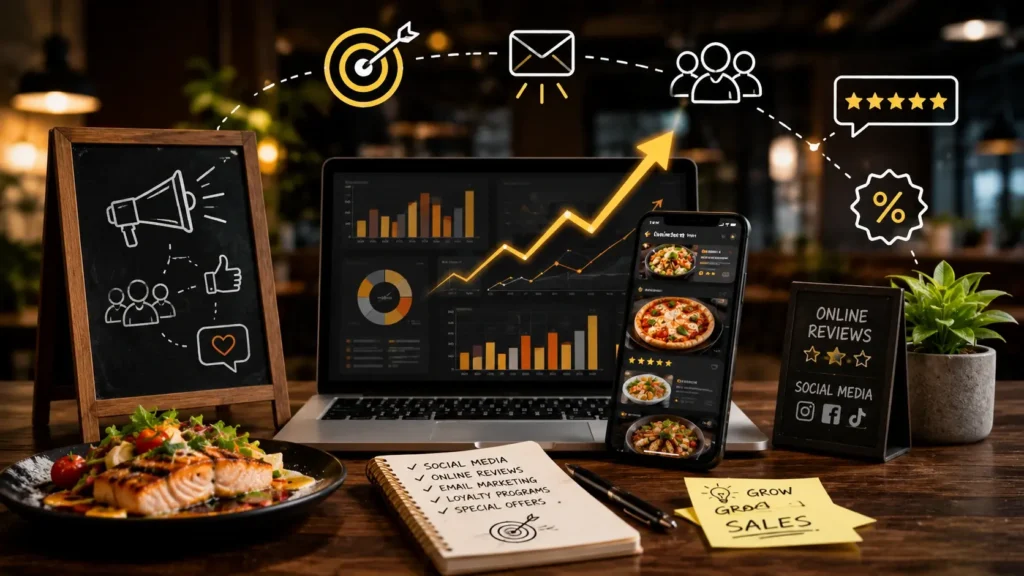
The best restaurant marketing strategy combines social media, influencer and content marketing, loyalty programs, special events, local SEO, email marketing, delivery optimization, and targeted promotions. Restaurants can also use Google Business, restaurant apps, SMS, WhatsApp, local partnerships, and geotargeted ads to attract new customers, strengthen brand awareness, increase sales, and encourage repeat business.
Are you struggling to attract more customers to your restaurant in 2026? You’re not alone. Restaurant discovery is increasingly happening online, with diners using Google, social media, restaurant platforms, and even AI tools to decide where to eat.
Recent restaurant industry research shows that 22% of consumers now use AI to discover restaurants, while 94% of diners use online resources such as Google, social media, and media sites to discover new restaurants. This makes your online presence just as important as the experience customers receive inside your restaurant.
At the same time, diners are becoming more selective about where they spend their money.
So, simply posting on social media or offering occasional discounts isn’t enough. Your restaurant needs a marketing strategy that connects discovery, conversion, and customer retention.
In this blog, we’ll explore expert-backed restaurant marketing strategies tailored for 2026, helping you increase sales and outshine your competitors.
What is Restaurant Marketing?
Restaurant marketing is the process of promoting a restaurant to attract new customers, increase orders or reservations, and encourage existing customers to return.
It combines digital and offline channels such as local SEO, Google Business Profile, social media, online advertising, email, SMS, loyalty programs, partnerships, and events.
A successful restaurant marketing strategy should cover three stages of the customer journey:
- Attract: Help potential customers discover your restaurant through Google, social media, restaurant platforms, local partnerships, and paid advertising.
- Convert: Make it easy for interested customers to view your menu, reserve a table, place an order, or contact your restaurant.
- Retain: Encourage customers to return through loyalty programs, personalized offers, email, SMS, and a consistent dining experience.
The right mix depends on your restaurant type, location, target audience, budget, and business goals. A neighborhood restaurant may benefit most from local SEO and Google Business Profile optimization, while a delivery-focused restaurant may prioritize online ordering, paid search, social media, and customer retention.
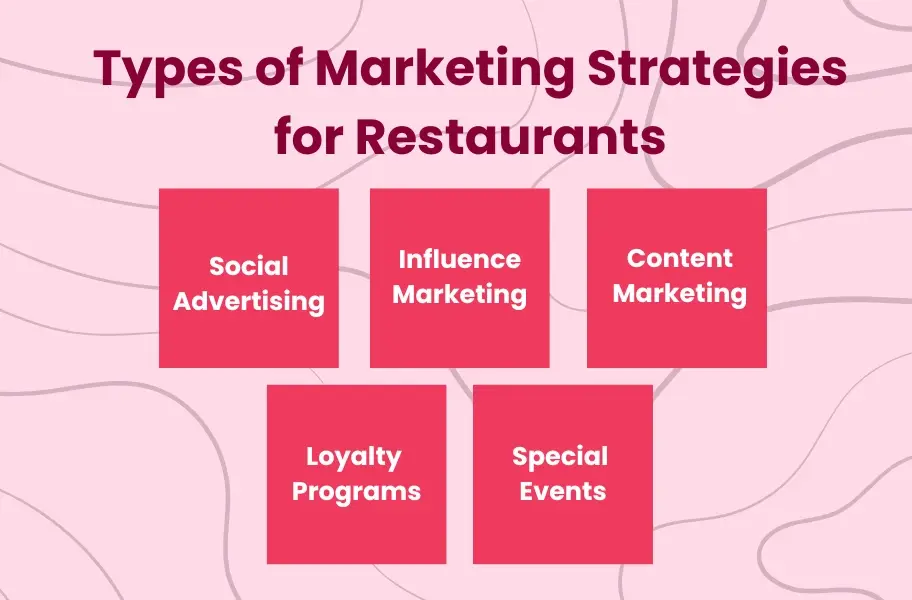
Types of Marketing Strategies for Restaurants
There are several innovative marketing strategies for restaurants that you can use to promote your business and attract customers.
Here are some popular types of marketing strategies for restaurants.
Social Advertising
Use the best marketing channels for restaurants and social media platforms like Instagram, Facebook, and YouTube to showcase your restaurant’s menu, ambiance, special offers, and engage with customers.
Additionally, use ready-to-use menu templates that offer a variety of designs, easily customizable to suit your restaurant’s unique style. These tools not only streamline the design process but also significantly enhance customer engagement by presenting your offerings in visually appealing and informative formats.
Influencer Marketing
It is another effective marketing strategy for a restaurant business. Partner with popular social media influencers or food bloggers who have a significant following and ask them to review or promote your restaurant.
Content Marketing
It is another marketing strategy for a restaurant. Create valuable and engaging content related to food, recipes, or dining experiences. You can publish blog posts, create trend videos, or even a podcast to establish your restaurant as an authority and attract food enthusiasts.
Loyalty Programs
Reward your regular customers with loyalty programs. Offer incentives such as freebies, discounts, or exclusive access to special events to encourage repeat visits.
Special Events
One of the best marketing tactics for restaurants is to host special events like live music nights and seasonal promotions. Consider offering limited-time menu items or discounts during these events to gain more customers.
Which Restaurant Marketing Channels Should You Use?
You don’t need to use every marketing channel at once. Start with the channels that match how your customers discover and purchase from your restaurant.
| Marketing Channel | Best For | Example |
| Google Business Profile | Local discovery | Appearing in Google Maps and local searches |
| Local SEO | Organic visibility | Ranking for “restaurants near me” and location-based searches |
| Social Media | Brand awareness and engagement | Instagram Reels, TikTok, Facebook |
| Online Ordering | Increasing direct orders | Website or branded ordering platform |
| Email Marketing | Customer retention | Personalized offers and new menu announcements |
| SMS & WhatsApp | Direct communication | Promotions, reminders, and updates |
| Loyalty Programs | Repeat purchases | Points, rewards, and member-only offers |
| Google Ads | High-intent customer acquisition | Ads for searches such as “pizza near me” |
| Influencer Marketing | Local awareness | Partnerships with food creators |
| Local Partnerships | Reaching new audiences | Collaborations with hotels, offices, and gyms |
| Events | Increasing visits and engagement | Tasting nights, live music, and seasonal events |
Rather than spreading your budget across every channel, choose two or three that align with your restaurant’s goals and measure the results. Once you know which channels generate profitable orders, reservations, or repeat customers, you can gradually expand your marketing efforts.
The Benefits of Effective Marketing Strategies For Restaurants
In the fast-paced world of dining, effective marketing strategies for restaurants are the key to standing out.
Beyond serving great dishes, a significant part of your success relies on your restaurant marketing ideas and trends.
Let’s explore the benefits of successful marketing strategies for restaurants that can transform your eatery into the best restaurant in your locality.
1. Enhanced Brand Awareness
Using mobile marketing strategies for restaurants via social media platforms provides an affordable means to engage a vast audience, significantly enhancing a restaurant’s visibility and brand presence.
Regularly sharing updates, discounts, and compelling content can attract new diners while maintaining the interest of existing ones.
Platforms such as Facebook and Instagram enable restaurants to target their marketing precisely by tailoring efforts to specific demographics, interests, and behaviors within their audience.
2. Increased Revenue
Boosting revenue relies on successful restaurant marketing strategies, which increase brand visibility, enhance customer engagement, and, in turn, increase financial returns for restaurants.
By carefully crafting and executing the most effective restaurant marketing strategy, you can elevate your presence in the competitive market and gain the attention of a broader audience.
Engaging customers through targeted campaigns, promotions, and interactive content fosters a deeper connection, translating into loyalty and repeat business.
The strategic use of digital platforms, such as social media and email marketing, plays a pivotal role in amplifying the restaurant’s reach and impact.
As brand visibility expands, attracting both new and returning customers, the potential for higher revenue generation becomes not just a goal but a tangible outcome of a well-executed marketing approach.
3. Trends Identification
Adapting to evolving diner preferences and industry trends is crucial for restaurants to remain relevant and appealing.
The best marketing strategies for restaurants play a pivotal role in this dynamic landscape by providing the tools to respond and proactively engage with emerging shifts.
By staying updated with changing tastes and market dynamics, restaurants can effectively fine-tune their offerings and messaging to target diners.
This adaptability, facilitated by effective marketing, goes beyond mere survival—it positions eateries to thrive in an ever-changing culinary landscape.
A restaurant marketing strategy can consist of trend-centric promotions, menu innovations, and agile communication through various channels to empower restaurants to not just keep pace with the trends but to set them, becoming trendsetters rather than followers.
So, if you implement the best marketing strategy for restaurants, it will serve as a source of guidance for restaurants through the changing trends of customer preferences.
Supercharge your deliveries with Enatega.
Register NowTop Marketing Strategies For Restaurants
The most effective restaurant marketing strategy isn’t about using every available channel. It’s about choosing the channels that help your restaurant attract local customers, convert them into paying guests, and encourage them to return.
Here are practical restaurant marketing strategies you can use in 2026.
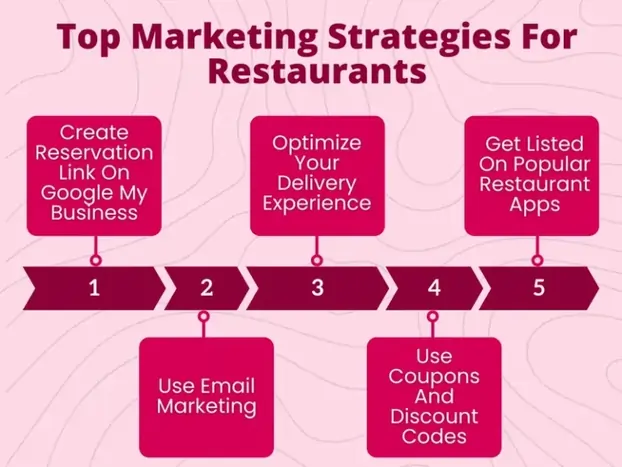
1. Create a Reservation Link On Google My Business
According to Skift’s Megatrends, Google’s control over local restaurant discovery is undeniable.
If you’ve already set up your Google Business account and showcased your location, images, and website link, you’ve covered the basics.
It is time to enhance your restaurant marketing strategy by using Google Business for reservations.
2. Optimize Your Delivery Experience
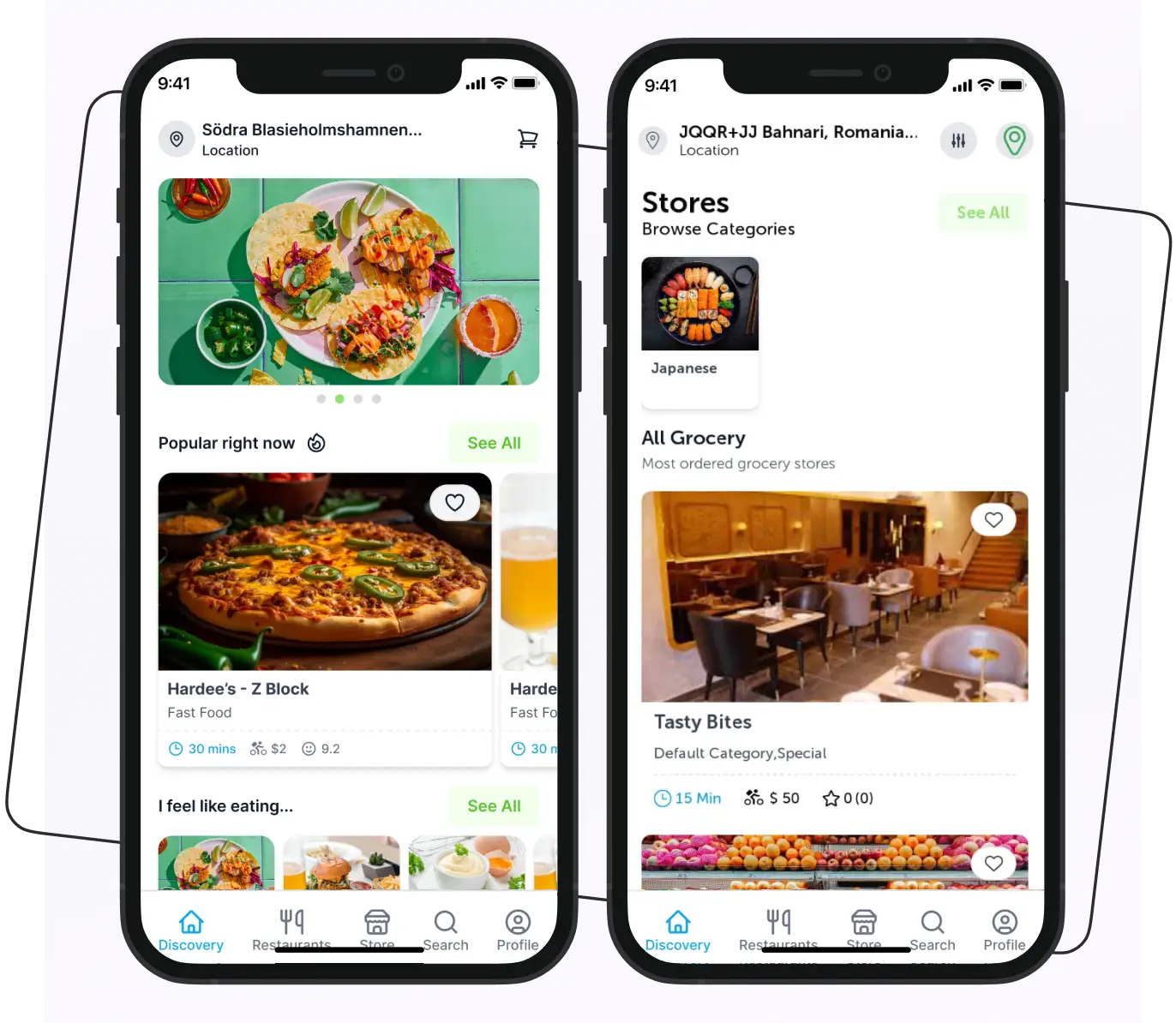
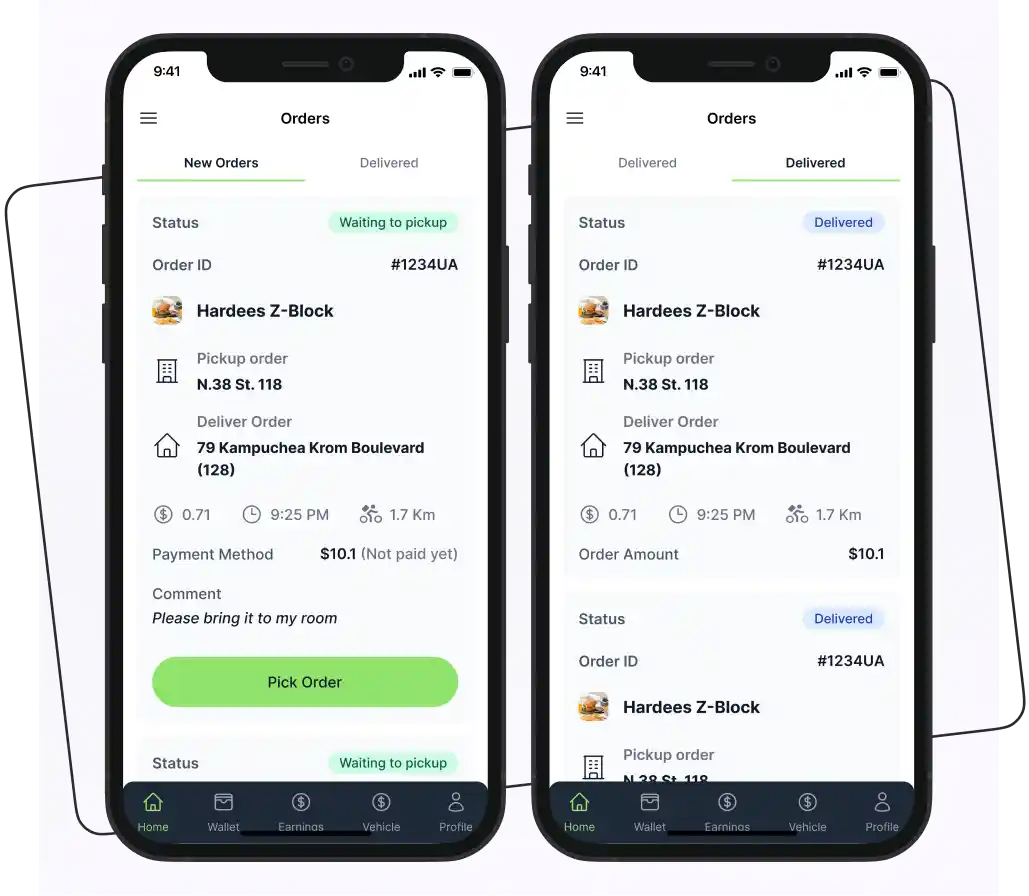
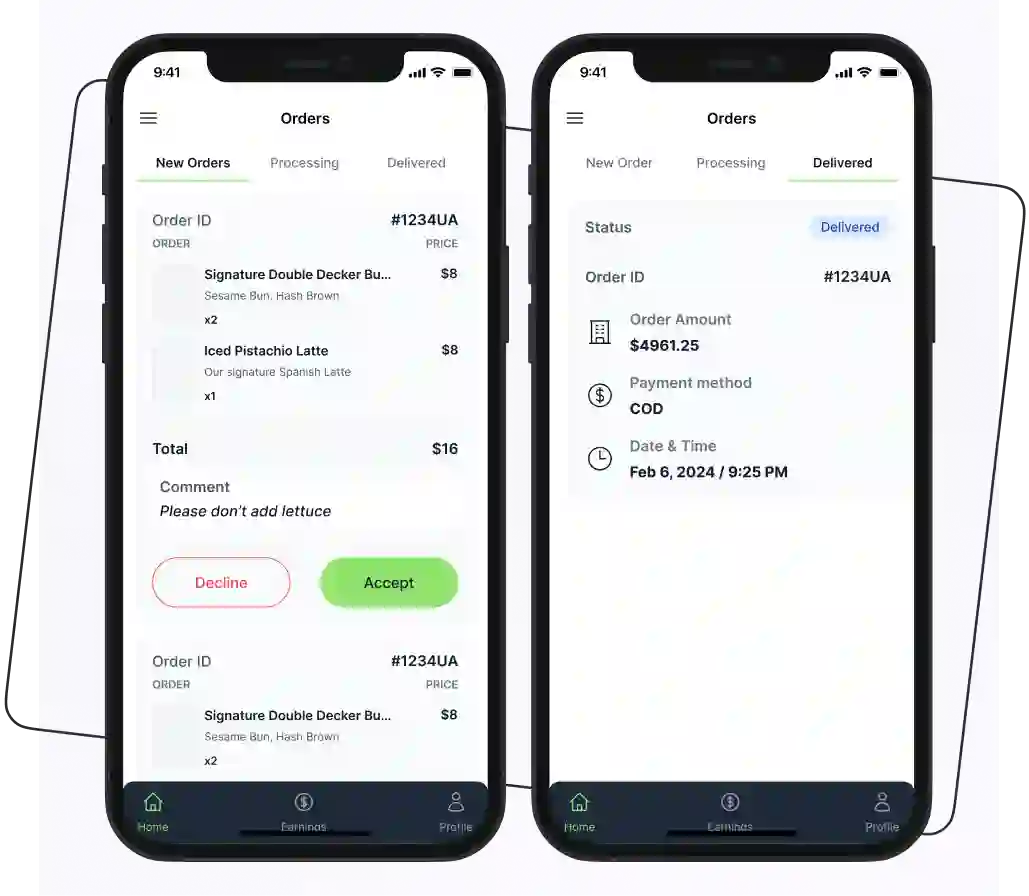
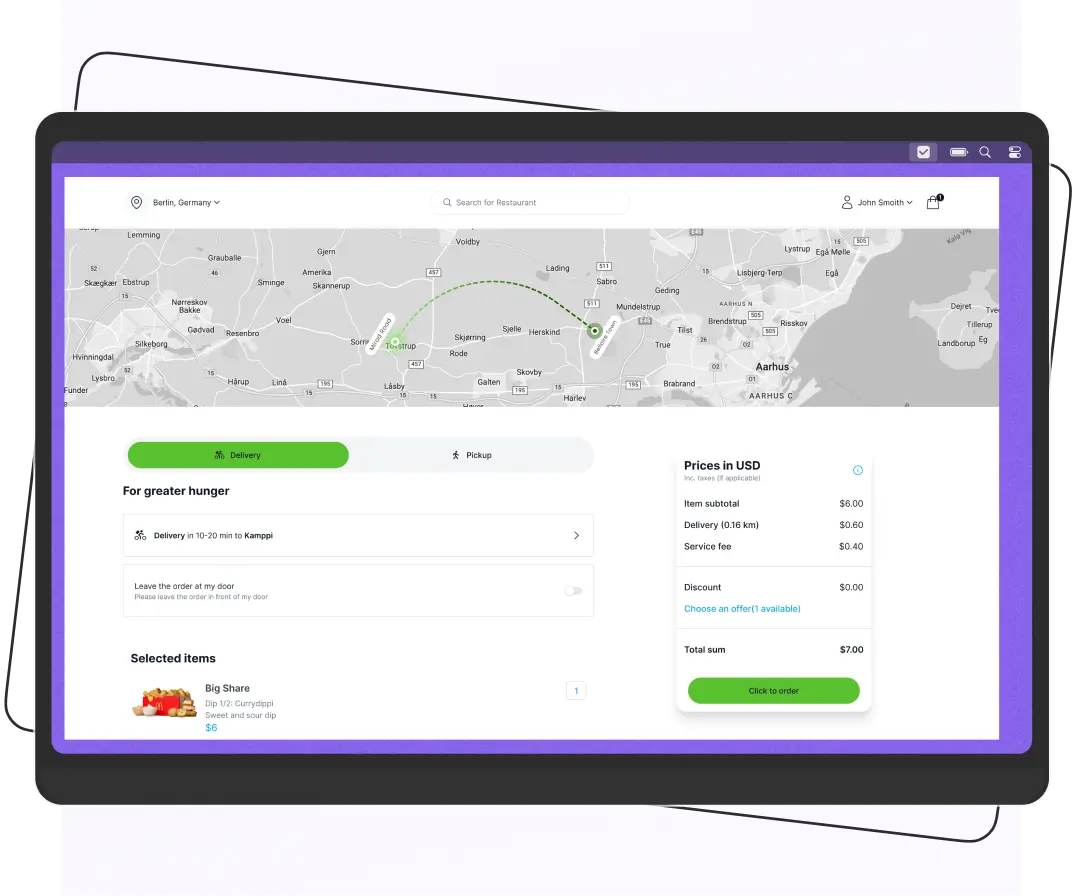
You can improve your restaurant’s success with a strategic marketing move: optimizing the delivery experience through the right app.
Choose a platform that caters to your specific needs, providing features like real-time order updates, customizable menus, and efficient delivery management.
By doing so, you can boost customer satisfaction and expand your reach by investing in a delivery app that aligns seamlessly with your restaurant’s requirements.
3. Get Listed On Popular Restaurant Apps
Increase your restaurant’s visibility and marketing strategies by securing a spot on dining and restaurant apps.
These platforms are powerful, free marketing tools that connect your restaurant with individuals actively seeking dining options.
The key lies in providing comprehensive details such as category, website, address, phone number, store hours, menu, price range, and an array of photos.
Use attributes like wifi availability, outdoor seating, parking facilities, and accommodation of special diets to enhance your restaurant’s profile on these apps.
The more details you provide, the better your chances of engaging customers with high intent through these dynamic marketing channels.
4. Use Personalized Email Marketing
Email marketing can help restaurants turn one-time customers into repeat customers, but sending the same message to everyone is unlikely to deliver the best results.
Instead, segment your customer database based on factors such as:
- Purchase frequency
- Last order date
- Favorite dishes
- Location
- Average order value
Email remains a powerful channel, but standing out is key with competition from major brands. This is where partnering with a B2B email marketing agency can make a significant difference.
For example, a new customer could receive a welcome offer, while an inactive customer could receive a personalized incentive to return. Loyal customers could receive early access to a new menu, exclusive events, or member-only rewards.
Restaurant-industry research from SevenRooms found that targeted emails generated 2× more revenue per email than non-targeted emails among its customers. This highlights the importance of personalization rather than relying on generic newsletters.
To make email marketing more effective, connect your campaigns with your customer data and track which messages generate actual orders or reservations.
5. Use Coupons And Discount Codes
Another useful marketing strategy for restaurants is to drive foot traffic with coupon and discount campaigns.
You can attract your customers with complimentary dishes, 10% discounts, or the ever-popular buy one get one free (BOGO) offer.
BOGO offers can attract attention, but restaurants should evaluate each promotion based on profitability rather than redemption volume alone.
However, for upscale restaurants, providing excessive discounts may impact brand perception. Therefore, it’s crucial to strike a balance to avoid setting expectations for ongoing discounts.
Make sure you tailor your campaigns to align with your restaurant’s brand and target audience for optimal marketing impact.
Restaurant Marketing Tools
Below are the restaurant marketing tools to help you promote your restaurant.
Google Business Profile
Best for: Local discovery and customer actions
Google Business Profile helps restaurants manage how their business appears in Google Search and Maps. Keep your restaurant information, opening hours, photos, menu, ordering options, and reservation links accurate so customers can find the information they need before visiting or ordering.
Social Media Management Tools
Best for: Planning and publishing social content
- Buffer: Helps restaurants plan and publish social media content across supported platforms and maintain a consistent posting schedule.
- Hootsuite: Provides social media scheduling, monitoring, and reporting features for businesses managing multiple social accounts.
Use these tools to plan content, but continue creating real-time content around new dishes, events, customer experiences, and behind-the-scenes moments.
Email Marketing Tools
Best for: Customer retention and personalized campaigns
- Mailchimp: Provides email campaign creation, audience segmentation, automation, and reporting.
- Constant Contact: Offers email marketing tools for creating campaigns, managing contacts, and tracking engagement.
For restaurants, the most important feature isn’t simply sending newsletters. Look for segmentation and automation capabilities that allow you to send different messages to new, returning, loyal, and inactive customers.
Online Ordering and Restaurant Management Platforms
Best for: Direct ordering and customer experience
Restaurant technology platforms can combine online ordering with other operational and customer-management functions.
For example, platforms such as Toast provide online ordering and restaurant technology tools that can connect ordering, marketing, and customer data. Toast’s current online ordering tools also support direct ordering through channels such as Google.
When choosing an online ordering platform, consider:
- Direct online ordering
- Mobile-friendly ordering
- Menu management
- Multiple payment options
- Order tracking
- Customer data
- Loyalty integrations
- Marketing integrations
- Reporting and analytics
Reservation Platforms
Best for: Managing table bookings
- OpenTable: Helps restaurants manage reservations and discoverability.
- Resy: Provides reservation management and customer-facing booking features.
Choose a reservation platform based on your restaurant’s location, target customers, booking volume, integrations, and overall costs.
Customer Relationship Management (CRM)
Best for: Customer retention and personalization
A restaurant CRM or customer-data platform can help organize information such as customer visits, orders, preferences, and engagement.
Use this information to create useful customer segments, such as:
- New customers
- Frequent customers
- High-value customers
- Inactive customers
- Customers who order online
- Customers who have joined your loyalty program
The goal isn’t to collect as much customer data as possible. It’s to use relevant data to provide more useful communication and improve the customer experience.
Content Creation Tools
Best for: Creating social media and promotional content
- Canva: Useful for creating social posts, menus, promotional graphics, flyers, and other marketing materials.
- Adobe Express: Can be used to create social posts, images, videos, flyers, and other branded content. Adobe Express replaced Adobe Spark, so use the current product name in your marketing toolkit.
Analytics and Measurement Tools
Best for: Measuring marketing performance
- Google Analytics 4: Helps analyze website traffic and customer journeys.
- Google Search Console: Helps monitor organic search performance and search visibility.
- Advertising platform analytics: Use Google Ads and Meta Ads reporting to evaluate campaign performance.
- Restaurant platform analytics: Use your ordering, reservation, loyalty, or POS reports to connect marketing activity with actual orders and revenue.
How to Choose the Right Restaurant Marketing Tools
Don’t choose tools simply because they have the most features. Start with the problem you need to solve.
For example:
- Need more local visibility? Google Business Profile + local SEO
- Need more direct orders? Online ordering + Google Business Profile
- Need more repeat customers? Loyalty + email/SMS
- Need better social media consistency? Buffer or Hootsuite
- Need better promotional content? Canva or Adobe Express
- Need to understand website performance? Google Analytics 4 + Search Console
- Need to manage reservations? OpenTable or Resy
The best restaurant marketing technology is the technology that helps you attract customers, convert them into orders or reservations, and bring them back again.
Restaurant Marketing Tips
Here are some additional restaurant marketing tips to help you succeed in this industry.
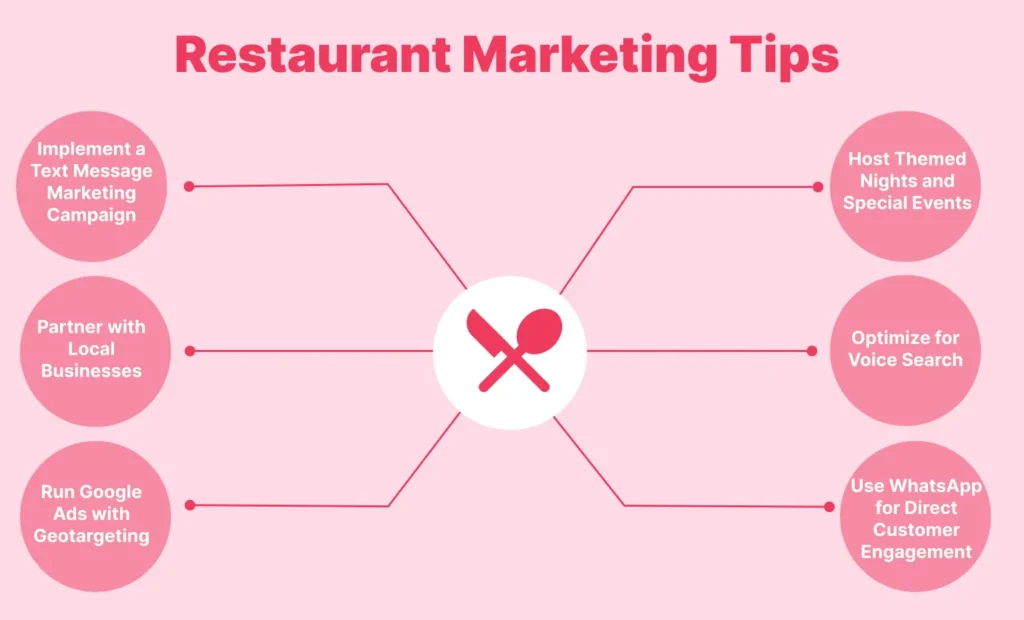
Implement a Text Message Marketing Campaign
SMS marketing has high open rates compared to emails. Send exclusive offers, limited-time discounts, or event invitations via text messages to your loyal customers.
Partner with Local Businesses
Collaborate with nearby gyms, hotels, or offices to offer discounts or meal deals. This cross-promotion helps attract new customers who might not have discovered your restaurant otherwise.
Run Google Ads with Geotargeting
Use Google Ads to target people searching for restaurants near your location. This ensures that potential customers find your restaurant when they’re actively looking for a place to eat.
Host Themed Nights and Special Events
Organize weekly theme nights such as Taco Tuesdays, Wine & Dine Wednesdays, or cultural cuisine nights. These create buzz and encourage repeat visits.
Optimize for Voice Search
With more people using Siri, Alexa, and Google Assistant, optimize your website for voice search queries like “best Italian restaurant near me” to improve local SEO rankings.
Use WhatsApp for Direct Customer Engagement
Use WhatsApp Business to handle reservations, answer customer queries, and send personalized promotions. It’s a direct and efficient way to engage with customers.
Case Study: How Chipotle Increased Sales with TikTok and User-Generated Content
Background
Chipotle Mexican Grill is known for its fast-casual dining and has always embraced digital marketing. In 2019–2021, the brand began experimenting with TikTok, a platform still emerging for restaurants at the time. By 2023, TikTok became one of Chipotle’s top digital growth channels, increasing brand engagement and customer loyalty.
Strategy
TikTok Challenges
- Chipotle launched the #GuacDanceChallenge, encouraging users to show off their dance moves to celebrate National Avocado Day.
- This combined UGC (user-generated content) with a trending cultural moment.
Partnership with Influencers
- Partnered with TikTok creators like David Dobrik to amplify reach.
- Influencers showcased real, fun, and authentic experiences with Chipotle’s menu items.
Exclusive Promotions
- Customers were rewarded with free guacamole when they participated in the campaign.
- This blended social engagement with tangible in-store value.
Results
- The #GuacDanceChallenge became TikTok’s highest-performing branded challenge in the U.S. at the time, generating 250,000 video submissions in just six days.
- More than 430 million views on TikTok.
- Chipotle sold 800,000 sides of guacamole on National Avocado Day, its biggest day for guacamole sales ever.
- The campaign helped Chipotle strengthen its image as a youth-driven, culturally relevant brand.
FAQs
There’s no single “best” strategy. The right approach depends on your restaurant type and goals. Social media remains one of the highest-impact channels for restaurants overall.
Platforms like Instagram, TikTok, and Facebook let you connect directly with diners, showcase your food, and build an engaged local community. Pair it with local SEO and Google Business Profile optimization for the strongest results, since most diners now discover restaurants through a mix of search and social.
Below are some tips to help you reach your customers effectively in 2026.
Establish an SEO-friendly website to ensure online discoverability.
Promote your brand story to create a compelling narrative that resonates with your audience.
Use social media marketing for direct engagement and visibility.
Initiate a rewards and referrals program to encourage customer loyalty, and prioritize analytics to understand and adapt to evolving customer preferences.
The main 7 P’s in the restaurant are:
Product
Place
Price
Promotion
People
Process
Physical
The following are tips to help you start marketing your new restaurant.
Create a user-friendly website/app.
Create accounts on social media platforms and promote your business.
Send promotional emails to your targeted customers.
Provide offers and discounts to your customers.
Join community events.
Customer relationship management software is the most important marketing tool of any restaurant. It helps to analyze customer data, manage reservations, and streamline operations.
Email marketing is a successful tool that helps you gain more customers and improve your online presence. Also, it is a great way to make your customers aware of your services.
Supercharge your deliveries with Enatega.
Register NowConclusion
In the restaurant marketing market, staying ahead requires an approach that taps into diverse marketing strategies. From using the power of social media and embracing innovative delivery management systems to crafting personalized email campaigns and executing effective coupon and discount promotions, the options are vast.
As we navigate the ever-evolving trends of 2026, remember that the key lies in a tailored blend of these strategies, aligning them with your unique restaurant identity and customer preferences.
About the author

Hudaibia Khalid is a senior content writer with several years of experience in creating clear and easy-to-understand content. Over the years, she has worked closely with startups, restaurants, and entrepreneurs, helping them simplify complex digital and technical topics into actionable insights.
Her expertise lies in writing about on-demand platforms, food delivery solutions, and business growth strategies in a way that is accessible even to non-technical readers. With her experience in the industry, she focuses on guiding businesses step by step, from understanding ideas to turning them into fully working solutions.
SHARE






 IOS
IOS Android
 Web
Web