

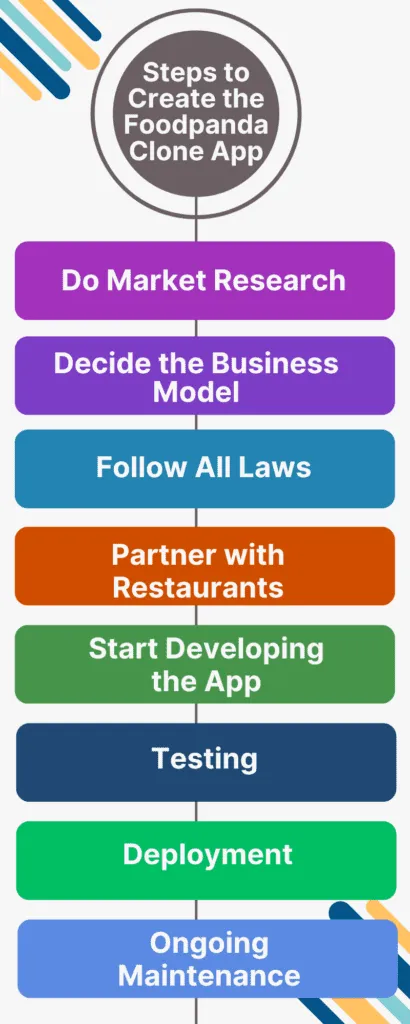
Building a Foodpanda clone app involves 8 steps, such as:
- Do market research
- Decide the business model
- Choose essential features
- Partner with restaurants
- Start Foodpanda clone app development
- Testing
- Deployment
- Ongoing maintenance
In 2026, the global online food delivery market is growing, with platforms like Foodpanda leading the charge. Foodpanda is a Delivery Hero subsidiary focused primarily on Asia, operating across more than 400 cities in 11 markets.
So, do you want to launch a Foodpanda clone app without spending months on development?
As demand for online food delivery continues to increase, building your own app like Foodpanda offers a strategic edge in this growing industry.
Therefore, if you have a food delivery business and want to create a delivery app like Foodpanda, you are in the right place.
Supercharge your deliveries with Enatega.
Register NowWhat is the Foodpanda Clone App?
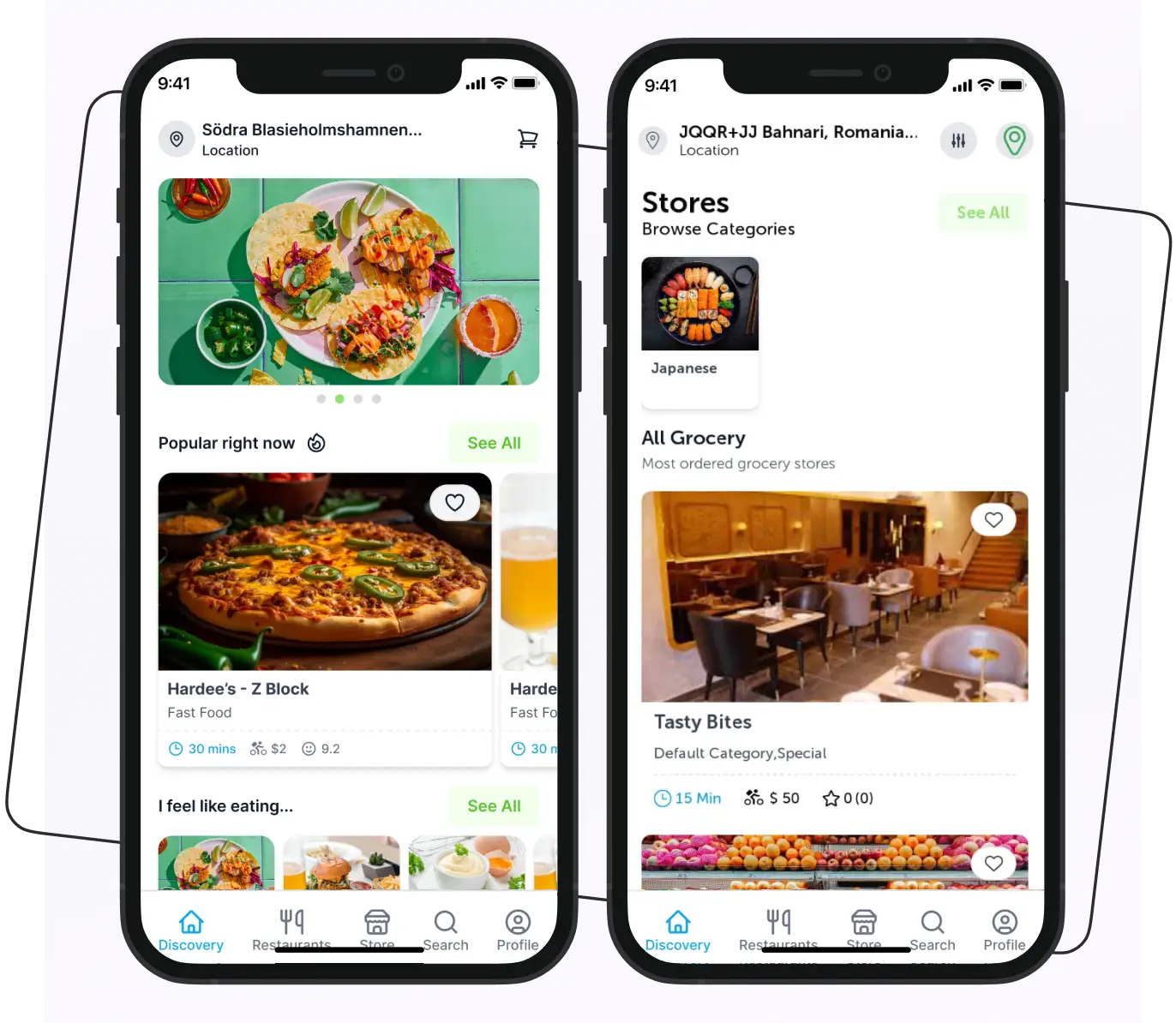
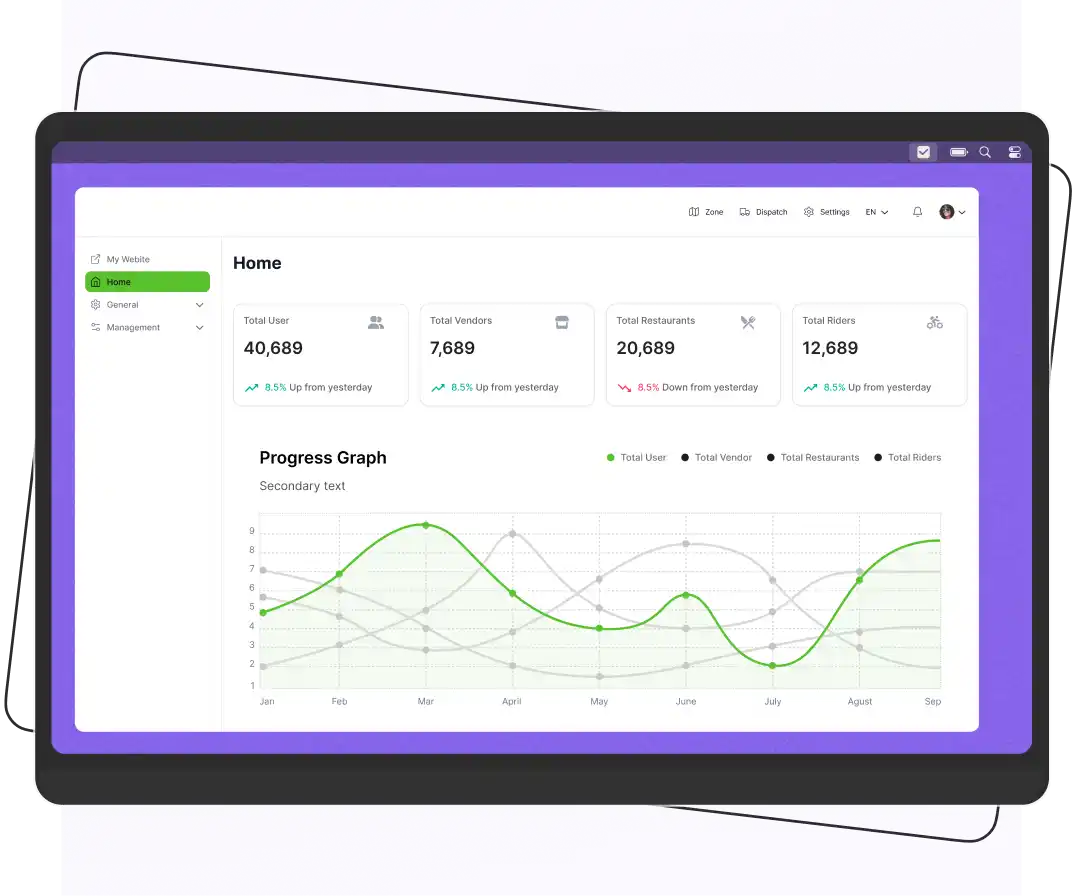
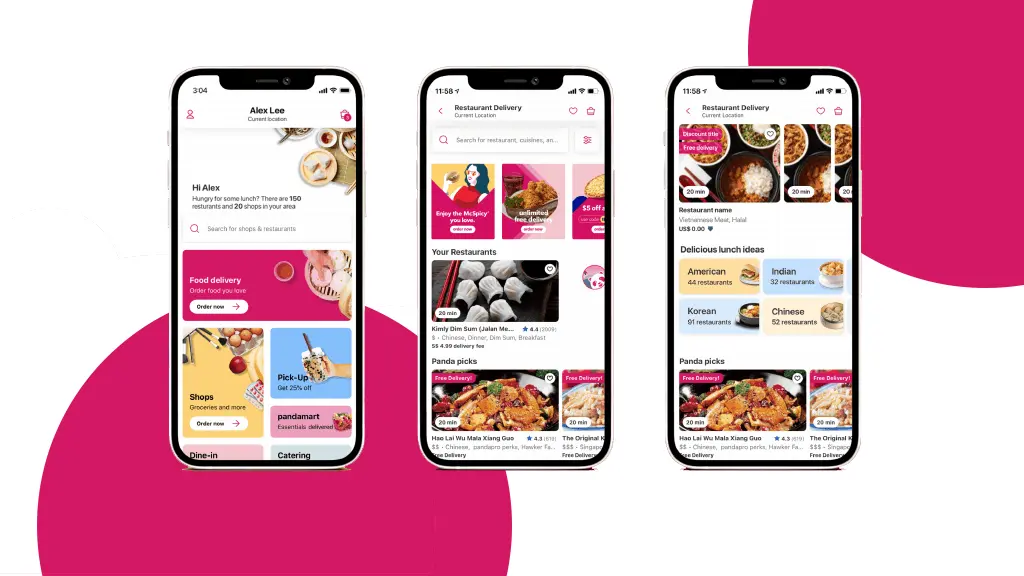
A Foodpanda clone app is a food delivery marketplace developed with workflows similar to those used by platforms such as Foodpanda. It connects customers with restaurants and delivery riders through customer apps, restaurant dashboards, rider apps, and an admin panel.
A clone does not mean copying Foodpanda’s source code, branding, proprietary design, or other protected assets. Instead, it refers to building a separate food delivery platform around similar business workflows.
Businesses can build a Foodpanda-like platform from scratch or use a pre-built, white-label, or self-hosted solution to reduce development time. The right approach depends on how much customization and technical control the business needs.
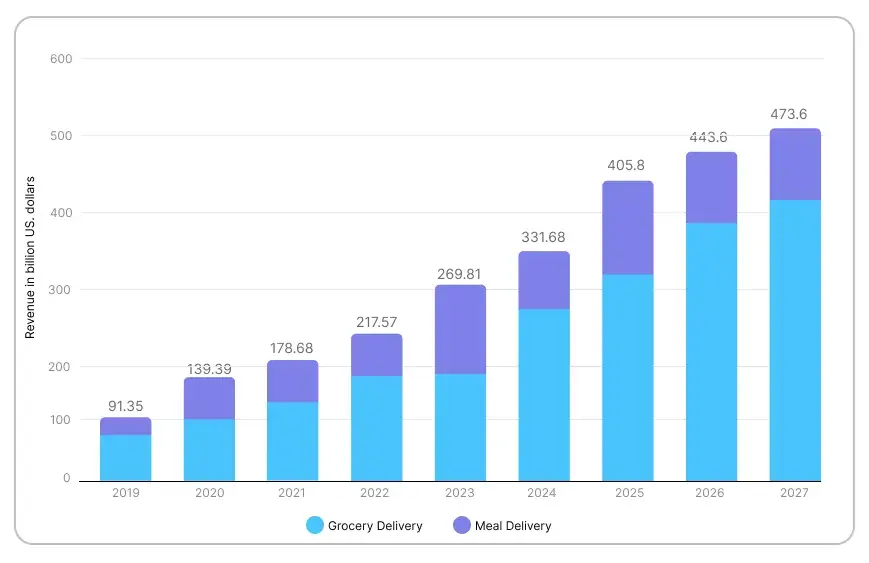
Interesting Stats About Food Delivery Services
- Foodpanda currently operates across more than 400 cities in 11 Asian markets, according to the company.
- According to Statista, the United States generated an estimated 432 billion U.S. dollars in online food delivery revenue in 2025.
- The US is the second-largest food delivery market after China.
- The instant grocery market, valued at USD 302B in 2026, is projected to reach USD 637.92B by 2030.
Services Offered With Foodpanda Clone Script App
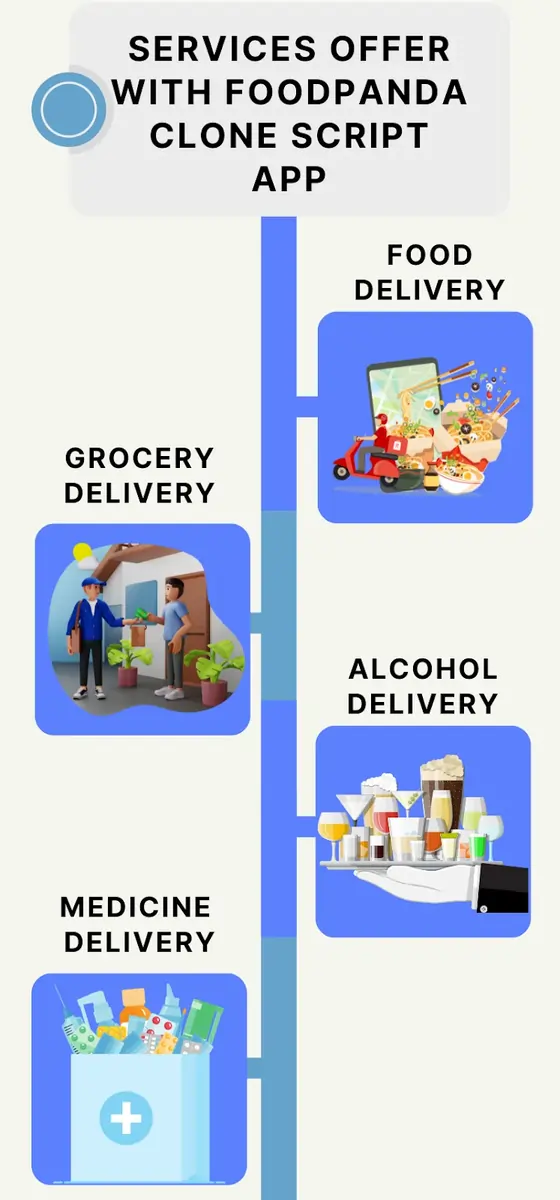
A food delivery platform can be designed to support more than restaurant orders. Depending on the platform architecture and local regulations, businesses can expand into additional delivery categories.
Common options include:
- Restaurant food delivery: Customers order meals from restaurants and track delivery.
- Grocery delivery: Supermarkets and grocery stores can manage products, inventory, orders, and deliveries.
- Convenience delivery: Businesses can offer everyday products through the same marketplace.
- Alcohol delivery: Alcohol delivery can require age verification, licensing, restricted delivery hours, and other local regulatory controls.
Foodpanda vs. Foodpanda Clone: What’s the Difference?
Look at the table below and understand the differences between them.
| Factor | Foodpanda | Foodpanda-Like Platform |
| Ownership | Operated by Foodpanda and its parent company | Owned or operated by the business launching the platform, depending on the solution and agreement |
| Purpose | Large-scale food and local commerce marketplace | Food delivery marketplace designed for a specific market, niche, or business |
| Geographic Focus | Operates across multiple Asian markets | Can be launched in a selected city, region, or country |
| Business Model | Uses marketplace, delivery, advertising, and other revenue streams | Can use commissions, delivery fees, subscriptions, advertising, or other models |
| Customization | Proprietary platform | Features, branding, workflows, and integrations can be customized depending on the development approach |
| Launch Time | Not applicable | Depends on whether the business chooses custom development, white-label software, or a pre-built/self-hosted solution |
| Data Control | Managed under Foodpanda’s platform and policies | Depends on the hosting model, software provider, contracts, and infrastructure |
| Vendor Onboarding | Managed according to Foodpanda’s operating policies | Business owner can define onboarding requirements and marketplace rules |
Main Features of the Foodpanda Clone Script
A food delivery marketplace normally consists of four connected components: the customer app, restaurant/vendor dashboard, rider app, and admin panel. Each component has a different role in the order lifecycle.
The most important features should be planned around the complete order journey rather than simply copying the visible features of Foodpanda.
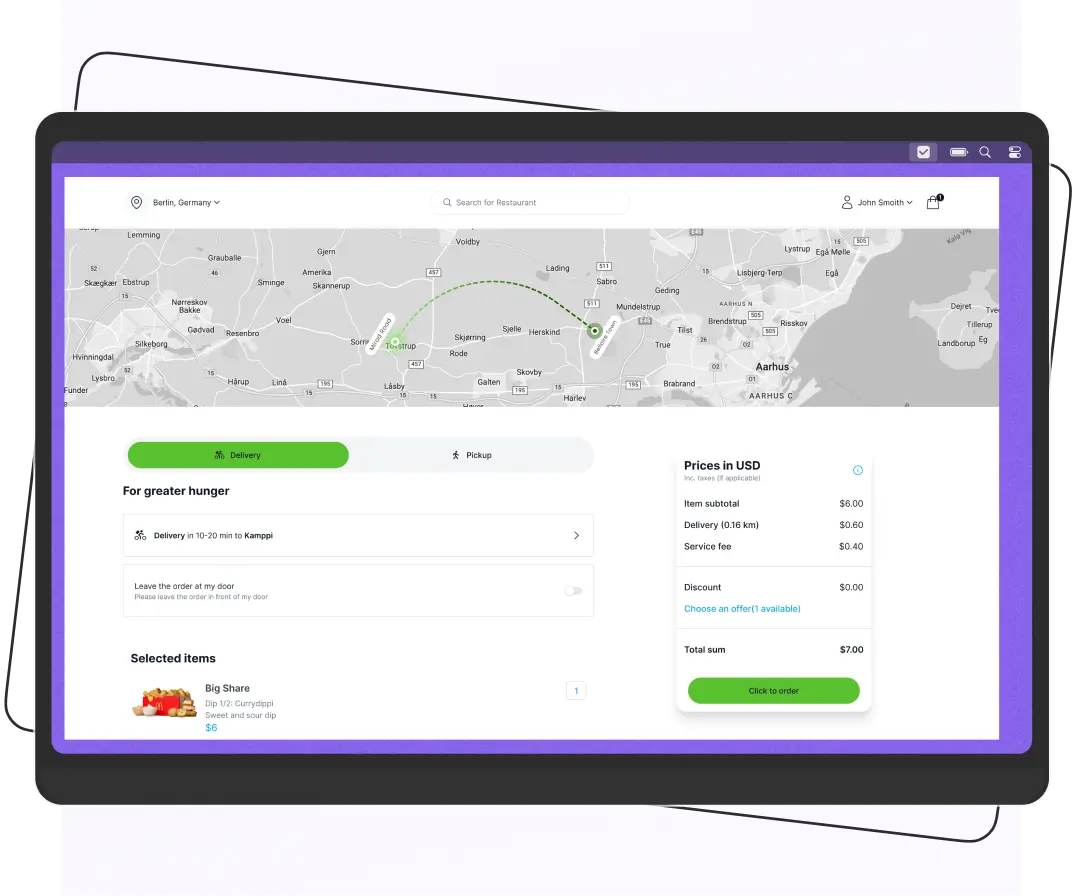
Admin Dashboard
The admin dashboard can help manage the app’s overall operations. These include:
| Features | Description |
|---|---|
| Customer Management | The admin dashboard allows for reviewing customer information and other useful details. |
| Restaurant Management | The admin can manage all the operations of the restaurant flexibly. Also, they can add or remove restaurants according to their requirements. |
| Database Management | Ensures the confidentiality of all information relating to clients, restaurants, riders, etc. |
| Analytics | The admin can analyze the sales, expenses, profits, and projections from the dashboard. |
| Multiple Payment Accepting Panel | The payments clients make through methods such as a credit card, debit card, internet banking, etc., can be conveniently received by the administrator in their account. |
| Add Cities | The business administrator can add more places to the central dashboard to reach more people. But the admin can also set specific criteria for specific cities. |
Customers
Below are the main features for customers.
| Features | Description |
|---|---|
| User Registration | Foodpanda account creation requires users to register by creating an account with an email address. They have to provide some information, such as their name, contact number, address, etc. |
| Searching For Restaurants | This feature allows customers to search for restaurants nearby. |
| Browse the Menu | Users can browse the Foodpanda menu, view details, check prices, and customize their orders according to their needs. |
| Ordering And Checkout | Users can add items to their cart and proceed to checkout. Plus, they can apply promo codes and discounts at the time of payment. |
| Rating And Reviews | Users can provide feedback and ratings to restaurants based on their experience. The feedback helps future customers make informed decisions. |
| Notifications | Users receive alerts and push notifications for new deals, promotional offers, order confirmations, and updates. |
| Ingredient Choice | Users can add or delete ingredients to suit their tastes before checking out. Customers can offer special instructions at checkout if they don’t find their preferred ingredient. |
| Multiple Order Placement | Users can place a single order that includes items from multiple restaurants or stores, depending on the platform’s multi-vendor capability. |
| History Analysis | Customers can directly access order history for faster ordering. |
| Order Tracking | Users can track their orders in real time. They know the status of their order, such as preparation, dispatch, and estimated food delivery time. |
| Secure Payments | The secure payment gateway helps users pay through Foodpanda payment methods, including credit/debit cards, cash on delivery, and digital wallets. |
| Tip Provider | When customers pay for their orders, they can enter the tip amount if they want to give it to the people who serve the food. |
Restaurants and Grocery Stores
Here are the key features of the restaurant.
| Features | Description |
|---|---|
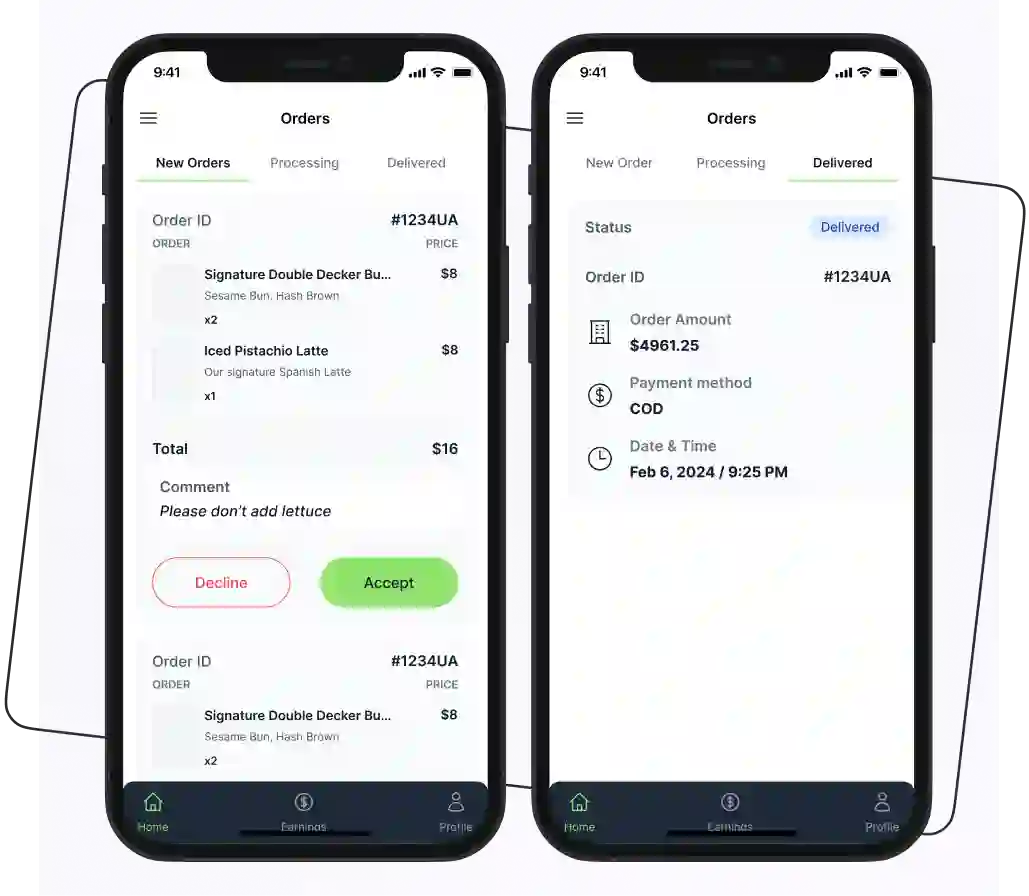
| Dashboard | The dashboard allows restaurants and stores to manage customer orders, item availability, and communication. |
| Menu Customization | This feature allows restaurants and stores to customize their menu according to their customers’ needs. |
| Order Tracking | The Foodpanda track order feature allows restaurants and stores to easily track orders and know which orders are delivered and pending. |
| Order Management | Restaurants and stores can manage their orders, which are completed and those that need to be completed. |
| Respond to Feedback | To build a Foodpanda grocery clone app that allows stores to respond to customer feedback and review ratings. |
| Manage Promotions and Deals | The Foodpanda grocery script allows for providing deals and discounts to customers on the app. |
| Notifications | With the help of notifications and alerts, the restaurant and stores know when the customer places an order. |
Delivery
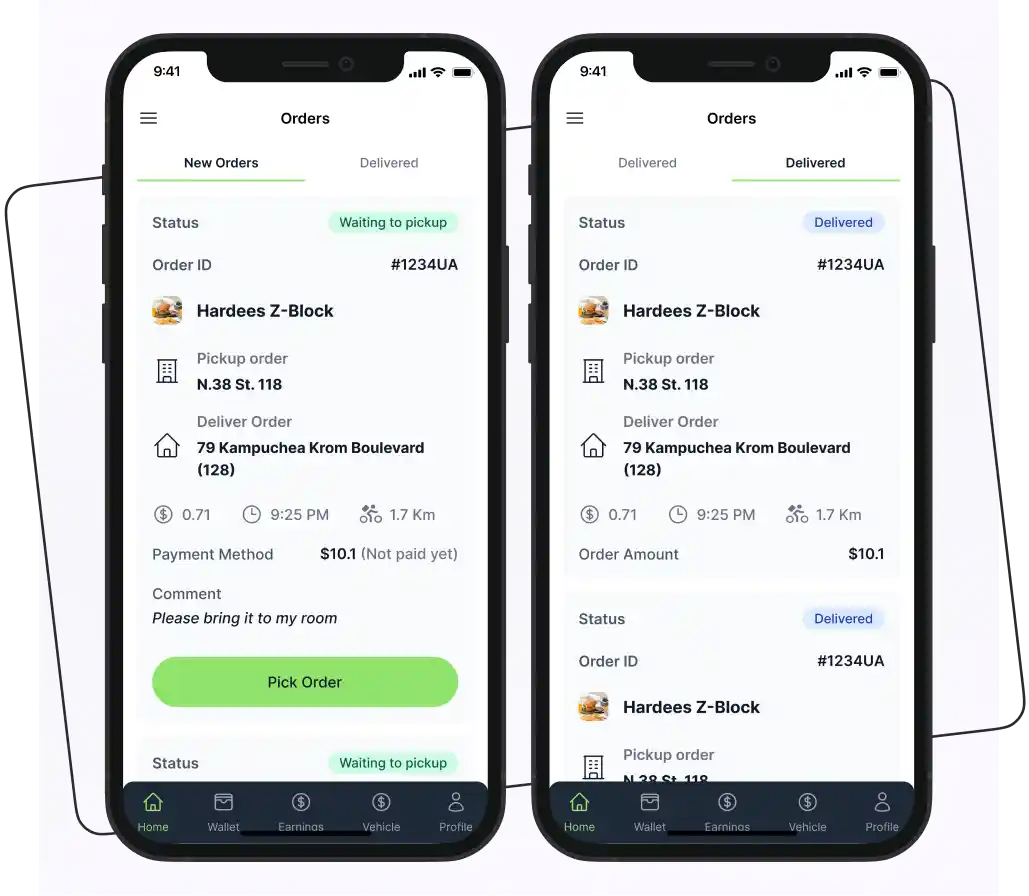
The following are the main features of the rider delivery app.
| Features | Description |
|---|---|
| Easy Onboarding | The sign-up process allows digital document uploads. Delivery executives can easily register as app stakeholders. |
| Confirmation of Pickups | Delivery drivers might display their immediate or delayed pickup status based on location. |
| Order History | When the delivery executive delivers the order, they can save it in their order history. |
| Notifications | The deliverer gets notifications for the orders they have to deliver. |
| Full Details About Food Order | Food item details, contact number, and customer location are sent to the deliverer for easy delivery. |
| Route Optimization | The food rider app selects the nearest free driver and assigns the shortest and fastest route to deliver the order on time. |
| Accept or Reject Orders | When a customer places an order, it is automatically sent to the rider who is closest to them. The rider has every right to accept or reject the order request. |
| GPS Tracking | With GPS tracking, the rider can find the exact address where the order needs to be delivered. |
Advanced Features of the Foodpanda Clone App
The Foodpanda app clone offers advanced functionality. So, look at the table below and know about them.
| Features | Description |
|---|---|
| Advanced Search Bars | Customers can search for their food items and restaurants with filtering and sorting elements. |
| Multilingual support | The restaurants can offer their business in different languages. Therefore, everyone can use the app without difficulty. |
| Better Product Management | The store managers can easily manage their products. They group them into different categories and subcategories. |
| Different Themes | The app has light and dark theme choices to meet the customer’s needs. Admin has the right to pick a theme. |
| Print Invoices | Allow storefronts to create invoices for all completed sales within the app. Also, a printer can be linked to the app via Bluetooth. |
Benefits of the Foodpanda Clone App
The Foodpanda alternative app offers several benefits to users, restaurants, grocery stores, etc., who enter the food delivery market. Below are some key benefits of the food delivery app to help.
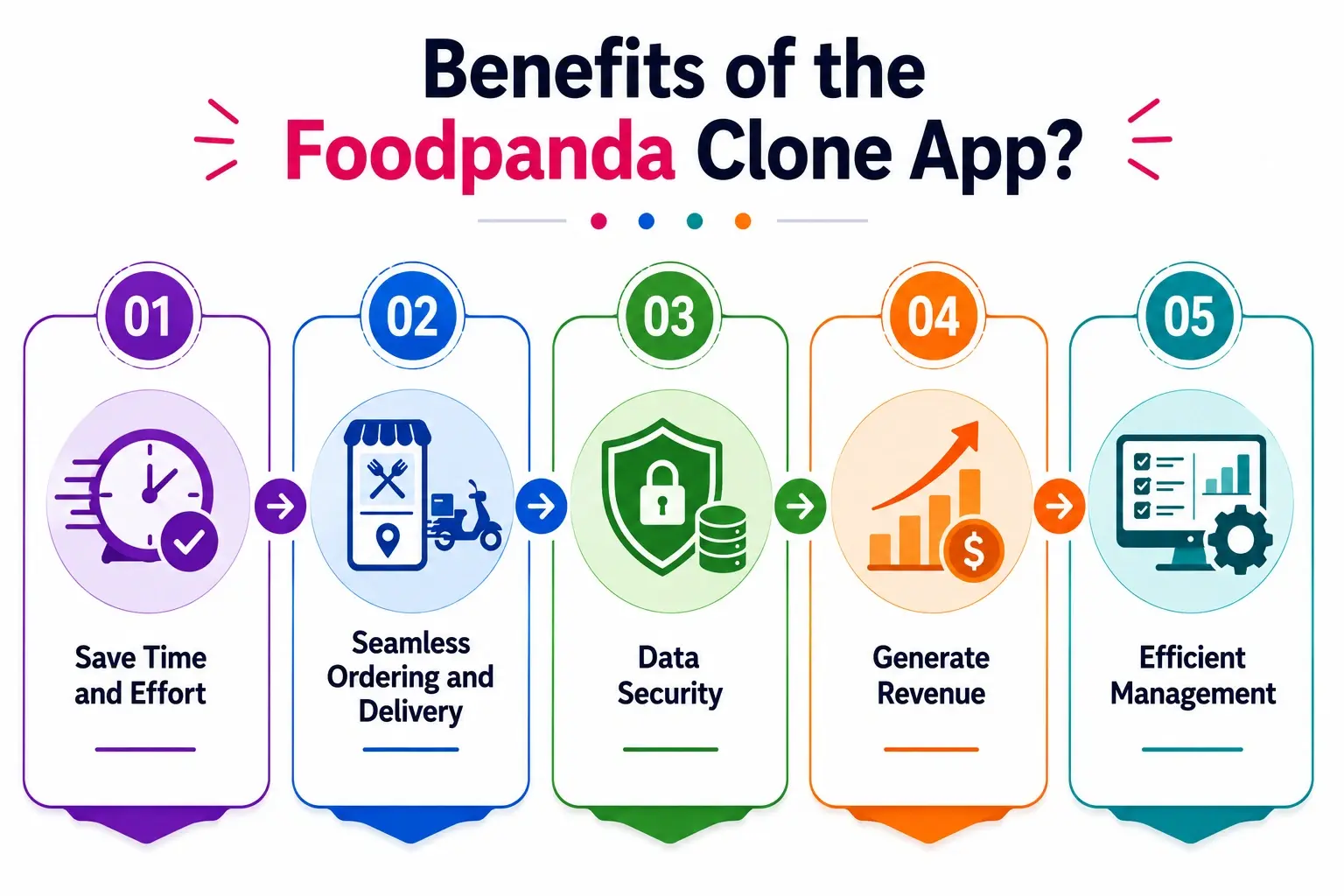
Save Time and Effort
The clone apps allow customers to order food from restaurants on their mobile phones. It reduces the need to visit restaurants and use traditional phone calls. Plus, it can save a lot of time and effort.
Easy Ordering and Delivery
A user-friendly interface simplifies the ordering process. Customers can easily customize orders, browse menus, track deliveries, and make secure payments.
Data Security
The Foodpanda app clone comes with a security protocol. All data is secured. Use TLS for data in transit, encryption at rest for sensitive stored data, and appropriate payment tokenization.
Generate Revenue
With the Foodpanda app clone, restaurants can expand their customer reach and generate more revenue. Also, they can gain access to a larger customer base without investing a lot of money.
Efficient Management
With the help of clone apps, restaurants can easily streamline their operations, such as order management, customer communication, and more. Plus, it can help them track sales, handle incoming orders, etc., efficiently.
How Does a FoodPanda Clone App Work?
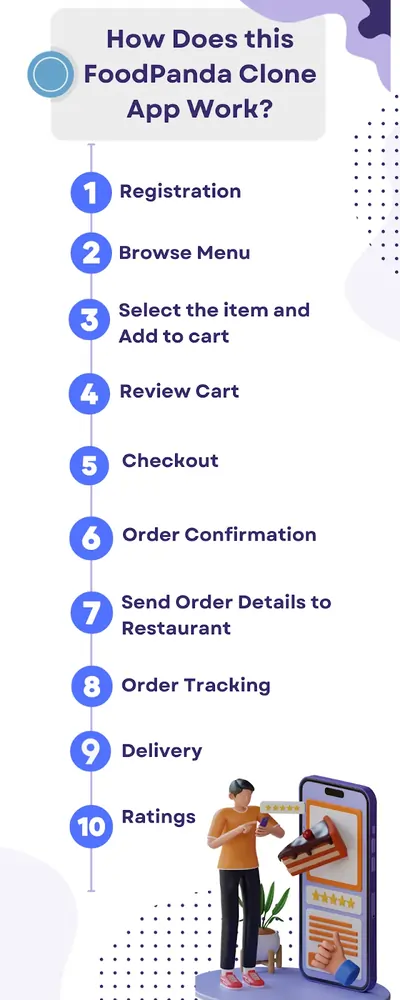
Before developing the app, you should know how to use the Foodpanda app. Below is an overview of how the Foodpanda app clone works.
For Customers
1. Registration
Customer registration requires users to sign up with their email address and provide basic details such as name, password, and contact number.
2. Browse Menu
Users can browse menus and restaurants in their area. They can view prices, ratings, profiles, etc.
3. Select the Item and add it to the Cart
The user selects the menu item, customizes it, and adds it to their cart.
4. Review Cart
After adding items, users review their cart and make any necessary adjustments. Also, they can apply any discount or promo codes if available.
5. Checkout
Users can check out when they order and select the payment method, such as cash on delivery, credit/debit cards, etc.
6. Order Confirmation
Users can receive a notification after order confirmation.
7. Send Order Details to the Restaurant
The restaurant receives order details from the app. The restaurant prepares and delivers the order.
8. Foodpanda Order Tracking
Users can track the live location status of their order. They receive updates from order preparation to delivery.
9. Delivery
The rider picks up the order from the restaurant and delivers it to the given address.
10. Ratings
Users can provide feedback about their overall experience, food quality, and delivery service. They use the Foodpanda rider rating feature and rate the delivery service.
For Restaurants
Foodpanda connects restaurants with customers who are looking for food in their delivery area. The restaurant workflow works as follows:
1. Restaurant Registration
The restaurant first registers on the platform and provides information such as its business details, location, contact information, operating hours, and menu. The platform may review the restaurant before approving it.
2. Create and Manage the Menu
After approval, the restaurant can add menu items, prices, descriptions, images, categories, and customization options. Restaurants can also update item availability and pricing when required.
3. Receive Customer Orders
When a customer places an order, the restaurant receives the order through its restaurant dashboard, tablet, or an integrated POS system, depending on the platform setup. Foodpanda also provides partner integrations for managing catalogs and receiving real-time order updates.
4. Accept and Prepare the Order
The restaurant reviews the order, confirms it, and starts preparing the food. The restaurant can update the order status so the platform knows when the order is ready for collection.
5. Rider Pickup
Once the order is ready, a delivery rider collects it from the restaurant. The platform can coordinate the pickup and delivery process between the restaurant, rider, and customer.
6. Order Delivery
The rider takes the order to the customer’s delivery address and updates the delivery status through the rider app.
7. Payment and Reporting
After the order is completed, the platform records the transaction and applicable fees or commissions. Restaurants can use their dashboard or available reports to monitor orders, sales, and other performance information.
Supercharge your deliveries with Enatega.
Register NowTechnologies Used to Build Foodpanda Clone App
Creating the Foodpanda alternative app requires a stack of front-end and back-end development technologies. Here are some of the main technologies used to develop a clone app like Foodpanda.
| Requirement | Technology | Why it matters |
| Mobile apps | React Native / Flutter | Cross-platform development |
| Backend | Node.js / NestJS | API and real-time workloads |
| Database | PostgreSQL / MongoDB | Depends on transactional/data model |
| Real-time tracking | WebSockets | Live order/rider updates |
| Maps | Google Maps / Mapbox | Geocoding, routing, ETA |
| Push notifications | FCM/APNs | Order status updates |
| Payments | Regional gateways | Local payment support |
Steps to Create the Foodpanda Clone App
To create the Foodpanda app clone, you need to follow the steps mentioned below.
1. Do Market Research
First, you have to do some research. Determine your app goals, key features, restaurant marketing strategies, and Foodpanda’s target audience.
Also, you should know the scope of your project and understand customer preferences. In addition, analyze your competitor apps and determine where they are weak.
2. Decide the Business Model
After research, select the Foodpanda business model for your food delivery app. Choosing the right business model for a Foodpanda-like app will greatly impact your business revenue. Therefore, make an informed choice and keep all the things in mind that you gather in your research phase.
3. Follow All Laws
Ensure you follow all local laws and regulations when operating the food ordering app clone. Legal compliance protects your platform’s safety, legality, and ethics. You must register your business and get the necessary permits and licenses to run the food delivery service.
4. Partner with Restaurants
Now, partner with restaurants and food providers willing to join your platform. Offer them deals and discounts that can entice them to partner. When your platform grows, you can offer more incentives, promotions, and loyalty programs to engage them.
5. Start Developing the App
When developing a Foodpanda grocery and food clone app, you must categorize your work into three sections.
UI/UX Design: Design a Foodpanda UI/UX interface that is easy to use for users. Make the design simple and easy. Therefore, users can use it without any difficulty.
Frontend Development: When the design is completed, start working on the on-demand food delivery app development. Make sure to turn your UI design functional and interactive.
Backend Development: In the backend clone food app development, the Foodpanda app developer sets up the database, servers, and APIs. Create a secure infrastructure that supports your app. Integrate all your main features into your app.
6. Testing
When the app is completed, thoroughly test it and ensure it functions smoothly. Conduct extensive testing, remove all the bugs, and create an error-free app. Test the app on different platforms before submitting it to the app stores.
7. Deployment
After the testing phase, deploy the app to the Google Play Store and App Store. Follow all the guidelines and complete the submission process.
8. Ongoing Maintenance
Keep your app up-to-date with regular updates and address any issues. When updating your app, consider the user feedback, preferences, and market dynamics. Success and growth require regular monitoring of how updates affect user retention and engagement.
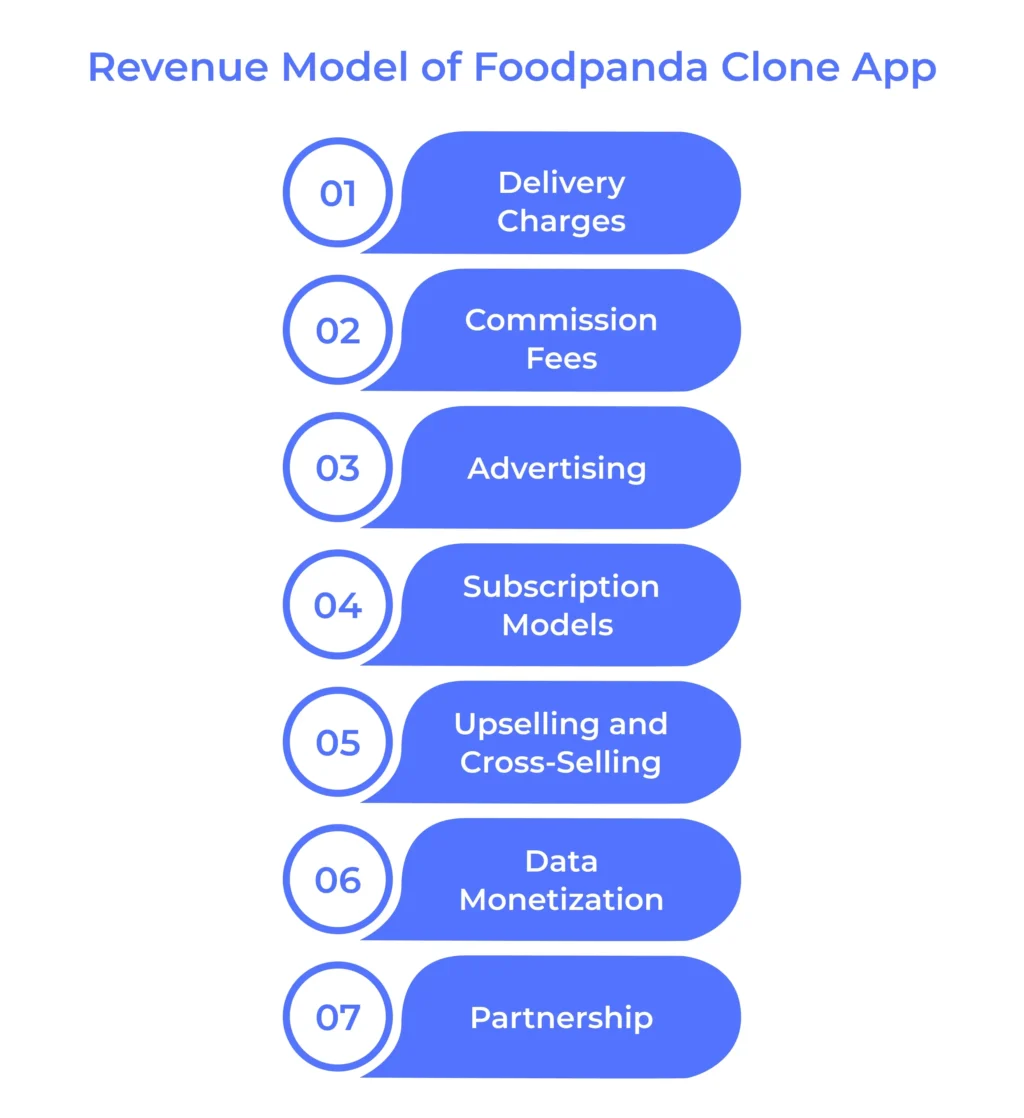
Revenue Model of Foodpanda Clone App
The Foodpanda app clone can generate revenue from several monetization strategies. The following are the revenue models adopted by food delivery apps like Foodpanda.
Delivery Charges
The food delivery apps charge a delivery fee from customers for each order. These charges can depend on several factors, such as order value, distance, peak hours, etc.
Commission Fees
It is the main revenue-generating model. Charge a commission fee from restaurants for each order placed through the app. This commission is typically deducted from the payment made by the customer to the restaurant or food establishment.
Advertising
The multi-vendor food delivery platform can generate revenue through advertisements. They offer advertising and promotional opportunities to restaurants and other relevant businesses. This can include banner ads, sponsored listings, featured promotions, or targeted marketing campaigns. Restaurants can pay to increase their visibility and attract more customers.
Subscription Models
Another revenue model is to offer subscription services to customers. For a monthly or yearly fee, subscribers can enjoy benefits such as free deliveries, exclusive discounts, or faster delivery times.
Upselling and Cross-Selling
Foodpanda’s similar apps can provide an opportunity for restaurants to upsell or cross-sell additional services or items during the ordering process.
Data Monetization
A food delivery clone app collects large amounts of data about customer ordering habits, preferences, and restaurant performance. This data can be analyzed and anonymized to provide valuable insights to restaurants and food industry players.
Partnership
The food apps can build partnerships with various brands, such as grocery stores, bakery shops, or liquor stores, and earn referral fees or commissions.
What is the Cost of Developing the Foodpanda Clone App?
The cost of building a Foodpanda-like app ranges between $15,000 – $150,000+. It is based on various factors. These factors include:
- Complexity
- App features and functionalities
- Development platform
- Customization requirements
- Development rates (if you hire someone)
- Use of AI features in the app
Based on these factors, you can easily estimate the exact cost of the Foodpanda app clone. However, the table below shows the rough cost of developing an app like Foodpanda.
| Foodpanda Clone App Development Cost | ||
| Development Approach | Cost Range | Time |
| Basic MVP | 15,000–30,000 | 2-4 months |
| Standard platform | 30,000–70,000 | 4-7 months |
| Advanced marketplace | 70,000–150,000+ | 7-12+ months |
Challenges Faced in Building the Foodpanda App Clone
Below are some challenges and ways to overcome them that you will face in building a clone of Foodpanda.
Challenge: Handling High Traffic
When many users access the app simultaneously, it can lead to slow performance or even crashes. This is especially critical during peak times, like lunch or dinner hours.
How to Overcome It?
- Use Cloud Services: Platforms like AWS or Google Cloud can dynamically adjust resources based on traffic, ensuring the app remains responsive.
- Load Balancing: Distribute user requests across multiple servers to prevent any single server from becoming overwhelmed.
- Optimize Performance: Regularly review and improve the app’s code to ensure it runs efficiently. Use techniques like lazy loading and caching.
Challenge: Payment Security and Data Privacy
Ensuring the security of payment information and personal data is vital to maintain user trust and comply with regulations.
How to Overcome It?
- Use Secure Payment Gateways: Integrate well-known payment processors that comply with security standards (like PCI DSS) to handle transactions safely.
- Encrypt Data: Implement encryption protocols for data at rest and in transit to protect sensitive information from unauthorized access.
- Regular Security Audits: Conduct frequent checks and updates to identify and fix potential vulnerabilities.
Challenge: Customer Retention
Keeping users engaged and coming back to the app is a continuous effort. Without effective retention strategies, users might switch to competitors.
How to Overcome It?
- Offer Promotions and Loyalty Programs: Provide discounts, referral bonuses, and loyalty rewards to encourage repeat usage.
- Enhance User Experience: Focus on intuitive design and smooth navigation. Gather user feedback to make improvements based on their preferences.
- Engage Through Notifications: Use personalized notifications to remind users of deals or new features, but avoid overwhelming them.
By addressing these challenges thoughtfully, you can create a great app that meets the needs of your audience.
Tips for Selecting the Foodpanda Clone App Service Provider
Below are some tips to help you select the Foodpanda delivery clone app service provider.
- Before selecting the clone app service provider, identify your requirements, like what you want to achieve, what features you would like to add, what your budget is, and more.
- Choose the clone app provider that can bring your ideas to life and whose team is capable of implementing your features.
- Check ratings and reviews to get a better idea of their services.
- Find out about the technology stack that a company uses to generate clone applications before selecting one. To create applications for every platform, the organization needs to use agile development processes and the newest technologies. This guarantees quicker development and more effective project management.
- To build a great food app like Foodpanda, effective communication is necessary. Thus, to precisely meet your needs, make sure the selected company is aware of them and keeps in close contact with you throughout the app creation process.
Case Study: Lumi – Qatar’s AI-Powered Super App Built on Enatega
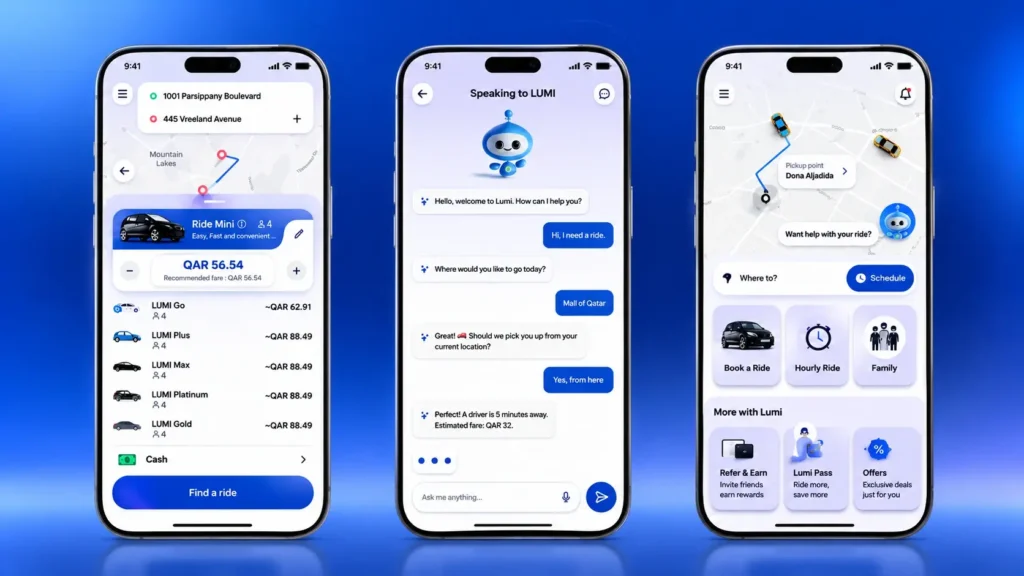
Lumi is Qatar’s first AI-powered super app, built on the Enatega framework and enhanced with its own AI features.
Lumi started with ride-hailing as its main service, offering AI-powered ride matching and peer-to-peer fare negotiation. From the beginning, it was designed as a multi-vertical platform, allowing it to later add food delivery, hotel bookings, and flight search within the same app.
The Challenge
Most delivery and mobility platforms are built for a single purpose. This can make it difficult to add new services later without changing the core infrastructure. Lumi needed a flexible platform that could start with ride-hailing and expand into food, travel, and other on-demand services without requiring separate apps for each service.
The Approach
Lumi used Enatega’s customizable, open-source multi-vendor architecture as its technical foundation and added:
- AI-powered matching and support, including a conversational agent that allows users to book rides or request services by describing what they need.
- One customer app for rides, food ordering, hotel deals, and flight search instead of separate apps for each service.
- Secure in-app payments and a digital wallet for easier transactions.
- Local compliance designed for the Qatari market and aligned with Qatar’s National Vision 2030 digital economy goals.
The Outcome
Lumi launched as Qatar’s first AI-powered super app, bringing mobility and lifestyle services together in one platform. It has expanded beyond ride-hailing into food and grocery ordering, hotel bookings, and flight search, with these services managed through one admin system instead of separate backends.
Why This Matters for a Foodpanda Clone
Lumi shows why businesses building food delivery platforms may benefit from choosing a multi-vertical architecture from the beginning. A platform can start with food delivery and later add grocery, courier, ride-hailing, or other on-demand services without having to rebuild the entire system.
Supercharge your deliveries with Enatega.
Register NowFAQs
Foodpanda is a Delivery Hero subsidiary, and Foodpanda is headquartered in Singapore. Delivery Hero itself is headquartered in Berlin.
Foodpanda is unique due to its features, which include:
User-friendly interface
Deals and discounts
Ratings and feedback
Global presence
Developing an app like Foodpanda takes 6-8 months. However, the exact timeline depends on your requirements, and if rework is required, it can take more time.
Xcode IDE, UIKit framework, and Swift programming language are required for Native iOS development.
Native Android Development requires the Android Studio IDE, the Android SDK, and the Java or Kotlin programming language required for Native Android development.
No, Foodpanda and Foodora are not the same company. Foodpanda and Foodora are separate food delivery services.
Hungry Panda primarily focuses on delivering Asian cuisine, particularly catering to the needs of Asian communities. Foodpanda offers a broader range of food options and operates in multiple countries with a more diverse restaurant selection.
Foodpanda’s competitors include services like UberEats, Deliveroo, Just Eat, Grubhub, and DoorDash, depending on the region.
Yes, you can order Foodpanda for someone else in another city by entering their address during the checkout process. Just ensure that the restaurant you choose delivers to that location.
A Foodpanda clone can generate revenue through restaurant commissions, delivery fees, advertising, subscriptions, and featured listings. You can also add partnerships and upselling options.
Yes, you can extend a Foodpanda clone to support grocery and medicine delivery. A multi-vendor platform can manage different business verticals from one system.
Conclusion
Building a Foodpanda-like marketplace doesn't require recreating every component from the ground up. The right platform can give you the core infrastructure and allow you to customize branding, workflows, and business rules.
Therefore, you can now learn all the steps required to create your food delivery app. However, if you want and need the help of an experienced food delivery app development company, explore Enatega’s Foodpanda-like solution or request a demo to see how the platform works.
About the author

Hudaibia Khalid is a senior content writer with several years of experience in creating clear and easy-to-understand content. Over the years, she has worked closely with startups, restaurants, and entrepreneurs, helping them simplify complex digital and technical topics into actionable insights.
Her expertise lies in writing about on-demand platforms, food delivery solutions, and business growth strategies in a way that is accessible even to non-technical readers. With her experience in the industry, she focuses on guiding businesses step by step, from understanding ideas to turning them into fully working solutions.
SHARE






 IOS
IOS Android
 Web
Web