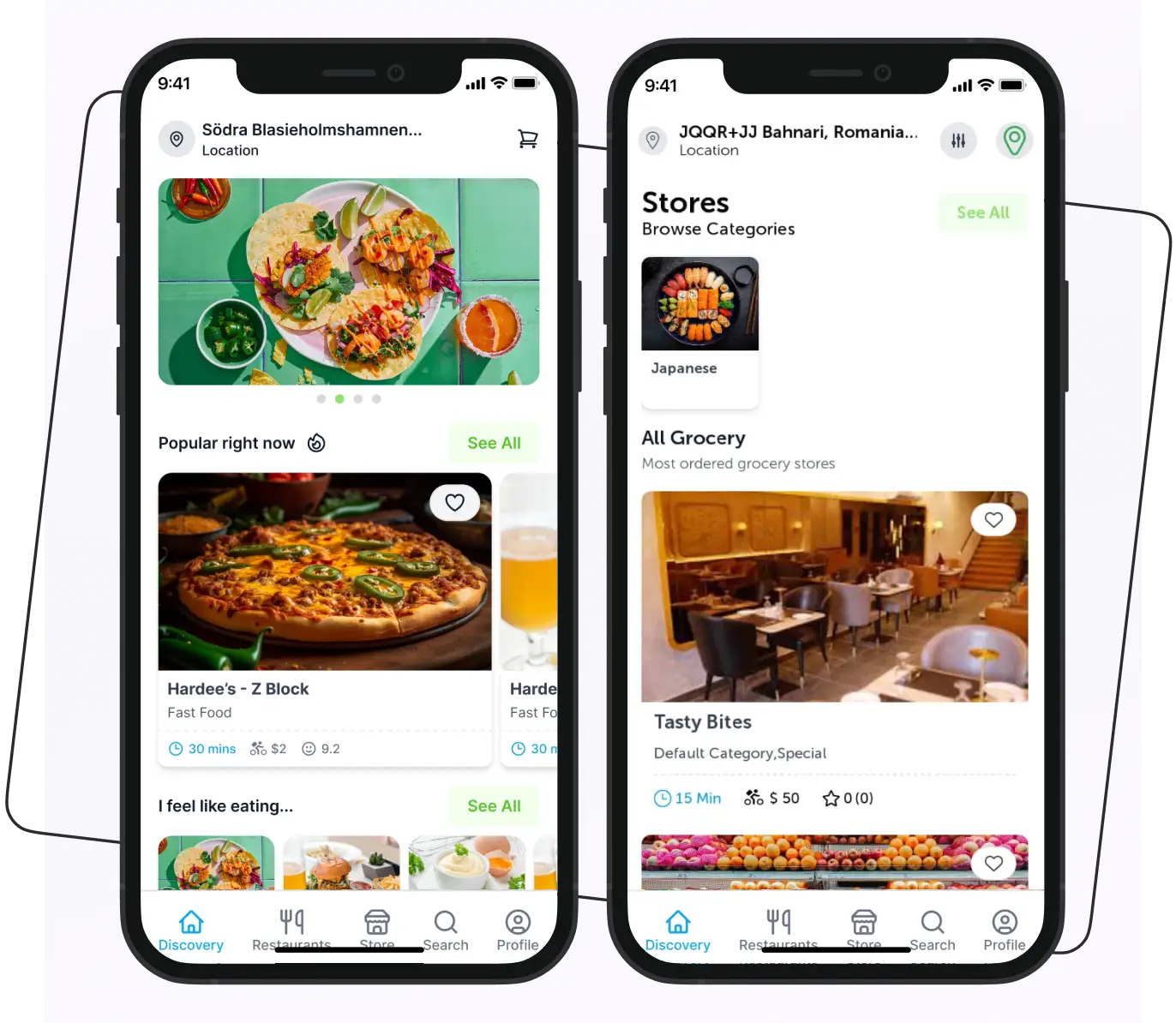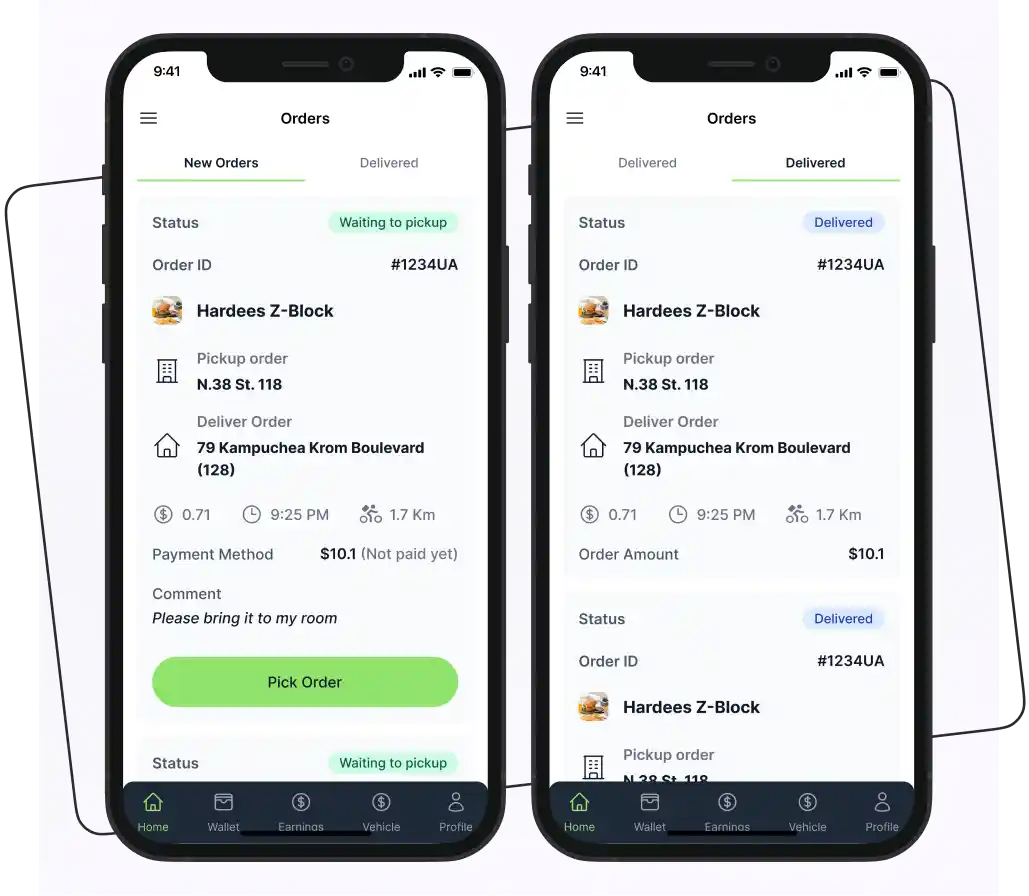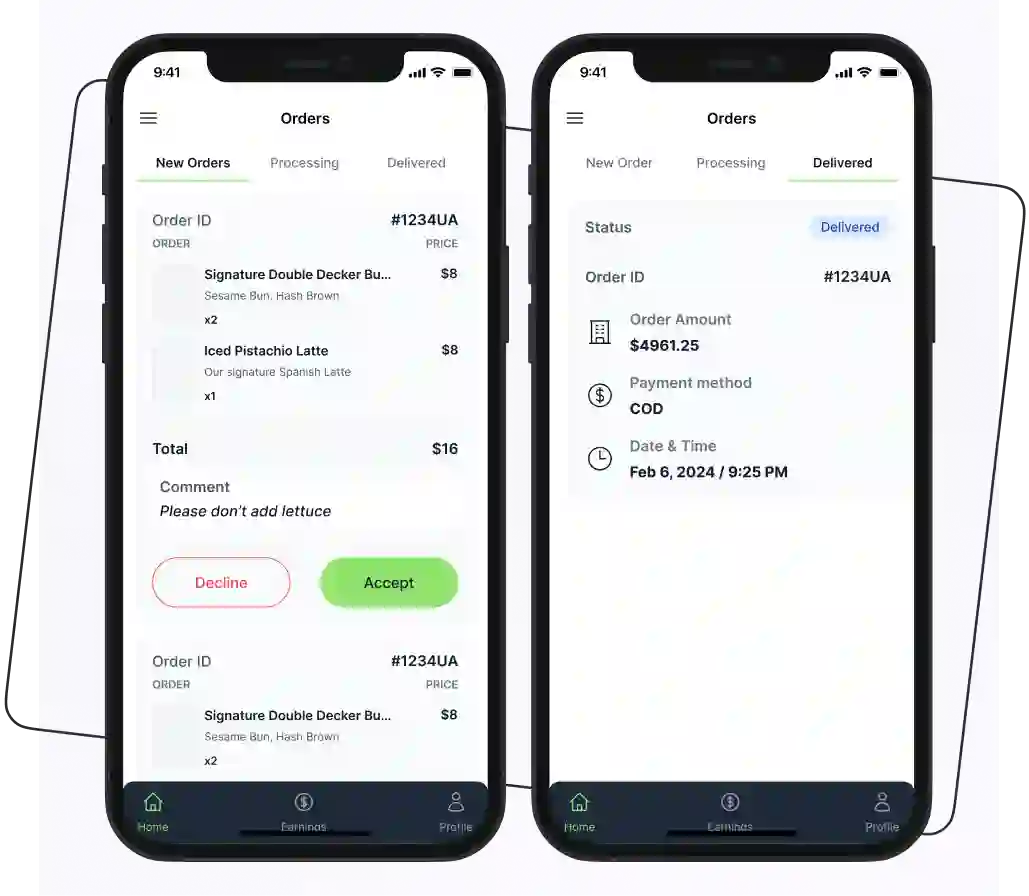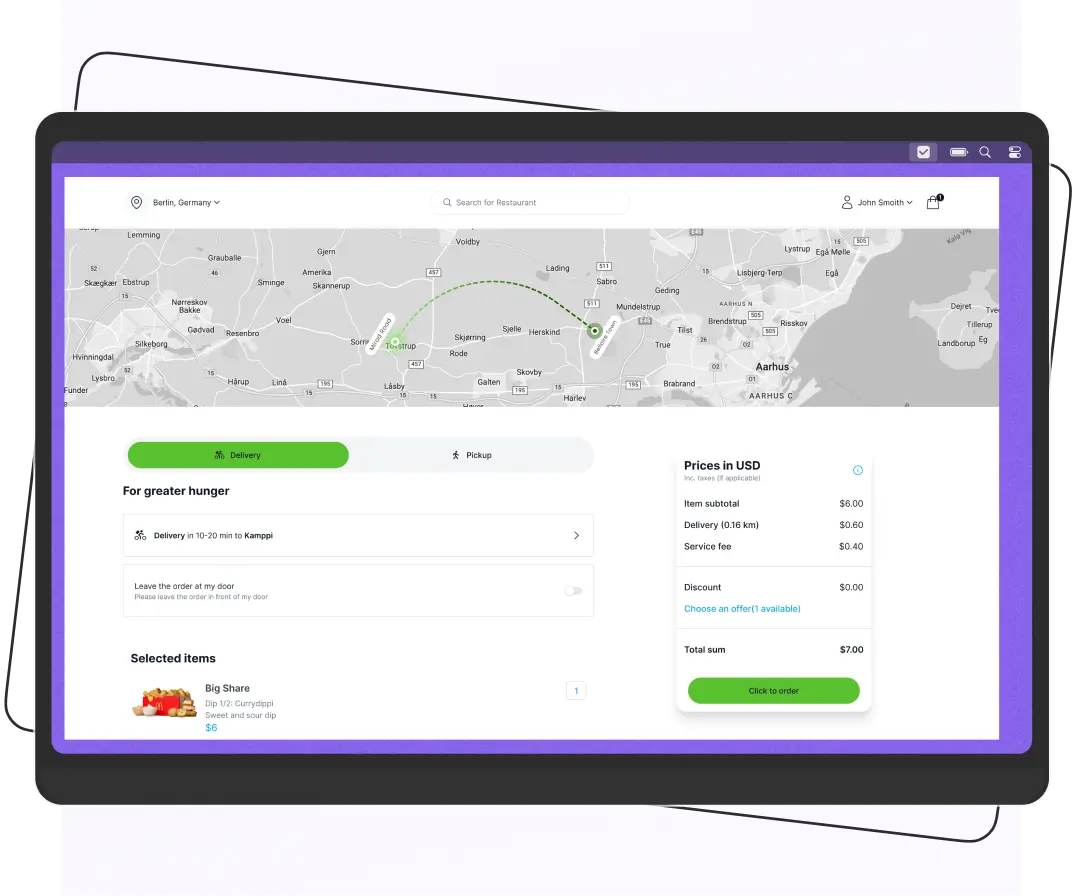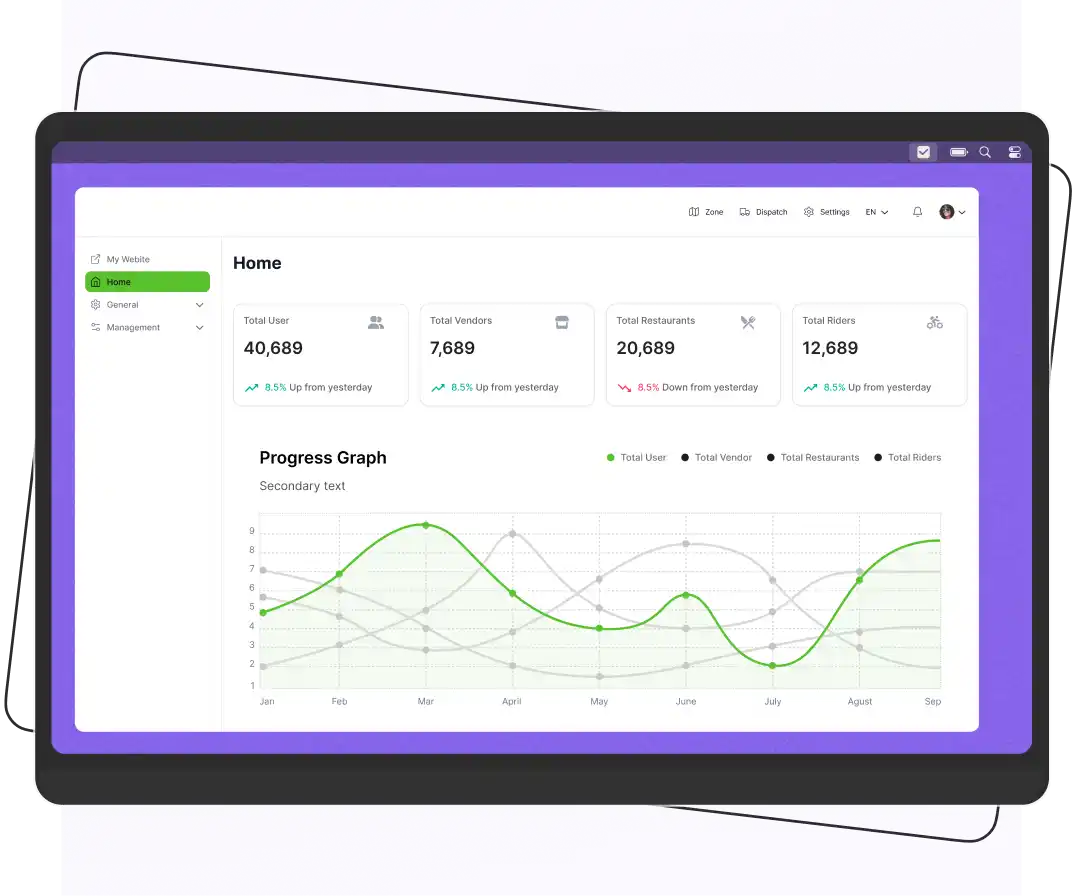



A Bolt Food clone is a pre-built, white-label software solution designed to replicate the food and grocery delivery features of Bolt Food. It includes apps for customers, delivery couriers, and restaurants, plus a central admin panel to launch a delivery business in weeks.
Launching a food delivery startup from scratch can take 8-12 months and tends to burn through budget before you’ve validated demand. A white-label Bolt Food clone app compresses that timeline to weeks by giving you a tested foundation.
Bolt Food is a well-known and successful food delivery and ordering platform that connects customers with local restaurants. Order your favorite dishes to your doorstep with the Bolt Food delivery app.
It operates in European and African cities and is well-known for fast grocery delivery. It can deliver your groceries directly to your door on time.
The app has top-notch features such as an intuitive user interface, real-time tracking, secure payment options, and a comprehensive restaurant listing to provide a seamless experience for both customers and restaurant partners.
Using a white-label Bolt Food clone app solution, you can replicate its proven business model and customize it according to your requirements. It is a powerful solution for all multi-delivery needs.
Are you ready to build a food delivery app like Bolt Food? Check out this blog for complete information.
Key Takeaways
- Bolt Food Clone App: A white-label solution that replicates Bolt Food’s business model for food and grocery delivery.
- Features: Includes real-time tracking, secure payments, multi-language support, and an intuitive interface.
- Business Model: Generates revenue through commission fees, delivery charges, and advertising.
- Development Process: Involves market research, app design, feature integration, testing, and deployment.
- Benefits: Quick market entry, brand recognition, operational efficiency, and multi-industry use (food, grocery, pharmacy, etc.).
- Customization: Can be tailored to business needs with branding and unique features.
What is Bolt Food?
Bolt Food is an online food ordering and delivery platform that was launched by Bolt, an Estonian ride-hailing company. Bolt expanded its services to include food delivery in addition to its transportation services. The platform allows users to order food from various restaurants and have it delivered to their desired location.
Similar to other food delivery platforms, Bolt Food operates through a mobile application or website.
Moreover, the Bolt Food app had over 23 thousand downloads in Poland in November 2023. By offering food delivery, Bolt aims to provide a convenient and efficient solution for users to access a wide range of food options from their favorite restaurants without having to leave the comfort of their homes.
Bolt Food vs. Bolt Market
Bolt Food and Bolt Market should not be treated as identical services. Bolt Food focuses primarily on food delivery from restaurants and stores, while Bolt Market is Bolt’s grocery offering available through the Bolt Food app in selected markets. Bolt Market allows customers to order groceries and household products and have them delivered by courier partners.
For businesses planning a Bolt Food clone app, this distinction is important. A food delivery platform can later be expanded into grocery, retail, or other local delivery categories, but each vertical may require different product catalogues and business rules.
How Does Bolt Food Work?
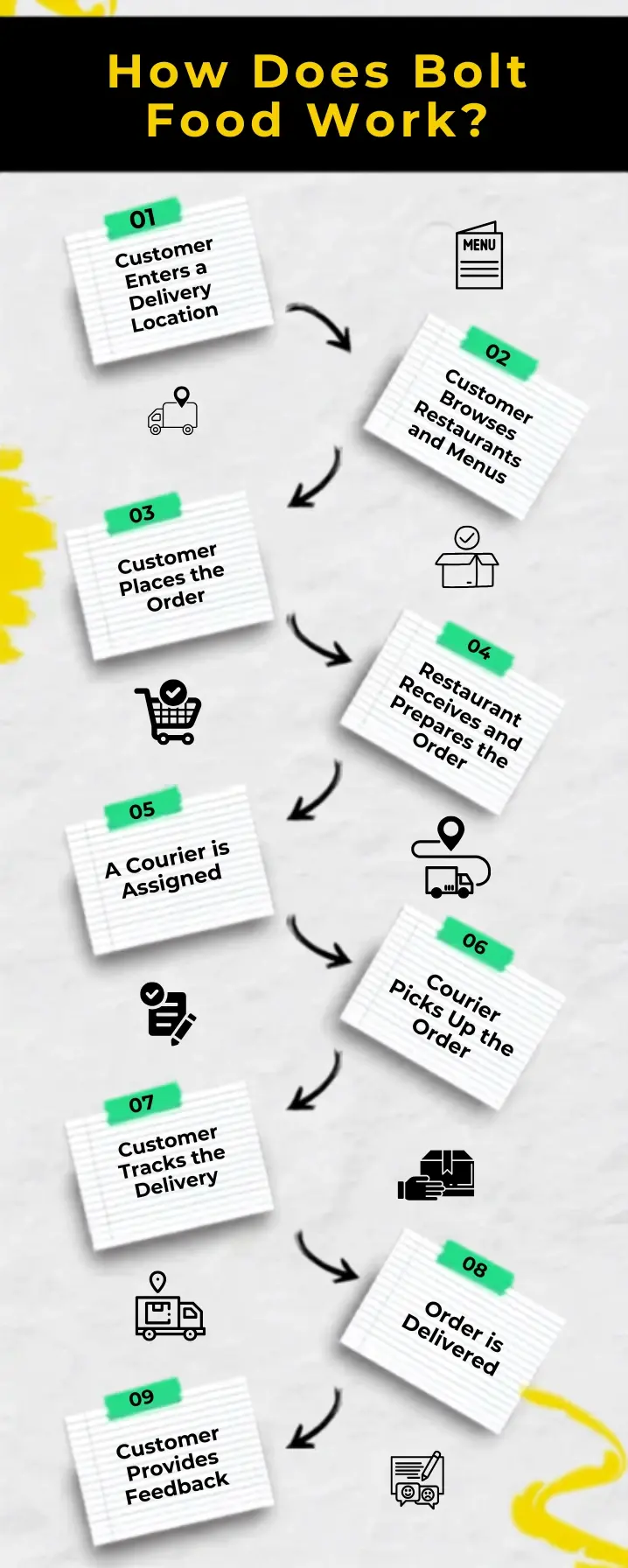
Here are the steps involved in using Bolt Food.
1. Customer Enters a Delivery Location
The customer opens the Bolt Food app or website and enters their delivery address or location. The platform then shows restaurants and stores that can serve that area.
2. Customer Browses Restaurants and Menus
Customers can browse available restaurants and stores, view menus or products, check prices, and add items to their basket.
3. Customer Places the Order
After selecting the required items, the customer reviews the basket and chooses the available fulfilment option. Depending on the restaurant and market, this can include delivery or pickup.
The customer then provides the required delivery information and completes checkout using an available payment method. Bolt states that payment options can include card, cash in some markets, and Bolt Balance.
4. Restaurant Receives and Prepares the Order
Once the order is placed, the restaurant or store receives the order through the platform.
The business can review the order details and prepare the requested food or products. In a delivery platform of your own, the restaurant dashboard should allow partners to manage incoming orders, update order status, manage menus, and monitor their operations.
5. A Courier is Assigned
For orders requiring platform-managed delivery, a courier is assigned to collect the order from the restaurant or store.
Bolt’s current terms explain that couriers are responsible for delivery unless the partner handles delivery itself. This distinction is important when designing your own platform because you can support both platform-managed delivery and merchant-managed delivery if your business model requires it.
6. Courier Picks Up the Order
The courier travels to the restaurant or store, collects the prepared order, and begins the delivery.
A Bolt Food-style courier app should provide the courier with important information such as:
- Pickup location
- Customer delivery address
- Order details
- Delivery instructions
- Navigation
- Order status
- Earnings information
7. Customer Tracks the Delivery
After the courier collects the order, the customer can track the delivery through the app. Bolt’s support documentation states that a live map can show the courier’s location once the order has been collected.
For your own delivery platform, real-time tracking can be implemented using GPS, mapping services, and push notifications.
8. Order is Delivered
The courier delivers the order to the customer’s specified location. The platform can then update the order as completed.
Depending on the payment method and local operating model, the order may already have been paid for online or may require cash handling. Bolt supports both cashless and cash delivery flows in markets where those options are available.
9. Customer Provides Feedback
After receiving the order, the customer may be able to rate the restaurant, courier, or overall experience, depending on the platform’s available features. For a new food delivery business, ratings and feedback can help identify problems.
Bolt Food Business Model
Below is the business model of Bolt Food.
Customer Segments: The customer segments in this business model include:
Foodies: People who enjoy having food delivered to their homes
Neighborhood eateries: Suppliers who desire to grow their company
Restaurant Partnerships: Bolt Food establishes partnerships with various local restaurants in the cities where it operates. These restaurants can sign up to become partners and list their menus on the Bolt Food app.
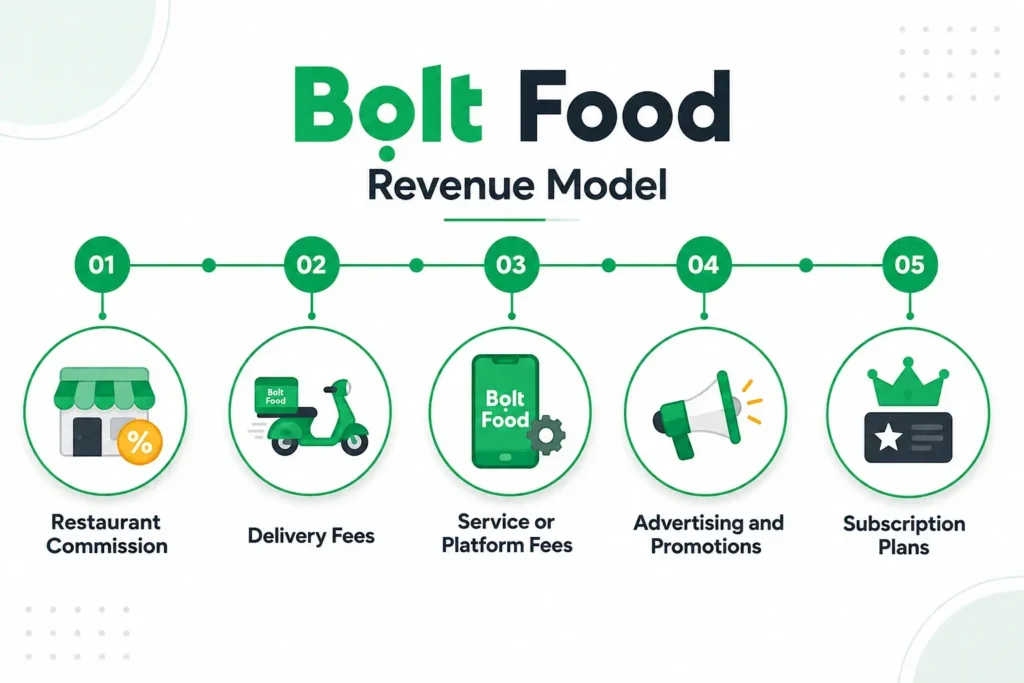
Bolt Food Revenue Model
Below is a revenue model of Bolt Food.
Commission Fees
One common revenue stream for food delivery platforms is charging a commission fee to restaurants for each order they receive through the platform. This fee is typically a percentage of the total order value. The commission fee covers the cost of using the platform’s services, including access to the customer base, order management, and delivery logistics.
Delivery Fees
Food delivery platforms often charge customers a delivery fee for each order. This fee helps cover the cost of the delivery infrastructure, including driver salaries, fuel, and maintenance expenses. The delivery fee may vary based on factors such as distance, order value, and demand.
Service or Platform Fees
A platform can add a small service fee to an order to help cover technology, payment processing, and other operational costs. The fee structure should be clearly displayed to customers before they complete checkout.
Advertising and Promotions
They generate revenue by offering advertising and promotional opportunities to restaurants. Restaurants might pay an additional fee to have their listings featured prominently on the platform or to run targeted marketing campaigns to reach a wider audience.
Subscription Plans
A food delivery business can introduce a subscription program that provides benefits such as:
- Reduced delivery fees
- Exclusive offers
- Other customer perks
Subscriptions can help increase repeat orders and create a more predictable revenue stream.
How to Choose the Right Revenue Model?
You don’t necessarily need to use every monetization method from the beginning. A new food delivery business can start with a simple model, such as restaurant commissions plus delivery fees, and introduce additional revenue streams as its customer and merchant base grows.
When deciding on your pricing structure, consider:
- Customer acquisition costs
- Courier and delivery expenses
- Payment processing fees
- Restaurant operating costs
- Average order value
- Competition in your target market
- Discounts and promotional expenses
- Customer price sensitivity
The goal is to create a revenue model that remains attractive to restaurants and customers while generating enough margin to support delivery operations.
What is a Bolt Food Clone App?
The Bolt Food app clone is a food and grocery delivery platform that provides the same functionality as the original Bolt Food app. The app helps restaurants connect with people nearby.
The main goal of creating the Bolt delivery app clone is to:
- Increase your revenue
- Easily handle food delivery from restaurants near you
- Get insights about your orders, ratings, and sales
- Manage an online menu effectively
Moreover, the Bolt Food app clone can be used for all types of delivery businesses, such as food, groceries, pharmacy, alcohol, milk, etc. Therefore, business owners looking to establish their startup with this clone app can be the ideal solution to generate multiple revenues from many sources.
Supercharge your deliveries with Enatega.
Register NowBenefits of Creating an App Like Bolt Food
Creating a clone app like Bolt Food for business, or any on-demand food delivery app clone, can offer several benefits. Here are some potential advantages of developing a Bolt Food clone app:
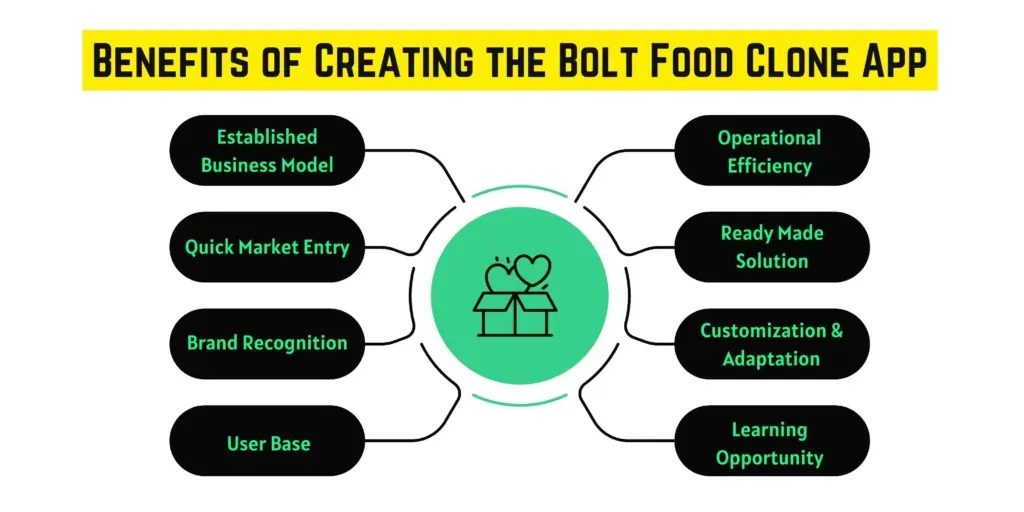
Established Business Model
Creating a Bolt Food delivery app clone allows food delivery restaurants to adopt a proven business model that has already been tested and validated by Bolt Food.
Quick Market Entry
Developing a Bolt Food app clone saves time and effort in conceptualizing and designing a new app from scratch. You can expedite your market entry by utilizing the existing app’s structure, workflows, and features.
Brand Recognition
Bolt Food has already built a strong brand presence in the food delivery industry. Creating a clone app can help you launch with familiar food-delivery workflows, but you still need to build your own brand, restaurant network, customer base, and reputation.
Use the existing model as inspiration rather than assuming users will automatically trust or recognize your new platform.
User Base
Bolt Food has a large user base of customers who are using the platform for their food delivery needs. By offering a similar app, you can tap into this existing user base, potentially gaining a competitive advantage in acquiring and retaining customers.
Operational Efficiency
A customizable Bolt Food clone app solution typically comes with pre-built features and functionalities that streamline the operational aspects of food delivery. These features include order management, real-time tracking, payment integration, and customer support. By using such features, you can enhance the efficiency of your food delivery operations.
Ready-Made Solution
The ready-to-use Bolt Food clone app solution allows you to customize it with your brand name and logo. You don’t need to spend a lot of time and effort creating an app like Bolt Food.
Customization and Adaptation
While developing a clone app, you have the flexibility to customize and adapt the features to suit your specific business requirements. This allows you to differentiate your app from the original Bolt Food platform and potentially offer unique value propositions to your customers.
Learning Opportunity
Developing an open-source Bolt Food clone app solution can serve as a valuable learning experience. It allows you to gain insights into the food delivery industry, understand user expectations, and learn about the underlying technologies and strategies that drive the success of such platforms.
Features of Bolt Food Clone App
Here are some common features that you might find in the Bolt Food app clone.
User Registration: Users should be able to register on the platform using their email address, phone number, or social media accounts. Also, users can add personal information like payment details, address, and other information.
Advanced Search: This feature allows users to search for restaurants according to cuisine type, ratings, location, and price range.
Order Tracking: Users can track their orders in real-time and receive notifications from order confirmation to delivery or pickup.
Rating and Review System: The ratings and reviews allow users to provide feedback and rate the restaurants based on their experiences. It helps build trust, and the restaurants know where they lack and what services they will provide their customers.
Payment Gateway Integration: Integrate secure payment gateways for online transactions. Multiple payment methods are included in the Bolt Food app clone to enhance convenience for users.
Admin Dashboard: The admin dashboard allows you to manage various aspects such as restaurant listings, order payments, menu updates, and analytics.
Discounts and Promotions: The Bolt Food clone script supports discounts and promotional offers to attract users.
Multi-language Support: The platform supports multiple languages and currencies. This feature makes the platform more accessible globally.
How to Build an App Like Bolt Food?
Are you thinking about developing a food delivery app similar to Bolt? But how are you going to do it? To help you out, here is a step-by-step guide to help you with the Bolt Food Clone app development.
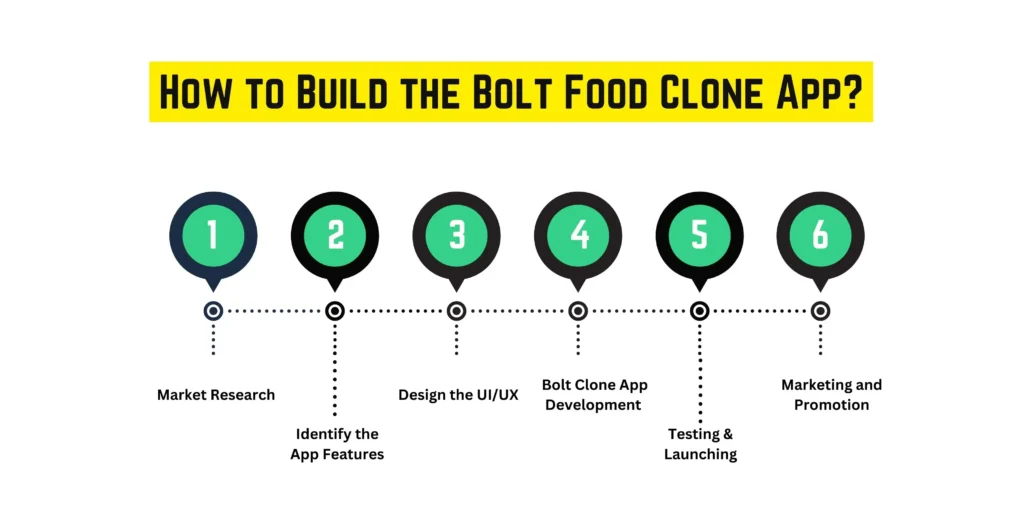
1. Market Research
Many entrepreneurs and app developers find market research expensive, complex, and time-consuming. However, without it, you cannot create a successful app.
Therefore, do your market research before developing the app. It can help you to uncover the preferences and inclinations of customers. Also, you have to know about your competitors, their weaknesses, strengths, the latest trends and challenges in your industry, and other main things.
Such information supports your business plan, and you’ll have the best chance of making your app a success.
2. Identify the Bolt Food Clone App Features
What are the main features of a well-designed Bolt Food app clone? This is the question that is in every business owner’s mind.
Not every business needs every feature from day one. Prioritize based on your launch market and budget:
- Must-have at launch: order tracking, in-app payments, restaurant/courier dashboards, push notifications
- Add in phase two: loyalty programs, advanced analytics, multi-language support, subscription plans
Building a minimum viable version first lets you validate demand before investing in the full feature set.
3. Design the UI/UX
Creating a simple UI/UX is one of the driving principles in food app architecture. A user-friendly interface helps users find what they want to order and check out in just a few taps on a mobile phone.
4. Bolt Clone App Development
Development is the most important element of the app development process. It is the stage where the magic happens.
After designing the user interface, start the front-end and back-end development of the app. Implement all the features and make it a working app for the customers.
5. Testing & Launching
After developing the app, start the testing phase. It involves thoroughly testing all of the features as well as the final product. A complete mobile testing plan is required to provide a high-quality mobile app.
Remove all the bugs and errors and make them error-free. If testing is done successfully and all the errors in the app are fixed, then launch it on the App Store (Android & iOS). Launching new versions of your application is important; therefore, don’t overlook it.
6. Marketing and Promotion
Develop a comprehensive marketing strategy to promote your ready-to-use Bolt Food clone app solution. Utilize digital marketing channels such as social media platforms, food blogs, and influencers to create awareness.
Offer promotions, discounts, and loyalty programs to incentivize repeat orders and build a loyal customer base.
How Much Does it Cost to Build the Bolt Clone App?
To provide you with a rough estimate, the development cost for a Bolt clone app can range from $40,000 to $100,000 or more. However, this is just a general estimate, and the actual cost can be higher or lower depending on your business requirements.
| Component | Estimated Cost |
| UI/UX design | $5,000 – $12,000 |
| Customer app (iOS + Android) | $10,000 – $25,000 |
| Courier app | $8,000 – $18,000 |
| Restaurant dashboard | $6,000 – $15,000 |
| Admin panel | $5,000 – $12,000 |
| Payment gateway + third-party integrations | $3,000 – $8,000 |
| QA & testing | $3,000 – $8,000 |
The cost of building a Bolt clone app can vary based on several factors, including:
- The complexity of the app
- The features and functionalities you want to include
- The development platform
- The development team’s rates
- The region in which the development is carried out
It’s important to consider that developing a food delivery app like Bolt involves various components, such as real-time location tracking, payment integration, route optimization, and rating systems. Each of these features adds to the overall development cost.
Additionally, ongoing expenses such as server hosting, maintenance, updates, and marketing should be taken into account.
Tips for a Successful Bolt Food Delivery App Development
Below are some tips that help you stay competitive in the food delivery market.
Unique UI
The user interface plays a crucial role as it can either make or break your consumer base. A well-designed user interface enhances user interaction and functionality and fosters a strong bond between your customers and your website.
Work on Feedback
It is another main factor in successful food delivery app development. Feedback helps in your growth, and you will run your business without hassle.
Expand your Delivery Reach
Try to expand your food delivery reach, so people in different regions and places can order food by using your food delivery app. It is the ideal way to attract customers.
Simple Ordering Process
Having a food delivery app makes life easier for your customers. Therefore, make the ordering process simple, and with a few steps, a customer can place an order. Never make the process complex and time-consuming.
FAQs
Bolt’s food competitors include food delivery services like Uber Eats, Deliveroo, and Just Eat. Additionally, regional players such as Glovo and DoorDash also compete in various markets, offering similar delivery options for restaurants and groceries.
Bolt Food is owned by Bolt, a ride-hailing company founded by Markus Villig in Estonia. Bolt operates various services, including food delivery, and has expanded its offerings across Europe and Africa.
Bolt Food and Wolt compete in many of the same European markets, but they have different strengths. Wolt focuses on its delivery network and restaurant selection, while Bolt Food can benefit from Bolt’s existing driver network. The “better” choice depends on your city; check app store ratings and delivery times in your specific location.
Yes, Bolt Food is still active and operating in select countries and cities across Europe and Africa, though it has shut down operations in a few specific markets due to local competition. You can place orders for meals and groceries using the mobile app or web platform.
The top three food delivery services are:
Uber Eats: Known for its vast selection of restaurants and user-friendly app.
DoorDash: Popular in the U.S. with a strong presence and diverse offerings.
Grubhub: Offers a wide range of local restaurants and frequent promotions.
Supercharge your deliveries with Enatega.
Register NowConclusion
The global online food delivery market was valued at USD 288.8 billion in 2024 and is projected to grow to USD 355.6 billion in 2026, reaching USD 505.5 billion by 2030, according to Grand View Research.
Newbies are investing in food delivery app development to stay competitive in the food delivery industry.
If you start your food delivery business and need to create an app like Bolt Food. Get a free consultation on your Bolt Food clone app development today!
About the author

Hudaibia Khalid is a senior content writer with several years of experience in creating clear and easy-to-understand content. Over the years, she has worked closely with startups, restaurants, and entrepreneurs, helping them simplify complex digital and technical topics into actionable insights.
Her expertise lies in writing about on-demand platforms, food delivery solutions, and business growth strategies in a way that is accessible even to non-technical readers. With her experience in the industry, she focuses on guiding businesses step by step, from understanding ideas to turning them into fully working solutions.
SHARE






 IOS
IOS Android
 Web
Web