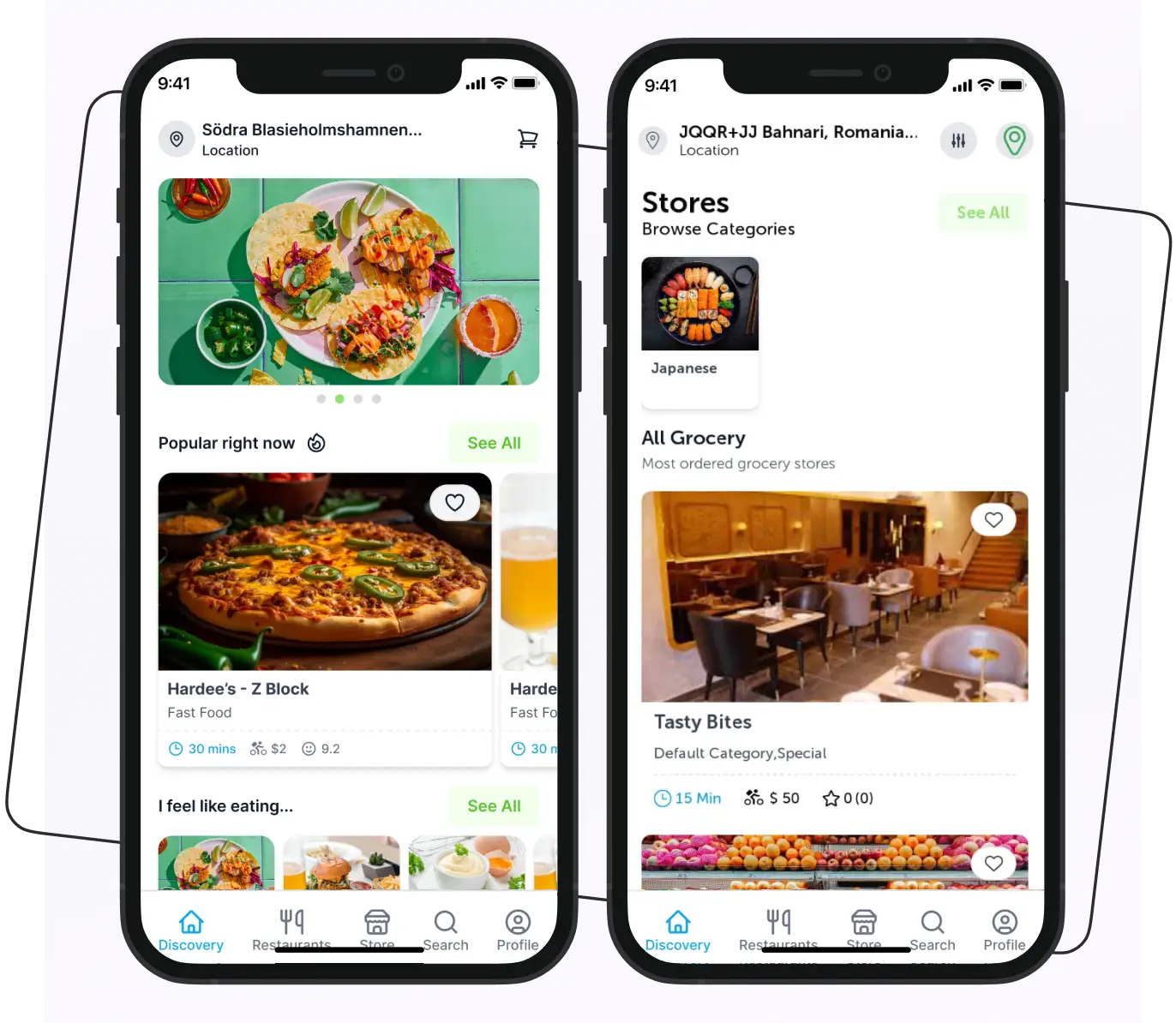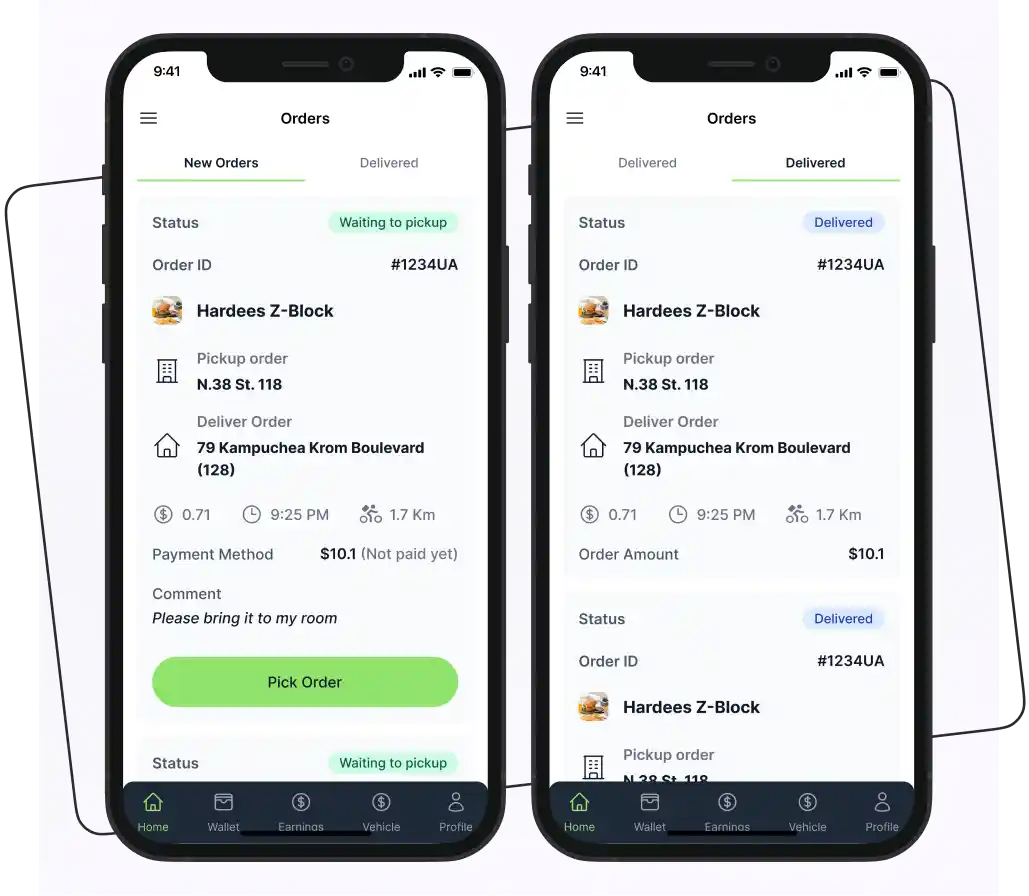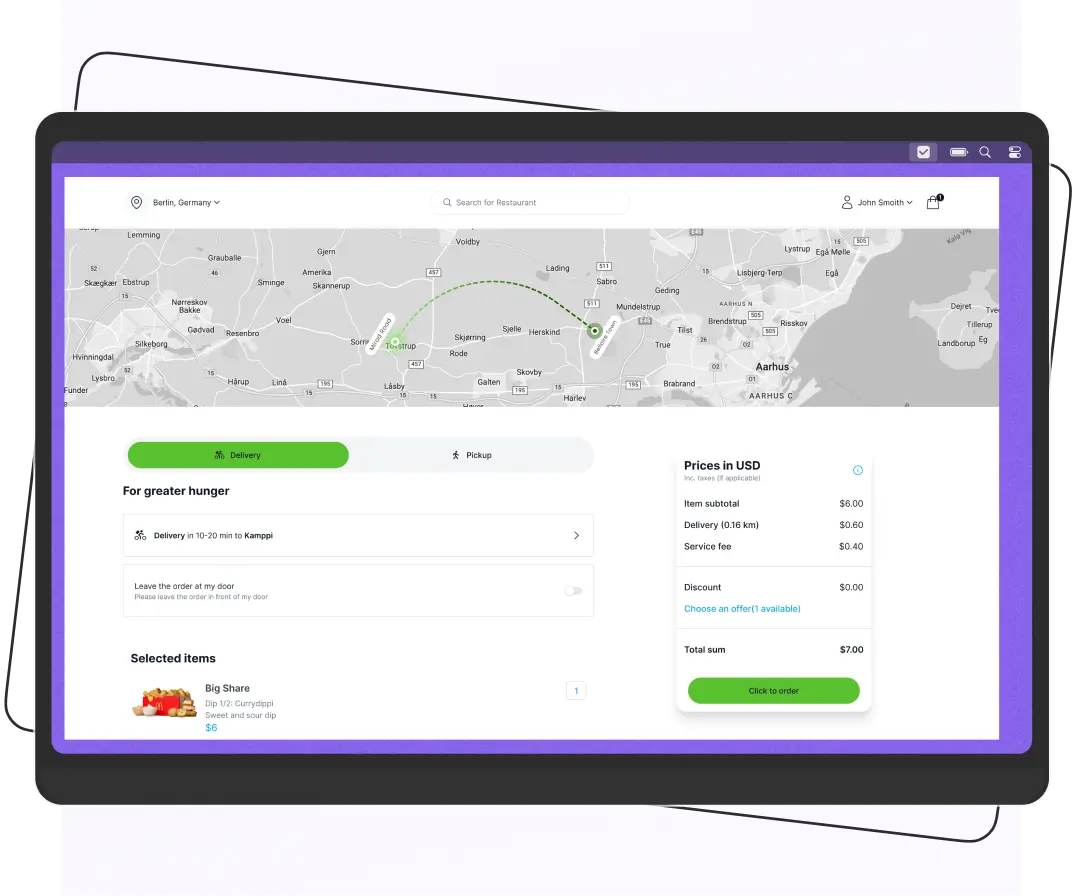


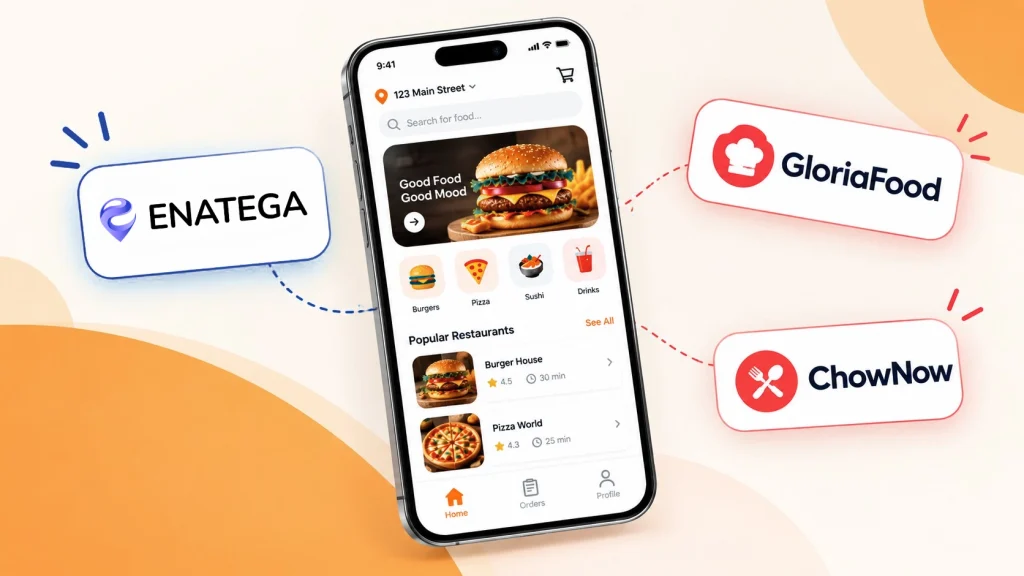
The best one-time-fee food ordering platforms let restaurants and delivery businesses pay upfront instead of recurring software fees. Enatega is a strong option for businesses looking for a full multi-vendor platform with source-code ownership, customer, restaurant, rider, and admin apps, and no per-order commission. When comparing platforms, consider the total cost over time, data ownership, customization, and ongoing maintenance rather than looking only at the upfront price.
“Pay once, and you’re done.” Sounds great, right?
Not so fast.
When you search for a one-time fee online ordering platform, you’ll find plenty of tools making that promise. But in many cases, the one-time payment covers only a branded mobile app, not the ordering website itself. After that, you may still be paying a monthly subscription, hosting costs, or other ongoing charges.
That doesn’t mean genuine one-time-fee options don’t exist. They do, but they’re much rarer than the marketing makes them seem.
We’ll separate the genuine one-time-fee models from the lookalikes, break down what you actually get for your money, and compare the real cost over 1, 3, and 5 years. Because the cheapest price tag today doesn’t necessarily mean the cheapest platform to own tomorrow.
Supercharge your deliveries with Enatega.
Register NowWhat is a One-Time Fee Food Ordering Platform?
A one-time fee food ordering platform is software you pay for upfront instead of paying a recurring monthly or annual subscription. Pay once for the software license, then use the platform without an ongoing software subscription.
Restaurant tech companies use terms like commission-free, lifetime, and one-time payment pretty loosely. And that creates a problem. A platform can advertise zero commission while still charging you hundreds of dollars every month.
If your goal is to stop paying recurring software fees, that distinction matters.
There are four pricing models you’re likely to come across:
| Model | What you pay | Example platforms |
| True one-time fee | One upfront payment with no recurring software cost | Enatega |
| Commission-free subscription | No commission per order, but you pay a recurring monthly or annual fee | ChowNow, Popmenu, UpMenu, Menufy |
| Free platform, paid transaction | No setup or monthly fee, but you pay a per-order or percentage fee, sometimes passed to the customer | GloriaFood, MenuDrive |
| Free and self-hosted | No software license fee, but you cover hosting, domain, maintenance, and your own technical work | TastyIgniter |
Why Does This Matter?
Because commission-free doesn’t mean free.
A platform charging $300 a month may take no percentage from your orders, but you’re still spending $3,600 a year to keep the software running. Over three or five years, that recurring cost can far exceed a one-time license.
On the other hand, a “free” platform may make money through transaction fees or customer-paid convenience charges. And a self-hosted platform can eliminate software licensing costs while shifting the expense to hosting, development, and maintenance.
If you’re looking to avoid recurring software costs, don’t stop at “0% commission.” Look at what you’ll actually pay to keep the platform running year after year.
Best One-Time Fee Food Ordering Platforms
Want to own your ordering platform instead of renting it every month? Here are the best one-time-fee food ordering platforms to explore and what you really get for your money.
1. Enatega – Best for a Full Multi-Vendor Marketplace
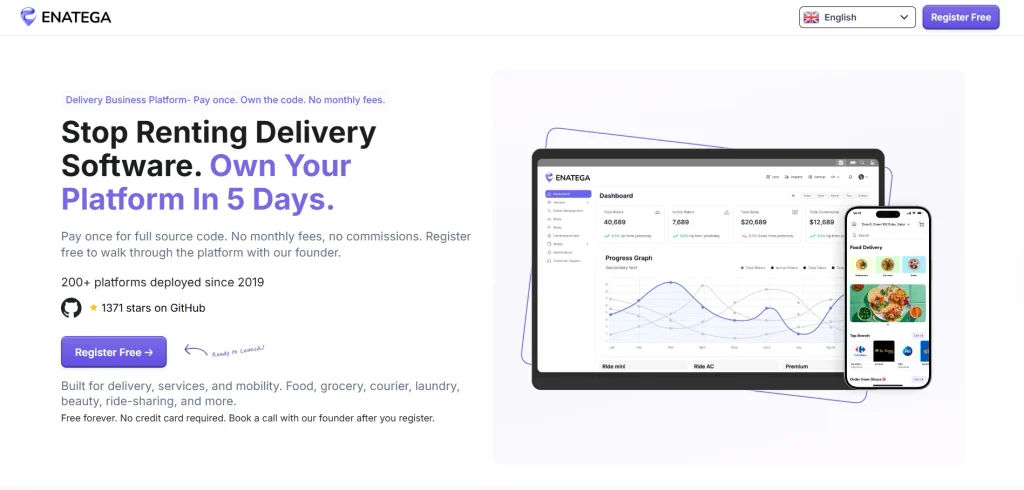
If you’re looking to build more than a simple restaurant ordering website, Enatega is in a different league. It’s designed for businesses that want to launch their own multi-vendor food delivery marketplace rather than simply add online ordering to one restaurant.
What’s Included
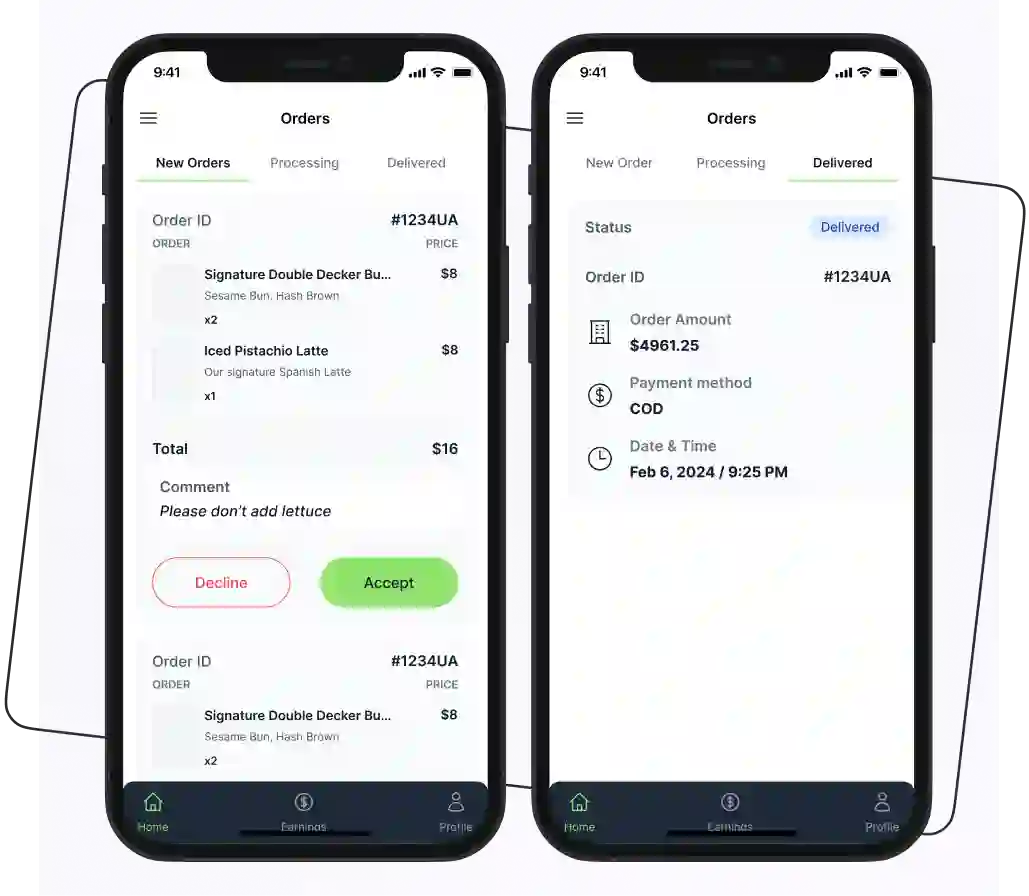
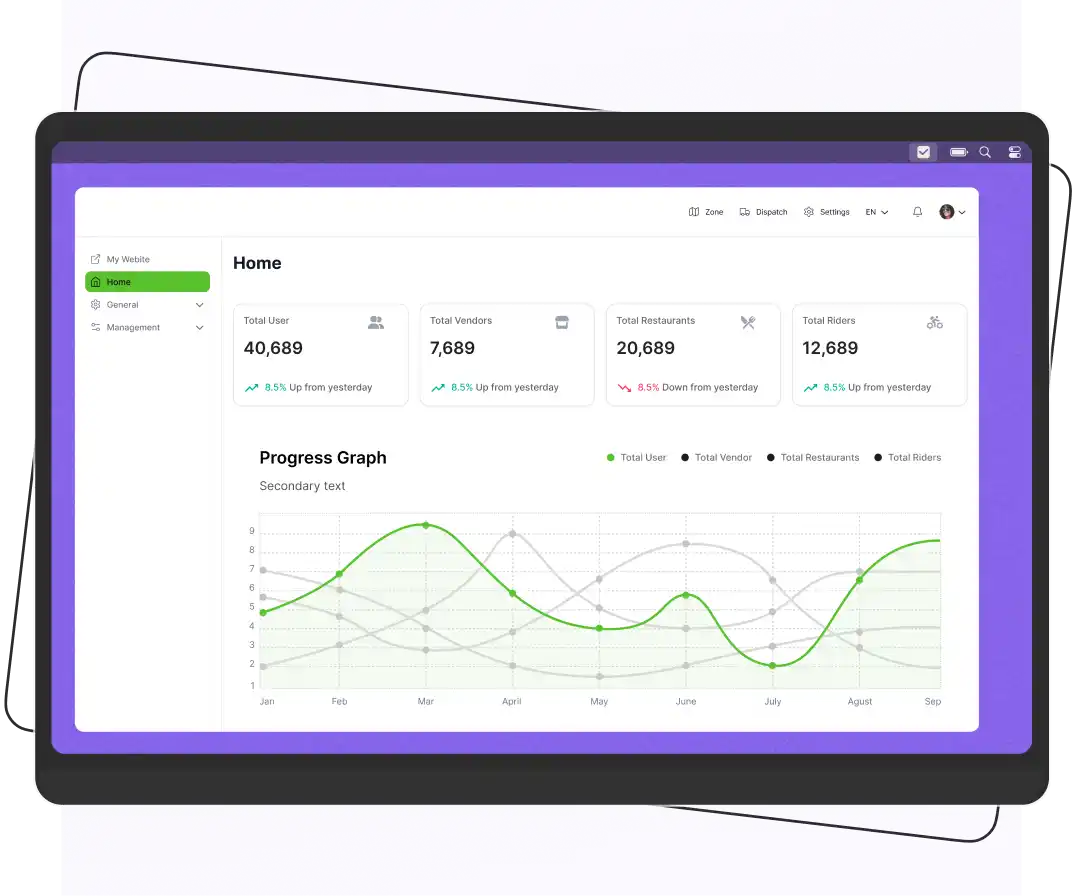
You get the source code for a complete delivery system, including customer apps, restaurant/vendor apps, a rider app, and an admin dashboard. That makes it suitable for building an Uber Eats- or Foodpanda-style marketplace under your own brand.
What to Consider
A one-time software license doesn’t mean everything is managed for you. Hosting, deployment, app-store publishing, maintenance, and future development remain your responsibility or may require additional services.
Pricing
The full platform is available for a one-time license fee. The one-time license does not charge a commission on each delivery.
2. GloriaFood (Oracle) – Best for a Free Core Ordering System
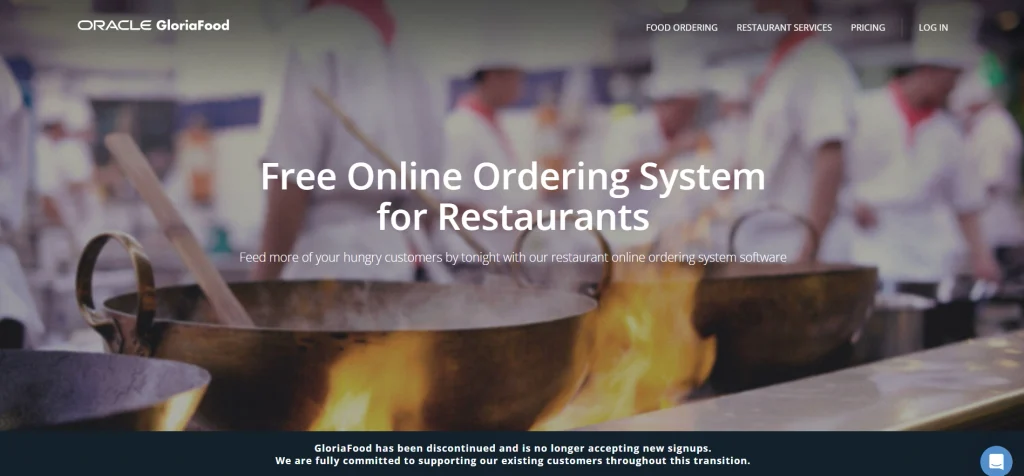
GloriaFood is one of the better-known options for restaurants wanting to accept online orders without a monthly software subscription. Its core ordering system was free, with 0% commission, while restaurants could pay for optional features such as online card payments and branded mobile apps.
Moreover, GloriaFood is not a viable option for new businesses going forward. Oracle announced that GloriaFood will shut down its operations on April 30, 2027.
What’s Included
Restaurants could manage menus and receive and confirm orders in real time. Support multiple locations without paying a recurring software license for the core ordering system.
What to Watch For
The free plan had an important limitation: online card payments required a paid add-on. So while the basic system could genuinely be used for free, restaurants needing online payments would face a recurring monthly cost.
Pricing
The core ordering system is free with unlimited orders and no commission. Online card payments were available as a $29/month add-on, while branded mobile apps were offered separately as a paid feature.
3. ChowNow – Best for Restaurants That Prefer Subscription-Based Software
If you’re willing to pay a recurring fee in exchange for a more managed platform and broad POS integrations, ChowNow is a strong alternative to one-time-fee software.
It eliminates commission on direct orders while offering a wider restaurant technology system than most upfront-license platforms.
What You Get
ChowNow supports 22,000+ restaurants and integrates with 45+ POS systems, including Toast, Square, Revel, and Clover. It also includes marketing tools such as:
- Automated email campaigns
- Loyalty/rewards features
- Push notifications.
What to Watch For
ChowNow is not a one-time-fee platform. You’re paying an ongoing subscription rather than purchasing the software outright. However, it belongs in this comparison because “commission-free” platforms are often considered alongside one-time-fee solutions, and the distinction matters.
Its biggest advantage is the depth of its POS integrations and managed system, features that many one-time-fee app builders don’t provide.
Pricing
Plans start at around $119/month, with 0% commission on direct orders. Standard payment processing still applies, at roughly 2.95% + $0.29 per transaction.
True Cost Over Time: One-Time Fee vs. Subscription vs. Per-Order Fees
A $149 one-time license might look expensive next to a “free” platform. But add a percentage to every order, or a monthly subscription that keeps charging year after year, and the economics can change quickly.
To see the difference, consider a restaurant processing $10,000 in orders per month.
| Pricing Model | Year 1 | Year 3 | Year 5 |
| One-time app fee ($149 once) + processing | ~$149 + processing | ~$149 + processing | ~$149 + processing |
| Commission-free subscription ($149/month) | ~$1,788 | ~$5,364 | ~$8,940 |
| Free platform + 4.5% per order | ~$5,400 | ~$16,200 | ~$27,000 |
| Free self-hosted + ~$15/month hosting | ~$180 + setup labor | ~$540 + labor | ~$900 + labor |
These are estimated costs and don’t include payment fees, taxes, customization, or other extra charges.
Moreover, a true one-time fee can be the cheapest option, but only if the platform continues to work well over time. If the vendor stops providing updates, security fixes, or app-store compatibility, you may end up paying for upgrades or switching platforms altogether.
That’s why it’s important to look beyond the upfront price and consider how reliable and established the vendor is.
What to Know Before Choosing a One-Time Fee Platform
The problem is that pricing labels can be misleading. A platform may advertise 0% commission while charging a monthly subscription, or promote a one-time app fee while keeping other parts of the service behind recurring charges.
Here’s what you should look beyond when comparing your options.
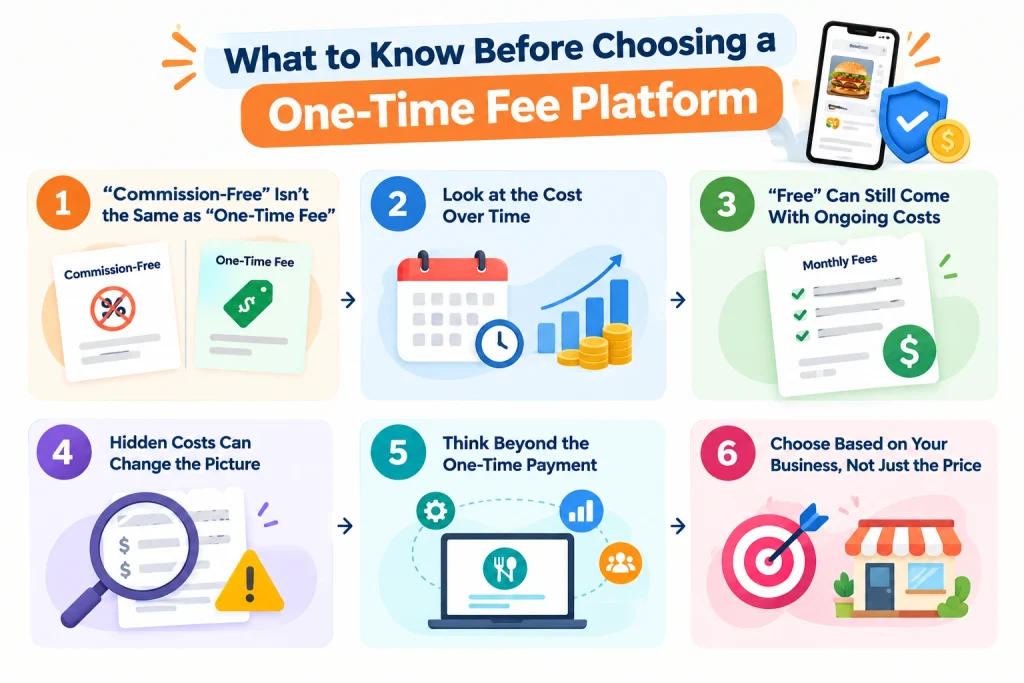
1. “Commission-Free” Isn’t the Same as “One-Time Fee”
This is the biggest source of confusion.
Commission-free simply means the platform doesn’t take a percentage of your orders. It doesn’t mean the software is free or that you pay only once. You could still be paying a monthly or annual subscription.
If your goal is to eliminate recurring software costs, you need to look specifically for the one-time fee, self-hosted, or open-source model.
2. Look at the Cost Over Time
The upfront price only tells you part of the story.
A $149 one-time license may look expensive next to a $149 monthly subscription, but the subscription costs $1,788 in the first year alone and keeps increasing every year.
For a fair comparison, consider the 1-, 3-, and 5-year cost, along with any additional fees.
3. “Free” Can Still Come With Ongoing Costs
Some platforms have no setup fee or monthly subscription but make money through per-order fees, payment charges, or customer-paid convenience fees.
That can work well for some restaurants, but it’s very different from owning software with no recurring platform fee.
4. Hidden Costs Can Change the Picture
The headline price may not include everything you need to operate the platform.
Look for additional costs such as:
- Payment processing
- Hosting
- App-store developer fees
- Setup and deployment
- Premium features
- Custom development
- Maintenance and updates
- Technical support
These costs can turn an apparently cheap platform into a much more expensive one over time.
5. Think Beyond the One-Time Payment
A one-time fee is attractive, but long-term support matters just as much.
Before buying, check whether the vendor actively maintains its software, releases updates, fixes security issues, and keeps its apps compatible with current operating systems and app-store requirements.
A $149 platform isn’t much of a bargain if it stops receiving updates and you have to replace it two years later.
6. Choose Based on Your Business, Not Just the Price
The best platform for a single restaurant may be completely different from what a five-location chain or a multi-vendor delivery startup needs.
A small restaurant might prioritize simplicity. A growing chain may need strong POS integrations. A marketplace operator may care more about source code ownership, customization, and scalability.
That’s why there isn’t one universal winner. The better question is:
Which pricing model and platform make the most sense for your business, both today and over the next five years?
Features You Should Look for in a One-Time Fee Food Ordering Platform
Before choosing a one-time-fee food ordering platform, look for these essential features.
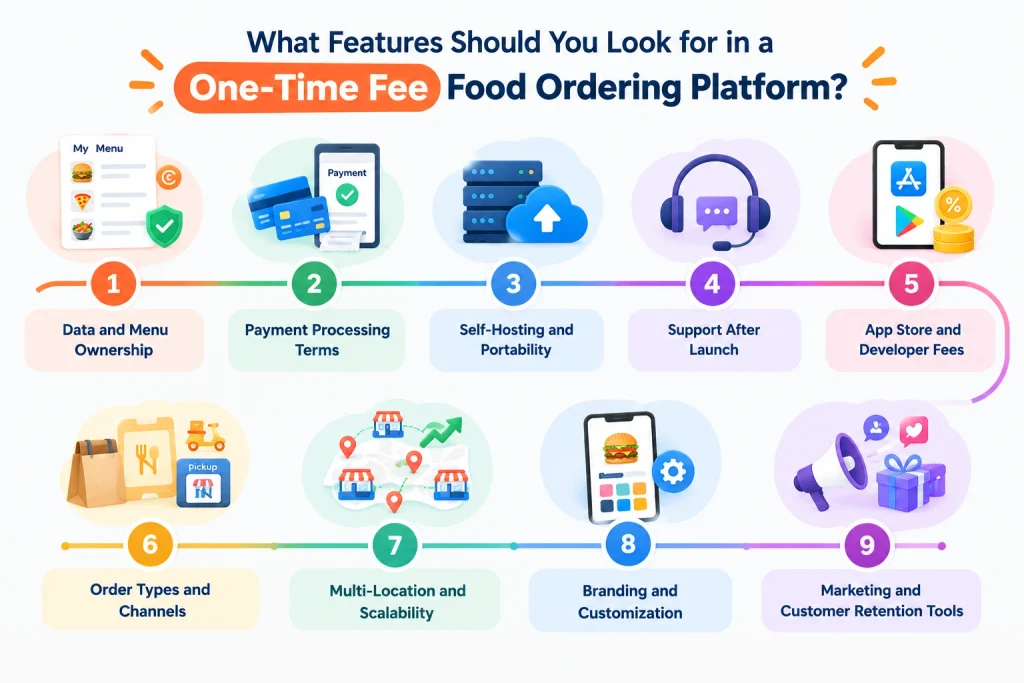
Data and Menu Ownership
Your data should belong to you. Before choosing a platform, check that you can easily export your customer information, order history, and menu data whenever you want.
The platform should allow you to download this data in common formats such as CSV or JSON without having to contact the vendor. If you can’t take your data with you, you’re not getting much real ownership even if you’ve paid for the software upfront.
Payment Processing Terms
A one-time software fee usually doesn’t cover payment processing. Every card or online payment can still come with a separate transaction fee charged by your payment provider.
Before choosing a platform, check:
- What payment processing rates apply?
- Can you connect your own payment provider?
- Are you required to use a specific processor?
- When do you receive your payouts?
Knowing these costs upfront helps you avoid surprises later.
Self-Hosting and Portability
If you’re buying source-code-based or self-hosted software, check that you can move it to another server or hosting provider.
This gives you more control if your hosting costs increase or you decide to switch providers. A platform may advertise a one-time payment, but if you’re locked into its hosting, you could still end up with ongoing vendor costs.
Support After Launch
Find out exactly how much support you get after purchasing the platform. Some vendors provide free support for a limited period and charge extra for help afterward.
Ask what is included in your purchase and what costs extra. You don’t want to discover the support terms only after something goes wrong.
App Store and Developer Fees
If the platform includes branded mobile apps, remember that app store fees are usually separate from the software price.
You’ll generally need your own Apple Developer and Google Play developer accounts to publish your apps. Also, check that the vendor handles the initial submission and future updates when Apple or Google changes its requirements.
Order Types and Channels
Make sure the platform supports the types of orders your business needs. Depending on your model, you may need:
- Delivery
- Pickup
- Curbside pickup
- Dine-in or QR ordering
- Scheduled orders
- Catering orders
It’s better to confirm these features before buying than to pay extra for them later.
Multi-Location and Scalability
Think about where your business could be in the next few years, not just where it is today.
If you plan to open additional locations or onboard more restaurants, check that the platform supports multiple locations and growing order volumes. Also, find out whether additional locations require separate licenses or fees.
Branding and Customization
Don’t assume that “white-label” means complete customization. Some platforms let you change your logo and colors, while others give you much more control over the design and user experience.
If branding is important to you, check exactly what you can customize. A live demo is often more useful than a few screenshots on a pricing page.
Marketing and Customer Retention Tools
Some one-time-fee platforms focus mainly on ordering and don’t include marketing tools such as:
- Loyalty programs
- Email campaigns
- Push notifications
- Abandoned-cart recovery
Decide if you want these features built into your ordering platform or are comfortable using separate marketing tools. A platform with fewer built-in features may cost less upfront but require additional software later.
FAQs
Not completely. Even with a one-time-fee platform, you’ll usually still pay payment processing fees on online transactions. Mobile apps may also require separate app store developer fees.
However, platforms like Enatega come close by offering a one-time payment with no recurring software subscription or per-delivery charges. You get the source code and can deploy the platform on your own infrastructure.
Platforms advertise a “one-time fee” to attract buyers with low upfront costs, but often shift or add monthly charges because continuous operations require constant funding.
A true one-time fee is easier to offer when the product has a limited scope, such as a branded ordering app, or when another revenue stream covers the ongoing costs.
Yes, especially if you use the platform for several years. A one-time payment can save you from paying the same monthly software fee year after year.
However, subscriptions often include ongoing updates, support, and new features. With a one-time platform, you may have to pay separately for some updates, support, or custom development.
Don’t stop at the advertised price. Ask about payment processing fees, hosting, app store fees, maintenance, updates, and technical support.
Also ask what happens if you need a bug fix, new feature, or app update later. Knowing these costs upfront makes it much easier to compare the real long-term price of each platform.
Supercharge your deliveries with Enatega.
Register NowConclusion
A one-time fee sounds simple. But the real cost goes beyond the price on the page.
Look at what happens after you buy: payment fees, hosting, updates, support, app store costs, and customization can all add up.
If your goal is to stop paying monthly software fees and actually have more control over your platform, Enatega is worth a look. You pay once for the license, get the source code, and avoid per-order commissions.
Don't just ask, “How much does it cost?” Ask, “What will it cost me to run it for the next 3-5 years?”
That's where the real value of a one-time-fee food ordering platform shows.
About the author

Hudaibia Khalid is a senior content writer with several years of experience in creating clear and easy-to-understand content. Over the years, she has worked closely with startups, restaurants, and entrepreneurs, helping them simplify complex digital and technical topics into actionable insights.
Her expertise lies in writing about on-demand platforms, food delivery solutions, and business growth strategies in a way that is accessible even to non-technical readers. With her experience in the industry, she focuses on guiding businesses step by step, from understanding ideas to turning them into fully working solutions.
SHARE






 IOS
IOS Android
 Web
Web