

To build a food delivery app like Talabat, research your target market, choose a revenue model, define the essential features, select a technology stack, develop the customer, restaurant, rider, and admin apps, and test the platform before launch. Development can cost $15,000 to $100,000+ depending on customization, features, and integrations. You can build from scratch or use white-label food delivery software like Enatega to reduce development time.
Want to build a food delivery app like Talabat? You don’t need to build everything from scratch. With the right approach, you can launch your own platform, connect customers with local restaurants, and manage deliveries under your own business name.
The big decision is whether to invest in custom development or use white-label software to get started faster. Your budget, business model, and growth plans will help you choose.
Here’s what you need to know about the features, costs, and steps involved in building an app like Talabat.
What is Talabat?
Talabat is a prominent online food and quick-commerce delivery platform. It operates across the Middle East (including the UAE, Kuwait, Saudi Arabia, Qatar, Oman, Bahrain, Jordan, Iraq, and Egypt).
Main Features and Services
- Food Delivery: Order meals from thousands of local and international restaurants.
- Quick-Commerce and Groceries: Rapid delivery of daily essentials, household items, and fresh goods via Talabat Mart.
- Extra Offerings: Delivery services for pharmacies, pet supplies, flowers, and charitable donations.
- Perks and Subscriptions: Access to Talabat Pro for free delivery options, dine-out discounts, and reward points.
- Payment Options: Flexible payment methods supporting online card transactions or cash-on-delivery.
UAE Food Delivery Market Insights
- According to Grand View Research, the UAE online food delivery market is expected to reach USD 3,961.4 million by 2030.
- According to Gulf News, Dubai hosts more than 13,000 restaurants and cafes, accounting for about 60% of all food outlets nationwide.
- With more than 9 million smartphone users in the UAE, ordering food through mobile apps has become a normal part of everyday life.
Supercharge your deliveries with Enatega.
Launch NowWhat is a Talabat Clone?
The Talabat clone app is a ready-made solution that replicates the main features and functionalities of the famous food delivery platform. Depending on your business model, you can also expand into grocery delivery, flowers, or other local services.
Rather than copying Talabat’s exact app design or branding, the goal is to build a platform around a similar business model while creating your own brand identity and customer experience.
A food delivery platform includes four main components:
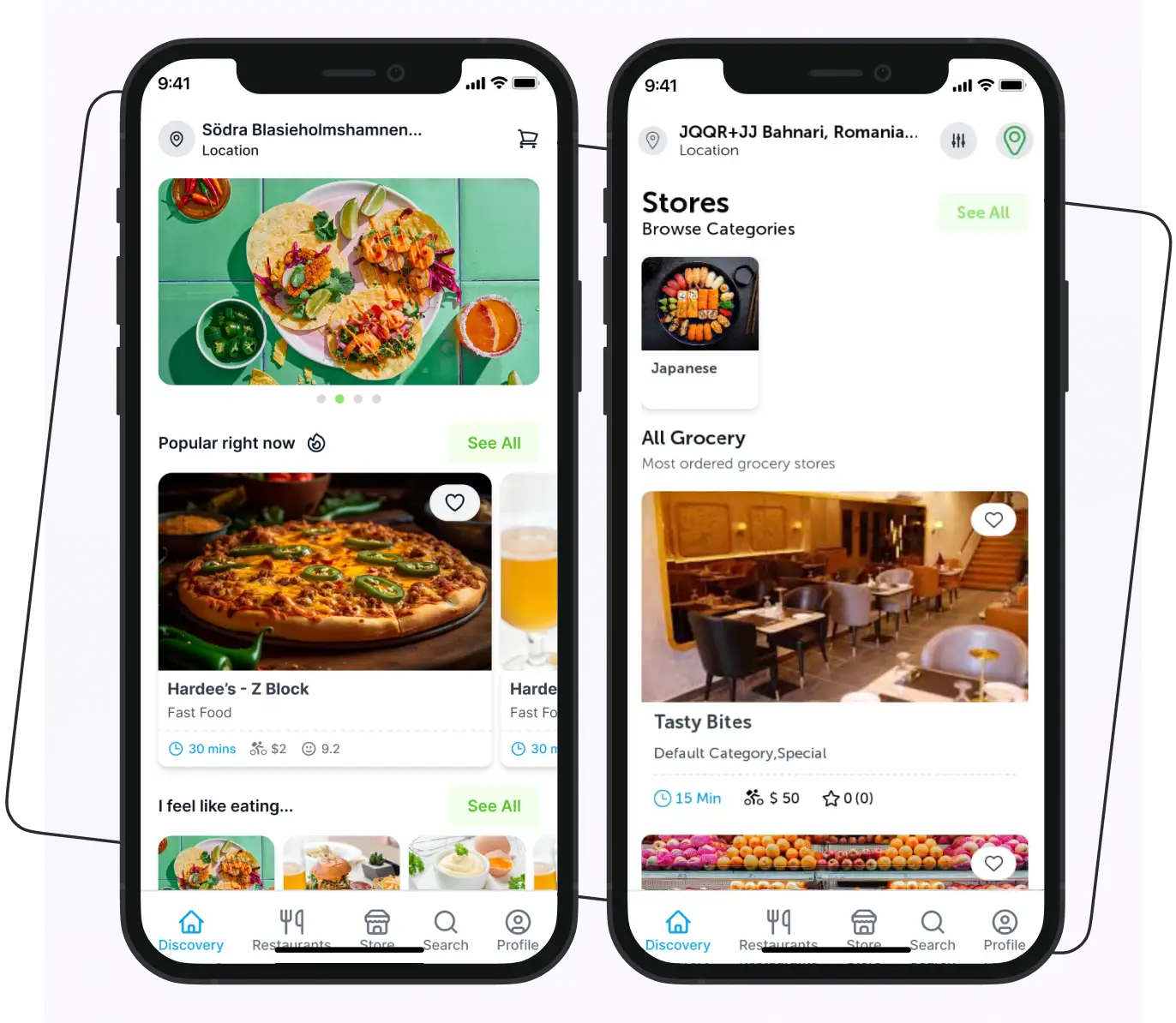
- Customer app: Lets users browse restaurants, explore menus, place orders, make payments, and track deliveries.
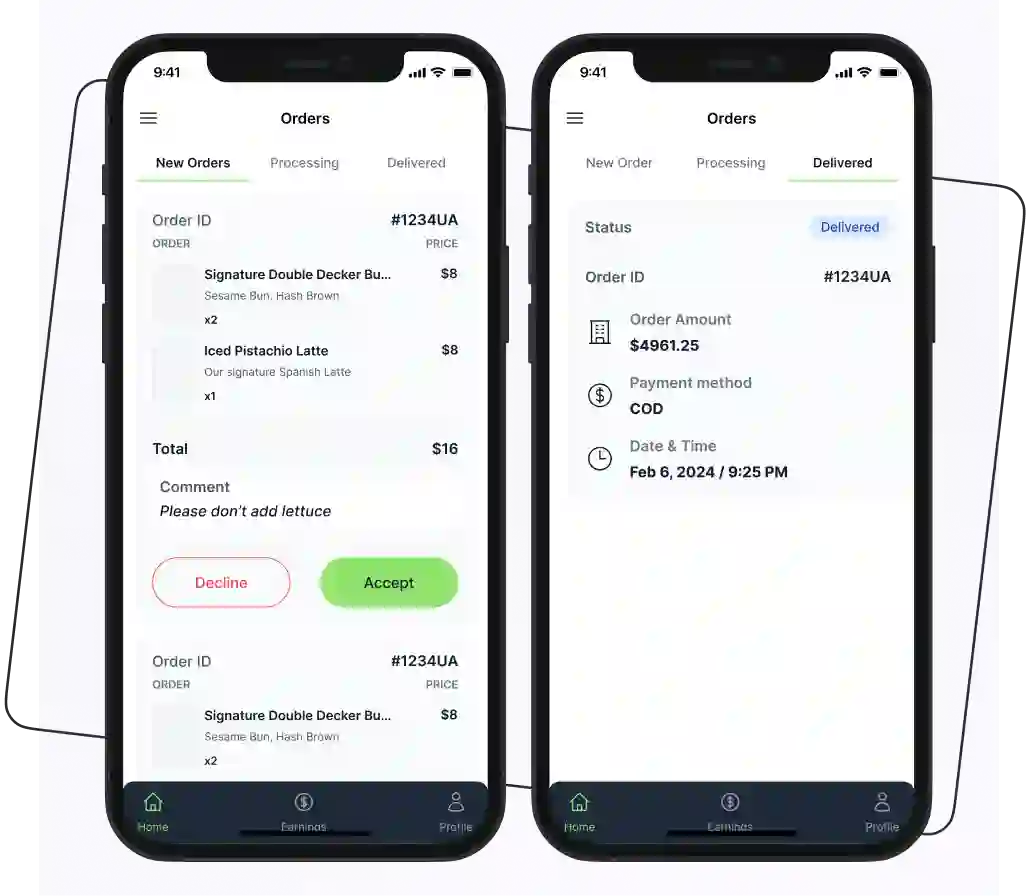
- Restaurant app or dashboard: Allows restaurant partners to manage menus, prices, incoming orders, and availability.
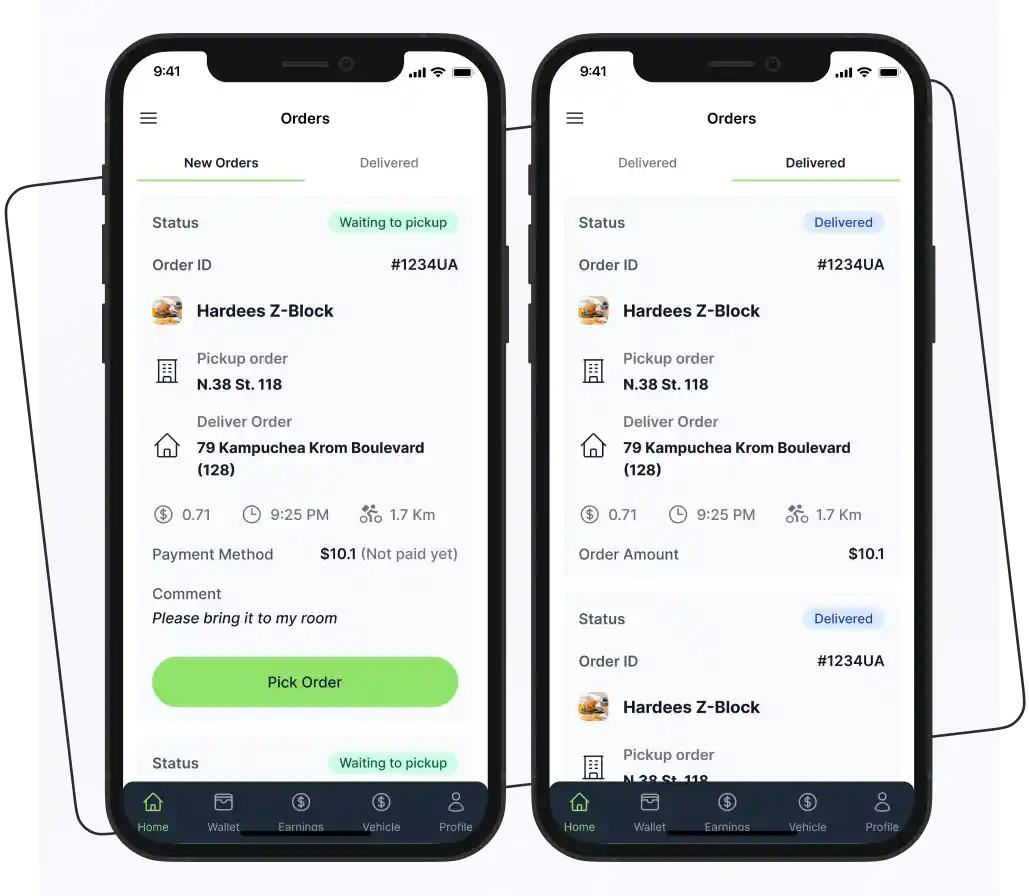
- Rider app: Helps delivery partners receive assignments, navigate to pickup and drop-off locations, and update delivery status.
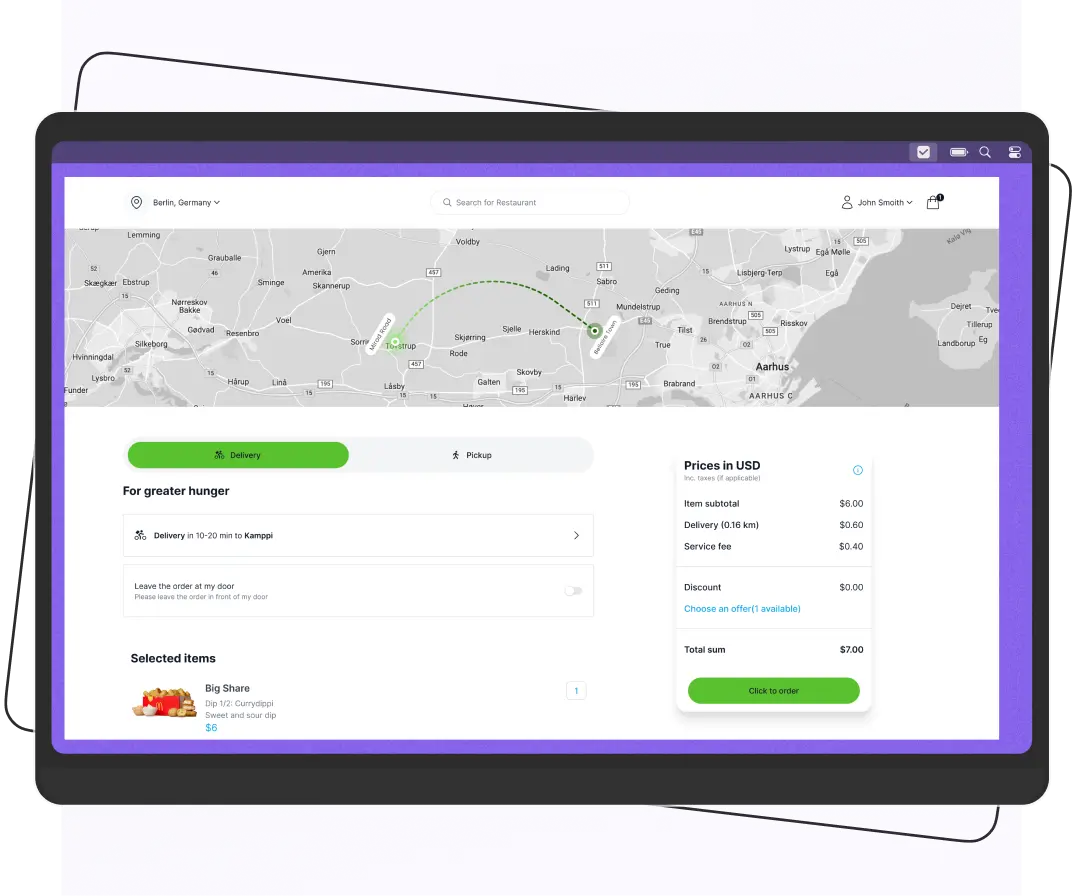
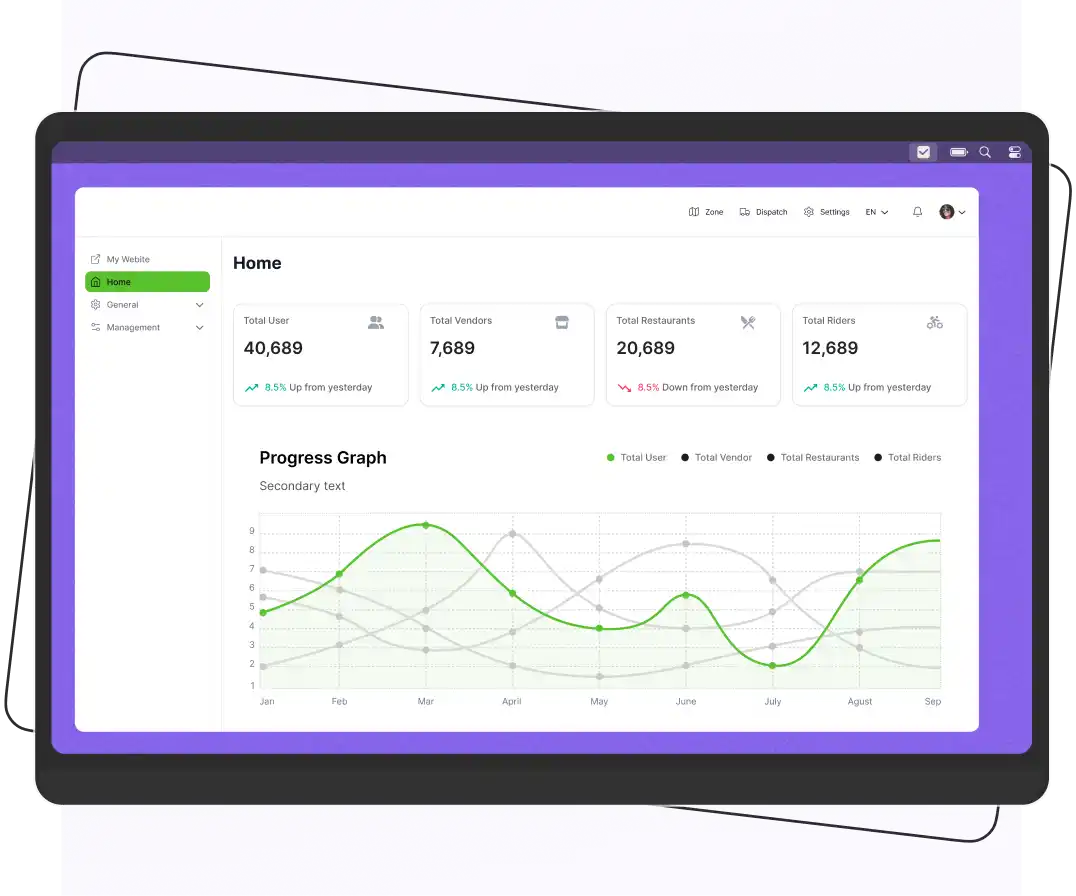
- Admin panel: Gives the business owner control over users, restaurants, orders, payments, promotions, and platform performance.
You can develop these components from scratch or customize white-label food delivery software, depending on your budget, technical requirements, and launch timeline. Before choosing a solution, confirm which features are included and whether you will receive access to the source code.
Talabat Business Model
Talabat is part of the Delivery Hero group and operates in the UAE, Kuwait, Qatar, Bahrain, Oman, Jordan, Egypt, and Iraq. It is a multi-sided marketplace connecting customers, restaurants and retailers, and delivery riders, and it has expanded beyond restaurants into grocery and retail through Talabat Mart/dark stores.
If you want to build a delivery app like Talabat, consider these revenue streams:
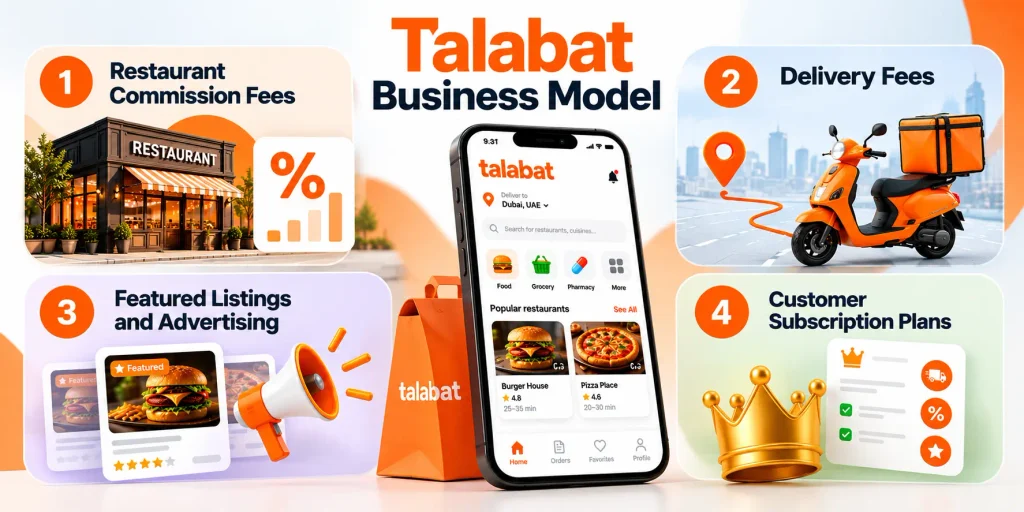
1. Restaurant Commission Fees
You can charge partner restaurants a percentage of each order placed through your platform. The commission rate should account for local competition, restaurant margins, and the services you provide. Avoid setting a rate before calculating your operating costs.
2. Delivery Fees
You can charge customers a delivery fee based on distance, order value, location, and delivery demand. Make sure the fee covers an appropriate share of delivery costs without discouraging customers from ordering.
3. Featured Listings and Advertising
Restaurants can pay to promote their listings or specific menu items within your app. Sponsored placements should be clearly identified so customers can distinguish paid promotions from organic results.
4. Customer Subscription Plans
You can offer a paid membership with benefits such as reduced delivery fees or exclusive offers. Before launching a subscription, estimate how frequently customers need to order for the benefits to be financially sustainable.
Talabat Clone vs. Custom-Built App
Below are the main differences between a Talabat clone and a custom-built food delivery app.
| Feature | Talabat Clone App (White-Label) | Custom-Built App |
| Development Time | Often faster because core features are already built | Usually longer because the platform is developed to your specifications |
| Source Code Ownership | Yes (if included in package) | Yes |
| Technical Risk | Lower build risk, but the product may have limitations you can’t change | Higher build risk; you control the architecture |
| Market Entry Speed | Quick | Slow and long development delays are possible |
| Features | Pre-built core features like tracking, multi-language, and payments | Fully custom feature set (may take longer to develop) |
| Maintenance and Updates | The vendor often provides ongoing support | Requires a dedicated in-house or contracted dev team |
| Scalability | Depends on the architecture and hosting; ask for load-test results | Depends on how well it’s designed and tested |
| Ideal For | Entrepreneurs/startups who want to enter the market quickly | Businesses with unique, complex, or proprietary ideas |
How Does the Talabat Solution Work?
Here is a process of how online food delivery platforms like Talabat work.

Registration and Account Creation
Users can register on the Talabat platform by creating an account. This usually involves providing information such as name, contact details, and delivery address.
Browsing and Ordering
Users can browse through a wide range of restaurants and food options available on the Talabat platform. They can view menus, prices, and restaurant ratings to make an informed choice. Once the user has decided what they want to order, they can add the items to their virtual shopping cart.
Checkout and Payment
After selecting their desired items, users proceed to the checkout process. They review their order, provide any special instructions if necessary, and choose a payment method. Talabat typically supports various payment options such as credit/debit cards, online wallets, or cash on delivery.
Order Confirmation and Processing
Once the order is placed, Talabat sends a confirmation notification to the user, which includes details such as the estimated delivery time and order number.
Restaurant Preparation and Dispatch
The restaurant receives the order and starts preparing the food. They may update the order status on the Talabat platform, allowing the user to track the progress. Once the food is ready, a delivery person (either from Talabat or the restaurant) collects the order for delivery.
Delivery and Tracking
The assigned rider delivers the order from the restaurant to the user’s specified address. Users can often track the delivery progress in real time through the Talabat platform.
Order Completion and Feedback
Once the order is delivered, the user receives the food and pays the rider if cash on delivery is selected. Talabat encourages users to provide feedback and rate the restaurant and delivery experience, which helps maintain service quality and allows other users to make informed choices.
Supercharge your deliveries with Enatega.
Launch NowBenefits of the Talabat Clone App for Customers and Restaurants
Talabat clone app is a customizable on-demand food-delivery solution that can be highly beneficial for entrepreneurs to start a food-delivery business quickly. It gives businesses a starting point for launching their own delivery platform without developing every component from scratch.
Take a look below and understand what benefits the Talabat clone app development offers to restaurant business owners and their customers.
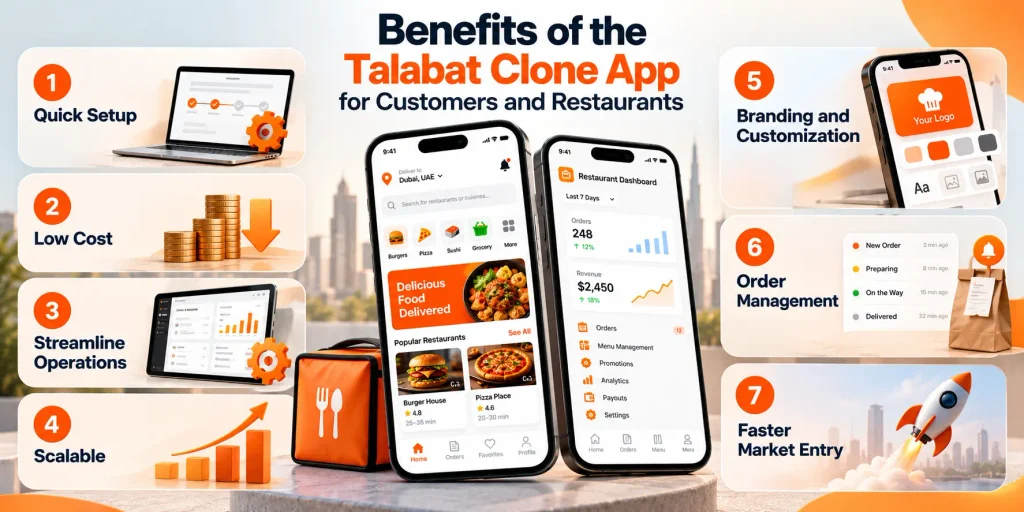
Quick Setup
Developing the Talabat app clone can reduce the development time and expenses. It allows business owners to focus more on customization and launching the service quickly. Since it is a replica of an existing successful app, a lot of planning and development have already been done.
Low Cost
Building a food delivery app like Talabat can be a faster and more cost-effective solution compared to developing a completely new app from scratch. You only need to customize and modify the app to match the branding and identity of the business.
Streamline Operations
The white-label solution automates the food delivery process from order management to delivery tracking. By implementing this solution, businesses can effectively manage their operations and enhance overall efficiency.
Scalable
The food delivery software should be scalable and capable of growing alongside the business. It has to be powerful enough to handle increased workload or growth without compromising performance or functionality. Also, the system should be able to handle a large number of concurrent users and orders. If you need to add more features or revamp the app, it can be done effortlessly.
Branding and Customization
The on-demand Talabat app clone solution is customizable and enables business owners to add new features or change the look according to their requirements. You will get ownership rights of your on-demand food delivery app, and you can alter it without difficulty.
Order Management
The food clone app helps you easily manage all the orders. You can easily know the number of orders received per day and track the status of each order. It can help reduce manual work, but its effectiveness depends on how the software is configured and how your team handles daily operations.
Faster Market Entry
Launching with a white-label base lets you test the market in weeks instead of building every component yourself. App store review and restaurant onboarding still take time, so plan for both.
Must-have Features in an App Like Talabat
A food delivery app needs more than a customer app. It must connect customers, restaurants, delivery riders, and administrators so orders can move smoothly from placement to delivery.
Below are some great features that a Talabat-like food app helps you make a difference.
Talabat Clone Customer App Features
| Features | Description |
| Push Notification | The push notification allows customers to know the current status of an order, new deals, special promotions, food items, etc. |
| Rating | The Talabat app clone’s rating feature helps customers order food from quality restaurants. It helps to know which restaurants and stores provide the best services. |
| Order History | The order history feature allows customers to view details of all their past and current orders placed. |
| Multiple Payment Modes | Offer customers several payment methods such as cash on delivery, digital wallet, credit/debit card, etc. |
| Multi-language | The app can be translated into multiple languages, including Arabic with right-to-left (RTL) layout. Languages are configured by the platform owner, so confirm which language packs are included and which need professional translation. |
| Promo Code | Every restaurant provides special offers to customers. Customers can view and use the promo codes. |
| Track Orders | Customers can track the status of their order from food preparation until they receive it. They can track and know where their favorite dish is and when it will be delivered. |
| Browse Restaurants | The app allows users to browse through the selection of restaurants available for delivery or pickup. |
| Customize Menu | One of the key features of the restaurant ordering app is the extensive customization options available for menu items. This allows customers to personalize their order to perfectly suit their tastes, dietary needs, and preferences. |
| Advanced Search | This feature allows customers to find their favorite restaurants and cuisines based on rating, delivery areas, timings, and price. |
Talabat Clone Restaurant App Features
| Features | Description |
| Profile Creation | Restaurant owners can register their restaurants on the clone app by creating a profile. During registration, they will be required to provide key details about their restaurant, such as restaurant name, restaurant location, full menu, verification documents, etc. |
| Operating Hours | The restaurants can set their operating hours according to their availability. This flexibility is key to delivering a positive experience for both restaurants and customers on the Talabat clone platform. |
| Earning History | Talabat clone script app allows restaurants to view the earnings they made from the platform. |
| Order Management | Restaurants can view the past and current orders received from customers. |
| Loyalty Program | Restaurants offer loyalty programs to customers. It helps them to increase customer retention and revenue. |
Talabat Rider Clone App Features
| Features | Description |
| Accept/Decline Delivery | Food riders can accept or decline the request according to their availability. This feature of the Talabat rider app provides riders with the flexibility to manage their workload. |
| In-App Call/Chat | This feature of the rider delivery app helps to avoid miscommunication between customers and riders. Riders can communicate with customers if they face any issues. |
| Track Earnings | On the Talabat food delivery clone, the riders can track their daily, weekly, and monthly earnings. Riders can make informed decisions about their work schedules and feel confident in the platform’s payment practices. |
| GPS Navigation | Riders can easily find optimized routes and directions via in-app navigation. This enhances the overall customer experience while also supporting the operational needs of the delivery fleet. |
Talabat Clone Admin Panel Features
| Features | Description |
| Customer Management | From the admin dashboard, manage customer details, orders, and other things. This feature helps to streamline all the business activities and manage all the operations from one platform. |
| Rider Management | A food delivery app like Talabat helps you manage your rider staff details, track their real-time locations, etc. |
| Feedback Management | Easily respond to customer reviews and feedback to make a connection with customers. |
| Analytics and Report | Maintain your business with analytics and reports. Using the data and analytics, businesses can make informed decisions for their business. |
Make a Food Delivery App Like Talabat
Creating a Talabat app clone for your food delivery business can be an easy process if you follow the necessary steps.
Below are some steps that help you create a food app like Talabat.
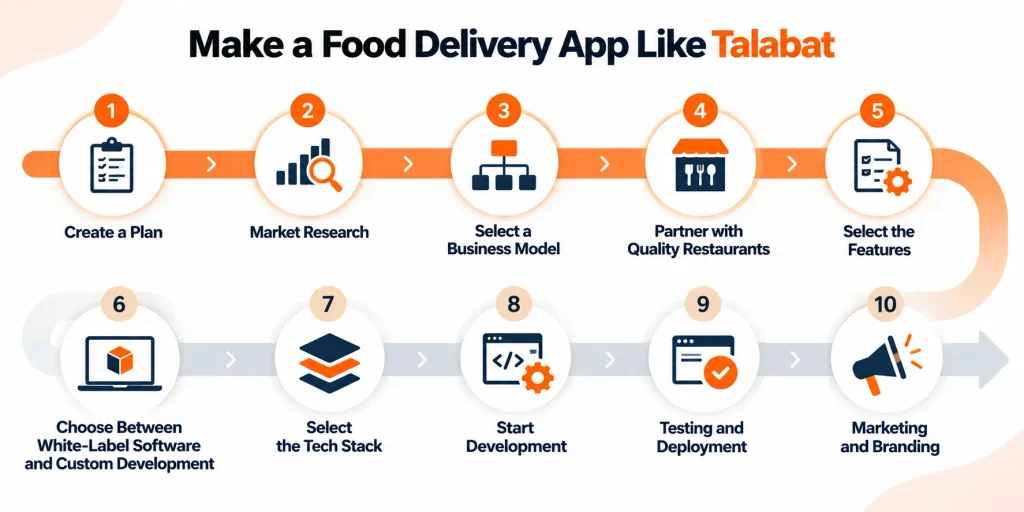
1. Create a Plan
First, you have to create a plan that focuses on the main aspects of your business, such as:
- Business goal
- Cost structure
- Revenue streams
- Value proposition
- Identify proven marketing strategies
- Resources
- Time planning
Without a plan, you cannot create a successful clone app. Therefore, never skip this step and create a proper plan for your business.
2. Market Research
Understanding the market is crucial. Identify your target customers, restaurant partners, competitors, and delivery areas. Study local ordering habits, customer expectations, and existing service gaps before deciding which features your app needs. This information will help you make informed decisions about your business.
3. Select a Business Model
Choose a model that best fits your business goals. You can select either the aggregator model or the order and delivery model for your business. Each model has pros and cons, so analyze them and select the one that suits you. Also, estimate your operating costs before choosing a pricing model.
4. Partner with Quality Restaurants
The right partnership plays a vital role in the success of your business. Always partner with high-quality restaurants that provide a wide variety of cuisines. Moreover, offer incentives and discounts to partners so that they use your online ordering and delivery platform.
5. Select the Features
You can select the app features that meet your customer expectations and business requirements. Never add irrelevant features to your app that make the app experience dull.
6. Choose Between White-Label Software and Custom Development
White-label software provides an existing foundation that you can configure for your brand and business requirements. Custom development lets you define the platform’s functionality and architecture but requires more development work.
Before deciding, compare:
- Cost
- Customization options
- Source-code access
- Integrations
- Maintenance
- Expected launch timeline before deciding
7. Select the Tech Stack
This decision is super important because the tech stack is like the foundation of your app. The tech stack you choose can make a massive difference in speed, cost, performance, and maintenance.
Look at the table below and see what technologies you use for building the Talabat app clone.
| Technical Component | Technology Options | Purpose |
| Frontend development | React, HTML, CSS, JavaScript | Builds web interfaces and dashboards. |
| Mobile app development | React Native, Flutter, Kotlin, Swift | Builds customer and rider apps for Android and iOS. |
| Backend development | Node.js, Django | Handles orders, user accounts, business logic, and communication between app components. |
| Database | PostgreSQL, MongoDB | Stores customer details, menus, orders, and other platform data. |
| Payment processing | Stripe, PayPal, etc | Processes payments supported in your target market. Always confirm gateway availability and settlement currency for your market. | |
| Maps and location | Google Maps Platform | Supports address selection, location display, and delivery navigation. |
| Cloud hosting | AWS, Microsoft Azure, Google Cloud | Hosts backend services, databases, and other infrastructure. |
| Analytics and monitoring | Google Analytics, Firebase, Sentry | Helps measure usage and monitor application errors, depending on the tools selected. |
You do not need to use every technology listed above. For example, you can choose a cross-platform framework to develop Android and iOS apps from a shared codebase, or use native development if your project requires platform-specific functionality.
8. Start Development
Start the Talabat Clone app development phase. In this step, first, you have to:
- Design the User Experience: Create clear interfaces for customers, restaurant staff, riders, and administrators. Keep important actions such as placing an order, accepting a delivery, updating order status, and managing menus easy to find.
- Develop and Integrate the Platform: Build or configure the app components and connect them through a shared backend. Make sure order details, payment status, rider assignments, and delivery updates stay consistent across the platform.
9. Testing and Deployment
Before being published to app stores, make sure the mobile app is tested. Test more than individual screens. Place test orders, process successful and failed payments, handle unavailable menu items, cancel orders, and more. Run various tests to eliminate all the bugs and make it error-free.
Prepare for the app launch by creating accounts on the Google Play Store and the Apple App Store. Follow their guidelines for submission and approval. Deploy the web application on a reliable hosting service like AWS, Azure, or Google Cloud.
10. Marketing and Branding
Plan a marketing strategy to promote your food clone app. Use social media, advertisements, and digital marketing to create awareness about your app and its features. In addition, knowing about the Talabat marketing strategy helps you drive profitability in the food delivery industry.
Legal and Compliance Checklist
Legal and compliance requirements vary by country and jurisdiction. Consult a local advisor to confirm which rules apply to your business before launching.
- Business License: Register your company and obtain the appropriate license to operate an online platform in your jurisdiction.
- Food Safety: Verify that partner restaurants hold valid permits from the relevant municipality or health authority. Collect the required documentation during onboarding.
- Tax: Register for VAT where required and ensure taxes are correctly reflected on invoices.
- Data Protection: Comply with applicable privacy laws, such as the UAE PDPL or GDPR when serving users in the EU, especially when handling customer data and tracking locations.
- Rider Compliance: Verify driver’s licenses and vehicle insurance, and check the rules governing worker classification.
- Branding and Intellectual Property: Create your own brand identity, including your logo, UI, and business name. Avoid copying Talabat’s trademarks, designs, or content.
- Consumer Terms: Publish clear terms and conditions, refund and cancellation policies, and a privacy policy.
Challenges for Building a Food Delivery App Like Talabat
To stay competitive in the food delivery industry, building an efficient food delivery app is crucial. However, there are several issues connected with developing an excellent food delivery app clone.
Let’s look at the major reasons behind the challenges while developing a clone app like Talabat.
Integration with Restaurants
One of the major challenges in building a clone app like Talabat is integrating with restaurants. This involves establishing partnerships with a wide range of restaurants and ensuring seamless integration of their pricing, menus, and working hours into the app.
It can be a complex task as each restaurant may have its own unique menu structure, pricing models, and operational systems. Coordinating with multiple restaurants and managing the data integration process requires effective communication and technical expertise.
How to address it
Provide a restaurant dashboard where partners can update menus, prices, availability, and operating hours. Establish a clear process for onboarding restaurants and checking menu information before it goes live. If you integrate with existing restaurant systems, confirm that the required APIs and data formats are supported.
Managing Delivery Operations
Efficient management of delivery operations is another challenge when developing a food delivery app clone. Managing a large fleet of delivery partners, ensuring timely deliveries, and handling customer support for delivery-related issues can be demanding tasks that require careful planning and coordination.
How to address it
Build a workflow for assigning riders, updating delivery statuses, and notifying customers about order progress. Give administrators visibility into active orders and delayed deliveries.
Scalability
Scalability is a crucial challenge for any food delivery app clone. As the user base grows and the number of orders increases, the app should be able to handle the increased load without compromising performance or user experience. It requires careful architectural design and implementation to ensure that the app remains responsive and reliable even during peak usage periods.
How to address it
Test the platform under expected peak loads before launch. Monitor response times, errors, database performance, and order-processing delays. Choose infrastructure that can scale with demand, and optimize bottlenecks based on actual performance data rather than adding complexity too early.
How Much Does It Cost to Build an App Like Talabat?
Building a food delivery app like Talabat can cost $15,000 to $100,000+, depending on the features, level of customization, platforms, and development approach. This is a rough planning estimate, not a fixed market price.
The total cost depends on what you need to launch and how much of the platform already exists.
| Cost Factor | How it Affects Your Budget |
| Development approach | White-label software may reduce initial development work, and custom development requires building more components from scratch. |
| Features and functionality | Features such as live order tracking, restaurant dashboards, rider management, and promotional tools add to development scope. |
| Platforms | Building customer apps for both iOS and Android, along with web dashboards, affects the total cost. |
| Customization | Custom designs, business rules, workflows, and third-party integrations require additional work. |
| Development team | Rates vary by team location, experience, and project requirements. |
| Testing and deployment | Quality assurance, app store preparation, hosting setup, and launch support should be included in the budget. |
| Ongoing maintenance | Hosting, bug fixes, and future improvements can add recurring costs after launch. |
Build and Grow Your Food Delivery App with Enatega
You don’t have to build every component from scratch. Enatega provides white-label food delivery software to help businesses launch their own delivery platforms with customer, restaurant, rider, and admin applications.
You can customize the platform to your business requirements, use your own branding, and scale your operations as order volumes grow. Enatega offers a one-time license rather than a recurring software subscription, helping you avoid subscription-based pricing as your business expands.
Snap Delivered is an example of a food delivery business built with Enatega’s technology. Its approach shows how the right software, restaurant partnerships, and delivery model can support a food delivery business.
Ready to launch your food delivery app like Talabat? Explore Enatega to explore the platform and see how it fits your business needs.
FAQs
Competition varies by country. In Gulf markets, common competitors include Deliveroo, Careem, and Keeta. In some countries, local apps and restaurant-owned ordering channels compete too.
Talabat makes money by using these methods:
Charges a commission fee to its restaurant partners for each order placed through its platform.
Applies delivery charges to customer orders. These charges are separate from the order total and cover the cost of delivering food from the restaurant to the customer’s location.
Generates revenue by charging fees for providing advertising services to restaurant partners.
It depends on your approach:
White-label solution: 2 to 8 weeks for configuration, branding, payment and map integration, testing, and app store approval.
Custom development: 4 to 9+ months for design, building four separate apps, QA, and launch.
Yes. You can build a custom platform or use white-label food delivery software. Before choosing, compare the total cost, available features, customization options, integrations, and ongoing fees.
Building a platform with a similar business model is legal in most places. Copying Talabat’s brand name, logo, design, or code is not. Create your own identity and consult a legal advisor.
Supercharge your deliveries with Enatega.
Launch NowConclusion
Software doesn’t build a food delivery business. Execution does.
Talabat didn’t win by having an app. It won by getting the right restaurants, reliable riders, and fast delivery in the right neighborhoods. Your platform needs the same foundation: a clear niche, healthy unit economics, and partners who want to stay.
That’s where the right starting point matters. White-label software gets you live in weeks, not months, so you can spend your budget on what actually decides success: restaurants, riders, and customers. Custom development makes sense only when your model is truly unique.
Don’t chase Talabat’s size. Start with one neighborhood, one strong offer, and one loyal customer base. Then scale.
Ready to see it in action? Register with Enatega and explore a platform built to launch fast and grow with you.
About the author

Hudaibia Khalid is a senior content writer with several years of experience in creating clear and easy-to-understand content. Over the years, she has worked closely with startups, restaurants, and entrepreneurs, helping them simplify complex digital and technical topics into actionable insights.
Her expertise lies in writing about on-demand platforms, food delivery solutions, and business growth strategies in a way that is accessible even to non-technical readers. With her experience in the industry, she focuses on guiding businesses step by step, from understanding ideas to turning them into fully working solutions.
SHARE






 IOS
 Android
 Web