

Key Takeaways
- Market Growth: The food delivery market is growing fast, expected to rise by 12.33% annually (2023–2027).
- Top apps: DoorDash, Uber Eats, Grubhub, Gopuff, and more offer unique features and pricing models.
- Best for restaurants: ChowNow (no commissions), Grubhub (local exposure), Uber Eats (global reach).
- Best for customers: DoorDash and Uber Eats for variety and speed; Gopuff for essentials beyond food.
- Development Cost: A food delivery app can cost $20K–$150K+, depending on features and scope.
- App Selection Tips: Consider pricing, features, target audience, restaurant size, and geography.
According to Statista, in 2026, the food delivery industry is projected to grow at an annual rate of 12–13% globally. Restaurants that rely solely on walk-ins or dine-in are missing a huge opportunity to increase revenue.
Choosing the right food delivery business app is necessary for restaurant owners. With dozens of options offering different pricing, features, and reach, it can be difficult to choose.
This blog provides a comparison of the top food delivery apps, including features, pricing, pros and cons, and tips for selecting the best app for your business.
What is a Food Delivery Business App?
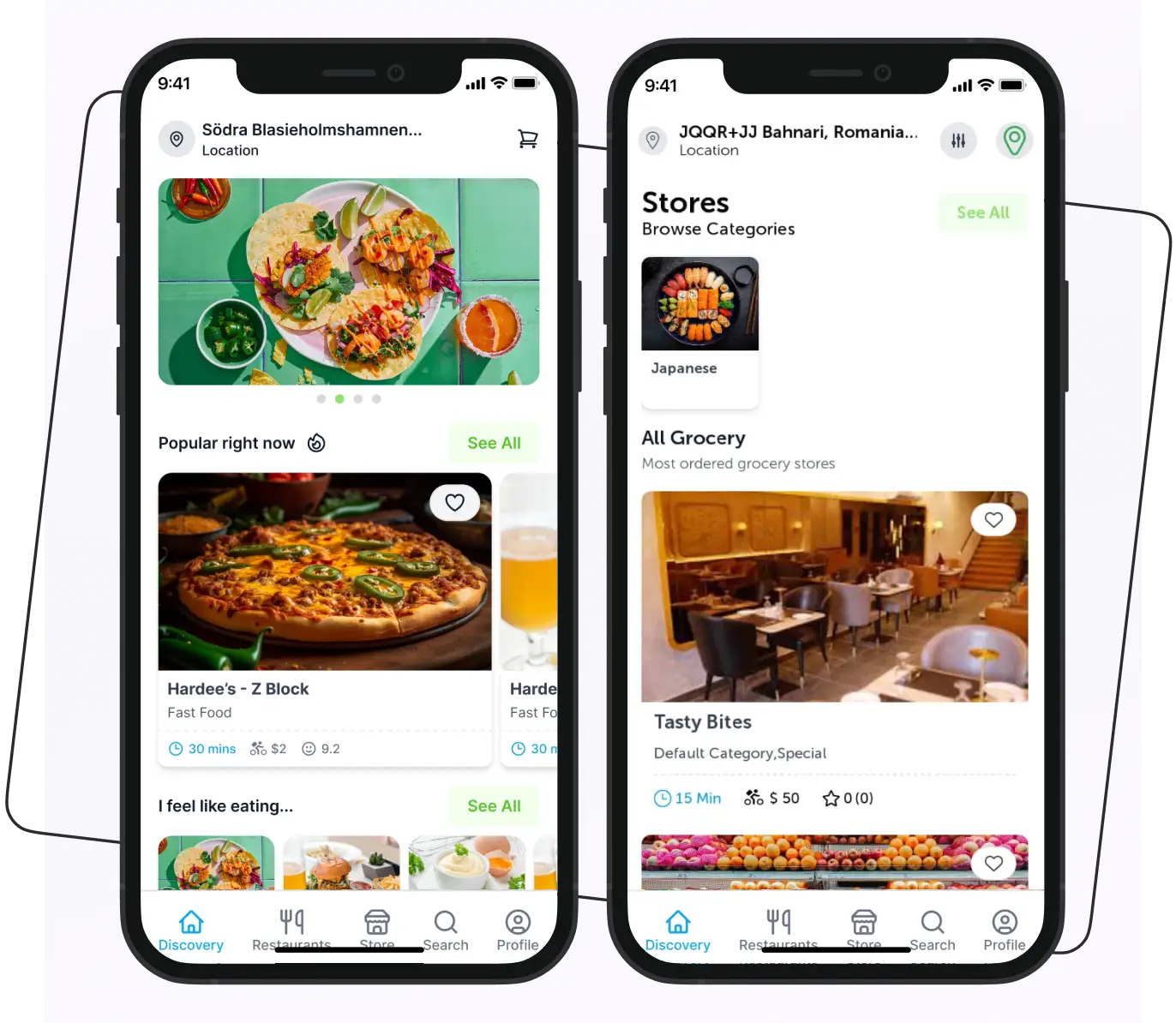
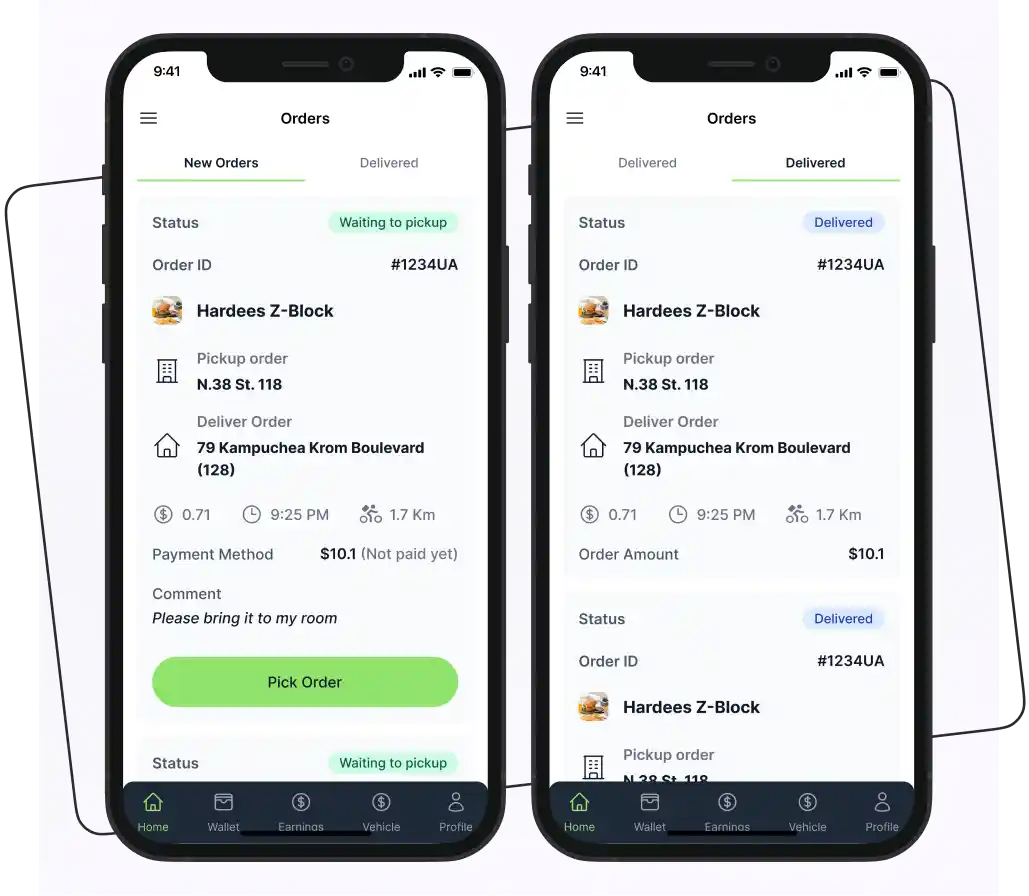
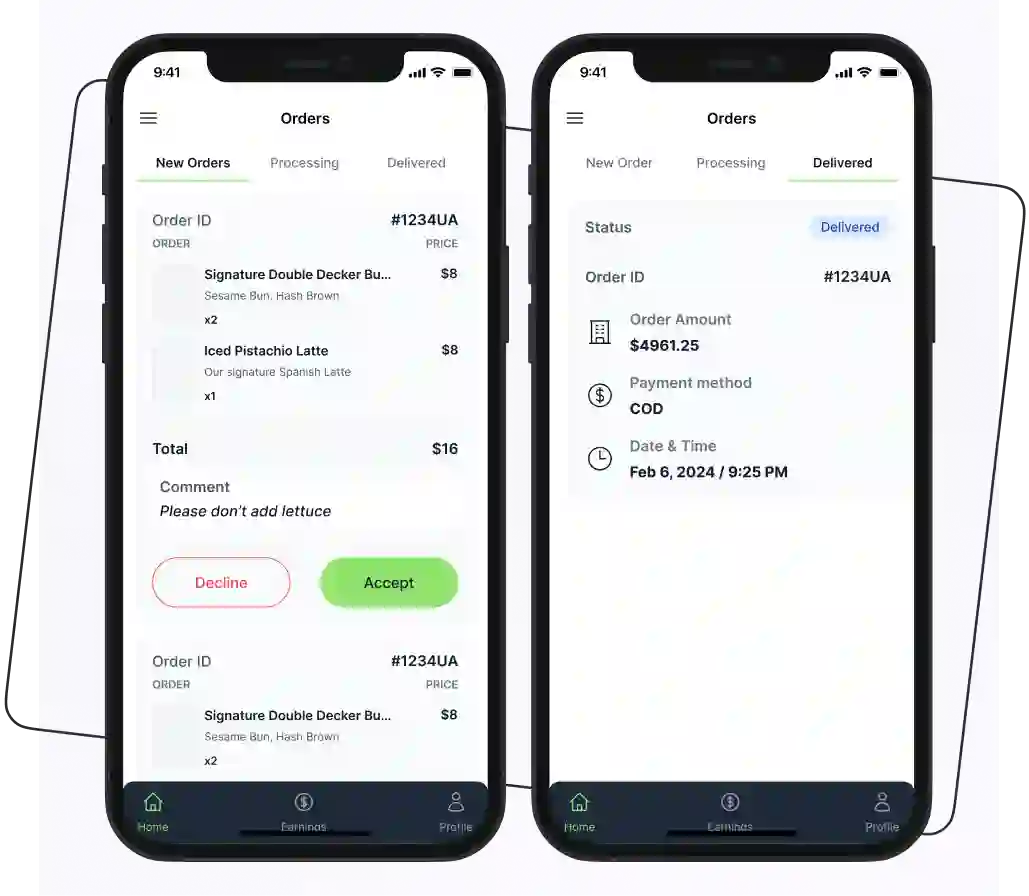
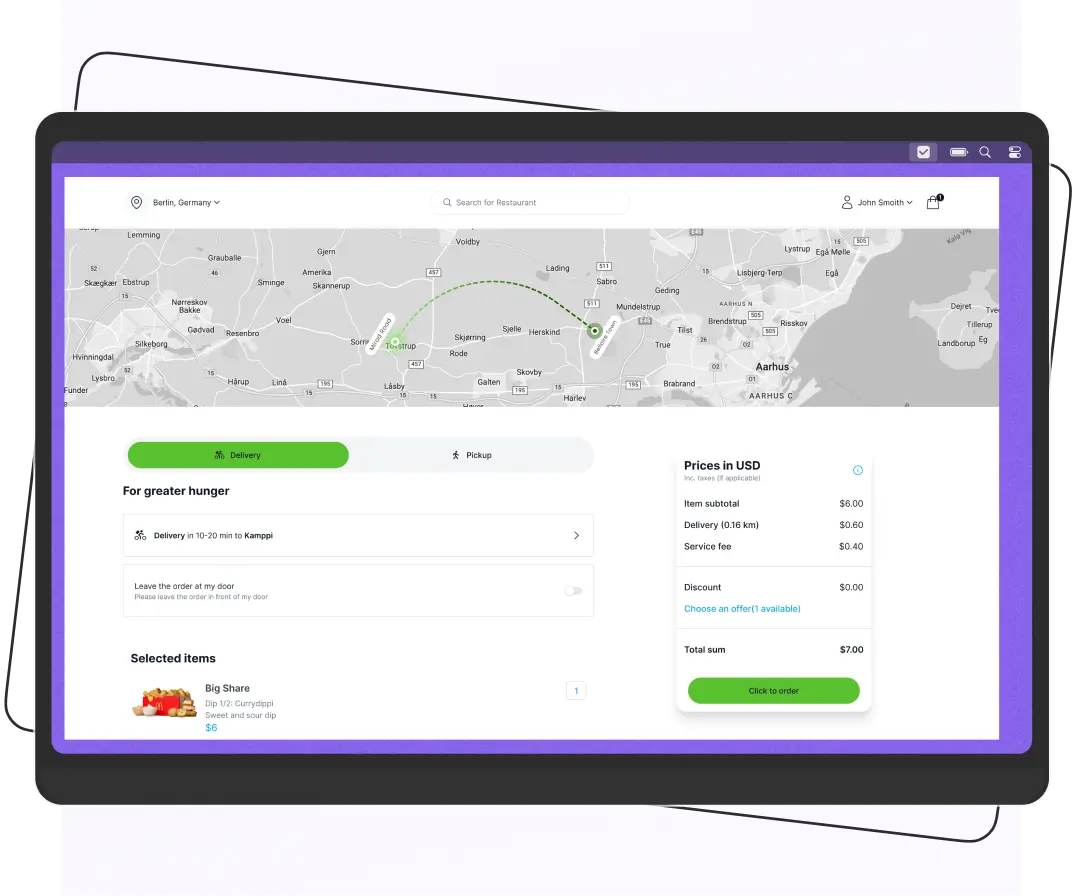
A food delivery business app is a digital platform. It connects restaurants, customers, and delivery partners for ordering and delivery of food. These apps allow users to browse menus, place orders, make payments, and track deliveries in real time.
Examples: Some of the most popular examples include DoorDash, Uber Eats, Grubhub, Gopuff, ChowNow, and Zomato.
Benefits for Restaurants
- Additional sales channel
- Efficient order management
- Increased reach to new customers
- Marketing and promotions
Benefits for Customers
- Convenient access to food and essentials
- Variety of restaurants and cuisines
- Features like loyalty programs, promotions, and multiple payment options
Food Delivery App Business Model
Food delivery apps generally follow three main business models.
Restaurant Aggregator Model
- The app lists multiple restaurants and earns commissions per order.
- Example: DoorDash, Uber Eats, Grubhub
- Revenue comes from restaurant commissions, delivery fees, and advertising.
Delivery-Only Model (Hyperlocal / Cloud Kitchens)
- The app operates its own kitchens and delivers food directly.
- Example: Gopuff, Swiggy’s cloud kitchens
- Revenue comes from food sales, delivery fees, and subscriptions.
Marketplace Model
- The app connects restaurants, customers, and third-party delivery agents.
- Example: Postmates, Delivery.com
- Revenue comes from service fees, delivery charges, and premium memberships.
Other revenue streams for food delivery apps include:
- Subscription services for unlimited deliveries (e.g., DashPass, Uber One)
- Advertising and promotions for restaurants on the platform
- Data insights and analytics sold to restaurants for targeted marketing
What are the Top Food Delivery Apps?
Below are the top food apps that help you pick the best one for your needs.
| App Name | Best For | Unique Feature / Standout Benefit |
| DoorDash | Large restaurants and a wide reach | DashPass, huge market share, flexible scheduling |
| Uber Eats | Global delivery and diverse cuisine | Transparent pricing, Uber One membership |
| Grubhub | Local exposure and brand growth | Custom restaurant websites, loyalty programs |
| Gopuff | Multi-product delivery | In-house warehousing delivers more than food |
| ChowNow | Independent restaurants | Commission-free, full control over branding |
| Seamless | Local food discovery | Grubhub+ perks, easy reordering |
| Delivery.com | Office catering and variety | Earn reward points, multi-category delivery |
| Caviar | High-end restaurants | Group ordering, no minimum order |
| Zomato | Dining discovery and reviews | Table reservations, review system |
Let’s discuss them in detail.
1. Gopuff
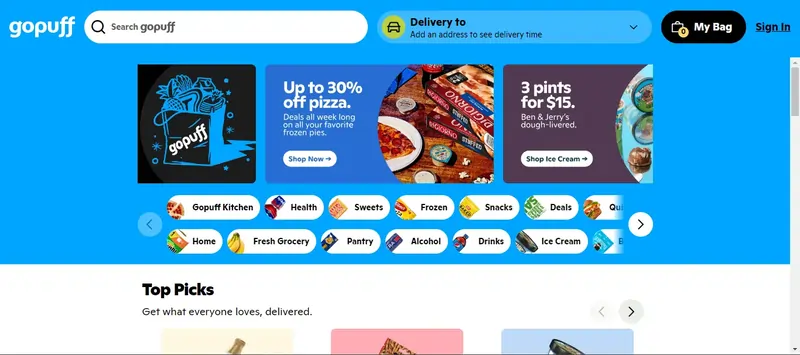
Gopuff is a versatile delivery service that provides a wide range of products beyond just food and beverages. Customers can order essentials like pet products, baby items, cleaning supplies, over-the-counter medications, electronics, and much more. This makes Gopuff a convenient option for quick and efficient access to various necessities, catering to diverse needs in a single platform.
Features of Gopuff
- Wide selection
- Contactless delivery
- Multiple payment options
- Customers get recommendations on items
- User reviews and ratings
- In-house warehousing
| Pros | Cons |
| Real-time access to inventory | Short product descriptions |
| Cost-efficient | |
| Fast delivery |
Gopuff Pricing
Gopuff has different pricing options.
Order Fee: The Gopuff order fee starts at $3.95. Members of the Gopuff Fam subscription service are exempt from the order cost.
Priority Delivery: It has an optional cost.
Gopuff Fam: The Gopuff Fam subscription program, which costs $7.99 a month, provides double rewards points, free delivery on all orders, and no alcohol surcharges. There are two subscription options: monthly and yearly.
2. DoorDash

DoorDash is the most popular food delivery app in the USA. It is available in almost all cities and states across the United States. Customers can easily order groceries, gifts, flowers, and more.
DoorDash has grown its platform to include over 590,000 partnered restaurants and grocery/retail markets. It is available across the U.S., Canada, and Australia, offering a broad array of local and chain dining options. Its intuitive app interface and efficient delivery logistics ensure that meals arrive promptly.
Moreover, DoorDash helps restaurants expand their customer base. It allows them to reach new customers in nearby areas easily and quickly while reducing waiting time.
Features of DoorDash
- Contact-free delivery
- Pre-ordering
- DashPass subscription
- Schedule deliveries
- Integrated point of sale
- Rating and review system
| Pros | Cons |
| Easy ordering process | High commission fees |
| Flexible schedule | |
| Riders can accept or decline orders |
DoorDash Pricing
DoorDash charges merchants a commission ranging from 15% to 30% per order, depending on the partnership plan chosen, along with additional fees for delivery and payment processing. Customers also pay a delivery fee, which varies based on distance and order size.
Supercharge your deliveries with Enatega.
Launch Now3. Uber Eats
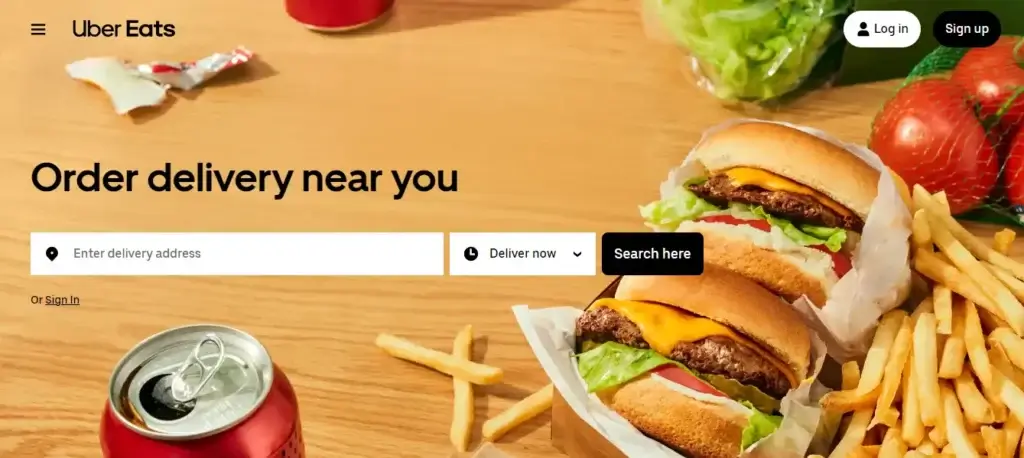
Uber Eats has gained huge popularity due to its strong customer base. It is the best food delivery app, operating in more than 6,000 cities across 45 countries and growing.
With the UberEats app, customers can order food, groceries, and even pharmacy items through the app or website. The app also offers over 80 food categories to choose from, including halal and gluten-free options.
Features of Uber Eats
- Transparent pricing
- Vast restaurant selection
- Promotions and discounts
- Delivery tracking
- Multiple payment options
- Easy-to-use interface
| Pros | Cons |
| Fast and reliable delivery | Restaurants have no control over their brand and customer experience |
| Pre-ordering | Some restaurants charged more for food delivered via UberEats |
| Low marketing cost | Does not provide refunds or credits for issues like missing food time, late delivery, and cold food |
| Riders work at flexible hours |
Uber Eats Pricing
UberEats uses a dynamic pricing structure. The prices are adjusted in real-time according to demand fluctuations.
Below are the pricing plans to help you get a better idea.
| Plan Name | Delivery Fee | Pickup Fee |
| Lite Plan | 15% | 6% |
| Plus Plan | 25% | 6% |
| Premium Plan | 30% | 6% |
| Self-Delivery Plan | 15% | 6% |
Customer Fees
| Fee Type | Description |
| Delivery Fee | Varies based on demand, location, and courier availability. |
| Local Operating Fee | Covers costs from regulations on third-party delivery platforms. |
| Service Fee | Varies based on basket size; helps cover order-related costs. |
| Small Order Fee | Applies to orders below a certain subtotal. |
Membership Benefits
- Uber One: Offers a $0 delivery fee on eligible orders, discounts, and cashback on rides.
4. Grubhub

Grubhub is a food ordering and delivery platform that accesses a wide range of more than 30,000 eateries located in more than 800 US locations. It is the most prominent food delivery app with easy-to-use features.
For restaurants, Grubhub helps to streamline the entire food delivery process. The restaurant owners can have access to a large pool of audience.
Features of Grubhub
- Deals and discounts
- No additional fees
- Location-specific restaurants and cuisines
- Gift card management
- Alerts/Notifications
| Pros | Cons |
| Real-time updates | Limited customization |
| Order tracking | Commission fees |
| Loyalty program | |
| Tipping for riders |
Grubhub Pricing
Grubhub’s pricing model is flexible. Let’s look at the table and understand the different pricing plans and their features.
| Pricing Component | Basic Plan | Plus Plan | Premium Plan |
| Marketing Rate | 5% | 10% | 15% |
| Delivery Fees | Higher fees paid by diners | Standard fees paid by diners | Standard fees paid by diners |
| Exposure Level | Basic exposure | Access to Grubhub+ diners | Highest exposure on the app |
| Custom Ordering Website | Yes | Yes | Yes |
| Professional Menu Photos | Yes | Yes | Yes |
| Supplemental Delivery | Pay only when using Grubhub drivers | Pay only when using Grubhub drivers | Pay only when using Grubhub drivers |
| Processing Fee | 3.05% + $0.30 per transaction | 3.05% + $0.30 per transaction | 3.05% + $0.30 per transaction |
| Subscription Fee | None | None | None |
5. Delivery.com

Delivery.com is an online ordering platform that allows users to order from grocery stores, restaurants, liquor stores, and more. It is a one-stop shop for customers to get what they want.
Customers earn delivery points with every order. They redeem them for credits, great prizes, and donations. The application is free to use without any subscription cost.
Features of Delivery.com
- Easy ordering process
- Customers earn points
- Order history
- Maps and geolocation
- Order status
| Pros | Cons |
| Track sales tax | Non-refundable orders |
| Provide catering services to offices |
Delivery.com Pricing
Below is a Delivery.com pricing structure.
| Pricing Component | Description |
| Delivery Fees | Varies by restaurant; typically $1-$5+ |
| Service Fees | Additional fee that may apply; varies by order |
| Minimum Order Amount | Some restaurants/stores have a minimum requirement |
| Tip | Customary to tip the driver; not included in the total |
6. ChowNow
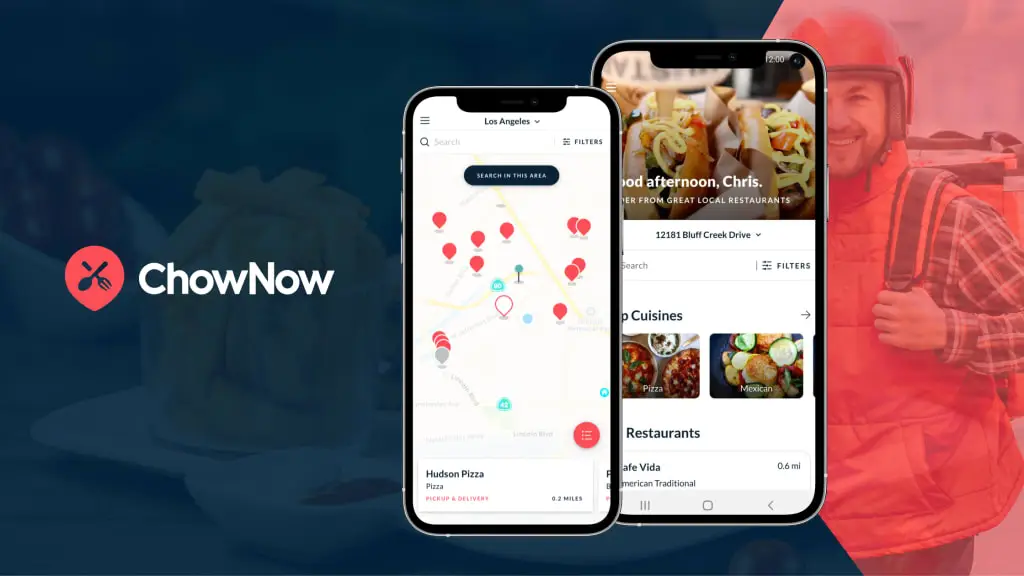
ChowNow is another famous online food delivery business app that connects customers with local restaurants.
It is designed specifically for restaurants, catering to their needs with a suite of features tailored to enhance their online presence and streamline their operations. Many people use this app as a way to find new restaurants and cafes in their area.
Features of ChowNow
- Customize the food menu
- Track delivery location
- Commission-free online ordering system
- Support independent restaurants
| Pros | Cons |
| Pre-payment | The monthly subscription fee is high |
| Integrate with the existing system | |
| Provide marketing tools | |
| No hidden fees |
ChowNow Pricing
ChowNow offers two pricing plans with different features, such as:
- ChowNow Pro: $199 / mo
- ChowNow Premier: $275 / mo
7. Seamless

Seamless is an online food ordering and delivery platform. With an extensive restaurant network and seamless user experience, it is one of the most well-known food delivery business apps. They offer exciting deals to make sure that users aren’t bored and use their app.
The goal of the Seamless app is to make it as easy as possible for users to find the food they want. People enjoy Seamless service, which has led to over 54,996 good ratings in the Google Play Store.
Features of Seamless
- Available on iOS and Android
- The app is free for all customers
- Contact-free delivery
- A wide range of local eateries is available
- No additional fees
| Pros | Cons |
| Reordering is available | High commission and service fees |
| Users can sign up for Grubhub+ to get a $0 delivery fee on eligible orders | |
| Restaurant contact data |
Seamless Pricing
Seamless provides a subscription service called Seamless+ for $9.99 per month. It provides various perks, such as free delivery on eligible orders. Plus, the subscription can be canceled at any time.
8. Caviar

Caviar is available in 28+ cities all around the United States. This delivery solution is best for consumers to order food from local eateries. This food delivery app for small businesses is well known for ordering in less than 30 minutes with affordable pricing.
Whether serving a small party of a few or hundreds, Caviar works directly with restaurants to deliver the greatest cuisine to its customers. Caviar collaborates with more than 400 culinary partners, such as food trucks, reputable eateries, and catering businesses.
Features of Caviar
- User-friendly app and website
- Promotions and offers
- Group ordering
- Schedule deliveries
- Top-rated restaurants
| Pros | Cons |
| Bill splitting | The order status is not up-to-date |
| No minimum order requirement | The expected earnings of riders are not correct |
| Offers discounts | |
| First free delivery |
Caviar Pricing
The cost of the Caviar food delivery app varies by area and may include restaurant and delivery fees.
Delivery fees: Depending on the area, Caviar delivery costs might vary from $1.99 to $8.99. DashPass, a membership service offered by Caviar, costs $9.99 a month and offers free delivery and discounted service fees for purchases of $12 or more.
Restaurant fees: Some eateries might charge a price for each order, such as a staff fee, a bag fee, or a fee imposed by the state or local government.
Promotions: Caviar offers promotions such as free delivery.
Moreover, restaurants pay Caviar a commission fee of 20–30%.
9. Zomato
Zomato is a leading online food ordering business app that provides users with a vast database of dining options based on location, cuisine, price range, and user reviews. Whether users are seeking a cozy cafe for brunch or a fine dining experience for a special occasion, Zomato helps them discover new culinary gems.
Further, the Zomato app customer support is available and ensures that you do not face any problems while interacting with the delivery person.
Features of Zomato
- Table reservation
- Reviews and ratings
- Order tracking
- Different modes of payment
- A vast choice of restaurants
- Filter search
| Pros | Cons |
| Cashless transactions | High delivery charges during peak time |
| Promotions and discounts | |
| Brand recognition |
Zomato Pricing
Here is the Zomato pricing plan for India.
Platform Fee: Zomato charges a fee of Rs 5 for each food delivery order, in addition to the delivery charge. This applies in major cities like Delhi NCR, Bengaluru, Mumbai, Hyderabad, and Lucknow.
Zomato Gold Members: If you’re a Zomato Gold member, you don’t have to pay the delivery charge. However, you still have to pay the Rs 5 platform fee. Gold members also enjoy other perks like discounts and free delivery after making an upfront payment.
Moreover, Zomato’s pricing outside India (in markets such as the UAE or where it still operates delivery services) includes:
- Delivery fee: Charged to the customer per order based on distance, time of day, and demand.
- Surge/dynamic fee: Fees can increase during peak hours or high demand.
- Platform/convenience fee: A small extra fee in addition to the delivery fee, essentially the platform’s operational charge (similar to other global delivery apps).
How to Create a Food Delivery App?
Below are some steps to help you build a successful food delivery app for business.
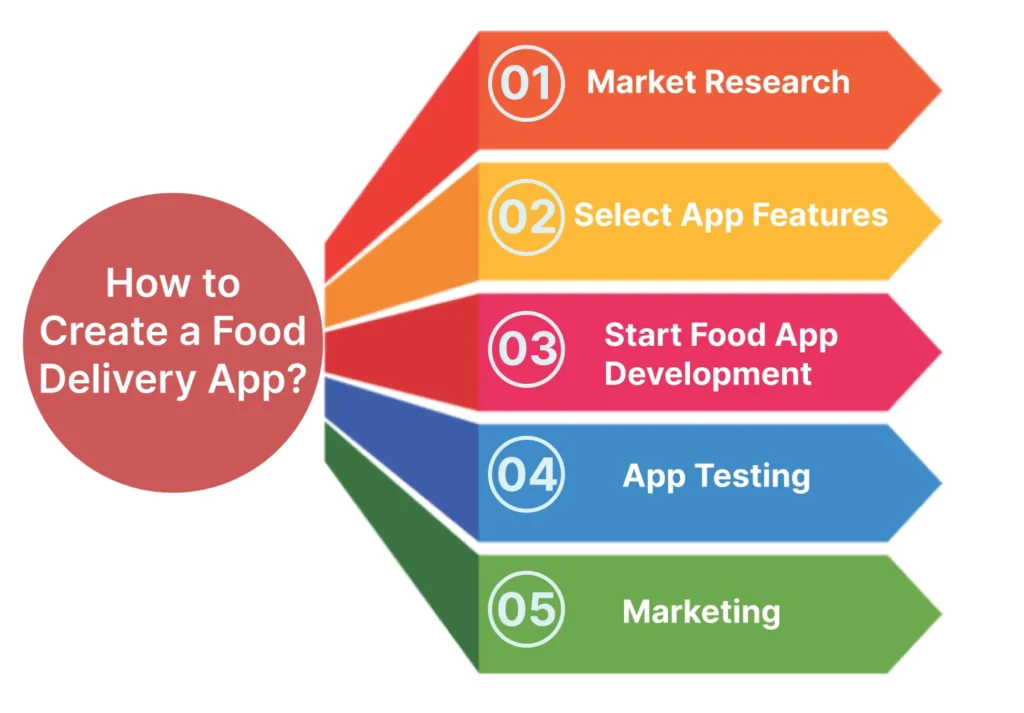
1. Market Research
Conducting thorough market research is essential for understanding the food delivery industry. Start by identifying your target audience, which may include busy professionals, families, or students. Analyze competitors to know their strengths and weaknesses. Plus, keep an eye on current trends.
2. Select App Features
Choosing the right features for your food delivery app is vital to improving user experience and functionality. The relevant features make the app attractive to the users, and they use it again and again.
3. Start Food App Development
Once the groundwork is laid, the actual development process can begin. Start with wireframing to visualize the app’s layout and user flow, which helps in planning the user interface and experience.
After wireframes, focus on the UI/UX design to create an engaging and intuitive interface that enhances user interaction. During the development phase, implement the chosen tech stack and ensure that all features are integrated properly.
4. App Testing
Testing is a phase in which you check that your app functions correctly and meets user expectations. Make sure that all features operate as intended.
5. Marketing
After the app is developed and tested, it’s time to focus on marketing to attract users. Start by establishing a strong brand identity with a memorable logo and engaging content that attracts your target audience.
Use social media platforms like Instagram and Facebook to reach potential users. Search Engine Optimization (SEO) and App Store Optimization (ASO) strategies are essential for increasing visibility in app stores.
How Much Does it Cost to Create a Delivery App?
The total cost of building the food delivery app will vary based on these factors:
- Specific business requirements
- Scope of the project
- Project Timeline
Check the table below and get an estimated cost of building the food delivery app.
| Factor | Estimated Cost |
| Basic Features | $10,000 – $30,000 |
| Advanced Features | Additional $20,000 – $50,000 |
| Platform | $15,000 – $50,000 |
| Design | $5,000 – $20,000 |
| Development Team | $25 – $150/hour |
| Time Frame | Varies based on urgency |
| Post-Launch Costs | $500 – $2,000/month |
| Total Estimated Cost: $10,000 – $100,000+ | |
Tips for Selecting the Best Food Delivery Business App
Below are some tips that help you in selecting the best food delivery business app.
- Always look for a food delivery app that has a clean and intuitive interface that makes it easy to browse restaurants, view menus, place orders, and track deliveries. A user-friendly app enhances the overall experience and reduces frustration during the ordering process.
- Consider the variety and quality of restaurants available on the app. The best food delivery apps partner with a diverse range of restaurants, offering users access to a wide selection of cuisines that suit different tastes and preferences
- Pay attention to user reviews and ratings. Look for apps with positive reviews and high ratings, as they are more likely to provide a satisfactory experience in terms of food quality, delivery speed, and customer service.
- Opt for a food delivery app that offers real-time order tracking, allowing you to monitor the status of your delivery from the time it is placed until it reaches your doorstep.
- Choose an app that offers multiple payment methods and ensures secure transactions to accommodate your preferred payment preferences.
- Keep your food delivery app business plan in mind if you collaborate with any other food platform.
Supercharge your deliveries with Enatega.
Launch NowFAQs
A food delivery business is a type of service that facilitates the delivery of food from restaurants, cafes, or other food establishments to customers’ homes, offices, or designated locations.
Below are some steps that help you start a food delivery app business.
Develop a business plan
Choose your business model
Create your menu and pricing strategy
Hire the development team
Start working
Yes, investing in the food delivery business is profitable. However, do proper research and then invest in the food business.
DoorDash is often considered the most profitable food delivery app. It leads the market in revenue and gross order value. However, profitability can vary by region and operational strategies.
The best delivery services for a small business are Uber Eats, DoorDash, and Postmates. Each offers features like a user-friendly interface, competitive pricing, and a broad reach, making them suitable for various small business models.
Creating a delivery app typically takes 3 to 6 months. It depends on factors such as complexity, features, and the development team’s expertise. A simple MVP (Minimum Viable Product) may take less time, while a fully featured app with advanced functionalities can take longer.
The best food delivery app often depends on your location and preferences. But popular choices include Uber Eats and DoorDash for their wide selection and user-friendly interfaces.
Building a food delivery app can cost between $20,000 – $150,000, depending on features, complexity, platform (iOS, Android, or both), and region of development. Custom features and design can increase the price.
The best delivery business to start in 2026 includes:
Laundry and dry cleaning delivery
Furniture delivery
Pharmacy delivery
Medical equipment delivery
Grocery delivery
Pet food and supplies delivery
Meal prep delivery
Conclusion
The online food delivery business apps have played a vital role in shaping our dining experience. If you're craving comfort food from a local eatery or looking for a gourmet culinary adventure, the above-mentioned best online food delivery apps of 2026 delivered all.
You can simply download the best app on a mobile phone, and with just a few taps, the order is placed.
Further, if you’re running a food business and planning to build a food app, then book a free demo with us and get a customized food app for your restaurant.
About the author

Hudaibia Khalid is a senior content writer with several years of experience in creating clear and easy-to-understand content. Over the years, she has worked closely with startups, restaurants, and entrepreneurs, helping them simplify complex digital and technical topics into actionable insights.
Her expertise lies in writing about on-demand platforms, food delivery solutions, and business growth strategies in a way that is accessible even to non-technical readers. With her experience in the industry, she focuses on guiding businesses step by step, from understanding ideas to turning them into fully working solutions.
SHARE






 IOS
IOS Android
 Web
Web