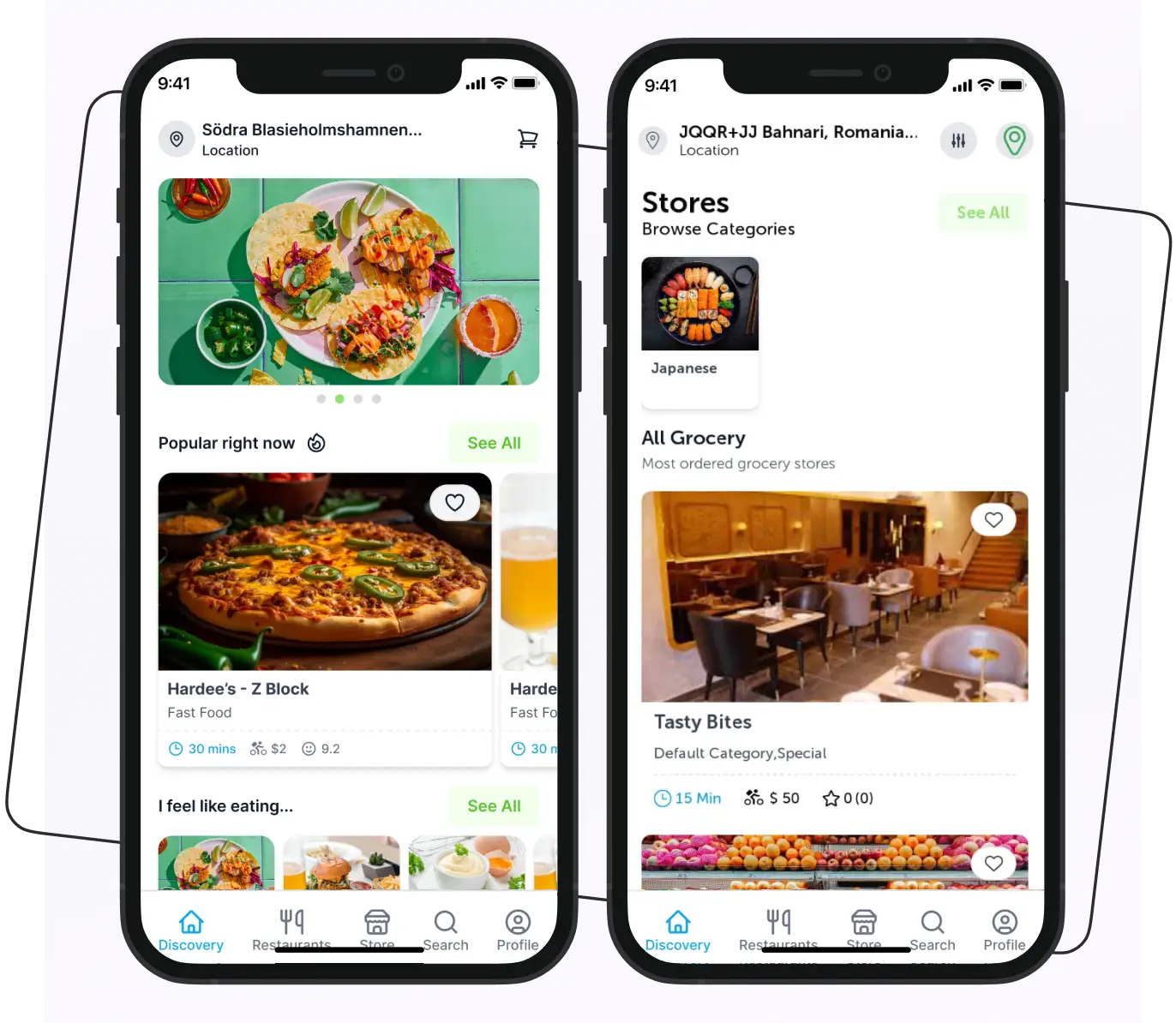


To build a Grubhub clone app, you need to define your business model, research the market, select core features, choose a technology stack, develop and test the platform, and launch it.
Want to start your own food delivery business without spending $50,000+ on development? The Grubhub clone script gives startups, restaurants, and entrepreneurs a ready-to-launch, fully customizable, and scalable app solution packed with all the features you need to compete with the biggest players in the market.
With a clone script, you can launch your app quickly, attract more customers, and start generating revenue from day one without coding from scratch or long development cycles.
So, let’s explore this innovative solution in detail.
What is Grubhub?
Grubhub is a U.S.-based online food ordering and delivery platform that connects customers with local restaurants and national chains. The platform operates across more than 4,000 U.S. cities and has hundreds of thousands of merchants on its network.
Grubhub was acquired by Wonder in a $650 million deal announced in November 2024, with the transaction closing in early 2025. Grubhub now operates as part of Wonder’s broader food and technology business.
Stats About Grubhub and the Food Delivery Industry
- In 2020, the global online food delivery market was valued at $107.4 billion and is projected to reach $192.16 billion by 2025.
- Grubhub had 24.6 million active customers in 2023, who purchased through the app once a month, according to Business of Apps.
- The company’s revenue is primarily driven by commission fees charged to restaurants on each order placed through the platform.
- Grubhub faces strong competition from other major players in the food delivery industry, including Uber Eats, DoorDash, and Postmates.
What is the Grubhub Clone App?
A Grubhub clone app is a food delivery platform built around a similar marketplace model, where customers can discover restaurants, browse menus, place orders, make payments, and track deliveries.
Instead of copying Grubhub’s proprietary software or branding, businesses can use the underlying concept as a starting point and customize the platform for their own market.
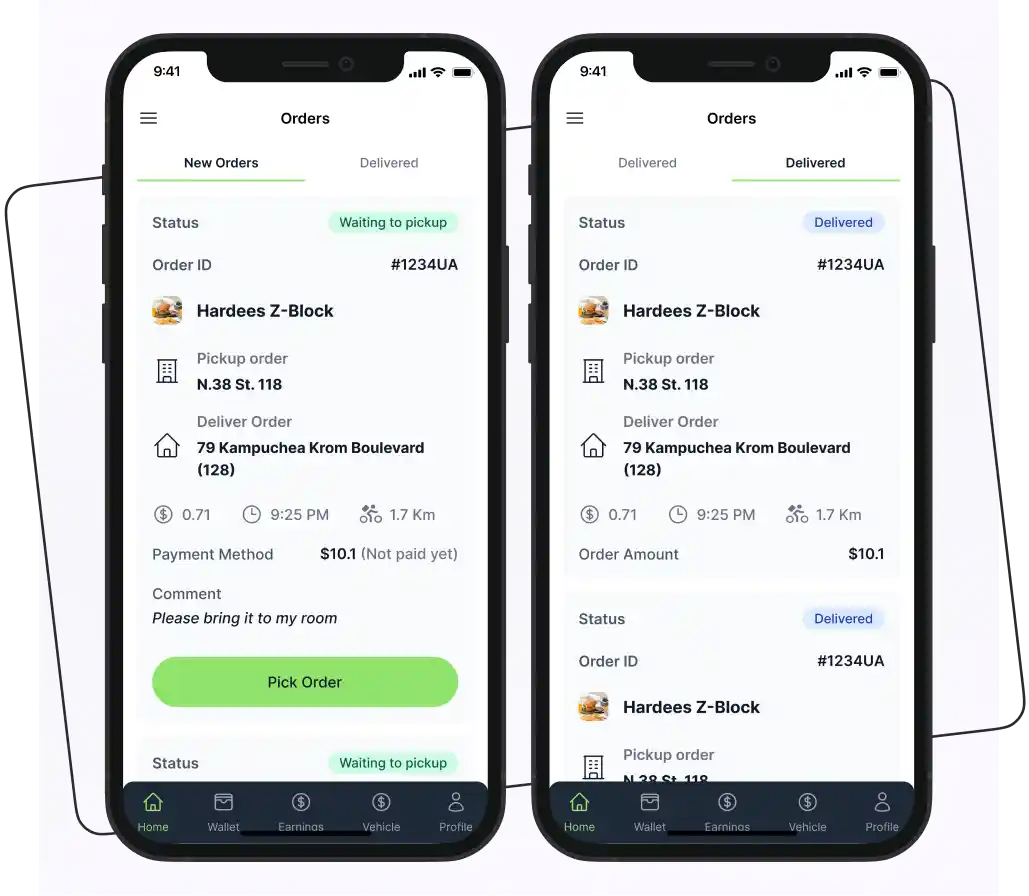
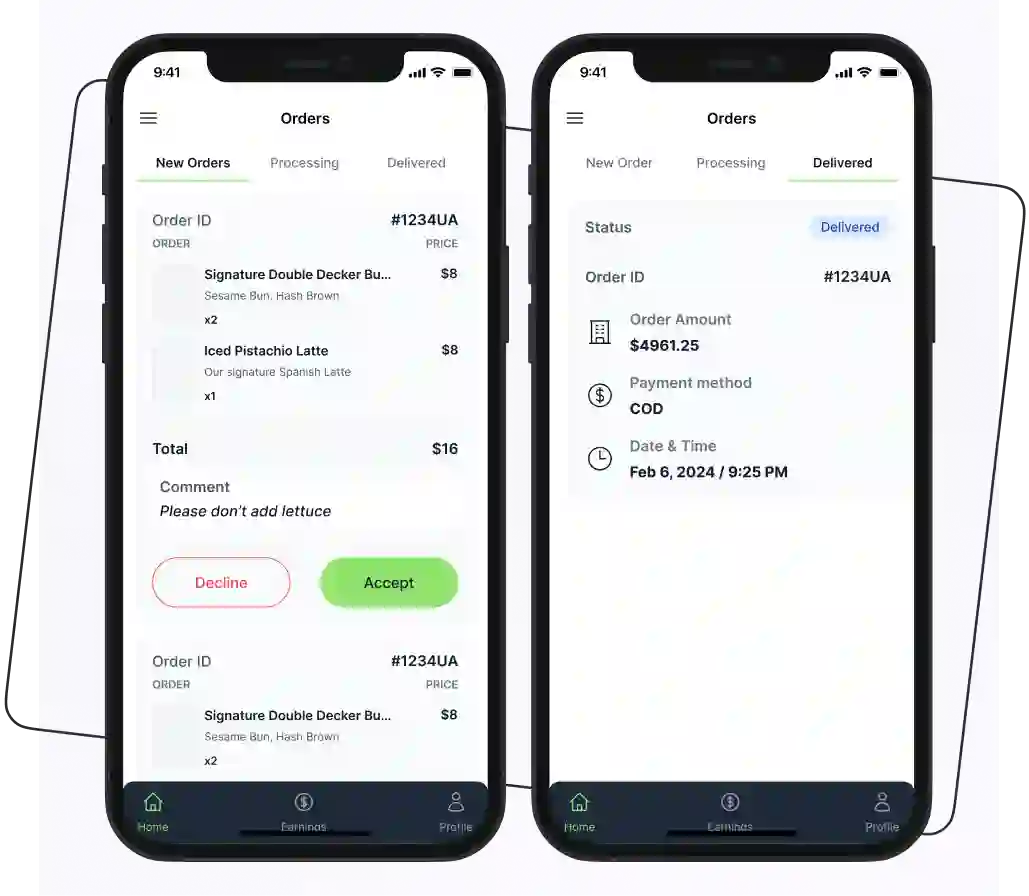
Depending on the solution, a ready-made platform can include separate interfaces for customers, restaurants, delivery drivers, and administrators.
Businesses can then adapt features, branding, payment methods, and integrations to suit their operational requirements.
How Does the Grubhub Clone App Work?
The process of how the Grubhub app clone works is divided into key steps outlined below.
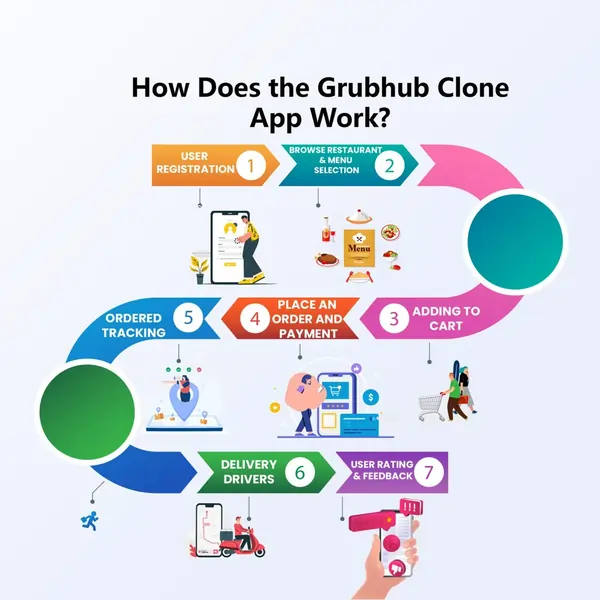
1. User Registration
Customers create an account and provide or select their delivery location. The platform uses the location to show restaurants and delivery options available in that area.
2. Browse Restaurants and Menu Selection
The app provides a wide variety of restaurants that users can choose from. Users can search for various cuisines based on location.
Furthermore, they can check menus, prices, ingredients, and other information.
The best thing is that users can customize their orders according to their requirements. In addition, users can read reviews and learn about the restaurants.
3. Adding to Cart
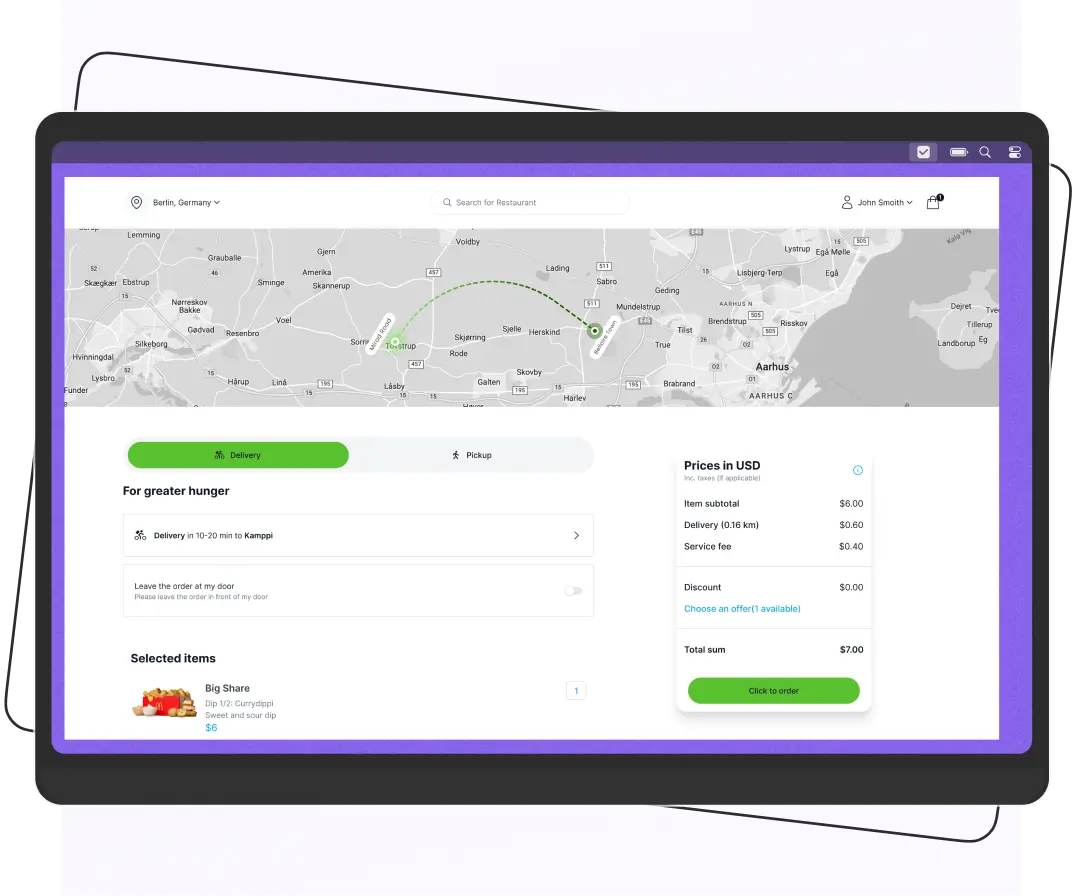
The app’s user-friendly interface allows you to add items to your cart. After adding them to the cart, users can review their order with complete details, which include:
- Total items
- Total cost
- Delivery/pickup option
- Payment information
The Clone app ensures that all transactions are secure and offers various payment methods, such as credit/debit cards, cash on delivery, and mobile wallets.
4. Place an Order and Payment
The order is sent to the restaurant when the user confirms and pays for it. The restaurant receives the order details and starts working on it. They ensure that they meet all your requirements and the highest standards of taste and quality.
5. Order Tracking
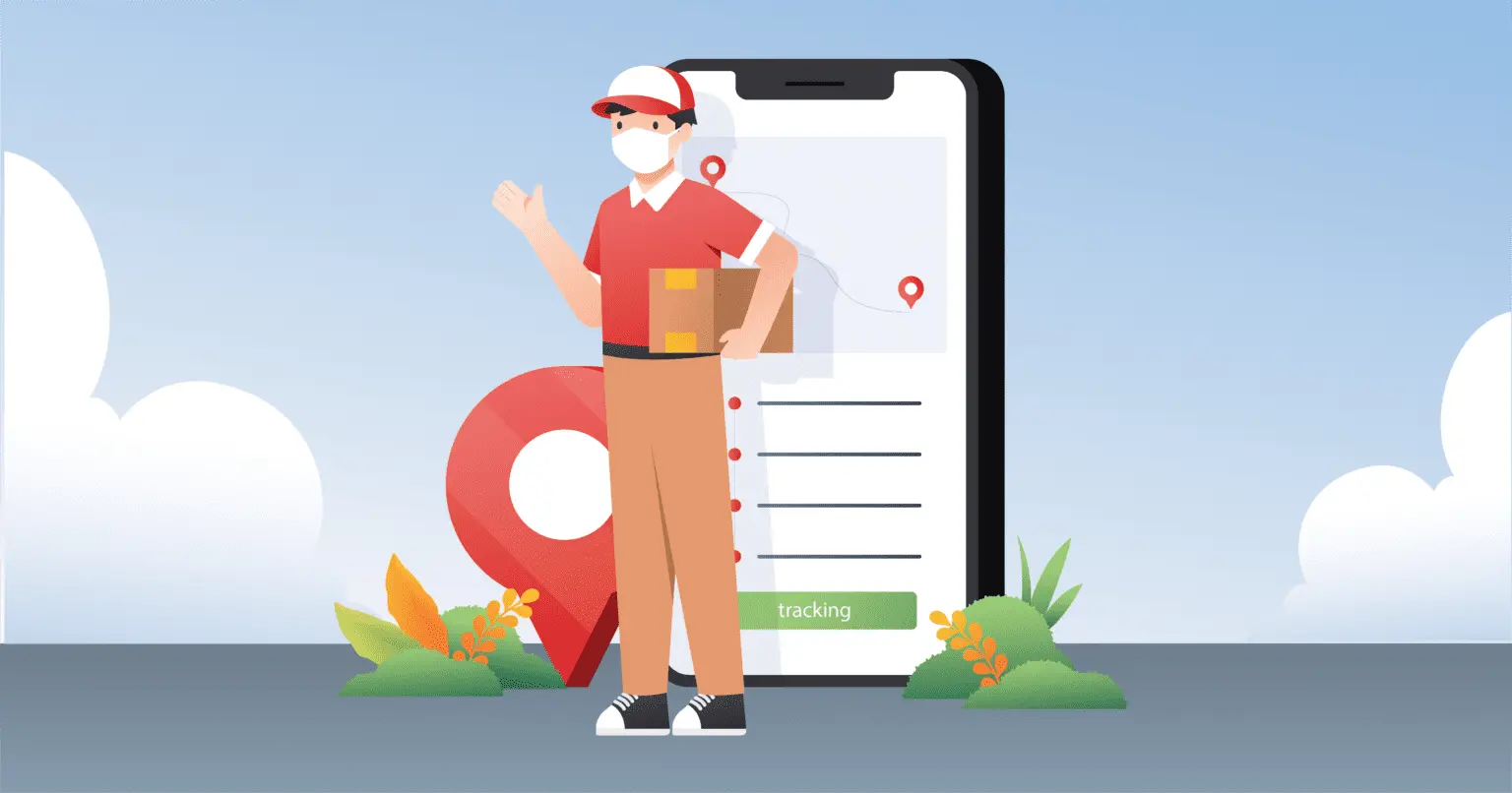
Users can track their orders from the food preparation to their doorstep through an app in real time. With the help of this feature, customers can stay informed about the estimated delivery time.
6. Delivery Drivers
The app partners with several delivery services to pick up the order from the restaurant. These delivery drivers have GPS-enabled devices that show them the best ways to get your food to you as quickly as possible.
7. User Ratings and Feedback
Customers can leave feedback and ratings based on their overall experience after receiving the food. These reviews can help others in making better decisions.
Grubhub Clone vs. Grubhub
| Aspect | Grubhub | Platform Like Grubhub |
| Branding | Operates under the Grubhub brand | Can be launched under your business name and branding |
| Business Model | Uses Grubhub’s established marketplace and pricing structure | You can choose a model based on your market, such as commissions, delivery fees, subscriptions, or advertising |
| Feature Control | Customers use the features provided by Grubhub | Features and workflows can be customized according to the software’s capabilities |
| Target Market | Grubhub’s established U.S. market | You choose the geographic and customer segment you want to serve |
| Customization | Customers cannot redesign Grubhub’s platform for their own business | Branding, workflows, integrations, and selected features can be customized |
| Development | Existing commercial platform | Can use ready-made software or custom development |
| Source Code | Not available to businesses using Grubhub | Depends on the software provider and licensing agreement |
| Scalability | Built for Grubhub’s operations | Depends on the architecture and infrastructure of the chosen solution |
Ready-Made vs. Custom Grubhub-Like Development
A business planning to build a food clone app generally has two development options: using a ready-made solution or choosing custom development.
Let’s discuss their differences so you can make a better decision for your business.
| Factor | Ready-Made Platform | Custom Development |
| Time to Market | Faster because the core software already exists | Longer because the platform is developed from the ground up |
| Initial Investment | Generally lower | Generally higher |
| Customization | Depends on the software architecture and provider | Greater flexibility to build custom workflows |
| Source Code | Depends on the licensing agreement | Can be owned by the business under the development agreement |
| Features | Existing features can be configured or extended | Features are developed according to requirements |
| Scalability | Depends on the platform’s architecture and infrastructure | Can be designed around expected growth |
| Maintenance | May be handled by the provider or your development team | Usually handled by your development team or development partner |
| Time to Launch | Shorter | Longer |
| Best For | Businesses that prioritize speed and lower development effort | Businesses that need highly specialized functionality |
| Main Consideration | Check customization, licensing, support, security, and scalability before choosing | Requires more time, planning, budget, and technical management |
Key Features of the Grubhub Clone App
A successful food delivery marketplace needs more than a customer ordering app. It requires separate functionality for customers, restaurants, delivery drivers, and administrators. The exact feature set should depend on the target market and business model.
Below are the main features of the online food delivery script:
| Features | Description |
|---|---|
| Live Tracking | It is the main feature of the clone app that allows users to sit back and enjoy while tracking their ordered food items via GPS integration. |
| Multilingual Support | Services are offered to customers in several different languages. You can easily attract and reach more customers with this feature. |
| Multiple Payment Options | Offer your customers several payment methods, which include credit cards, debit cards, cash-on-delivery, net banking, UPI, and an electronic wallet. |
| Advanced Search Bar | Let your customers easily search for their favorite restaurants, menus, and more without any hassle. Customers can search restaurants by cuisine, dietary restrictions, ratings, and location. |
| Geolocation | The Grubhub app clone has ultra-accurate geolocation features so that you can get rid of all location-based inefficiencies. |
| Reviews and Ratings | The reviews and ratings allow the customers to leave feedback and express their thoughts on the overall service and a specific food item. |
| Takeaway | Allows customers to order food online and collect it from the restaurant. |
| Browse Categories | Customers can browse different categories and order their favorite food. |
| Push Notifications | With the help of notifications, customers can get updates, promotions, deals, and discounts. |
| User Management | Easily manage user profiles with all details, such as order history, addresses, and more. |
| Menu Management | This feature helps restaurants manage menus and enhance the dining experience. |
| Loyalty Program | To increase customer retention rate and attract more customers, add a loyalty program feature to your food app. |
| Real-Time Order Tracking | The order tracking feature gives peace of mind to customers. They know everything from the moment the order is placed until delivery to their doorstep. |
| In-App Chat | With an in-app chat feature, customers can communicate with restaurants and riders to clear their queries as soon as possible. |
Supercharge your deliveries with Enatega.
Launch NowHow Does the Grubhub Clone App Make Money?
A Grubhub clone app makes money by charging commissions on orders, adding delivery fees, selling sponsored placements, and offering premium customer memberships.
Let’s discuss them in detail.
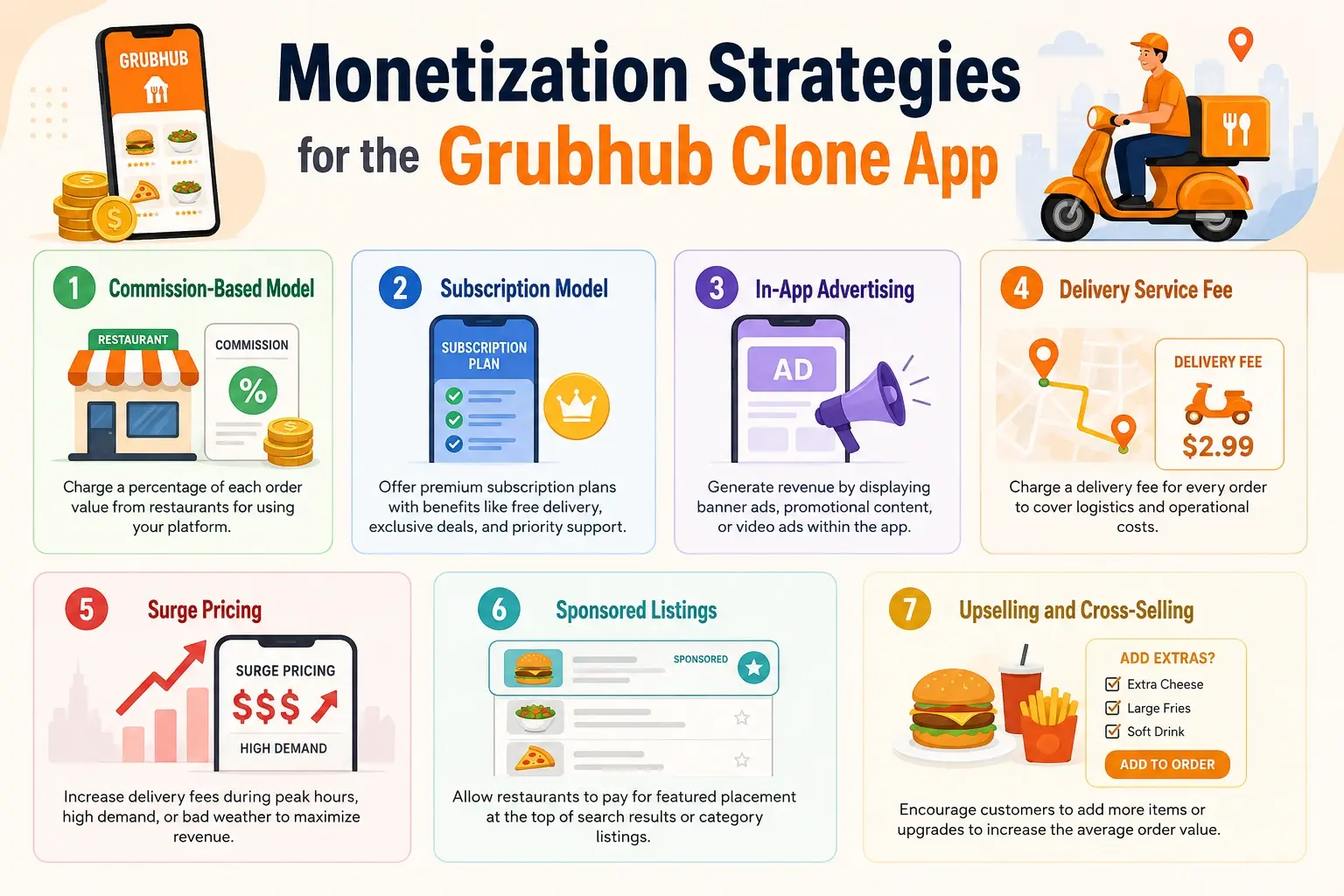
Commission-Based Model
It is the most popular delivery app monetization model.
With the help of this model, businesses earn revenue by charging a certain percentage to restaurants for each order they get from the app.
Also, the commission is based on the restaurant’s popularity, order volume, and order value.
Subscription Model
It is another commonly used model. This model can provide various subscription plans with various features, like free or discounted delivery, priority access to new restaurants, exclusive discounts, and more.
In-App Advertising
This model helps to display adverts within the app to monetize the platform. However, make sure that the ads do not interfere with the user experience, as intrusive ads can drive consumers away.
Delivery Service Fee
This model is best for generating revenue. The app charges the customers a delivery fee for each order placed.
The delivery service fee depends on order size, location, and distance. Free delivery on orders over a particular amount can encourage customers to spend more.
Surge Pricing
This model allows the app to increase prices due to the current market conditions. In the surge pricing model, real-time data analysis and algorithms are used.
Furthermore, high rates during busy times help the app balance supply and demand and maximize income.
Sponsored Listings
Sponsored listings can help brands reach a specific audience and boost sales. Businesses can gain a leading position in the app category listings or search results. With the help of this model, businesses can gain visibility by offering discounts and offers to app users.
Referral Program
The referral program helps to inspire users to invite their family and friends to join the app. The person referred and the new user get discounts or other prizes in exchange.
Upselling and Cross-Selling
The platform can recommend complementary items, add-ons, larger portions, or popular products during menu browsing and checkout. These recommendations can increase average order value when they are relevant to the customer’s order and do not make the checkout experience unnecessarily complicated.
Technologies Used in the Grubhub Clone App
The following are the technologies mainly used in the clone app development of Grubhub.
| Component | Common Technology Options | Purpose |
| Mobile Apps | React Native, Flutter, Swift, Kotlin | Customer and delivery applications |
| Web Applications | React, Vue, Angular | Customer, restaurant, or admin interfaces |
| Backend | Node.js, Python, PHP, Java | Business logic, APIs, authentication, and order management |
| Database | PostgreSQL, MySQL, MongoDB | Users, restaurants, menus, orders, transactions, and other data |
| APIs | REST or GraphQL | Communication between applications and backend services |
| Real-Time Services | WebSockets or similar technologies | Live order and delivery status updates |
| Maps & Location | Google Maps, Mapbox, or regional providers | Geolocation, mapping, routing, and delivery tracking |
| Cloud Infrastructure | AWS, Microsoft Azure, Google Cloud | Hosting, storage, databases, scaling, and infrastructure |
| Notifications | Firebase Cloud Messaging and other providers | Push notifications and order updates |
The final stack should be selected based on the app’s actual requirements rather than simply choosing the largest number of technologies.
How to Build a Grubhub Clone App?
Building a Grubhub clone software requires careful planning and preparation. Therefore, if you’re delivering food, you know that a well-made app is the key to winning customers’ hearts.
Like any product launch, building a food delivery app works best with a clear, step-by-step process.
Here are some easy steps that help you create a food delivery app script like a professional.
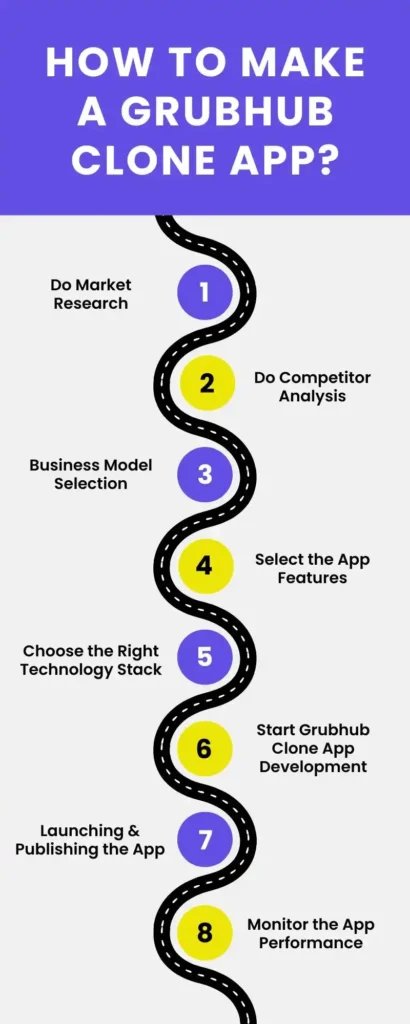
1. Do Market Research
First, you must research Grubhub and learn about its food delivery business model to help you create a better food app. In this step, you should research these things:
- Grubhub’s core strengths and weaknesses (e.g., restaurant commission complaints, delivery fee criticism)
- Your target city or region’s existing delivery options and any underserved cuisines or neighborhoods
- Realistic customer acquisition cost in your market (check local CAC benchmarks from delivery-industry reports)
- Know the restaurant marketing strategies
- Look for gaps that your clone app can fulfill
2. Do Competitor Analysis
Competitor analysis is beneficial for creating a successful clone app, and it gives you a clear vision of the competitive landscape. When you conduct competitor analysis, you need to follow these tips:
- Do an in-depth study of your competitors.
- Conduct a SWOT analysis of the competitor’s app.
- Understand what unique value proposition they offer to their clients.
- Create a list of special offerings and features of each competitor.
- Analyze competitors’ app store ratings and reviews.
3. Business Model Selection
In this step, select the food delivery business model. Every food ordering app clone requires a unique business model. You must keep the Grubhub business model in mind, which includes:
- Customers place an order on the app.
- The restaurant receives the order.
- The delivery person receives the order from the restaurant.
Moreover, you can also consider these options for creating a clone food delivery app.
- Using personal transportation
- Restaurants handle delivery themselves
- Use an external courier or cab service
4. Select the App Features
Before working on the design and development, you must know what features to include in the food delivery app. Add those features that make your app stay competitive and meet user expectations.
5. Choose the Right Technology Stack
Selecting the right technology is crucial and the foundation of a successful clone food app. However, there is no single technology stack that is required to build a food delivery marketplace. The right choice depends on these factors:
- Required platforms
- Development team’s expertise
- Expected traffic
- Integrations
- Security requirements
- Long-term maintenance plans
Moreover, keep factors like security, scalability, and user experience in mind when selecting the ordering technology.
6. Start Grubhub Clone App Development
After deciding on features and technologies, start the clone app development phase. This step involves the following phases:
UI/UX Design: Design a user-appealing and intuitive interface that attracts users and improves user experience.
Development: It is an important phase where programmers manage everything and create the final product.
Testing: Never forget this step. Review and test the product and remove all the bugs or issues. Make your app bug-free and provide users with a seamless experience.
7. Launching and Publishing the App
When the app is created, prepare the marketing plan before launching. Use social media, app store optimization techniques, and more to increase visibility. Remember that a strong online presence helps you build customer trust.
8. Monitor the App Performance
If you are done with the clone app development, keep in mind that while launching the app, it is essential to monitor its performance.
Furthermore, identify the areas of improvement and analyze the user feedback, behavior, and app metrics.
Stay updated with the latest technologies and continuously innovate your app to stay ahead of the competition.
Top Advantages of the Grubhub Clone App Solution
The following are the main benefits of the food delivery clone app.
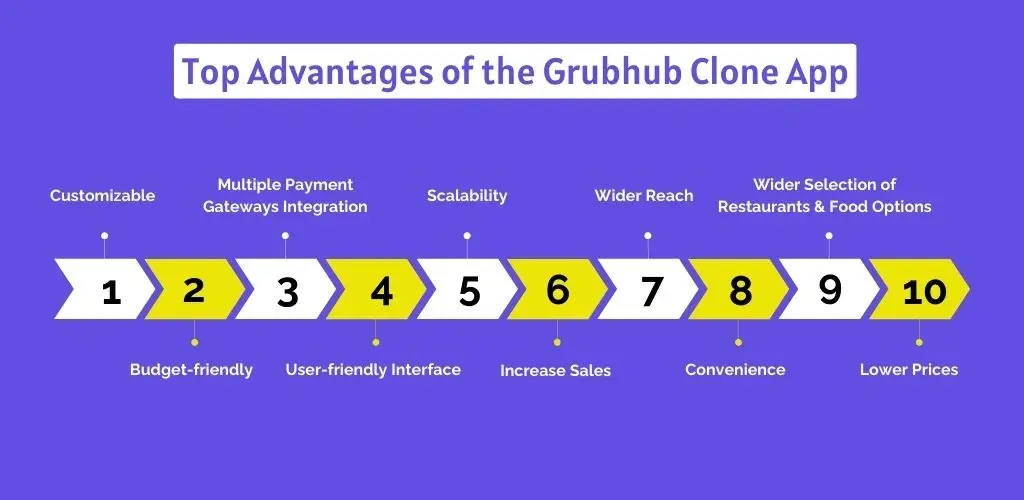
Customizable
The clone app is customizable. Food delivery businesses can customize it according to their needs. Here are ways in which a clone app can be customized:
- Pricing
- Menu management
- Language
- Payment options
- Delivery time slots
- Special promotions
- Feedback mechanism
- Theme of the app and more
Budget-friendly
The clone app gives developers the ability to integrate, customize, and improve the platform in a short amount of time to meet their requirements. Because of this, there will be no need to spend additional money on it because it can be obtained at an affordable price.
Multiple Payment Gateways Integration
It is the best benefit of the clone app. Provide the option to integrate multiple payment gateways. It offers flexibility to users and reduces payment barriers.
User-friendly Interface
The user-friendly interface makes it easier for users to browse menus, place orders, track orders, and more. With an easy-to-use interface, users can use this app without any difficulty.
Scalability
Your user base will grow, so your food clone app will be able to scale to meet the additional demand. It is essential to have this level of scalability to handle peak order times and expand into new areas.
Wider Reach
With the help of a food app, restaurants can reach a large customer base and increase their brand reach. By offering deals, special promotions, and discounts, restaurants can keep their customers engaged.
Convenience
The food delivery apps provide convenience to customers by allowing them to order food online from any place and at any time. They save time and effort to prepare a meal or go out to find a good place to eat.
How Much Does it Cost to Clone Grubhub?
The cost of building a Grubhub-like food delivery platform can range from $50,000 to $150,000. It depends on whether you choose a ready-made solution or custom development.
A custom-built platform can require a substantial investment because it involves:
- UI/UX design
- Customer and restaurant applications
- A delivery driver app
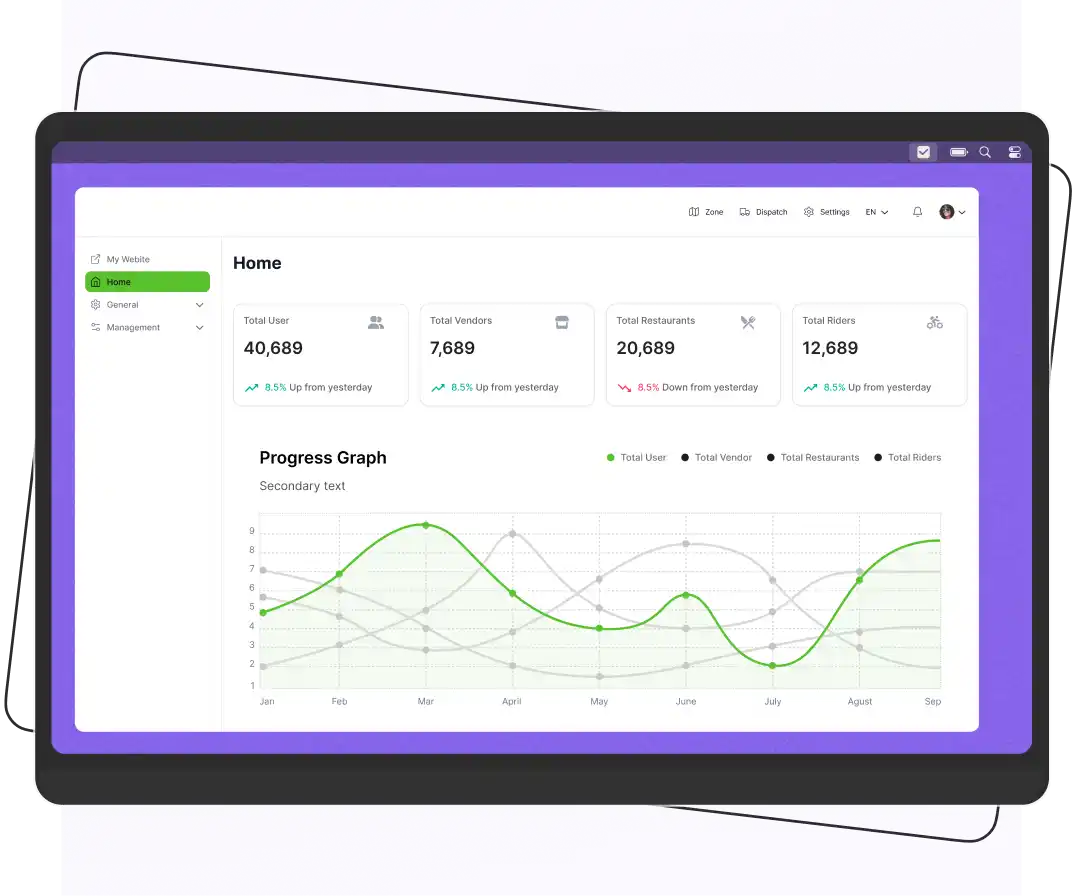
- An admin dashboard
- Backend development
- Testing
- Integrations
- Deployment
- Ongoing maintenance
A ready-made or white-label solution can reduce the initial development effort because the core platform is already built.
The main factors that affect development cost include:
- Number of applications and dashboards
- Feature complexity
- UI/UX requirements
- Payment gateway integrations
- Maps and real-time tracking
- Restaurant and rider management
- Third-party API integrations
- Custom business workflows
- Cloud infrastructure
- Testing and deployment
- Ongoing maintenance and support
Popular Food Delivery Platforms Similar to Grubhub
Below are some popular products similar to the Grubhub clone app.
DoorDash
DoorDash is a popular food delivery platform that serves a wide range of restaurants and customers. It is one of the largest food delivery platforms in the United States. It offers the largest selection of restaurants and stores. You can create the DoorDash clone script and quickly launch your food business in no time.
Uber Eats
Uber Eats is the most well-known on-demand food delivery app, launched in 2014. It operates in numerous countries and partners with several restaurants. Offer the doorstep delivery of your favorite food from local and national restaurants.
Foodpanda
Delicious food and speedy groceries are at your fingertips with Foodpanda. This online ordering platform is your food and grocery delivery companion that connects you to various restaurants and food providers. It operates in various countries and provides a convenient way to order food online.
The Foodpanda clone app can recreate common food and grocery delivery workflows, with features depending on the software solution and customization requirements.
FAQs
Restaurants get orders from the clone app through a tablet or computer that is linked to the app. The restaurant gets a notification when the customer places an order, so they can start making the food.
A Grubhub clone app lets customers pay for their items in several ways, such as:
Cash on delivery
Credit/debit cards
Digital wallets
Grubhub charges restaurants a marketing commission rate ranging from 5% to 25% depending on the chosen pricing plan. Plus an additional 10% delivery fee if you use Grubhub’s drivers and a processing fee of 3.05% plus $0.30 per order.
Grubhub’s biggest competitor is DoorDash, which holds a significant share of the food delivery market and offers similar services. Other notable competitors include UberEats and Postmates.
A ready-made Grubhub clone can be launched within 1-3 weeks. Custom development may take 4-12+ months, depending on features, complexity, and requirements.
A Grubhub clone uses a prebuilt codebase for faster and more affordable deployment. Custom development builds the platform from scratch with greater flexibility and customization.
A multi-vendor marketplace requires a customer app/web interface, restaurant dashboard or app, delivery driver app, and admin dashboard. These components work together through a shared backend.
Source-code ownership depends on the software provider and licensing agreement. Before purchasing a solution, confirm that you receive full source-code access, modification rights, and ownership, or only a license to use the platform.
Yes, depending on the platform, you may be able to customize branding, payment gateways, delivery workflows, commissions, languages, and other features. The level of customization depends on the software architecture and licensing terms.
Beyond the software, you need:
Restaurants or other merchants
A delivery model
Payment processing
Delivery zones
Customer support
Marketing
Operational processes
You should also address local legal, tax, privacy, and payment requirements before launch.
Supercharge your deliveries with Enatega.
Launch NowConclusion
Building a food delivery platform like Grubhub requires more than copying a restaurant listing and checkout experience. You need a complete marketplace covering customers, restaurants, delivery operations, order management, and administration.
The right development approach depends on your budget, timeline, and desired level of customization. A ready-made platform can shorten the path to market, while custom development offers greater control when highly specialized functionality is required.
If you are considering a ready-made food delivery platform, Enatega can help you launch an app.
Enatega worked with a food delivery client to build a multi-restaurant ordering system with a user-friendly interface and integrated loyalty features.
According to the client's review on Clutch.co, the engagement scored a perfect 5.0 across quality, schedule adherence, cost, and likelihood to refer, with particular praise for Enatega's responsive support and attention to detail throughout development.
About the author

Hudaibia Khalid is a senior content writer with several years of experience in creating clear and easy-to-understand content. Over the years, she has worked closely with startups, restaurants, and entrepreneurs, helping them simplify complex digital and technical topics into actionable insights.
Her expertise lies in writing about on-demand platforms, food delivery solutions, and business growth strategies in a way that is accessible even to non-technical readers. With her experience in the industry, she focuses on guiding businesses step by step, from understanding ideas to turning them into fully working solutions.
SHARE






 IOS
IOS Android
 Web
Web